Careers after an online MBA in Business Analytics for first-time managers

Co-Founder and Chief Data Scientist
Your first management role may require you to make decisions with data while also coaching employees, defending budgets, and explaining results to executives. An online MBA in business analytics can help connect those responsibilities, but it will not replace experience leading a team or working in a particular function. This guide identifies realistic career paths, the skills employers may expect, and the salary and job-market evidence behind them. It also helps you decide whether the degree—or a more targeted course—fits your next move.
Key Things You Should Know
- The most plausible next steps are analytics-informed management roles in a function you already know, such as operations, marketing, or business performance—not an immediate move into senior leadership.
- The U.S. Bureau of Labor Statistics projects about 1.1 million annual openings across all management occupations from 2025 to 2035; that figure is not specific to analytics or MBA graduates.
- Choose an MBA if you need both broader management skills and analytics practice; choose targeted technical training if your main gap is a tool or statistical method.
What Careers Can You Pursue After an Online MBA in Business Analytics?
For a first-time manager, the strongest career move is often to manage a larger scope within a familiar function while using analytics to improve decisions. The degree can support a transition, but employers will still look for evidence that you have delivered results and can lead people.
The paths below differ in how much functional and technical experience they usually demand. Job titles vary by employer, so compare responsibilities rather than titles alone.
| Potential path | Typical responsibility | Experience to demonstrate |
| Operations or process improvement manager | Use performance measures to improve capacity, quality, or service. | Process ownership, cross-team coordination, and measurable improvements. |
| Marketing or customer insights manager | Use customer and campaign evidence to guide spending and priorities. | Marketing knowledge, experimentation, and clear communication of findings. |
| Business analytics or business intelligence manager | Set reporting priorities and help teams turn analysis into decisions. | Prior analytics work, data quality judgment, and experience guiding analysts. |
| Strategy or business performance manager | Evaluate initiatives, budgets, and organizational performance. | Financial reasoning, stakeholder influence, and knowledge of the business. |
An operations supervisor who has improved scheduling with performance data, for example, may be better positioned for a broader operations role than for immediate leadership of a specialized data science team. Technical analytics management may require substantial experience with data systems, statistics, or analytical staff beyond MBA coursework.
How Does an Online MBA in Business Analytics Prepare First-Time Managers?
The MBA's value is in connecting evidence to management action. A new manager might learn to assess whether a declining metric reflects a real problem, decide which response a budget can support, and explain the trade-off to employees and senior leaders. Leadership, organizational behavior, and communication courses can help with delegation, conflict, and stakeholder buy-in—tasks that analysis alone does not solve.
Look for assignments that require a recommendation, not just a dashboard: defining a business problem, checking data limitations, comparing options, and presenting a decision. Ask whether group projects, live meetings, or required visits fit your supervisory schedule. If predictable study time matters, compare part-time asynchronous MBA programs online MBA programs with asynchronous classes, then verify each program's actual meeting and collaboration requirements. Online delivery does not necessarily mean self-paced study.
Coursework can build management judgment; responsibility for hiring, performance reviews, or a larger budget comes from the role an employer entrusts to you, not from the diploma.
What Is an Online MBA in Business Analytics?
It is a graduate business degree delivered primarily online that combines a general MBA core with study of how organizations use data to make decisions. Some schools offer a formally named Business Analytics concentration; others offer analytics electives without a designated concentration. Confirm which credential and coursework will appear on your academic record.
The distinction matters for career planning. An MBA emphasizes managerial applications—such as choosing metrics, evaluating forecasts, and acting on findings. A specialized analytics or data science master's degree may offer deeper statistical and technical training. If you want to supervise decisions across functions, the MBA may fit; if you want to build advanced models as your primary job, compare the technical depth of other programs before enrolling.
Curricula vary, but the MBA core commonly covers accounting, managerial finance, marketing, operations, strategy, and leadership. Analytics-focused courses may address data visualization, business statistics, forecasting, decision models, or applied projects. Check course descriptions and prerequisites rather than assuming every program teaches the same software or level of coding.
For a new manager, an applied project is especially useful when it requires both analysis and implementation: recommending a staffing change, explaining its cost, and anticipating how the team will respond. If you have prior graduate coursework, ask whether it can reduce the required workload and whether any transferred credits can satisfy concentration requirements. Policies differ; a guide to transferable coursework for business graduate programs can help you frame those questions.
Schools commonly review an undergraduate degree, academic record, résumé, and application materials describing professional goals. Work-experience expectations, recommendations, interviews, and GMAT or GRE policies vary by program. A first-time manager should not assume that limited time supervising people is disqualifying: substantial project leadership or individual-contributor experience may also be relevant, depending on the school.
Analytics coursework may benefit from comfort with basic statistics and spreadsheets, while accounting or finance may be unfamiliar to applicants outside business. Ask whether the school requires foundation courses or instead provides preparation after admission. To compare policies, start with business-school entry requirements for MBA students online MBA programs, then confirm current requirements directly with each institution.
Time to completion depends on required credits, course sequencing, and whether you study part-time or at an accelerated pace. Concentration courses may be offered less frequently than core courses. For a first-time manager, the fastest advertised timeline may be impractical during budgeting cycles, team changes, or a demanding project.
Compare total required tuition and mandatory fees—not just a per-credit rate—and account for books, software, any required travel, and borrowing costs. Employer assistance can change your out-of-pocket cost, but check reimbursement limits and any requirement to remain employed afterward. A list of online MBA programs with manageable tuition online MBA programs under $30,000 can provide a starting point for comparing advertised costs; confirm each program's current charges and whether its analytics concentration is included.
Before committing, weigh the full cost against a realistic next role at your employer or in your market. If you mainly need to learn visualization software or strengthen statistics, a shorter course may cost less and address the gap sooner.
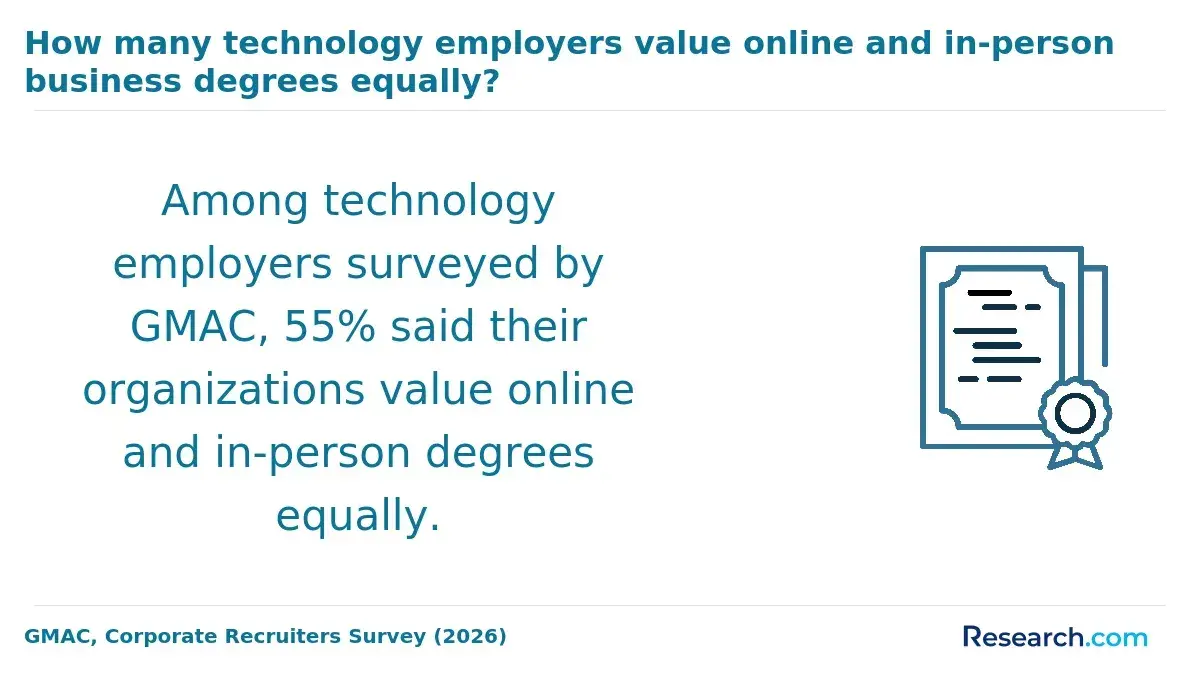
An online MBA is an MBA, but employer assessments depend on the institution, curriculum, your experience, and what you can demonstrate—not delivery format alone. Do not assume online students receive the same recruiting access, internships, or networking opportunities as students in a school's campus-based program.
For an employed first-time manager, the ability to apply lessons immediately may be more valuable than leaving work for full-time study. If you need to change employers or industries, ask specifically which career services, alumni events, recruiting opportunities, and applied projects are available to online students.
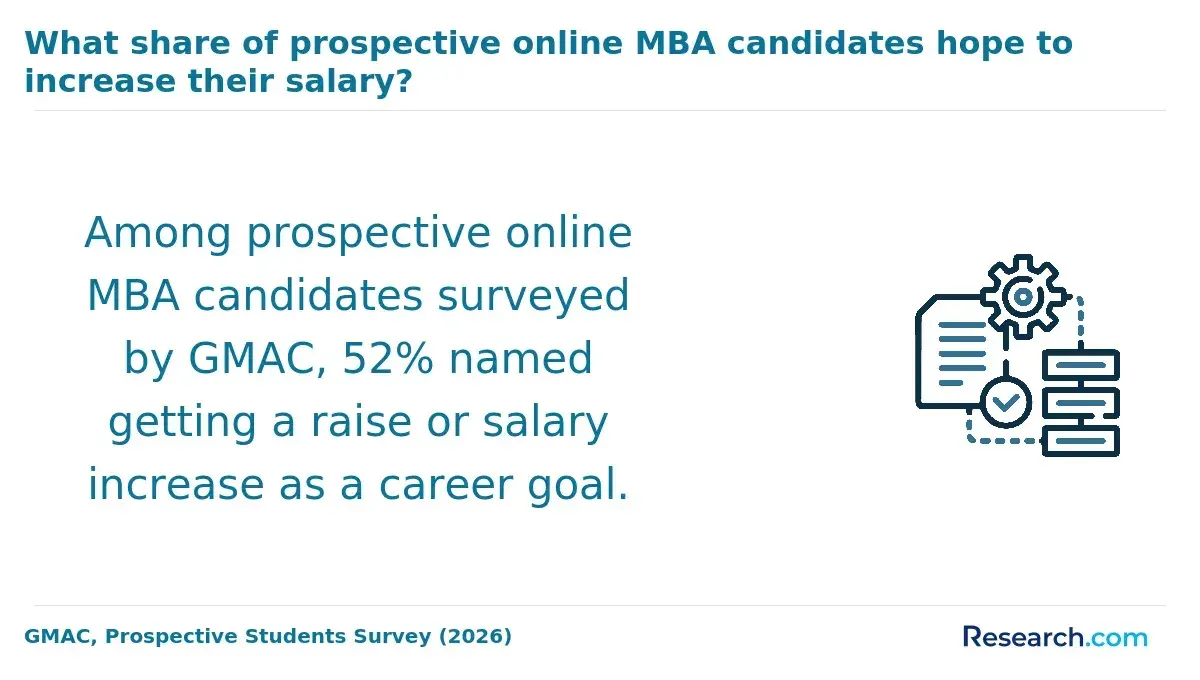
There is no single reliable salary for graduates of this concentration. Pay depends on the occupation, location, industry, level of responsibility, and prior experience. The U.S. Bureau of Labor Statistics reports a $126,520 median annual wage for management occupations in May 2025. That is a median for workers across management occupations—not an entry salary, an analytics-specific figure, or an estimate of what the MBA will add to your pay.
For a useful personal comparison, identify roles you could plausibly qualify for now and roles you might qualify for after gaining both the degree and further management experience. Compare local job postings and your employer's pay ranges for those specific responsibilities rather than treating a broad occupational median as an expected offer.
The BLS projects overall employment in management occupations to grow faster than the average for all occupations from 2025 to 2035, with about 1.1 million openings per year on average from growth and replacement needs. This broad outlook does not measure demand for Business Analytics MBA graduates or show how many openings are appropriate for newly appointed managers.
Focus on the market for your intended function. Read openings for the work involved: some seek managers who can interpret analysis and direct teams, while others require hands-on expertise in data engineering or advanced modeling. That distinction helps you decide whether to build on your current management experience, add technical training, or pursue both.
How Can You Choose an Accredited Online MBA in Business Analytics?
First, verify that the institution holds recognized institutional accreditation and check whether the business school also holds specialized accreditation, such as AACSB, ACBSP, or IACBE. Institutional and business-school accreditation are different; neither confirms that a particular analytics concentration is offered online.
Next, request the current curriculum, total-cost breakdown, course schedule, and details of career support for online students. Ask whether the analytics option is formally designated, how much applied work it includes, and whether graduates in roles like yours have access to relevant employer connections. If a low price is central to your choice, use an online MBA cost guide 10 000 as an initial comparison—not a substitute for checking current charges, accreditation, and analytics coursework.
The best fit is the program that closes your specific gap at a manageable cost. For a new manager who needs finance, leadership, and data-informed decision-making together, that may be an MBA. If the next role calls primarily for deeper technical analysis, targeted coursework or a specialized master's may be the more direct route.
Other Things You Should Know About MBA
Not by itself. Employers may expect experience reviewing technical work, setting data priorities, and leading analytical staff. An MBA can strengthen business judgment, but it does not replace that experience.
List the MBA as awarded and describe the analytics concentration or relevant coursework accurately, using the school's official terminology. Add a project result that shows how you used analysis to make a management decision.
Only with appropriate permission. Ask the instructor and your employer about confidentiality, data security, and intellectual property rules; anonymized or public data may be a safer option.
Present a specific development plan: the skills you will apply, a realistic study schedule, the full cost, and how you will measure the value of a work-related project. Confirm the employer's education-assistance terms before enrolling.
- Leadership Roles You Can Pursue with an MBA Degree | Jenkins MBA https://mba.ncsu.edu/2026/05/07/leadership-roles-you-can-pursue-with-an-mba-and-analytics-focus/
- Team Decision-Making: Why It Matters & How Managers Can Get It Right | Harvard Business School https://online.hbs.edu/blog/post/team-decision-making
- Are Online MBAs Taken Seriously? What Employers Really Think | sbs.edu https://www.sbs.edu/blog/are-online-mbas-taken-seriously-what-employers-think/
- Online vs. In-Person MBA: Which is Right for You? | Colorado Technical University https://www.coloradotech.edu/degrees/studies/business-and-management/online-vs-in-person-mba
- The 5 most in-demand roles for MBAs in 2026 | gmac https://www.gmac.com/resources/learners/business-careers/career-planning/most-demand-roles-mbas
- Employers Value Both Online & In-Person Learning Equally | poetsandquantsforexecs.com https://poetsandquantsforexecs.com/admissions/employers-value-both-online-in-person-learning-equally-but-favor-in-person-mba-skills/
- Do Employers Really Value Online MBA Degrees? | Rowan Blog https://rowanblog.com/2025/08/do-employers-value-online-mba-degree/
- Business Analytics Careers: Roles, Skills, and Industry Overview | Michigan State University https://www.michiganstateuniversityonline.com/resources/business-analytics/business-analytics-careers-roles-skills-and-industry-overview/
- Business analytics: Essential tools, techniques and skills for data-driven success | Databricks https://www.databricks.com/blog/business-analytics-essential-tools-techniques-and-skills-data-driven-success
- 7 In-Demand Data Analyst Skills to Get You Hired in 2026 | Coursera https://www.coursera.org/articles/in-demand-data-analyst-skills-to-get-hired