Best online MBA in Accounting programs for nonbusiness bachelor's graduates

Co-Founder and Chief Data Scientist
A bachelor's degree outside business does not rule out an online MBA in accounting, but it changes what you should compare. A program may welcome your academic background while expecting you to learn accounting fundamentals before graduate courses begin. And an accounting concentration may support management goals without supplying the coursework required for CPA licensure. This guide compares a focused shortlist of programs and shows how to assess preparation, cost, format, and career fit before applying.
Key Things You Should Know
- Start with the four-program shortlist, then confirm each school's current accounting concentration, online availability, and foundation-course policy.
- For nonbusiness graduates, the most consequential cost may be prerequisite coursework that sits outside the advertised MBA tuition.
- An accounting MBA develops business leadership alongside accounting knowledge; it does not, by itself, establish CPA eligibility or replace accounting work experience.
What is an online MBA in accounting for nonbusiness graduates?
It is a graduate management degree with an accounting concentration or similarly designated course sequence, delivered primarily online. The MBA core teaches subjects such as finance, operations, and leadership; the accounting component adds courses relevant to reporting, taxation, auditing, or managerial accounting, depending on the school. It is not necessarily the same as a master's in accounting, which generally devotes more of its curriculum to technical accounting.
Your undergraduate major can still be an asset. A biology graduate who manages a laboratory, for example, may bring useful operational knowledge to budgeting and financial decisions. If the goal is leadership in that original field rather than accounting work, compare graduate business options in healthcare before committing to an accounting concentration.
Can you earn an online MBA in accounting without a business degree?
Yes. An accounting or business bachelor's degree is not a universal MBA admissions requirement. Schools may admit graduates from other disciplines directly, assign foundation courses, or assess readiness through prior coursework and professional experience. A mathematics graduate and a literature graduate should not assume they have identical preparation gaps.
The better first filter is your intended job. If you want to manage budgets, teams, or business operations, an accounting MBA may be appropriate. If you want to enter public accounting and pursue a CPA license, examine a master's in accounting or a structured post-baccalaureate accounting pathway as well. You can use broader lists of online MBA programs to identify alternatives, but verify that any apparent accounting option is a formal concentration available to online students.
Which online MBA in accounting programs are accredited?
The following is a fit-based shortlist, not a national ranking. It focuses on universities with identifiable online MBAs and named accounting concentration options, then highlights the question most relevant to an applicant without a business bachelor's degree. These universities have AACSB-accredited business schools; confirm the current accreditation record and online concentration in each school's directory and catalog before applying.
The comparison deliberately omits prices and admissions thresholds that can change by term or applicant. Use the final column to distinguish the programs rather than assuming their accounting courses or foundation requirements are interchangeable.
| University | Online MBA accounting option | Business-school accreditation | Priority question for a nonbusiness graduate |
| Louisiana State University Shreveport | Accounting concentration | AACSB | Which foundation requirements, if any, would your transcript trigger? |
| University of Southern Indiana | Accounting concentration | AACSB | How much introductory accounting is expected before concentration courses? |
| Texas A&M University-Corpus Christi | Accounting concentration | AACSB | Do the current accounting electives match your management or CPA-related goals? |
| University of Massachusetts Lowell | Accounting concentration | AACSB | How do any foundation courses affect your total time and cost? |
Accreditation is a quality check, not a substitute for course-level comparison. Institutional accreditation and AACSB business-school accreditation are different; neither confirms that a particular course meets a state CPA board's requirements. Ask each program for its current online course sequence and a transcript-specific review before treating it as a final choice.
There is no single prerequisite package across online accounting MBAs. A school may require introductory financial and managerial accounting, economics, statistics, or other business foundations; another may build introductory material into its MBA. Some distinguish required courses from recommended preparation.
Send an unofficial transcript to each shortlisted program and request a written assessment. Ask whether prior coursework satisfies a requirement, whether a placement assessment is available, and whether a foundation course carries graduate credit toward the MBA. That last distinction matters: a course can add tuition and time without reducing the degree's remaining credit requirements. If accounting is entirely new to you, an introductory course before enrollment can also test your interest before you commit to a full degree.
Expect a management core alongside a smaller set of accounting-focused courses. Core work commonly addresses financial decision-making, strategy, operations, and organizational leadership. Depending on the program, the concentration may cover managerial accounting, financial reporting, auditing, taxation, or accounting information systems. The exact mix matters more than the concentration label.
Compare course descriptions against your goal. Managerial accounting and budgeting can be especially useful if you oversee resources in your current profession. Technical financial reporting and auditing become more important if you intend to move into accounting practice. Ask whether introductory accounting is taught before advanced courses and whether the online version includes applied projects; do not assume an MBA concentration provides the technical depth of a specialized accounting master's.
Requirements vary by university and may include an accredited bachelor's degree, transcripts, a résumé, a statement of purpose, recommendations, or an interview. Schools also set their own policies on work experience, GPA, and GMAT or GRE scores. A test waiver at one university says nothing about another university's policy.
Present your nonbusiness background as evidence of relevant strengths, not as a deficiency to apologize for. In your application, connect projects, quantitative work, supervision, or budget responsibility to the MBA's management curriculum. If your transcript lacks accounting, explain how you plan to prepare. Before paying an application fee, confirm the current requirements for the online accounting concentration, not just the university's general MBA.
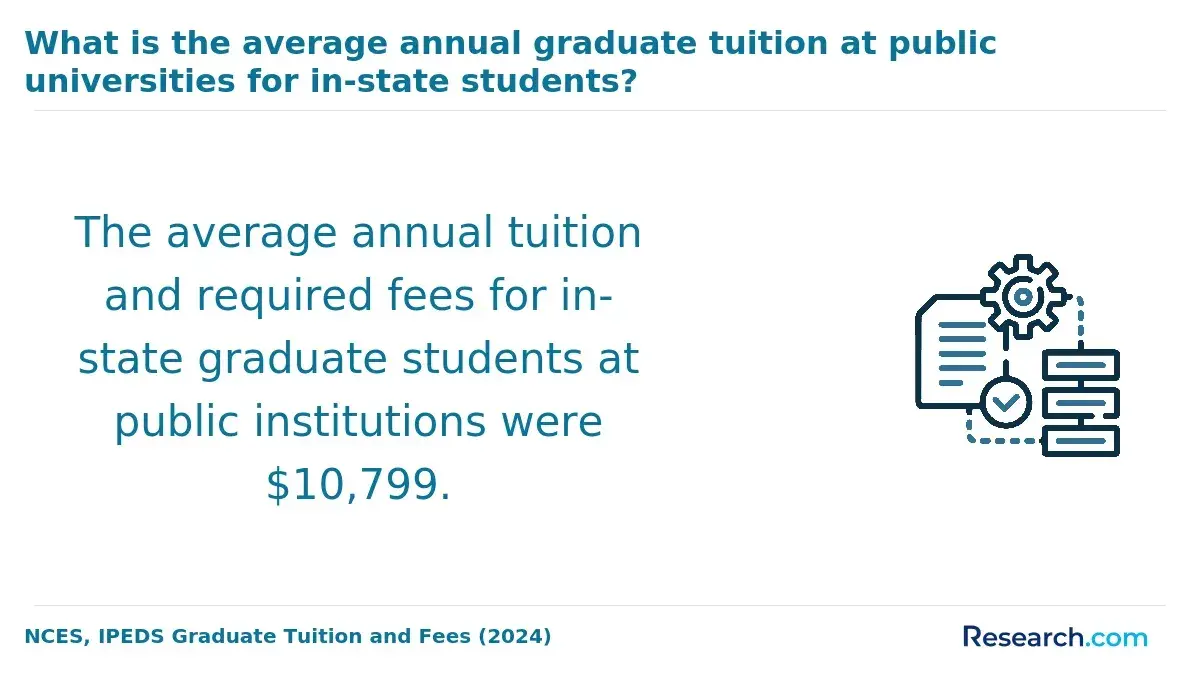
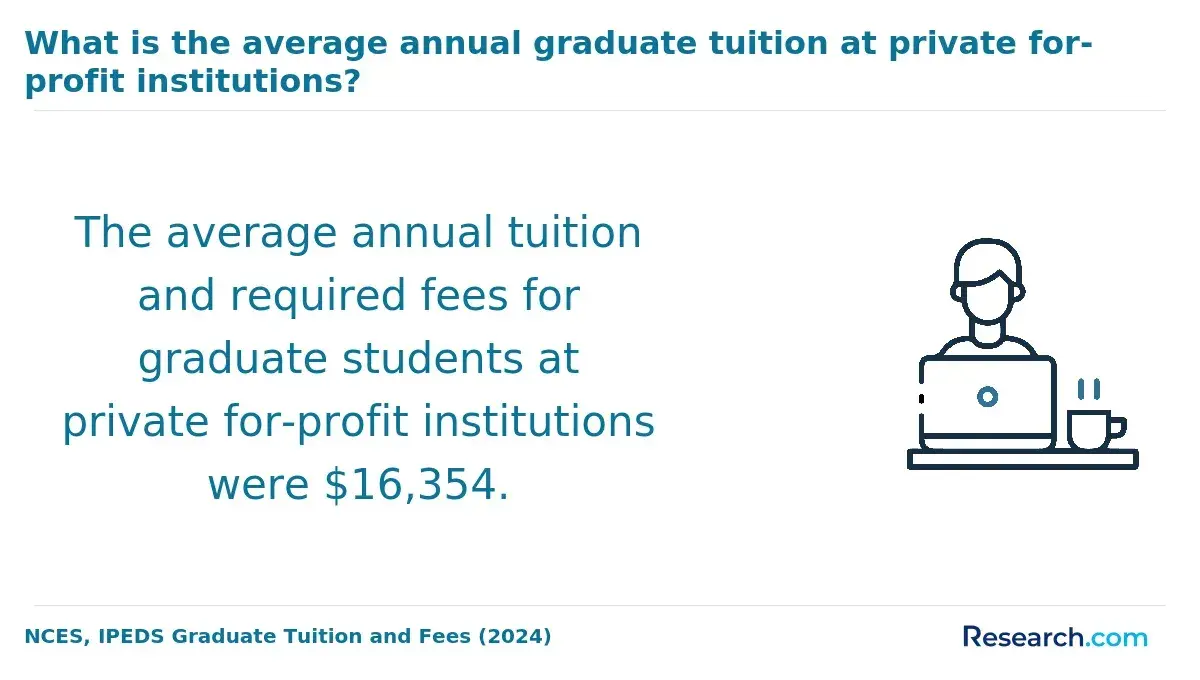
Time and price depend on required credits, course load, tuition rules, and any foundations added after a transcript review. An accelerated published timeline may assume continuous enrollment and no additional preparation. Compare the total path you would actually take, including fees, materials, and any required travel, rather than comparing tuition-per-credit figures alone.
Request an individualized degree plan and itemized cost estimate from each school. Then compare it with affordable online MBA schools using the same assumptions about residency, fees, and prerequisite credits. Employer tuition assistance may change your out-of-pocket cost; borrowing can increase it through interest. A lower advertised MBA price is not necessarily the less expensive route for an applicant who needs substantial foundation work.
An online MBA may let you keep working and apply coursework immediately, while a campus-based program may offer more face-to-face recruiting and access to activities tied to being on site. Neither format guarantees stronger accounting instruction or better career outcomes. For someone making a substantial switch into accounting, access to internships, employer recruiting, and local professional contacts may matter more than delivery format.
Check whether classes are asynchronous, whether live sessions cross your work hours, and whether exams, group projects, or residencies impose fixed commitments. If speed is central to your decision, compare MBA schools with accelerated formats degree programs, but ask whether their advertised pace remains feasible after your required foundations are added.
For a nonbusiness graduate, the most realistic next role often builds on existing experience: a project or operations professional might move toward budget ownership, financial planning collaboration, or management in the same industry. A transition into staff accounting may require more technical coursework and direct accounting experience. Controller and other senior financial roles generally require substantial relevant experience; the MBA alone is not a shortcut into them.
The U.S. Bureau of Labor Statistics reports a $126,520 median annual wage for management occupations in May 2025. That is a broad occupational figure - not the starting salary of an accounting MBA graduate - and should not be used to forecast your pay. Compare job postings for your target role and location with your current qualifications before assigning a financial return to the degree.
If your experience is in healthcare and your goal is to lead clinical operations rather than accounting, healthcare-focused MBA program options online MBA programs for healthcare professionals may align more closely with the positions you want.
Does an online MBA in accounting qualify graduates for CPA licensure?
Not automatically. CPA eligibility is determined by the state accountancy board and depends on its education, examination, and experience rules. An MBA may contribute credits, but an accounting concentration might not include every required subject or the appropriate level of coursework. Online delivery alone does not decide whether a course counts.
If CPA licensure is your objective, choose the state where you expect to apply and obtain its current education requirements. Ask the MBA program for course descriptions and credit details, then have the proposed coursework evaluated against those requirements before enrolling. If significant technical accounting coursework remains, a master's in accounting or a targeted post-baccalaureate sequence may be a more direct choice.
Other Things You Should Know About MBA
Diploma wording is set by the university. Ask the registrar for the exact wording if it matters to you.
Usually, undergraduate courses do not replace graduate MBA credits, though they may satisfy foundation requirements. Ask for a transcript review.
No. A concentration is coursework within the MBA; a certificate is a separate credential with its own requirements. Check what will appear on your transcript.
That depends on the school's policies and course availability. Ask whether switching would delay graduation or change your costs.
- Education Requirements | texas.gov https://www.tsbpa.texas.gov/applicants/education/
- MPAcc vs. MBA in Accounting: Which Fits Your Goals? | Pittsburg State University https://degree.pittstate.edu/online-programs/master-professional-accountancy/mba-vs-mpacc-accounting/
- What Is MBA Accreditation? • Rollins College https://crummer.rollins.edu/resources/what-is-mba-accreditation/
- MBA vs MAcc: Which Accounting Degree is Right for You? | EWU https://online.ewu.edu/degrees/business/mba/accounting/macc-comparison-guide/
- Course Formats - Faculty Center for Teaching and Learning https://www.umaryland.edu/fctl/resources/course-formats/
- Pursuing a Master of Accounting (for non-accounting degree holders) | FIU College of Business https://business.fiu.edu/academics/graduate/insights/posts/pursuing-a-master-of-accounting-for-non-accounting-degree-holders.html
- GMAT/GRE Exam Policy | marquette.edu https://www.marquette.edu/business/graduate/gmat-gre-waiver-policy.php
- MBA or Master's in Accounting? Choosing the right degree for you - D'Amore-McKim School of Business https://damore-mckim.northeastern.edu/resources/cc-mba-or-masters-in-accounting/
- Master's in Accounting vs MBA Accounting | University of Bridgeport https://www.bridgeport.edu/news/mba-in-accounting-vs-masters-in-accounting/
- 4.1.21 Instructional Modalities and Distance Education | Illinois State https://policy.illinoisstate.edu/academic/4-1-21