Is an online MBA in Artificial Intelligence for Business worth it for military veterans?

Co-Founder and Chief Data Scientist
An online AI-focused MBA can help a veteran turn military leadership experience into civilian business management skills—but its value depends on the job they want and what they will pay to earn it. The distinction matters as employers explore AI tools while still needing managers who can judge their costs, risks, and practical uses.
Key Things You Should Know
- An online AI-focused MBA is most promising for veterans targeting management roles that combine operations, strategy, and AI adoption—not for those seeking to become machine-learning engineers.
- GI Bill eligibility, the school's VA approval, and the online housing-allowance rules can substantially change the net cost; military service alone does not establish a veteran's benefit level.
- The Bureau of Labor Statistics reports a $126,520 median annual wage for US management occupations in May 2025, but that is not an AI MBA graduate salary or a forecast of an individual veteran's earnings.
Is an Online MBA in Artificial Intelligence for Business Worth It for Military Veterans?
Yes, potentially—if the degree closes a specific gap between military leadership and a civilian management job, and the remaining cost is reasonable. A veteran who has led teams, managed logistics, or overseen complex programs may already have much of the leadership experience employers value. An MBA can add fluency in finance, commercial strategy, and how to evaluate AI investments. It cannot, by itself, replace industry experience or qualify someone for a technical AI role.
The strongest case is an adjacent move: for example, a logistics leader pursuing operations management at a company adopting AI forecasting tools. The case is less certain for a veteran changing both industry and function, especially if the program offers limited recruiting access. Benefits also differ by goal: a promotion may have measurable financial value, while a broader professional network or greater confidence in civilian business decisions may matter without producing an immediate pay increase.
Before enrolling, identify target job postings, the experience they require, and the skills the MBA would actually provide. Then compare the net tuition and fees after confirmed benefits, time away from work, possible changes in housing allowance, and realistic—not guaranteed—career gains. Veterans without substantial civilian experience should also consider online MBA programs without work experience requirements, while checking whether those programs provide enough practical exposure and career support for their goals.
What Is an Online MBA in Artificial Intelligence for Business?
It is a graduate business degree delivered primarily online that combines an MBA's management core with coursework on applying AI to organizational decisions. Depending on the school, "artificial intelligence for business" may be a formal concentration, a track, or simply a group of electives. Those distinctions affect how much AI coursework a student completes and whether the specialization appears on an academic record.
The emphasis is usually managerial: selecting use cases, assessing vendors, managing implementation, and governing risks such as unreliable outputs or sensitive-data exposure. An AI-focused MBA should not be confused with a master's in computer science or machine learning. Veterans seeking to build models professionally should examine technical degree requirements and their own mathematics and programming preparation instead.
How Can Veterans Use GI Bill Benefits for an Online AI MBA?
Eligible veterans may be able to use VA education benefits toward an approved online MBA, but coverage depends on the individual's benefit, entitlement, enrollment, and the school and program. For the Post-9/11 GI Bill, tuition-and-fee payments vary with factors including eligibility level and whether the institution is public or private. Books-and-supplies payments and a monthly housing allowance may also apply when VA conditions are met.
Online enrollment can change the financial comparison. Students taking only distance-learning courses are subject to a different Post-9/11 GI Bill housing-allowance rule than students with qualifying in-person attendance. A hybrid course should not be assumed to change the allowance until the school's VA certifying official confirms how it will be reported. Yellow Ribbon funding, where available, also depends on individual eligibility and the school's participation and terms.
Before committing, check the specific program in VA's GI Bill Comparison Tool and ask the school's certifying official for an enrollment-specific explanation of tuition certification, required fees, course modality, and any Yellow Ribbon contribution. Compare that explanation with your remaining entitlement and VA benefit information; a school's general "military-friendly" label is not a coverage determination.
Neither format is inherently better. The choice turns on work location, transition needs, recruiting access, and the actual financial package. This comparison highlights the differences a veteran should verify rather than assume from the word "online."
| Decision factor | Online MBA | Campus-based MBA |
| Scheduling | May accommodate work or relocation, but live classes, group meetings, and residencies can still be required. | Usually requires regular presence and may be harder to combine with full-time work. |
| Career transition | Can work well for advancement alongside employment; access to recruiting and internships varies by school. | May offer more in-person recruiting and cohort contact, particularly in full-time programs. |
| VA-related finances | Distance-learning housing allowance rules may reduce the payment relative to qualifying in-person study. | Housing allowance treatment depends on eligibility, enrollment, and campus location. |
For a veteran already employed in a target industry, a strong online program may preserve income while building skills. For someone relying on a structured internship or an intensive transition into a new industry, a campus-based program may warrant its greater disruption. Ask each school whether online students can use the same employer events, veteran career advising, and experiential projects as campus students.
The MBA core typically develops managerial accounting, finance, strategy, operations, marketing, and organizational leadership. AI-related study may address business analytics, evaluating automation opportunities, implementation planning, data governance, and the human and ethical consequences of AI-assisted decisions. Exact courses and their technical depth vary by program.
For a veteran, an applied project can be more useful than an AI course title alone. A project might require estimating whether a forecasting tool improves inventory decisions, defining measures of success, and explaining risks to executives. That work connects military planning and resource-management experience to a civilian business case. Inspect syllabi and project descriptions: a program focused on prompting tools may offer a different level of preparation from one that teaches data quality, financial evaluation, and organizational change.
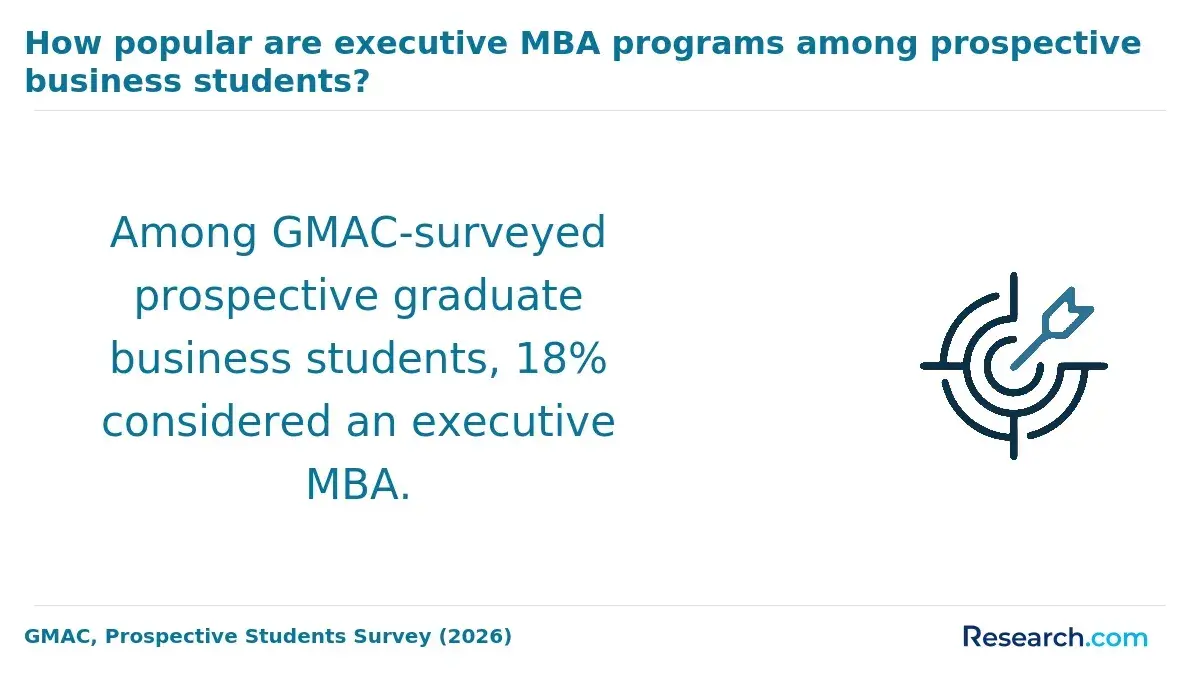
Requirements vary by school. Applicants commonly submit evidence of a bachelor's degree, academic transcripts, a résumé, and a statement of purpose; some programs request recommendations, an interview, or GMAT/GRE scores, while others waive or do not require tests. Prior AI study is not a universal MBA admission requirement.
Veterans should describe military work in terms a civilian admissions committee can assess: team size, budgets or resources managed, process improvements, stakeholder coordination, and measurable results. Applicants concerned about their undergraduate record can review MBA application requirements by program rather than assuming one school's GPA or testing policy applies everywhere. Ask whether the program has foundation coursework if accounting or quantitative work is unfamiliar, and distinguish those recommendations from formal prerequisites.
Completion time depends on required credits, course sequencing, and whether the student enrolls full- or part-time. Schools may price tuition by credit, course, or term, so a quoted rate is not necessarily the total degree cost. Compare published requirements and a personalized cost estimate rather than assuming that online delivery is cheaper.
For a useful affordability comparison, request an itemized estimate covering tuition, mandatory fees, materials and software, any required travel, and the number of terms you expect to enroll. Subtract only benefits or employer assistance that have been confirmed for your circumstances.
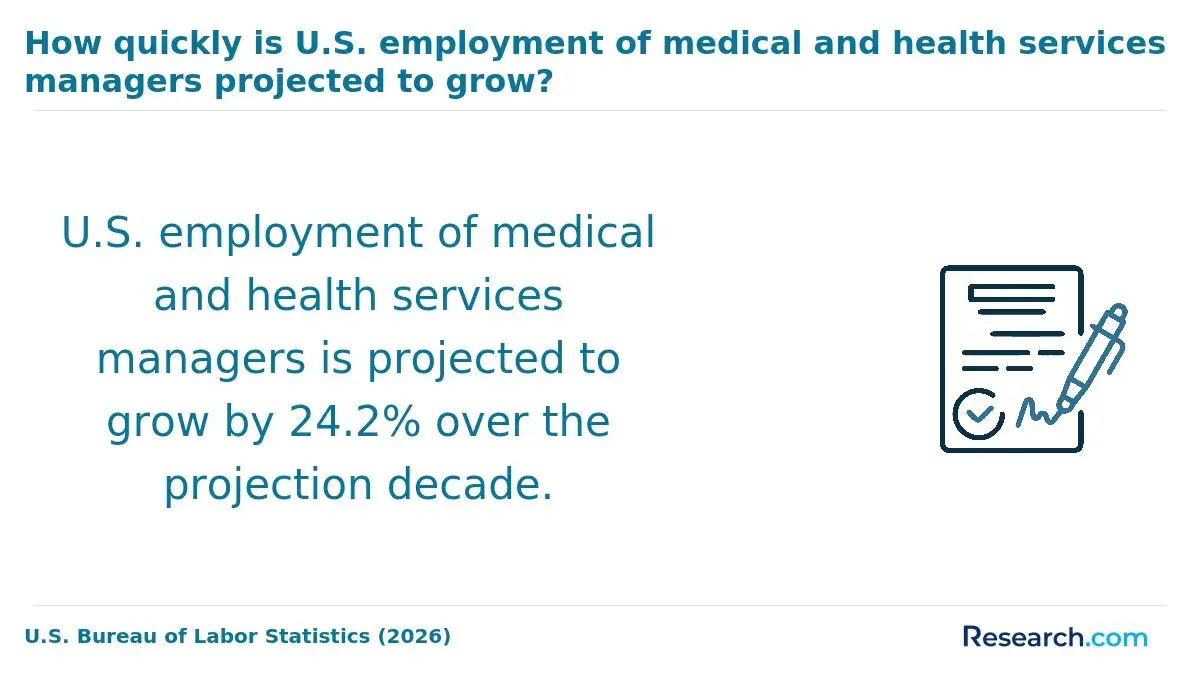
If a veteran's target is specifically healthcare management rather than cross-industry AI adoption, it may be more useful to compare affordable MBA schools programs online in that field than to pay for an AI specialization that does not fit the intended role.
Realistic paths build on both military experience and the veteran's chosen civilian industry. An operations veteran might pursue operations or supply chain management and help assess AI-assisted forecasting. A program leader might target technology implementation, product operations, or business transformation roles. These jobs require different levels of commercial knowledge, technical fluency, and prior functional experience.
The MBA is most useful when it strengthens an existing career story rather than being asked to create one from scratch. Veterans seeking AI product management, for example, may also need evidence that they understand customer needs, software development, and cross-functional delivery. Veterans with a nursing background face a different decision: MBA degree and career options can help clarify whether business leadership or a nursing-focused graduate path better matches their intended responsibilities.
For a personal return-on-investment estimate, use compensation ranges for the exact roles and locations you can credibly pursue, then compare a plausible change in earnings with your net program cost and forgone income. Do not attribute the full difference between your current pay and a management-occupation median to the degree; career stage and prior experience matter substantially.
How Can Veterans Choose an Accredited and Reputable AI MBA Program?
Ask the program to identify its formal AI concentration requirements, sample syllabi, live-session and residency rules, veteran support contacts, and online students' access to career services. Request evidence about employer engagement and outcomes for the relevant student population rather than relying on campus-wide MBA claims. Finally, obtain the school's VA-approved program details and a benefit-specific cost estimate. The best fit is the program whose verified coursework, career access, schedule, and net cost support your civilian goal—not necessarily the one with the strongest AI branding.
Other Things You Should Know About MBA
Possibly, but graduate credit policies vary and MBA programs may limit transfer credit. Ask the school to review your military transcript and published transfer policy before assuming it will shorten the degree.
Yes. Contact the school's disability services office to discuss the documentation and accommodations appropriate to the program's classes, assessments, and technology.
No. A degree does not grant or maintain a clearance. Clearance decisions depend on the relevant government process and role requirements.
Policies differ. Before enrolling, ask how the school handles military leave, missed live sessions, withdrawals, and reentry, and confirm any effect on VA benefit certification with its certifying official.
- Post-9/11 GI Bill (Chapter 33) | Veterans Affairs https://www.va.gov/education/about-gi-bill-benefits/post-9-11/
- What Are Veterans' Job Prospects After They Serve? | Census.gov https://www.census.gov/library/stories/2025/01/veterans-employment-outcomes.html
- Military Training Evaluation Program (MTEP) | dantes.mil https://www.dantes.mil/credit4training/
- Your Transition Assistance Program - DiscoverVA | VA Transition Programs https://discover.va.gov/transition-programs/transition-assistance-program/
- Transition Assistance Program | dol.gov https://www.dol.gov/agencies/vets/programs/tap
- Full-Time MBA and MBAxMS | Costs | Financial Aid at CBS https://business.columbia.edu/financial-aid/costs/full-time
- AI & Data Analytics | Yale School of Management https://som.yale.edu/the-som-experience/interests-and-industries/ai-data-analytics
- From Military to MBA: A Guide for Veterans | utexas.edu https://blogs.mccombs.utexas.edu/mba-insider/from-military-to-mba-a-guide-for-veterans/
- Post-9/11 GI Bill®/Yellow Ribbon | nyu.edu https://www.nyu.edu/students/communities-and-groups/military-students-and-veterans/military-connected-student-benefits/post-9-11-gi-bill-yellow-ribbon-montgomery-gi-bill.html
- US Veterans Pivot Into Business With An Online MBA | UC News https://www.online.uc.edu/blog/us-veterans-pivot-into-business-with-an-online-mba.html