
Is an Online MBA in Artificial Intelligence for Business Worth It for Working Parents?

Co-Founder and Chief Data Scientist
An online MBA may let you build AI-related management skills without leaving your job, but it also claims time your family may already need. For working parents, the decision turns on more than whether classes are online: live meetings, group projects, tuition, and the career move you expect all matter.
This guide explains what an AI-focused MBA teaches, where it may help professionally, and how to test its financial and scheduling fit before you enroll.
Key Things You Should Know
- An online AI-focused MBA is most compelling when you already have relevant work experience, want broader management responsibility, and can apply what you learn to real business decisions.
- Online does not necessarily mean self-paced: confirm live sessions, group-work deadlines, campus visits, and interruption policies before committing family time.
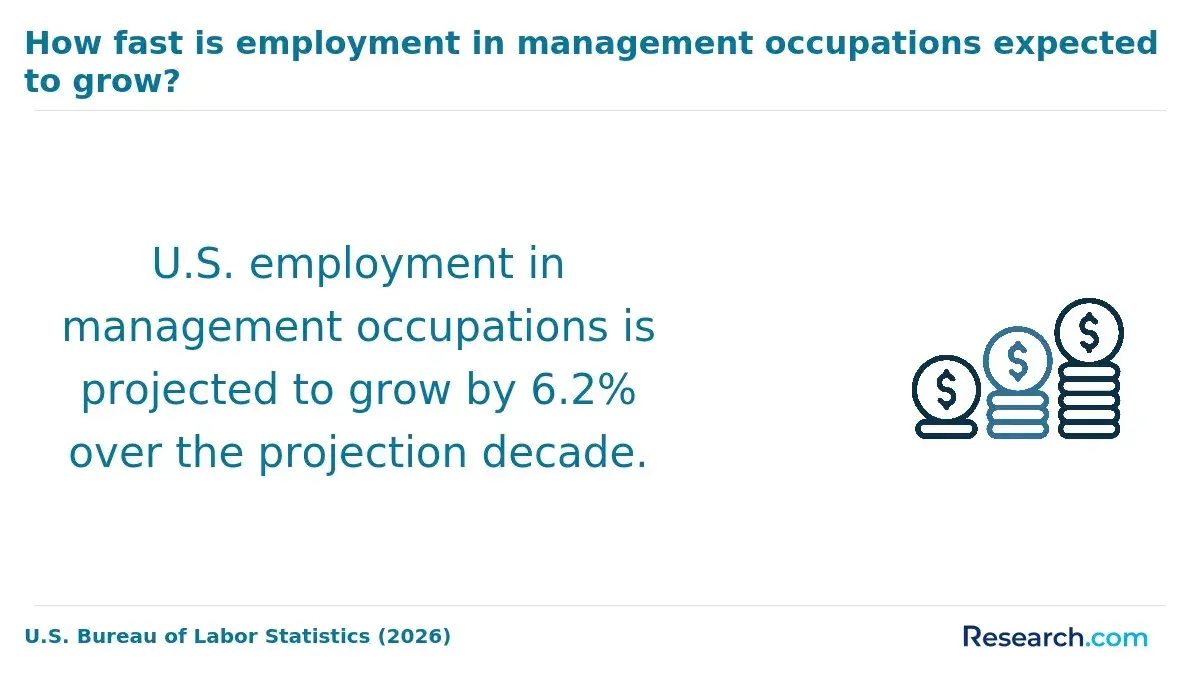
- For context, the U.S. Bureau of Labor Statistics projects about 1.1 million annual openings across management occupations from 2025 to 2035; that figure is not a forecast of jobs for AI MBA graduates.
What is an online MBA in Artificial Intelligence for Business?
It is a Master of Business Administration delivered primarily online that combines a broad management education with coursework on applying artificial intelligence in organizations.
The MBA core typically addresses subjects such as finance, strategy, operations, and leadership. AI-focused study may examine business use cases, adoption, data-informed decisions, and governance.
Program labels matter. One school may offer a formally named Artificial Intelligence for Business concentration; another may offer only an AI elective or a certificate alongside its MBA.
Check the credential named on the school's curriculum page, the courses required to earn it, and whether every course is available online. An AI business MBA generally prepares managers to evaluate and lead AI initiatives, not to perform the advanced model development taught in a technical machine-learning degree.
Is an online AI-focused MBA worth it for working parents?
It can be worth it if the degree supports a plausible next role and fits a sustainable household schedule. Its value is less certain if you need a rapid career change, would take on substantial debt without a clear advancement path, or mainly want hands-on technical AI skills.
Start with the change you are trying to make. A manager whose employer is introducing AI tools may use MBA projects to strengthen a case for leading implementation. Moving into an unfamiliar industry or function is harder: the degree may add business knowledge, but employers can still expect relevant experience.
The table separates likely sources of value from constraints that matter especially to parents:
| Goal | Potential MBA value | Main constraint |
| Advance within your current organization | Broader management skills and projects tied to existing work | Promotion depends on available roles and demonstrated performance |
| Move into AI adoption or product leadership | Practice connecting technology decisions to budgets, customers, and change management | Relevant functional or industry experience may still be required |
| Learn to build AI systems | Business context for technical work | A technical degree, targeted courses, or hands-on experience may be more direct |
For a financial test, compare the full household cost, tuition, fees, financing, childcare, and any travel, with employer funding and a conservative estimate of additional earnings you might realistically obtain. Divide the remaining cost by that estimated annual earnings gain to explore a possible payback period.
If the gain is uncertain, do not treat the calculation as a forecast. Also weigh benefits that are harder to price, such as confidence managing AI vendors or greater access to leadership work.
Before applying, put live classes and group meetings on a shared family calendar and identify who covers caregiving during predictable pressure points.
If a full MBA does not fit, compare shorter courses, employer training, or other MBA program choices: online MBA programs against your actual career goal rather than assuming a larger credential delivers a better return.
What careers can an online MBA in AI for Business lead to?
The most credible paths build on work you already know. An operations manager might oversee AI-assisted process changes; a product manager might evaluate AI features and customer needs; and an analytics or transformation manager might coordinate teams implementing new decision tools.
These roles require judgment about budgets, stakeholders, and measurable results, not simply familiarity with AI terminology.
For a working parent seeking an internal move, a supervised workplace project may be more useful than an unsupported claim of "AI expertise." Ask whether you can demonstrate a business problem, the risks you assessed, the people you brought along, and the outcome.
Career services and alumni contacts may help, but confirm whether online students receive the recruiting access you need. If your aim is specifically customer acquisition or brand leadership, graduate business programs in marketing may be a closer curricular fit than an AI concentration.
An MBA alone does not qualify someone to become a machine-learning engineer, nor does it guarantee a senior management position. Those transitions generally depend on technical preparation or substantial leadership experience, respectively.
Online study can remove a commute and make it easier to remain employed, but its flexibility depends on course design. Recorded lectures may fit around school pickup; required evening discussions, fixed-time exams, and group projects may not. Ask for a sample weekly schedule from the actual AI courses, not just the MBA core.
A campus-based MBA may offer more in-person recruiting and informal contact with classmates, but it can demand more travel or time away from work and home. Neither format automatically has stronger academics or career support.
Compare access to faculty, employer events, applied projects, and career advising for students in each format. For parents, the best option is the one whose required activities, not just advertised delivery mode, fit the support available at home.
Expect the management core to provide the financial, organizational, and strategic context for technology decisions. Depending on the school, AI-related courses may cover identifying suitable use cases, assessing data quality, evaluating vendors, managing implementation, measuring results, and addressing privacy, bias, or accountability. A capstone or consulting project may let students apply those ideas, but it is not universal.
Read course descriptions for the level of technical depth. A course on selecting and governing AI tools is different from one requiring programming or advanced statistics. That distinction matters when deciding whether the workload fits alongside employment and caregiving.
It also matters when choosing a credential: a nurse whose primary aim is combined clinical and business leadership, for example, may want to examine accelerated online MBA options involving nursing rather than assume an AI MBA addresses clinical preparation.
Requirements vary by school. Online MBA applicants commonly need a bachelor's degree and application materials describing their work and goals; schools set their own policies for professional experience, recommendations, interviews, and GMAT or GRE scores. An AI focus does not universally require a computer science degree or coding experience.
Before spending time on an application, check the program's current admissions page for prerequisites, test policies, deadlines, and whether the AI option has separate entry rules.
If your quantitative background is rusty, introductory statistics or accounting study may make coursework easier even when it is not required for admission. Parents should also ask whether admission can be deferred if a change in caregiving makes the intended start term impractical.
There is no single duration or price. Completion depends on required credits, transfer policies, term schedules, course availability, and how many classes you take at once. A faster route may reduce the time until graduation but increase weekly demands at home. An online MBA time-to-degree guide can help frame the comparison; verify the schedule for the particular AI coursework you want.
Compare a school's published tuition basis, per credit, course, term, or full program, before estimating your bill. Add mandatory fees, materials, required travel, childcare needed for scheduled sessions, and possible borrowing costs.
Then check employer tuition assistance, payment timing, and the effect of part-time enrollment on any aid you expect. Ask the school for a written estimate based on your intended pace; a tuition figure alone is not the full household cost.
First, verify that the university holds institutional accreditation recognized by the U.S. Department of Education or the Council for Higher Education Accreditation.
Then check whether the business school has separate programmatic accreditation, such as AACSB, if that distinction matters to you or your employer. Institutional and business-school accreditation are different claims; neither establishes that an AI concentration is offered online.
Use the accreditor's current directory to confirm the institution or business school rather than relying solely on advertising. You can use a comparison of accredited online business schools as a starting point, but confirm accreditation status and the specific MBA curriculum directly before applying.
There is no reliable single salary for graduates of this specialization. Pay depends on occupation, experience, location, employer, and the responsibilities you actually obtain.
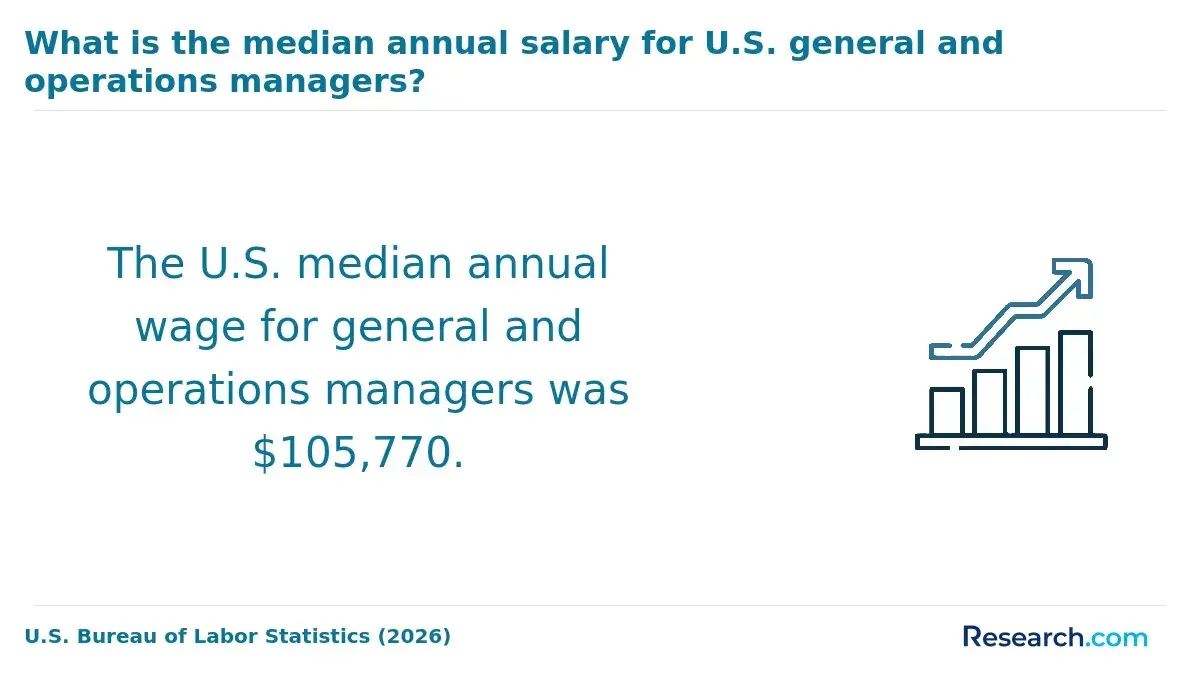
The U.S. Bureau of Labor Statistics reports a $126,520 median annual wage for management occupations in May 2025. That is the midpoint across a broad occupational group, not a starting salary or an earnings estimate for online AI MBA graduates.
Likewise, projected management openings do not measure demand for this particular degree. For a useful personal comparison, look at compensation ranges for the specific roles you could plausibly pursue with your present experience, then ask whether the MBA would materially improve your candidacy.
Do not assign an entire future raise to the degree when performance, job changes, and prior experience may also explain it.
Do AI business careers require certifications or professional licenses?
Business roles involving AI adoption generally do not have a universal professional license or required AI certification. Employers may value evidence that you can manage projects, assess risk, work with data teams, and lead organizational change.
A targeted certification can complement those skills, but it is not interchangeable with an MBA or a substitute for relevant work.
Requirements can differ when an AI project sits within a regulated profession. A business degree does not replace the license needed to practice nursing, accounting, law, or another regulated occupation. Check the requirements of the role you want, not just the industry in which an employer operates.
Other Things You Should Know About MBA
That depends on the university. Ask for its diploma and transcript wording if the distinction matters to you or your employer.
Often only with instructor approval and your employer's permission. Confirm rules on confidential data, intellectual property, and use of workplace AI tools before sharing materials.
Some schools offer nondegree enrollment or stackable coursework. Ask whether a course would count toward the MBA later and whether admission to the degree is separate.
Ask the school about withdrawal deadlines, leave policies, tuition liability, and the timing of the next required course. Those details can substantially change the cost of an interruption.
- Understanding U.S. Accreditation | EducationUSA https://educationusa.state.gov/understanding-us-accreditation
- Types of Financial Aid: Grants, Work-Study, and Loans | studentaid.gov https://studentaid.gov/understand-aid/types
- Accreditation in the U.S. | ed.gov http://www.ed.gov/laws-and-policy/higher-education-laws-and-policy/college-accreditation/accreditation-in-the-us
- Employer-offered educational assistance programs can help pay for college | Internal Revenue Service https://www.irs.gov/newsroom/employer-offered-educational-assistance-programs-can-help-pay-for-college
- Online MBA in Artificial Intelligence | USI https://online.usi.edu/degrees/business/mba/artificial-intelligence/
- How Many Hours of Work Per Online Course Credit | ASU Online https://asuonline.asu.edu/newsroom/online-learning-tips/discover-weekly-number-hours-online-students-study/
- 7 Benefits of Artificial Intelligence (AI) for Business - UC Online https://www.online.uc.edu/blog/business-benefits-artificial-intelligence-ai.html
- How Do Asynchronous Classes Work? | Hopkins EP Online https://ep.jhu.edu/news/how-do-asynchronous-classes-work/
- Online MBA (OMBA) Tuition & Payment Options | FAU Business https://business.fau.edu/masters-phd/mba-program/online-mba/methods-of-tuition-payment/
- Synchronous vs. Asynchronous Learning | Saint Leo University https://www.saintleo.edu/about/stories/blog/synchronous-vs-asynchronous-learning-for-course-delivery


