Online MBA in Nonprofit Management: Admissions Guide for Military Veterans

Co-Founder and Chief Data Scientist
Military leadership can be valuable in nonprofit work, but an online MBA application must show how that experience translates to managing people, budgets, and a civilian mission. For veterans weighing a career transition, the admissions decision also involves program fit, education benefits, and whether an MBA offers enough nonprofit-specific training.
This guide explains what schools commonly request, how to present military experience, and what to verify before applying - so you can choose a program that supports your goals rather than simply earning another credential.
Key Things You Should Know
- Most online MBA applicants need a bachelor's degree and application materials; work-experience, GPA, and GMAT or GRE policies vary by school.
- Present military leadership through measurable civilian-facing examples, and check whether the curriculum teaches nonprofit finance, fundraising, and board governance - not just general management.
- Post-9/11 GI Bill coverage depends on individual eligibility and whether the specific program is VA-approved; compare your remaining cost and online housing allowance before enrolling.
What is an online MBA in nonprofit management for military veterans?
It is an MBA delivered primarily online that combines general business education with nonprofit-focused study. The MBA core typically covers accounting, finance, operations, strategy, and organizational leadership. Nonprofit coursework may address fundraising, mission-based budgeting, governance, or measuring community impact. Schools may offer this study as a formal concentration, a certificate, or a few electives; those are not equivalent, so inspect the degree requirements and transcript designation.
For veterans, the potential value lies in translating experience with teams, logistics, and constrained resources into civilian management practice. The main knowledge gap may be less about leading people than about donor relationships, nonprofit boards, restricted funding, and operating without a commercial profit measure. An MBA can help with broad management roles; a specialized nonprofit master's degree may fit better if your goal is deep training in fundraising, policy, or nonprofit administration.
Admission accessibility is only one screening factor. Lists of online MBA programs with accessible admissions acceptance rates can help identify schools to investigate, but an institution-wide or historical acceptance rate does not establish your likelihood of admission to a particular online MBA.
Are online nonprofit MBA programs accredited and recognized?
Check institutional accreditation first. It establishes that the university meets recognized academic standards and matters for federal student aid and degree recognition. Then check whether the business school or MBA has additional business accreditation, such as AACSB, ACBSP, or IACBE. Specialized business accreditation can inform a comparison, but it is not the same as institutional accreditation and is not universally required for nonprofit jobs.
Verify the institution and accreditor through the U.S. Department of Education's accreditation database, then confirm the MBA - not merely an unrelated campus offering - is the program you intend to enter. Ask whether the nonprofit concentration appears on the transcript and whether online students receive the same degree designation as campus students. Accreditation alone does not establish VA benefit eligibility; confirm approval for the specific program separately.
How can veterans use GI Bill benefits for an online MBA?
Veterans who qualify for the Post-9/11 GI Bill may be able to use remaining entitlement toward an approved online MBA. Eligibility, benefit level, remaining months, and payment amounts are individual - not automatic consequences of veteran status. Obtain or review your VA Certificate of Eligibility, confirm the exact degree program with the school's VA certifying official, and compare the school's certified charges with your expected VA payment before committing.
Online delivery matters financially. The Post-9/11 GI Bill housing allowance for exclusively online study is subject to a different maximum than the allowance associated with eligible in-person study; enrollment intensity and other eligibility rules also matter. Do not assume that one campus visit changes the VA's classification of every course. Ask the certifying official how your planned schedule will be reported. At private schools, or when charges exceed applicable benefit limits, ask whether the institution participates in Yellow Ribbon for your program and whether you qualify.
Also check other funding before using entitlement: employer assistance, institutional veteran scholarships, and, when applicable, Veteran Readiness and Employment benefits. These programs have different eligibility and approval rules. A school's veteran-support office can help with enrollment logistics, but the VA determines your benefits.
Most programs expect a completed bachelor's degree and transcripts, and many request a résumé, statement of purpose, or recommendations. Schools set their own policies for minimum GPA, professional experience, interviews, prerequisites, and GMAT or GRE scores. A test-optional policy at one university says nothing about another's requirements; likewise, military service does not automatically waive a prerequisite.
Veterans can strengthen an application by explaining their work in terms a civilian admissions reader can assess. "Managed a unit" is less informative than describing the size of the team, resources controlled, decisions made, and results achieved - without disclosing sensitive information. Connect those examples to a specific nonprofit goal, such as managing service delivery or improving operations at a veterans' organization. If accounting or quantitative coursework is unfamiliar, ask whether the school offers foundation modules and whether they add cost or time.
Use this sequence to prepare applications without mistaking general advice for a school's official requirements:
- Check each program's published degree, GPA, experience, testing, deadline, and prerequisite policies.
- Translate military responsibilities into measurable leadership, budgeting, logistics, and stakeholder examples on your résumé.
- Explain why nonprofit work - and this program's actual curriculum - fits your next role.
- Request recommendations from people who can describe your judgment and leadership in concrete terms.
- Confirm the application deadline, benefit certification process, and any deposit before submitting.
If your academic record is a concern, compare stated policies and opportunities to explain later professional growth. A guide to online MBA programs with accessible admissions can help build a shortlist, but only the program can tell you how it evaluates your record.
An online MBA may let a veteran keep working or avoid relocating during a transition, but "online" does not necessarily mean self-paced. Live meetings, group projects, proctored exams, and residencies can still constrain a schedule. Campus study may offer easier access to local nonprofit events and face-to-face recruiting, though online programs can also provide substantial networking when they deliberately connect students with organizations and alumni.
Compare the formats against the constraints that will affect completion:
| Decision factor | Online MBA | Campus-based program |
| Schedule | May reduce commuting; live sessions and team work can still be required | Usually requires regular attendance at a set location |
| Nonprofit connections | Depends on virtual projects, alumni access, and regional reach | May simplify participation in nearby employer and community events |
| VA housing allowance | Exclusively online study follows online-specific rules | Eligible in-person enrollment may follow different rules |
Ask for a sample course schedule and the online student's access to career services before applying. If the next available start matters because of separation or employment timing, online MBA programs with rolling admission may be worth examining; rolling admission does not guarantee an immediate start, a place in required courses, or a particular benefit payment.
Expect a management core before - or alongside - nonprofit electives. Managerial accounting and finance teach students to interpret budgets and allocate resources; strategy and operations address organizational priorities and service delivery; organizational behavior examines teams and change. Those subjects apply across sectors, but nonprofit practice adds different funding and accountability constraints.
Look for coursework in nonprofit financial management, fundraising or development, board governance, ethics, grant management, and impact measurement if those skills match your target role. A veteran aiming to run programs may benefit particularly from evaluation and operations projects; someone pursuing development work needs substantial exposure to donors and fundraising, not merely an MBA marketing course. Review syllabi or course descriptions and ask whether a capstone can involve a nonprofit partner. No single course list defines every nonprofit MBA.
Completion time depends on required credits, course sequencing, and whether you study full time or part time. A concentration may add courses, fit within existing elective space, or be unavailable in a given online format. Ask for a term-by-term plan that accounts for your work schedule and remaining education-benefit entitlement rather than relying on an advertised fastest completion time.
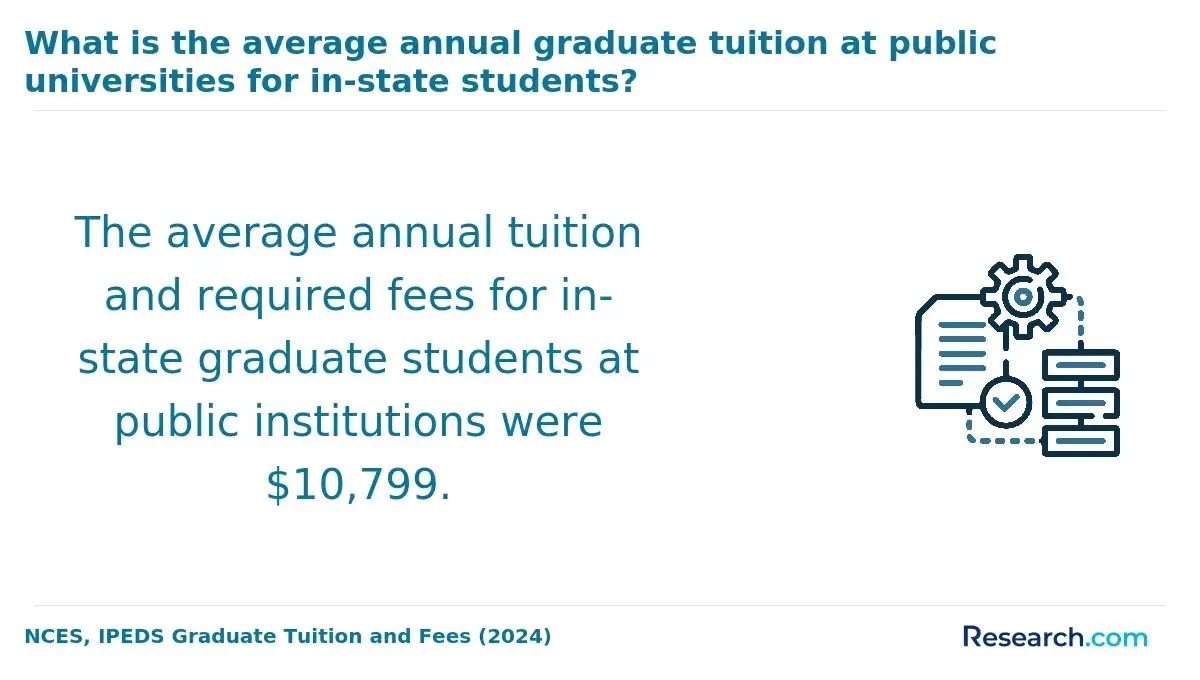
There is no single reliable price for this type of MBA. Compare the full amount you could owe, not just a tuition headline: required credits multiplied by the applicable per-credit rate, mandatory fees, books and technology, and any travel for residencies. Then subtract only funding you are actually eligible to receive. For an initial tuition comparison, MBA program prices and tuition options can surface lower-priced possibilities; verify current charges and nonprofit coursework directly with each school.
A lower-cost general MBA may be sensible if you can gain nonprofit experience through work or volunteering. Paying more for a concentration makes a stronger case when its courses, applied projects, and connections address a specific gap you cannot readily fill elsewhere.
Roles to investigate include program manager, operations manager, development operations manager, and, with relevant fundraising experience, development manager. Veterans with substantial leadership experience may also pursue broader organizational management positions. Employers will assess sector knowledge and demonstrated results alongside the degree; an MBA alone does not qualify someone to direct a nonprofit or raise major gifts.
Match your service record to the work. Logistics and resource planning can support nonprofit operations; training and team leadership can support program delivery. To cross the remaining gap, seek a project, volunteer assignment, or board-approved committee role that exposes you to budgets, community partners, and impact reporting. Be realistic about compensation and organizational size: a small nonprofit may combine several functions in one job.
Healthcare nonprofits offer another possible route for veterans with relevant experience, but clinical leadership roles can require professional licensure. For a licensed nurse comparing education paths, online study options for online MSN and MBA dual-degree programs may be relevant; that route is not necessary for general nonprofit management.
Pay varies sharply by occupation, employer size, location, and experience; there is no dependable single salary for "nonprofit MBA graduates." As broad context, the U.S. Bureau of Labor Statistics reports a $126,520 median annual wage for management occupations in May 2025. That figure covers managers across industries, not nonprofit workers or MBA holders specifically, so it should not serve as your expected offer.
BLS projects overall management employment to grow faster than the average for all occupations from 2025 to 2035, but that broad outlook does not predict hiring at a particular nonprofit. For a useful personal comparison, examine job postings in your target location, distinguish program and development roles from executive positions, and weigh any likely pay change against tuition not covered by benefits and the experience you still need.
Which certifications and professional standards benefit nonprofit managers?
Certifications can complement an MBA when they match the job you want; none is a universal credential for nonprofit management. The Certified Fund Raising Executive credential is relevant to experienced fundraising professionals, while project-management training may help veterans translating operational experience into program delivery. Check each credential's current experience, education, and renewal requirements before investing in it.
Regardless of certification, learn the standards that shape nonprofit decisions: board oversight, conflict-of-interest practices, restricted-gift stewardship, financial reporting, and responsible impact measurement. An MBA can build management judgment, but it does not replace accounting expertise, legal advice, fundraising experience, or the trust earned by working with a community.
Other Things You Should Know About MBA
Potentially, if you qualify and the program is approved. Active-duty status can affect payments, including housing allowance eligibility, so confirm your circumstances with the VA before enrolling.
Not necessarily. Graduate transfer-credit and prior-learning policies vary, and many MBA cores have limited waiver options. Ask the school to evaluate your records before assuming any time or cost savings.
You can contact the university's disability-services office to discuss accommodations without treating a diagnosis as an admissions qualification. Ask about the process and documentation needed for online coursework.
Possibly, if the organization welcomes your contribution and you understand its fiduciary duties and time commitment. A board seat is a governance responsibility, not simply a résumé-building opportunity.
- Post-9/11 GI Bill (Chapter 33) | Veterans Affairs https://www.va.gov/education/about-gi-bill-benefits/post-9-11/
- Admissions Requirements | MBA Degree Online Ohio | UNOH https://onlinemba.unoh.edu/admissions/
- GMAT and GRE Waiver Policies | JHU Carey Business School https://carey.jhu.edu/admissions/gmat-gre-waiver-policies
- 8 Reasons To Pursue a Master's in Nonprofit Management Online | Northeastern University Graduate Programs https://graduate.northeastern.edu/knowledge-hub/reasons-to-pursue-nonprofit-management-masters/
- Online MBA Degrees - North Park University - Illinois https://degree.northpark.edu/online-programs/business/mba/
- GMAT/GRE Waiver Policy | UNC Online MBA https://onlinemba.unc.edu/admissions/application-requirements/gmat-waiver-policy/
- MBA - NonProfit Management Concentration | Grace College https://www.grace.edu/programs/master-of-business-administration-mba-nonprofit-management-concentration/
- Online MBA in Nonprofit Management | 12-18 Months | murraystate https://onlinedegrees.murraystate.edu/programs/business/mba/nonprofit-leadership/