
Online MBA in Real Estate: curriculum and workload for nonbusiness bachelor's graduates

Co-Founder and Chief Data Scientist
An online real estate MBA can connect your existing expertise to property investment and management, but it also asks you to learn graduate-level business fundamentals alongside real estate coursework. That matters if your bachelor's degree is in architecture, engineering, the humanities, or another nonbusiness field - and especially if you plan to keep working while studying. This guide explains what you are likely to study, where the workload may be steepest, and how to compare programs and alternatives before committing your time and money.
Key Things You Should Know
- A nonbusiness bachelor's degree does not automatically bar admission; preparation needs depend on your coursework, quantitative skills, experience, and each school's policies.
- Expect an MBA core in accounting, finance, and management plus real estate courses such as valuation, investment analysis, and development. Check the actual course sequence and live-session requirements before judging workload.
- An MBA can support a move toward property-related management, but it does not replace deal experience or a required license. The $126,520 median wage for US management occupations in May 2025 is not a forecast of real estate MBA earnings.
What is an online MBA in real estate?
An online MBA in real estate is a graduate business degree with property-focused study. Its MBA core teaches decisions that apply across organizations; its real estate concentration, track, or electives apply those skills to property markets, investments, development, and operations. The label matters: a school offering one property elective has not necessarily created a formal real estate concentration.
The degree is generally aimed at managing businesses, projects, capital, and people rather than training students to perform every technical task in an acquisition or construction project. For example, marketing a development draws on MBA marketing concepts, but it is different from the broader brand and customer strategy emphasized in MBA programs for marketing managers. Compare course descriptions against the work you actually want to do.
Is an online MBA in real estate worth it for nonbusiness graduates?
It may be worthwhile if you already work near property decisions - perhaps in architecture, construction, facilities, lending, or local development - and need stronger financial and managerial judgment to take on broader responsibility. Your prior discipline can be an asset: an architect may understand building constraints, while an engineer may recognize project risk. Neither background automatically supplies the accounting, capital-market, or deal-analysis skills employers may expect.
The case is less certain if you are trying to enter real estate with no relevant experience. Ask whether the program offers property-industry projects, accessible career services, and introductions to employers - not just online lectures. Compare the full cost and time commitment with the likely next role, rather than assuming that any post-MBA salary difference was caused by the degree.
If your primary goal remains leadership in your original profession, a different credential may fit better. A nurse considering property management, for example, should distinguish that transition from advancement in healthcare; top online MSN and MBA dual-degree programs address a different combination of clinical and business goals. For someone seeking only valuation skills, targeted courses or supervised deal experience may be more direct than a full MBA.
What does an online MBA in real estate curriculum include?
There is no universal course list. The most useful comparison is between the business core you must complete, the depth of the real estate coursework, and the work you will produce. The table shows common subject areas and why they can feel different to a nonbusiness graduate.
| Curriculum layer | Possible subjects | Likely challenge or value |
| MBA core | Managerial accounting, finance, economics, analytics, strategy, and organizational behavior | Builds a shared business vocabulary; accounting and finance may require the most preparation if you have not studied them before. |
| Real estate specialization | Property valuation, investment analysis, real estate finance, development, and market analysis | Applies business tools to cash flows, financing choices, property risk, and project feasibility. |
| Electives or applied work | Negotiation, urban development, a case study, or a capstone project, if offered | Can help you test career interests and demonstrate your thinking, but availability and industry access vary. |
Expect management-level analysis, not automatic preparation to practice as an appraiser, attorney, architect, or licensed broker. A finance assignment might ask you to compare a property's projected cash flows and financing scenarios; it will not necessarily teach the full legal, engineering, and transaction process behind a live deal.
Workload depends on sequencing as much as subject matter. Taking introductory accounting and property investment analysis together may be harder than taking either separately. Ask for a sample part-time course sequence, assessment examples, group-project expectations, and any foundation modules. If spreadsheets or financial modeling are unfamiliar, practice interpreting financial statements and building cash-flow models before the first finance-heavy term.
Yes, many MBA admissions pathways consider applicants from varied undergraduate majors, but eligibility is set by each school. A nonbusiness degree is not the same as a lack of business readiness: a mathematics graduate may be comfortable with modeling but new to accounting, while a construction professional may know projects well but need practice with corporate finance.
Separate formal requirements from helpful preparation. A school may specify a bachelor's degree, application materials, work experience, or foundation coursework; another may teach business fundamentals within the MBA. Do not assume a prerequisite, test waiver, or minimum experience level without checking the program's current admissions policy. If you need to compare possible entry routes, an online MBA programs with accessible admissions degree guide can be a starting point, not a substitute for confirming each real estate option's requirements.
Before applying, request a transcript review and ask which accounting, economics, statistics, or finance topics the first term assumes you already know. Also ask whether any foundation courses carry extra tuition or extend the schedule. In your application, connect your disciplinary knowledge to a specific property-related decision you hope to learn to make.
Online delivery can let you remain employed and apply coursework to current projects. It does not mean every assignment is self-paced. Live classes, fixed deadlines, team meetings, exams, and occasional travel can create substantial scheduling constraints. Campus programs may make face-to-face collaboration and local employer events easier, but typically demand more geographic and scheduling flexibility.
For real estate, access to a relevant market may matter more than the delivery label. A campus program near your target employers can make local networking easier; an online program may be equally useful if it offers meaningful industry projects, reachable faculty, and career support available to remote students. Ask whether online students can join employer events and whether group projects require meetings across time zones.
Compare a normal working week, not an ideal one: obtain the live-session timetable, project deadlines, residency rules, and leave policy. Then test that schedule against your job and other commitments before enrolling.
Completion time depends on required credits, term length, course availability, any foundation work, and whether you study part time or at an accelerated pace. A shorter advertised minimum may assume a course load that is difficult to combine with full-time work - particularly while learning accounting or financial modeling for the first time. Request a personalized sequence showing when every required real estate course is actually offered.
For cost, compare total required credits multiplied by the applicable tuition rate, then add mandatory fees, foundation courses, materials, software, and any required travel. Ask whether tuition is charged per credit, course, or term and whether the quoted rate applies to online students in your state. Published tuition alone is not the total cost of attendance.
Employer assistance can lower your personal cost, but check annual limits, grade requirements, and repayment conditions. If borrowing, include financing costs in your decision. A practical comparison is the total amount you would pay, the work time you would give up, and the specific advancement opportunity you could reasonably pursue - not a generic claim about MBA payback.
Check two distinct questions. First, verify that the institution holds recognized institutional accreditation through its stated accreditor and the US Department of Education's accreditation records. Second, check whether the business school holds specialized business accreditation, such as AACSB accreditation, if that distinction matters to you. Institutional accreditation and business-school accreditation are not interchangeable.
Confirm that the accreditation applies to the institution or business school awarding the online MBA, rather than assuming that a marketing badge covers a particular concentration. For a comparison of MBA accreditation options in the US, use the school and accreditor's current records as the final check. Accreditation establishes an important quality baseline; it does not verify the depth of real estate coursework or guarantee employer connections.
Likely pathways depend heavily on what you have already done. A construction professional might seek development-project or property-operations responsibility; someone in lending might move toward real estate finance or investment analysis. Those moves still require evidence that you can evaluate deals, coordinate stakeholders, or manage assets. Senior acquisitions and development roles commonly call for transaction experience that coursework alone cannot supply.
For a more substantial career change, look for a credible entry route: relevant projects, a role adjacent to your current expertise, an internship you can actually undertake, or an employer willing to expand your responsibilities. An unrelated MBA specialization is not a shortcut into a new industry. A healthcare professional weighing property work against advancement in their existing field, for example, can compare the transition with career-focused online MBA choices tied to nursing and healthcare leadership.
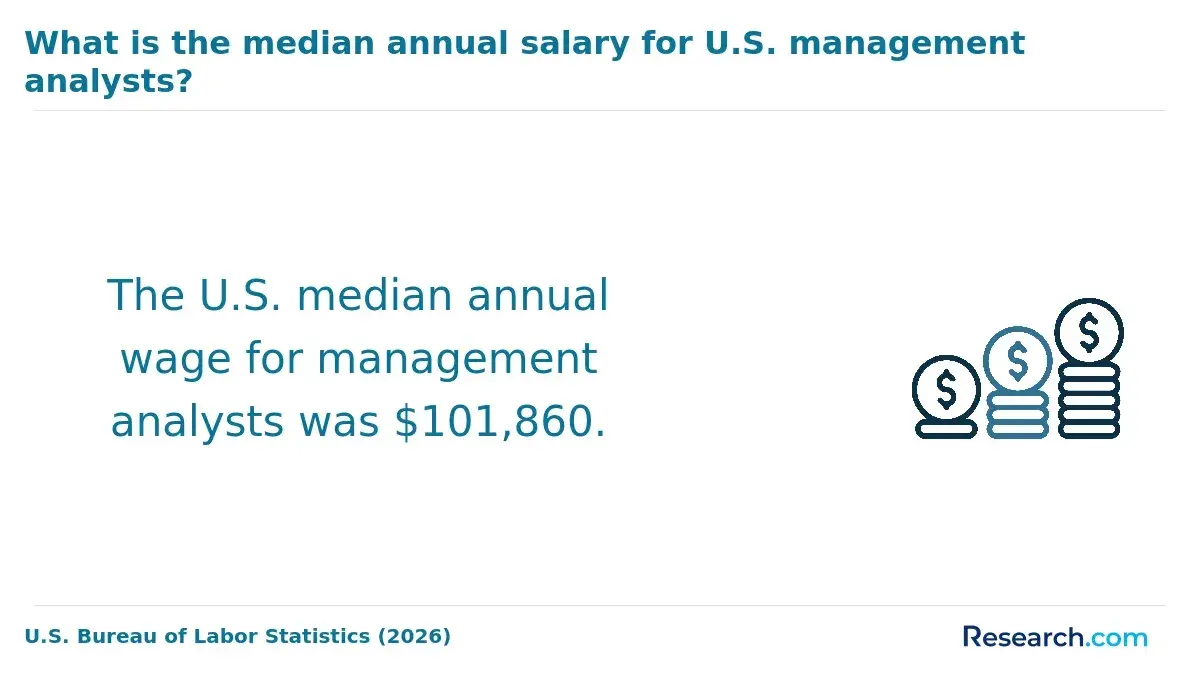
There is no single dependable salary for "real estate MBA graduates." Compensation differs by occupation, location, experience, employer, and whether pay includes commissions or performance incentives. The US Bureau of Labor Statistics reports a $126,520 median annual wage for management occupations in May 2025. That broad occupational figure covers many industries and workers without MBAs; it is not an expected salary for a new graduate or a real estate career changer.
For a useful personal estimate, compare current local postings for your target job with postings for the role you could plausibly reach after the degree. Note required deal experience, licenses, and compensation structure. If a projected salary increase depends on landing a role for which you currently lack experience, treat it as uncertain when evaluating tuition and debt.
Do real estate MBA graduates need licenses or certifications?
The MBA itself does not generally grant authority to perform regulated real estate work. If you plan to broker property transactions, perform licensed appraisal work, or practice another regulated profession, check the relevant state board's education, examination, experience, and renewal rules. Requirements vary by occupation and state.
Certifications in areas such as property management or investment analysis may help demonstrate focused knowledge, but their value depends on the employer and role. Decide on a credential after identifying your target job: a development manager, broker, asset manager, and appraiser do not share one universal licensing path.
Other Things You Should Know About MBA
Some schools allow nondegree enrollment or offer graduate certificates. Ask whether the course is open to you, whether admission is required, and whether its credits would later count toward that school's MBA.
Not necessarily. Schools may record a concentration on the transcript, diploma, both, or neither. Confirm how the credential is officially designated before relying on the wording for your résumé.
Possibly, with your employer's permission and the instructor's approval. Check confidentiality rules before sharing rent rolls, financing terms, tenant details, or other nonpublic information.
Coursework can still be useful, but local relationships may need separate attention. Ask where alumni work, whether projects use markets relevant to you, and which career events remote students can attend.
- Real Estate MBA Concentration - myRBS https://myrbs.business.rutgers.edu/mba/real-estate
- Are accelerated online courses right for me? | Southwestern College https://ps.sckans.edu/news/view/110/
- Test Waiver & Quantitative Readiness Course | umich.edu https://michiganross.umich.edu/graduate/online-mba/admissions/application-requirements/test-alternatives
- Get Ready for Business School by Brushing Up on Quantitative Skills | Syracuse University https://onlinegrad.syracuse.edu/blog/get-ready-business-school-brushing-quantitative-skills/
- Real Estate Finance: Investment, Risk, and Financial Analysis | William & Mary Mason https://online.mason.wm.edu/blog/real-estate-finance-investment-risk-and-financial-analysis
- How the Purdue Online MBA Program Works https://business.purdue.edu/graduate-programs/blog/posts/how-purdue-online-mba-program-works.php
- Choosing the Right Online MBA Program | Gies College of Business https://giesbusiness.illinois.edu/news/2025/10/03/choosing-the-right-online-mba-program--a-comprehensive-guide-to-asynchronous--synchronous--and-hybrid-programs
- Program: Business Administration, M.B.A. - University Catalog https://ecatalog.calstatela.edu/preview_program.php
- What to Expect in Your First Semester of an MBA Program | Carson-Newman University https://www.cn.edu/cps-blog/what-to-expect-in-mba-programs/
- Time on Task in Online Courses | RIT https://www.rit.edu/teaching/time-task-online-courses


