Is an Online MBA in Project Management Worth It for Public Sector Professionals?

Co-Founder and Chief Data Scientist
If you manage public programs, contracts, or capital projects, an online MBA in project management may help you move toward broader leadership responsibilities. But government pay structures and hiring rules can make its financial return less predictable than private-sector MBA marketing suggests.
This guide examines where the degree adds value, what it cannot replace, and how to weigh cost, curriculum, credentials, and employer support before enrolling.
Key Things You Should Know
- An online project management MBA is most compelling when you need both project-delivery skills and broader responsibility for budgets, operations, or people, not simply a project credential.
- The Bureau of Labor Statistics reports a $126,520 median annual wage for all management occupations in May 2025. That figure is not a salary estimate for government project managers or MBA graduates.
- Before enrolling, check your agency's promotion rules and education benefits. A degree may strengthen your candidacy without changing your pay grade or replacing required experience.
Is an online MBA in project management worth it for public sector professionals?
The MBA is a broad management degree; a project management concentration adds focused coursework within it. For a public employee moving from delivering individual projects to overseeing portfolios, budgets, vendors, or teams, that combination can be useful. It may also support a move into consulting or contracting, though those employers will still assess relevant experience.
The return is less certain if your agency awards advancement mainly through competitive vacancies, service requirements, or demonstrated technical expertise. Even when a degree helps you qualify for consideration, it does not itself create a promotion or raise. Its nonfinancial value, stronger financial judgment, leadership practice, and a network beyond your agency, may still matter.
Compare the degree with the narrower route that matches your goal. A PMP certification may be more direct for experienced project practitioners; a public administration degree may fit policy, governance, and public finance roles better. Targeted procurement training or graduate courses can address a specific gap without the commitment of an MBA.
To test affordability, calculate net education cost after confirmed employer assistance, then divide it by a conservative estimate of additional annual earnings from a realistic next role. Treat the result as an illustrative payback period, not a forecast.
Taxes, financing costs, lost personal time, and the possibility of no promotion can change it substantially. If you cannot identify a plausible next role, the financial case is not yet established.
What careers can an online MBA in project management lead to in government?
The most realistic path builds on the projects and institutional knowledge you already have. A program analyst coordinating initiatives might pursue project or program management; an experienced project manager might seek portfolio, operations, or departmental leadership. Public agencies may also employ professionals who oversee infrastructure delivery, IT modernization, procurement-related initiatives, or organizational change.
These roles differ. Project managers coordinate scope, schedules, risks, and stakeholders. Program and portfolio leaders weigh priorities across initiatives and allocate resources. Operations leaders also manage ongoing services and people.
An MBA can develop the management perspective for those transitions, but hiring may still require agency-specific knowledge, supervisory experience, contracting expertise, or technical credentials.
If your work is in a public hospital or health agency, sector knowledge deserves particular weight: healthcare-focused MBA program options may be more relevant than a general project management concentration when your goal is health-system leadership. Professionals with limited experience should also compare online MBA programs without work experience requirements carefully; admission does not mean employers will waive experience for management jobs.
How much do public sector project managers with an MBA earn?
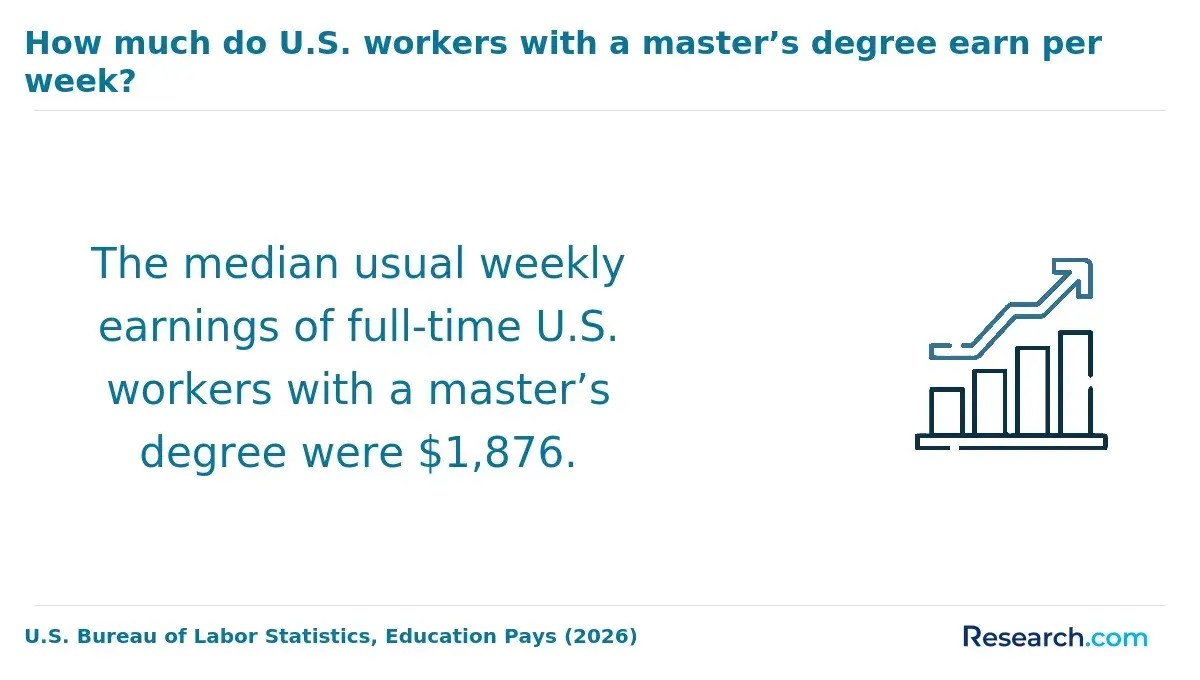
There is no single reliable salary figure for public sector project managers with an MBA. Employer type, location, pay grade, supervisory duties, and prior experience all affect compensation, while published occupational data generally do not isolate workers by both sector and degree.
For context, the Bureau of Labor Statistics reports that the median annual wage across all management occupations was $126,520 in May 2025. That broad group includes many roles outside government and is not a benchmark for what a project management MBA will pay. Project management specialists are also reported as a distinct occupation, so the management-wide median should not be relabeled as their salary.
For a useful comparison, find the posted salary range or pay schedule for the specific role you could reasonably pursue after graduation. Compare it with your current compensation and check whether the vacancy requires a degree, accepts one in place of experience, or evaluates it only as an additional qualification. Include benefits and pension effects when comparing a public role with a contractor or private-sector offer.
The MBA core typically covers managerial accounting and finance, operations, strategy, organizational behavior, and leadership. A formal project management concentration may add courses on planning, risk, resource allocation, stakeholder communication, and project execution. Requirements vary: one relevant elective does not make a degree a designated concentration.
For government work, examine how assignments handle public accountability. A useful program should give you opportunities to apply management concepts to constrained budgets, procurement rules, multiple stakeholders, and outcomes that are not measured solely by profit.
Ask whether a capstone can address an agency problem without disclosing protected information, and whether instructors recognize the limits of transferring private-sector practices directly to government.
MBA project coursework teaches management applications; it is not a substitute for detailed agency procurement instruction, technical training, or certification eligibility. If your target is healthcare administration within a public institution, compare the project courses with online MBA programs for healthcare professionals rather than assuming either concentration covers both fields in depth.
Completion time depends on required credits, prior coursework, course sequencing, and whether you study part time while working. An accelerated calendar may shorten the time to graduation but increase the pressure of group work and deadlines during budget season or a major project launch. Ask schools for a term-by-term plan based on the pace you can sustain.
Published tuition is only one part of the investment. The comparison below identifies costs that can change the decision even when two programs advertise similar rates.
| Cost or time factor | What to verify | Why it matters |
| Tuition and mandatory fees | Required credits, per-credit or total price, and program fees | Determines the amount owed before optional expenses |
| Online participation | Live meetings, residencies, travel, and required software | Can add expense or conflict with agency duties |
| Employer assistance | Annual limits, approval rules, eligible schools, and repayment terms | Can lower net cost but may restrict timing or job changes |
| Enrollment pace | Course availability, minimum enrollment, and maximum completion period | Affects how quickly you finish and when costs come due |
Avoid treating an employer benefit as confirmed funding until your agency approves the particular program and courses. If you borrow, include interest in your personal cost comparison; if you pay as you go, consider the effect on household savings and flexibility.
Requirements are set by each school, not by the specialization. Applicants commonly submit a bachelor's-degree record, transcripts, a résumé, and written application materials; policies on work experience, recommendations, interviews, and GMAT or GRE scores vary. A nonbusiness bachelor's degree is not necessarily a barrier, though a school may offer or require preparation in accounting or quantitative subjects.
If your academic record is a concern, review online MBA programs for low-GPA applicants alongside each school's current admissions policy. You can strengthen an application by explaining measurable public-service responsibilities, such as managing a budget, coordinating vendors, or leading a cross-agency initiative, without presenting that experience as a substitute for a stated requirement.
Ask admissions staff whether the project management concentration is available in the online format and whether its courses have separate prerequisites. An offer of admission to a general MBA does not, by itself, confirm access to every concentration.
Online study can let a public employee remain in the same job and apply lessons immediately. Campus study may make in-person group work and local recruiting easier to access. Neither format guarantees better instruction or stronger career outcomes; course design and the opportunities actually available to students matter more than the label.
The practical distinction is scheduling. Confirm whether online classes are asynchronous, require live evening sessions, involve group meetings, or include campus visits. For campus programs, account for commuting and time away from work. In either format, ask career services whether part-time students pursuing government or contractor roles can use relevant advising and employer events.
When reviewing online MBA programs, compare the specific project management coursework and participation rules, not just the convenience of attending remotely. An online program with fixed live sessions may be a poor fit for an employee whose emergency-response or field schedule changes often.
First, confirm that the institution holds recognized institutional accreditation through the U.S. Department of Education's accreditation database or the accreditor itself.
Then check whether the business school separately holds specialized accreditation, such as AACSB, ACBSP, or IACBE. Institutional accreditation and business-school accreditation answer different questions; neither confirms that a particular concentration is offered online.
Review the current catalog for the degree title, required project courses, faculty, and graduation requirements. Ask for evidence relevant to your goal: examples of public-sector coursework, access to career services, and policies for part-time online students. Published outcomes can help, but check whether they describe online students, public-sector employees, or a much broader MBA population.
Admissions accessibility is one consideration, not a quality measure. If you use program selection for online MBA programs with accessible admissions as a starting point, independently confirm recognition, curriculum, total cost, and employer acceptance before applying.
There is no general government-issued license required simply to work as a project manager. A particular position may nevertheless specify a credential, security clearance, technical qualification, or professional license tied to the underlying work. Read the actual vacancy announcement rather than assuming a universal rule.
The Project Management Professional (PMP) credential is a professional certification, not a license or an MBA degree. Its eligibility rules include project leadership experience and project management education or training; applicants should verify current requirements directly with the Project Management Institute. An MBA concentration does not automatically confer PMP status or establish that every course counts toward certification requirements.
Choose based on the gap you need to close. If you already lead projects and target postings emphasize PMP, certification may be the more direct next step. If you are moving toward enterprise budgets, organizational strategy, and people leadership, the MBA may offer broader preparation. Some professionals benefit from both, but they need not pursue both at once.
How strong is the job outlook for project management specialists?
Project management skills apply across government activities, from infrastructure and IT to service delivery, but national labor projections cannot predict openings in a particular agency. Budgets, appropriations, contracting decisions, and retirements can shape local hiring more directly than a broad occupational trend.
The Bureau of Labor Statistics projects overall employment in management occupations to grow faster than the average for all occupations from 2025 to 2035. That is context for management careers, not a project-management-specialist growth rate or a forecast of government hiring.
For a career decision, examine recent postings in your target agency or location and note how often they request project experience, supervisory responsibility, or a specific credential. Those requirements provide a clearer test of whether an MBA addresses a real opportunity.
Other Things You Should Know About MBA Programs
Possibly. Obtain agency approval and ask the school about confidentiality rules before using internal budgets, personnel information, procurement details, or other restricted material. A simulated or publicly documented case may be safer.
That depends on the institution. Ask the registrar what appears on the diploma and transcript; do not assume they use the same wording.
Check the signed assistance agreement first. Some employers require continued service or repayment if you leave within a specified period.
Ask which future roles the degree could support, whether those positions require other qualifications, and whether your agency offers approved tuition assistance or scheduling flexibility. Seek specifics rather than a general endorsement of graduate study.
- Employer-offered educational assistance programs can help pay for college | Internal Revenue Service https://www.irs.gov/newsroom/employer-offered-educational-assistance-programs-can-help-pay-for-college
- Research Summary: Education and Lifetime Earnings | ssa.gov https://www.ssa.gov/policy/docs/research-summaries/education-earnings.html
- Education and Training - About This Tool https://www.benefits.va.gov/gibill/comparison_tool/about_this_tool.asp
- DAPIP | Homepage - Office of Postsecondary Education (OPE) https://ope.ed.gov/dapip/
- PMP Certification: Requirements, Eligibility, and How to Get It | post.edu https://post.edu/blog/pmp-certification-what-is-it-and-how-do-you-get-it/
- Is Project Management a Good Career? Pay & Path - MBA | uttyler https://online.uttyler.edu/degrees/business/mba/project-management/career-path-and-salary/
- M.B.A. vs. M.P.A.: Which Degree Fits Your Career Goals? | miami.edu https://news.miami.edu/uonline/stories/2025/08/mba-vs-mpa.html
- MPA vs. MBA: What's the Difference? | Northeastern Online https://publicaffairs.northeastern.edu/articles/master-public-administration-mpa-vs-master-business-administration-mba/
- Cornell MBA Career Outcomes https://business.cornell.edu/admissions/graduate/mba/career-outcomes/