Online MBA in Artificial Intelligence for Business: Curriculum and Workload for Small Business Owners

Co-Founder and Chief Data Scientist
Running a business leaves little room for coursework that cannot improve decisions you already face. An online MBA in artificial intelligence for business may help you evaluate AI tools while strengthening finance, marketing, and operations skills, but its assignments compete with customers, staff, and cash flow.
This guide explains the likely curriculum, the scheduling demands behind "online" study, and the questions to ask before committing. It is designed to help small business owners decide whether a full MBA, a shorter course, or hands-on advice is the better investment.
Key Things You Should Know
- Expect an MBA management core plus AI-focused study of business use cases, adoption, and governance, not the technical depth of a machine-learning degree. Confirm whether AI is a formal concentration or simply an elective.
- Weekly work depends on course design and how many courses you take at once. Live meetings, group projects, and deadlines may be harder to accommodate than recorded lectures.
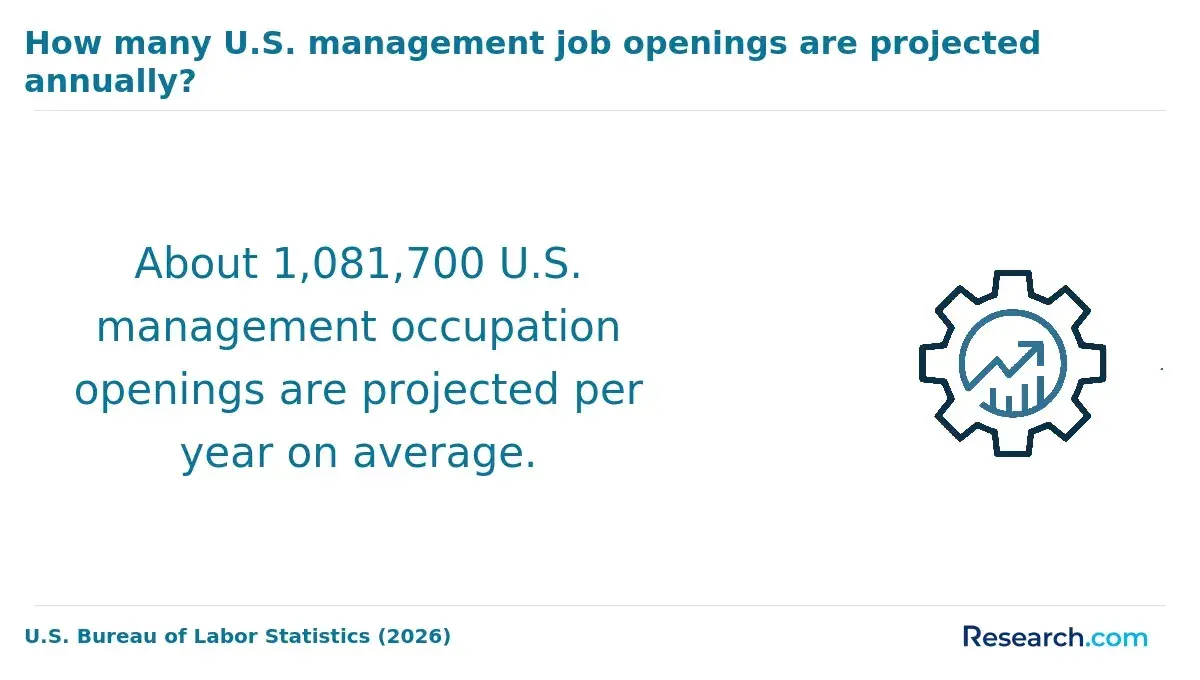
- Judge the degree against a problem in your own business and its full cost, including time away from operations. The U.S. Bureau of Labor Statistics' $126,520 May 2025 median wage for management occupations is not an estimate of an owner's return on an MBA.
What is an online MBA in artificial intelligence for business?
It is a Master of Business Administration delivered primarily online that combines broad management education with coursework on using AI in organizations. Depending on the school, "artificial intelligence for business" may name a formal concentration, a group of electives, or a theme within an analytics course.
Those arrangements offer different depth; a program with one AI elective should not be treated as equivalent to one with a defined sequence.
The emphasis is usually managerial: identifying worthwhile uses, evaluating vendors and data, managing implementation, and setting safeguards.
It should not be assumed to provide the programming, mathematics, or model-development training of a specialized computer science or machine-learning degree. An owner seeking to build models personally needs to check the technical syllabus rather than rely on the MBA's title.
Why should small business owners earn an online AI-focused MBA?
The strongest case is broader than buying an AI tool. An owner may need to decide whether automation will actually improve margins, whether customer-acquisition spending is working, and how employees will adapt when processes change.
MBA finance, marketing, operations, and leadership courses can connect those decisions; AI coursework can help test where the technology adds value and where it creates risk.
A full degree makes more sense when those management gaps are substantial, the owner expects to keep applying the learning, and the business can function during study hours. If the immediate goal is to choose a chatbot, improve one workflow, or understand AI basics, a targeted course, trusted mentor, or vendor-neutral adviser may deliver a faster and less disruptive answer.
Owners comparing the widest possible price range might examine MBA programs with affordable tuition 10,000, while verifying that any candidate actually offers meaningful AI coursework and that its published price covers their circumstances.
What does an online MBA in artificial intelligence for business teach?
There is no standard curriculum shared by all AI-focused MBAs. The distinction below helps you read a school's course list: core classes build general management judgment, while the AI component should show how that judgment applies to technology decisions.
| Curriculum component | Likely subject matter | Value to an owner |
| MBA core | Managerial accounting, finance, marketing, operations, strategy, and leadership | Connects technology spending to cash flow, customers, capacity, and staff |
| AI-focused courses or electives | Business use cases, data quality, analytics, implementation, ethics, and governance | Supports decisions about which tasks to automate and which risks to control |
| Applied work, if offered | Cases, simulations, consulting assignments, or a capstone | May allow an owner to evaluate a real business problem, subject to course rules |
For example, a useful assignment might compare the cost, accuracy, customer impact, and employee oversight needed for AI-assisted customer support. That is different from training a new language model. Review required courses, not just elective descriptions, and ask whether projects can address a business of your size. Some programs may have a capstone; others may not.
No reliable universal weekly-hour figure applies to online AI MBAs. Work varies with course intensity, prior accounting or analytics knowledge, assignments, and whether you enroll in multiple courses. For an owner, the more useful question is which hours are movable and which compete directly with business operations.
Recorded lessons may fit around opening hours, but scheduled discussions, timed assessments, and group meetings may not. AI projects can also require time to clean data, assess a vendor, or revise a recommendation after feedback.
Even part-time asynchronous MBA programs can impose fixed submission dates and collaborative work; "asynchronous" does not necessarily mean self-paced.
Before enrolling, request a recent syllabus and sample weekly calendar for both a core course and an AI course. Ask when live attendance is compulsory, how teams coordinate across time zones, whether courses overlap, and what happens if a busy season forces a pause.
Then block study time on your actual operating calendar and arrange coverage for tasks only you currently handle. If that exercise repeatedly displaces payroll, sales, or customer service, start with a lighter course load or a shorter qualification.
Requirements vary by school. Applicants generally need a bachelor's degree and should expect to document academic history and professional experience; individual programs may also request a résumé, essays, recommendations, an interview, or GMAT/GRE results.
Test waivers and experience expectations are program-specific. Ownership can demonstrate management experience, but schools may assess it differently from salaried employment.
A business degree or coding background is not automatically required. If accounting, statistics, or spreadsheets are unfamiliar, check whether the program assigns foundation work and whether it adds time or cost.
In an application, an owner can make a stronger case by describing a concrete decision, such as evaluating inventory forecasts or improving lead qualification, and explaining why both management training and AI judgment are needed. Confirm the current requirements directly with each admissions office before preparing materials.
Completion time depends on required courses, term structure, course availability, and enrollment pace. The AI component may fit within ordinary electives, or it may affect sequencing if specialized courses run infrequently. An advertised accelerated route may require simultaneous courses that are impractical while you run a business.
Ask for a term-by-term plan at the pace you could sustain during your busiest season, not just the school's fastest advertised path. Check whether you can skip a term, how long credits remain valid, and whether stepping away changes tuition or financial-aid eligibility. A slower plan may protect revenue and learning quality even if it delays graduation.
There is no single price for this type of degree. Schools may quote tuition per credit, course, term, or entire program, and the quoted amount may exclude fees. To compare offers, obtain the required credits and a written estimate for the enrollment pace you intend to use.
Beyond tuition, check mandatory online or technology fees, books and software, any required travel, and borrowing costs. For an owner, lost billable time or the cost of hiring coverage can matter as much as a fee. MBA program prices and tuition options MBA USA can provide comparison candidates, but confirm each school's current charges and whether the AI coursework is included in the MBA price.
Evaluate the investment against a specific outcome: a decision you will make better, a process you could improve, or a growth opportunity you are equipped to pursue. Avoid treating projected savings from AI as guaranteed. Ask about scholarships, payment schedules, and applicable aid, but do not assume business ownership itself qualifies you for funding. A focused course may be the financially sounder choice when the MBA core would duplicate skills you already use well.
Online delivery can reduce travel and let an owner study around operating hours. Campus study can make in-person discussion and relationship-building easier, but commuting and scheduled attendance may be costly when the business depends on your presence.
Neither format is inherently more flexible: an online course with frequent live meetings may constrain your week more than a campus course offered on a predictable evening.
Compare the actual course schedule, team-project expectations, faculty access, and any residencies rather than the format label. Also ask whether online students have access to the same electives, career services, and networking events advertised for campus students.
A list of top online MBA programs can help identify schools to investigate, but overall placement on a list does not establish AI-course depth or fit with your operating calendar.
For many owners, the primary outcome is not a new job title. It is better judgment about hiring, investment, customer acquisition, and technology adoption within their existing business. An owner who later seeks employment may be able to describe experience in operations, product decisions, or change management, especially if coursework produced demonstrable results.
Employers will still evaluate prior responsibilities and industry knowledge; an MBA alone does not qualify someone for technical AI engineering roles or senior executive posts.
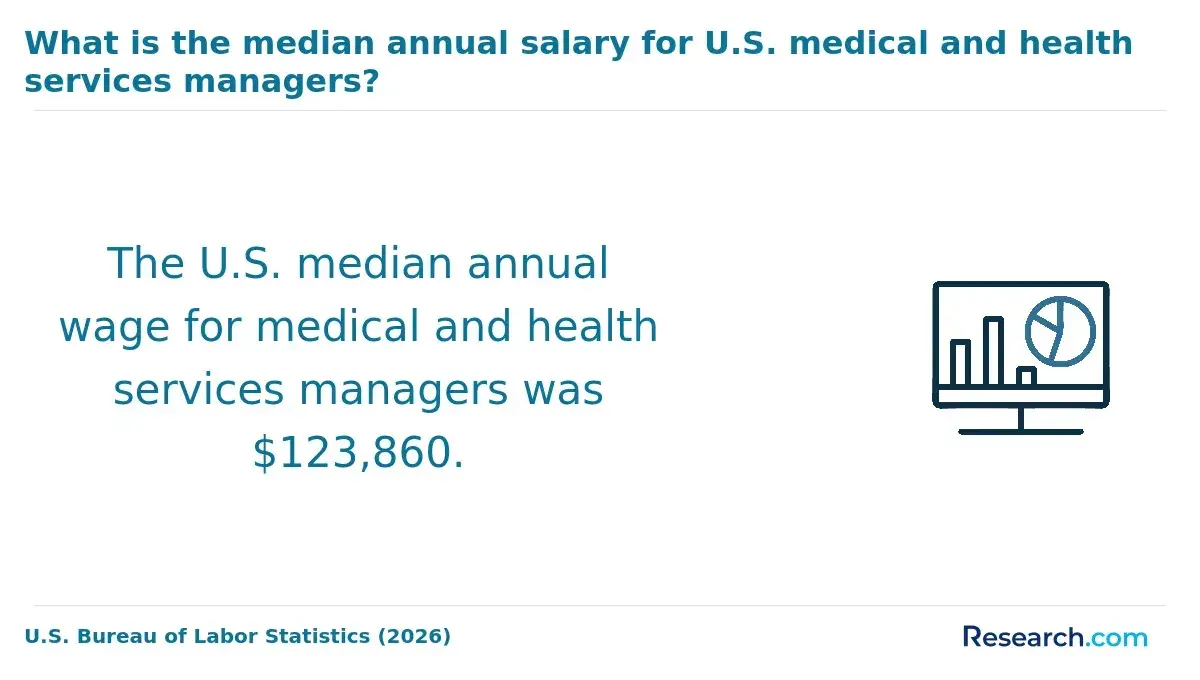
For context, the U.S. Bureau of Labor Statistics reports a median annual wage of $126,520 for management occupations in May 2025 and projects faster-than-average employment growth for the group from 2025 to 2035.
That broad occupational figure includes people without MBAs and does not represent small business owner income, AI-specific jobs, or a salary attributable to this degree. Use it as labor-market context, not as an MBA payback forecast.
How can small business owners choose an accredited AI MBA program?
Start by checking that the institution is accredited by an agency recognized by the U.S. Department of Education. Then check separately whether the business school or its programs hold specialized business accreditation, such as AACSB, ACBSP, or IACBE, if that distinction matters to you. Institutional accreditation and business-school accreditation are not interchangeable.
Next, confirm in the current catalog whether AI is a named concentration, which courses are required, and whether those courses are available online at your intended pace. Request syllabi and ask how projects address data privacy, vendor evaluation, and implementation - not just AI terminology.
Finally, compare the full price and scheduling rules against a realistic plan for keeping your business staffed. For an owner based in North Carolina, affordable online MBA programs MBA NC may provide additional comparison candidates; verify each program's AI offering, accreditation, and current tuition independently.
Choose the MBA if its management core fills genuine gaps, its AI instruction supports decisions you expect to make, and the workload remains feasible without weakening the business. If only one AI skill is missing, buy that education separately first.
Other Things You Should Know About MBA
Possibly. Ask the instructor whether owner-run businesses qualify, what the project must demonstrate, and whether you can submit results without revealing confidential information.
Ownership depends on university policies, project agreements, and any third-party participation. Review those terms before sharing proprietary methods or building a product as an assignment.
Tax treatment depends on your circumstances and whether the education qualifies under applicable tax rules. Do not assume an MBA is deductible; ask a qualified tax professional before including tuition in your investment calculation.
Not without permission and appropriate safeguards. Check your privacy commitments, applicable law, school rules, and the tool's data-use terms; anonymized or synthetic data may be safer for a class project.
- Business Analytics Without Work Experience | Wake Forest University School of Business https://business.wfu.edu/masters-in-business-analytics/articles/ms-in-business-analytics-without-work-experience/
- Online MBA in AI for Business at USCA https://online.usca.edu/degrees/business/mba/artificial-intelligence-business/
- What Is a Capstone Project? - Boston University Questrom https://www.bu.edu/questrom/blog/what-is-a-capstone-project/
- Artificial Intelligence for Business - Wharton OID | Operations, Information and Decisions Department https://oid.wharton.upenn.edu/artificial-intelligence-mba/
- Calculating contact hours in online and hybrid classes | usc.edu https://annenberg.usc.edu/faculty-and-staff-resources/calculating-contact-hours-online-and-hybrid-classes
- What's the Difference Between Asynchronous and Synchronous Learning? | Ohio State Online https://online.osu.edu/content-hub/blogs/whats-the-difference-between-asynchronous-and-synchronous-learning/
- Time on Task in Online Courses | RIT https://www.rit.edu/teaching/time-task-online-courses