
Is an Online MBA in Marketing Worth It for First-Time Managers?

Co-Founder and Chief Data Scientist
Your first management role changes the work: you may still own marketing results, but now you also need to guide people, defend budgets, and make decisions across teams. An online MBA in marketing could help you build those skills without leaving your job - but it is a substantial investment, not a prerequisite for promotion.
This guide is for new or soon-to-be managers weighing that investment. It explains what the degree can teach, what it cannot do for your career on its own, and how to decide whether an MBA or a more targeted option fits your next step.
Key Things You Should Know
- An online marketing MBA is most compelling when you need both broad business leadership skills and deeper marketing judgment, and can apply them in a current or attainable management role.
- Cost, scheduling, employer support, and access to meaningful projects matter more to your return than the concentration label alone; an MBA does not confer managerial responsibility or guarantee promotion.
- The $126,520 median annual wage for US management occupations in May 2025 is context, not a forecast of what a marketing MBA graduate - or a first-time manager - will earn.
Is an online MBA in marketing worth it for first-time managers?
An MBA combines management subjects such as finance, operations, and organizational behavior with marketing coursework. That combination can be valuable if you have moved from executing campaigns to setting priorities, managing a team, and explaining marketing investments to other leaders.
The case is strongest when your employer will help pay, the schedule lets you keep working, and you can use class projects to solve real problems at work. It is weaker if you mainly need one skill - such as paid-media measurement - or expect the degree itself to secure a promotion. Some programs welcome applicants early in their careers, but admission and classroom fit are different questions: compare the experience of classmates and the roles graduates pursue. If eligibility is a concern, online MBA programs without work experience requirements can be a starting point, not a substitute for checking each school's current policy.
For a personal return-on-investment estimate, compare the total amount you would pay - tuition, fees, materials, financing, and any required travel, less confirmed employer support - with a conservative estimate of career gains you could reasonably attribute to the degree. Include the value of skills and opportunities you would not otherwise gain, but do not count an hoped-for promotion as certain income. Ask your manager which responsibilities you could take on while studying and what qualifications actually influence advancement.
What are the benefits of an online MBA in marketing for new managers?
The most useful benefit may be learning to manage beyond your own specialty. Finance coursework can help you defend a campaign budget; organizational behavior can help you give feedback and resolve conflict; marketing strategy can help you decide which customers and channels merit limited resources. Those are connected decisions a first-time manager makes regularly.
Continuing to work also gives you a place to test what you learn. A worthwhile program might let you examine your team's customer research, build a business case, or evaluate a marketing investment - subject to your employer's confidentiality rules. Cohort discussions can expose you to managers in other functions, although the quality of networking and career support varies. Ask how online students work with classmates and whether they can use the school's career services; do not assume campus-MBA recruiting access is identical.
How does an online MBA in marketing compare with a campus-based program?
The delivery format affects both what you give up and what you can keep. This comparison highlights the questions most likely to matter to a new manager who wants to continue building experience while studying.
| Decision factor | Online MBA | Campus-based MBA |
| Current job | Often designed to accommodate continued employment, depending on course schedules | Part-time options may accommodate work; full-time study may require leaving or reducing it |
| Interaction | May combine recorded work, live sessions, and remote group projects | Typically offers more in-person class and informal campus interaction |
| Career access | Employer connections and recruiting services must be checked for online students | On-campus recruiting may be more accessible, particularly in full-time programs |
| Scheduling | May still require fixed meetings, team coordination, or travel | Requires commuting or relocation unless the program is local and part-time |
Online study can make sense if staying in your role is central to the degree's value. A campus program may be more attractive if you need an intensive recruiting environment for a major career change. Before choosing either, request a sample course schedule and ask about live sessions, group meetings, and required visits; "online" does not necessarily mean self-paced.
The MBA core generally develops business-wide decision-making through subjects such as accounting, managerial finance, operations, strategy, and leadership. Marketing coursework may then address customer research, segmentation, brand strategy, pricing, analytics, and the allocation of marketing resources. Actual courses and depth vary by school: a marketing elective is not the same as a formally designated marketing concentration.
For a new manager, the most useful assignments connect those subjects - for example, explaining a marketing proposal's financial assumptions while planning who on the team will deliver it. Review course descriptions and any capstone requirements for that kind of applied work. If your bachelor's degree was outside business, also check whether the school requires foundation courses; online MBA programs that don't require business prerequisites may offer another route, though you may still benefit from preparing for quantitative coursework.
Requirements vary by university. Applicants commonly submit evidence of a bachelor's degree, transcripts, a résumé, and written statements or recommendations; schools set their own rules for work experience, academic preparation, interviews, and GMAT or GRE scores. A marketing background is not universally required, and being a first-time manager does not automatically make you ineligible.
Check the current admissions page for each program rather than treating a test waiver as universal. If testing is a barrier, a comparison of affordable online MBA programs with no GMAT requirement can help you identify options to verify. In an application, describe a concrete transition from individual contributor to manager: the decisions you now make, the people or projects you coordinate, and the business skills you need next.
Completion time depends on required credits, term structure, course load, and whether marketing courses are available when you need them. Part-time study can preserve your income but extends the period during which coursework competes with team responsibilities. Ask for a course-by-course completion plan based on the pace you can actually sustain.
Compare total program cost, not just advertised tuition. Include mandatory fees, books or software, possible campus visits, and borrowing costs; then subtract only employer reimbursement or aid you have confirmed. Published affordable online MBA programs can help you assemble a shortlist, but verify each school's current charges and whether its marketing concentration adds courses or fees. If your employer offers tuition assistance, check payment timing, grade conditions, and any requirement to remain employed afterward.
Start by confirming that the university holds recognized institutional accreditation. Then check whether the business school or program also holds specialized business accreditation, such as AACSB, ACBSP, or IACBE. These are distinct forms of accreditation; a school's institutional status does not automatically establish specialized accreditation for its MBA.
Verify the current status with the accreditor and confirm that it covers the offering you are considering. Accreditation is an important quality and eligibility check, but it cannot tell you whether the marketing curriculum, online support, schedule, or price fits your goals.
For someone already working in marketing, the most plausible next steps are broader responsibility within the function: leading a larger team, owning a product or brand portfolio, directing customer acquisition, or managing a marketing budget. The MBA can strengthen your case for those roles, but employers will also look for evidence that you have led people and produced results.
A move from another function into marketing management is harder if you lack experience with customers, campaigns, or market analysis. In that case, seek a cross-functional project or an intermediate marketing role rather than assuming the degree will bridge the experience gap. Match the qualification to the job you actually want: a nurse newly managing a clinical team, for instance, may find MSN/MBA dual-degree programs more relevant than a marketing concentration if the goal is healthcare leadership.
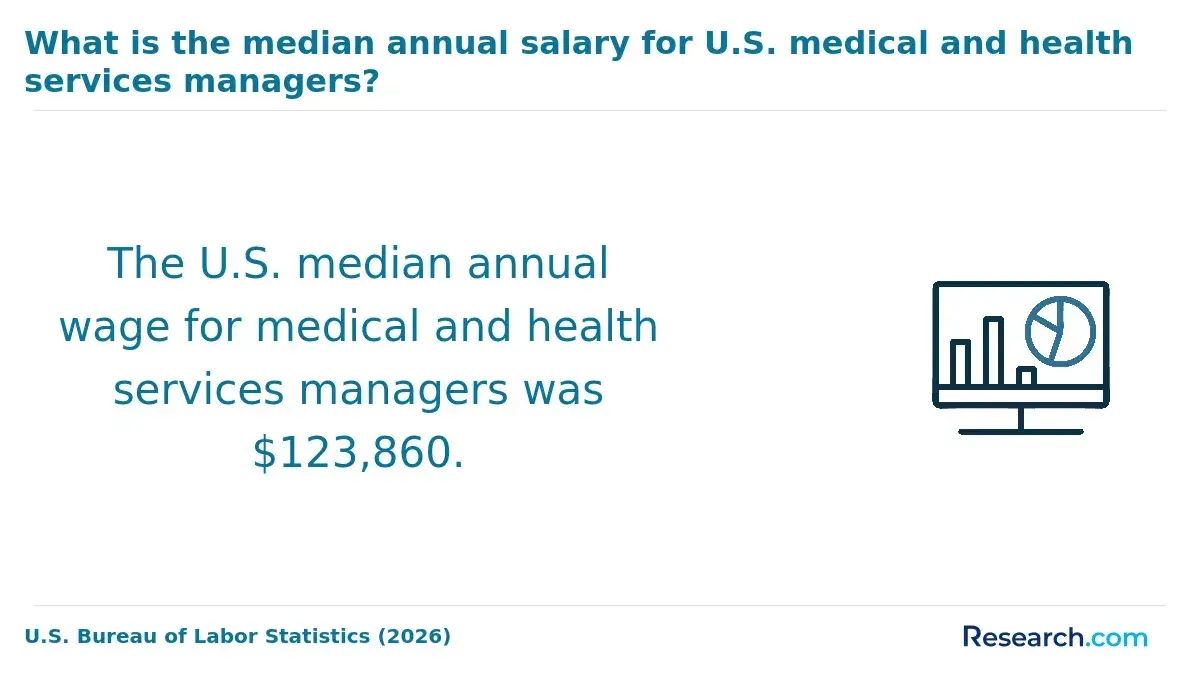
There is no single reliable salary figure for marketing managers after an MBA: pay depends on the role, experience, employer, location, and scope of responsibility, and an occupational wage does not isolate the degree's effect. The US Bureau of Labor Statistics reports a $126,520 median annual wage for management occupations in May 2025. That broad group is not a marketing-manager salary estimate and includes people with many educational backgrounds and career histories.
Use compensation for roles you could realistically pursue - not a broad management median - to test your MBA budget. Compare current pay with credible openings in your region and ask whether the roles require demonstrated budget ownership, people leadership, or industry experience that you still need to develop. The BLS projects management occupations overall to grow faster than average from 2025 to 2035, but that group-level outlook does not guarantee openings in your particular marketing niche.
What certifications can complement an online MBA in marketing?
Certifications can fill a narrower skills gap while an MBA develops broader management judgment. Depending on your work, training in a major advertising platform, web analytics, customer relationship management software, or project management may help you perform a specific task sooner. Check whether the credential is recognized by employers you target and whether you will have a chance to use the skill at work.
If your immediate challenge is measuring campaigns or operating a particular platform, a focused course or certification may be the better first investment. If the challenge is deciding how marketing, finance, and people management fit together, targeted training is less likely to replace the MBA's broader scope.
Other Things You Should Know About MBA
That depends on the university's diploma and transcript policies. Ask the school what each document displays; do not assume the delivery format or marketing concentration will appear.
Possibly. Schools set their own limits on eligible coursework, grades, age of credits, and how transferred courses fulfill MBA requirements. Request a written evaluation before relying on transfer credits in your budget or timeline.
Many schools have leave or reentry policies, but deadlines and consequences differ. Check how a pause affects course availability, tuition, financial aid, and the maximum time allowed to finish.
If you are comfortable doing so, a conversation can clarify tuition support and reveal whether the degree aligns with advancement criteria. It can also help you identify projects that let you practice new skills while enrolled.
- Employer-offered educational assistance programs can help pay for college | Internal Revenue Service https://www.irs.gov/newsroom/employer-offered-educational-assistance-programs-can-help-pay-for-college
- Types of Financial Aid: Grants, Work-Study, and Loans | studentaid.gov https://studentaid.gov/understand-aid/types
- Top-ranked online MBA cost comparison | iu.edu https://kdblog.kelley.iu.edu/2024/01/09/comparing-online-mbas-top-considerations-to-find-the-right-program/
- MBA Program Course Descriptions - Wharton Marketing https://marketing.wharton.upenn.edu/mba-program-course-descriptions/
- Guide to Tuition Reimbursement and Education Benefits | stanford.edu https://online.stanford.edu/guide-tuition-reimbursement-and-education-benefits
- Is an MBA Worth It? ROI, Pros, Cons and Who Should Enroll | CSP Global Concordia University, ST. Paul https://online.csp.edu/resources/article/is-an-mba-worth-it/
- Online MBA vs. traditional MBA for working professionals | Capella University https://www.capella.edu/blog/business/online-mba-vs-traditional-mba/
- Why First-Time Managers Need MBA-Level Training | UVA Darden School of Business https://www.darden.virginia.edu/executive-education/stories/why-first-time-managers-need-mba-level-training-even-without-an-actual-mba
- Choosing the Right Online MBA Program | Gies College of Business https://giesbusiness.illinois.edu/news/2025/10/03/choosing-the-right-online-mba-program--a-comprehensive-guide-to-asynchronous--synchronous--and-hybrid-programs
- Master's in Marketing vs. MBA: Which Is Right for You? | National University https://www.nu.edu/blog/masters-in-marketing-vs-mba/


