
Best online MBA in Cybersecurity Management programs for working parents

Co-Founder and Chief Data Scientist
An online MBA can help a cybersecurity professional move toward risk, governance, or business leadership—but "online" does not mean that classes will fit around work and childcare. This guide offers a focused comparison of cybersecurity-related MBA options and shows working parents what to verify before applying: the actual concentration, live-session and group-work demands, total cost, and time to completion. It also explains when a certification or a more technical degree may be a better investment.
Key Things You Should Know
- Start with programs that explicitly pair an online MBA with cybersecurity study; Southern New Hampshire University and Saint Leo University are two options to investigate, but confirm their current curricula and schedules before applying.
- For working parents, required meeting times, team projects, campus visits, and the ability to reduce course load matter more than an advertised fast completion time.
- The Bureau of Labor Statistics reports a May 2025 median annual wage of $126,520 across management occupations; it is not a salary estimate for cybersecurity MBA graduates or a basis for assuming the degree will pay for itself.
What Is an Online MBA in Cybersecurity Management?
An online MBA in cybersecurity management combines a broad business core—such as finance, operations, strategy, and leadership—with study of security risk, governance, and technology decisions. Schools use different names, including "cybersecurity" and "cybersecurity management." A relevant elective alone does not establish that a school offers a formal concentration.
The degree is most directly useful to someone who already works with technology, security, compliance, or organizational risk and wants greater responsibility for budgets, teams, or executive decisions. It is not a substitute for hands-on security training. Parents seeking a less expensive way to add business and technology knowledge can also compare affordable online MBA programs in information systems, while checking whether those programs actually cover their cybersecurity goals.
Which Online MBA in Cybersecurity Management Programs Are Accredited?
The shortlist below emphasizes an identifiable online MBA and cybersecurity-specific study, rather than treating every technology MBA as equivalent. It is a fit-based starting point, not a nationwide ranking: current tuition, course availability, live-session rules, and business-program accreditation should be checked directly with each school before enrollment.
These options differ principally in how they label the cybersecurity component. Neither label, by itself, establishes how technical the coursework is or how easily it fits a parent's week.
| Program to investigate | Cybersecurity focus | Working-parent decision point |
| Southern New Hampshire University online MBA | Cybersecurity concentration | Confirm the current concentration courses, group-work expectations, and options for changing course load. |
| Saint Leo University online MBA | Cybersecurity Management concentration | Confirm which concentration courses are offered online, their meeting times, and any campus requirements. |
Southern New Hampshire University is institutionally accredited by the New England Commission of Higher Education; Saint Leo University is institutionally accredited by the Southern Association of Colleges and Schools Commission on Colleges. Institutional accreditation and specialized business-school accreditation are different. Ask whether the specific MBA program holds specialized business accreditation and verify its current status with the accreditor.
How Much Do Online Cybersecurity Management MBA Programs Cost?
Do not compare programs using a per-credit quote alone. The useful comparison is the amount your household would pay to finish the required MBA and concentration under a realistic part-time schedule. Tuition and fee schedules change, so obtain a current written estimate from each school rather than relying on an undated program summary.
Ask each school to itemize the following costs before comparing its offer with MBA options by total cost:
- Required credits multiplied by the applicable tuition rate, plus mandatory program and university fees.
- Books, software, technology charges, and any required travel or campus visits.
- Financing costs and the household impact of taking fewer paid work hours, if applicable.
Employer tuition assistance can change the calculation substantially, but reimbursement may depend on grades, annual limits, or continued employment. A lower-priced program may also cost more in practice if its schedule requires paid childcare or lost work time.
The strongest fit is a program whose obligations you can place on a family calendar before paying a deposit. Recorded lectures may help, but fixed deadlines, live discussions, proctored exams, and group meetings can still compete with work shifts and caregiving.
Ask an admissions adviser for a recent syllabus from both a core course and a cybersecurity course. Then check these scheduling questions:
- Are live classes required, and what time zone governs them?
- How often do teams meet, and can students arrange meetings outside standard work hours?
- Are there required evening, weekend, or on-campus activities?
- Can you take one course at a time, pause for a family disruption, and resume without losing completed credits?
If unpredictable team meetings are your main constraint, compare the program's actual assessment design with online MBA programs with limited group work. Limited group work is not the same as no collaboration; for security leadership, practicing stakeholder communication can be valuable.
Expect the MBA core to develop business decision-making, while the cybersecurity component applies that perspective to security governance, enterprise risk, incident response planning, privacy, or technology policy. Exact course titles and the number of concentration courses vary; review the current catalog rather than assuming a common curriculum.
A useful test is whether assignments require students to explain a security investment to executives, weigh business disruption against risk, or coordinate a response across departments. Those tasks differ from configuring defenses or conducting penetration tests. Professionals who primarily want to build technical systems may find online MBA programs for engineers useful for comparing broader management paths but should consider specialized technical education if technical depth is their chief objective.
Requirements are set by each university, not by the cybersecurity specialization as a whole. MBA applications commonly ask for a bachelor's degree, transcripts, and a résumé; a school may also request recommendations, a statement, or test scores, or offer a testing waiver. Do not assume that either shortlisted school requires—or waives—a particular item without checking its current admissions page.
A business bachelor's degree is not universally required. Before applying, ask whether the program has foundational accounting or quantitative coursework and whether your work experience meets any stated expectation. In your application, describe specific decisions you have made about risk, budgets, operations, or teams; a job title alone says less about readiness for management study.
Completion time depends on required credits, course sequencing, term structure, and how many courses you can take while employed and caring for family. A school's fastest advertised path may assume continuous enrollment or a heavier course load than is sustainable at home.
Request a term-by-term plan built around your intended pace. Check when cybersecurity courses run, whether prerequisites delay entry, the maximum time allowed to finish, and what happens if you miss a term. That plan is more useful than a single advertised completion figure.
For someone already working in security or IT, the MBA may support a move toward security program management, technology risk leadership, governance, or eventually broader security leadership. Those roles involve setting priorities, explaining exposure to decision-makers, allocating resources, and coordinating people—not simply knowing security tools.
The transition is less direct for an applicant with no technology or security experience. An MBA concentration does not replace experience responding to incidents, managing controls, or working with regulated data. In a sector such as healthcare, security decisions also depend on industry-specific operations and obligations; online MBA programs for healthcare professionals offer a different management emphasis that may fit some goals better.
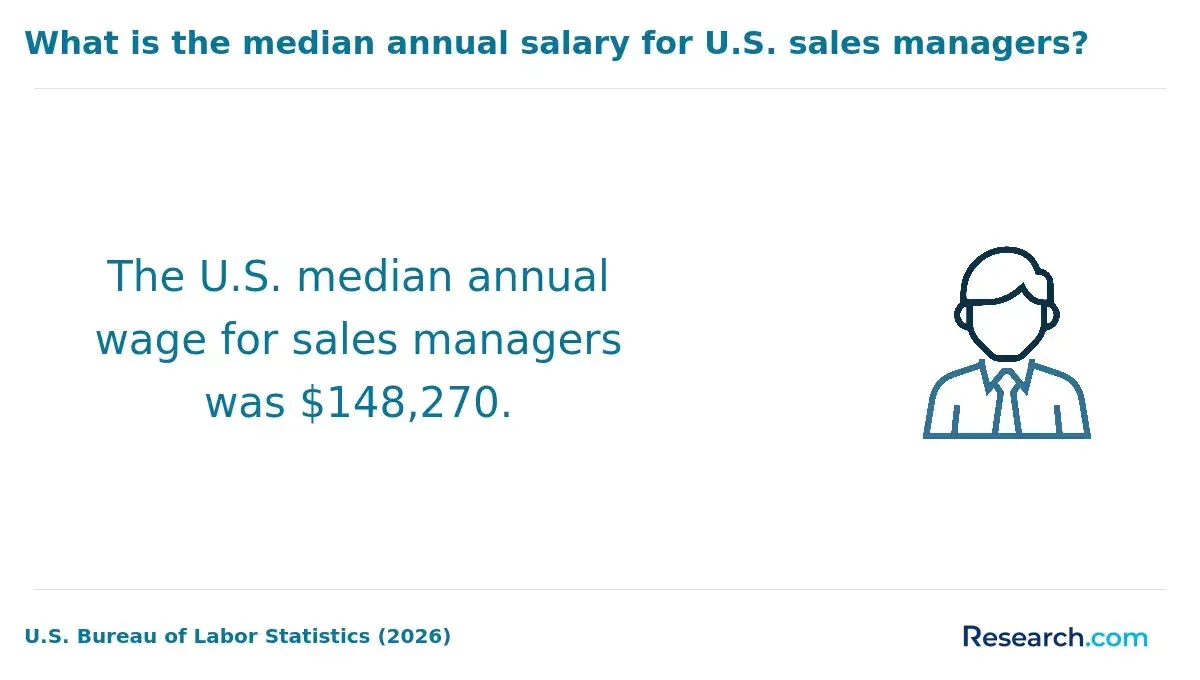
The Bureau of Labor Statistics reports that the median annual wage across all management occupations in the United States was $126,520 in May 2025. That broad figure includes many jobs outside cybersecurity and workers with varied education and experience. It should not be treated as expected pay after an MBA.
For a useful personal comparison, look at the compensation range for the specific role and location you could realistically enter next. Then weigh any plausible increase against tuition, financing costs, and family time. A promotion within your present employer may present a different opportunity—and a different salary path—from trying to enter cybersecurity management without prior security experience.
Which Cybersecurity Certifications Complement an Online MBA?
Certifications can demonstrate more targeted knowledge than an MBA concentration. CISSP may be relevant to experienced security professionals; CISM emphasizes information security management; and CRISC focuses on IT risk and controls. Each credential has its own eligibility, examination, and maintenance rules, so check the issuing organization's current requirements before committing money or study time.
Choose according to the gap you need to close. If you already manage security work but need finance and organizational leadership skills, an MBA may add something distinct. If you need a narrower credential for your present role, certification or employer training may be the more manageable choice for your household.
Other Things You Should Know About MBA
Not necessarily. Ask the registrar whether it appears on the diploma, transcript, both, or neither before relying on the designation for a career goal.
Only with appropriate employer permission. Use anonymized or fictionalized details if a project could reveal confidential systems, customer information, or incident findings.
No. A degree does not grant a clearance; clearance eligibility and sponsorship follow separate government and employer processes.
Often, but confirm that the school can enroll students in your state and that any required in-person activity is feasible before applying.
- DAPIP | Homepage - Office of Postsecondary Education (OPE) https://ope.ed.gov/dapip/
- MBA with Cybersecurity Concentration | NDNU https://www.ndnu.edu/business-management/mba/cybersecurity.html
- Search Accredited Schools | AACSB https://www.aacsb.edu/accredited
- Trinity Policies for Online Teaching and Learning | trinitydc.edu https://discover.trinitydc.edu/catalog-25-26/online-teaching-and-learning-policy/
- Program: Cybersecurity Management, MBA - Hofstra University https://bulletin.hofstra.edu/preview_program.php
- Budget & Cost Information | Financial Aid - Utah Tech University https://financialaid.utahtech.edu/student-financial-aid-handbook/budget-cost-information/
- Cybersecurity Management | College of Natural & Applied Science | Texas A&M University-Victoria https://www.tamuv.edu/natural-applied-science/graduate-degrees/certificates/cybersecurity-management/
- MBA Accreditation Types and Benefits | Freeman News https://freemannews.tulane.edu/2026/08/06/mba-accreditation-types-and-benefits
- Course Delivery Mode Definitions - University Policies | Search Policies and Handbooks https://policies.uark.edu/academic/162212.php
- What's the Difference Between Asynchronous and Synchronous Learning? | Ohio State Online https://online.osu.edu/content-hub/blogs/whats-the-difference-between-asynchronous-and-synchronous-learning/


