Online MBA in Operations Management: admissions guide for military veterans

Co-Founder and Chief Data Scientist
Military experience can demonstrate the leadership and logistical judgment that MBA programs value, but translating it into a civilian application takes preparation. Veterans considering an online MBA in operations management also need to check whether the curriculum fits their career goal and whether education benefits will cover their chosen format.
This guide explains common admission requirements, how to present service experience, what to verify with a school and the VA, and when a different credential may be a better next step.
Key Things You Should Know
- An operations concentration is not an admissions prerequisite: MBA entry requirements are set by each school, and a business bachelor's degree or military occupation is not universally required.
- Post-9/11 GI Bill coverage depends on individual eligibility, the approved program, enrollment and delivery format; online-only study can affect the housing allowance.
- The Bureau of Labor Statistics reports a $126,520 median annual wage for all management occupations in May 2025, not a starting salary or an earnings forecast for operations MBA graduates.
What is an online MBA in operations management for military veterans?
An online MBA in operations management combines a broad business-management core with coursework on improving how organizations deliver products or services.
Depending on the school, operations may be a formally designated concentration, a track, or simply a choice of electives. Those distinctions matter: one supply chain elective does not make a degree an operations MBA.
Veterans who have coordinated personnel, equipment, maintenance, procurement or complex missions may already have relevant examples for class discussions and applications.
The MBA adds civilian business frameworks, such as cost analysis, process design and organizational strategy, but does not automatically translate a military title into a particular corporate rank. It is most useful when the applicant can identify a management skill gap and a plausible target role.
How can veterans use GI Bill benefits for an online MBA?
Eligible veterans may be able to use Post-9/11 GI Bill benefits for a VA-approved online MBA. The amount payable depends on their entitlement level, remaining benefits, the school and program, enrollment intensity, and how courses are delivered.
Eligible students at public schools may have different tuition coverage from those at private schools. Yellow Ribbon participation can help with qualifying uncovered tuition and fees, but availability and individual eligibility must be confirmed.
Online-only enrollment can change the housing allowance. VA applies a distance-learning housing-allowance rule rather than automatically paying the rate associated with a school's campus location.
A qualifying in-person course may change the calculation, but students should not add campus visits solely on that assumption: ask the school's VA certifying official how the specific schedule will be certified.
Before paying a deposit, request the program's VA approval details and a term-by-term estimate from its certifying official. Confirm which charges are mandatory, whether the school participates in Yellow Ribbon for this program, and when enrollment will be reported.
Start dates matter too: information on how MBA programs assess applicants can help you identify flexible application timing, but an admission offer does not replace VA benefit certification.
What are the admission requirements for an online operations MBA?
Most applicants should expect to document a bachelor's degree and submit an application describing their work and goals. Schools set their own rules for grades, professional experience, tests, references and prerequisite coursework; an operations concentration does not create a universal admissions standard. Check the requirements for the online MBA and the intended start term, not a school's campus MBA.
For veterans, the strongest application usually translates service into outcomes a civilian reader can evaluate. Instead of relying on rank or acronyms, explain the scope of a team, the resources managed, the process improved and your contribution.
Describe any career transition honestly: leading logistics in the military is relevant to civilian operations, but it does not establish experience with every commercial system or industry.
Use this preparation sequence to separate required documents from ways to strengthen your candidacy:
- Confirm the school's degree, transcript, experience, GMAT/GRE, recommendation and deadline policies; do not assume a test waiver or minimum GPA.
- Translate military accomplishments into plain-language resume bullets, protecting classified information and explaining measurable results only when they can be disclosed.
- Identify preparation gaps in accounting, statistics or spreadsheets, then ask whether the program requires foundation courses or merely recommends preparation.
- Ask recommenders to address judgment, collaboration and readiness for graduate study, rather than relying on rank alone.
If your undergraduate record is uneven, review online MBA application criteria while checking each school's actual policy. Strong subsequent performance and professional responsibility may provide context, but neither overrides a published requirement.
Start with institutional accreditation, then check whether the business school holds specialized accreditation, such as AACSB, ACBSP or IACBE. These are different checks: institutional accreditation concerns the university, while specialized accreditation evaluates business programs or schools.
Neither establishes that an operations concentration exists online. Verify its designation and required courses in the current catalog.
The table shows comparisons that are especially useful when military experience and education benefits shape the decision. Ask each school for answers tied to the same start term so that marketing descriptions do not obscure meaningful differences:
| Compare | What to verify | Why it matters to a veteran |
| Operations depth | Formal concentration and required operations, analytics or supply chain courses | Determines whether the degree addresses the intended civilian skill gap |
| Delivery | Live sessions, group work, residencies and interruption policies | Reveals scheduling demands during work, relocation or reserve service |
| Veteran support | VA certifying official, benefit processing and applicable student support | Helps prevent enrollment and payment surprises |
| Career access | Online students' access to coaching, alumni, projects and employer events | Shows whether the program supports a civilian transition, not just coursework |
Admission accessibility can help narrow a shortlist, but it should not replace curriculum and benefit checks. Resources on choosing online MBA programs with accessible admissions are a starting point; verify every finalist's current requirements directly.
The MBA core commonly covers managerial accounting, finance, marketing, leadership, strategy and quantitative decision-making. Operations-focused study may add process improvement, supply chain management, procurement, quality, project management or business analytics.
Course titles and the number of required electives vary, so read descriptions rather than assuming a standard concentration curriculum.
For a veteran moving toward manufacturing or distribution, capacity planning and inventory decisions may be more directly useful than a broad leadership elective.
Someone targeting service operations may benefit more from process design, workforce planning and customer-demand analysis. An applied project using unclassified, real-world business data can also provide a civilian example to discuss in interviews.
Different goals call for different curricula. business-school options for online MBA in sustainability may be more relevant to an applicant focused on environmental strategy; they should not be treated as substitutes for operations coursework without examining the required classes.
Completion time depends on required credits, prior preparation, course sequencing and whether a student studies part time or accelerates. An online format alone says little about weekly availability: live meetings, team assignments and short terms can make a program difficult to combine with full-time work or reserve obligations. Ask for a sample course schedule and the maximum time allowed to finish after an interruption.
For cost, request a written estimate covering the full degree - not just the advertised per-credit tuition. Include mandatory fees, books or software, any required travel, and the cost of financing amounts not covered by benefits.
Then ask the VA certifying official to distinguish projected school charges from any housing or book payments to you. Compare the resulting out-of-pocket cost with your remaining entitlement and other education goals.
Be careful with comparison lists aimed at different degrees. Listings of lower-cost graduate business programs that feature MSN/MBA dual degrees describe a nursing pathway, not a like-for-like price benchmark for an operations MBA.
If you mainly need process-improvement skills, a targeted course or certification may cost less and use fewer education benefits.
Neither format is inherently better. Online study may suit veterans who work full time, live far from campus or expect to relocate. Campus study may make it easier to attend in-person recruiting events, work regularly with classmates and pursue an internship-based career change. The decisive question is whether the specific program gives online students access to the experiences needed for the intended job.
Compare live-session schedules and required visits alongside career-service access. Also obtain a benefit estimate for each realistic enrollment plan: housing-allowance rules can make two academically similar choices financially different.
If the goal is a substantial industry or function switch, ask whether online students can use the same employer events, projects and internship support as campus students before assuming equivalent recruiting access.
Potential paths include operations manager, supply chain manager, logistics manager, procurement manager and process-improvement manager. The best entry point depends on prior responsibility, industry knowledge and the role's technical requirements.
A veteran with substantial logistics leadership may be competitive for adjacent civilian roles; moving into an unfamiliar industry or specialized procurement environment may require an intermediate role first.
Translate service experience into the employer's operating problem. Fleet readiness may illustrate maintenance planning; coordinating supplies across locations may demonstrate inventory and stakeholder management.
Pair those examples with civilian terminology and evidence of relevant systems knowledge. The MBA can strengthen a case for management responsibility, but it does not substitute for employer-required experience or guarantee a managerial appointment.
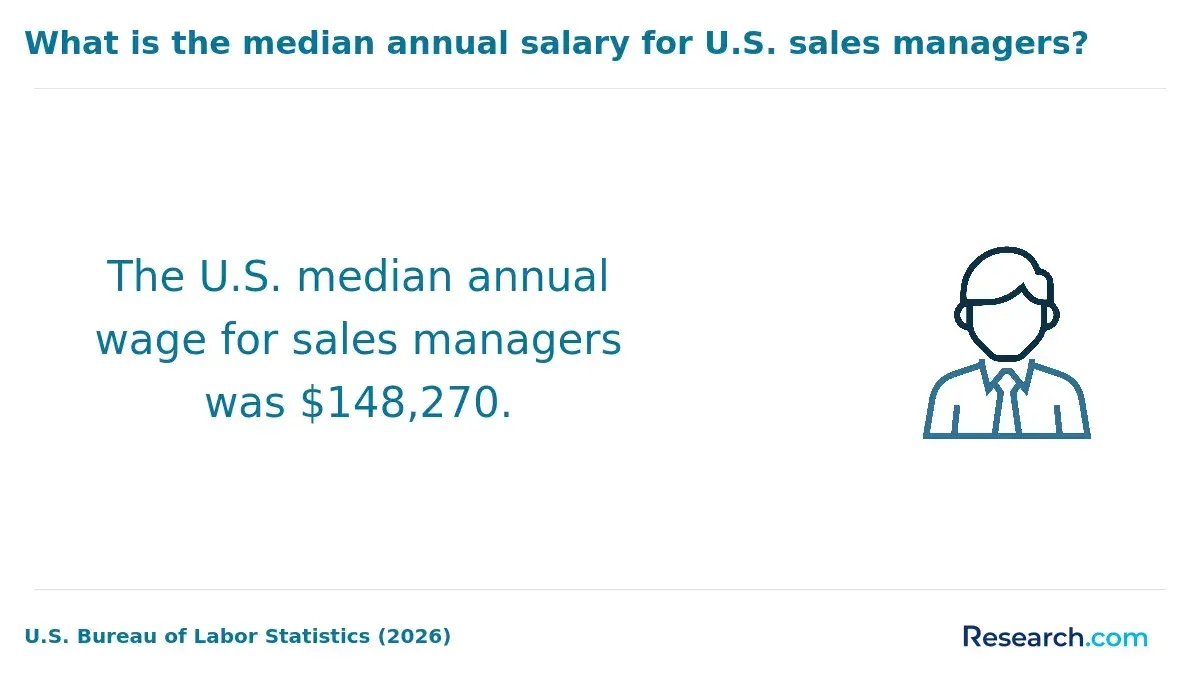
The U.S. Bureau of Labor Statistics reports a $126,520 median annual wage for management occupations in May 2025. That figure covers a broad occupational group, not veterans, operations specialists or MBA graduates specifically. It is useful for understanding the management labor market, but not for predicting an offer after graduation.
BLS projects management employment to grow faster than the average for all occupations from 2025 to 2035, with about 1.1 million openings annually on average from growth and replacement needs.
Those openings span many occupations and experience levels. For a personal decision, compare pay ranges for specific roles in your target location and industry against your current compensation, likely entry point and total degree cost.
Which certifications complement an operations management MBA?
A certification can supply focused evidence of a skill an MBA treats more broadly. Depending on the target role, veterans might investigate ASCM credentials for supply chain work, Lean Six Sigma training for process improvement, or the Project Management Professional credential for project leadership.
Check each issuer's current eligibility, examination and maintenance rules; MBA coursework does not automatically confer a certification or satisfy every experience requirement.
Choose a credential after reviewing actual job postings. If employers primarily ask for a specific planning system or process method, targeted training may offer a more direct first step than a full MBA. If the gap is broader, finance, cross-functional strategy and advancement into general management, the MBA may add value that a single certification cannot.
Other Things You Should Know About MBA
Possibly, but graduate transfer-credit policies are school-specific. Ask the MBA program to evaluate any eligible prior graduate coursework or military education; do not assume a Joint Services Transcript will reduce MBA requirements.
A former commanding officer or civilian supervisor can be appropriate if they know your work well. Choose someone who can describe your decisions, collaboration and growth in terms an admissions committee will understand.
Do not disclose classified or otherwise restricted information. Describe permitted aspects of your responsibilities, methods and results, and seek guidance through the appropriate military channels if you are unsure what you may share.
Contact the school promptly about its leave, withdrawal, readmission and assignment policies, and speak with its VA certifying official about benefit implications. Get the applicable procedures in writing before you need them.
- School Program Approval - Education and Training https://www.benefits.va.gov/GIBILL/school_program_approval.asp
- Yellow Ribbon Program | Veterans Affairs https://www.va.gov/education/about-gi-bill-benefits/post-9-11/yellow-ribbon-program/
- How to Navigate a Military MBA | Eller College of Management https://eller.arizona.edu/news/2021/08/how-navigate-military-mba
- How Does the Yellow Ribbon Program Work? | Northeastern University Graduate Programs https://graduate.northeastern.edu/knowledge-hub/how-does-the-yellow-ribbon-program-work/
- Translate Military Experience into a Job-Winning Resume | txst.edu https://www.careerservices.txst.edu/students-alumni/resources-services/career-guides/military-resume-guide.html
- GMAT and GRE Waiver Policies | JHU Carey Business School https://carey.jhu.edu/admissions/gmat-gre-waiver-policies
- Yellow Ribbon Program Explained | NU - National University https://www.nu.edu/military-and-veterans/yellow-ribbon-program/
- Full-Time MBA Requirements | UCLA Anderson School of Management https://www.anderson.ucla.edu/degrees/full-time-mba/admissions/requirements
- MBA Requirements: What You Need to Apply in 2026 | SCU https://www.scu.edu/business/blog/admissions/mba-requirements/
- MBA Programs for Veterans - Lehigh College of Business https://business.lehigh.edu/academics/graduate/masters-programs/veterans