
American Public University Online MBA Concentrations: Courses and Career Paths

Co-Founder and Chief Data Scientist
Choosing an American Public University online MBA concentration means deciding where to build expertise beyond the management core. A finance-focused path may support a different next move than healthcare administration or project management, even though each leads to the same MBA degree. This guide is for working professionals comparing those paths. It explains what the concentrations emphasize, how to assess their career relevance, and which program details - including current course requirements and total cost - you should confirm before committing.
Key Things You Should Know
- APU's MBA combines broad business study with concentration coursework; choose the concentration by its required courses and relevance to your experience, not its name alone.
- Finance, healthcare administration, human resource management, marketing, and project management illustrate distinct career directions, but none replaces the experience or professional credentials a particular job may require.
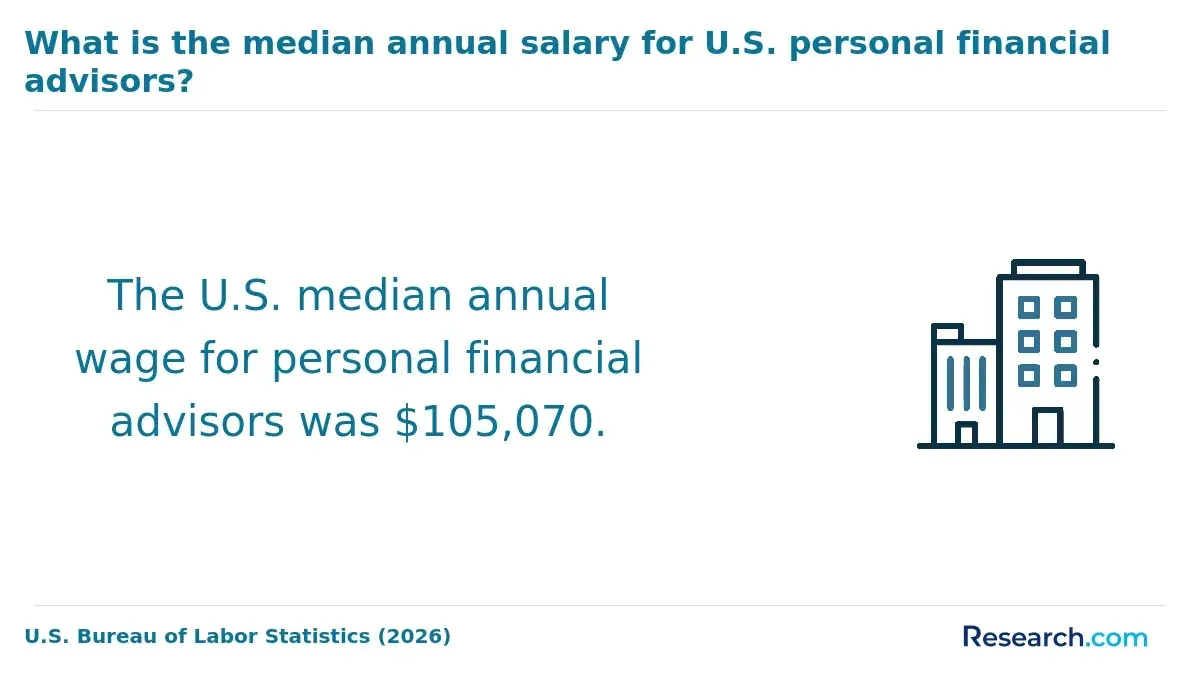
- Confirm the current APU catalog, tuition schedule, and accreditation scope before applying. The U.S. median wage for management occupations was $126,520 in May 2025, but that is not an APU MBA graduate salary.
What Is the American Public University Online MBA?
American Public University (APU) is part of American Public University System (APUS). Its online Master of Business Administration is a graduate business degree built around management subjects such as accounting, finance, marketing, strategy, and organizational leadership. A concentration is a defined area of study within that degree; it is not a separate MBA or a substitute for a specialized professional qualification.
The program's main appeal is the ability to study business management without relocating. That matters most if you can apply assignments to work you already do or use the degree to prepare for a plausible next role. If you are still comparing institutions, review online study options for online MBA programs using the same criteria: curriculum, scheduling, total cost, and career support.
What Concentrations Does the American Public University MBA Offer?
APU has offered MBA concentration options spanning business functions and industry settings. The table highlights areas to investigate and what each can add to the general MBA core. Use the current APU degree catalog to confirm the official name, online availability, required courses, and elective choices for your intended start date: offerings and course sequences can change.
The distinctions matter because similarly named concentrations at different schools may involve very different amounts of specialized study.
| Concentration area | What to look for in the course sequence | Best fit to investigate |
| Accounting | Managerial reporting, financial analysis, and accounting decisions beyond the core | Managers who use accounting information; not necessarily a route to CPA eligibility |
| Business analytics | Data analysis, decision tools, and business applications | Professionals who want to lead data-informed decisions rather than train primarily as data scientists |
| Entrepreneurship | New ventures, business models, and growth decisions | Founders or professionals developing new products or services |
| Finance | Corporate financial decisions, investment analysis, and risk | Professionals moving toward financial management within their field |
| Healthcare administration | Healthcare organizations, operations, and sector-specific management | Healthcare professionals pursuing administrative responsibility, not clinical licensure |
| Human resource management | Workforce planning, employment practices, and organizational development | People managers or HR professionals seeking broader business responsibility |
| Information technology management | Technology strategy, systems, and organizational implementation | Technology professionals moving toward management |
| Marketing | Customer analysis, positioning, and marketing decisions | Professionals responsible for customers, brands, or growth |
| Project management | Project planning, execution, and organizational delivery | Professionals coordinating complex work; not a replacement for project-management certification |
These are concentration areas to check against APU's current catalog, not a promise that every option or course is available in every enrollment period. Compare the required concentration courses first: a single elective in a subject does not provide the same depth as a formal concentration. If your goal is specifically environmental strategy, program selection for online MBA in sustainability may be more useful than assuming a general MBA concentration covers that subject.
What Courses Are Required for the American Public University MBA?
The MBA core is intended to build cross-functional management knowledge. Expect to examine areas such as managerial accounting and finance, marketing, organizational behavior, strategy, and evidence-based decision-making. Concentration courses then narrow the focus: for example, a finance pathway calls for more financial decision-making, while a healthcare pathway applies management concepts in healthcare organizations.
Do not treat those subject areas as an official course checklist. The authoritative requirements are the APU catalog for your enrollment date, including course titles, credits, prerequisites, elective rules, and any final project or capstone. Before choosing a concentration, compare its required-course sequence with the skills listed in several jobs you would realistically pursue. A concentration is less useful if its courses develop skills you already have but omit your biggest gap.
APUS holds institutional accreditation from the Higher Learning Commission (HLC). Institutional accreditation applies to the university system; it is distinct from specialized accreditation of a business program. APU also identifies Accreditation Council for Business Schools and Programs (ACBSP) accreditation for business programs. Check the current ACBSP listing and APU's program information to confirm whether the MBA is within its accredited scope when you enroll.
This distinction matters if an employer, tuition-benefit policy, or future school specifies a type of accreditation. Neither institutional nor business-program accreditation guarantees that a particular employer will value a concentration or that credits will transfer elsewhere.
Applicants should expect to document an eligible bachelor's degree and satisfy APU's current graduate admission and identity-verification policies. Do not assume that a business undergraduate major, a particular test score, or years of management experience are required without checking the current MBA admissions page. Applicants with nonbusiness degrees should also distinguish formal prerequisites from helpful preparation in accounting, finance, and quantitative reasoning.
Ask admissions to confirm the current degree and transcript rules, any GPA or English-language requirements that apply to you, and whether prior graduate coursework can count toward the MBA. If the timing of your application matters, compare APU's stated start dates with online MBA programs with rolling admission; frequent starts and rolling admission are not necessarily the same policy.
Completion time depends on the credits in your applicable catalog, the number of courses you take at once, course availability, and any approved transfer credit. An advertised minimum timeline may assume continuous enrollment at a pace that is difficult to sustain alongside full-time work.
Request a term-by-term plan for your chosen concentration. In particular, ask whether required courses must be taken in sequence and how a missed term would affect graduation. That plan is more useful for scheduling than a university-wide estimate that does not account for your concentration or work commitments.
APU's published graduate tuition rate and any applicable military or other rate should be checked for the term in which you enroll. A reliable personal estimate multiplies the credits you must complete at APU by the rate you qualify for, then adds applicable fees, materials, and financing costs. Without a confirmed current rate and your individual credit plan, a single total would be misleading.
Employer reimbursement, approved transfer credit, and education benefits can change what you pay, but eligibility and coverage vary. Ask for a written cost estimate identifying the tuition rate, required credits, fees, and whether benefits apply to this specific program. Use an online MBA cost guide online MBA programs under $30,000 as a comparison point only after calculating costs on the same basis; a tuition figure alone is not the full cost of attendance.
APU delivers the MBA online, allowing students to access coursework without routine campus attendance. Online delivery does not, by itself, establish that every activity is asynchronous or that every deadline is flexible. Course discussions, team assignments, exams, and instructor expectations can affect when you need to work.
Before enrolling, ask for a recent syllabus from both a core course and a course in your intended concentration. Check for live meetings, group-project coordination, assignment deadlines, proctored assessments, and any campus requirement. If your schedule changes unpredictably, also ask how course withdrawals and enrollment breaks affect tuition, financial aid, and progress toward the degree.
The strongest pathway usually builds on experience you already have. A healthcare employee might use administration coursework to pursue operations responsibility; an HR specialist might prepare for broader workforce planning; and a project lead might strengthen budgeting and organizational decision-making. Moving into an adjacent management role is generally a different challenge from entering a new field with no relevant experience.
A concentration can signal a focus, but employers still assess demonstrated results, industry knowledge, and any required credentials. Accounting coursework does not automatically satisfy CPA requirements, and project-management coursework is not itself a professional certification. Healthcare professionals considering business leadership can also compare MBA options for leadership roles with clinically focused graduate education.
For each target job, identify one skill the MBA would develop and one requirement you must meet through work experience, a project, or a separate credential. If nearly all of the gap is technical or occupation-specific, a targeted course or specialized degree may be more direct.
What Salaries and Job Outlook Can MBA Graduates Expect?
The U.S. Bureau of Labor Statistics reports that the median annual wage for management occupations was $126,520 in May 2025. That figure covers workers across management jobs, education levels, and experience levels - not APU MBA graduates or people with a particular concentration. It is most useful as occupational context, not as an expected post-MBA salary.
BLS projects management occupations overall to grow faster than the average for all occupations from 2025 to 2035, with about 1.1 million openings per year on average from growth and replacement needs. Prospects still differ substantially by role and industry. For a sound financial decision, compare compensation for the specific positions you could qualify for now and after gaining relevant experience, then weigh any plausible increase against your personal program cost.
Other Things You Should Know About MBA
Do not assume it will. Ask APU whether the concentration appears on the diploma, transcript, or both, and how you may accurately describe it to employers.
Ask an academic advisor before changing. Completed courses may not satisfy the new concentration's requirements, which could add time and cost.
Yes. Match your documented leadership, logistics, personnel, or project work to civilian roles, then choose coursework that addresses the skills those roles require. Experience alone does not establish eligibility for education benefits.
A general pathway may make sense if you want broad management electives or have no clear functional target. Choose a concentration when its required courses address a defined professional goal.
- Online MBA Information - Anderson School of Management | The University of New Mexico https://business.unm.edu/current-students/grad/online-mba-curriculum.html
- Full-Time MBA Curriculum and Concentrations | Rutgers Business School-Newark and New Brunswick https://www.business.rutgers.edu/full-time-mba/curriculum
- Concentrations and Electives | Xavier University https://www.xavier.edu/master-of-business-administration/concentrations-and-electives
- How to Choose an MBA Concentration | Freeman News https://freemannews.tulane.edu/2025/06/09/how-to-choose-an-mba-concentration
- Types of MBA Concentrations, Complete Guide For 2025 | Pepperdine Graziadio Business School https://bschool.pepperdine.edu/mba-programs/article/mba-specialization-types.htm
- Program Structure | Master of Business Administration | University of Nebraska Omaha https://www.unomaha.edu/college-of-business-administration/mba/program/index.php
- Core MBA Subjects Explained From Analytics to Strategy | University of New Haven https://business.online.newhaven.edu/blog/core-mba-subjects
- Online MBA Curriculum | Online MBA & Executive MBA https://mba.wsu.edu/mba/curriculum/
- Master of Business Administration - APUS Catalog https://catalog.apus.edu/amu/academic-programs/masters/master-of-business-administration/
- What Does an MBA Teach You? Skills, Curriculum & Career Impact | Southwest Minnesota State University https://online.smsu.edu/resources/article/what-does-an-mba-teach-you/


