Online MBA in Accounting: Admissions Guide for Small Business Owners

Co-Founder and Chief Data Scientist
Running a business can teach you plenty about revenue and expenses without making you confident about cash-flow forecasts, financing decisions, or financial controls. An online MBA in accounting may help, but applying means committing money and time that your business also needs.
This guide explains what admissions teams commonly look for, how owners can present their experience, and which program features matter after acceptance. It will help you decide whether to apply, prepare first, or choose a shorter route to the skills you need.
Key Things You Should Know
- Most online accounting MBAs require a bachelor's degree, but accounting coursework, work-experience minimums, and GMAT or GRE policies vary by school; owning a business can provide relevant experience.
- Check whether accounting is a formal concentration and whether its courses address your business's needs. An MBA is not, by itself, a CPA qualification.
- Protect operating cash and time: compare the full program cost and required live commitments with targeted courses or advising before applying.
What is an online MBA in accounting, and is it useful for small business owners?
An online MBA in accounting is a graduate management degree delivered primarily online, with an MBA core and additional accounting coursework. The core typically covers finance, marketing, operations, and leadership; the accounting component may be a formal concentration, a track, or simply a set of electives. Those labels do not promise the same depth, so inspect the required courses.
For an owner, the potential benefit is better use of financial information: interpreting margins, planning cash needs, evaluating expansion, and designing controls as the business hires. The broader MBA can also help with customer acquisition and managing people. It is less compelling if the immediate problem is preparing this year's tax return or setting up bookkeeping software. A qualified accountant, mentor, or focused course may solve that problem faster and at lower cost.
Your industry can change which broad skills matter most. A healthcare-practice owner, for example, might compare accounting study with healthcare leadership degree options online if managing a practice - not accounting depth - is the main goal.
How does an online MBA in accounting compare with a campus-based program?
The degree's academic value depends on the institution and curriculum, not simply where classes meet. The practical difference for an owner is how reliably the format lets you serve customers, supervise staff, and participate in class. "Online" does not necessarily mean self-paced: live meetings, team projects, exams, and occasional travel may still be required.
The comparison below focuses on scheduling and access rather than assuming either format is universally better.
| Factor | Online MBA | Campus-based MBA |
| Business coverage | Can reduce routine travel, though live sessions may still conflict with operating hours | Requires attendance or travel at scheduled times |
| Peer interaction | Depends on cohort design, live discussion, and group-work requirements | Offers regular in-person contact, subject to the program's schedule |
| Applied work | May allow projects using your own business, subject to course rules | May offer local projects and events that require time on campus |
Ask for a sample weekly schedule and the residency policy before assuming either option fits. Be careful with "accelerated" labels, too: searches for one-year graduate business programs degree programs can surface nursing-specific dual degrees, which are not substitutes for an accounting MBA.
What accreditation should you look for in an online accounting MBA?
First, confirm that the institution holds recognized accreditation and that the online MBA is offered by that institution. Institutional accreditation matters when evaluating degree recognition and eligibility for federal student aid; check the school in the U.S. Department of Education's accreditation database rather than relying on a marketing badge.
Next, check whether the business school or program has specialized accreditation, such as AACSB, ACBSP, or IACBE, and what the accreditor's listing actually covers. Specialized business accreditation is distinct from institutional accreditation; it is useful evidence to compare, not a substitute for checking the accounting curriculum, faculty, and student support. If CPA eligibility matters, accreditation alone does not establish that a particular MBA supplies the courses your state board requires.
Curricula differ, but the useful distinction is between the MBA core and accounting-specific study. Core courses may address managerial economics, marketing, operations, organizational behavior, strategy, and finance. Accounting coursework may include managerial accounting, financial reporting, taxation, auditing, or accounting analytics; some programs offer only a narrower selection.
Match the syllabus to decisions you actually make. Managerial accounting can help an owner examine product or service profitability, while financial reporting can improve conversations with lenders and outside accountants. Tax or audit electives may be valuable, but an MBA course is not a replacement for professional tax advice or the technical sequence expected in some accounting careers. Ask whether a capstone permits a project based on your business and whether you can use financial information without exposing confidential customer or employee data.
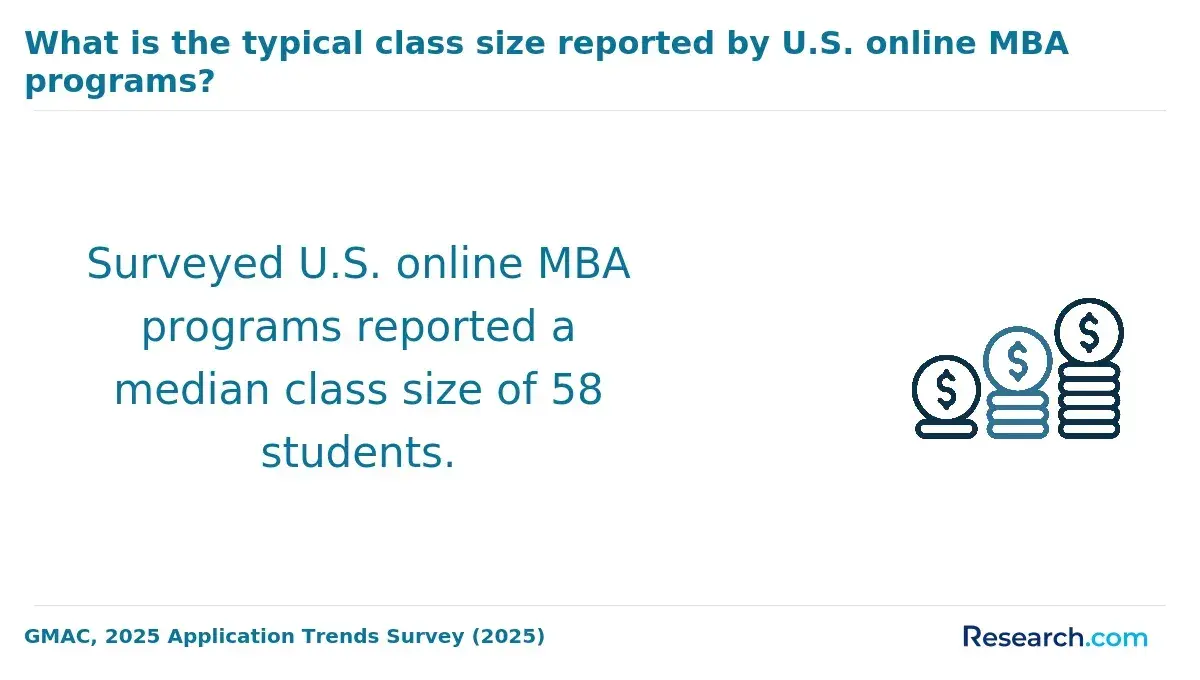
Most programs ask applicants for a bachelor's degree and academic transcripts. Many also request a résumé and a statement of purpose; recommendations, an interview, professional-experience minimums, and GMAT or GRE scores depend on the school. Some programs waive tests under stated conditions or do not require them. Do not assume that having an accounting major - or a particular GPA - is universally required.
A nonbusiness graduate may need foundation work in accounting, statistics, or economics, while an owner who already uses financial statements may be ready for applied coursework but still need formal accounting preparation. Check whether foundation courses are admission conditions, degree requirements, or optional refreshers: that distinction affects both time and cost.
Before you apply, use this checklist to separate each school's rules from ways to make your application stronger:
- Read the program's current admissions page for degree, transcript, experience, test, recommendation, and deadline requirements; confirm unclear policies with admissions.
- Compare your prior coursework with any published prerequisites or foundation courses.
- Prepare examples of decisions you have made as an owner - such as managing cash, pricing, hiring, or financing - and explain what you need the MBA to help you do better.
- Identify a recommender who can assess your judgment and leadership rather than relying only on your job title.
- Confirm the start date, application deadline, and expected class schedule against your business's busiest periods.
Ownership can demonstrate substantial responsibility, but schools may define "professional experience" differently. If a requirement is ambiguous, ask whether self-employment counts and what documentation would help.
Completion time depends on the required credits, course sequence, transfer policy, and how many courses you take per term. Part-time study may protect business operations but extend the period over which tuition and fees are due. An accelerated schedule can shorten enrollment while leaving less room for a busy season or an unexpected staffing problem.
Published tuition is rarely the entire investment. Compare total required credits against the price per credit, then add mandatory fees, books or software, and any residency travel. Ask how tuition changes if you slow down, pause, or repeat a course. For affordability, also consider financing charges and the time you cannot spend on the business. Lists of MBA options by total cost degree programs may be useful for comparing cost methods, but a low-cost information-systems MBA is not necessarily an accounting MBA.
A practical test is to write down the business decision you expect the degree to improve and what a credible alternative would cost. If your main need is a stronger cash forecast, compare the MBA commitment with a targeted accounting course and professional advice before taking on graduate tuition.
CPA licensure is governed by state boards of accountancy, which set education, examination, experience, and other requirements. An accounting concentration can include useful graduate credits while still missing specific undergraduate or upper-level accounting subjects required by a board. Rules also change, so do not use a school's broad "CPA preparation" claim as an eligibility determination.
If licensure is a goal, obtain your transcripts and compare both your existing credits and proposed MBA courses with the requirements of the state where you intend to apply. Ask the program for course descriptions and consult that state's board before enrolling. If your objective is operating your company rather than practicing public accounting, CPA-focused coursework may be less useful than managerial accounting and finance.
For many owners, the most relevant "career outcome" is running the current business more effectively or expanding into additional locations, products, or management responsibilities. If you later seek employment, experience gained budgeting, supervising staff, and interpreting results may support applications for operations or financial-management roles. Employers will still assess the scale of that experience and any technical accounting skills the role needs.
An MBA concentration does not by itself qualify someone for a controller role, public-accounting practice, or another position requiring substantial accounting experience or licensure. Owners considering a move into another industry should examine its hiring expectations as well as the degree. In healthcare, for example, MBA degree and career options for nursing professionals reflect clinical backgrounds that a nonclinical business owner would not automatically have.
There is no reliable single salary for graduates of online accounting MBAs. An owner's income depends on business revenue, expenses, debt, and how much they choose to pay themselves; an employee's pay depends on the occupation, location, experience, and employer. Neither can be inferred from the degree title.
For context, the U.S. Bureau of Labor Statistics reports a $126,520 median annual wage for management occupations in May 2025. That figure covers workers across management occupations - not online MBA graduates, accountants, or small business owners specifically. Use pay data for a particular job and location if employment is your goal. If you plan to remain an owner, assess whether the skills could improve cash flow or decision-making enough to justify the program's full cost, without assuming a guaranteed return.
How can small business owners choose a reputable online accounting MBA?
Start with the business problem, then shortlist programs that teach the skills needed to address it. A reputable institution is necessary, but fit also depends on the accounting course sequence, actual scheduling obligations, total cost, and whether an interruption would be manageable while you operate your company. Rankings alone cannot answer those questions.
Use these questions when speaking with admissions and program staff; request written policy pages or sample schedules where possible:
- Is accounting a formally designated concentration, and which accounting courses are required rather than optional?
- Which classes require live attendance, group meetings, examinations at set times, or campus visits?
- What is the full cost at my planned pace, including mandatory fees and any foundation courses?
- Can I use an appropriately anonymized business problem for an applied project?
- What happens to my course sequence and charges if business demands require a pause?
If you have previous graduate business credits, ask for a course-by-course evaluation before budgeting on a shortened degree. Transfer-friendly business degree pathways can suggest where to investigate, but each MBA decides what it will accept. Apply when the program addresses several durable management needs and its commitments fit the business; choose shorter training when you need one specific accounting fix.
Other Things You Should Know About MBA
Possibly. Ask instructors whether client work or company data is permitted, and remove or secure sensitive information according to course and business policies.
Not necessarily. Internship requirements vary; some programs use capstones or other applied projects instead. Confirm the requirement before enrolling.
It may be able to, but how payments are treated for tax and accounting purposes depends on your circumstances. Consult a qualified tax professional rather than assuming tuition is deductible.
Ask about leave-of-absence rules, course availability, readmission, and tuition changes. A permitted break may still delay completion if required courses run infrequently.
- Accreditation in the U.S. | ed.gov http://www.ed.gov/laws-and-policy/higher-education-laws-and-policy/college-accreditation/accreditation-in-the-us
- Education Requirements | texas.gov https://www.tsbpa.texas.gov/applicants/education/
- Admission Requirements - Darla Moore School of Business | University of South Carolina https://sc.edu/study/colleges_schools/moore/study/accounting/degree_programs/master_of_accountancy/admission_requirements/
- Master of Accounting Admissions | UNC Kenan-Flagler Business School https://www.kenan-flagler.unc.edu/programs/master-of-accounting/admissions/
- What Are the Prerequisites for an MBA Program? | marymount.edu https://marymount.edu/blog/what-are-the-prerequisites-for-an-mba-program/
- College application checklist: Forms, essays and deadlines | About the University of Cincinnati https://www.uc.edu/blog/college-application-checklist.html
- Standardized Test Waiver (GMAT/GRE) | Fisher College of Business https://fisher.osu.edu/graduate/ftmba/admissions/test-waiver
- GMAT/GRE Waiver Policy | UNC Online MBA https://onlinemba.unc.edu/admissions/application-requirements/gmat-waiver-policy/
- Online MBA Accounting Concentration | SNHU https://www.snhu.edu/online-degrees/masters/mba-online/mba-in-accounting
- Online MBA Frequently Asked Questions | calbaptist.edu https://calbaptist.edu/academics/programs/online-master-of-business-administration-management/faqs