
Is an Online MBA in Cybersecurity Management Worth It for Small Business Owners?

Co-Founder and Chief Data Scientist
A customer-data breach can disrupt a small business, but so can spending heavily on a degree that does not solve its most pressing problems. An online MBA in Cybersecurity Management combines broad business education with security leadership, making it a substantial investment for an owner who may have little time away from operations.
This guide explains what the degree can - and cannot - do, how to weigh its cost against shorter alternatives, and what to check before enrolling. The goal is to help you choose education that improves both your business decisions and your ability to manage cyber risk.
Key Things You Should Know
- An online MBA in Cybersecurity Management is most likely to pay off when you need broad management skills as well as the ability to oversee security risk; it is usually excessive if your only goal is to improve basic protections.
- Judge the investment against total tuition, fees, financing, and time away from the business - not a prospective graduate salary. A small business owner may see value through fewer disruptions or better decisions rather than a pay raise.
- Check that cybersecurity management is an actual online concentration with relevant courses. An online MBA with one security elective may not provide the depth you expect.
Is an online MBA in Cybersecurity Management worth it for small business owners?
It can be worth it if you intend to use both halves of the degree: the MBA core to improve finance, operations, hiring, and growth decisions, and the cybersecurity concentration to govern risks involving customer data, vendors, and business continuity. If your business chiefly needs stronger passwords, backups, or an outside security assessment, targeted help will generally address that need more directly than a full MBA.
The right choice depends on what you need to change. These options differ in scope and in how quickly you can apply what you learn.
| Option | What it is best suited to | Main limitation |
| Cybersecurity management MBA | Broad business development alongside long-term security oversight | Substantial cost and study time; limited hands-on technical training |
| Short course, mentoring, or executive education | A defined management or cyber-risk knowledge gap | Less breadth and usually no MBA credential |
| Qualified security provider | Assessing or implementing protections the business needs now | Does not replace the owner's responsibility for priorities and oversight |
For an owner, return on investment need not mean a higher salary. It may mean better cash-flow decisions, a more resilient operation, or stronger qualifications for a future leadership role. Those benefits are uncertain and difficult to attribute to a degree alone. Listings of affordable online MBA programs 10 000 can provide a cost benchmark, but verify that any program you consider actually offers the cybersecurity curriculum you want.
What can an MBA in Cybersecurity Management teach small business owners?
An MBA typically builds managerial skills in accounting, finance, marketing, operations, and leadership. For an owner, that breadth matters: a security decision competes with payroll, customer acquisition, and other uses of limited cash. Cybersecurity management coursework adds a framework for setting risk priorities, assigning responsibility, evaluating vendors, and communicating decisions to staff and customers.
That is different from learning to configure networks or conduct penetration tests. An owner can become a better buyer and supervisor of technical services without becoming the person who performs them. If your main ambition is hands-on security work, compare technical training or a specialized cybersecurity degree instead.
Your industry may also change the better degree choice. For a nurse-owner weighing clinical leadership alongside business management, an online MSN and MBA dual-degree programs program comparison may be more relevant than a cybersecurity concentration; check each program's nursing eligibility requirements.
How can cybersecurity management skills protect a small business?
Security management helps an owner decide what must keep working, which information needs protection, and who will act when something fails. For example, a retailer dependent on an online storefront may prioritize payment-system availability and a tested recovery plan; a professional-services firm may focus more heavily on client records and access to shared files.
The practical value is in making security an operating responsibility rather than an occasional technology purchase. An owner can establish a process for approving access when employees join or leave, review a provider's responsibilities, fund backups and recovery testing, and decide when an incident needs outside help. An MBA may improve those judgments, but coursework itself will not secure a system: the business still needs appropriate tools, trained staff, and qualified technical support.
Online study may let you remain near your business and avoid routine travel, but it does not automatically mean studying whenever you want. Programs can require live classes, group meetings, fixed assignment deadlines, or campus visits. Campus study may be preferable if in-person relationships are a major goal and you can reliably delegate daily operations.
Ask for a sample course schedule and confirm live-session times, group-work expectations, residency requirements, and policies for slowing or pausing enrollment. Then test that schedule against your busiest business period, not your quietest week. When comparing formats, online MBA financial planning affordable online MBA programs can help frame the broader affordability question; include any travel costs and the value of hours taken from the business.
There is no universal curriculum. The MBA core commonly covers managerial accounting, finance, marketing, operations, strategy, and organizational leadership. A cybersecurity management concentration may add information-security governance, enterprise risk management, privacy, technology policy, or incident-response planning. Course titles alone do not establish depth: examine descriptions, assignments, and how many courses are devoted to the concentration.
An applied project can be particularly useful if it lets you analyze a real business problem, such as prioritizing recovery for critical systems or assessing vendor risk. Confirm whether you may use your own company, how sensitive business information would be handled, and whether the project is required rather than merely possible.
Requirements vary by school. Applicants generally need a bachelor's degree and may be asked for transcripts, a résumé, a statement of purpose, recommendations, or an interview. Schools set their own work-experience expectations, prerequisite or foundation-course policies, and GMAT or GRE rules. Do not assume that owning a business automatically satisfies an experience requirement - or that a technical cybersecurity background is required.
Use your application to show decisions you have actually made: managing a budget, hiring staff, improving a process, or responding to an operational risk. If accounting or quantitative coursework is unfamiliar, ask whether the program provides foundation classes and whether they add time or cost. Confirm all requirements directly with the admissions office before applying.
Completion time depends on required credits, course sequencing, enrollment pace, and whether the concentration is offered regularly. Accelerated study can reduce calendar time but may increase the pressure on an owner who cannot hand off daily decisions. Part-time study spreads the work out, though it extends the period during which classes compete with business priorities.
Request the program's published completion options and a term-by-term plan that includes the cybersecurity courses. Check whether taking a break affects course availability or the maximum time allowed to finish. A workable schedule is more valuable than the shortest advertised timeline.
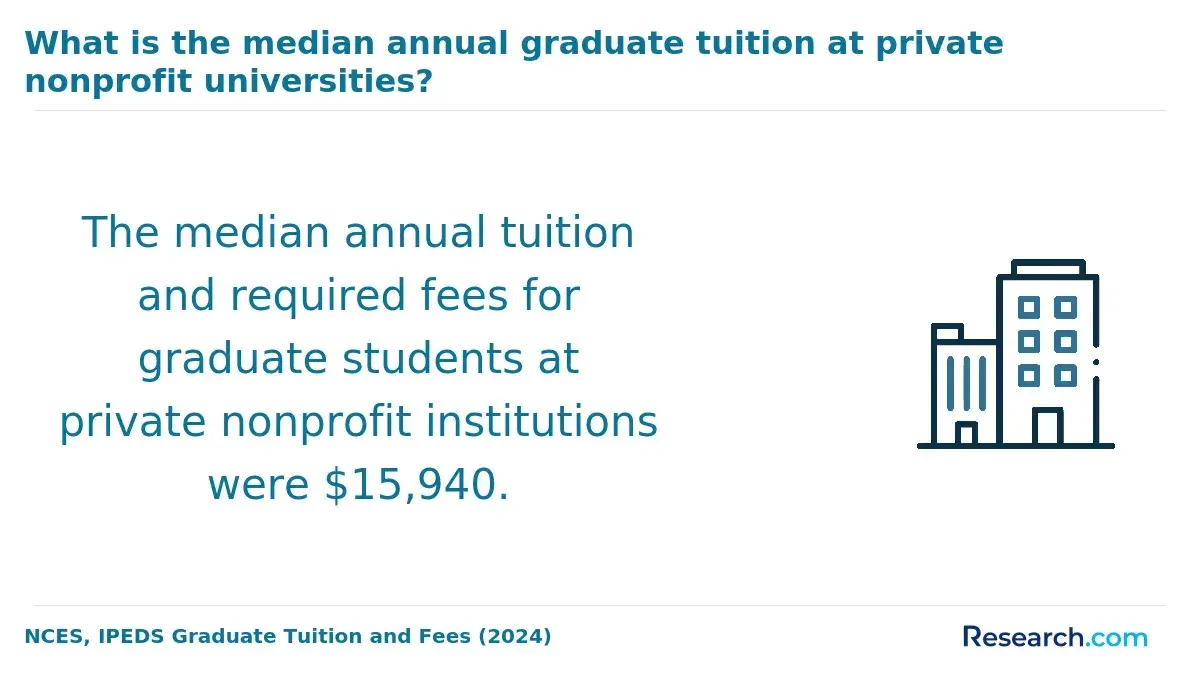
There is no single price: tuition varies by institution and credit requirements, and the advertised rate may exclude mandatory fees, materials, technology charges, or travel. A concentration may also affect the courses you must take. To estimate your own total, multiply the required credits by the applicable tuition rate, add all required charges, and account separately for borrowing costs and time diverted from the business.
Use a consistent total-cost basis when you compare MBA tuition and fees mba usa. Ask each school for the cost of the full degree at your expected pace, whether rates can change, and which expenses are not included. If your business would pay, discuss the tax treatment with a qualified adviser rather than assuming tuition is deductible.
For an owner, the most immediate outcome may be running the existing business better - not taking a new job. If you later pursue employment, your operating experience may support roles in operations, risk, technology governance, or security program management. Employers will still evaluate your industry experience and evidence that you have managed relevant work; an MBA concentration alone does not qualify you for a senior cybersecurity post or a technical security role.
For context, the U.S. Bureau of Labor Statistics reports a median annual wage of $126,520 for management occupations in May 2025. That figure covers many occupations and experience levels, not cybersecurity MBA graduates or small business owners. It should not be treated as a forecast of your earnings or used by itself to justify tuition.
How should small business owners choose an accredited cybersecurity MBA?
First, verify the institution's accreditation through the accreditor and confirm that the MBA is offered online. Then check whether the business school holds specialized accreditation, if that matters to you; institutional accreditation and business-school accreditation are different. A list of accredited online business schools can help you develop candidates, but verify each school's current status and program details independently.
Next, compare the exact cybersecurity courses, total cost, scheduling rules, and opportunities to apply assignments to your business. Speak with the program about whether the concentration appears on the transcript, whether required courses are available at your planned pace, and what happens if business demands interrupt your studies. Choose the program whose benefits you can realistically use - not the one with the strongest-sounding concentration name.
Other Things You Should Know About MBA
No. Insurers set policy-specific application and security requirements. Review the actual policy and application with your insurer or broker; a degree does not substitute for required controls.
Possibly. Ask whether instructors permit company-based projects and how the school handles confidential customer, financial, or security information.
Tax treatment depends on your circumstances and applicable rules. Consult a qualified tax professional before treating tuition as a business expense.
Not necessarily. A security elective may be useful, but confirm whether the school formally designates a concentration and what coursework it requires.
- Accreditation in the U.S. | ed.gov http://www.ed.gov/laws-and-policy/higher-education-laws-and-policy/college-accreditation/accreditation-in-the-us
- Annual Earnings by Educational Attainment - COE https://nces.ed.gov/programs/coe/indicator/cba/annual-earnings
- Cyber Guidance for Small Businesses | cisa.gov https://www.cisa.gov/cyber-guidance-small-businesses
- Cybersecurity for Small Business | Federal Trade Commission https://www.ftc.gov/business-guidance/small-businesses/cybersecurity
- What Do Cybersecurity Professionals Do? | Neumann https://learn.neumann.edu/neuperspectives/what-do-cybersecurity-professionals-do
- The time commitment and workload for an online MBA degree | WashU Olin Business School https://olin.washu.edu/about/news-and-media/news/2022/12/the-time-commitment-and-workload-for-an-online-mba-degree.php
- How Long Does It Take To Get an MBA? | Notre Dame de Namur University https://www.ndnu.edu/articles/business-management/how-long-does-it-take-to-get-an-mba.html
- Cybersecurity Management | College of Natural & Applied Science | Texas A&M University-Victoria https://www.tamuv.edu/natural-applied-science/graduate-degrees/certificates/cybersecurity-management/
- Bachelor Degree in Cybersecurity Management | Northwood University https://www.northwood.edu/programs/cybersecurity-management/
- Online MBA Cost in the US: Fees, Tuition & Other Expenses | UniAthena https://uniathena.com/online-mba-cost-in-the-us


