Best Online MBA in Risk Management Programs for First-Time Managers

Co-Founder and Chief Data Scientist
Your first management role may require you to approve budgets, handle team concerns, and explain risks to leaders outside your specialty - all while you are still learning to manage people. An online MBA with risk management coursework can help connect those decisions, but programs differ in specialization depth, scheduling, and cost. This guide offers a focused shortlist and a way to compare it. You will learn which option may fit your responsibilities, what to verify with each school, and when a shorter credential could serve you better.
Key Things You Should Know
- Start with Florida State University's online MBA with a Risk Management and Insurance major and the University of Wisconsin-Whitewater's online MBA with a Risk Management and Insurance emphasis; compare their current catalogs before treating either as your best fit.
- For a first-time manager, leadership practice and business fundamentals matter as much as specialist courses. Ask how you will apply risk concepts to budgets, teams, and decisions.
- The U.S. Bureau of Labor Statistics reports a May 2025 median annual wage of $126,520 across management occupations; that is not a predicted salary for risk management MBA graduates.
What is an online MBA in risk management?
It is a general management degree with additional study of how organizations identify, assess, finance, and respond to uncertainty. The MBA core develops skills in areas such as accounting, finance, operations, and organizational behavior. Risk-focused coursework may address insurance, enterprise risk, financial exposures, or governance, depending on the school. A formal major or emphasis offers a more identifiable pathway than one risk-related elective.
For a new manager, the value is not simply learning to name risks. It is learning to weigh a proposed control against its cost, assign responsibility, and explain the decision to your team and other stakeholders. If you mainly need broader management training, compare general online MBA programs too; the linked comparison focuses on Texas schools, so it is not a nationwide risk-management shortlist.
How this shortlist was selected: The two schools below have identifiable online MBA pathways associated with Risk Management and Insurance. That makes them useful starting points, not ranked nationwide winners. Their titles also signal a possible insurance focus: confirm that the current courses match your target field if you work in operational, technology, or enterprise risk.
The comparison identifies the distinct reason each program merits a closer look. It does not substitute for current tuition quotes or a review of the course schedule.
| Online MBA option | Identifiable risk pathway | Potential fit for a first-time manager | Confirm before applying |
| Florida State University | Risk Management and Insurance major | Worth examining if you want risk study clearly identified within the MBA | Current online major availability, required courses, live commitments, and total cost |
| University of Wisconsin-Whitewater | Risk Management and Insurance emphasis | Worth examining if you want to pair the management core with an insurance-related emphasis | Current online emphasis availability, elective rotation, residency requirements, and total cost |
Request the current online degree plan from each school. In particular, check whether risk courses are guaranteed in your intended terms and whether the curriculum teaches enterprise-wide decision-making or primarily insurance-market concepts. That distinction is more useful than choosing by the concentration label alone.
Which accreditation should an online MBA in risk management have?
First, verify that the university holds recognized institutional accreditation. Then check whether its business school or MBA has specialized business accreditation, such as AACSB, ACBSP, or IACBE. Institutional and business-school accreditation answer different questions; neither confirms that a particular risk major is available online.
Check each accreditor's directory and the university's current catalog, including whether the online MBA falls within the accredited business school. For this decision, a verified degree pathway, relevant courses, and a workable schedule are more informative than an accreditation label considered in isolation.
What careers can you pursue with a risk management MBA?
A first-time manager is usually best positioned to add risk responsibility to a role they already understand. Someone supervising claims staff might move toward insurance operations or risk-control leadership; a finance team lead might pursue controls or financial-risk work. Enterprise risk and compliance roles may be possible, but employers can expect industry knowledge, regulatory familiarity, or prior risk experience in addition to an MBA.
Managing a risk process is also different from managing people. Seek assignments that let you present trade-offs, coordinate across departments, and coach others through a change. Those examples can demonstrate readiness for broader responsibility; the degree alone does not confer it. Leadership-focused executive MBA programs may become relevant later, but they generally target a different career stage than a manager building foundational skills.
Expect the MBA core to cover managerial accounting, finance, strategy, operations, and leading teams. Risk-specific study can include insurance, enterprise risk assessment, risk financing, and related governance topics. Schools set their own requirements, so a course title is not evidence of the same depth or emphasis at both shortlisted programs.
As a new manager, look for applied work in which you must recommend a response to a business exposure, defend its budget, and communicate implementation responsibilities. Ask whether projects involve group decisions and feedback on communication - not just technical analysis. If your goal is deep quantitative modeling rather than management of risk decisions, a specialized graduate degree may be a more direct route; some MBA programs combine degrees, but that adds a different time-and-cost decision rather than automatically improving risk preparation.
Requirements vary by university. An application commonly involves a bachelor's degree, academic records, a résumé, and a statement of goals; testing, recommendations, interviews, and work-experience expectations depend on the program. Do not assume that the risk pathway requires a prior insurance job or that a general online MBA admissions policy applies unchanged to every major.
If you have only recently begun supervising others, explain both what you have already done and what you need to learn. A concrete example - such as allocating a limited team budget or resolving competing priorities - can show why management coursework is timely. Ask each admissions office whether your intended online pathway has separate entry rules and whether any foundation courses are required.
There is no reliable single timeline or price for these two programs. Completion depends on required credits, course load, risk-course availability, and whether you pause enrollment. For first-time managers, an accelerated calendar can be especially demanding if a promotion has also increased evening work or travel. Compare MBA programs with accelerated schedules only after checking whether the risk pathway is available at that pace.
Ask each school for a written estimate covering tuition, mandatory fees, materials, and any required travel, along with the terms under which those charges may change. Compare that figure with employer reimbursement rules and the number of courses you can realistically take while managing a team. A lower advertised per-credit rate is not necessarily the lower total expense.
Online study may let you keep working and apply lessons immediately, but it does not guarantee a flexible week. Live meetings, group projects, exams, and possible campus visits can conflict with a new manager's responsibilities. A campus-based program may offer more routine in-person interaction, while requiring a commute or time away from work.
Ask for a sample course schedule, the frequency of synchronous sessions, and the rules for making up missed work. Also ask which career services and employer events online MBA students can use; do not assume their recruiting experience matches that of full-time campus students. If you are comparing formats for a later career stage, online executive MBA programs are a separate option with different experience expectations.
A certification can signal focused knowledge, but choose one for the work you intend to do. The RIMS-Certified Risk Management Professional credential relates to organizational risk practice; the Financial Risk Manager credential is oriented toward financial risk; and insurance designations can be more relevant to underwriting, claims, or insurance operations. Each issuer sets its own eligibility, examination, and continuing-education rules.
For a first-time manager, an employer-supported course or credential may be a better immediate investment than an MBA if the main gap is technical risk knowledge. If you also need budgeting, organizational leadership, and cross-functional decision-making, the broader MBA case is stronger.
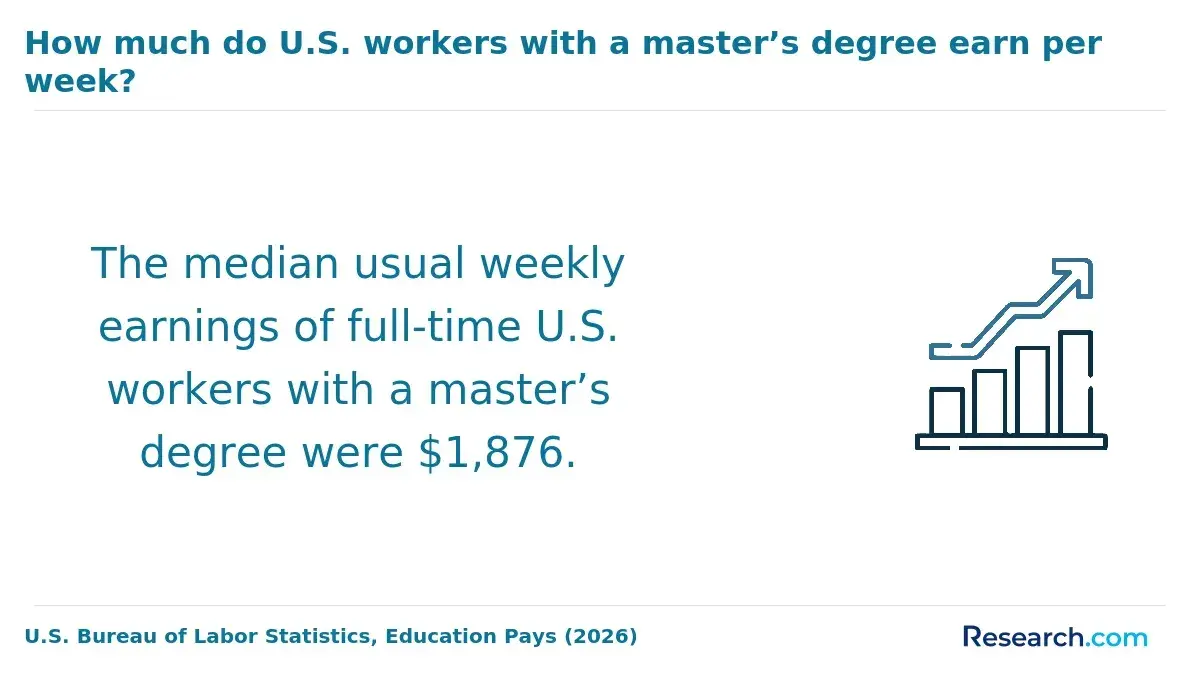
There is no defensible salary figure for graduates of these specific pathways without comparable graduate-outcome data. The U.S. Bureau of Labor Statistics reports that the median annual wage across all management occupations was $126,520 in May 2025. This broad figure includes occupations and experienced managers outside risk management; it is not an entry salary or an MBA earnings estimate.
For a useful personal comparison, examine pay for the particular job you could realistically pursue next, in your location and industry. Consider whether your employer rewards added risk responsibility, an actual promotion, or neither before treating higher earnings as a reason to borrow for the degree.
What is the job outlook for risk management professionals?
The BLS projects employment in management occupations overall to grow faster than the average for all occupations from 2025 to 2035. That describes a broad occupational group, not a forecast for risk-management MBA holders or for either shortlisted program.
Your nearer-term opportunity depends more on where risk decisions already sit in your organization. Look for responsibilities involving controls, insurance, vendor exposure, operational continuity, or financial decisions. Taking ownership of a measurable project can help you test your interest and build relevant experience before committing to a degree.
Other Things You Should Know About MBA
Yes. Ask to help maintain a risk register, assess a vendor, or document controls for a team process. The work can clarify which skills you lack and whether you enjoy the field.
That depends on the school's credential and transcript policies. Ask the registrar exactly how the completed pathway will be recorded.
No degree concentration replaces a state insurance license. Check the rules for the state and type of insurance activity involved.
Ask about course sequencing, breaks in enrollment, and how long completed credits remain valid. Those policies matter if a promotion changes your workload.
- Cost of Attendance (Budget) | 2025-2026 Federal Student Aid Handbook https://fsapartners.ed.gov/knowledge-center/fsa-handbook/2025-2026/vol3/ch2-cost-attendance-budget
- General Schedule Qualification Policies | U.S. Office of Personnel Management https://www.opm.gov/policy-data-oversight/classification-qualifications/general-schedule-qualification-policies/
- Types of Financial Aid: Grants, Work-Study, and Loans | studentaid.gov https://studentaid.gov/understand-aid/types
- Enterprise Risk and Resilience Management | CMU Software Engineering Institute https://www.sei.cmu.edu/enterprise-risk-and-resilience-management/
- Instruction Modes - BC Knowledge for Students https://students.brooklyn.edu/knowledge-base/instruction-modes/
- What's the Difference Between Asynchronous and Synchronous Learning? | Ohio State Online https://online.osu.edu/content-hub/blogs/whats-the-difference-between-asynchronous-and-synchronous-learning/
- Modes of Instruction - College of Staten Island - CUNY https://www.csi.cuny.edu/students/registrar/registration-information/modes-instruction
- MBA in Enterprise Risk Management | The University of Olivet https://www.uolivet.edu/academics/professional-graduate/mba-program/mba-in-enterprise-risk-management/
- M.B.A. in Risk Management | St. John's University https://www.stjohns.edu/academics/programs/risk-management-master-business-administration
- What Are The Most Popular MBA Specializations? https://www.mba.com/explore-programs/mba-programs/mba-specializations-everything-you-need-to-know