2027 How to Get the Lowest Student Loan Refinance Rate

Student Finance & Loan Expert
Many borrowers face high-interest rates on their student loans, increasing the total cost of repayment and delaying financial goals. This issue becomes more pressing when initial loans come from multiple lenders with varying terms. Refinancing offers a path to potentially lower interest rates and consolidating multiple loans into one, but finding the best rate can be complex and time-consuming.
Factors such as credit score, loan type, and market conditions significantly influence available refinancing options. This article explores proven strategies and critical considerations to secure the lowest possible student loan refinance rate and reduce overall financial burden efficiently.
- How do you get the lowest student loan refinance rate? Getting the Lowest Refinance Rate
- What affects student loan refinance rates the most? What Drives Refinance Rates Most?
- Who qualifies for student loan refinancing? Refinancing Eligibility
- Should you refinance or consolidate student loans? Refinancing vs Consolidating Student Loans
- How do federal and private student loans differ? Federal vs Private Student Loans
- What are the current federal student loan repayment options? Federal Student Loan Repayment Options
- How do interest rates and fees compare across loan types? Rates and Fees Across Student Loan Types
- What happens if you defer or forbear student loans? Student Loan Deferment and Forbearance
- How do student loan forgiveness programs work? Student Loan Forgiveness Programs
- How do parent and graduate student loans work? Parent and Grad Loans
How do you get the lowest student loan refinance rate?
To secure the lowest student loan refinance rates in the US, focus first on your credit score. Lenders usually require a score above 650 to offer competitive rates, with the best rates available to those scoring over 750. Reducing existing debt and avoiding new credit inquiries are essential steps to improve your creditworthiness before applying.
Select a lender providing various loan terms. Shorter terms like 5 or 7 years generally offer lower interest rates than 10-year loans, but expect higher monthly payments. Balance your budget to choose a term that aligns with your financial goals and maximizes interest savings.
Evaluate both fixed and variable interest rates. Variable rates start lower but can rise over time, whereas fixed rates remain stable. Consider your risk tolerance and current market conditions carefully before deciding. Many lenders also require proof of steady income and employment, typically a minimum of one year in the same field, to reduce lending risk and qualify for better rates.
Applying with a creditworthy co-signer can further enhance your chances of qualifying for the best student loan refinance rates. It may significantly lower your interest if your credit or income is borderline. Shopping around and obtaining multiple loan offers is crucial; borrowers who refinanced student loans in 2024 saved an average of $253 monthly and $18,668 overall.
Be prepared with documentation like tax returns, pay stubs, and current loan statements to speed up processing and secure the lowest possible rates. For students exploring additional financial options, consider student loans for off-campus rent as part of your funding strategy.
What affects student loan refinance rates the most?
The primary factors influencing student loan refinance rates include credit score, debt-to-income ratio (DTI), income stability, and specific loan details. Borrowers with a credit score above 700 generally qualify for better rates, with those scoring 750 or higher often receiving offers near or below 4%. In contrast, applicants below 650 may face rates exceeding 7%. This highlights the credit score impact on student loan refinancing and its crucial role in loan approvals and interest rates.
Debt-to-income ratio is another key element. A DTI under 35% signals financial reliability, improving chances of favorable terms, while a DTI over 45% may result in higher rates or application denial. Consistent income also plays a vital role. Stable employment with steady or rising income boosts lender confidence, whereas self-employed individuals or those with fluctuating earnings might face higher rates unless supplemental documentation is provided.
Loan characteristics further affect refinancing offers. Larger balances often secure better rates due to lower risk per dollar lent. Fixed-rate loans usually carry slightly higher rates but offer payment stability, whereas variable rates can start lower-for example, 3.65% compared to 3.95% fixed rates as reported by Credible. Loan term length affects rates, with shorter terms typically having lower interest but higher monthly payments. Additionally, cosigners may lower rates for borrowers with less strong financial profiles.
For those seeking independent options, understanding how to navigate independent student loans can broaden refinancing possibilities and improve credit profiles, ultimately impacting student loan refinance rates factors.
Who qualifies for student loan refinancing?
Student loan refinancing eligibility depends largely on creditworthiness, stable income, and the status of existing loans. Most lenders require a credit score generally above 650, ideally 700 or higher, to secure better rates. A 2024 LendingTree analysis found that borrowers with FICO scores of 780 or more receive refinance rates about 3.71 percentage points lower than those scoring between 620 and 639. This highlights the impact of credit on loan refinancing requirements in the US.
Applicants must show steady income through pay stubs, tax returns, or other employment proof. Self-employed borrowers often need to provide detailed financial documents verifying earnings. Existing loans typically must be in good standing with no recent delinquencies or defaults. While refinancing defaulted loans is sometimes possible, it usually requires cosigners or additional steps.
Those eligible include recent graduates and working professionals with federal or private student loans. However, refinancing federal loans into private ones means losing protections such as income-driven repayment plans and federal forgiveness options.
Common qualification criteria include:
- Credit score generally above 650, ideally 700+ for better rates
- Stable employment or consistent income
- Loan balances often exceeding $5,000-$10,000 to justify refinancing costs
- Debt-to-income ratio under 40%
Lenders may ask for a cosigner if credit history or income is limited, improving approval chances. Meeting these core terms maximizes prospects for favorable rates and terms. For those exploring options, specialized programs such as student loan refinance bonus offers can further enhance benefits when refinancing.
Should you refinance or consolidate student loans?
Refinancing student loans typically offers lower interest rates and can save borrowers significant money over time. Consolidation combines multiple federal loans into one but usually does not reduce interest rates; rather, it averages them. Choosing to refinance makes sense if you want to secure a lower rate, especially if your credit profile has improved since taking out the original loans. This distinction is important when comparing options like student loan refinance vs consolidation.
Federal loan consolidation preserves access to benefits such as income-driven repayment plans and Public Service Loan Forgiveness, which refinancing with private lenders eliminates. On the other hand, refinancing moves your loans to private lenders, potentially losing these protections but gaining the opportunity for better rates and flexible repayment terms. Evaluating the best student loan refinancing options in the United States should consider these trade-offs carefully.
The presence of a co-signer can significantly affect refinancing outcomes. According to EducationData.org, borrowers who refinance with a creditworthy co-signer qualify for rates averaging 1.77 percentage points lower than those without one. For example, if a borrower without a co-signer qualifies for a 6% rate, adding a co-signer could reduce it to about 4.23%, resulting in substantial interest savings.
Borrowers should assess:
- Whether they need federal loan benefits that refinancing would remove
- Their current creditworthiness compared to when the loan originated
- The potential cost savings demonstrated by rate reductions with a co-signer
- Income stability to handle potentially shorter or altered repayment terms
For those with strong credit or a co-signer, refinancing offers clear financial advantages. For others relying on federal protections, consolidation might be the better choice despite higher rates. Students interested in options can also explore how to pay for nursing school as part of broader financial planning.
How do federal and private student loans differ?
Federal and private student loans differ mainly in interest rates, borrower protections, and eligibility criteria. Federal loans are government-backed with fixed, generally lower interest rates. Private loans, offered by banks and other lenders, often feature variable rates that change with the market.
Federal loans provide benefits such as income-driven repayment plans, deferment, forbearance, and possible loan forgiveness. Private loans typically lack these protections and may impose stricter repayment terms, increasing financial risk during economic hardship.
Eligibility for federal loans is mostly based on financial need, with little emphasis on credit scores. Private lenders evaluate creditworthiness and income, offering competitive rates to borrowers with strong credit but higher costs or denial to those with weaker credit.
Refinancing private loans is sensitive to interest rate fluctuations. After the Federal Reserve's 525 basis-point hike cycle, refinancing rates for private loans rose by about 2-3 percentage points, closely tracking benchmark rates, according to Bankrate. This highlights the need to monitor market trends when considering refinancing.
Federal loans cannot be directly refinanced but can be consolidated, while refinancing private loans may reduce monthly payments at the cost of losing federal borrower protections. Weigh these factors carefully based on your financial situation and loan portfolio.
What are the current federal student loan repayment options?
Federal student loan repayment options offer a range of plans tailored to different financial circumstances. The Standard Repayment Plan features fixed monthly payments over 10 years, typically resulting in higher payments but less total interest.
The Extended Repayment Plan stretches payments up to 25 years, reducing monthly costs but increasing overall interest. Meanwhile, the Graduated Repayment Plan starts with lower payments that rise every two years during a 10-year period, suited for borrowers expecting income growth.
Income-Driven Repayment (IDR) plans-including Income-Based Repayment (IBR), Pay As You Earn (PAYE), Revised Pay As You Earn (REPAYE), and Income-Contingent Repayment (ICR)-adjust payments based on income and family size, extending terms to 20-25 years. After qualifying, remaining balances might be forgiven, though forgiven amounts may be taxable.
Borrowers working in government or nonprofit sectors can benefit from Public Service Loan Forgiveness (PSLF), which forgives remaining loan balances after 120 qualifying payments under eligible plans.
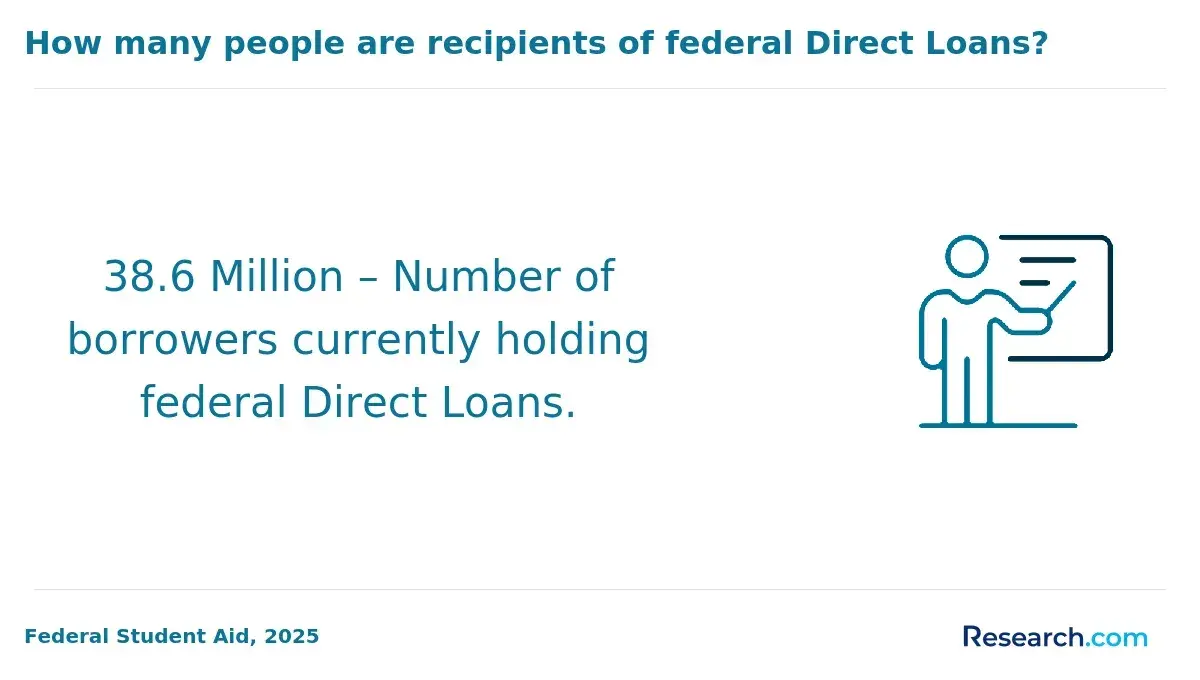
Approximately 7.4 million federal Direct Loan borrowers face interest rates of 7% or higher. Refinancing to private loans with rates around 4-5% could save thousands in interest but eliminates federal protections like IDR and forgiveness programs. This option fits those with stable finances and no need for federal benefits.
- Standard Repayment Plan: 10 years, fixed payments
- Extended Repayment Plan: up to 25 years, lower monthly payments
- Graduated Repayment Plan: payments increase every two years
- Income-Driven Repayment Plans: payments based on income, possible forgiveness
- Public Service Loan Forgiveness: forgiveness after 120 qualifying payments
How do interest rates and fees compare across loan types?
Interest rates for student loan refinancing vary mainly between fixed and variable rates. Fixed rates remain the same throughout the loan term, giving borrowers predictable monthly payments and protection against market fluctuations. For example, a fixed-rate refinance loan often starts around 5.00% APR, helping with budgeting certainty despite slightly higher initial costs.
Variable rates may start lower, around 4.50% APR or less, but they can increase as market conditions change, potentially raising the total interest paid. This option suits borrowers who expect to pay off their loans quickly or anticipate stable or decreasing interest rates.
Fees also impact overall costs. Origination fees, usually ranging from 0% to 1% of the loan amount, can apply, though prepayment penalties are typically avoided by refinancing borrowers. It's important to review loan terms carefully to understand these charges.
Key factors to consider when comparing refinance offers include:
- The initial APR and potential changes over time
- Loan fees such as origination or late fees
- Your repayment timeline and income stability
- The trade-off between lower initial rates and payment stability
According to Bankrate, the average difference between the lowest advertised variable and fixed refinance APRs in early 2026 hovered between 0.30 and 0.50 percentage points, highlighting the subtle cost-benefit balance borrowers must evaluate.
What happens if you defer or forbear student loans?
Deferment and forbearance pause student loan payments temporarily, but interest usually continues to build, increasing your overall loan balance. For federal unsubsidized loans, unpaid interest during these periods is added to the principal once payments restart, a process called capitalization.
Forbearance offers payment relief for up to 12 months (sometimes longer with approval) during financial hardship or other qualifying situations. Deferment applies to specific conditions like enrollment in school, military duty, or economic hardship, often allowing reduced or paused interest accrual depending on the loan type. Private loans rarely provide deferment or interest-free forbearance options.
Extending repayment through deferment or forbearance can significantly raise the total cost. For example, increasing a $50,000 refinanced loan term from 10 to 20 years at 6% interest raises total interest paid by about 78%-from $16,613 to $29,897-according to a 2025 EducationData.org analysis.
Borrowers should consider these trade-offs carefully. Making interest payments during deferment or forbearance can help avoid capitalization. Always contact your loan servicer to understand how pausing payments can affect your repayment timeline and overall costs.
How do student loan forgiveness programs work?
Student loan forgiveness programs reduce or eliminate a borrower's remaining federal student debt under specific conditions. Typically, borrowers must work in qualifying public service jobs, certain professions, or for designated employers for a set period, often 10 years. After completing all required payments and employment terms, the remaining loan balance may be forgiven.
Common examples include Public Service Loan Forgiveness (PSLF), which forgives federal student loans after 120 qualifying payments while employed full-time by a government or nonprofit organization. Income-Driven Repayment (IDR) forgiveness cancels any remaining debt after 20 to 25 years of payments, with amounts based on income and family size.
Key points to consider:
- Most forgiveness programs apply only to federal loans, not private or refinanced loans.
- Refinancing federal loans into private loans usually results in losing eligibility for forgiveness.
- Forgiven loan amounts can sometimes be taxable, depending on the program and timing.
- Comparing offers from multiple lenders is essential for refinancing decisions.
- According to 2024 data from the Consumer Financial Protection Bureau, borrowers who request quotes from at least three student loan refinance lenders save an average of 1.70 percentage points on interest rates. This can lower costs but must be balanced against potential loss of forgiveness benefits.
How do parent and graduate student loans work?
Parent PLUS loans are federal loans borrowed by parents to cover their child's education expenses, with the parent responsible for repayment and interest accumulating during school. These loans usually have higher interest rates and fewer flexible repayment options than graduate student loans.
raduate student loans, including federal Graduate PLUS or private loans, are taken out by the student and generally offer income-driven repayment plans and possible payment deferment during advanced studies.
Refinancing can reduce interest rates by consolidating multiple loans, but it may mean losing federal protections. When refinancing parent loans, some lenders require the parent to refinance, while others allow the graduate to take over responsibility, which affects credit criteria and repayment obligations.
Many borrowers miss out on benefits by not enrolling in autopay. Around 62% of those who refinanced missed an average 0.25 percentage-point rate discount, costing them hundreds over the loan's life, according to EducationData.org.
Consider these tips for managing federal loans and refinancing:
- Decide who should refinance parent loans based on credit and income.
- Confirm if refinancing causes loss of federal loan benefits.
- Sign up for autopay immediately after refinancing to secure rate discounts.
- Compare offers from reputable lenders to find the lowest interest rates.
Other Things You Should Know About
Yes, you can refinance your student loan multiple times. This strategy can help you secure better interest rates or adjust loan terms as your financial situation evolves. Ensure you compare lenders and consider any long-term impacts on your repayment plan and benefits.
Refinancing federal student loans into a private loan will cause you to lose access to federal benefits like income-driven repayment plans and loan forgiveness programs. Before refinancing, weigh these potential losses against the benefits of a lower interest rate or monthly payment.
Typically, you will need recent pay stubs, tax returns, proof of existing student loan balances, and personal identification. Lenders may also require information about your employment status and credit history to evaluate your application.
Refinancing can potentially improve your credit score if you make timely payments under the new loan terms. However, the initial hard credit inquiry may cause a temporary dip. Consistent repayment and reduced credit utilization over time are the key factors for credit improvement.