2027 Online Paralegal Studies Degrees With Veteran-Friendly Funding Support

Co-Founder and Chief Data Scientist
Choosing an online paralegal studies degree is a funding, flexibility, and career-fit decision-especially for veterans using education benefits. The U. S. Bureau of Labor Statistics reported a May 2024 median annual wage of $61,010 for paralegals and legal assistants, making this a practical legal career path that usually does not require law school. This guide explains degree types, accreditation, GI Bill use, costs, online learning trade-offs, curriculum, certification, and career outcomes so you can compare programs with less guesswork.
Key Things You Should Know
- Veterans should prioritize institutionally accredited programs with a VA School Certifying Official, clear GI Bill processing, military transfer-credit review, and career services tied to legal employers.
- Online paralegal degrees vary widely: certificates may support faster entry, associate degrees build foundational legal support skills, and bachelor's degrees can improve competitiveness for corporate, government, and specialized roles.
- The May 2024 median wage for paralegals and legal assistants was $61,010, but outcomes depend on region, employer type, experience, specialization, certifications, and the quality of practical legal training.
What is an online paralegal studies degree and how does it prepare legal support professionals?
An online paralegal studies degree is a college program that prepares students to assist attorneys with legal research, document drafting, case organization, client intake, discovery support, trial preparation, and compliance work. Paralegals are not attorneys and cannot give legal advice, represent clients in court, or set legal fees, but they often perform much of the structured research and document work that keeps legal matters moving.
Programs may be offered as certificates, associate degrees, bachelor's degrees, or legal studies degrees with a paralegal concentration. The right option depends on your prior education, career goal, and timeline. Veterans with substantial military experience or previous college credit may shorten the path by transferring credits into an associate or bachelor's program.
The table below compares common online paralegal study options so you can match credential level to your starting point and career target.
| Credential type | Best fit | Typical focus | Decision trade-off |
| Undergraduate certificate | Students who already have college credit or want faster entry | Core legal research, writing, civil litigation, and ethics | Fast and focused, but may be less competitive where employers prefer degrees |
| Associate degree | New college students seeking entry-level legal support roles | General education plus paralegal fundamentals | Balanced cost and career preparation, but may not support advancement as well as a bachelor's degree |
| Bachelor's degree | Students seeking broader legal, corporate, government, or compliance options | Advanced writing, legal technology, specialty law, research, and management-ready skills | Stronger long-term credential, but requires more time and funding |
| Post-baccalaureate certificate | Career changers who already hold a bachelor's degree | Legal specialty coursework without repeating general education | Efficient for graduates, but not designed as a full undergraduate degree |
Paralegal studies is also distinct from broader criminal justice training. If you are comparing legal office work with policing, corrections, or public safety administration, a criminal justice online program may fit different career goals than a paralegal-focused curriculum.
How do online paralegal programs support veterans through GI Bill and military education benefits?
Veteran-friendly online paralegal programs support students in two ways: they help students use benefits correctly, and they reduce avoidable friction caused by deployments, relocations, work schedules, disability-related needs, or transfer-credit issues. The strongest programs do not simply say they accept military benefits; they have trained staff who understand VA certification, enrollment changes, and military transcripts.
Before enrolling, veterans should confirm how the school handles benefits and academic records. These checks matter because a program can be online and accredited but still create problems if it has weak advising, slow certification, or unclear course sequencing.
- Confirm that the institution is approved for VA education benefits and has an accessible School Certifying Official.
- Ask whether the program participates in the Yellow Ribbon Program if your tuition may exceed standard Post-9/11 GI Bill coverage.
- Request a written evaluation of Joint Services Transcript, Community College of the Air Force, CLEP, DSST, and prior college credits before committing.
- Ask how enrollment intensity affects housing allowance, book stipend timing, and benefit usage.
- Verify policies for military withdrawals, temporary duty interruptions, and re-entry after deployment or medical leave.
- Check whether online courses are asynchronous, synchronous, or mixed, since required live sessions may affect students in different time zones.
A common mistake is assuming that "military-friendly" automatically means low out-of-pocket cost. A better approach is to ask for a degree plan, benefits estimate, transfer-credit evaluation, and remaining-cost breakdown before the first term begins.
Which accredited online paralegal studies programs offer the strongest veteran-friendly resources?
The strongest veteran-friendly online paralegal programs usually share the same traits: institutional accreditation, legal specialty coursework, transparent tuition, VA benefit processing, military credit review, accessible advising, and career services that understand legal hiring. Because program formats, ABA approval status, tuition, and VA participation can change, use the examples below as a comparison starting point rather than a fixed ranking.
This table highlights program models that veterans commonly compare when searching for online paralegal or legal studies education. Always verify the current catalog, accreditation, benefit eligibility, and delivery format directly with the school before applying.
| Program example | Online legal study option | Veteran-friendly feature to verify | Best-fit student |
| University of Maryland Global Campus | Online legal studies pathway | Military advising, transfer-credit review, and VA benefit support | Veterans seeking a public, adult-learner-focused online option |
| Liberty University | Online paralegal studies bachelor's pathway | Military tuition policies, benefit processing, and flexible online terms | Students wanting a faith-based private university with online legal coursework |
| National University | Paralegal studies or legal studies pathway depending on catalog | Veteran services, accelerated course options, and current ABA-related details where applicable | Adult learners who want shorter course blocks and structured advising |
| Purdue Global | Online legal support or legal studies pathway | Military tuition reductions, prior learning assessment, and online student support | Students seeking competency-focused online legal support training |
| American Public University System | Online legal studies pathway | Military-focused admissions, tuition policies, and transfer-credit processes | Military-connected students seeking a fully online legal studies option |
When comparing programs, look beyond labels. A strong paralegal program should require legal research and writing, civil litigation, legal ethics, technology skills, and supervised practical assignments. A weak program may rely heavily on survey courses, provide little feedback on legal writing, or fail to explain how graduates prepare for entry-level legal jobs.
What accreditation should online paralegal studies degrees have for credible legal training?
At minimum, an online paralegal studies degree should come from an institution accredited by an agency recognized by the U.S. Department of Education or the Council for Higher Education Accreditation. Institutional accreditation affects transfer credit, federal financial aid eligibility, graduate school recognition, and employer confidence.
Program-level recognition is more nuanced. The American Bar Association approves some paralegal education programs, but ABA approval is not the same as institutional accreditation and is not required for every paralegal job. ABA-approved programs can be valuable, especially in competitive legal markets, but fully online delivery may be subject to specific program rules. Students should check the current ABA directory and school catalog rather than relying on old marketing language.
The table below separates the main quality signals so you can evaluate credibility without overvaluing any single badge.
| Quality signal | Why it matters | What to verify |
| Institutional accreditation | Supports federal aid, credit transfer, and general academic legitimacy | Accreditor recognition and active status |
| ABA program approval | May strengthen employer confidence in some markets | Whether the specific paralegal program is currently approved and how online courses are delivered |
| Legal specialty coursework | Shows the program teaches paralegal-specific competencies rather than only general law topics | Required courses in research, writing, litigation, ethics, and legal technology |
| Faculty qualifications | Experienced attorneys and paralegals can provide practical feedback | Instructor legal background and availability for online students |
| Career support | Legal hiring often depends on writing samples, internships, and local employer networks | Resume help, mock interviews, internship guidance, and employer connections |
Red flags include unrecognized accrediting claims, vague "pre-law" branding without paralegal coursework, no legal ethics requirement, no writing-intensive assignments, and refusal to provide a transfer-credit or total-cost estimate before enrollment.
How do online paralegal studies programs compare with campus-based options for flexibility and outcomes?
Online paralegal programs are often the better fit for veterans, working adults, caregivers, and students who cannot relocate. Campus programs can be stronger for students who want face-to-face networking, local internships, courtroom observation, or immediate access to legal clinics. The best format is the one that helps you finish the credential while building employable legal skills.
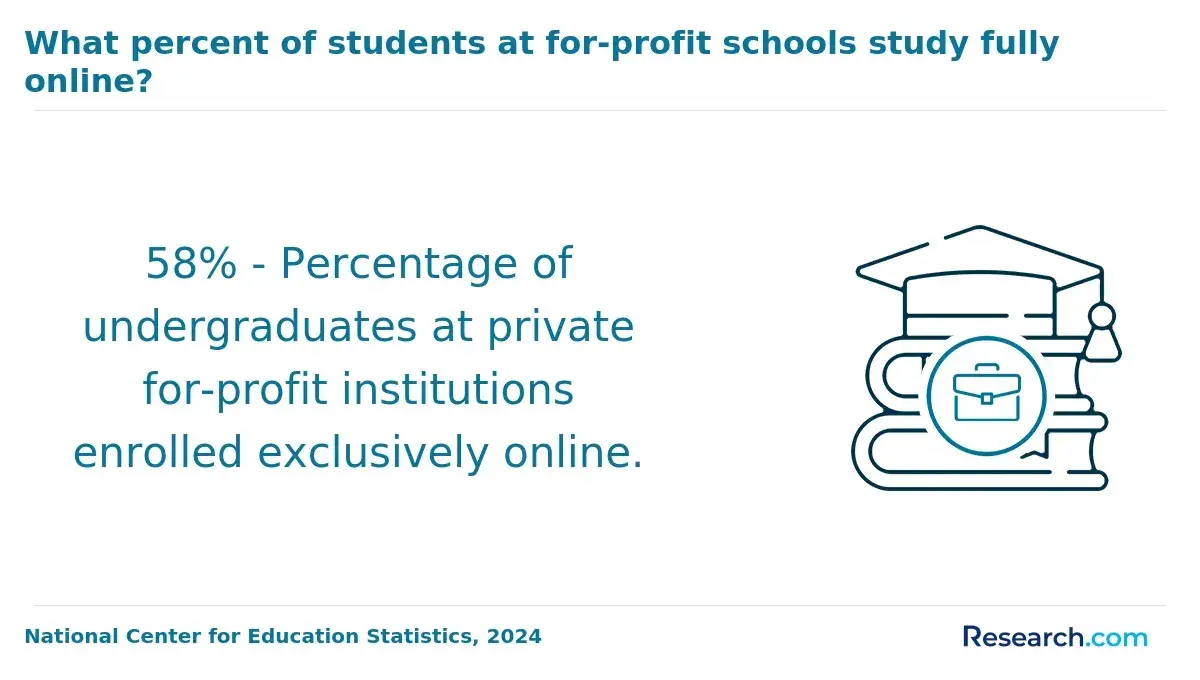
Online education has become a mainstream choice, but flexibility should not be confused with less rigor. Strong online programs still require frequent writing, legal database work, citations, deadlines, group communication, and detailed instructor feedback.
The table below compares online and campus formats across factors that directly affect completion, cost, and career preparation.
| Factor | Online paralegal degree | Campus-based paralegal degree | Best choice when |
| Schedule flexibility | Often asynchronous or evening-friendly | Usually fixed class meeting times | Online is better for work, military obligations, or family care |
| Networking | Depends on virtual events, internships, and faculty engagement | May offer stronger local legal community access | Campus is better if you want local law firm connections |
| Cost control | Can reduce commuting and relocation expenses | May include transportation, parking, or housing costs | Online is better when total cost matters more than campus access |
| Learning style | Requires self-direction and written communication | Provides in-person structure and immediate discussion | Campus is better if you need live accountability |
| Practical experience | May require students to find local internships | May have established local placements | Choose the program with the stronger internship support, regardless of format |
Students comparing related justice or behavioral science paths should also consider whether they want legal document work or investigative and assessment-oriented roles. For example, those asking what can I do with a masters in forensic psychology are usually exploring a different graduate-level path tied to psychology, courts, corrections, and behavioral assessment.
What courses and practical skills are typically included in an online paralegal curriculum?
A strong online paralegal curriculum teaches students how to support legal work accurately, ethically, and efficiently. The most useful programs go beyond legal terminology and require students to produce documents, research authority, organize evidence, and apply procedural rules to realistic scenarios.
Most paralegal programs include a core set of courses, followed by electives that let students explore specialties such as family law, criminal law, business law, real estate, immigration, or estate planning.
- Introduction to paralegal studies and the legal system
- Legal research using primary and secondary authority
- Legal writing, citation, memoranda, and correspondence
- Civil litigation, discovery, pleadings, and trial preparation
- Legal ethics and unauthorized practice of law rules
- Contracts, torts, criminal law, family law, or business organizations
- Law office technology, e-discovery, case management software, and document management
- Capstone, internship, practicum, or portfolio-based legal writing project
Technology is increasingly important. Legal teams use e-discovery platforms, cloud-based case management systems, document automation tools, and AI-assisted research products. Students should learn how to use technology while also checking citations, protecting confidentiality, and understanding that AI output cannot replace legal judgment or attorney supervision.
Before choosing a program, ask whether students graduate with writing samples or a portfolio. Employers often want evidence that applicants can summarize facts, follow formatting rules, research carefully, and communicate professionally under deadlines.
What admission requirements, transfer policies, and prior military credit options do programs offer?
Admission requirements depend on credential level. Undergraduate certificates and associate degrees may require a high school diploma or GED, while bachelor's completion programs may expect prior college credit. Post-baccalaureate certificates generally require an earned bachelor's degree. Selective programs may also ask for writing placement, transcripts, or minimum GPA.
Veterans should pay special attention to transfer policies because prior learning can significantly affect time to completion and benefit usage. The American Council on Education provides military credit recommendations, but each college decides how those recommendations apply to a specific degree plan.
Use this step-by-step process before enrolling so you do not waste benefits on courses you may not need.
- Request official transcripts from every college previously attended, even if credits are old or incomplete.
- Send the Joint Services Transcript or Community College of the Air Force transcript to the school before accepting admission if possible.
- Ask for a degree audit showing which credits apply to general education, electives, major requirements, and remaining courses.
- Confirm whether CLEP, DSST, prior learning assessment, or professional training can reduce elective requirements.
- Ask whether transfer credits affect residency requirements, honors eligibility, financial aid pace, or VA enrollment certification.
- Keep written copies of all credit decisions and appeal procedures.
A common mistake is choosing the school that accepts the most credits without checking how those credits apply. Elective credit can be helpful, but credits that satisfy required courses are usually more valuable because they shorten the actual path to graduation.
How much do online paralegal degrees cost and what financial aid exists for veterans?
The cost of an online paralegal degree depends on credential level, school type, transfer credits, tuition rate, technology fees, books, legal database access, and time to completion. Veterans should focus on net cost after benefits, not advertised tuition alone.
Use the cost categories below when requesting an estimate from admissions or financial aid. Prices should be listed separately so you can compare programs accurately.
- Per-credit tuition for in-state, out-of-state, military, or online students
- Mandatory technology, distance learning, graduation, transcript, or student services fees
- Books, legal writing manuals, citation guides, and legal research platform costs
- Exam proctoring, portfolio, internship, or background check fees if required
- Remaining cost after Post-9/11 GI Bill, Montgomery GI Bill, Yellow Ribbon, Tuition Assistance, scholarships, Pell Grants, and transfer credits
For federal aid context, the maximum Pell Grant for the 2024-2025 award year was $7,395. That figure does not mean every student receives the maximum, but it shows why completing the FAFSA can matter even for veterans who expect the GI Bill to cover most costs.
The main veteran and student-aid options include Post-9/11 GI Bill benefits, Montgomery GI Bill benefits, Veteran Readiness and Employment for eligible students with service-connected disabilities, Yellow Ribbon funding at participating schools, federal grants, federal loans, state veteran tuition programs, employer tuition assistance, and institutional military scholarships.
To avoid overpaying, ask each school for a written estimate showing tuition, fees, benefit coverage, expected remaining balance, number of benefit months used, and refund rules if you drop or withdraw. If two programs look similar, the better value is usually the one that gives you more applied transfer credit, stronger career support, and fewer hidden fees-not necessarily the lowest sticker price.
What paralegal careers, salaries, and advancement opportunities can graduates expect?
Graduates of online paralegal studies programs commonly pursue roles in law firms, corporate legal departments, government agencies, courts, insurance companies, banks, healthcare organizations, real estate offices, and compliance teams. Entry-level work may involve file maintenance and document preparation, while experienced paralegals may manage discovery, coordinate closings, support investigations, or specialize in complex litigation.
The U.S. Bureau of Labor Statistics reported a May 2024 median annual wage of $61,010 for paralegals and legal assistants. Treat that figure as a national midpoint, not a promise. Pay varies by metro area, employer size, legal specialty, overtime expectations, degree level, certification, and years of experience.
The table below summarizes common career directions and how they differ in daily work and advancement potential.
| Career direction | Typical responsibilities | Advancement path |
| Litigation paralegal | Draft pleadings, organize discovery, summarize depositions, prepare trial binders | Senior litigation paralegal, trial technology specialist, case manager |
| Corporate paralegal | Maintain entity records, support contracts, assist with governance and filings | Corporate governance specialist, compliance analyst, legal operations role |
| Real estate paralegal | Prepare closing documents, review title materials, coordinate transactions | Senior real estate paralegal, title or escrow management |
| Estate planning and probate paralegal | Draft client documents under attorney supervision, manage probate filings, communicate with beneficiaries | Trust administration specialist, senior probate paralegal |
| Government or public sector legal assistant | Support attorneys in agencies, courts, prosecutors' offices, or public defenders' offices | Supervisory legal assistant, investigator support, court administration |
Paralegal work is a good fit for detail-oriented students who like writing, research, deadlines, and organized problem-solving. It may not fit students who want to argue in court, give legal advice, or work independently without attorney supervision. Those drawn more to behavioral investigation than legal support may also compare adjacent justice careers, including research on criminal profiler salary and education pathways.
Are certification exams or state-specific requirements needed to work as a paralegal?
Most states do not license paralegals the way they license attorneys, but requirements can vary by employer, jurisdiction, job title, and work setting. Some states define who may use certain paralegal titles, some employers prefer graduates of ABA-approved programs, and some roles require experience with specific practice areas or court systems.
Professional certification is usually voluntary, but it can strengthen a resume when paired with education and experience. Common options include exams from national paralegal associations and state or local professional organizations. Certification should be viewed as a credibility signal, not a substitute for strong legal writing, ethics, and technology skills.
Before paying for an exam or certificate, take these practical steps.
- Review job postings in your target city and practice area to see whether certification is required, preferred, or rarely mentioned.
- Ask the program director which certifications graduates commonly pursue and whether coursework aligns with exam topics.
- Check eligibility rules for education, experience, continuing education, and recertification before registering.
- Confirm whether your state has title restrictions, notary rules, document preparer rules, or court-specific requirements that affect the work you want to do.
- Avoid programs that imply certification allows you to practice law independently or provide legal advice.
Certification decisions should match your target role. A litigation paralegal, immigration paralegal, contract specialist, and probate paralegal may benefit from different credentials or continuing education. Students comparing hands-on forensic support roles should note that those paths may involve very different requirements and work settings, as seen in resources discussing autopsy tech salary and training expectations.
Other Things You Should Know About Paralegal Studies
Yes, some employers hire legal assistants without a degree, especially for administrative roles. However, a paralegal certificate or degree can make you more competitive for research, drafting, litigation support, and specialized legal work.
It can be, especially if you want exposure to legal writing, court procedures, and law office operations before law school. It is not required for law school admission, so compare it with majors that build writing, analysis, and GPA strength.
Certificates may take a few months to about a year, associate degrees often take about two years, and bachelor's degrees commonly take about four years for first-time students. Transfer credits, military credit, course load, and term structure can shorten or extend the timeline.
In 2027, many online paralegal programs with veteran-friendly funding support integrate internships as optional components, recognizing their value in providing practical experience. However, these programs often provide alternative experiential learning paths for those unable to participate in traditional internships.
References
- Military Friendly Colleges Offering Paralegal Degrees https://www.militarysupportivecolleges.com/careers/guide-paralegal-degrees-certificates/
- Your Legal Toolkit: Understanding the Paralegal Course Curriculum https://www.paralegalinst.com/complete-paralegal-course-curriculum-guide
- Military Education Benefits https://paralegal.edu/military/
- Online Paralegal Certification Training | Ursuline - Liberal Arts College in OH https://www.ursuline.edu/academics/continuing-education/career-training/certified-paralegal
- NALP Paralegal Qualifications - Level 3 & 4 Diploma - Online Courses - Law Training Centre https://www.ltckent.co.uk/courses/nalp-paralegal-course/
- Paralegal Salary Guide | How Much Can You Make? https://www.learnhowtobecome.org/paralegal-salary/
- Title IV Federal Financial Aid - Online Paralegal School - Crestpoint ... https://www.nationalparalegal.edu/financialaid.aspx
- PARALEGAL – PROFESSIONAL LICENSURE/CERTIFICATION DISCLOSURE https://www.villanova.edu/university/provost/about/education-requirements/paralegal.html
- Earn an Online Paralegal Degree | OEDb.org https://www.oedb.org/rankings/online-paralegal-programs/
- Best Financing Options for Paralegal Certificates and Programs https://www.online-paralegal-degree.org/online-paralegal-degrees-and-certificates/financing-options/