2027 Online Paralegal Studies Degrees With the Best Transfer Policies

Co-Founder and Chief Data Scientist
Choosing an online paralegal studies degree is often a transfer-credit decision as much as a career decision. The right policy can shorten your timeline, reduce tuition, and protect credits you already earned. The U. S. Bureau of Labor Statistics reports a $61,010 median annual wage for paralegals and legal assistants, so program cost and credential value matter. This guide is for students with prior college, military, work-based, or legal training who want to compare online options, avoid credit-loss mistakes, and choose a program that fits their budget and career goals.
Key Things You Should Know
- The best transfer-friendly online paralegal degrees usually accept regionally accredited college credits, capstone-free lower-division electives, CLEP or DSST exams, military credit, and sometimes prior legal coursework; bachelor's programs may accept up to about 90 transfer credits, while associate programs commonly require at least 15 to 25 credits completed at the awarding school.
- Accreditation matters more than marketing language: institutional accreditation is essential for federal financial aid and credit transfer, while ABA approval can be valuable but is not available for fully online programs because ABA-approved paralegal programs must include some in-person instruction.
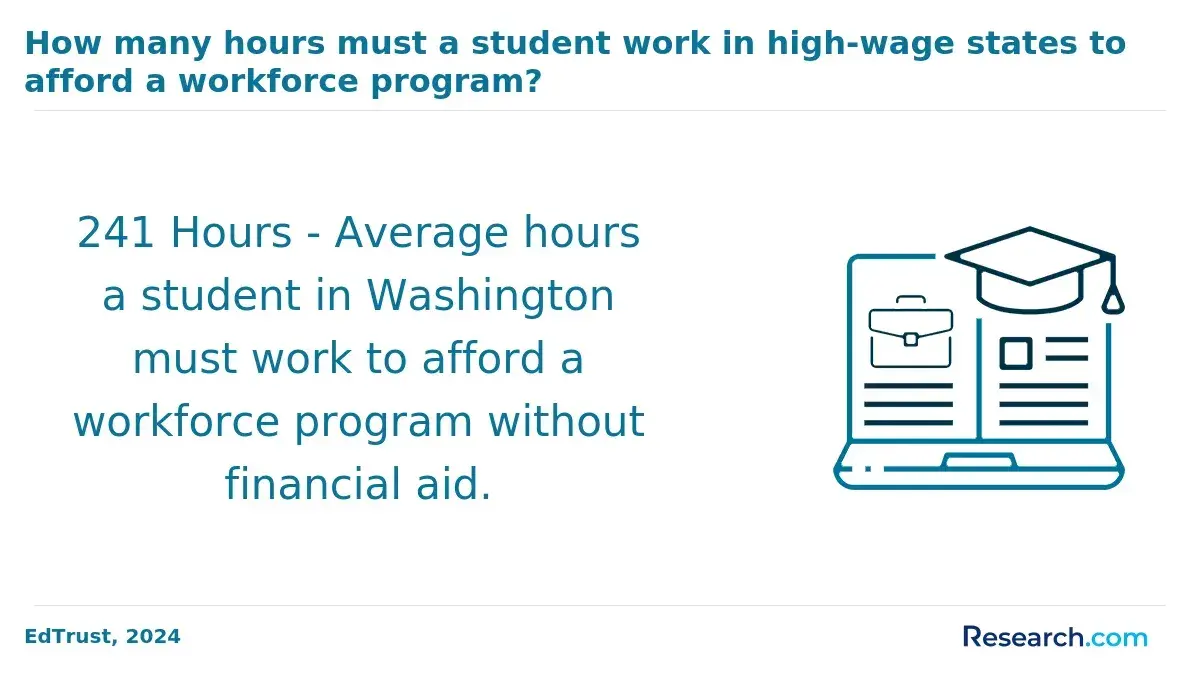
- Cost should be evaluated after transfer credits, not before; College Board's 2024-25 pricing shows average published tuition and fees of $4,050 at public two-year colleges and $11,610 for in-state public four-year institutions, making credit acceptance a major driver of total price.
What are online paralegal studies degrees with the best transfer policies?
Online paralegal studies degrees with the best transfer policies are programs that let students apply substantial previously earned credit toward an associate or bachelor's degree in paralegal studies, legal studies, or a closely related major. These programs are especially useful for adults who started college elsewhere, completed a legal assistant certificate, served in the military, or earned credits in criminal justice, business, English, political science, or general education.
A strong transfer policy is not just a high credit maximum. It should clearly explain which credits count toward the major, which count as electives, how old credits can be, how legal specialty courses are evaluated, and how many credits must be completed in residence at the institution granting the degree. Students comparing law-related pathways may also look at criminal justice degree price, but paralegal studies is usually more directly tied to legal research, civil litigation, contracts, document drafting, and law office procedure.
The table below summarizes common online paralegal degree formats and how transfer policies usually affect each option. Use it to identify which credential best matches the credits you already have and the job level you are targeting.
| Program type | Typical transfer fit | Best for | Key trade-off |
| Associate degree in paralegal studies | Often accepts general education and elective credits, with several paralegal courses completed at the school | Students seeking entry-level legal assistant or paralegal roles quickly | May be less competitive for employers that prefer a bachelor's degree |
| Bachelor's degree in paralegal or legal studies | Often most transfer-friendly for students with 60 to 90 prior credits | Transfer students who want stronger advancement options | Usually costs more and takes longer than an associate degree |
| Post-baccalaureate paralegal certificate | Usually does not need many transfer credits because the student already has a bachelor's degree | Career changers who already hold a degree | May not help students who still need an undergraduate credential |
| Legal studies completion program | Designed for students entering with substantial prior credits | Adults returning to finish a bachelor's degree | May be broader than a paralegal-specific curriculum |
The best choice depends on your starting point. If you already have many general education credits, a bachelor's completion program may provide the strongest value. If you have few credits and want to enter the workforce sooner, an associate degree with transparent transfer rules may be the better first step.
How do transfer credit policies work for paralegal studies programs?
Transfer credit policies determine how much of your past learning counts toward a new paralegal studies degree. Schools usually evaluate official transcripts course by course, then decide whether credits apply to general education, legal specialty requirements, electives, or prerequisites. The most transfer-friendly policies are written in plain language and provide a preliminary evaluation before you commit.
Most programs use several categories of transferable learning. Understanding these categories helps you ask better questions and avoid assuming that every accepted credit will reduce your time to graduation.
- Traditional college credits: Courses from regionally accredited institutions are typically the easiest to transfer, especially English composition, communication, social science, business, and general education courses.
- Legal specialty credits: Prior paralegal or legal studies courses may transfer only if the syllabus, credit hours, and learning outcomes match the new program's requirements.
- Exam-based credit: Some schools accept CLEP, DSST, or Advanced Placement credit, usually for general education rather than legal specialty courses.
- Military and workforce credit: Institutions may evaluate Joint Services Transcripts, ACE recommendations, professional training, or portfolio-based prior learning, but policies vary widely.
- Residency requirements: Even generous schools require a minimum number of credits to be completed through their institution before awarding the degree.
Before enrolling, follow a simple sequence that protects you from losing credits late in the process.
- Request official transcripts from every college you attended, even if you withdrew or earned low grades.
- Ask the admissions office for a written transfer evaluation showing degree-applicable credits, not just accepted credits.
- Confirm how many paralegal-specific courses must be completed at the new school.
- Ask whether older legal courses expire or require department approval.
- Compare the total remaining credits, tuition per credit, fees, and expected graduation date across programs.
A common mistake is focusing only on the maximum number of accepted credits. A school may accept 75 credits but apply only 45 toward the degree, which can change the true cost. If you are comparing paralegal studies with broader justice programs, reviewing criminal justice degree price can also help you understand how credit transfer changes total online degree affordability.
Which accreditations matter most for online paralegal programs?
For online paralegal programs, institutional accreditation is the baseline requirement. It shows that the college or university has been reviewed by a recognized accreditor and is generally necessary for federal financial aid, transfer credit recognition, employer confidence, and graduate school eligibility. Students should confirm accreditation through official school materials and the U.S. Department of Education's recognized accreditor database.
ABA approval is also important to understand, but it is often misunderstood. The American Bar Association approves paralegal education programs, not entire colleges, and ABA-approved paralegal programs must include some in-person instruction. As a result, a program advertised as 100% online will not be ABA-approved, even if the institution itself is properly accredited.
The table below explains the credentials and quality signals you are most likely to encounter. Use it to separate meaningful recognition from language that sounds impressive but may not affect transferability or employment.
| Quality signal | Why it matters | What to verify |
| Institutional accreditation | Supports financial aid eligibility, credit transfer, and basic academic legitimacy | The institution is accredited by a recognized accrediting agency |
| ABA-approved paralegal program | May appeal to some employers and demonstrates review against paralegal education standards | The paralegal program itself is listed as ABA-approved and includes required in-person components |
| State authorization for online learning | Allows the school to enroll online students from your state | The school is authorized or participates in an applicable state authorization agreement |
| Transfer articulation agreements | Can make credit movement from community colleges more predictable | The agreement names your sending institution, degree, and applicable courses |
| Professional alignment | Shows the curriculum reflects legal workplace expectations | Courses cover research, writing, litigation, ethics, technology, and legal procedures |
Accreditation should be checked before cost, speed, or convenience. A low-priced program that lacks recognized institutional accreditation may create problems with financial aid, transfer credits, employer screening, and future education options.
What admission requirements do online paralegal programs typically ask for?
Admission requirements for online paralegal studies programs are usually straightforward, but transfer students should expect extra documentation. Associate programs generally require a high school diploma or equivalent, while bachelor's completion programs often require prior college credits and minimum GPA standards. Post-baccalaureate certificates usually require an earned bachelor's degree from an accredited institution.
Most schools ask for a combination of academic, identity, and placement materials. These requirements help the program determine admission eligibility and place you in the right writing, research, or general education courses.
- Completed online application and application fee, if required
- Official high school transcript, GED record, or proof of prior college completion
- Official transcripts from every college or university previously attended
- Minimum GPA, often applied more strictly to transfer or upper-division applicants
- Placement information or completed college-level English composition
- Personal statement, resume, or advising interview for some adult-focused programs
- Technology access, including reliable internet and software compatible with the learning platform
Students with older credits, low grades, or interrupted enrollment should not assume they are disqualified. Many online programs serve adult learners and may offer conditional admission, academic renewal, or transfer pathways. However, students should be cautious if a school admits them quickly but will not provide a clear degree plan before enrollment.
Useful questions to ask an admissions advisor include: how many credits will apply to the major, whether D grades transfer, whether legal specialty courses require a minimum grade, whether there is a time limit on prior coursework, and whether transfer decisions can be appealed with syllabi or course descriptions.
How do online and campus paralegal programs compare?
Online and campus paralegal programs can lead to similar academic credentials, but the learning experience differs. Online programs are often better for working adults, parents, military students, and transfer students who need scheduling flexibility. Campus programs may offer more direct access to local legal employers, in-person legal labs, and ABA-approved formats when the program meets ABA requirements.
The table below compares the main decision factors. It is most useful if you already know whether your priority is flexibility, employer networking, ABA approval, or hands-on support.
| Factor | Online paralegal program | Campus paralegal program |
| Schedule flexibility | Often asynchronous or evening-friendly | Usually tied to fixed class meeting times |
| Transfer-student fit | Often designed for adult learners with prior credits | May be more structured by semester sequence |
| ABA approval possibility | Fully online programs are not ABA-approved | Possible if the program meets ABA requirements |
| Networking | Depends on virtual career services, internships, and alumni access | May provide stronger local employer exposure |
| Learning style | Best for self-directed students comfortable with reading, writing, and legal databases | Best for students who prefer face-to-face discussion and immediate support |
Online education is now mainstream enough that format alone is not the main quality marker. What matters is whether the program is accredited, academically rigorous, transparent about transfer credits, and connected to legal skill development. Students who need ABA approval should look closely at hybrid or campus options rather than assuming every online program can meet that preference.
What coursework is included in a paralegal studies degree?
A paralegal studies degree teaches students how to support attorneys, legal departments, government agencies, and compliance teams. Coursework usually blends legal theory with practical skills such as legal research, document drafting, case organization, ethics, and client communication. Because paralegals cannot give legal advice or represent clients as attorneys, ethics and supervision are central parts of the curriculum.
Most programs include a core set of legal specialty courses. These courses matter because employers often expect job-ready skills in research, writing, procedure, and legal technology.
- Introduction to law and the legal system, including court structure and legal terminology
- Legal research and writing using statutes, cases, regulations, and secondary sources
- Civil litigation, including pleadings, discovery, trial preparation, and case management
- Legal ethics, unauthorized practice of law, confidentiality, and attorney supervision
- Contracts, torts, family law, criminal law, real estate law, probate, or business organizations
- Law office technology, e-discovery, document management, and legal billing systems
- Internship, practicum, or capstone experience when available or required
AI and automation are also changing paralegal education. Legal employers increasingly use e-discovery platforms, document automation, contract review tools, and AI-assisted research. A strong program should teach students how to use technology responsibly, verify sources, protect confidentiality, and understand the limits of automated legal tools.
Students comparing curricula should look for writing-heavy assignments, database research practice, realistic document drafting, and clear instruction on ethics. A program that offers many broad criminal justice or political science electives but few paralegal-specific skills may not provide the same preparation for legal support roles.
How long does an online paralegal degree usually take?
The time needed to finish an online paralegal degree depends mostly on the credential level, transfer credits, course load, and course availability. Transfer-friendly programs can shorten the timeline substantially, but students should confirm whether required legal specialty courses are offered every term or only once per year.
The table below shows common timelines under typical enrollment patterns. These are planning ranges, not promises, because individual degree audits and course sequencing can change the result.
| Credential | Typical full-time timeline | How transfer credits affect completion |
| Paralegal associate degree | About 2 years | General education transfer credits may reduce the remaining course load |
| Paralegal bachelor's degree | About 4 years from no prior credit | Students entering with an associate degree may finish upper-division work faster |
| Bachelor's completion program | Often 1 to 2 years after substantial transfer credit | Best suited for students with many applicable prior credits |
| Post-baccalaureate certificate | Often less than 1 year to about 18 months | Prior bachelor's degree meets the entry credential, but certificate courses are usually required |
Accelerated formats can be appealing, especially for students who want to enter the legal workforce quickly. The trade-off is workload: compressed courses may require more weekly reading, writing, and case analysis. If you work full time, a part-time schedule may be more sustainable even if it extends the completion date.
Students comparing online credentials across fields should evaluate time and price together. For example, someone exploring a broader business pathway may review MS in digital marketing degree cost USA alongside legal studies options, but the better choice depends on the role you actually want, not only on which program is faster.
What does an online paralegal studies degree cost?
The cost of an online paralegal studies degree depends on tuition per credit, transfer credits, fees, textbooks, legal database access, technology requirements, and whether the school charges different rates for in-state and out-of-state students. The most useful number is not the advertised annual tuition; it is the total cost for the credits you still need after transfer evaluation.
College Board's 2024-25 figures provide a useful benchmark for published tuition and fees in U.S. higher education. These averages do not predict the exact cost of a specific online paralegal program, but they help students judge whether a quote is unusually low, moderate, or expensive.
- Public two-year college, in-district average published tuition and fees: $4,050
- Public four-year college, in-state average published tuition and fees: $11,610
- Private nonprofit four-year college average published tuition and fees: $43,350
To estimate your real cost, multiply the number of remaining credits by tuition per credit, then add mandatory fees and course materials. If a school accepts more transfer credits but charges a higher per-credit rate, it may still be cheaper than a lower-tuition school that requires many repeated courses.
Common cost mistakes include ignoring online course fees, assuming all transfer credits reduce major requirements, forgetting graduation or transcript fees, and comparing annual tuition instead of total remaining program cost. Students comparing law-adjacent degrees can use resources on criminal justice degree price to see how tuition, fees, and program structure affect total affordability in related online programs.
Financial aid may be available for eligible students enrolled in accredited degree programs, but certificate programs and noncredit training may have different aid rules. Before enrolling, ask whether the program is Title IV eligible, whether scholarships apply to online students, and whether employer tuition assistance can be used.
What jobs can you get with a paralegal studies degree?
A paralegal studies degree can prepare students for legal support roles in law firms, corporate legal departments, courts, insurance companies, banks, real estate offices, healthcare organizations, and government agencies. The degree is most valuable when it builds strong writing, research, organization, technology, and ethics skills.
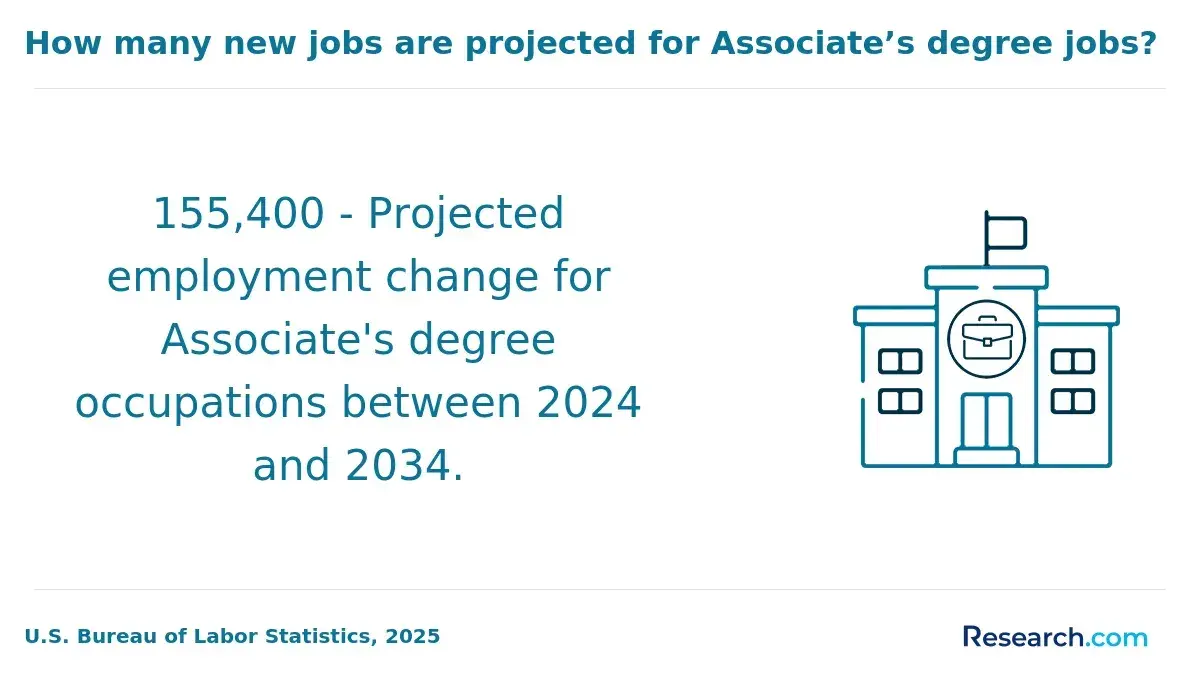
The U.S. Bureau of Labor Statistics reports a $61,010 median annual wage for paralegals and legal assistants, with about 37,300 openings projected each year over the 2023-33 period. That means the field can offer stable opportunities, but salary and hiring conditions vary by region, employer type, specialization, experience, and education level.
The table below outlines common roles connected to paralegal studies. Use it to match coursework and internships with the type of legal environment you want.
| Role | Typical responsibilities | Good fit for |
| Paralegal | Legal research, drafting, discovery support, case organization, and attorney assistance | Students who want broad legal support responsibilities |
| Legal assistant | Administrative support, scheduling, document preparation, filing, and client communication | Entry-level candidates building legal office experience |
| Litigation support specialist | E-discovery, document databases, trial exhibits, and case technology | Students comfortable with legal technology and detail-heavy work |
| Corporate legal assistant | Contracts, compliance files, entity records, and internal legal operations | Students interested in business and regulatory environments |
| Government legal support worker | Case files, public records, hearings, and agency legal documentation | Students interested in public service or administrative law |
Specialization can affect earnings potential. Students who want to compare compensation by practice area can review what types of paralegals make the most money, but they should also consider local demand, workload, stress level, and the amount of experience required.
This degree is a strong fit for detail-oriented students who enjoy reading, writing, deadlines, and structured problem-solving. It may be a poor fit for students who want to practice law independently, give legal advice, or avoid heavy documentation. Those goals typically require law school and attorney licensure, not a paralegal degree.
Do paralegals need certification or licensure in the U.S.?
Paralegals generally do not need a state license to work in the U.S., but requirements and expectations vary by employer, state, and job function. Most paralegals work under attorney supervision, and they cannot independently represent clients, establish attorney-client relationships, set legal fees, or provide legal advice.
Voluntary certification can help demonstrate professional knowledge, especially for candidates without extensive legal experience. Certification is different from earning a college certificate: a college certificate is an educational credential, while professional certification is usually granted by an organization after meeting eligibility rules and passing an exam.
The table below clarifies common credential terms. This distinction matters because job postings may use "certificate" and "certification" loosely even though they mean different things.
| Credential term | What it means | Why it matters |
| Degree | Associate or bachelor's credential from a college or university | May satisfy employer education preferences and support advancement |
| Academic certificate | Shorter college program focused on paralegal skills | Useful for career changers or students adding legal training |
| Professional certification | Voluntary credential from a professional organization | Can signal competence but is not the same as licensure |
| Licensure | Government permission to practice a regulated profession | Generally applies to attorneys, not standard paralegal roles |
Before choosing a program, review job postings in your target city and practice area. If employers repeatedly prefer ABA-approved education, a bachelor's degree, litigation experience, or a specific certification, use that information to guide your program choice. Do not rely only on national averages or school marketing claims.
Other Things You Should Know About Paralegal Studies
Yes. Many paralegals enter the field with degrees in English, business, political science, criminal justice, or other areas, then add a paralegal certificate or legal work experience. Employers usually care about legal research, writing, organization, ethics, and technology skills.
It can be useful if you want legal workplace exposure before law school, but it is not required for law school admission. If law school is the main goal, compare cost carefully and make sure the degree also serves a backup career plan.
When searching for 2027 online paralegal studies degrees with the best transfer policies, consider the number of credits accepted, whether they accept credits from accredited institutions, potential financial implications, and any articulation agreements they have with other colleges to streamline the transfer process.
Focus on college-level writing, careful reading, time management, document organization, spreadsheet basics, and comfort with online research. These skills make legal coursework easier and are highly relevant to paralegal work.
References
- Paralegal Program Comparison https://paralegal.edu/compare/
- Paralegal Certification https://www.paralegals.org/page/paralegal-certification
- Study Paralegal Course, Program, Diploma Online https://www.cdicollege.ca/study-online/programs-and-courses/legal/paralegal/
- 7 Paralegal Jobs Not in Law Firms https://www.becomeaparalegal.org/blog/7-paralegal-jobs-not-in-law-firms-where-to-look-what-to-expect/
- Paralegal Courses with OTC-UK https://onlinetrainingcollege.co.uk/paralegal-courses.html
- Paralegal Studies Transfer Policies and Procedures https://www.ivc.edu/business/dept/paralegal/transfer
- Paralegal Schools: Types of Studies and Paralegal Degrees https://www.allcriminaljusticeschools.com/legal-and-paralegal/paralegal-programs/
- How to Choose an Online Paralegal Studies Program | Campus https://campus.edu/blog/paralegal/how-to-choose-online-paralegal-program
- Do paralegals need to be certified in a law firm? https://www.avvo.com/legal-answers/do-paralegals-need-to-be-certified-in-a-law-firm--5826311.html
- Paralegal Studies Certificates Explained: Your Path to Law https://www.paralegalinst.com/paralegal-studies-certificate