2027 Online Paralegal Studies Degrees With the Most Flexible Credit Transfer Rules

Co-Founder and Chief Data Scientist
Transfer credit can decide whether an online paralegal degree takes one year or several. The National Student Clearinghouse Research Center reported that undergraduate transfer enrollment grew 5.3% in spring 2024, showing that more students are moving credits between schools.
This guide is for adult learners, community college graduates, military students, and working legal staff who want a faster, lower-cost path to a bachelor's degree. You will learn how flexible policies work, which programs often accept more credit, and how to compare schools before enrolling.
Key Things You Should Know
- The most transfer-friendly online paralegal bachelor's programs commonly allow up to 90 semester credits, or about 75% of a 120-credit degree, but final awards depend on transcript review, grades, course fit, and residency rules.
- Institutional accreditation is the baseline for transferable credit; ABA approval can strengthen employer recognition in paralegal education, but it does not automatically make every credit transferable.
- Cost savings can be substantial because College Board's 2024 pricing data lists average published in-state tuition and fees at $11,610 for public four-year colleges, making accepted transfer credits a major ROI factor.
What makes an online paralegal degree's credit transfer policy truly flexible for students?
A flexible credit transfer policy is not just a high maximum number of accepted credits. For paralegal students, true flexibility means the school can apply prior coursework, legal specialty classes, general education credits, military learning, standardized exams, and documented professional experience toward the degree in a way that actually shortens the path to graduation.
The best policies are transparent before you apply. They explain the maximum transfer limit, minimum grade requirements, whether credits must come from accredited institutions, how old credits can be, and which courses must be completed at the degree-granting school.
Students comparing online paralegal programs should pay special attention to legal specialty coursework because some schools accept general education credits broadly but restrict transfer into paralegal-specific classes.
Use these features to judge whether a policy is meaningfully flexible rather than just generous on paper:
- High transfer ceiling: A bachelor's program that accepts up to 90 credits gives associate degree holders and students with prior college coursework the strongest chance of finishing quickly.
- Clear residency requirement: A school may accept many credits but still require the final 30 credits, upper-division legal courses, or a capstone to be completed in residence.
- Prior-learning options: Credit for CLEP, DSST, ACE-recommended training, military transcripts, employer training, or portfolio assessment can help students who have more work experience than completed college credits.
- Legal course alignment: Credits are most useful when they satisfy required courses such as legal research, civil litigation, contracts, torts, legal ethics, or law office technology.
- Fast preliminary evaluation: Transfer-friendly schools often provide unofficial estimates before enrollment, then issue an official evaluation after admission and transcript submission.
The common mistake is assuming "up to 90 credits" means you will automatically receive 90 usable credits. A school may accept credits as electives but still require you to complete core paralegal courses, upper-division requirements, or a minimum number of credits from its own catalog.
Which online paralegal bachelor's programs accept the most transfer and prior-learning credits?
Several online legal studies and paralegal bachelor's programs publish policies that can be favorable to transfer students. The programs below are not ranked outcomes guarantees. They are practical examples of schools students often review because their posted transfer limits or prior-learning policies may allow substantial credit toward a bachelor's degree.
Always confirm the current catalog, program name, ABA status if relevant, and transfer evaluation process before applying.
This table compares transfer-friendly features that matter most when your goal is to finish an online paralegal-related bachelor's degree with the fewest repeated courses.
| School or program type | Commonly posted transfer flexibility | Best fit | Important caution |
| University of Maryland Global Campus, Legal Studies bachelor's pathway | May allow up to 90 transfer credits toward a 120-credit bachelor's degree | Students with community college, military, or prior university credits who want an online legal studies curriculum | Legal studies is broader than a narrowly titled paralegal studies degree, so compare course outcomes with your career goal |
| Liberty University, online paralegal studies bachelor's pathway | Often states that students may transfer up to 75% of the degree total | Students seeking a faith-based private university format with generous transfer review | Check which paralegal core courses must be completed through the institution |
| Purdue Global, legal support or legal studies-related bachelor's pathway | Uses transfer and prior-learning review, often with a 75% degree-transfer framework | Adult learners with work, military, or prior college experience | Quarter-credit systems can make comparisons confusing; ask how credits convert to degree requirements |
| Peirce College, paralegal or legal studies-related bachelor's pathway | May accept substantial transfer credit toward degree completion | Working adults who already hold an associate degree or have accumulated college credits | Confirm current ABA approval status and whether online delivery meets your expectations |
| Eastern Kentucky University, paralegal science-related bachelor's pathway | Transfer credit may be available for prior college work, especially general education and lower-division courses | Students who want a public university option with paralegal-focused coursework | Some legal specialty requirements may be more structured than general online electives |
The strongest candidates for maximum transfer are usually students who completed an associate degree at a regionally accredited community college, earned C or better grades, and took courses that map cleanly to general education or introductory legal requirements. Students with scattered credits from multiple schools can still benefit, but they should expect a more detailed course-by-course review.
How can you compare credit transfer policies across accredited online paralegal programs?
Comparing transfer policies requires more than reading the headline transfer maximum. A program that accepts 90 credits may still take longer than a program that accepts 75 credits if many of your courses apply only as electives. The goal is to find out how many credits reduce your remaining degree requirements.
Start with a transcript-by-transcript comparison. Ask each school for the same information so you can compare results fairly:
- Request an unofficial transfer estimate before applying, then ask what could change after official review.
- Separate credits into general education, legal specialty, upper-division, elective, and unused categories.
- Ask whether old legal courses expire or require department approval because laws, court procedures, and legal technology change over time.
- Confirm the minimum grade required for transfer, especially if you have C-minus grades or pass/fail coursework.
- Ask whether the school accepts ACE, CLEP, DSST, military Joint Services Transcript credits, or portfolio-based credit.
- Calculate remaining credits, required terms, tuition, fees, textbooks, technology costs, and any portfolio assessment charges.
Common red flags include vague transfer language, refusal to explain residency rules, pressure to enroll before receiving a credit estimate, and policies that accept credits only as free electives. A better alternative is to ask for a degree audit showing exactly which requirements your previous credits satisfy.
The table below shows how two schools with similar transfer maximums can produce very different outcomes for the same student.
| Comparison factor | More useful policy | Less useful policy |
| Transfer maximum | Allows many credits and applies them to required categories | Allows many credits but applies most as electives |
| Residency rule | Requires a clear final-credit minimum, such as 30 credits | Requires unclear institutional, major, and upper-division minimums |
| Legal specialty transfer | Reviews paralegal courses individually for direct equivalency | Rejects most legal courses without explaining appeal options |
| Prior learning | Accepts standardized exams, ACE recommendations, or portfolios where appropriate | Counts only traditional college transcripts |
| Timing | Provides early estimates and a final degree plan | Gives full information only after enrollment |
What accreditation should online paralegal programs have to ensure transferable, respected credits?
Accreditation matters because it affects credit transfer, financial aid eligibility, employer trust, and graduate school options. For online paralegal programs, the first requirement to check is institutional accreditation from an agency recognized by the U.S. Department of Education or the Council for Higher Education Accreditation.
Program-level ABA approval is different. The American Bar Association approves paralegal education programs that meet its guidelines, but ABA approval is not the same as institutional accreditation and is not required for every paralegal job.
Some employers prefer or recognize ABA-approved programs, especially in competitive legal markets, but many hiring decisions also weigh experience, writing ability, technology skills, and knowledge of legal procedure.
Use this accreditation framework before choosing a transfer-friendly program:
- Institutional accreditation: This is the nonnegotiable baseline for credit transfer, federal financial aid, and broad academic recognition.
- ABA approval: This can add credibility for paralegal education, but it applies to the program and may include delivery-format requirements that students should verify.
- State authorization: Online students should confirm that the school is authorized to enroll students in their state.
- Transfer partnerships: Articulation agreements with community colleges can make transfer smoother, but students should still request a degree audit.
The biggest mistake is choosing a school because it is "nationally known" without confirming accreditation status. Another mistake is assuming ABA approval solves every transfer issue. Credit transfer remains a receiving-school decision, and law-related courses may be evaluated differently by each institution.
How do transfer-friendly online paralegal programs evaluate previous college, military, and work experience?
Transfer-friendly online paralegal programs usually evaluate prior learning in several categories. Traditional college transcripts are the simplest, but adult learners may also bring military education, employer training, legal office experience, certifications, or standardized exam scores.
The review process typically follows a hierarchy. College courses from accredited institutions are reviewed first because they already have credit hours, grades, and course descriptions. Military and workforce learning may then be evaluated through ACE recommendations, institutional policies, or portfolio review. Portfolio credit is usually more time-intensive because students must document learning outcomes, not just job duties.
Students with nontraditional learning should prepare evidence before contacting admissions. Useful documentation often includes:
- Official transcripts from every college attended, even if credits seem old or unrelated
- Course syllabi for legal research, litigation, contracts, torts, criminal law, legal writing, and technology courses
- Joint Services Transcript or Community College of the Air Force transcript for military students
- ACE-recommended training records or employer-sponsored legal training documentation
- Descriptions of law office duties, writing samples, software experience, and supervisor verification if portfolio credit is available
- Scores from CLEP, DSST, AP, or other approved examinations if the institution accepts them
Legal work experience can be valuable, but it does not automatically equal academic credit. A student who has prepared filings, maintained case calendars, or assisted with discovery may still need to show college-level learning in legal ethics, research methodology, court systems, and procedural rules.
What admission requirements do flexible-credit online paralegal degrees typically have for transfer students?
Admission requirements for flexible-credit online paralegal bachelor's programs are usually designed for working adults and transfer students, but they still vary by institution. Most schools require proof of high school completion or an equivalent credential, official transcripts from all colleges attended, and a minimum GPA for transfer admission or good academic standing.
Transfer applicants should expect requirements in these areas:
- Prior education: A high school diploma, GED, or completed college coursework is usually required; students with an associate degree may receive more streamlined review.
- Official transcripts: Schools generally require transcripts from every institution attended, not only the colleges where credits were earned successfully.
- Minimum grades: Many programs require at least a C for transfer credit, though some major courses may require higher grades.
- Technology access: Online students usually need reliable internet, document software, learning management system access, and sometimes legal research platform access.
- Writing readiness: Paralegal coursework is writing-heavy, so schools may place students into composition or legal writing support if prior coursework is missing.
Students with lower GPAs should not assume they are automatically excluded. Some adult-focused programs offer conditional admission, probationary terms, or academic success plans. However, conditional admission may limit course load or financial aid pacing, so ask how it affects your graduation timeline.
How do online and campus paralegal programs differ in credit transfer limits, residency, and pacing?
Online and campus paralegal programs can lead to similar academic outcomes, but they often differ in pacing, scheduling, access to local internships, and how transfer credit is reviewed. Online programs are usually more convenient for students who work full time, care for family, serve in the military, or live far from a campus-based legal studies program.
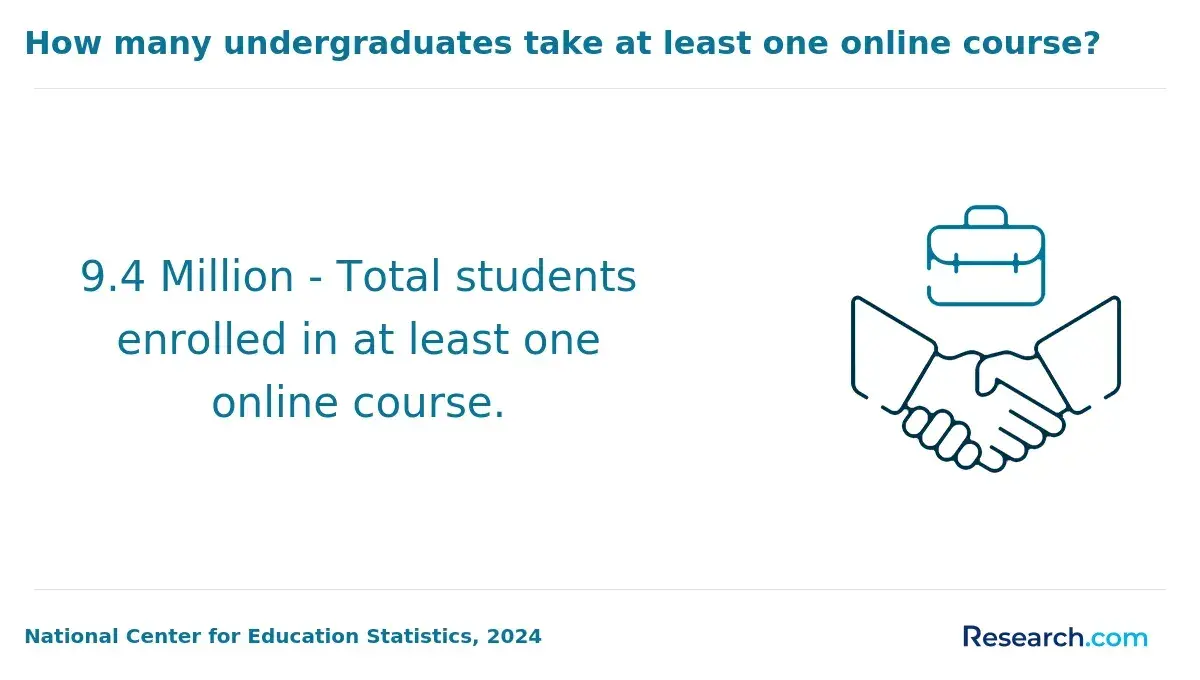
The U.S. Department of Education's 2024 distance education data continued to show that online learning remains a major part of higher education, especially for adult learners. For paralegal students, that trend matters because schools have built more online advising, digital library access, remote tutoring, and asynchronous course formats that can make degree completion more realistic.
This comparison shows where online and campus formats typically differ for transfer students.
| Factor | Online paralegal degree | Campus paralegal degree |
| Transfer credit limits | Often adult-learner focused, with published transfer maximums and prior-learning options | May be flexible, but policies can be built around traditional full-time enrollment |
| Residency requirements | Usually completed through online courses, though some programs may require synchronous sessions or specific legal specialty courses | Typically satisfied through on-campus major courses and seminars |
| Pacing | May offer accelerated sessions, multiple start dates, and part-time options | Often follows semester calendars with fewer start dates |
| Networking | Depends on virtual events, remote internships, alumni networks, and local student initiative | May offer easier access to local courts, law firms, clinics, and faculty events |
| Best fit | Working adults, military students, rural learners, and students with many prior credits | Students who want in-person structure, local legal networking, or campus support |
Online is not automatically easier. Legal research, citation, litigation support, and ethics courses can be demanding in any format. The best choice is the one that matches your schedule, learning style, local career goals, and transfer-credit outcome.
What core courses and specializations are common in online paralegal programs that accept many transfers?
Online paralegal programs that accept many transfers still require students to complete a structured legal curriculum. A flexible transfer policy can reduce general education and elective requirements, but students usually must complete core legal specialty courses through the institution or prove close equivalency.
Common core courses include legal research and writing, civil litigation, contracts, torts, criminal law, family law, business organizations, real estate law, legal ethics, evidence, and law office technology.
Students interested in psychology, courts, and behavior may also compare paralegal studies with a forensic psychology major, but the career preparation is different: paralegal programs focus on legal support work, while forensic psychology programs focus more on psychology, assessment, and justice-system applications.
Specializations can help students align coursework with a target work environment. The table below summarizes common options and the types of legal settings where they may be useful.
| Course or specialization area | What students learn | Where it may be useful |
| Litigation | Pleadings, discovery, trial preparation, court rules, and case management | Law firms, insurance defense offices, government litigation units |
| Corporate law | Business entities, contracts, compliance support, and corporate records | Corporate legal departments, compliance teams, business law firms |
| Criminal law | Criminal procedure, evidence, investigation support, and court documentation | Prosecutors' offices, defense firms, public agencies |
| Family law | Divorce, custody, support, mediation documents, and client intake | Family law firms, legal aid organizations, court services |
| Estate planning and probate | Wills, trusts, probate filings, asset inventories, and client documentation | Estate planning firms, elder law practices, probate departments |
| Legal technology | E-discovery tools, document management, research databases, and case software | Firms using litigation technology, compliance teams, remote legal support roles |
AI is changing the skill mix in legal support work. Paralegals are increasingly expected to use document automation, e-discovery platforms, legal research databases, and AI-assisted drafting tools responsibly. That makes legal ethics, verification, confidentiality, and citation accuracy more important, not less.
How do flexible-credit online paralegal degrees impact total cost, financial aid, and time to graduation?
Flexible transfer credit can lower total cost in three ways: fewer credits to pay for, fewer terms of fees, and less time away from full-time work.
The savings are especially meaningful for bachelor's students because College Board's 2024 data lists average published tuition and fees at $11,610 for in-state public four-year colleges and $43,350 for private nonprofit four-year colleges. Those figures are not paralegal-specific, but they show why avoiding repeated credits can materially change degree ROI.
Cost comparison should focus on total completion cost, not just tuition per credit. A school with a higher per-credit price may be cheaper if it accepts more usable transfer credits. A low-tuition school may cost more if it requires you to retake multiple legal or general education courses.
When estimating affordability, include these items:
- Remaining credits after transfer evaluation
- Tuition per credit and whether online students pay separate rates
- Technology, library, graduation, transcript, and portfolio assessment fees
- Textbooks, legal database access, and citation manuals
- Expected number of terms to completion
- Federal, state, employer, military, or institutional aid eligibility
- Opportunity cost if the schedule reduces your ability to work
Financial aid can usually apply only to credits required for your degree plan, so a precise audit matters. If 15 credits transfer only as excess electives, they may not reduce aid-eligible enrollment or shorten your path.
Students comparing law-related study with other career paths should evaluate ROI using field-specific salary and education data; even a resource on sports data analyst salary can be useful as a reminder that different careers have different training costs, labor markets, and pay structures.
The smartest cost strategy is to get written transfer estimates from at least three accredited schools, then compare remaining credits rather than advertised tuition. If you already have an associate degree, ask whether the school has a block-transfer agreement that waives lower-division general education requirements.
What paralegal careers, certifications, salary ranges, and job outlook can graduates realistically expect?
Paralegal studies degrees prepare students for legal support roles, not attorney licensure. Paralegals help lawyers and legal teams by conducting research, organizing evidence, drafting documents, managing deadlines, communicating with clients under attorney supervision, and supporting hearings, closings, investigations, or transactions.
The U.S. Bureau of Labor Statistics reported a May 2024 median annual wage of $61,010 for paralegals and legal assistants. This figure is a national median, not a promise; pay varies by region, employer, experience, specialization, and whether the role is in a law firm, corporation, government agency, nonprofit, or compliance department.
Graduates may consider several career paths depending on experience and local hiring expectations. Students who prefer broader law enforcement, corrections, public safety, or homeland security pathways may also compare paralegal studies with a criminal justice degree.
| Role | Typical responsibilities | Degree value |
| Paralegal or legal assistant | Research, drafting, filing, client communication, case organization, and attorney support | A paralegal or legal studies degree can show job-specific preparation |
| Litigation support specialist | E-discovery, document review, trial preparation, database management, and evidence organization | Legal technology coursework and litigation classes can be especially useful |
| Corporate legal assistant | Contract tracking, entity records, compliance documents, and corporate governance support | Business law, contracts, and compliance coursework may help |
| Compliance assistant | Policy documentation, regulatory tracking, internal audits, and reporting support | A bachelor's degree may be useful for advancement in regulated industries |
| Court or government legal support role | Records, filings, scheduling, public-facing legal process support, and case documentation | Knowledge of court systems and procedure can support entry-level applications |
Certification is optional in many states, but it can help demonstrate competence. Common credentials include NALA's Certified Paralegal credential, NFPA's Paralegal CORE Competency Exam and Registered Paralegal credential, and NALS legal professional certifications. Eligibility rules, exam content, and renewal requirements vary, so students should verify requirements directly with the certifying organization.
Technology is reshaping paralegal work. AI-assisted research and drafting may reduce some routine tasks, but legal teams still need trained professionals who can verify sources, protect confidentiality, manage deadlines, interpret attorney instructions, and apply ethical rules. Students who build strong writing, research, litigation technology, and client-service skills will be better positioned than those who focus only on earning the credential.
Other Things You Should Know About Paralegal Studies
In 2027, online paralegal studies programs offer various flexible credit transfer rules. Many institutions accept credits from accredited community colleges and other universities, with some allowing up to 75% of credits to be transferred. Ensure to verify transfer policies directly with the specific schools.
No. ABA approval is not a universal employment requirement. However, some employers prefer graduates from ABA-approved programs, so it is worth checking job postings in your local market before choosing a school.
They may count toward your undergraduate degree if accepted by your institution, but law school admission depends on completing a bachelor's degree, academic performance, application materials, and the admission policies of each law school.
They can be, especially when the school is properly accredited and the curriculum includes strong legal research, writing, ethics, and technology training. Employers usually care about skills, experience, professionalism, and program credibility more than delivery format alone.
References
- Paralegal Programs https://paralegal.edu/paralegal-programs/
- Paralegal Studies Certificate Program | Long Island University https://liu.edu/brooklyn/academics/school-of-professional-and-continuing-studies/Paralegal-Studies-Certificate-Program
- Your Guide to Online Paralegal Programs: Degrees, Classes, and Training https://www.paralegalinst.com/online-paralegal-program
- How to Choose an Online Paralegal Studies Program | Campus https://campus.edu/blog/paralegal/how-to-choose-online-paralegal-program
- Paralegal | Community College of Denver https://www.ccd.edu/program/paralegal
- Best Online Paralegal Associate Degrees https://www.onlineu.com/degrees/associate-paralegal
- Online Paralegal High School Program | USCI - USCI https://www.uscareerinstitute.edu/online-high-school/paralegal-career-pathway
- Accreditation https://www.nationalparalegal.edu/accreditation.aspx