2027 Online Paralegal Studies Degrees for Students Who Want Law Firm Careers

Co-Founder and Chief Data Scientist
Choosing an online paralegal studies degree is really a career decision: will the program prepare you for law firm work, and is the cost worth it? The U. S. Bureau of Labor Statistics reported a $61,010 median annual wage for paralegals and legal assistants in 2024, but outcomes vary by employer, location, experience, and credentials. This guide is for students who want practical law firm roles, not law school. You will learn how to compare programs, credentials, costs, skills, jobs, and red flags before enrolling.
Key Things You Should Know
- For law firm careers, prioritize an institutionally accredited online paralegal program with legal research, writing, civil litigation, ethics, and technology training rather than choosing only by tuition.
- The BLS reported a $61,010 median annual wage for paralegals and legal assistants in 2024, with about 37,300 openings projected each year from 2023 to 2033 due largely to replacement needs.
- Certificate programs can be fastest for students who already have college credit, while associate and bachelor's degrees usually provide broader general education, transfer value, and stronger long-term mobility.
What is an online paralegal studies degree and how does it prepare you for law firm work?
An online paralegal studies degree is a college program that teaches students how to support attorneys with legal research, document preparation, case organization, client communication, and litigation support. It does not qualify graduates to practice law or give legal advice, but it can prepare them for supervised legal work in law firms, corporate legal departments, government agencies, and nonprofit legal settings.
For students focused on law firm careers, the most useful online paralegal programs connect legal theory to daily practice. That means learning how to draft pleadings, summarize depositions, manage discovery, cite legal authorities, use case management software, and protect client confidentiality.
Law firm paralegals often work under deadlines, so a strong program should build both accuracy and workflow judgment. The degree is usually a good fit if you want a structured legal career without committing to law school. It may be a poor fit if your main goal is courtroom advocacy, independent legal representation, or becoming an attorney, because those paths require a Juris Doctor and bar admission.
The table below summarizes how online paralegal study connects to common law firm expectations. Use it to check whether a program's curriculum looks practical or overly theoretical.
| Law firm expectation | How a strong online program should prepare you | Why it matters |
| Legal research | Training in statutes, regulations, case law, citation, and database use | Attorneys rely on paralegals to find and organize authorities efficiently |
| Document drafting | Assignments involving memos, pleadings, discovery requests, and correspondence | Clear writing reduces attorney revision time and filing errors |
| Case management | Practice with calendars, deadlines, files, exhibits, and client records | Missed deadlines can damage cases and client relationships |
| Professional ethics | Instruction on confidentiality, conflicts of interest, and unauthorized practice of law | Ethical mistakes can create serious consequences for firms and clients |
| Legal technology | Exposure to e-filing, document management, e-discovery, and productivity tools | Modern firms expect paralegals to work comfortably in digital systems |
How do online paralegal programs compare to campus-based options for aspiring law firm paralegals?
Online and campus-based paralegal programs can lead to similar entry-level law firm roles when they are properly accredited and career-focused. The main difference is not whether the classroom is physical or virtual; it is how well the program supports interaction, writing feedback, legal technology practice, internships, and local employer connections.
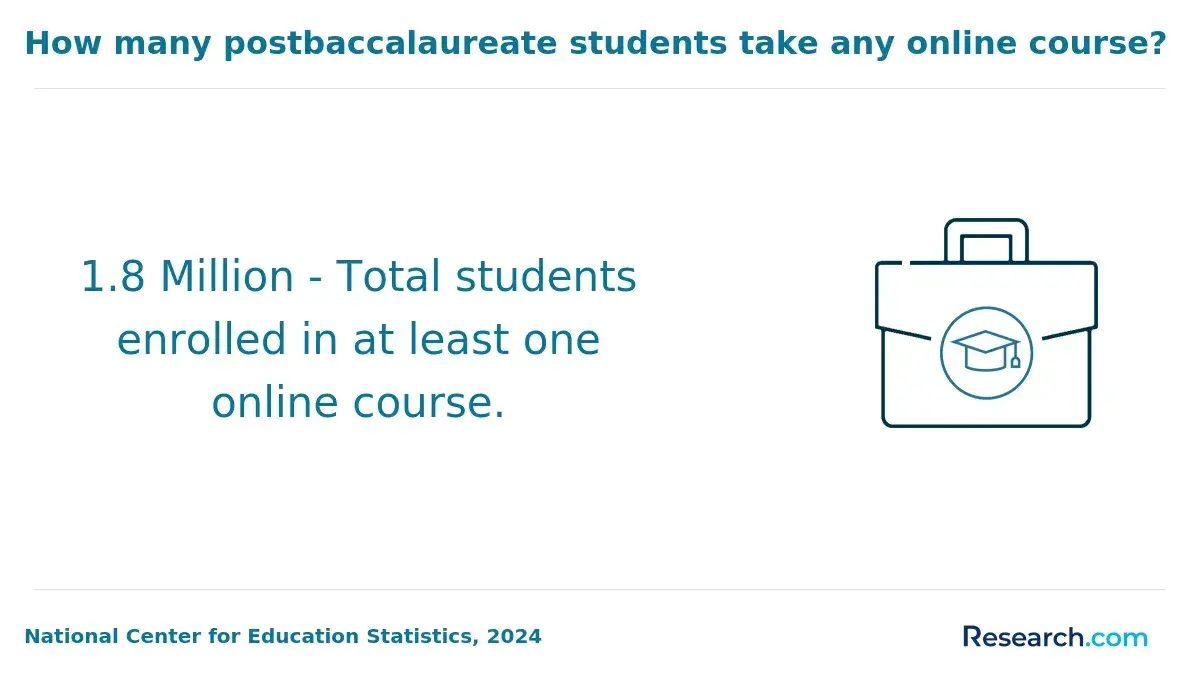
Federal education data released through the National Center for Education Statistics in 2024 continued to show that distance education remains a major part of U.S. higher education. For paralegal students, that means online study is no longer unusual, but it still requires discipline and careful program vetting.
The table below compares online and campus formats from the perspective of a student trying to enter a law firm. The best choice depends on your schedule, learning style, local job market, and need for in-person networking.
| Factor | Online paralegal degree | Campus-based paralegal degree | Best fit |
| Schedule | Often asynchronous or evening-friendly | Usually tied to class meeting times | Online can work better for employed students or caregivers |
| Networking | Depends on virtual events, faculty access, and internship support | May offer easier face-to-face contact with faculty and peers | Campus may help students who want frequent in-person interaction |
| Skills practice | Can be strong if it includes writing feedback, simulations, and legal software | Can be strong if courses include live workshops and clinics | Either format can work if practice is built into the curriculum |
| Internships | May require the student to secure a local placement | May have established local employer relationships | Check placement support before enrolling |
| Cost control | May reduce commuting and relocation costs | May include campus fees, transportation, or housing costs | Online may be cheaper overall, but tuition varies widely |
Online study makes the most sense if you are self-directed, comfortable writing, and able to create a professional routine. Campus study may be better if you learn best through live discussion, want more immediate access to local legal employers, or need structured accountability.
What accreditation should online paralegal studies programs have for law firm careers?
The first accreditation question is whether the college or university is institutionally accredited by an agency recognized by the U.S. Department of Education or the Council for Higher Education Accreditation. This matters because institutional accreditation affects credit transfer, eligibility for federal student aid, and employer confidence in the degree.
The second question is whether the paralegal program has specialized recognition. Some programs are approved by the American Bar Association, commonly called ABA approval. ABA approval can be a positive signal, but not every reputable online paralegal program has it, and ABA rules have historically required a meaningful amount of synchronous or in-person instruction for approved programs. Students should confirm the current delivery format directly with the school.
Before you apply, use the following steps to verify program quality and avoid common accreditation mistakes.
- Confirm the school's institutional accreditation in an official federal or accreditor database, not only on the school's marketing page.
- Ask whether the paralegal program itself has ABA approval or another recognized program-level credential, and ask what that approval does and does not mean.
- Check whether credits can transfer to a bachelor's degree if you are starting with a certificate or associate program.
- Ask local law firms, bar associations, or legal staffing agencies whether they recognize graduates from the program.
- Avoid schools that imply accreditation guarantees employment, certification, or admission to law school.
Accreditation is not the same as licensure. Most paralegal jobs do not require a state license, but employer preferences vary. Some firms prefer candidates with ABA-approved education, a bachelor's degree, professional certification, or experience in a specific practice area.
What types of paralegal credentials can you earn online (certificate, associate, bachelor's)?
Online paralegal education comes in several credential levels, and the right one depends heavily on your prior education. A post-baccalaureate certificate can be efficient for someone who already has a degree, while an associate or bachelor's degree may make more sense for students who need a full college credential.
The table below compares the main online paralegal credential options. Use it to match your current education level with your law firm career goals.
| Credential | Typical student profile | Typical length | Best for | Trade-off |
| Undergraduate certificate | Students starting college or adding a focused legal credential | Several months to about one year | Quick entry into legal support roles when combined with transferable skills | May offer less general education and transfer value than a degree |
| Post-baccalaureate certificate | Students who already hold a bachelor's degree | Often less than one year to about 18 months | Career changers who want paralegal-specific training | Not a substitute for a degree if employers require one |
| Associate degree | Students who want both general education and paralegal coursework | Usually about two years full time | Entry-level paralegal and legal assistant roles | May limit advancement at firms that prefer bachelor's degrees |
| Bachelor's degree | Students seeking broader academic preparation and long-term mobility | Usually about four years full time | Competitive law firm roles, corporate legal departments, and future graduate study | Costs more time and money than shorter credentials |
A certificate can be worth it if you already have a degree in English, criminal justice, business, political science, or another field that developed research and writing skills. An associate degree can be practical for first-time college students seeking an affordable route. A bachelor's degree may be the strongest long-term option if you want advancement, specialized practice areas, or broader career flexibility.
What courses and skills do online paralegal programs typically include for law firm practice?
Law firm paralegal work is detail-heavy, writing-intensive, and technology-supported. A strong online curriculum should therefore combine substantive law, procedural training, research practice, and professional communication.
Most programs include a core set of courses that help students understand how law firms handle cases from intake through resolution. The following subjects are especially relevant for students who want to work in litigation, family law, personal injury, criminal defense, estate planning, or business law practices.
- Introduction to paralegal studies and the structure of the U.S. legal system
- Legal research, legal writing, and citation methods
- Civil litigation, discovery, pleadings, and trial preparation
- Contracts, torts, criminal law, family law, real estate law, or wills and estates
- Professional responsibility, confidentiality, conflicts of interest, and unauthorized practice of law
- Law office technology, e-filing, document management, and e-discovery basics
Some students also benefit from electives that support a law firm niche. For example, students interested in criminal litigation or evidence-heavy legal work may explore how scientific evidence is handled through related options such as online forensic science courses, while still keeping paralegal ethics and attorney supervision at the center of their career plan.
Beyond course titles, look for assignments that mirror actual law firm tasks. Useful programs require students to draft memos, prepare case chronologies, summarize records, proofread legal documents, conduct database research, and communicate professionally with attorneys and clients.
AI and automation are changing paralegal work, but they are not removing the need for judgment. Law firms increasingly use tools for document review, contract analysis, research assistance, and workflow automation. Students should choose programs that teach technology literacy while also emphasizing verification, confidentiality, ethics, and the limits of AI-generated legal content.
What are the typical admission requirements for online paralegal studies degrees?
Admission requirements vary by credential level and school selectivity. Most undergraduate certificate and associate programs are accessible to students with a high school diploma or GED, while bachelor's completion programs and post-baccalaureate certificates may require prior college credits or a completed degree.
Applicants should expect schools to review basic academic readiness and, in some cases, writing preparation. Common requirements include the following documents and steps.
- High school diploma, GED, or official college transcripts
- Online application and application fee, if required
- Minimum GPA requirement for transfer, bachelor's completion, or post-baccalaureate programs
- Placement testing or proof of college-level English readiness
- Personal statement, resume, or advising interview for some programs
- Technology access requirements, including reliable internet and word processing software
Students with criminal records should be especially careful before enrolling. A record does not automatically prevent college enrollment or every legal support job, but law firms, courts, government agencies, internship sites, and certification bodies may conduct background checks. If this applies to you, review practical education-path guidance such as what can a felon go to college for and ask schools how background issues may affect internships and employment support.
Do not assume open admission means the program is a good fit. A reputable school should be transparent about writing expectations, transfer credits, course sequencing, internship options, and the kinds of paralegal roles its graduates commonly pursue.
How long do online paralegal degrees take and what do they cost?
Program length depends on credential level, transfer credits, course load, and whether classes run in standard semesters or accelerated terms. A certificate may take months, an associate degree usually takes about two years of full-time study, and a bachelor's degree usually takes about four years unless you transfer prior credits.
Cost varies widely by institution type and residency status. The College Board's 2024 pricing data reported average published tuition and fees of $4,050 for public two-year in-district students and $11,610 for public four-year in-state students for the 2024-25 academic year. Those averages are not paralegal-specific, but they give useful context: community colleges and public universities can be significantly cheaper than many private or out-of-state options.
The table below summarizes the main time and cost drivers. Use it to estimate total cost rather than comparing only the advertised tuition rate.
| Cost or time factor | How it affects online paralegal students | Decision tip |
| Credential level | Certificates are usually shortest; bachelor's degrees require more credits | Do not pay for a longer credential if a shorter one fits your current education and employer market |
| Transfer credits | Accepted credits can reduce both time and tuition | Request an official transfer evaluation before committing |
| Residency rules | Public schools may charge different rates for in-state and out-of-state students | Ask whether online students receive a separate tuition rate |
| Books and databases | Legal textbooks and research tools may add costs | Ask whether database access is included in tuition or fees |
| Internship requirements | Internships may require daytime availability or local travel | Confirm scheduling expectations if you work full time |
| Pace | Accelerated terms can shorten completion time but increase weekly workload | Choose speed only if you can keep up with reading and writing demands |
To reduce cost, compare net price rather than sticker price, ask about transfer credit, complete the FAFSA if eligible, and check whether your employer offers tuition assistance. Avoid borrowing heavily for a program before you understand local law firm wages and entry-level hiring requirements.
What law firm jobs can you get with an online paralegal degree?
An online paralegal degree can support entry into several law firm roles, especially when paired with strong writing samples, technology skills, internships, or prior office experience. Job titles vary because some employers use "legal assistant" for administrative roles and others use it interchangeably with "paralegal."
The table below outlines common law firm roles connected to paralegal education. It is not a guarantee of eligibility, because employers may require experience, a bachelor's degree, practice-area knowledge, or certification.
| Role | Typical responsibilities | Good fit for |
| Legal assistant | Scheduling, filing, client communication, document preparation, and attorney support | Students seeking a first law office role |
| Entry-level paralegal | Research, drafting, case file organization, discovery support, and records review | Graduates with paralegal coursework and strong writing skills |
| Litigation paralegal | Pleadings, exhibits, discovery tracking, trial notebooks, and deposition summaries | Students who like deadlines, organization, and procedural detail |
| Corporate or transactional paralegal | Entity filings, contracts, closing binders, due diligence, and regulatory documents | Students interested in business law and document workflows |
| Estate planning or probate paralegal | Draft support, asset information, court filings, and client records | Students who are detail-oriented and comfortable with sensitive family matters |
| Personal injury or insurance defense paralegal | Medical record summaries, demand packages, discovery, and settlement support | Students who can manage large volumes of records |
Students should also think carefully about adjacent careers. If you discover that you are more interested in medical evidence, death investigation, or laboratory-adjacent work than law firm case support, an autopsy tech pathway is a different career direction and should not be confused with paralegal training.
To improve your chances of landing a law firm role, build a small portfolio of redacted or classroom-based writing samples, learn common office software, practice professional email writing, and pursue internships or volunteer legal support opportunities where available.
How much do paralegals working in law firms earn and what is the job outlook?
The BLS reported a $61,010 median annual wage for paralegals and legal assistants in 2024. This national median includes workers across legal services, government, corporate, and other settings, so it should be used as a benchmark rather than a promise. Entry-level law firm pay may be lower, while experienced paralegals in high-cost metro areas, specialized practices, or large firms may earn more.
The job outlook is stable but not fast-growing. BLS projections for 2023 to 2033 show about 37,300 openings each year for paralegals and legal assistants, with many openings tied to workers changing occupations or leaving the labor force. For students, this means the field can offer steady opportunity, but competition may depend on local employer demand and the strength of your practical skills.
Several factors can influence law firm compensation and advancement. These are the variables you should weigh when estimating return on investment.
- Location, because salaries often differ between rural markets, mid-sized cities, and large legal centers
- Practice area, since litigation, intellectual property, corporate law, and complex insurance work may require specialized skills
- Experience level, especially comfort with discovery, trial preparation, legal research, and client communication
- Credential level, including whether employers in your market prefer certificates, associate degrees, bachelor's degrees, or professional certification
- Technology ability, including e-discovery, document management systems, spreadsheets, and responsible use of AI-assisted tools
The most realistic way to judge salary potential is to review law firm postings in your target city before enrolling. Compare required education, preferred experience, software expectations, and pay ranges when available. If most local postings require a bachelor's degree, a short certificate alone may not deliver the mobility you want.
How can you evaluate and choose a reputable online paralegal program?
A reputable online paralegal program should make it easy to verify accreditation, curriculum, faculty qualifications, student support, costs, and career relevance. If a school avoids specific answers, pressures you to enroll quickly, or makes employment promises, treat that as a warning sign.
Use the following steps as a practical evaluation process before applying or paying a deposit.
- Define your target role first, such as legal assistant, litigation paralegal, corporate paralegal, or probate paralegal.
- Review local job postings to identify common education, experience, software, and certification preferences.
- Verify institutional accreditation through official sources and ask whether the paralegal program has ABA approval or other program-level recognition.
- Compare the curriculum against law firm tasks, especially legal research, writing, litigation, ethics, and technology.
- Ask for total program cost, including tuition, fees, books, software, graduation fees, and internship-related expenses.
- Request information on transfer credit, prior learning credit, and whether credits can apply to a higher degree later.
- Ask how online students receive writing feedback, faculty access, tutoring, library support, and career services.
- Confirm whether internships are required, optional, remote, local, or arranged by the student.
- Look for transparent outcomes information, but remember that job placement data can vary in method and may not predict your result.
Common mistakes include choosing the cheapest program without checking accreditation, assuming "online" means easier, ignoring transfer policies, and enrolling in a certificate when your target employers usually prefer a degree. A better approach is to choose the least expensive reputable program that matches your local job market, schedule, transfer goals, and preferred law firm practice area.
If two programs are both accredited and career-relevant, the better choice is usually the one that gives you stronger writing feedback, lower total debt, transferable credits, and clearer access to internships or law office experience.
Other Things You Should Know About Paralegal Studies
No. Paralegals work under attorney supervision and cannot give legal advice, represent clients in court, set legal fees, or establish attorney-client relationships. Ethical programs should teach these boundaries clearly.
No. A degree or certificate is an educational credential from a school. Professional certification is usually earned through an organization after meeting eligibility rules and passing an exam. Some employers value certification, but requirements vary.
Not always, but an internship can be valuable for students without law office experience. It helps you build references, learn workflow, and test whether law firm work fits your strengths.
While AI streamlines legal research and document management, it falls short in areas requiring human judgment, empathy, and complex negotiation. As of 2027, AI assists paralegals by enhancing efficiency but does not replace the nuanced tasks essential to a law firm career.
References
- 7 Paralegal Jobs Not in Law Firms https://www.becomeaparalegal.org/blog/7-paralegal-jobs-not-in-law-firms-where-to-look-what-to-expect/
- Affordable Online Paralegal Certification - Get Certified Today https://www.expertrating.com/certifications/personal-development-and-enrichment/paralegal-certification.asp
- Is the Paralegal Field Booming? Your Job Outlook Guide https://www.paralegalinst.com/paralegal-job-prospects
- IALM | Best Institute for Online Courses https://ialm.academy/blogs/get-into-law-no-law-school-required-an-online-paralegal-course-is-your-answer
- Online Paralegal Course - Copiah-Lincoln Workforce Development https://workforce.colin.edu/online-training/online-skills-and-career-training/online-paralegal-course/
- Paralegals I Careers https://www.sullcrom.com/Careers/Paralegals
- Paralegal Certification Guide https://onlinemasteroflegalstudies.com/career-guides/become-a-paralegal/paralegal-certification/
- What is a Paralegal’s Salary in the UK? Your 2026 Forecast https://www.remitly.com/blog/en-gb/jobs-and-careers/paralegal-salary/
- Paralegal https://www.fanshawec.ca/programs/plg1-paralegal/next
- Paralegal Certificate vs Certification | Let's clear up the confusion. https://paralegal.edu/blog/paralegal-certificate-vs-paralegal-certification-lets-clear-up-the-confusion/