2027 Best Online Paralegal Studies Degrees for Students With a Business Background

Co-Founder and Chief Data Scientist
Business professionals moving into legal support need a program that values prior experience without skipping essential legal training. The U. S. Bureau of Labor Statistics reported a May 2024 median pay of $61,010 for paralegals and legal assistants, making this a practical career pivot for people with contract, compliance, finance, HR, or operations experience.
This guide explains how online paralegal degrees work, what to compare before enrolling, and how to judge cost, accreditation, certification, and career fit before investing time and money.
Key Things You Should Know
- The best online paralegal studies option for a business-background student is usually a regionally accredited bachelor's completion program, associate degree, or post-baccalaureate certificate that includes legal research, civil litigation, contracts, ethics, and legal technology.
- College Board's 2024 pricing data shows published tuition and fees averaging $4,050 at public two-year colleges and $11,610 for in-state students at public four-year colleges, so transfer credit and program length can strongly affect total cost.
- BLS data shows paralegal and legal assistant employment is projected to change by 1% from 2023 to 2033, so students should choose programs tied to high-utility skills such as eDiscovery, compliance, contract management, litigation support, and legal writing.
What is an online paralegal studies degree and how does a business background help?
An online paralegal studies degree is a college program that prepares students to support attorneys with legal research, document drafting, case preparation, client communication, compliance review, and litigation or transactional workflows. It may be offered as an associate degree, bachelor's degree, bachelor's completion pathway, or post-baccalaureate certificate, depending on the student's previous education.
For students with a business background, the strongest fit is often in law areas where legal work overlaps with business operations. Prior coursework or work experience in accounting, management, human resources, marketing, finance, entrepreneurship, or information systems can make legal concepts easier to apply, especially in contracts, corporate governance, employment law, tax-adjacent research, intellectual property administration, and regulatory compliance.
The main advantage is not that business experience replaces legal training. It is that business experience gives context. A former HR coordinator may understand workplace documentation before studying employment law. A finance major may be more comfortable reviewing transaction records. A project manager may already have the organization skills needed to track deadlines, filings, discovery requests, and matter updates.
These are the main online paralegal credential types business-background students usually compare:
| Credential type | Best fit | Typical advantage | Watch-out |
| Associate degree in paralegal studies | Students without a completed degree who want an entry-level legal support path | Builds legal fundamentals and general education together | May take longer if the student already has substantial college credit |
| Bachelor's degree in paralegal studies or legal studies | Students seeking broader advancement options in legal operations, compliance, or corporate legal departments | Can pair legal coursework with business electives or transfer credit | Higher total cost if transfer policies are weak |
| Post-baccalaureate paralegal certificate | Business graduates who already hold a bachelor's degree | Usually faster and more focused than a second degree | Not the same as a graduate degree and may not include broad career services |
| Legal studies bachelor's completion program | Students with prior college credits or an associate degree | Often the most efficient route to a four-year credential | Requires close review of transfer and upper-division credit rules |
The best choice depends on what the student already has. A business bachelor's graduate may not need another full bachelor's degree if a strong post-baccalaureate paralegal certificate meets employer expectations. A student with some business credits but no degree may benefit more from a bachelor's completion program that turns prior coursework into progress toward a credential.
Are online paralegal programs a good fit for professionals with business experience?
Online paralegal programs can be a strong fit for business professionals because legal support work is deadline-driven, documentation-heavy, and process-oriented. Those are familiar conditions for people who have worked in operations, procurement, banking, insurance, HR, compliance, sales administration, or office management.
The fit is strongest when a student wants to move into legal work without becoming an attorney. Paralegals do substantive legal support under attorney supervision, but they do not give legal advice, represent clients in court, or establish attorney-client relationships. That boundary matters because the role rewards precision and judgment, but it is not a substitute for law school.
Students with business experience should consider an online paralegal program if they match several of these conditions:
- They want to work in legal support, compliance, contracts, litigation support, or corporate legal operations rather than general business administration.
- They can handle reading-intensive coursework that requires careful citation, procedural accuracy, and formal writing.
- They need a flexible format because they are working full time, caregiving, or changing careers gradually.
- They are comfortable learning legal technology, document management platforms, eDiscovery tools, and research databases.
- They understand that online flexibility does not mean reduced rigor or guaranteed employment.
An online paralegal program may be a weaker fit if the student's real goal is counseling clients independently, practicing law, or becoming a licensed attorney. It may also be less useful for someone who wants a psychology-centered legal career; in that case, a masters in forensic psychology online may align better with assessment, behavioral science, or court-related mental health interests.
A common mistake is choosing a paralegal program only because it is short. A faster program can be valuable, but students should still verify the curriculum, faculty legal experience, career support, internship options, and whether the credential fits local employer expectations.
How do online paralegal degrees compare to campus-based programs for business majors?
Online and campus-based paralegal programs can lead to similar academic credentials, but they differ in delivery, networking, scheduling, and practical learning structure. For business majors or working professionals, the best format is usually the one that allows consistent participation without sacrificing internship access or legal writing feedback.
The table below compares the formats on decision points that matter most to business-background students. Use it to identify which trade-offs are acceptable and which could affect your career preparation.
| Factor | Online paralegal degree | Campus-based paralegal degree | Best choice when |
| Schedule | Often asynchronous or evening-friendly | More fixed meeting times | Online fits working adults with business jobs |
| Networking | May rely on virtual advising, alumni groups, and local internships | May offer stronger in-person networking with nearby firms | Campus fits students targeting a local legal market |
| Legal writing feedback | Can be strong if courses include drafts, rubrics, and instructor review | Can be strong through live workshops and office hours | Either works if feedback is frequent and detailed |
| Technology practice | Often well aligned with remote legal tools and digital case management | May include classroom labs or legal clinics | Online fits students interested in legal operations and remote-capable workflows |
| Internships | May require students to find approved local placements | May have established local employer relationships | Campus may help students with limited legal networks |
Program length can matter as much as format. Career changers often compare legal education timelines with other professional paths, and resources on topics like architect course duration can be useful reminders that "fast" only helps when the credential matches the role you actually want.
The best online programs reduce the usual distance-learning weaknesses by offering live legal research demonstrations, writing-intensive assignments, access to research platforms, structured internship support, and responsive faculty. The weakest online programs leave students to complete readings and quizzes without enough practice drafting pleadings, memoranda, contracts, or discovery documents.
What accreditation should online paralegal studies programs have in the United States?
At minimum, an online paralegal studies program should be offered by an institution accredited by an agency recognized by the U.S. Department of Education or the Council for Higher Education Accreditation. Institutional accreditation is important for federal financial aid eligibility, credit transfer, graduate study, and employer trust.
Paralegal-specific approval is a separate issue. The American Bar Association approves some paralegal education programs, but ABA approval is voluntary and not every legitimate paralegal program has it. Students should not assume that "online," "legal studies," or "pre-law" automatically means ABA-approved.
Before enrolling, use this sequence to verify quality and avoid accreditation problems:
- Confirm the institution's accreditation through an official accreditation database, not just the school's marketing page.
- Check whether the paralegal program itself has ABA approval if that matters to employers in your region.
- Ask whether any ABA-approved option has synchronous, residency, internship, or campus requirements that affect online students.
- Review whether legal specialty courses are taught by attorneys, experienced paralegals, or faculty with relevant legal practice backgrounds.
- Confirm that credits can transfer if you may later pursue a bachelor's degree, graduate degree, or different legal studies credential.
A major red flag is a school that uses vague phrases such as "nationally recognized," "attorney approved," or "bar-style curriculum" without naming a recognized accreditor or verifiable program approval. Another warning sign is a program that promises certification automatically; graduation and professional certification are usually separate.
What admission requirements do online paralegal programs have for students with business degrees?
Admission requirements vary by credential level. Business graduates often have an advantage because they can submit prior transcripts, professional resumes, and sometimes transfer credits, but they still need to meet the legal program's specific entry standards.
The table below summarizes common requirements by program type. It helps business-background applicants identify whether they are looking at a first-degree pathway, a degree-completion route, or a focused credential after a completed bachelor's degree.
| Program type | Common admission requirement | How a business background may help | Question to ask admissions |
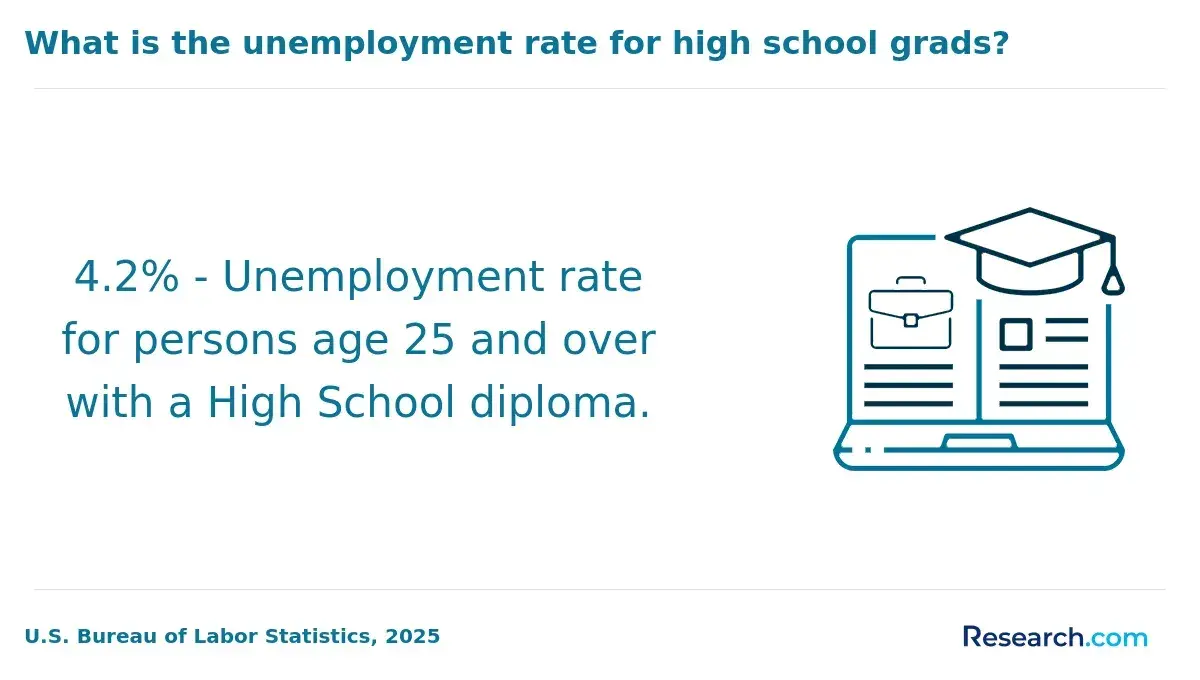
| Associate degree | High school diploma or GED, transcripts, placement requirements | Prior business credits may satisfy electives or general education | How many credits can transfer into the associate degree? |
| Bachelor's degree | High school diploma or transfer credits, transcripts, minimum GPA rules | Business coursework may count toward electives, minors, or concentration requirements | Will my business credits reduce total time and tuition? |
| Bachelor's completion program | Prior college credits or associate degree, minimum GPA, completed prerequisites | Often the best match for students with unfinished business degrees | How many upper-division legal credits must be completed at this school? |
| Post-baccalaureate certificate | Completed bachelor's degree, transcripts, sometimes resume or statement of purpose | A business degree may satisfy the general education expectation | Does the certificate meet local employer or certification prerequisites? |
Applicants should prepare more than the basic application. A strong application explains why the student is moving from business into legal support and how prior experience connects to the program's curriculum.
Useful preparation steps include the following:
- Request official transcripts early, especially if you attended multiple colleges or completed military, professional, or community college coursework.
- Ask for a written transfer credit estimate before committing to a program.
- Prepare a resume that highlights contracts, compliance, documentation, customer communication, finance, HR, or project coordination experience.
- Review writing expectations because paralegal programs often require formal legal analysis rather than general business writing.
- Ask whether the program offers placement help for students who do not already work in a legal environment.
The biggest admissions mistake is assuming a prior business degree automatically shortens every program. Some schools accept many transfer credits, while others require most legal specialty credits to be completed in residence.
What courses and skills are typically included in online paralegal studies curricula?
Online paralegal studies curricula usually combine legal theory, practical drafting, research, ethics, and technology. Business-background students should look for courses that turn their existing commercial knowledge into legal workplace competence.
Most strong programs include a core set of legal specialty courses. These courses matter because paralegals are expected to understand procedure, terminology, deadlines, and documentation standards, not just general office administration.
- Introduction to paralegal studies and the legal system, including court structure, sources of law, and attorney supervision rules.
- Legal research and writing, including case law, statutes, secondary sources, citation, memoranda, and objective analysis.
- Civil litigation, including pleadings, discovery, motions, trial preparation, and case timelines.
- Contracts and business organizations, including formation, interpretation, corporate records, and transactional documents.
- Legal ethics, including confidentiality, conflicts of interest, unauthorized practice of law, and client communication boundaries.
- Technology for legal practice, including document management, eDiscovery basics, research platforms, spreadsheets, and case management systems.
Current legal workplaces increasingly expect paralegals to be comfortable with digital evidence, cloud-based matter management, remote collaboration, and AI-assisted research tools. However, AI does not remove the need for human review. Paralegals still need to verify citations, protect confidential information, follow attorney instructions, and understand court or employer rules on technology use.
Business students should pay special attention to skill overlap. The most marketable combination is often legal writing plus business fluency: the ability to understand what a contract, transaction, invoice, policy, or compliance record means and then organize it in a legally useful way.
How long do online paralegal degrees take and what do they cost for business graduates?
Program length depends on the credential, transfer credit, enrollment pace, and whether the student already has a degree. Business graduates can sometimes move faster through a post-baccalaureate certificate, while students with partial college credit may benefit from a bachelor's completion program.
College Board's 2024 pricing data reported average published tuition and fees of $4,050 at public two-year colleges, $11,610 for in-state public four-year students, and $43,350 at private nonprofit four-year institutions. These are broad benchmarks, not paralegal-specific prices, but they show why institutional type, transfer credit, and program length can change the total investment substantially.
The table below gives practical timeline and cost considerations by pathway. Use it to compare the route that fits your existing education rather than assuming the shortest program is automatically the best value.
| Pathway | Typical completion pattern | Cost factors | Best for |
| Associate degree | Often about two academic years full time | Community college tuition, books, technology fees, possible internship travel | Students without a prior degree who want a lower-cost start |
| Bachelor's degree | Often about four academic years full time, less with transfer credit | Upper-division tuition, residency requirements, elective choices, financial aid eligibility | Students seeking broader legal operations or compliance options |
| Bachelor's completion program | Varies based on accepted credits | Transfer credit limits, required legal specialty credits, online fees | Students with prior business credits but no completed bachelor's degree |
| Post-baccalaureate certificate | Often shorter than a second degree | Certificate tuition, fewer general education courses, possible limited aid options | Business bachelor's graduates seeking focused legal training |
Students comparing legal and justice-related programs should evaluate total cost, not just tuition per credit. A guide on how much does it cost to get a criminal justice degree can also help applicants think through fees, transfer credits, books, and online learning expenses.
To reduce cost without weakening program quality, ask schools for a written estimate that includes tuition, fees, books, research database access, exam proctoring, graduation fees, and internship-related expenses. Also ask whether employer tuition assistance, military benefits, scholarships, or prior learning credit can apply.
What paralegal careers are open to graduates with both legal and business training?
Graduates with both legal and business training can pursue traditional paralegal roles and business-facing legal support positions. The combination is especially useful in workplaces where legal issues are tied to transactions, regulatory obligations, employment practices, records, contracts, or corporate risk.
The table below summarizes roles where a business background can be especially relevant. It is not a guarantee of eligibility, but it shows how legal training and prior business knowledge may work together.
| Career path | Typical responsibilities | Why business experience helps |
| Corporate paralegal | Maintain corporate records, support filings, assist with board materials, organize transaction documents | Business coursework helps with entity structures, governance, and commercial terminology |
| Contracts paralegal | Track contract drafts, manage deadlines, organize approvals, prepare standard agreements under attorney supervision | Procurement, sales, and operations experience help with contract workflows |
| Compliance paralegal | Support regulatory filings, policy documentation, audits, and internal investigations | Risk management and process knowledge translate well to compliance work |
| Litigation paralegal | Assist with pleadings, discovery, exhibits, trial preparation, and case calendars | Project management skills help with deadlines and large document sets |
| Employment law paralegal | Organize personnel records, support claims, help draft policies, prepare investigation files | HR or management experience provides useful workplace context |
| Legal operations assistant or analyst | Support budgets, vendor tracking, matter management, dashboards, and process improvement | Finance, systems, and operations skills are directly relevant |
Some students are drawn to investigative or criminal justice roles after studying law. If that is the goal, it is important to distinguish paralegal work from profiling, sworn law enforcement, or forensic investigation; a guide on how to become a criminal profiler explains a very different path.
For business-background students, the strongest career strategy is to target employers that value both skill sets: law firms with corporate practices, in-house legal departments, banks, insurers, healthcare organizations, real estate companies, government agencies, and compliance-heavy businesses.
What salary ranges and job outlook can paralegals with business backgrounds expect?
The most reliable national benchmark is the U.S. Bureau of Labor Statistics category for paralegals and legal assistants. BLS reported a May 2024 median annual wage of $61,010 for this occupation. That figure is a midpoint across industries, regions, experience levels, and employer types, so it should be used as a planning benchmark rather than a personal salary prediction.
Salary can vary widely depending on location, legal specialty, employer size, and responsibilities. Paralegals in corporate, finance, intellectual property, healthcare compliance, and complex litigation settings may see different pay structures than those in small general-practice firms, but higher pay often comes with heavier workload expectations, advanced technology use, and more specialized knowledge.
BLS projects employment for paralegals and legal assistants to change by 1% from 2023 to 2033. That modest national growth means students should not rely on the degree alone; they should build a targeted skill profile that matches hiring demand in their local market.
Business-background students can improve their competitiveness by developing skills that are useful across legal and corporate settings:
- Advanced document organization, spreadsheet tracking, and deadline management for litigation or transactional matters.
- Clear legal writing that avoids business jargon and follows attorney, court, or employer standards.
- Contract lifecycle awareness, including intake, version control, approvals, renewals, and obligation tracking.
- Comfort with eDiscovery, digital records, case management platforms, and research databases.
- Professional judgment around confidentiality, conflicts, data privacy, and unauthorized practice of law.
The salary takeaway is simple: a business background may help you compete for business-facing legal roles, but it does not automatically raise pay. The strongest salary case comes from pairing legal education with demonstrable skills, relevant internships or experience, and a specialty that employers need.
Do paralegals need certification, and how does a business background impact eligibility?
Paralegals generally do not need a universal national license to work in the United States, but requirements and title rules can vary by state, employer, and practice setting. Some employers prefer or require professional certification, especially for candidates without prior legal experience.
Professional certification is different from earning a college certificate. A college certificate is an academic credential issued by a school. Professional certification is usually granted by an association after meeting education or experience requirements and passing an exam.
Common certification options include credentials from organizations such as NALA, NFPA, and NALS. Eligibility rules vary, but a business degree may help if the certifying body accepts a bachelor's degree plus paralegal coursework or legal work experience. It may not help if the requirement specifically calls for paralegal education, supervised legal experience, or both.
Before choosing a program, take these steps if certification matters to you:
- Identify the certification preferred by employers in your target city, state, or legal specialty.
- Read the certifying organization's current eligibility rules directly before enrolling.
- Ask the school whether its curriculum is designed to support that certification path.
- Confirm whether internships, legal specialty credits, or attorney-supervised work experience are needed.
- Avoid schools that imply certification is automatic after graduation unless they clearly explain the separate exam and eligibility process.
A business background can strengthen a certification plan when it gives you professional experience, a completed degree, and workplace maturity. However, certification exams test legal knowledge and paralegal competence, so students should still choose a program with rigorous legal research, writing, ethics, and procedural training.
Other Things You Should Know About Paralegal Studies
Yes, obtaining a paralegal degree can be advantageous if you plan to apply to law school. It provides foundational knowledge of legal systems and processes, enhances critical thinking and writing skills, and can demonstrate your commitment to a legal career, which law schools value in applicants.
Sometimes. Some programs allow remote or hybrid internships with law firms, legal departments, agencies, or compliance teams, but approval rules vary. Ask the program who finds placements, how supervision works, and whether remote work satisfies graduation requirements.
Some paralegals work remotely or hybrid, especially in document-heavy, corporate, compliance, or litigation support roles. Availability depends on the employer, confidentiality rules, court deadlines, training needs, and the sensitivity of client documents.
References
- Best Paralegal Schools By State https://www.criminaljusticedegreeschools.com/degree-by-state/paralegal-schools/
- Is the Paralegal Field Booming? Your Job Outlook Guide https://www.paralegalinst.com/paralegal-job-prospects
- Your Guide to Online Paralegal Programs: Certificate, Associate Degrees, and Career Paths https://masteroflegalstudies.com/programs/online-paralegal/
- What is a Paralegal? - Career Insights | Teal https://www.tealhq.com/career-paths/paralegal
- Study Paralegal Course, Program, Diploma Online https://www.cdicollege.ca/study-online/programs-and-courses/legal/paralegal/
- The Difference Between a Paralegal Certification and Degree | Bryan University Online© https://bryanuniversity.edu/faq/the-difference-between-a-paralegal-certification-and-degree/
- Paralegal Program - Walden Haran Williams LLP https://whwllp.com/about/whw-paralegal-program/
- Paralegal Certification https://www.paralegals.org/page/paralegal-certification
- Delaware Law’s Online Legal Studies and Paralegal Certificate https://delawarelaw.widener.edu/prospective-students/non-jd-programs/paralegal/paralegal-certificate
- UK Paralegal Academy | Clyde & Co Careers https://careers.clydeco.com/en/early-careers/united-kingdom/england/uk-paralegal-academy/