2027 Best Student Loans for Low-Income Students

Student Finance & Loan Expert
Many low-income students face difficulty securing affordable funding for graduate studies. Limited credit history and financial constraints often restrict access to traditional loans with fair interest rates.
Rising education costs create stress and uncertainty, discouraging potential applicants from pursuing advanced degrees. Without reliable financial support, students risk accumulating high debt or stopping their education prematurely.
This article explores the best student loans available for low-income students, focusing on options that minimize repayment burdens and maximize accessibility. The goal is to provide clear guidance to help students identify manageable loan solutions that support their educational and career goals.
- What are the main types of student loans available to low-income students? Loan types
- How do federal student loans compare to private loans for low-income borrowers? Federal vs private
- How can low-income students figure out how much they should safely borrow? Amount to borrow
- How do you use the FAFSA to qualify for loans, grants, and work-study? FAFSA basics
- What federal loan options best support low-income undergraduate and graduate students? Best federal loans
- How do interest rates, fees, and borrowing limits work for low-income borrowers? Rates and limits
- Which income-driven repayment plans are best for low-income federal loan borrowers? Best IDR plans
- What loan forgiveness and cancellation programs can low-income borrowers qualify for? Forgiveness options
- When should low-income borrowers consider refinancing or consolidating student loans? Refinance vs consolidate
- How can low-income students avoid default and protect their credit with hardship options? Avoiding default
What are the main types of student loans available to low-income students?
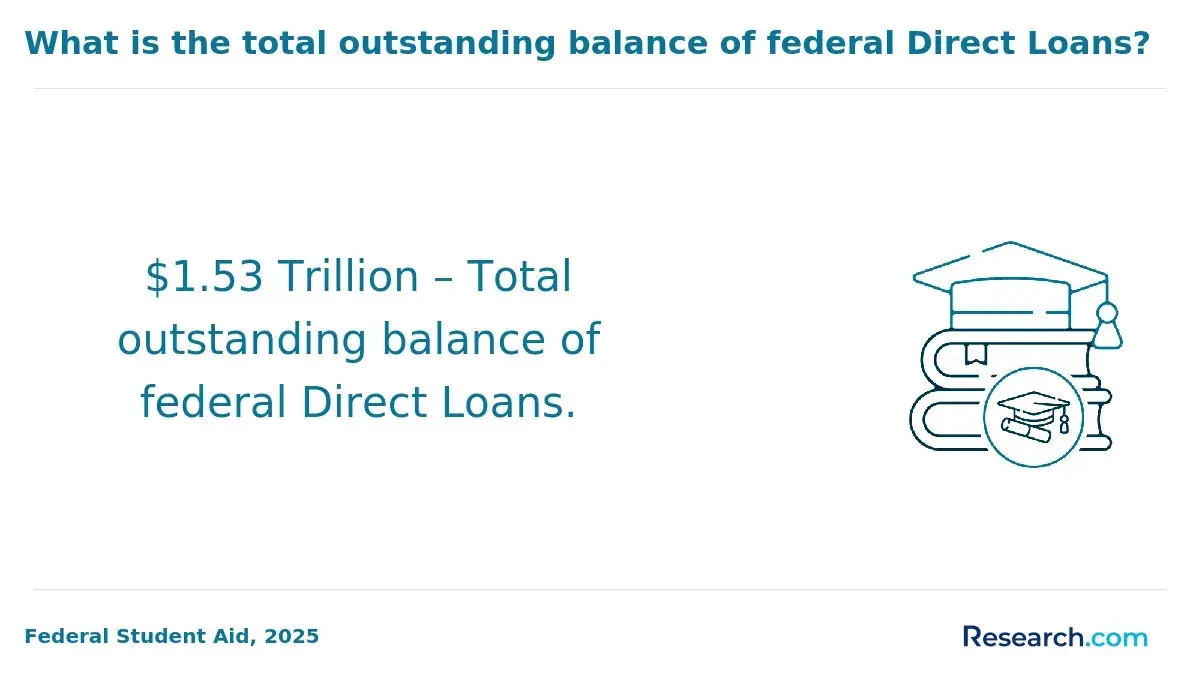
Low-income students often rely on three main student loan types: federal direct loans, private loans, and state-based loans. Federal direct loans are the most accessible and commonly used option. Among these, Direct Subsidized Loans are particularly beneficial because they do not accrue interest while students are in school or in deferment, making them ideal low-interest student loan options for low-income students.
Direct Unsubsidized Loans start accruing interest right away. In total, federal student loans disbursed $82.8 billion to 6.35 million students, with an average amount of $13,039, according to the Education Data Initiative.
Private loans, offered by banks and financial institutions, usually require credit checks and often co-signers, which makes them less accessible for low-income borrowers without established credit. Their interest rates tend to be higher and more variable, increasing financial risk. These loans rarely offer flexible repayment options similar to federal programs.
State-based loans vary widely but can provide lower interest rates or special repayment plans. Some states limit eligibility by income, which can be advantageous for low-income students pursuing in-state education. Federal and private student loans for low-income borrowers have distinct differences in terms of protections and costs.
Income-driven repayment plans linked to federal loans adjust monthly payments to a borrower's income, easing repayment challenges. Low-income students without a credit history should prioritize federal loans first to access such benefits.
For specific professions, specialized aid might be available; for example, dental students can learn more about dental school financial aid.
How do federal student loans compare to private loans for low-income borrowers?
Federal student loans offer vital borrower protections for low-income students facing average debts over $30,000. For undergraduates in the lowest income quartile (annual income $0-$42,716), these loans feature fixed interest rates, income-driven repayment plans, and forgiveness options that help manage repayment challenges and financial uncertainty.
Such flexible terms make federal student loans a preferred choice when comparing federal student loans vs private loans for low-income borrowers.
Private loans generally have variable interest rates that can increase monthly payments unpredictably and rarely provide income-based repayment or forgiveness programs.
While private lenders might offer forbearance, the criteria tend to be stricter and less assured than federal programs. This makes federal loans safer and more manageable for students with fluctuating financial situations.
Students seeking the best student loans for low-income students in the United States should complete the Free Application for Federal Student Aid (FAFSA) to maximize federal loan and grant eligibility.
Financial aid advisors emphasize evaluating total borrowing against expected income after graduation, as federal loans' protections are better aligned with uncertain earnings.
If additional funding beyond federal limits is necessary, private loans might fill gaps but require careful review of terms. For borrowers with credit challenges, exploring options for student loans with low credit score can be essential to finding manageable financing.
How can low-income students figure out how much they should safely borrow?
Low-income students should borrow only what is necessary to cover essential education costs, including tuition, fees, required books, and basic living expenses.
Calculating affordable borrowing limits for low-income students involves creating a detailed budget based on your school's cost of attendance, then subtracting scholarships, grants, and family contributions. The remainder reflects the amount you might safely borrow.
Federal student loans are often preferable due to their lower interest rates, fixed terms, and flexible repayment options. For example, the Education Data Initiative reports that 38.6% of college students took federal loans averaging $7,487 for the 2021-22 academic year, giving context to how to determine safe student loan amounts.
Consider these factors when setting your borrowing limit:
- Borrow only for education-related expenses, avoiding loans for discretionary spending.
- Estimate realistic post-graduation income to ensure you can manage repayment, especially in lower-paying fields.
- Conservatively calculate living costs by budgeting monthly expenses across the academic year.
- Use loan calculators to project repayment plans and total interest costs for varying loan amounts.
Exploring other financial aid options such as work-study or emergency grants before borrowing can reduce debt. Regularly update your budget and loan needs each term to avoid borrowing excess funds. Borrowing slightly above your calculated needs, generally no more than 10%, can help with unexpected expenses.
Careful financial planning, supported by accurate cost and income data, enables students to maintain manageable debt levels. For additional strategies, consider programs offering a student loan refinance cashback bonus.
How do you use the FAFSA to qualify for loans, grants, and work-study? - FAFSA basics
Complete the Free Application for Federal Student Aid (FAFSA) as soon as it is available on October 1 to qualify for loans, grants, and work-study programs. The FAFSA evaluates your financial status and calculates your Expected Family Contribution (EFC), which influences your eligibility for federal aid. This process is essential for how to use the FAFSA for low-income student financial aid effectively.
The FAFSA considers applicants for federal grants like the Pell Grant, designed for students with limited financial resources and requiring no repayment. It also helps determine access to Federal Direct Subsidized Loans, which offer lower interest rates and defer payments while enrolled. Work-study opportunities are awarded based on financial need and provide part-time jobs to help offset education expenses.
Be aware that even after maximizing federal aid, additional funding may be necessary. According to The Institute for College Access & Success, roughly 66% of private student loan borrowers in 2019-20 attended institutions charging over $10,000 annually.
Your FAFSA results influence private loan approval, as lenders review your calculated need and federal aid status, which aligns with FAFSA eligibility requirements for loans, grants and work-study. For specific options, explore private nursing school loans to cover tuition gaps in healthcare education.
File the FAFSA annually, since changes in income, family size, and enrollment status can affect your aid package. Ensure all your schools receive your FAFSA data promptly to maximize the benefits and maintain eligibility.
What federal loan options best support low-income undergraduate and graduate students?
Direct Subsidized Loans and Federal Perkins Loans primarily support low-income undergraduate and graduate students, though Perkins loans are now rarely available. Direct Subsidized Loans are beneficial because they do not accrue interest while the borrower is enrolled at least half-time, during grace periods, or deferments.
This feature helps reduce the overall debt burden for low-income students. Maximum annual amounts for these loans range from $3,500 to $5,500 for undergraduates, varying by year in school and dependency status. Graduate students are not eligible for subsidized loans but may access Direct Unsubsidized Loans, which do accumulate interest.
Need-based Pell Grants provide vital non-loan financial aid, with a maximum award of $7,395 for the 2024-25 academic year. More than 6.1 million students received Pell Grants recently, highlighting their importance in lowering out-of-pocket expenses and reducing reliance on borrowing.
Direct PLUS Loans, aimed at graduate students and parents, require a credit check and typically carry higher interest rates, making them less suitable for low-income borrowers.
Low-income students benefit most by maximizing Pell Grants before considering Direct Subsidized Loans. Key strategies include early FAFSA submission and careful budgeting to enhance eligibility.
Using subsidized loans reduces long-term costs compared to unsubsidized options. Additionally, awareness of deferment and income-driven repayment plans can shield borrowers from excessive debt.
How do interest rates, fees, and borrowing limits work for low-income borrowers?
Interest rates for low-income student borrowers depend largely on the loan type. Federal Direct Subsidized Loans offer fixed rates around 4.99% for undergraduates, ensuring consistent monthly payments. Private loans often come with variable rates above 7%, increasing financial uncertainty for borrowers.
Federal student loans include an origination fee of about 1.057%, deducted upfront. Private loans may have extra fees like late payment or prepayment penalties, adding to overall costs.
Borrowing limits differ based on loan type and student status. Dependent undergraduates can borrow $5,500 to $7,500 annually, with a total cap of $31,000. Independent or graduate students have higher limits to reflect greater funding needs.
Income-driven repayment (IDR) plans adjust payments based on income and family size, helping reduce monthly costs. According to a 2024 U.S. Government Accountability Office report, 57% of IDR plan participants earn under $60,000, demonstrating the focus on assisting low-income borrowers.
Loan forgiveness under certain IDR plans can eliminate remaining debt after 20 to 25 years of qualifying payments, providing crucial support for those with limited earnings.
Which income-driven repayment plans are best for low-income federal loan borrowers?
Low-income federal loan borrowers benefit most from income-driven repayment (IDR) plans like Revised Pay As You Earn (REPAYE), Pay As You Earn (PAYE), and Income-Based Repayment (IBR). These plans limit monthly payments to a portion of discretionary income, helping ease financial strain and lower default risk.
REPAYE requires 10% of discretionary income, offering loan forgiveness after 20 years of qualifying payments on undergraduate loans. It subsidizes unpaid interest during negative amortization periods, benefiting borrowers with low or rising incomes.
PAYE and IBR set payments at 10-15% of discretionary income, with forgiveness after 20 and 25 years respectively. PAYE usually has lower initial payments but needs borrower certification of partial financial hardship. IBR serves as a fallback if PAYE eligibility is unmet.
Borrowers should consider reducing loan amounts through strategies such as Federal Work-Study, which supported 7.4% of undergraduates in 2021-22 with an average earning of $2,783, lowering borrowing needs per Education Data Initiative.
Additional income before repayment helps reduce principal and minimize interest accrual. Borrowers with variable incomes benefit from plans recalculating payments annually.
Public service employees should explore combining IDR with Public Service Loan Forgiveness for potentially faster forgiveness.
Choosing wisely involves evaluating income, loan types, career goals, and earnings potential to reduce long-term repayment costs effectively.
What loan forgiveness and cancellation programs can low-income borrowers qualify for?
Low-income borrowers have access to several federal loan forgiveness and cancellation programs that can significantly reduce or eliminate their student debt.
The Public Service Loan Forgiveness (PSLF) program is one of the most notable, offering forgiveness after 120 qualifying monthly payments under an income-driven repayment plan while employed full-time by a qualifying employer. This program primarily supports public servants such as teachers, nurses, and government workers.
Income-Driven Repayment (IDR) forgiveness programs provide cancellation after 20 or 25 years of qualifying payments, depending on the specific plan. These plans, including Revised Pay As You Earn (REPAYE), Pay As You Earn (PAYE), and Income-Based Repayment (IBR), tailor monthly payments based on income and family size, making loan repayment more manageable for low-income individuals.
Additional options include Teacher Loan Forgiveness, which grants up to $17,500 for those who teach for five consecutive years in low-income schools. Borrowers with total and permanent disabilities or those eligible for borrower defense to repayment may also qualify for loan cancellation.
Private student loans do not qualify for these federal forgiveness programs, and borrowers often face greater repayment challenges. The Consumer Financial Protection Bureau reports that private loan holders are about twice as likely to struggle with payments compared to federal borrowers.
Prioritizing federal loan options and understanding eligibility requirements are crucial for accessing these forgiveness benefits.
When should low-income borrowers consider refinancing or consolidating student loans?
Low-income borrowers with stable income and good credit might benefit from refinancing student loans to secure lower interest rates. Refinancing replaces existing federal or private loans with a new private loan, typically reducing interest rates and monthly payments.
However, this option sacrifices federal protections like income-driven repayment plans and Public Service Loan Forgiveness. For instance, refinancing could lower a 7% interest rate to about 4%, saving thousands over the loan's duration.
Consolidation combines multiple federal loans into a Direct Consolidation Loan, keeping the interest rate unchanged but simplifying payments. It can extend repayment terms to lower monthly payments or allow borrowers to switch federal repayment plans. Consolidation may also restore eligibility for Public Service Loan Forgiveness on certain loans.
Choosing between refinancing and consolidation depends on the borrower's priorities: refinancing suits those seeking lower rates with good credit but no need for federal benefits, while consolidation is better for preserving federal options without rate reduction.
Many low-income students depend on federal aid, as state and institutional grants averaged $1,080 per full-time student, with need-based grants covering 75% of state aid, according to the National Association of State Student Grant and Aid Programs' 2024 report.
- Use refinancing to lower interest rates only if federal protections aren't necessary.
- Select consolidation to simplify payments and access extended federal repayment plans.
- Avoid refinancing if income-driven plans or forgiveness options apply to your loans.
How can low-income students avoid default and protect their credit with hardship options?
Low-income borrowers can protect their credit and avoid loan default by promptly contacting their loan servicers when facing financial difficulties. Federal student loans offer income-driven repayment plans that limit monthly payments to a percentage of discretionary income, often lowering payments to under $100 for many borrowers.
Options like deferment and forbearance allow temporary suspension or reduction of payments during hardships such as unemployment, in-school enrollment, or military service. However, forbearance usually accrues interest, increasing loan balances over time.
Default significantly harms credit scores and limits future borrowing. Enrolling in repayment plans, including graduated repayment plans that start with lower payments and increase as income rises, helps avoid this risk.
Private student loans generally lack flexibility, exposing low-income borrowers to greater risks. According to the Institute for College Access & Success, private student loan balances grew 53% from 2010-11 to 2019-20, outpacing federal loans. This underscores the importance of relying on federal loans' protections when possible.
Students should also:
- Request temporary hardship modifications from private lenders.
- Keep detailed communication records with loan holders.
- Seek credit counseling services that specialize in student debt.
- Consider refinancing only after financial stability improves.
Other Things You Should Know About
Yes, many federal student loans do not require a credit history or credit check for low-income students. For instance, Direct Subsidized Loans are awarded based on financial need and do not consider credit. Private lenders often require a credit check or a co-signer, making federal options generally more accessible for those without credit history.
Federal student loans, including Direct Subsidized and Unsubsidized Loans, can be used to finance many career training and technical programs as long as the institution is eligible for federal aid. Some private lenders also offer loans tailored for vocational or technical education, but terms and requirements vary widely. It's important to confirm the program's eligibility to use federal loans before borrowing.
In 2027, federal student loans remain the best option for low-income students, offering need-based options like Pell Grants and subsidized Stafford Loans. Loan forgiveness programs, income-driven repayment plans, and scholarships are also important tools to consider.
Yes, student loans can be used not only for tuition but also for reasonable living expenses such as housing, food, and transportation. When applying, students estimate their cost of attendance, which includes these costs, and loans can be disbursed accordingly. However, borrowing should be carefully planned to avoid excessive debt.