
Nimble vs Pipedrive – 2027 Comparison

Co-Founder and Chief Data Scientist
Nimble vs. Pipedrive Comparison Table of Contents
- What is Nimble?
- Who is Nimble for?
- Key Benefits of Nimble
- What is Pipedrive?
- Who is Pipedrive for?
- Key Benefits of Pipedrive
- Integrations and Compatibility with Other Tools
- Who are Nimble and Pipedrive best for?
- Nimble vs. Pipedrive Feature Comparison
- Nimble vs. Pipedrive Pricing
- Nimble Pros and Cons
- How do these CRMs integrate with online marketing software?
- Pipedrive Pros and Cons
- Additional Features and Use Cases
What is Nimble?
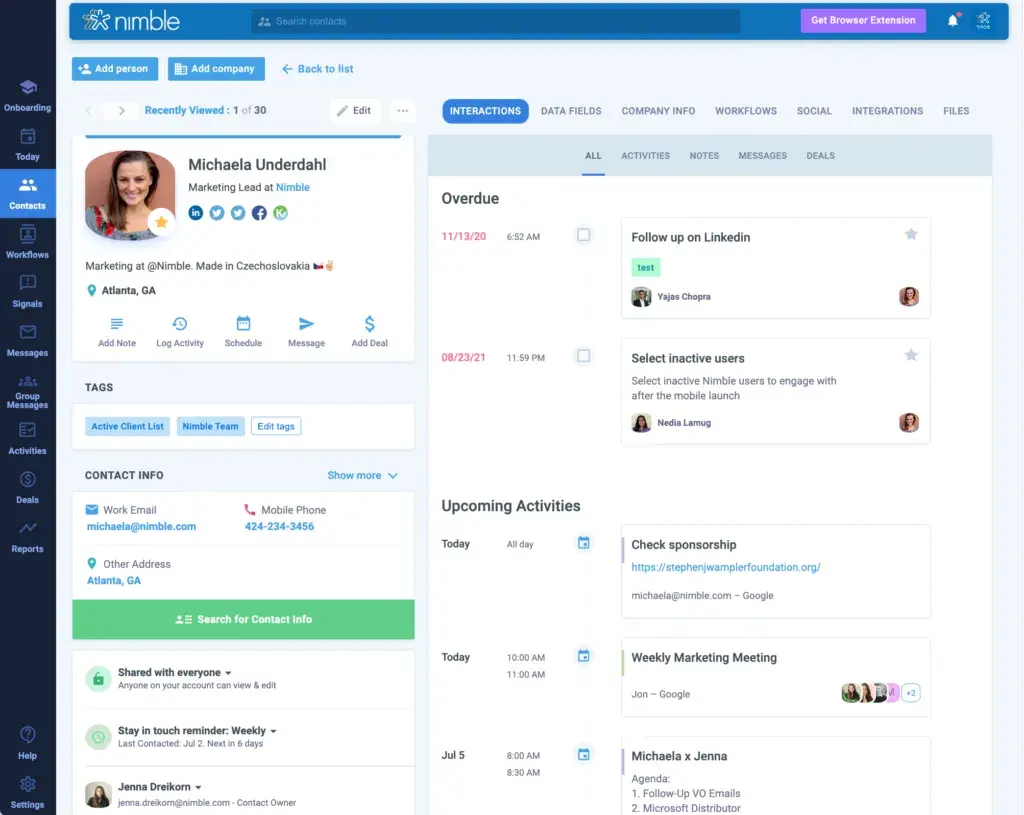
Nimble is a customer relationship management (CRM) platform that aims to streamline and enhance business relationship management. Its unique value proposition is its ability to consolidate and organize customer interactions and data from various sources, providing a unified view of each contact. The platform helps businesses build and nurture meaningful relationships with their contacts by offering a comprehensive solution for contact management, communication tracking, and social media engagement.
Nimble caters to diverse users like small and medium-sized businesses, sales teams, and professional service providers. The platform is particularly well-suited for those seeking a user-friendly and integrated CRM solution that simplifies contact management and facilitates effective communication. Its main features include contact and lead management, email tracking, calendar integration, social media insights, and team collaboration tools.
What sets Nimble apart is its emphasis on social media integration. This feature allows users to acquire valuable insights and engage with contacts directly through popular social platforms, contributing to a more holistic understanding of their relationships and interactions.
Featured CRM Software Products

$9 to $150/user/month
Yes, up to 2 users
E-signature software, call transcription, conversation routing
Editor's Take
HubSpot CRM is a powerful customer relationship management platform designed to help businesses manage their sales, marketing, and customer service efforts in one centralized place. Its user-friendly interface allows teams to track leads, monitor customer interactions, and automate sales pipelines. With built-in tools for email marketing, contact management, and analytics, HubSpot CRM provides deep insights into customer behavior and sales performance. The platform also supports seamless collaboration between marketing and sales teams through real-time updates and integrations with tools like Gmail, Outlook, and Slack. Additionally, its automation features help reduce manual tasks, enabling teams to focus on building relationships and closing deals. HubSpot CRM is scalable, making it ideal for businesses of all sizes, from startups to large enterprises.
Expert Score
In evaluating SaaS software, a comprehensive and structured methodology ensures a fair and accurate comparison across key metrics. This approach focuses on the most critical aspects that affect user experience, functionality, and business value. The following metrics—general features, cost, customer service, integrations, and mobile support—are evaluated to provide a holistic view of each software solution’s strengths and weaknesses. These metrics are selected based on their direct impact on software usability, scalability, and long-term effectiveness for businesses.
1. General Features - scoring weight 40%
This metric evaluates the core functionalities and tools the software offers. It involves assessing the comprehensiveness of the features, their relevance to the target users, and the ease of use. This is important because robust and well-designed features determine the software's overall utility and efficiency in solving user problems.
2. Cost - scoring weight 15%
Cost analysis focuses on pricing models, value for money, and scalability. It's crucial to evaluate whether the software’s features justify its price, considering different plans for small and large organizations. This is vital for businesses to ensure they invest in cost-effective solutions that fit their budget.
3. Customer Service - scoring weight 15%
This evaluates the responsiveness, quality, and availability of customer support, including channels like chat, email, or phone. Good customer service is essential for troubleshooting and ensuring smooth software usage, which reduces downtime and frustration for users.
4. Integrations - scoring weight 15%
This examines how well the software integrates with third-party tools (e.g., CRM, payment systems, collaboration apps). Seamless integrations are key for creating a unified workflow and enhancing productivity by connecting multiple systems, which is crucial for operational efficiency.
5. Mobile Support - scoring weight 15%
Mobile support assesses the software’s functionality and performance on mobile devices, including apps and mobile web versions. With increasing remote work and on-the-go usage, strong mobile support is critical to ensure users can access and utilize the software effectively, regardless of location.

$25 per user per month
14 days
marketing automation, sales automation, no code customization
Editor's Take
CRM Creatio is a comprehensive customer relationship management (CRM) solution designed to streamline and enhance business processes across sales, marketing, and customer service functions. Known for its low-code platform, Creatio allows businesses to customize and automate workflows without requiring extensive technical expertise. This adaptability makes it particularly appealing to organizations seeking to align the software with their specific needs.
The platform's marketing module provides tools for multi-channel campaign management, lead generation, and personalized customer engagement. Its sales module offers functionality for pipeline management, opportunity tracking, and analytics to help teams close deals more efficiently. Additionally, the customer service module supports case management, service level agreement (SLA) monitoring, and omnichannel communication, enabling businesses to provide exceptional customer support.
Creatio stands out with its intuitive interface, robust analytics, and AI-powered tools that provide actionable insights. The low-code development tools allow non-technical users to create applications and automate processes, reducing the dependency on IT teams. Integration capabilities with other software platforms and APIs enhance its utility, making it a versatile choice for businesses of all sizes.
Overall, CRM Creatio is a powerful solution that combines user-friendly design with advanced customization and automation features. Its adaptability and low-code foundation position it as a strong contender for organizations looking to optimize customer relationship management processes while maintaining flexibility for growth and innovation.
Expert Score
In evaluating SaaS software, a comprehensive and structured methodology ensures a fair and accurate comparison across key metrics. This approach focuses on the most critical aspects that affect user experience, functionality, and business value. The following metrics—general features, cost, customer service, integrations, and mobile support—are evaluated to provide a holistic view of each software solution’s strengths and weaknesses. These metrics are selected based on their direct impact on software usability, scalability, and long-term effectiveness for businesses.
1. General Features - scoring weight 40%
This metric evaluates the core functionalities and tools the software offers. It involves assessing the comprehensiveness of the features, their relevance to the target users, and the ease of use. This is important because robust and well-designed features determine the software's overall utility and efficiency in solving user problems.
2. Cost - scoring weight 15%
Cost analysis focuses on pricing models, value for money, and scalability. It's crucial to evaluate whether the software’s features justify its price, considering different plans for small and large organizations. This is vital for businesses to ensure they invest in cost-effective solutions that fit their budget.
3. Customer Service - scoring weight 15%
This evaluates the responsiveness, quality, and availability of customer support, including channels like chat, email, or phone. Good customer service is essential for troubleshooting and ensuring smooth software usage, which reduces downtime and frustration for users.
4. Integrations - scoring weight 15%
This examines how well the software integrates with third-party tools (e.g., CRM, payment systems, collaboration apps). Seamless integrations are key for creating a unified workflow and enhancing productivity by connecting multiple systems, which is crucial for operational efficiency.
5. Mobile Support - scoring weight 15%
Mobile support assesses the software’s functionality and performance on mobile devices, including apps and mobile web versions. With increasing remote work and on-the-go usage, strong mobile support is critical to ensure users can access and utilize the software effectively, regardless of location.

$8/per user/per month
Yes
customizable dashboards, automated follow-ups, advanced analytics
Editor's Take
monday.com Sales CRM is a customizable platform designed to streamline sales processes, enhance team collaboration, and improve pipeline visibility. Its intuitive interface enables users to manage leads, track deals, and automate repetitive tasks with ease. The CRM integrates seamlessly with popular tools like Gmail, Slack, and HubSpot, ensuring a centralized workflow. Features like customizable dashboards, automated follow-ups, and advanced analytics help sales teams stay organized and focused on closing deals. With scalability in mind, monday.com caters to businesses of all sizes, offering flexible pricing plans and robust customer support. It’s an excellent choice for teams seeking efficiency and adaptability.
Expert Score
In evaluating SaaS software, a comprehensive and structured methodology ensures a fair and accurate comparison across key metrics. This approach focuses on the most critical aspects that affect user experience, functionality, and business value. The following metrics—general features, cost, customer service, integrations, and mobile support—are evaluated to provide a holistic view of each software solution’s strengths and weaknesses. These metrics are selected based on their direct impact on software usability, scalability, and long-term effectiveness for businesses.
1. General Features - scoring weight 40%
This metric evaluates the core functionalities and tools the software offers. It involves assessing the comprehensiveness of the features, their relevance to the target users, and the ease of use. This is important because robust and well-designed features determine the software’s overall utility and efficiency in solving user problems.
2. Cost - scoring weight 15%
Cost analysis focuses on pricing models, value for money, and scalability. It’s crucial to evaluate whether the software’s features justify its price, considering different plans for small and large organizations. This is vital for businesses to ensure they invest in cost-effective solutions that fit their budget.
3. Customer Service - scoring weight 15%
This evaluates the responsiveness, quality, and availability of customer support, including channels like chat, email, or phone. Good customer service is essential for troubleshooting and ensuring smooth software usage, which reduces downtime and frustration for users.
4. Integrations - scoring weight 15%
This examines how well the software integrates with third-party tools (e.g., CRM, payment systems, collaboration apps). Seamless integrations are key for creating a unified workflow and enhancing productivity by connecting multiple systems, which is crucial for operational efficiency.
5. Mobile Support - scoring weight 15%
Mobile support assesses the software’s functionality and performance on mobile devices, including apps and mobile web versions. With increasing remote work and on-the-go usage, strong mobile support is critical to ensure users can access and utilize the software effectively, regardless of location.

$7 per user per month billed annually
15 days
lead generation, sales pipeline management, workflow automation
Editor's Take
Zoho CRM is a flexible and comprehensive customer relationship management platform designed to help businesses manage and grow their customer relationships effectively. With tools for lead generation, sales pipeline management, workflow automation, and analytics, Zoho CRM is suitable for businesses of all sizes across a variety of industries.
Zoho CRM enables teams to streamline sales processes by capturing leads from multiple channels, tracking interactions, and managing every stage of the sales cycle. The platform offers customizable dashboards and reports, providing insights into sales performance and customer behaviors to help make data-driven decisions. With powerful automation features, Zoho CRM allows businesses to set up workflows for routine tasks like follow-ups, lead scoring, and email notifications, reducing manual work and enhancing productivity. The platform integrates with popular tools, including the Zoho suite, Microsoft 365, and G Suite, enabling a seamless connection across teams.
For businesses aiming to improve customer engagement, close deals faster, and enhance team collaboration, Zoho CRM delivers a scalable, user-friendly solution to drive sales and customer satisfaction.
Expert Score
In evaluating SaaS software, a comprehensive and structured methodology ensures a fair and accurate comparison across key metrics. This approach focuses on the most critical aspects that affect user experience, functionality, and business value. The following metrics—general features, cost, customer service, integrations, and mobile support—are evaluated to provide a holistic view of each software solution’s strengths and weaknesses. These metrics are selected based on their direct impact on software usability, scalability, and long-term effectiveness for businesses.
1. General Features - scoring weight 40%
This metric evaluates the core functionalities and tools the software offers. It involves assessing the comprehensiveness of the features, their relevance to the target users, and the ease of use. This is important because robust and well-designed features determine the software's overall utility and efficiency in solving user problems.
2. Cost - scoring weight 15%
Cost analysis focuses on pricing models, value for money, and scalability. It's crucial to evaluate whether the software’s features justify its price, considering different plans for small and large organizations. This is vital for businesses to ensure they invest in cost-effective solutions that fit their budget.
3. Customer Service - scoring weight 15%
This evaluates the responsiveness, quality, and availability of customer support, including channels like chat, email, or phone. Good customer service is essential for troubleshooting and ensuring smooth software usage, which reduces downtime and frustration for users.
4. Integrations - scoring weight 15%
This examines how well the software integrates with third-party tools (e.g., CRM, payment systems, collaboration apps). Seamless integrations are key for creating a unified workflow and enhancing productivity by connecting multiple systems, which is crucial for operational efficiency.
5. Mobile Support - scoring weight 15%
Mobile support assesses the software’s functionality and performance on mobile devices, including apps and mobile web versions. With increasing remote work and on-the-go usage, strong mobile support is critical to ensure users can access and utilize the software effectively, regardless of location.

By quote
Yes
Lead Management, Contact Management, Workflow Automation
Editor's Take
Salesforce CRM is a leading customer relationship management platform known for its robust functionality, scalability, and extensive customization options, making it suitable for businesses of all sizes, from startups to large enterprises. Built to streamline sales, marketing, customer service, and analytics, Salesforce CRM empowers teams to manage customer interactions, optimize workflows, and drive growth from a single, cloud-based platform.
Salesforce CRM provides a complete view of customer data, enabling teams to track interactions, manage leads, and automate tasks throughout the sales pipeline. With powerful tools for reporting and analytics, Salesforce offers insights into sales performance, customer trends, and campaign effectiveness, allowing teams to make data-driven decisions. The platform’s automation capabilities reduce manual workloads with customizable workflows, automated follow-ups, and lead scoring, ensuring a smooth customer journey. Integrations with thousands of third-party applications, along with its own suite of services, make Salesforce a highly adaptable solution for businesses looking to connect their CRM with other tools.
For organizations focused on enhancing customer engagement, improving team efficiency, and scaling their operations, Salesforce CRM delivers a powerful and versatile solution tailored to support long-term business growth.
Expert Score
In evaluating SaaS software, a comprehensive and structured methodology ensures a fair and accurate comparison across key metrics. This approach focuses on the most critical aspects that affect user experience, functionality, and business value. The following metrics—general features, cost, customer service, integrations, and mobile support—are evaluated to provide a holistic view of each software solution’s strengths and weaknesses. These metrics are selected based on their direct impact on software usability, scalability, and long-term effectiveness for businesses.
1. General Features - scoring weight 40%
This metric evaluates the core functionalities and tools the software offers. It involves assessing the comprehensiveness of the features, their relevance to the target users, and the ease of use. This is important because robust and well-designed features determine the software's overall utility and efficiency in solving user problems.
2. Cost - scoring weight 15%
Cost analysis focuses on pricing models, value for money, and scalability. It's crucial to evaluate whether the software’s features justify its price, considering different plans for small and large organizations. This is vital for businesses to ensure they invest in cost-effective solutions that fit their budget.
3. Customer Service - scoring weight 15%
This evaluates the responsiveness, quality, and availability of customer support, including channels like chat, email, or phone. Good customer service is essential for troubleshooting and ensuring smooth software usage, which reduces downtime and frustration for users.
4. Integrations - scoring weight 15%
This examines how well the software integrates with third-party tools (e.g., CRM, payment systems, collaboration apps). Seamless integrations are key for creating a unified workflow and enhancing productivity by connecting multiple systems, which is crucial for operational efficiency.
5. Mobile Support - scoring weight 15%
Mobile support assesses the software’s functionality and performance on mobile devices, including apps and mobile web versions. With increasing remote work and on-the-go usage, strong mobile support is critical to ensure users can access and utilize the software effectively, regardless of location.

$7/user/month
15 days
Pipeline Management, Email Integration, Task Tracking
Editor's Take
Bigin is a lightweight CRM by Zoho, tailored for small businesses and startups to manage sales pipelines efficiently. It provides tools for deal tracking, email integration, and task management, ensuring a simple yet effective approach to sales. The platform offers customizable pipelines, real-time notifications, and seamless integrations with other Zoho apps. Its user-friendly design makes it accessible for teams with minimal CRM experience, helping them streamline sales processes without complexity.
Expert Score
In evaluating SaaS software, a comprehensive and structured methodology ensures a fair and accurate comparison across key metrics. This approach focuses on the most critical aspects that affect user experience, functionality, and business value. The following metrics—general features, cost, customer service, integrations, and mobile support—are evaluated to provide a holistic view of each software solution’s strengths and weaknesses. These metrics are selected based on their direct impact on software usability, scalability, and long-term effectiveness for businesses.
1. General Features - scoring weight 40%
This metric evaluates the core functionalities and tools the software offers. It involves assessing the comprehensiveness of the features, their relevance to the target users, and the ease of use. This is important because robust and well-designed features determine the software's overall utility and efficiency in solving user problems.
2. Cost - scoring weight 15%
Cost analysis focuses on pricing models, value for money, and scalability. It's crucial to evaluate whether the software’s features justify its price, considering different plans for small and large organizations. This is vital for businesses to ensure they invest in cost-effective solutions that fit their budget.
3. Customer Service - scoring weight 15%
This evaluates the responsiveness, quality, and availability of customer support, including channels like chat, email, or phone. Good customer service is essential for troubleshooting and ensuring smooth software usage, which reduces downtime and frustration for users.
4. Integrations - scoring weight 15%
This examines how well the software integrates with third-party tools (e.g., CRM, payment systems, collaboration apps). Seamless integrations are key for creating a unified workflow and enhancing productivity by connecting multiple systems, which is crucial for operational efficiency.
5. Mobile Support - scoring weight 15%
Mobile support assesses the software’s functionality and performance on mobile devices, including apps and mobile web versions. With increasing remote work and on-the-go usage, strong mobile support is critical to ensure users can access and utilize the software effectively, regardless of location.
Who is Nimble for?
Nimble primarily caters to small and medium-sized enterprises (SMEs) but is utilized by multiple businesses across various industries.
- Professional Services: Nimble is well-suited for professional service providers like consultants, marketing agencies, and legal services, where maintaining strong client relationships is essential.
- Sales and Marketing Teams: As a software for salesman, Nimble is designed to meet the needs of sales and marketing teams across different sectors. The platform offers capabilities that streamline contact management, communication tracking, and social media engagement.
- Technology and Software: Companies in the technology and software industry leverage Nimble to efficiently manage customer relationships and sales pipelines.
- Real Estate: Nimble can help real estate agents and brokers organize and maintain contacts, track deals, and foster client relationships.
- Finance and Accounting: Nimble is suitable for businesses in finance and accounting that require effective CRM solutions to manage client interactions and track financial deals.
- Retail and E-commerce: Nimble can be used by small retailers and e-commerce businesses to manage customer relationships, track sales leads, and enhance overall customer experience.
As a CRM platform, Nimble can centralize contact information and interactions, help users track messages with contacts, and integrate with social media platforms. Hence, social interactions can help businesses stay organized and gain customer insights. For businesses exploring CRM options, considering Nimble alternatives is worth exploring due to its adaptability across diverse industries.
Key Benefits of Nimble
Nimble offers several key benefits that contribute to its effectiveness as a CRM solution:
- Unified Contact Management: Nimble provides a centralized platform for managing contacts by consolidating information from various sources. This unified view helps businesses maintain up-to-date and comprehensive profiles of their contacts.
- Social Media Integration: When comparing Nimble vs. Pipedrive, the former's distinctive feature is its integration with social media platforms. This allows users to gather valuable insights from social interactions, engage with contacts directly on social media, and stay informed about their online activities.
- Ease of Use: Nimble is designed with user-friendliness in mind. The CRM platform's intuitive interface makes it accessible to users with varying technical expertise, contributing to quicker adoption and efficient usage.
- Mobile Accessibility: Nimble offers mobile applications, allowing users to access CRM data and functionalities on the go. This is especially beneficial for sales professionals who need to stay connected and manage relationships while outside the office.
- Customization: Nimble provides customization options, allowing businesses to tailor the CRM to their needs. This flexibility ensures that Nimble can adapt to different industries and business models.
What is Pipedrive?
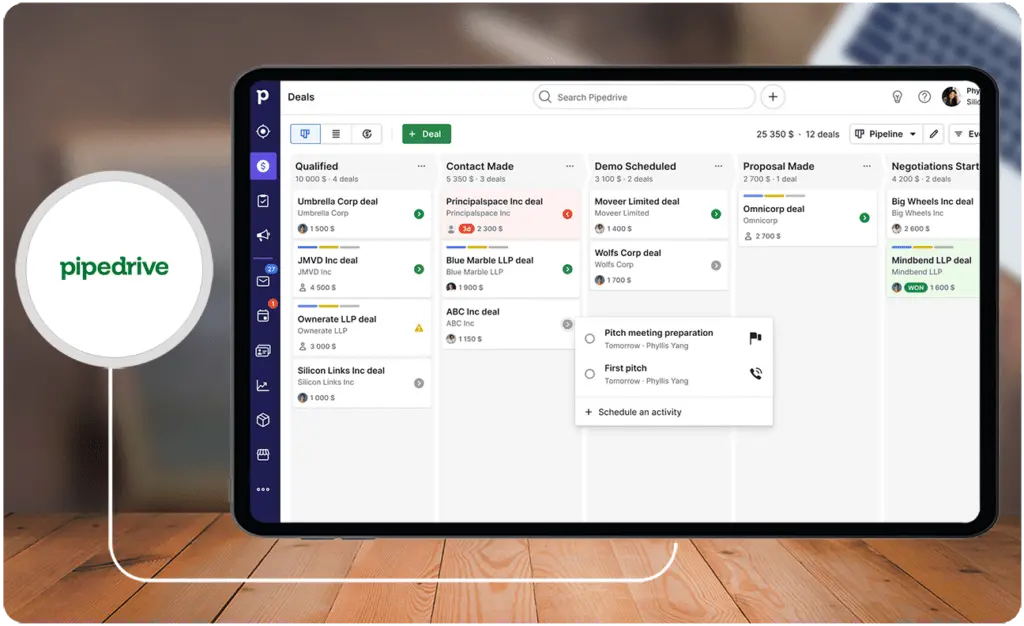
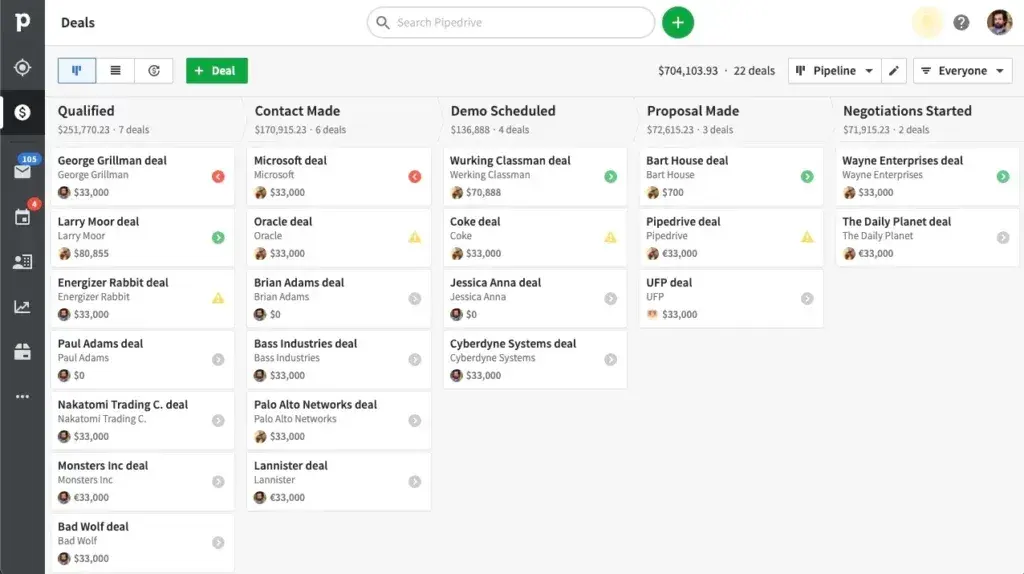
Pipedrive is a popular CRM tool with a user-friendly and visual platform to help sales teams manage their processes and close deals more effectively. The unique value proposition of this platform lies in its intuitive interface and visual pipeline management which enables users to track deals and progress through customizable sales pipelines quickly.
The primary users of Pipedrive are sales teams and professionals across different industries. The platform caters to individuals and teams seeking a straightforward and efficient solution for managing leads, tracking deals, and optimizing the sales pipeline. It aims to simplify the sales process by offering an easy platform to set up, navigate, and integrate with other tools, empowering sales teams to focus on closing deals.
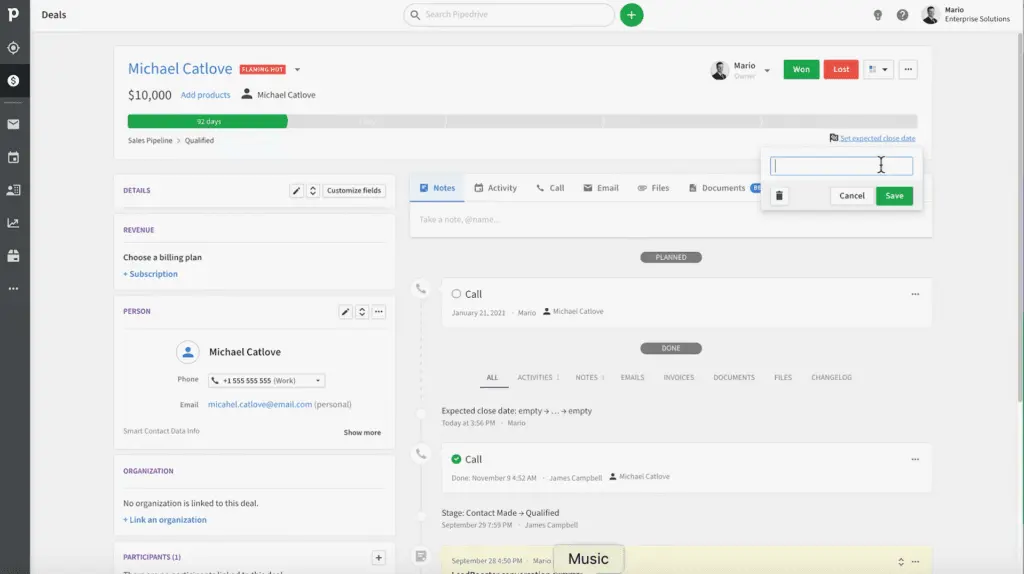
Pipedrive's main features include deal and contact management, email integration, sales reporting and analytics, workflow automation, and mobile accessibility. By emphasizing visual representations of the sales process, Pipedrive provides users with a clear overview of their sales pipeline, helping them identify opportunities, prioritize tasks, and ultimately drive more successful deals to closure.
Who is Pipedrive for?
Pipedrive is a versatile CRM solution used by businesses that prioritize ease of use and quality customer support. The industries and business types that commonly leverage this platform include:
- Sales and Marketing: Pipedrive is extensively used by sales and marketing teams across industries to streamline their sales processes and manage customer interactions.
- Real Estate: Real estate professionals use Pipedrive to manage property listings, track leads, and facilitate communication with clients throughout sales.
- Consulting and Professional Services: Businesses in consulting, legal, and other professional service industries benefit from Pipedrive's tools for managing client relationships, deals, and sales pipelines.
- E-commerce and Retail: Pipedrive is suitable for e-commerce businesses and retailers to track customer interactions, manage sales, and optimize their sales pipelines for better conversion.
- Technology and Software: Companies in the technology and software sector use Pipedrive to organize sales efforts, track deals, and enhance collaboration among sales teams.
- Financial Services: Banks and insurance companies use Pipedrive to manage client relationships, track sales activities, and improve overall sales efficiency.
Pipedrive's visual interface provides a clear overview of deals in various stages which helps teams prioritize their efforts. Users looking for the best marketing automation platform may also consider this CRM solution because it supports workflow automation and integrates with various tools and applications.
Key Benefits of Pipedrive
Pipedrive offers a range of key benefits that make it a popular choice for sales professionals looking to streamline and improve their processes:
- Visual Sales Pipeline: When comparing Nimble vs. Pipedrive, the latter's visual representation of the sales pipeline is a standout feature. It provides a clear and intuitive view of deals at different stages which makes it easy for users to track progress, identify bottlenecks, and prioritize activities.
- Automation and Workflow Management: Pipedrive supports workflow automation to allow users to streamline routine tasks and standardize processes. This helps save time, reduce manual effort, and ensure consistency in sales activities.
- Email Integration: Pipedrive seamlessly integrates with email so users can track and log email communications within the platform. This integration ensures that important correspondence is centralized.
- Sales Reporting and Analytics: The platform provides robust analytics tools for marketing, offering insights into sales performance, conversion rates, and other vital metrics. This data-driven approach allows companies to make data-informed decisions and optimize their sales strategies.
- Mobile Accessibility: Pipedrive offers mobile applications that allow sales professionals to access and manage their sales pipelines on the go.
Integrations and Compatibility with Other Tools
When choosing a CRM, integration capabilities are essential for seamless workflow and enhanced productivity. Both Nimble and Pipedrive offer various integrations to streamline CRM management with the rest of your tech stack. Here’s an overview of each platform’s compatibility with popular tools and software.
- Email Integration
- Nimble: Integrates with Gmail and Microsoft Outlook, allowing users to track email interactions and centralize communication within the CRM.
- Pipedrive: Supports Gmail, Outlook, and other IMAP email services, enabling users to send, receive, and track emails directly within the platform.
- Calendar Synchronization
- Nimble: Syncs with Google Calendar and Microsoft 365, ensuring users stay on top of meetings, tasks, and deadlines without switching between apps.
- Pipedrive: Integrates with Google Calendar and Microsoft Outlook, allowing for easy scheduling and event tracking directly within the CRM.
- Project Management and Task Tracking
- Nimble: Offers limited task management, suitable for small teams managing client relationships.
- Pipedrive: Supports integrations with project management tools like Asana, Trello, and Monday.com, enabling task assignments and tracking alongside sales activities.
- Accounting and Invoicing Tools
- Nimble: Integrates with QuickBooks, streamlining financial processes for small and medium-sized businesses.
- Pipedrive: Connects with accounting tools like Xero and QuickBooks, offering enhanced support for financial management alongside CRM functionality.
- Social Media Integrations
- Nimble: Known for its robust social media integration, pulling insights from LinkedIn, Twitter, and Facebook to enrich contact profiles.
- Pipedrive: Limited social media capabilities but integrates with third-party tools like Zapier for additional social media connections.
Who are Nimble and Pipedrive best for?
Making a Nimble vs. Pipedrive comparison does not mean that one is a better tool than the other. Instead, our team's product reviews reveal the specific areas in which each CRM platform excels.
Both tools provide:
- Intuitive and visual representation of the sales pipeline
- Tools to organize and manage contacts
- Seamless integration with third-party tools and applications
Where Nimble excels more:
- Strong emphasis on social media integration, allowing users to gather insights and engage with contacts directly on social platforms.
- Consolidating information from various sources, providing a unified view of each contact for enhanced organization.
Where Pipedrive excels more:
- Advanced customization options for visual sales pipelines allow businesses to tailor the platform to their sales processes.
- Robust workflow automation capabilities, enabling users to automate routine tasks and standardize sales processes efficiently.
- Comprehensive reporting and analytics tools, offering deeper insights into sales performance and data-driven decision-making.
Nimble vs. Pipedrive Feature Comparison
While making a Nimble vs. Pipedrive comparison, we observed that the former distinguishes itself with a strong focus on social media integration and unified contact management. On the other hand, it stands out in visual pipeline customization, advanced workflow automation, and comprehensive sales reporting and analytics. To give you a better understanding of their similarities and differences, we have outlined their core functionalities below.
Visual Sales Pipeline
Nimble and Pipedrive visually represent the sales pipeline, providing users with a clear and intuitive view of deals at various stages. Nimble's visual pipeline allows users to track deals visually but may not offer advanced customization options like Pipedrive. Pipedrive excels in this aspect, allowing users to customize the platform to their specific sales processes.
Contact Management
Both provide tools to organize and track interactions with leads and clients. However, our Nimble vs. Pipedrive comparison shows that the former can comprehensively consolidate information from various sources to view each contact. Meanwhile, the latter offers advanced customization options.
Integration Capabilities
Nimble and Pipedrive seamlessly integrate with third-party tools and applications, enhancing overall workflow and collaboration. This feature ensures that users can leverage their preferred tools alongside the CRM platform. Businesses can choose between them based on specific integrations they require or the ease of integration with their existing tech stack. While Nimble and Pipedrive are robust options, businesses exploring CRM solutions may also want to consider Pipedrive alternatives for a more tailored fit to their unique needs.
Mobile Accessibility
Nimble and Pipedrive offer mobile accessibility through dedicated applications. Doing so allows users to access and manage their CRM data on the go. It provides flexibility and convenience for sales professionals who need to stay connected outside the office. Hence, choosing between Nimble vs. Pipedrive might depend on user interface preferences and specific features available in their respective mobile applications.
Nimble vs. Pipedrive Pricing
A Nimble vs. Pipedrive comparison is incomplete without discussing pricing. The former boasts a simple pricing plan that costs $24.90 per month if billed annually. The single plan allows users to store 25,000 contact records, integrate the platform with Microsoft 365 and Google Workspace, and use the Nimble Prospector feature. A 14-day free trial is also available to help companies evaluate whether Nimble is the right CRM tool for them.
Pipedrive has five pricing plans that start at $12.50 per user per month if billed annually. All plans enable users to store at least 3,000 open deals, leverage 30 custom fields, and generate 15 insights reports. The most affordable plan is ideal for businesses that want to set up a sales process fast, while the enterprise plan, which costs $75.90 per user per month, is for companies that want to maximize the tool without limits.
Nimble Pros and Cons
Pros
- Unified Contact Management: Nimble consolidates information from various sources, providing sales and marketing teams a unified view of each contact. This feature enhances organization and provides a more comprehensive understanding of client interactions.
- Social Media Integration: When comparing the benefits of using Nimble vs. Pipedrive, the former stands out with its robust social media integration. This feature enables users to gather insights and engage with contacts directly on popular social platforms. This functionality contributes to a more holistic approach to relationship management.
Cons
- Limited Visual Pipeline Customization: Nimble's visual pipeline may have customization limitations compared to our list of CRM platforms. Businesses with highly specific or complex sales processes might find the customization options less extensive.
- Learning Curve for Advanced Features: While Nimble is user-friendly, some users may find that the advanced features related to social media integration and unified contact management have a learning curve. Training and familiarization may be necessary for users to leverage these features effectively.
How do these CRMs integrate with online marketing software?
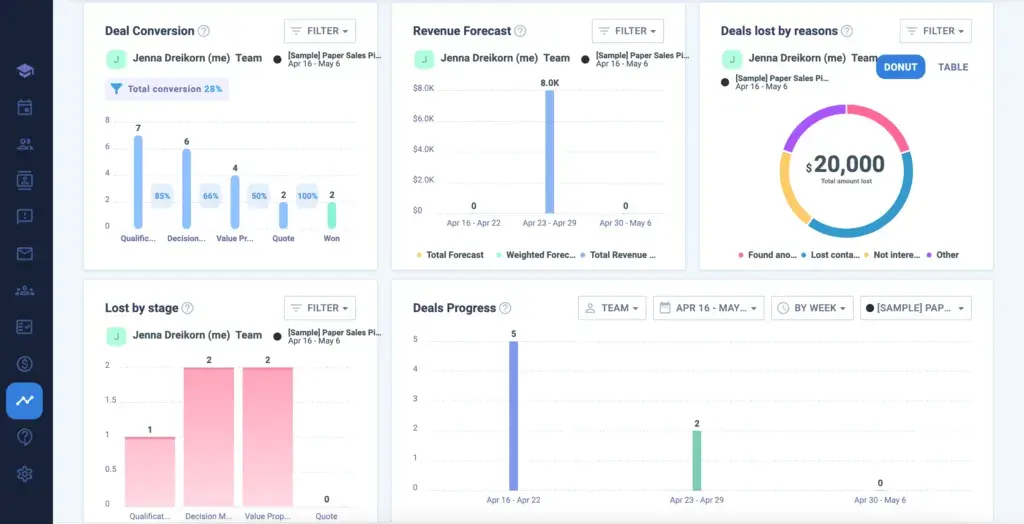
Both Nimble and Pipedrive offer robust API capabilities that enable seamless integration with external marketing platforms. This integration allows for the automatic transfer of customer data, ensuring that lead management, campaign tracking, and performance analytics are unified across systems. By connecting with dedicated online marketing software, these CRMs help align sales and marketing efforts, streamline workflow processes, and enhance overall data accuracy for strategic decision-making.
Pipedrive Pros and Cons
Pros
- Visual Pipeline Customization: When comparing the sales pipeline dashboard of Nimble vs. Pipedrive, the latter offers highly customizable visual sales pipelines. Companies can customize the platform based on their sales processes, providing a flexible and personalized approach to deal tracking.
- Advanced Workflow Automation: Pipedrive is known for its robust workflow automation capabilities, making it one of the best BPM software in the market. Users can automate routine tasks, standardize processes, and ensure consistent and efficient sales operations.
Cons
- Emphasis on Sales: Pipedrive's primary focus on sales might be a limitation for businesses looking for a more comprehensive CRM covering other aspects like customer support or marketing.
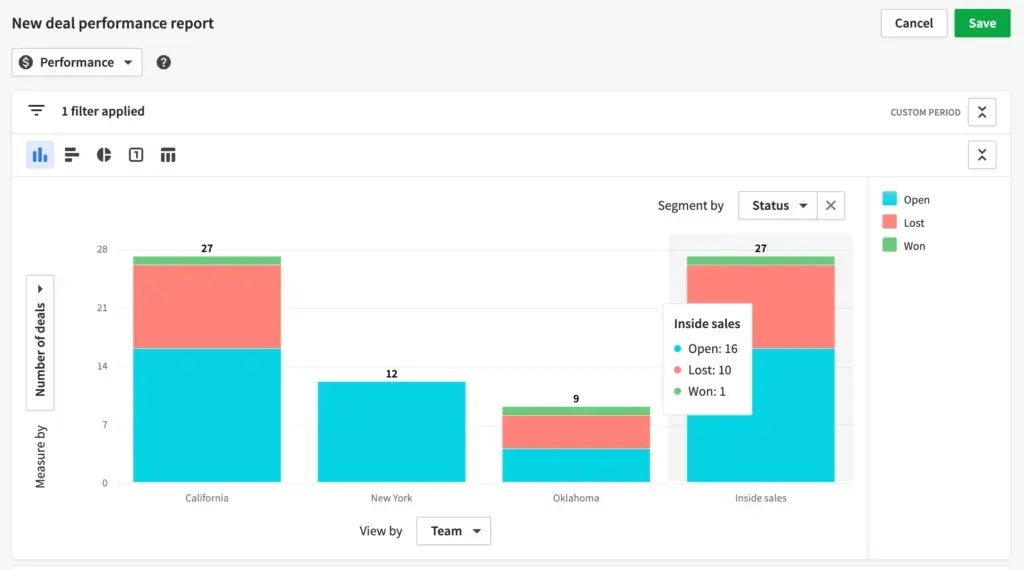
- Reporting and Analytics Complexity: While Pipedrive offers comprehensive reporting and analytics tools, some users may need help with the system's complexity when creating and customizing reports.
Additional Features and Use Cases
Both Nimble and Pipedrive offer distinctive features that can be tailored to specific business needs, but understanding how these platforms can adapt to advanced functions further highlights their value. For instance, organizations with a strong focus on client scheduling and appointment management may find opportunities to integrate these CRM solutions with leading appointment scheduling software tools. By doing so, businesses can streamline the customer journey from initial contact to post-sale follow-ups while ensuring better time management and resource allocation.
Nimble, with its social media integration, can be advantageous for businesses aiming to enhance their customer relations by aligning communication efforts across digital platforms. This is particularly useful for managing client interactions in industries such as real estate, consulting, and marketing, where relationship-building plays a pivotal role.
On the other hand, Pipedrive's workflow automation and customization of visual pipelines make it especially suitable for sales-centric industries like technology, e-commerce, and financial services. Its advanced analytics tools enable teams to dive deeper into sales data, making it ideal for organizations looking to refine their performance strategies.
By leveraging integration capabilities and aligning each platform’s unique strengths with specific use cases, businesses stand to gain significant improvements in operational efficiency and customer satisfaction.
Verdict – Nimble vs. Pipedrive: Which software is better?
Both are robust CRM solutions catering to diverse business needs but excel in different areas. During our Nimble vs. Pipedrive comparison process, our researchers found that the former's strengths lie in unified contact management and social media integration. At the same time, the latter excels in visual pipeline customization and advanced workflow automation.
Nimble consolidates information from various sources which provides users with a unified view of each contact. This emphasis on unifying data enhances overall organization and ensures a comprehensive understanding of client interactions. It also boasts social media integration, allowing users to gather insights and engage with contacts directly on popular social platforms.
On the other hand, Pipedrive provides highly customizable visual sales pipelines. This enables businesses to tailor the CRM to their specific sales processes. This flexibility is particularly advantageous for organizations with unique or complex sales workflows. Pipedrive's robust suite of workflow automation tools also enables users to automate routine tasks, standardize processes, and maintain consistent and efficient sales operations.
Key Insights
- Unified Contact Management: Nimble excels in providing a centralized platform for managing contacts by integrating information from various sources, offering a comprehensive view of customer interactions.
- Social Media Integration: A standout feature of Nimble is its ability to integrate with social media platforms, enabling users to gather insights and engage with contacts directly on these platforms.
- User-Friendly Design: Both Nimble and Pipedrive prioritize ease of use, with intuitive interfaces that facilitate quick adoption and efficient use of the platforms.
- Customization and Automation: Pipedrive offers advanced customization options for visual sales pipelines and robust workflow automation capabilities, making it highly adaptable to specific sales processes.
- Mobile Accessibility: Both platforms provide mobile applications that allow users to access and manage CRM data on the go, enhancing flexibility and convenience for sales professionals.
- Comprehensive Reporting: Pipedrive offers extensive sales reporting and analytics tools, providing deeper insights into sales performance and helping businesses make data-driven decisions.
- Pricing Flexibility: Nimble offers a single pricing plan with a 14-day free trial, while Pipedrive provides multiple pricing tiers to accommodate different business needs and budgets.
Other Things You Should Know About Nimble – Pipedrive Comparison
Nimble is a customer relationship management (CRM) platform designed to streamline and enhance business relationship management. It consolidates and organizes customer interactions and data from various sources to provide a unified view of each contact.
Pipedrive is a CRM tool known for its user-friendly and visual platform, helping sales teams manage their processes and close deals more effectively. It focuses on visual pipeline management and workflow automation.
Nimble is suited for small and medium-sized businesses, professional service providers, sales and marketing teams, and industries such as technology, real estate, finance, and retail that require a robust CRM solution to manage customer relationships and sales pipelines.
Pipedrive is ideal for sales teams, marketing professionals, real estate agents, consultants, e-commerce businesses, technology companies, and financial services seeking an efficient CRM to manage leads, track deals, and optimize sales processes.
Key benefits include unified contact management, social media integration, ease of use, mobile accessibility, and customization options, making it a versatile CRM for diverse industries.
Key benefits include a visual sales pipeline, automation and workflow management, email integration, comprehensive sales reporting and analytics, and mobile accessibility, providing a clear and intuitive view of sales processes.
Nimble integrates with popular social media platforms, allowing users to gather insights from social interactions, engage with contacts directly, and stay informed about their online activities.
Pipedrive offers advanced customization for visual sales pipelines, allowing businesses to tailor the platform to their specific sales processes. It also supports robust workflow automation to streamline routine tasks.
Both Nimble and Pipedrive provide dedicated mobile applications, enabling users to access and manage their CRM data on the go. This feature offers flexibility and convenience for sales professionals working outside the office.
Nimble offers a single pricing plan at $24.90 per month, with a 14-day free trial. Pipedrive provides five pricing plans starting at $12.50 per user per month, with options ranging up to $75.90 per user per month for the enterprise plan.
Pipedrive offers more advanced reporting and analytics tools, providing detailed insights into sales performance, conversion rates, and other key metrics. Nimble offers basic reporting features suitable for straightforward analytics.
Pipedrive is better suited for businesses with complex sales processes due to its advanced customization options for visual sales pipelines and robust workflow automation capabilities.
The main cons include limited visual pipeline customization and a learning curve for advanced features related to social media integration and unified contact management.
The main cons include a primary focus on sales, which may limit its suitability for businesses needing a more comprehensive CRM covering other aspects like customer support or marketing, and the complexity of its reporting and analytics tools.


