# 1 position


Audited and Verified:
Our Editorial and Data Verification Process
Research.com uses government datasets, official education statistics and primary institutional information to support its career and degree guides. Our review process checks factual accuracy, occupational definitions, source dates and the requirements associated with the credentials discussed.
How This Article Was Fact-Checked
Our editorial team verifies salary estimates, employment projections, education requirements and program information against original data providers and official organizations. Salary figures are checked against the relevant occupational definitions and reporting periods. Information about licensure, accreditation and required in-person training is reviewed separately.
Fact-checked and verified on:

Co-Founder and Chief Data Scientist

Reviewed by Karolina Broda
Fact-Checker and Data Verification
Choosing affordable dental assistant training in Hibbing means looking beyond tuition: the program must also provide hands-on preparation for the work you want to do in Minnesota. The Research.com team of data scientists created its Most Affordable Dental Assistant Trade Schools in Hibbing for 2027 ranking to help students identify programs worth considering. The U.S. Bureau of Labor Statistics projects 7.4% national employment growth for dental assistants from 2025 to 2035. This guide helps prospective students and career changers compare costs, credentials, training formats, and licensing implications before enrolling.
Expect instruction that connects infection control, dental materials, radiography concepts, patient care, and office procedures with supervised chairside practice. Dental assisting is a hands-on occupation: reading about instrument transfer or sterilization does not replace demonstrating those skills safely. The U.S. Bureau of Labor Statistics describes assistants as preparing patients and work areas, assisting dentists during procedures, processing records, and, where permitted, taking dental images.
For a Hibbing student, the first question is whether Minnesota North College currently offers the desired dental assisting credential at an accessible campus, with a schedule and clinical placement the student can actually attend. Program location matters because a commute to labs or an assigned dental office adds both cost and time. Ask for the current catalog, campus-specific course schedule, clinical requirements, and written cost estimate rather than assuming every offering at the college is available in Hibbing.
A certificate or diploma may suit someone seeking focused occupational training. An associate-degree program, if available and aligned with the same career goal, generally involves a broader course load; it should be compared on added time, cost, and any benefit to the student's intended role. Employer-based entry training may be more practical for someone who can secure a position and does not initially need a school credential, but the employer must explain which duties a new assistant may legally perform. These are distinct routes - not interchangeable credentials.
Students comparing career-entry training with fast online degree completion programs for working adults should keep the goal clear: online academic study does not replace dental assisting labs or supervised practice.
Dental offices are the primary setting for dental assistants, according to the U.S. Bureau of Labor Statistics. Depending on vacancies and qualifications, a Hibbing-area applicant might consider general dentistry, specialty practices, or positions combining chairside and front-office work. A smaller local market makes commuting distance consequential: ask programs where their clinical sites are and whether graduates commonly search beyond Hibbing.
Training does not automatically authorize every advertised duty. Before accepting a position involving radiographs or expanded functions, compare its duties with Minnesota Board of Dentistry rules and your documented training or license status. That check can prevent a mismatch between a job posting and the work you may perform.
The U.S. Bureau of Labor Statistics reports a May 2025 national median annual wage of $48,070 for dental assistants. A median describes workers across experience levels and locations; it is neither a Hibbing wage quote nor a likely first paycheck. When evaluating an offer, ask about starting hourly pay, scheduled hours, benefits, and whether additional authorized duties affect compensation.
For return on investment, compare the earnings you expect without training against plausible local offers after training. Then account for fees, debt, completion likelihood, and any income forgone during clinical hours. A shorter program is not necessarily cheaper if its schedule prevents you from working or requires a long clinical commute.
Completion time depends on the credential, course sequence, attendance pattern, and clinical schedule. Ask Minnesota North College for its current program map rather than relying on a general estimate for dental assisting schools. Confirm whether the published length includes all required labs and externship or clinical hours, and whether those placements run during normal business hours.
Employer-sponsored training can allow someone to begin working sooner, but time in a dental office is not automatically equivalent to completing a program that meets Minnesota's requirements for licensed dental assistants. Similarly, a part-time school schedule can preserve current earnings while extending the time before completion. Applicants seeking flexible study may also encounter best programs for older adults online; the useful distinction here is that dental assisting's practical competencies still require an in-person setting.
Online delivery can make lectures, terminology, or assignments easier to fit around work. Campus instruction gives students access to equipment, instructor feedback, and supervised practice. A hybrid program combines the two, but students still need a feasible plan for labs, competency assessments, and any clinical placement. An entirely online course should not be assumed to qualify someone for Minnesota licensure or for every duty an employer expects.
The comparison below separates what may be flexible from what generally requires physical attendance. Confirm the actual format with the provider before enrolling.
| Format | Potential advantage | Critical limitation to check |
| On-campus | Regular access to supervised equipment practice | Travel, fixed lab times, and clinical-site travel |
| Hybrid | Some coursework completed remotely | Required in-person labs and clinical days may still be substantial |
| Online coursework only | Flexible study of academic material | May not provide required practical training or licensing eligibility |
If flexibility is the priority, distinguish a dental assisting hybrid program from best accredited non-profit online universities: an institution's accreditation alone cannot establish that a particular dental assisting course supplies the clinical experience or Minnesota eligibility you need.
A defensible Hibbing-specific average requires comparable, current prices for the relevant local programs; a single advertised tuition figure would not establish one. Instead, request an itemized estimate from each available provider for the full time you expect to attend. Separate charges paid to the school from expenses needed to reach clinical training and occupational entry.
Use the following cost categories to compare quotes on the same basis:
Federal aid eligibility depends on the school, program, and student; a low price does not by itself make a course aid-eligible (Federal Student Aid). Ask the financial aid office for a program-specific estimate and compare net cost and likely borrowing, not just the sticker price. A cheap bachelor degree comparison answers a different education question and should not be used as the price benchmark for becoming a dental assistant.
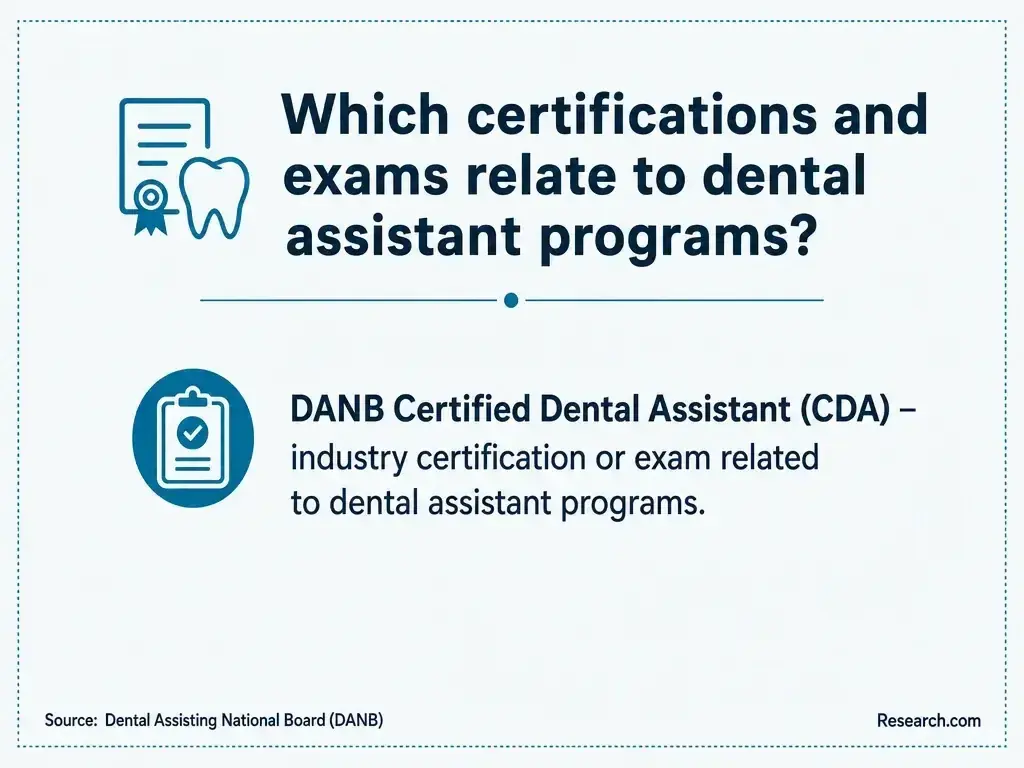
The credential is whatever the enrolled program officially awards - such as a certificate, diploma, or, where offered, an associate degree. Obtain the exact credential name from the current catalog. A school award, a Dental Assisting National Board certification, and a Minnesota dental assistant license are three different things; none should be inferred from another.
Programmatic accreditation is distinct from institutional accreditation. The Commission on Dental Accreditation (CODA) identifies accredited dental assisting programs, while institutional accreditation concerns the school more broadly. Minnesota Board of Dentistry requirements determine state licensing eligibility. Before enrolling, ask the provider to document how its specific program prepares students for the examinations and other steps relevant to their intended duties.
Requirements vary by program and clinical site. An applicant should obtain the current Minnesota North College admission checklist and ask separately about dental assisting prerequisites, application deadlines, immunizations, background checks, and any clinical-site conditions. General college admission does not necessarily mean immediate entry into a limited-space occupational program.
For employer-based entry, the hiring office sets its own hiring criteria, but it cannot waive Minnesota rules governing dental assistant duties. Ask whether training is paid, who supervises new assistants, and whether the employer supports any later certification or licensing steps.
Relevant training typically covers chairside procedures, dental anatomy and terminology, instrument handling, infection prevention, patient communication, radiography principles, and recordkeeping. The important distinction is between covering a topic and being assessed on safe performance. The U.S. Bureau of Labor Statistics identifies both clinical and administrative tasks in this occupation.
Ask to see how the program evaluates practical skills and where students practice them. If clinical placements are involved, find out who arranges the site, how students are supervised, and whether travel beyond Hibbing is possible. Experience with digital records and imaging may be valuable, but training must still match the functions Minnesota permits the assistant to perform.
Not every dental assistant position has the same entry requirement. Minnesota distinguishes unlicensed dental assistants from licensed dental assistants and limits duties according to training, authorization, and supervision (Minnesota Board of Dentistry). For someone aiming at licensed or expanded duties, choosing a program without checking the board's current education, examination, and application requirements is a costly mistake.
Dental Assisting National Board certification is a professional credential; it is not the same as a Minnesota license. CODA accreditation concerns a program, not an individual's permission to practice. Before paying an enrollment deposit, identify the duties you want to perform, verify the program's current accreditation or approval status, and ask the Minnesota Board of Dentistry which additional steps apply to that pathway.
Start with your intended job, then work backward to the training and authorization it requires. An affordability ranking can narrow the search, but it cannot tell you whether a particular class schedule, clinical site, or credential fits your circumstances. Use this sequence when speaking with Minnesota North College or evaluating an employer-training offer:
Red flags include a promise that online coursework alone qualifies you for all chairside duties, an unexplained gap between tuition and total charges, or a claim that institutional accreditation automatically grants a license. Avoid using unrelated benchmarks such as a low cost doctorate degree online to judge the value of focused dental assistant training; compare routes into the same occupation instead.
A realistic first step is an entry-level dental assistant role within the duties the worker is authorized to perform. With experience and the appropriate training or authorization, an assistant may pursue a broader chairside role or move toward scheduling, treatment coordination, or office supervision. Those positions depend on employer needs and additional skills; they are not automatic outcomes of graduation (U.S. Bureau of Labor Statistics; Minnesota Board of Dentistry).
Someone primarily interested in front-office work should ask whether a shorter employer-training route meets that goal. Someone seeking Minnesota licensed dental assistant duties should prioritize documented eligibility and supervised clinical preparation over the fastest advertised course. Broader education searches, including a cheap bachelor degree, address different goals and should not distract from the requirements of the dental assisting job you actually want.
The U.S. Bureau of Labor Statistics projects 7.4% growth nationally from 2025 to 2035 for dental assistants. That projection indicates continued occupation-wide demand, but it does not predict openings in Hibbing or guarantee a local job after training. A student who needs to remain in Hibbing should check current vacancies and acceptable commuting distance before committing to a program.
Ask clinical-site coordinators and prospective employers which duties they expect new hires to perform. That local evidence can be more useful for choosing between school and employer-based training than a national growth rate alone.
Investing in training is an important decision, especially when the lowest advertised tuition may not be the lowest total cost. Research.com designed this ranking to compare dental assisting programs against relevant local options using documented data rather than promotional claims. Only programs with completions reported to IPEDS are eligible; that limit does not mean other training routes are unavailable or unsuitable.
For its most affordable rankings, the team evaluates tuition, cost of attendance, median student debt, and federal loan default rates. Indicator weights are assigned through an entropy-based method, which gives more weight to measures that differ more across eligible programs. Accreditation and other quality indicators do not contribute to the affordability score. Research.com's separate best programs rankings use different criteria, including outcomes and quality. Readers should therefore treat an affordability rank as a cost comparison - not proof of licensing eligibility, clinical quality, or job placement.
The team used the following sources to assemble and check the ranking. Some provide cost and outcome data; others help verify institutional or occupation-specific information:
Using multiple sources helps readers identify a cost-conscious shortlist, but the final decision still requires a current program quote and confirmation of Minnesota's requirements. More detail about the ranking approach is available on Research.com's methodology page.
# 1 position
# 2 position
Not necessarily. Compare the complete cost, practical training, completion schedule, and Minnesota eligibility for your intended duties. A cheaper course that does not prepare you for the job you want may be poor value.
Some Minnesota dental assistant work may be available through employer training, subject to state limits on duties and supervision. If your goal is licensed duties, check the Minnesota Board of Dentistry's current pathway before treating work experience as a substitute for a program.
Online coursework may cover academic topics, but chairside competencies require practical training. Confirm where labs and clinical work happen and whether the specific program supports your Minnesota career goal.
No. A school credential and a Minnesota license are separate. Verify the board's current education, examination, and application requirements for licensed dental assistants.
Ask whether the desired program is currently offered at a campus you can attend, what credential it awards, where clinical training occurs, what the full cost is, and how it aligns with Minnesota's licensing requirements.