# 1 position
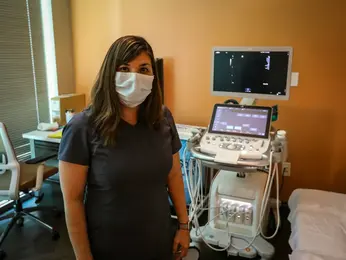
Pima Medical Institute-Renton - Dental Assisting/Assistant.
certificate or diploma

Audited and Verified:
Our Editorial and Data Verification Process
Research.com uses government datasets, official education statistics and primary institutional information to support its career and degree guides. Our review process checks factual accuracy, occupational definitions, source dates and the requirements associated with the credentials discussed.
How This Article Was Fact-Checked
Our editorial team verifies salary estimates, employment projections, education requirements and program information against original data providers and official organizations. Salary figures are checked against the relevant occupational definitions and reporting periods. Information about licensure, accreditation and required in-person training is reviewed separately.
Fact-checked and verified on:

Co-Founder and Chief Data Scientist

Reviewed by Karolina Broda
Fact-Checker and Data Verification
Choosing dental assistant training near Renton means looking beyond a school's name: the credential, clinical practice, Washington registration requirements, and total cost all affect whether a program fits your goal. The U.S. Bureau of Labor Statistics projects 7.4% growth in dental assistant employment nationally from 2025 to 2035. This guide explains the local training choices and career-entry rules so you can compare them confidently. It will also feature the Best Dental Assistant Trade Schools in Renton for 2027 ranking, created by the Research.com team of data scientists to help students identify programs worth considering.
Expect instruction in chairside assistance, infection prevention, dental materials, patient communication, records, and office procedures, followed by supervised practice. Because the job involves patients, instruments, and treatment rooms, ask how many hours occur in a lab and how many occur in an actual dental office. A similarly named credential is not equivalent if one program offers substantially less supervised practice.
The main choices are a technical-college or career-school program and, where an office is willing to hire and train a beginner, employer-based entry. Renton Technical College and Pima Medical Institute-Renton are the local schools to check for current dental assisting offerings. An associate-degree route may appeal to someone seeking broader college coursework, but it is not automatically required for basic dental assistant registration in Washington. Searches for a 6 month associate degree online should not be used as a shortcut for judging whether dental assisting clinical competencies can be completed.
Before committing, ask each provider what credential it awards, whether it arranges clinical placement, and which tasks graduates are prepared to perform under Washington rules. A direct-entry office job can reduce upfront school costs, but the amount and consistency of training will depend on the employer.
Dental offices are the principal workplace for dental assistants, according to the U.S. Bureau of Labor Statistics. Training may also be relevant to specialty practices, such as orthodontic or oral surgery offices, where the daily procedures differ. Renton's access to the wider Seattle-area labor market gives applicants more offices to consider, but commuting time and the location of a required externship can materially change a program's cost and schedule.
When speaking with an office, ask which duties it expects a newly registered assistant to perform and what it teaches after hiring. Training for general chairside work should not be mistaken for authorization to perform expanded functions or for preparation to work independently.
The U.S. Bureau of Labor Statistics reports a $48,070 national median annual wage for dental assistants in May 2025. Half of employed assistants nationally earned less and half earned more; the figure is neither a Renton wage nor a likely first offer. Use current local job postings to assess entry pay, paid hours, benefits, and any premium for experience or specialty-office duties.
For a training decision, compare the pay you could reasonably seek after completion with what you could earn while training or by entering an office directly. Subtract program costs and forgone work hours before treating a higher prospective wage as a return on your investment.
Dental assisting programs commonly take about one year, according to the U.S. Bureau of Labor Statistics, but a Renton student's finish date depends on the specific cohort, schedule, and clinical placement. Ask for the published calendar and required classroom, lab, and externship hours - not just the number of terms. Verify whether clinical hours are included in the advertised length and whether you must find your own placement.
An accelerated schedule may get you into the job market sooner but can leave less room for paid work. Part-time training may protect current income while delaying completion. Employer-based training can begin with paid work, although reaching proficiency and accessing particular duties depends on the office's supervision and Washington's rules.
Online coursework can cover terminology, records, and some infection-control concepts. It cannot replace practice positioning patients, handling instruments, assisting at chairside, or demonstrating safe procedures under supervision. A hybrid option is useful only if its in-person lab and clinical arrangements are accessible from Renton and provide the practice you need.
Before choosing an advertised online program, obtain its written plan for labs, supervised office experience, and Washington-specific preparation. Online college classes open enrollment may offer flexible entry to general coursework, but open enrollment alone says nothing about clinical placement, job readiness, or eligibility for a dental assisting credential.

There is no reliable single Renton-wide average to apply to every dental assisting route: a public-college program, a career-school program, and paid employer training have different charges and opportunity costs. Request a current, itemized cost-of-attendance estimate from each school rather than relying on an advertised tuition figure. Include mandatory fees, books, scrubs and protective equipment, clinical-site travel, required screenings if applicable, and registration or optional certification fees.
Ask each school which costs financial aid can cover and whether its program is eligible for federal aid. Washington residents should also check Washington College Grant eligibility with the school and the Washington Student Achievement Council; eligibility is not automatic. An employer-trained route may reduce tuition but still involve time, travel, and supplies. Unrelated searches such as cheap online masters cannot establish what it costs to become a job-ready dental assistant.
For a fair comparison, weigh the full cost against completion likelihood, time away from work, expected debt, and the pay you could obtain without the program. A lower sticker price is not necessarily better if essential clinical training is missing.
A dental assisting program may award a certificate or diploma; confirm the exact award with the school. That school credential documents completion. Washington registration is a separate state requirement for working as a dental assistant, while the Dental Assisting National Board's Certified Dental Assistant credential is a distinct professional certification with its own eligibility rules (Washington State Department of Health; Dental Assisting National Board).
Also distinguish institutional accreditation from Commission on Dental Accreditation programmatic accreditation. Neither automatically grants state registration or national certification. Ask whether the particular program is CODA-accredited if that status matters to a certification route or future mobility. Searches for shortest online doctoral programs do not address these dental assisting credentials or their practical-training requirements.
Admissions rules belong to the individual provider. Ask Renton Technical College and Pima Medical Institute-Renton whether their current dental assisting cohorts require a high school diploma or equivalent, placement assessment, health documentation, background screening, or prerequisites before lab or clinical work. Do not assume that admission to a school guarantees a clinical placement or that every employer will accept the same screening result.
Employer-based entry has a different gatekeeper: an office must be willing to hire, supervise, and train a beginner. If you already have related coursework or dental-office experience, ask a school whether it grants documented prior-learning or transfer credit and, crucially, whether any credit changes required hands-on practice.
Useful training connects classroom concepts to chairside tasks: preparing treatment areas, processing instruments, understanding dental anatomy and materials, recording information accurately, communicating with patients, and following infection-prevention procedures. The U.S. Bureau of Labor Statistics identifies clinical and administrative work as core parts of the occupation; the exact tasks an assistant may perform depend on state rules and supervision.
Look for supervised repetition, feedback, and an externship or other office experience - not just demonstrations. Ask to see the skills checklist and find out who assesses performance in the clinic. A program emphasizing office software but offering limited chairside practice may be a poor fit for someone seeking a clinical role.
Washington generally requires dental assistants to register with the Washington State Department of Health; basic dental assistant registration is not the same as a school certificate or the Dental Assisting National Board's voluntary Certified Dental Assistant certification. Scope-of-practice and supervision rules determine what a registered assistant may do. Expanded functions have a separate Washington credential and requirements, so do not assume an entry program qualifies you to perform them (Washington State Department of Health).
Check the department's current application and scope rules before enrolling, particularly if a program advertises radiography, expanded duties, or interstate portability. Ask the school which requirements its curriculum addresses and which steps remain your responsibility. An accredited school alone cannot confer state permission to practice.
Start with the job you want: general chairside assistant, a specialty-office role, or a longer-term expanded-functions goal. Then compare each available program with the direct-entry office route against the same criteria. The most useful questions to put to admissions staff are:
Get answers in writing. Red flags include a promised salary, unclear clinical arrangements, or claims that an online certificate automatically permits practice. A ranking helps identify options to investigate; the better investment is the route whose practical training, schedule, net cost, and realistic job prospects fit your circumstances.
An entry-level assistant can develop expertise in general dentistry, move into a specialty practice, or take on scheduling and office-coordination responsibilities with experience. Someone interested in Washington expanded functions should check the Department of Health's separate credential requirements before choosing additional training. Optional national certification can also be worth examining when an employer values it or a later move might make it useful; it is not a substitute for state registration (Washington State Department of Health; Dental Assisting National Board).
If you are comparing dental assisting with other hands-on occupations, review careers you can pursue after trade school alongside each occupation's actual entry requirements. Dental assisting is a stronger fit for someone comfortable with close patient contact and repeated chairside procedures than for someone seeking a fully remote role.
The U.S. Bureau of Labor Statistics projects 7.4% national employment growth for dental assistants from 2025 to 2035. That indicates an expanding occupation nationally, not a forecast of Renton openings or a guarantee of work after graduation. Local prospects will depend on which offices are hiring, the duties they expect, and whether your schedule allows you to reach them.
Before paying for training, scan current Renton-area vacancies for recurring requirements and ask prospective clinical sites whether they hire beginners. That check is more useful for choosing between a school program and employer training than applying a national growth rate directly to your personal prospects.
Investing in training is a consequential decision. Research.com's team designed this ranking to compare dental assisting programs with other options in the same occupation and location, using multiple sources to check outcomes, costs, recognition, and student support. Only programs reporting completions to IPEDS are eligible; absence from the ranking does not mean a training provider is unapproved or unsuitable.
For the best-programs ranking, programmatic accreditation or occupation-relevant industry recognition accounts for 20% of the score, institutional accreditation for 10%, and student support for 10%. The remaining 60% covers completion and full- and part-time retention; earnings one year after completion and relative to annual attendance cost; and tuition, attendance cost, debt - including debt held by students who withdrew - and federal loan default rates. An entropy-based method assigns more weight to measures that vary more across eligible programs. Most-affordable rankings instead score only tuition, attendance cost, median debt, and loan default rates using that method; accreditation and other quality measures are not part of the affordability score.
The team used the following databases and organizations to evaluate programs and check relevant recognition. Some cover education broadly rather than dental assisting specifically:
The ranking can narrow a shortlist, but its institution-level figures may not describe a particular dental assisting cohort or include every employer-trained assistant. Verify current program details directly before enrolling. More detail on the ranking approach appears in Research.com's methodology.
# 1 position
# 2 position
# 3 position
Potentially. An office may hire and train a beginner, but you still need to meet Washington's registration and scope-of-practice rules. Compare the supervision offered with what a school's labs and clinical placement provide (Washington State Department of Health).
No. A school certificate records completed training; Washington registration is a separate step. Check the Department of Health's current requirements before applying for work.
Do not assume so. CODA accredits dental assisting programs, while Washington sets its own rules for assistant registration. CODA status can matter for particular certification pathways, so check the route you intend to pursue (Commission on Dental Accreditation; Dental Assisting National Board; Washington State Department of Health).
Online study can cover some theory, but chairside skills require supervised in-person practice. Ask where and how any advertised online or hybrid program provides that experience.
Compare current, itemized quotes from Renton Technical College and Pima Medical Institute-Renton. Include fees, supplies, clinical travel, available aid, and income you may forgo; tuition alone cannot establish the lower-cost route.