2027 Most Valuable Psychology Degree Programs Ranking in Clemson

Co-Founder and Chief Data Scientist
Choosing the right psychology degree program in Clemson can feel overwhelming. This article presents the 2027 Most Valuable Psychology Degree Programs Ranking in Clemson, created by the Research.com team of data scientists to guide you through the options.
By exploring this ranking, you'll gain clear insights into programs that offer strong career potential and academic value. Earning a psychology degree opens doors to understanding human behavior and making a positive impact.
We're here to help you find a path that fits your goals and inspires confidence in your decision.
Key benefits of getting psychology degree in Clemson
- Salary for psychology degree graduates: Graduates can expect competitive pay with roles such as Marketing Research Analyst earning a mean annual wage of $83,190 and Human Resources Specialists earning around $76,060.
- Career paths: Clemson psychology graduates often pursue diverse fields like clinical research, child care, or survey research, showcasing flexibility and rewarding opportunities.
- Benefits of online degrees: Online psychology degrees from Clemson provide flexibility and convenience, allowing students to balance life while earning valuable credentials that open doors to meaningful careers.
- 2027 Most Valuable Psychology Degree Programs Ranking in Clemson
- What can I expect from psychology degree in Clemson?
- Where can I work with psychology degree in Clemson?
What can I expect from psychology degree in Clemson?
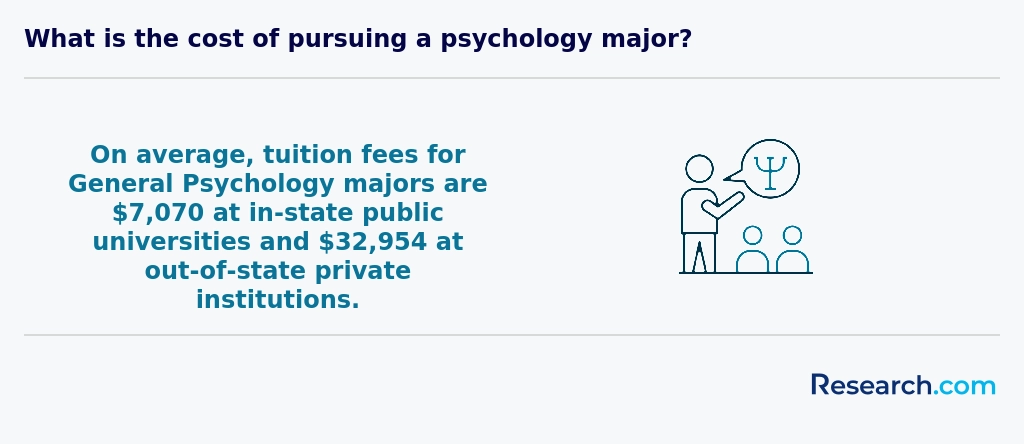
Studying psychology at Clemson is both an inspiring and attainable goal, with in-state tuition averaging around $16,000 per year and out-of-state tuition approximately $38,000 annually. Graduates often recall how the investment was truly worthwhile, given the hands-on research experiences and community internships that deeply enriched their understanding and prepared them for rewarding careers.
Many students thrive in Clemson's close-knit academic environment, where faculty engage actively in cutting-edge topics like behavioral neuroscience and social cognition. Imagine yourself collaborating at the Brooks Center for the Study of Aging, applying theoretical knowledge to real-world challenges affecting psychological health. Graduates speak of a strong sense of accomplishment gained through these experiences.
Financial aid and scholarships often ease the cost burden, making the dream of a Clemson psychology degree reachable and exciting. The program's blend of rigorous coursework and meaningful practical work creates a powerful foundation for success in healthcare, counseling, education, and beyond.
Where can I work with psychology degree in Clemson?
Graduates with a psychology degree in Clemson find exciting career paths across diverse fields, fueling their passion to make a difference. Many step into healthcare roles at hospitals and clinics nearby, becoming mental health counselors or behavioral therapists who directly support patients' journeys toward well-being. Imagine working alongside dedicated professionals at medical centers in Greenville or Anderson, knowing your efforts truly change lives.
Others thrive in education, supporting students in Anderson and Pickens counties by helping them overcome challenges and grow emotionally. These roles offer daily fulfillment, turning psychological knowledge into real support for young minds. Clemson's universities foster this strong community connection, empowering graduates to lead with empathy and insight.
Business sectors also welcome psychology graduates eager to enhance workplace culture and consumer engagement. Whether in human resources or marketing, these graduates use their understanding of behavior to create positive, innovative environments. Clemson's blend of manufacturing and technology companies opens doors for those ready to inspire change.
Nonprofit work attracts many, too-graduates find joy in community outreach, addiction counseling, and family support, creating hope and healing. Plus, advanced degree holders engage in impactful research or clinical practice, often supported by Clemson's vibrant academic institutions. Each path offers rewarding ways for psychology graduates to shine locally and beyond.
Graduates from psychology programs at Clemson's universities are stepping into rewarding careers with encouraging earning potential. Entry-level roles like human resources specialists offer promising salaries, with a mean annual wage around $76,060 according to recent data. This means you could start your professional journey earning a solid income while applying your learned skills in real-world settings.
For those intrigued by research and analysis, positions such as marketing research analysts present even higher financial prospects, with mean annual wages near $83,190. Imagine contributing to meaningful projects that influence business strategies or community programs while advancing your career and income simultaneously.
Clinical research associates and survey researchers in Clemson enjoy mean annual wages around $62,370, reflecting steady opportunities for graduates aiming to impact health and social sciences. Many psychology graduates from Clemson's programs find these roles both fulfilling and well-compensated, helping them grow professionally and personally.
Choosing psychology in Clemson opens doors to diverse career paths with solid financial rewards, complemented by the vibrant university community and local support. The blend of practical experience and competitive salaries creates an inspiring environment where ambitious graduates thrive and feel confident about their future.
- The average annual tuition for in-state students at Clemson University is about $15,000, while out-of-state students pay around $38,000.
- Entry-level psychology graduates in Clemson typically earn between $40,000 and $50,000 per year, with potential growth to $60,000-$75,000 annually.
- Job opportunities are available in healthcare, education, social work, and private practice within Clemson and nearby cities like Greenville and Charleston.
- Clemson University offers undergraduate and graduate psychology programs with access to research projects and internships.
- Licensure and certification for clinical or counseling psychology require graduate education and supervised experience beyond a bachelor's degree.
Completing a psychology degree in Clemson is a journey filled with growth and discovery, typically spanning about four years for those pursuing a bachelor's degree at institutions like Clemson University. Many graduates reflect on how this timeframe allowed them to build a strong foundation, balancing core courses in biological and social psychology with exciting topics like cognitive and developmental psychology.
For those aiming higher, graduate programs pleasantly extend this adventure. A master's degree usually takes two to three years, offering deeper knowledge and hands-on research opportunities that many students cherish. Doctoral degrees, such as PhDs or PsyDs, take between five to seven years, empowering students to become experts through meaningful clinical training and original research.
Students often find that internships and research roles enrich their learning experience, sometimes adding time but always enhancing career readiness. At popular Clemson colleges, this flexible approach transforms studying psychology into an inspiring and rewarding experience, tailored to individual goals and passions.
Ensuring your psychology program is accredited is essential for licensure and career mobility. In Clemson, SC, most bachelor’s and graduate psychology degrees are accredited by the Southern Association of Colleges and Schools Commission on Colleges (SACSCOC) and, where applicable, the American Psychological Association (APA). Accreditation verifies that a program meets rigorous academic standards, making you eligible for state licensure and graduate studies nationwide. Key Accreditation Bodies:
- SACSCOC: Oversees regional accreditation for institutions in South Carolina, confirming overall academic quality.
- APA: Recognizes doctoral and select master’s programs in clinical, counseling, and school psychology, a prerequisite for many state licensure exams.
- CACREP: The Council for Accreditation of Counseling and Related Educational Programs accredits counseling psychology tracks, aligning curriculum with licensure requirements. Licensure Pathway in South Carolina: 1. Degree Completion: Graduate from an APA- or CACREP-accredited program. 2. Supervised Experience: Accumulate 3,000 hours of supervised clinical practice under a licensed psychologist. 3. Examination: Pass the Examination for Professional Practice in Psychology (EPPP) and South Carolina jurisprudence exam. 4. Application: Submit transcripts, exam scores, and supervision documentation to the South Carolina Board of Examiners in Psychology. Financial Considerations: Prospective students should weigh accreditation-related costs alongside tuition. For cost-conscious applicants, explore our Most Affordable Psychology Degree Programs Ranking in North Carolina to compare tuition rates and accreditation status before applying.
Choosing between an online and on-campus psychology degree in Clemson means embracing different, yet equally rewarding journeys. On-campus students at Clemson University often treasure the vibrant classroom energy, where lively discussions with professors and peers deepen their understanding of human behavior. They enjoy hands-on experiences in labs and training at campus counseling centers, painting a rich picture of psychology beyond textbooks.
Online students, meanwhile, celebrate the freedom to tailor their studies around busy lives. Whether balancing a job or family commitments, these learners find joy in progressing at their own pace, accessing Clemson's robust digital resources from anywhere. Imagine joining virtual study groups or live sessions that connect you with passionate classmates across South Carolina, making learning flexible yet engaging.
Both paths lead to the same respected degree, opening doors to careers where you can truly make a difference. Graduates from either format often reflect on how their chosen style nurtured their growth-whether through personal connections on campus or self-driven discovery online-empowering them to follow their unique professional dreams with confidence.
Clemson’s psychology programs go beyond academic excellence by offering a vibrant campus life and extensive student support services that enhance both personal and professional growth. From dedicated academic advising and mental health counseling centers to active student organizations and career workshops, these resources are designed to help students navigate the challenges of higher education while building valuable life skills. Many institutions also provide tutoring, research assistantships, and mentorship programs that foster a collaborative learning environment, ensuring you’re well-equipped to meet academic and career goals. For those seeking additional flexibility, several schools now offer online clinical psychology programs that combine rigorous coursework with the convenience of remote study. Engaging in extracurricular activities, networking events, and community outreach projects not only enriches your education but also builds a resilient foundation for a successful career in psychology.
The average cost of a psychology degree in Clemson reflects a valuable investment in your future, with median total costs around $55,606 for out-of-state students and approximately $15,554 for in-state students. Many Clemson psychology graduates recall the excitement of balancing tuition fees with daily life while appreciating the excellent education they received at Clemson University, renowned for its strong psychology programs.
When planning your studies, it's important to remember that tuition and fees form only a part of the total cost. Books, supplies, and living expenses play a role too, but generous financial aid and scholarships available specifically for psychology students often lighten this burden. Many students share stories of finding rewarding work-study opportunities and scholarships that made their educational journey more accessible and fulfilling.
For those eager to explore options beyond traditional degrees, Clemson's environment encourages students to uncover pathways that combine academic pursuit with practical experience. If you want to explore affordable and flexible learning routes, consider researching the top online clinical MSW programs, which can complement psychology studies and expand career opportunities.
Understanding the average cost of psychology degree in Clemson helps students create realistic, inspiring budgets tailored to their goals. This awareness empowers future psychologists to focus on thriving academically and personally, confident that their investment will open doors to a fulfilling career dedicated to helping others.

To practice as a psychologist or counselor in South Carolina, graduates must complete these core steps:
- Education:
- For licensed psychologists, earn a doctoral degree (PhD or PsyD)-see psyd programs for online options.
- For licensed professional counselors (LPC), obtain a master’s in counseling or a related field.
- Supervised Experience:
- Psychologists: 3,000–4,000 hours under a licensed psychologist.
- LPCs: 2,000–3,000 hours of supervised clinical practice.
- Examinations:
- Psychologists: Pass the Examination for Professional Practice in Psychology (EPPP).
- LPCs: Pass the National Counselor Examination (NCE) or the National Clinical Mental Health Counseling Examination (NCMHCE).
- State Application:
- Submit transcripts, verification of supervised hours, and exam scores to the South Carolina Board of Examiners in Psychology or the Board of Examiners for Licensure of Professional Counselors, Marriage and Family Therapists, and Psycho-Educational Specialists.
- Continuing Education:
- Maintain licensure with required continuing education credits (typically 20–40 hours every two years).
Psychology students in Clemson can confidently pursue their passions thanks to abundant financial aid options designed to lighten the load. Many graduates recall how federal Pell Grants, offering up to $7,395 annually, made a real difference when balancing expenses at Clemson University. These grants require no repayment, allowing students to focus fully on their studies.
Institutional scholarships play a huge role too. Clemson social sciences and psychology students often benefit from merit-based awards like the Clemson Scholars Award, which recognize hard work and dedication. One graduate described how combining this with departmental scholarships transformed their college experience, fueling both academic success and personal growth.
Graduate assistantships also offer an incredible opportunity, providing tuition remission and stipends in exchange for teaching or research roles. This not only eases financial stress but actively builds professional skills, making it easier to step confidently into future careers.
Additionally, private scholarships from organizations like the American Psychological Association give aspiring psychologists extra encouragement and resources, creating a strong supportive community in Clemson's vibrant academic environment.
When evaluating psychology degree programs, it's essential to consider factors like accreditation, curriculum, and faculty expertise. For those looking to pursue a psychology degree in South Carolina, understanding the nuances of each program can make a significant difference in their academic and professional journey. Prospective students can explore valuable psychology programs in south carolina to find the best fit for their interests and career goals. By delving into the specifics of each program, students can make informed decisions about their education, ensuring they choose a path that aligns with their aspirations and prepares them for success in the field of psychology.
Enrolling in a psychology degree at Clemson requires a strong academic foundation, which many successful graduates describe as empowering. Most students begin by securing a high school diploma with good grades, typically around a 2.5 to 3.0 GPA, showing dedication and an eagerness to learn.
Standardized tests like the SAT or ACT often play a role, but the growing test-optional approach allows students to highlight their unique strengths beyond scores. Graduates recall how preparing through biology or social science classes in high school eased their transition, fueling their passion and curiosity before even stepping into Clemson's classrooms.
At Clemson University, aspiring psychology majors thrive by cultivating critical thinking and writing skills early. Many credit introductory courses in statistics and social sciences as key contributors to their confidence and success, helping them engage deeply with both theory and real-world applications.
For those aiming at graduate studies, holding an undergraduate degree with a solid GPA around 3.0 and sometimes GRE scores opens doors to advanced learning. This journey reflects a rewarding commitment to growth that many Clemson students embrace wholeheartedly.
Earning a psychology degree in Clemson, SC is just the first step toward professional practice-most careers require state licensure and specialized certifications. To become a licensed psychologist in South Carolina, graduates must: • Complete a doctoral degree (PhD or PsyD) from an APA-accredited program. • Accumulate at least 1,600 supervised practice hours, including a predoctoral internship approved by the South Carolina Board of Examiners in Psychology. • Pass the Examination for Professional Practice in Psychology (EPPP) administered by the Association of State and Provincial Psychology Boards (ASPPB). • Meet South Carolina’s jurisprudence requirements by completing a state-specific ethics exam and submitting proof of supervised postdoctoral experience (minimum 1,500 hours over one year). For career paths such as school psychology or counseling, additional credentials may be needed: • School Psychologist Certification: Administered by the South Carolina Department of Education, requiring a Master’s degree, completion of a practicum in a K–12 setting, and passing the Praxis II School Psychology exam. • Licensed Professional Counselor (LPC): Requires a Master’s in Counseling or Psychology, 3,000 supervised hours, and successful completion of the National Counselor Examination (NCE). After initial licensure, professionals must fulfill continuing education (CE) requirements-20 CE hours every two years including at least one hour in ethics. Specialized certificates (e.g., Child and Adolescent Mental Health) can enhance credentials and open doors to niche roles; for instance, those pursuing jobs with child psychology degree often benefit from the Certified School Psychologist credential. Understanding and planning for these licensure steps ensures that Clemson graduates transition seamlessly into practice, maintaining compliance with state regulations while advancing their careers.
Students pursuing psychology degrees in Clemson dive into a vibrant mix of courses designed to spark curiosity and deepen understanding. At Clemson University, graduates often describe their introduction to psychology as an eye-opening experience, where foundational theories come alive, setting the stage for more advanced exploration.
Core classes such as Developmental Psychology invite students to envision the fascinating journey of human growth, while Cognitive Psychology challenges them to unlock the mysteries of memory and problem-solving-skills that feel personally transformative. Abnormal Psychology and Social Psychology encourage students to connect with real-world challenges, from mental health awareness to group dynamics, fostering empathy and insight.
Engaging with courses like Neuroscience reveals the powerful link between brain science and behavior, making academic concepts tangible and inspiring. Many students appreciate how hands-on research and experiments at Clemson's labs bring these lessons into vivid focus, enriching their learning journey with meaningful, practical experience that fuels their confidence and passion.
Psychology degree specializations in Clemson offer exciting pathways for students eager to make a meaningful impact. At Clemson University and other popular colleges, graduates have pursued Clinical Psychology to help individuals overcome mental health challenges through therapy and counseling. Others chose Developmental Psychology, inspired by a desire to support children and families as they grow and thrive.
Clemson psychology program concentration options also include Social Psychology, where students explore how social interactions shape behavior-skills that empower careers in marketing or community outreach. Experimental Psychology attracts those passionate about research, using scientific tools to unlock cognitive mysteries. Industrial-Organizational Psychology prepares students for leadership roles improving workplace culture and employee well-being, an increasingly vital focus in today's world.
Many students appreciate how interdisciplinary opportunities enrich their journey, blending psychology with health or forensic fields. Experienced graduates often emphasize how hands-on research and internships deepen understanding and fuel enthusiasm for a bright future. If you're ready to explore your interests and meet psychology career requirements, Clemson's diverse specializations can guide your unique path.
Choosing the best psychology degree programs in Clemson means focusing on what truly energizes you. Graduates from Clemson's universities often share how small class sizes and accessible professors made a real difference in their confidence and skills. Imagine learning psychology in interactive settings, where faculty with active research projects mentor you personally, opening doors to internships and meaningful community experiences.
Many students appreciate Clemson affordable psychology degree options that balance quality and cost. With in-state tuition around $15,000 annually, coupled with strong support services, it's easier to stay motivated when you know your investment is worthwhile. Practical choices like program specialization-from applied psychology to counseling-align your passion with career needs, just as alumni have found success in diverse fields.
For those exploring further growth, some also enhance their expertise through an online master's in Christian counseling, blending faith with professional skills. Envision your future shaped by vibrant campus resources, community connections, and psychology organizations that truly support your journey.
Psychology graduates from Clemson's leading universities discover fulfilling career paths that make a real difference. Many pursue clinical psychology, working closely with individuals to support mental health and well-being, often advancing through graduate studies and licensure. Others explore diverse psychology career opportunities in Clemson, including counseling roles in schools and community centers, helping people navigate life's challenges with empathy and skill.
Graduates also thrive in social work and human services, where they apply their knowledge to advocate for and empower vulnerable populations through public agencies and nonprofits. Additionally, the business world welcomes psychology graduates eager to enhance employee wellness, conduct consumer research, or develop organizational strategies, showcasing the versatility of a psychology degree.
Hands-on experiences at Clemson's colleges enable students to confidently transition into these roles, reflecting the growing demand for skills in mental health and human behavior nationwide. For those intrigued by professional credentials beyond Clemson, local options and resources like Georgia psychologist license verification offer helpful guidance for expanding horizons. The bright futures awaiting students reveal why jobs with psychology degree Clemson SC are so promising.

The job market for psychology degree holders in Clemson offers encouraging prospects fueled by a growing awareness of mental health and expanding community resources. Graduates from institutions like Clemson University often secure fulfilling roles in healthcare centers, schools, and local organizations, where their skills directly improve lives. Many find that their internships and community connections open doors to meaningful employment soon after graduation, reflecting a positive Clemson psychology graduate employment outlook.
Psychology degree job opportunities in Clemson are diverse, spanning clinical settings, education, business, and social services, providing graduates with various pathways to success. Salaries align with national trends, and with experience and licensure, earning potential grows significantly. Students drawn to Clemson benefit from affordable tuition options and strong programs, including some of the valuable psychology programs in south carolina, that prepare them for these roles with hands-on experience and professional networking.
2027 Most Valuable Psychology Degree Programs Ranking in Clemson
Investing in your education is a significant decision that can shape your future, and the Research.com team understands the importance of making informed choices. To assist prospective students in Clemson, we have meticulously crafted the "2027 Most Valuable Psychology Degree Programs Ranking in Clemson." Our commitment to quality, credibility, and accuracy is reflected in the extensive research and analysis conducted to compile this ranking.
We utilized the following reputable data sources to ensure a comprehensive evaluation of psychology programs:
By exploring this ranking, readers will gain valuable insights into the most valuable psychology degree programs in Clemson, empowering them to make well-informed educational decisions. For more details on our methodology, please visit our Research.com methodology page.

Frequently Asked Questions About psychology
Psychology degree students in Clemson can maximize their learning experience by engaging actively with both coursework and community resources. Clemson University's psychology program offers access to research opportunities in areas like cognitive and developmental psychology, which helps students gain practical skills. Participating in faculty-led research projects, internships, or volunteer roles in mental health clinics enhances understanding beyond textbooks.
Utilizing Clemson's Career Center and joining psychology-related student organizations further connects learners with professional networks. According to Clemson University data, nearly 60% of psychology undergraduates participate in internships before graduation, improving employment prospects. Regularly attending guest lectures and workshops adds valuable perspectives on contemporary psychological practices.
Emerging niches within the psychology field reflect evolving societal needs and technological advancements. In Clemson and the broader US, neuropsychology is gaining prominence, focusing on brain-behavior relationships, which aligns with increased interest in cognitive health. Another growing area is health psychology, addressing how psychological factors influence physical health and chronic illness management.
Industrial-organizational psychology also remains vital, as businesses prioritize workplace well-being and productivity. Additionally, forensic psychology is expanding due to rising demand for mental health expertise in legal contexts. According to the American Psychological Association, these specialties are expected to see faster-than-average job growth through 2030.
Preparing for the job market after earning a psychology degree in Clemson involves strategic planning and skill development. Many graduates benefit from gaining practical experience through internships or research assistantships, often available via Clemson University's Psychology Department. These positions improve employability by providing hands-on skills valued by employers.
Networking is essential; students should connect with local professionals and attend South Carolina psychological association events. According to the Bureau of Labor Statistics, the demand for psychologists in South Carolina is expected to grow by 8% through 2030, highlighting opportunities in clinical, counseling, and industrial-organizational roles.
Additionally, pursuing certifications or graduate studies enhances career options and earning potential.
Employers in Clemson highly value psychology graduates who demonstrate strong critical thinking and analytical skills. These abilities enable graduates to assess research findings and apply psychological principles effectively in real-world settings. Communication skills, both written and verbal, are equally essential, as professionals often work in counseling, human resources, or social services roles.
Additionally, proficiency in statistical software and data analysis is increasingly important. According to the U.S. Bureau of Labor Statistics, psychology roles requiring data interpretation are growing by 8% nationally, reflecting local trends in South Carolina's healthcare and education sectors. Clemson-area employers also seek graduates with cultural competence and ethical awareness, critical for working with diverse populations.
Practical experience through internships or research participation enhances employability. South Carolina universities, including Clemson University, emphasize experiential learning, preparing students to meet these employer expectations.
Finding internships in Clemson relevant to a psychology degree involves leveraging university resources and local opportunities. Clemson University's Psychology Department often collaborates with nearby clinics, schools, and mental health agencies to provide hands-on experience. Students should start by consulting their academic advisors and the university's career services, which maintain updated listings of internship openings.
The local community offers various psychology-related internships, including placements in counseling centers and research facilities. According to Clemson University data, approximately 65% of psychology majors secure an internship before graduation, enhancing their practical skills and employability. Networking with faculty and attending local psychology association meetings can also uncover hidden opportunities.
Obtaining a psychology degree in Clemson can significantly enhance career mobility and advancement within the region. Psychology graduates benefit from a strong local demand in healthcare, education, and social services sectors, which often seek professionals with expertise in mental health and human behavior. According to the Bureau of Labor Statistics, careers related to psychology are expected to grow by 8% nationally through 2030, a trend reflected in South Carolina's expanding job market around Clemson.
Moreover, Clemson University's psychology programs emphasize research and applied skills, giving graduates practical experience. This makes candidates more competitive for positions such as counseling, human resources, and behavioral analysis. Additionally, local employers value graduates from accredited programs due to their familiarity with regional needs and standards.
Networking opportunities through university partnerships with Clemson-based clinics and organizations also provide pathways for advancement. Many graduates report that their local degree facilitates quicker entry into supervisory or specialist roles compared to out-of-state credentials, reflecting regional preferences in hiring practices.
Studying for a psychology degree in Clemson offers strong preparation for interdisciplinary roles by integrating coursework and research that bridge multiple fields. Clemson University's psychology programs emphasize collaboration with areas such as neuroscience, public health, and business, fostering versatile skill sets. For example, students engage in projects that combine psychological theory with data science and healthcare applications.
The curriculum includes practical exposure to real-world problems, encouraging critical thinking and adaptability. According to Clemson's College of Behavioral, Social and Health Sciences, nearly 40% of psychology graduates pursue careers intersecting with education, health, and social services, reflecting interdisciplinary demand.
This approach equips students to work effectively in diverse professional environments, from clinical settings to organizational management, preparing them to meet the evolving needs of modern workplaces.
When choosing between a thesis and a non-thesis psychology degree program in Clemson, consider your career goals. A thesis program typically involves original research and is suited for students planning to pursue a PhD or careers in research and academia. Clemson University's psychology department offers thesis options that provide hands-on experience, which can strengthen graduate school applications.
In contrast, the non-thesis option usually emphasizes coursework and practical skills, better for those aiming to enter professional practice quickly, such as counseling or human services. According to Clemson's program data, about 40% of psychology graduates select thesis tracks, reflecting interest in research careers.
Cost and time are factors: thesis programs often require more semesters to complete due to research duties. Consult academic advisors to match your choice with your long-term plans and personal strengths.
Students pursuing psychology degrees in Clemson have various opportunities to study abroad through established university partnerships. Clemson University offers exchange programs in countries such as the United Kingdom, Australia, and Germany, where psychology coursework can complement their degree credits. These programs typically last one semester and allow students to gain international perspectives on psychological research and practice.
According to Clemson's Office of Global Engagement, about 10% of students in psychology-related majors participate in study abroad experiences. Such programs enhance cultural competence, a skill increasingly valued in psychology careers.
Additionally, students can join faculty-led short-term trips that focus on global mental health topics, which are tailored to complement classroom learning and provide field experience.
Students pursuing psychology degrees in Clemson can benefit greatly from part-time jobs that enhance their academic knowledge and professional skills. Opportunities include working as research assistants in Clemson University's psychology labs, where students support faculty-led studies and gain hands-on experience with experimental design and data analysis.
Local healthcare facilities and counseling centers often seek interns or support staff, allowing students to observe clinical practices and understand mental health service delivery. Additionally, tutoring positions in psychology or related subjects provide valuable teaching experience, reinforcing the student's own understanding of core concepts.
These roles not only complement classroom learning but also improve resumes for future graduate school or employment within psychology fields.
Psychology students in Clemson benefit from a variety of networking opportunities that enhance their academic and professional growth. Clemson University's Department of Psychological Sciences actively encourages student involvement in local research symposiums and professional conferences. These events often feature guest speakers and alumni, providing valuable connections within the field.
Students can join organizations such as Psi Chi, the International Honor Society in Psychology, which hosts regular meetings and networking sessions designed to connect peers and professionals. Additionally, Clemson's strong ties with nearby clinical and research facilities offer internship placements that foster direct industry interactions.
According to Clemson University's Career Center, students who participate in internships and campus organizations report a 30% higher chance of securing relevant jobs post-graduation. These structured networking avenues help students build meaningful relationships vital for their future careers in psychology.
Alumni networks play a crucial role for psychology degree students in Clemson by providing valuable connections within the local and national psychology community. Graduates from Clemson's psychology programs often participate in these networks, facilitating mentorship and career guidance for current students.
Through organized alumni events and online platforms, students gain access to internships, job opportunities, and research collaborations. According to Clemson University's Career Center, over 60% of students who engage with alumni networks secure positions in psychology-related fields within six months of graduation.
These networks also support professional development by sharing information on licensure requirements, continuing education, and emerging trends in mental health-key factors in the evolving US psychology job market.
Students pursuing a psychology degree in Clemson can tailor their studies to align with specific career goals through elective courses and specialized tracks. Many psychology programs in the region offer options in clinical, developmental, or cognitive psychology, allowing students to focus on areas that match professional interests. Internship opportunities and research projects within Clemson also provide practical experience to enhance job readiness.
The University of South Carolina, a key institution near Clemson, reports that about 75% of psychology graduates secure internships before graduation, supporting career customization. Consulting academic advisors early ensures the selection of relevant courses and experiential learning suited to particular fields such as counseling, education, or health psychology.
Psychology students in Clemson often face several typical challenges during their studies. Like many students across the US, managing the demanding coursework and balancing academic responsibilities with personal life is a key concern. Psychology programs require strong critical thinking and research skills, which can be overwhelming for newcomers. Time management is essential, as students engage in lectures, labs, and often fieldwork or internships.
Additionally, accessing sufficient research opportunities in Clemson can be competitive, given limited faculty availability relative to student interest. According to data from the National Center for Education Statistics, about 60% of psychology undergraduates nationwide report stress related to research demands, a trend visible in Clemson as well.
Moreover, students sometimes struggle with the social-emotional aspects of studying psychology, such as coping with sensitive topics and maintaining mental health during intense training. Awareness of these challenges can help prospective students prepare effectively.
With a psychology degree in Clemson, students can pursue various professional certifications to enhance their career prospects. Common certifications include becoming a Certified Psychological Assistant (CPA) and Certified Addiction Counselor (CAC). These qualifications allow graduates to work under supervision or in specialized fields like substance abuse counseling.
For clinical practice, obtaining licensure as a Licensed Professional Counselor (LPC) or Licensed Clinical Social Worker (LCSW) often requires additional graduate study but starts with a psychology bachelor's degree.
According to the South Carolina Department of Labor Markets (2023), approximately 15% of psychology graduates in Clemson enter counseling-related roles benefitting from these certifications.
Certifications such as Behavioral Analyst Certification Board (BACB) credentials also offer pathways, especially for those interested in ABA therapy.
Applying for a psychology program in Clemson requires careful preparation. Start by maintaining a strong academic record, especially in courses like biology, statistics, and social sciences. Clemson University's psychology programs often emphasize GPA; a competitive score is typically above 3.5 on a 4.0 scale.
Next, craft a clear and focused personal statement. Highlight your motivation for studying psychology and any relevant experience, such as internships or research projects. Clemson values applicants who demonstrate both academic ability and practical interest.
Letters of recommendation from professors or professionals familiar with your skills and work ethic strengthen your application. Additionally, some programs may require GRE scores; check specific Clemson program requirements early.
Finally, familiarize yourself with Clemson's psychology faculty interests to align your goals with their research areas, showing genuine fit and initiative.
The global perspectives on a psychology career are increasingly shaping opportunities for graduates in Clemson and across the US. Psychology is recognized worldwide as a versatile and valuable field, with applications varying from clinical practice to research and organizational roles. The US Bureau of Labor Statistics projects a 8% growth in psychologist jobs between 2022 and 2032, reflecting demand both domestically and internationally.
Graduates from Clemson's psychology programs gain skills applicable in global mental health initiatives, human behavior research, and cross-cultural studies. International organizations often seek psychologists trained in evidence-based practices common in US education.
Moreover, American psychology degrees, including those from Clemson, are well-respected globally, helping graduates pursue careers or further studies abroad. This global recognition emphasizes the field's broad impact on health, education, and social policy around the world.
Students pursuing a psychology degree in Clemson have several opportunities to gain practical experience alongside their studies. Many local institutions and research centers collaborate with universities to offer internships in clinical, counseling, and social psychology settings. These internships allow students to apply theoretical knowledge in real-world situations, a critical step for career readiness. Clemson's proximity to healthcare facilities and community organizations supports access to diverse placement options.
Additionally, Clemson University's psychology department often provides research assistant positions. Participating in faculty-led research projects helps students develop skills in data collection, analysis, and scientific reporting. According to Clemson's latest department data, over 60% of psychology undergraduates engage in research projects before graduation.
Volunteer work and student organizations also offer avenues for practical exposure, with roles ranging from peer counseling to mental health advocacy. These experiences are valuable for building interpersonal skills and professional networks.
Choosing the right concentration within a psychology degree program in Clemson involves assessing your career goals and personal interests. Clemson University offers concentrations such as clinical, cognitive, and developmental psychology, each preparing students for distinct paths. For example, clinical psychology focuses on mental health treatment, while cognitive psychology explores brain functions. Research from the American Psychological Association highlights that students who align their concentration with clear career objectives experience higher job satisfaction post-graduation.
It is also wise to consider faculty expertise and available research opportunities. Clemson's psychology department is known for strong neuropsychology research, which can be beneficial if interested in brain-behavior studies. Additionally, speaking with academic advisors and exploring local internships in Clemson's healthcare systems can provide practical insights to guide your choice.
- 2027 Most Valuable Psychology Degree Programs Ranking in Columbia
- 2027 Most Valuable Psychology Degree Programs Ranking in Charlotte
- 2027 Most Valuable Psychology Degree Programs Ranking in Greensboro
- 2027 Most Valuable Psychology Degree Programs Ranking in Durham
- 2027 Most Valuable Psychology Degree Programs Ranking in Birmingham
- 2027 Most Valuable Psychology Degree Programs Ranking in Raleigh
- 2027 Most Valuable Psychology Degree Programs Ranking in Montgomery
- 2027 Most Valuable Psychology Degree Programs Ranking in Cincinnati
- 2027 Most Valuable Psychology Degree Programs Ranking in Columbus
- 2027 Most Valuable Psychology Degree Programs Ranking in Mobile
See What Experts Have To Say About Studying Psychology
Read our interview with Psychology experts

Joann Farrell Quinn, Ph.D., MBA
Psychology Expert
Director at the College of Medicine Department of Medical Education
Morsani College of Medicine

Catherine Caldwell-Harris, Ph.D.
Psychology Expert
Associate Professor of Psychology
Boston University

Elizabeth L. Jeglic Ph.D.
Psychology Expert
Professor of Psychology
City University of New York

- How Psychology Students Can Get Clinical Experience Before Graduating | The Playful Psychologist https://www.theplayfulpsychologist.com/post/students-experience-how-to-get-the-experience-you-need-before-you-graduate
- Alumni Perspectives - Meet Our FPN Alumni https://www.aanmelder.nl/alumni-perspectives-june-2023
- What can I do with a psychology degree? https://www.hull.ac.uk/study/undergraduate/courses/psychology-bsc-hons/what-can-i-do-with-a-psychology-degree
- Professional Networking For Psychologists | Psychology.org https://www.psychology.org/resources/professional-networking/
- A Guide to Psychology Internships | Psychology Degree Guide https://psychologydegreeguide.org/resources/internships/
- Clemson University Tuition: Costs, Tuition Fees, and How to Budget https://ingeniusprep.com/blog/clemson-university-tuition/
- 2026 Clemson University Psychology Degree Programs https://psychologyonlinedegrees.org/programs/south-carolina/clemson-university/
- Sample letters in psychology https://www.mystudies.com/en-in/human-and-social-sciences/psychology/letter-model/
- Clemson University- Studying Psychology, Accreditation, Applying, Tuition https://www.appliedbehavioranalysisprograms.com/schools/clemson-university/
- Study Psychology Abroad | Go Overseas https://www.gooverseas.com/study-abroad/psychology