
2027 Most Valuable Online Psychology Degree Programs Ranking in the USA

Co-Founder and Chief Data Scientist
Choosing the right psychology degree program can shape your future in meaningful ways. This article presents the 2027 Most Valuable Online Psychology Degree Programs Ranking in the USA, created by the Research.com team of data scientists. It's designed to help you make an informed decision about which programs offer the best value and opportunities.
Exploring these rankings will give you clarity and confidence in your educational path. A psychology degree opens doors to rewarding careers and personal growth, making the journey truly worthwhile.
Key benefits of getting online psychology degree in America
- Salary: Psychology graduates can earn competitive salaries in roles such as Human Resources Specialist, with a mean annual wage of $76,060, or Marketing Research Analyst, earning around $83,190 per year, reflecting strong earning potential in the field.
- Career paths: Graduates from popular universities often find diverse opportunities ranging from Clinical Research Associates to Survey Researchers, allowing for meaningful work in healthcare, research, and business sectors.
- Online degree benefits: Earning a psychology degree online from a well-known university offers flexibility and convenience, enabling students to balance work and study while gaining the same valuable skills and credentials as traditional programs.
- 2027 Most Valuable Online Psychology Degree Programs Ranking in the USA
- What can I expect from online psychology degree in America?
- Where can I work with online psychology degree in America?
What can I expect from online psychology degree in America?
The average cost of an online psychology degree in America can feel like an exciting investment in your future. Many students at popular universities, such as Arizona State University or University of Florida, find tuition ranges widely but often sits between $10,000 and $30,000 for a bachelor's degree. Imagine balancing your budget while you dive into cognitive psychology or explore developmental theories through engaging video lectures and interactive assignments.
Graduates often share how financial aid, scholarships, and employer tuition reimbursement turned their affordable dream into reality. One graduate described feeling thrilled when a scholarship covered half their tuition, allowing them to focus on mastering research methods instead of stressing over bills. Online programs offer competitive prices compared to on-campus learning while keeping flexibility front and center-perfect for those juggling work, family, or personal pursuits in vibrant cities like Chicago or Austin.
Where can I work with online psychology degree in America?
Graduates with an online psychology degree from universities like Arizona State or University of Florida find themselves stepping into vibrant career landscapes across America. Many start as mental health technicians or behavioral health aides, roles that bring the rewarding challenge of supporting individuals in hospitals or community centers. Picture yourself collaborating with diverse clients, gaining hands-on experience that fuels your passion for helping others.
For those advancing to a master's or doctoral level, licensed psychologist or counselor positions open up, offering the chance to work in private practices, schools, or government agencies. Imagine diagnosing mental health conditions or contributing to cutting-edge research-opportunities that truly make an impact on people's lives. The journey often requires supervised clinical hours, but it's a rewarding adventure embraced by many grads nationwide.
Some graduates channel their interests toward business, diving into industrial-organizational psychology to enhance workplace dynamics, while others thrive in education, supporting student well-being. Whether coordinating community programs or conducting research at renowned institutions, the career possibilities with an online psychology degree in America are as diverse as exciting.
Graduates from online psychology programs at well-known universities like Arizona State University or the University of Florida often step into roles such as Human Resources Specialists, earning around $76,060 annually. Imagine using your psychology background to improve workplace culture while enjoying a solid paycheck. Others find exciting opportunities as Marketing Research Analysts, where the mean salary reaches about $83,190-perfect for those curious about consumer behavior and trends.
Some graduates dive into research fields, working as Clinical Research Associates or Survey Researchers, both averaging $62,370 a year. Picture yourself contributing to groundbreaking studies, advancing mental health knowledge while building a rewarding career. Even roles like Childcare Worker have openings for psychology grads, with an average salary of $32,070, offering a hands-on path to impact young lives directly.
With an online degree from any reputable American college, your earning journey can vary widely but often opens doors to diverse, engaging paths where your skills truly matter and your income grows alongside your expertise.
- Online psychology degrees are available from associate to doctoral levels, with bachelor's and master's being the most common.
- Total tuition for a bachelor's degree typically ranges from $20,000 to $60,000, while master's programs cost between $15,000 and $40,000.
- Employment for psychologists is expected to grow about 6% from 2021 to 2031, matching the average growth for all jobs.
- Starting salaries for psychology graduates with a bachelor's degree are around $50,000 per year on average.
- Graduate degrees can lead to median annual wages above $80,000, with some specialized roles earning over $100,000.
- State licensing often requires completing an accredited program, supervised clinical hours, and passing a licensing exam.
Associate degrees, often a two-year voyage with around 60 credits, serve as exciting stepping stones. Many students describe these programs as a perfect launchpad that fueled their curiosity before embracing a bachelor's or beyond.
When it comes to graduate studies, the timeline morphs. Masters degrees at institutions like Boston University or UCLA typically span 1.5 to 3 years. For those chasing doctoral dreams-be it a PhD or PsyD-the journey extends to a thrilling 4 to 7 years, filled with research quests, internships, and dissertation milestones.
Part-time explorers appreciate the flexibility, crafting their own pace, while others eagerly accelerate, packing in summer courses to reach the finish line sooner. This dynamic path reflects the vibrant, personal nature of studying psychology online in America, full of discovery and growth.
One of the most critical steps following completion of an online psychology degree is navigating the licensure and certification landscape to practice professionally. Requirements vary by state, but typically include: 1. Supervised Experience • Accumulate 1,500–4,000 hours of supervised clinical work under a licensed psychologist. • Document hours in areas such as assessment, intervention, and ethics to fulfill state board criteria. 2. Examination Requirements • Pass the Examination for Professional Practice in Psychology (EPPP). • Complete any additional state-specific jurisprudence or ethics exams. 3. State Licensure Application • Submit official transcripts, verification of supervised hours, and exam scores to the state licensing board. • Pay application fees and undergo background checks as required. 4. Continuing Education • Maintain licensure through annual or biennial continuing education credits. • Choose courses that align with your specialty-clinical, counseling, or school psychology. For those interested in behavior analysis, earning Board Certified Behavior Analyst (BCBA) credentials can open up specialized career paths. Many graduates pursue this certification through accredited online aba programs, which combine supervised fieldwork with coursework in behavior assessment, intervention design, and ethical practice. By carefully planning your licensure journey and selecting the right certification track, you’ll maximize the return on your online psychology degree and ensure compliance with professional standards.
Imagine diving into psychology at a bustling campus like UCLA, where in-person lectures buzz with energy and spontaneous debates spark between classes. On-campus programs thrive on these face-to-face moments, combining hands-on lab work and group projects with direct professor feedback. Graduates often recall late nights in cozy study groups or volunteering at nearby counseling centers, soaking in the vibrant community vibe.
Now, picture studying from your hometown or a sunny café in Florida through a respected online program offered by a top university like Arizona State. Here, the freedom to fit classes around a busy job or family life feels like a personal win. Online students navigate interactive modules and virtual internships, partnering with local organizations or using simulations to earn real-world experience. Many celebrate the flexibility and self-paced progress, appreciating a learning adventure tailored to their unique rhythm.
Exploring the average cost of an online psychology degree in America reveals a landscape shaped by diverse institution types and residency status. Graduates from popular universities often share stories of balancing ambition with budget, finding that the median total expenses for online psychology programs 2027 hover around $45,600. For those venturing beyond their home state, the median out-of-state total cost climbs to about $53,790, a figure that reflects the premium paid for a broader choice of schools.
In-state students, on the other hand, enjoy a more accessible path with a median total cost near $37,920. Imagine a psychology enthusiast in California enrolling through a state university's online program, feeling heartened by this affordability as they pursue their dreams without uprooting their life. This flexible cost structure allows students to dive into their studies with excitement and less financial strain.
Many find their tuition investment worthwhile when they consider the supportive academic communities and engaging coursework offered by institutions known for robust psychology curriculums. Graduates often reflect fondly on their time at schools that combine cost-effectiveness with quality education, sometimes discovered by researching the most affordable psychology schools. The average cost of online psychology degree USA programs, when weighed against experiential learning and access to expert faculty, becomes a promising gateway to a fulfilling career in psychology.
When considering an online psychology degree, one crucial aspect to examine is the cost and the availability of financial aid. Understanding these factors can help prospective students make informed decisions about their education. For those interested in pursuing this path, it's essential to weigh the costs against the potential benefits, including the flexibility and career opportunities that online programs offer. Exploring options such as the most affordable psychology schools can provide valuable insights into affordable programs. Many online psychology degree programs offer competitive pricing, and when coupled with financial aid, can become an accessible option for many students. Additionally, the long-term earnings potential of psychology graduates, ranging from roles in human resources to clinical psychology, can significantly offset the initial costs of education, making it a worthwhile investment for those passionate about the field.
Imagine diving into your online psychology degree at a university like Arizona State or the University of Florida, where financial aid becomes your trusty companion on this exciting journey. Federal financial aid is often the first beacon of hope-by filling out the FAFSA, students unlock Pell Grants providing up to $7,395 a year, Federal Direct Loans with manageable interest, and even Work-Study programs that let you earn while you learn.
Venturing further, many states sprinkle their own magic with grants like California's Cal Grant, offering substantial support for residents studying within the state's top programs. Graduates often share stories of how these awards slashed their tuition bills, transforming daunting costs into attainable dreams.
Universities themselves, like Penn State or Oregon State, also roll out scholarships aimed at online learners, focusing on merit or unique backgrounds. Plus, private scholarships from the American Psychological Association or Psi Chi offer a competitive edge to students ready to invest in their future psychology careers. Even employers in health fields sometimes step in, easing the financial load with tuition reimbursements.
After earning an online psychology degree, graduates must navigate state licensure requirements to practice professionally. Accreditation by the American Psychological Association (APA) or regional bodies is often the first step toward eligibility for licensure exams. Most states require candidates to pass the Examination for Professional Practice in Psychology (EPPP), complete a specific number of supervised clinical hours-typically between 1,500 and 3,000-and submit proof of graduate-level coursework in ethics, assessment, and intervention. Each state board sets its own timeline and prerequisites. For example, California mandates 3,000 postdoctoral supervised hours and successful completion of both the EPPP and the California Psychology Laws and Ethics Examination (CPLEE), whereas New York requires 1,750 supervised hours and may accept doctoral or master’s degrees depending on the specialization. Prospective candidates should consult their state’s psychology board website early in their program journey to confirm coursework alignment and supervision arrangements. Beyond the EPPP, many psychologists pursue specialty certifications-such as the Board Certified Behavior Analyst (BCBA) or the National Certified Counselor (NCC)-to enhance employability in fields like behavioral analysis or counseling. These credentials often require additional examinations and continuing education credits, which can be fulfilled through online workshops or university-sponsored seminars. For students comparing program costs and licensure outcomes, our Affordable Psychology Degree Programs Ranking in Maryland offers insights into cost-effective options that maintain strong accreditation and support pathways to certification.
For those aiming higher, say master's students at renowned colleges, having a bachelor's in psychology or related fields, along with coursework in statistics and research methods, was crucial. Letters of recommendation and personal statements helped them share passions for research and mental health, adding a personal touch to the application. Technical readiness matters too; reliable internet and compatible devices are must-haves for embracing dynamic online classes that bring professors and classmates to life, no matter the distance.

Ensuring your online psychology degree is accredited is the first step toward meeting state licensure requirements and securing financial aid. Accreditation signals that a program meets rigorous academic standards and is recognized by employers, graduate schools, and licensing boards.
- Institutional vs. Programmatic Accreditation: - Institutional accreditation is granted by regional bodies (e.g., Middle States, WASC) and ensures overall quality of the university. - Programmatic accreditation-such as APA (American Psychological Association) for doctoral programs or CACREP (Council for Accreditation of Counseling and Related Educational Programs) for counseling psychology-confirms that specific psychology tracks adhere to professional benchmarks.
- Why Accreditation Matters: - Licensure Eligibility: Most states require graduation from an APA-accredited doctoral program to sit for the Examination for Professional Practice in Psychology (EPPP) and fulfill supervised practice hours. - Transfer Credits & Graduate Admissions: Accredited credits are widely accepted by other institutions and graduate programs. - Financial Aid & Benefits: Federal loans and grants typically apply only to students enrolled in regionally accredited schools.
- State Licensure Pathway: 1. Earn the required degree from an accredited program (bachelor’s for many entry-level roles; master’s or doctoral for clinical practice). 2. Complete supervised clinical hours as mandated by your state board (often 1,500–3,000 hours). 3. Pass the EPPP and any state-specific jurisprudence exams. 4. Apply for licensure through your state’s psychology board and maintain continuing education credits annually.
- How to Verify: - Consult the U.S. Department of Education’s Database of Accredited Postsecondary Institutions and Programs (DAPIP). - Visit the APA’s accreditation page for doctoral programs. - Compare accredited offerings in your region-e.g., our ranking of Affordable Psychology Degree Programs Ranking in Maryland-to ensure compliance with state requirements.
Diving into an online psychology degree in America, students often find themselves immersed in courses like Introduction to Psychology, where they explore the fascinating history and core principles that shape human behavior. Graduates from top universities like UCLA or the University of North Carolina describe feeling empowered as they uncover how our minds work, from basic emotions to complex social dynamics.
Courses in Research Methods and Statistics are essential adventures in learning how to design studies and interpret data-skills that turn curiosity into evidence-based insight. Imagine analyzing real-life scenarios where data reveals patterns behind everyday decisions, a challenge that excites many psychology majors at institutions such as Arizona State University.
Developmental and Biopsychology courses open doors to understanding lifelong growth and the biological underpinnings of behavior, giving students a firsthand look at what shapes us. Electives like clinical or industrial-organizational psychology let learners tailor their journey, feeding their passions and future career dreams.
Diving into an online psychology degree in America means unlocking a thrilling variety of specializations that fit unique passions and career dreams. Graduates from renowned colleges often rave about the excitement of clinical psychology, where they learn to assess and support mental health, turning knowledge into real-world healing. Imagine tackling complex cases or developing counseling skills that empower others-this is a common path in psychology career options in America.
Many students find joy in counseling psychology, focused on everyday emotional challenges, human development, and practical support, perfect for those drawn to community work or private practice. Others are drawn to the curiosity-driven world of experimental psychology, delving into research on cognition and behavior to push scientific boundaries.
Beyond these, there's a fascinating spectrum of niches like forensic psychology's blend of law and mind, industrial-organizational psychology's take on workplace well-being, and child and adolescent psychology's dedication to younger minds.
For those eager to explore more, programs at popular universities offer rich opportunities, and many students explore affordable online masters degrees in psychology to deepen their expertise and career prospects.
Choosing the best online psychology degree programs USA means diving into a world of options where accreditation is your compass. Graduates from popular institutions like the University of Arizona or Penn State often share how APA accreditation opened doors for licensure and real-world practice. Envision yourself balancing coursework while working part-time, appreciating how programs with flexible pacing, like those at Southern New Hampshire University, fit your lifestyle perfectly.
Cost is another thrilling puzzle. Many affordable psychology degrees online America models surprise students with competitive tuition that feels like a win. Think of stories from learners who valued accessible tuition over flashy campuses, finding value without sacrificing quality.
Faculty expertise and resources shape the adventure, too-consider programs boasting engaging professors and responsive support. Some even offer pathways to exciting careers through online aba programs, adding a vibrant chapter to your education journey.

Earning an online psychology degree in America unlocks a thrilling array of career paths that graduates often describe as eye-opening journeys into human behavior. From roles like case management assistant or psychiatric technician, popular among bachelor's degree holders from universities like Arizona State or University of Florida, to more advanced positions in clinical psychology, the options reflect boundless possibilities.
Graduates pursuing a master's or doctoral degree find themselves diving into therapy, assessments, and school psychology, often motivated by real stories of helping individuals manage mental health challenges. Imagine working as a clinical psychologist in bustling cities or quieter communities, making a tangible difference every day.
For those curious about blending psychology with fields like law or business, paths in forensic or industrial-organizational psychology await. Many graduates from institutions respected for their online programs share excitement about research roles or health psychology careers that allow them to explore mind-body connections deeply.
Students considering costs may explore Affordable Psychology Degree Programs Ranking in Maryland to find opportunities that match their adventurous spirit without compromise.
The job market for graduates with an online psychology degree in America invites exciting possibilities, shaped by the degree level and your chosen path. Graduates from popular universities embracing flexible online formats often discover entry-level roles in social services or human resources, especially with a bachelor's degree. Yet, the adventure deepens with a master's or doctoral degree, opening doors to licensed counseling, school psychology, or independent clinical practice, which truly expand career horizons. This dynamic landscape mirrors growing recognition of mental health needs across schools, hospitals, and businesses, creating demand for skilled professionals.
Employment prospects for psychology graduates America-wide brighten with accredited online programs that meet state licensure requirements. Many students share stories of balancing coursework while gaining priceless internships that boost their employability. Imagine joining one of the top programs and stepping confidently into roles once imagined possible only through on-campus experiences.
For a detailed guide on institutions, eager students often explore a list of best online schools to find programs that fit their ambitions and budgets. This fuels a rewarding journey toward a fulfilling career in psychology.
2027 Most Valuable Online Psychology Degree Programs Ranking in the USA
Investing in your education is a significant decision that can shape your future, and the Research.com team understands the importance of making informed choices. To assist prospective students in selecting the best online psychology degree programs, we have meticulously crafted the "2027 Most Valuable Online Psychology Degree Programs Ranking in the USA." Our commitment to quality, credibility, and accuracy is reflected in the extensive research and analysis conducted to compile this ranking. We utilized the following reputable data sources to ensure a comprehensive evaluation of online psychology programs:
By exploring this ranking, readers will gain valuable insights into the most valuable online psychology degree programs, empowering them to make informed decisions that align with their educational and career goals. For more details on our methodology, please visit our Research.com methodology page.

# 2 position
Cameron University
Master of Behavioral Science

# 3 position
Mary Baldwin University
Bachelor of Psychology


# 5 position
Peru State College
Bachelor of Psychology

# 6 position
University of Wisconsin-Madison
Master of Educational Psychology: Professional Educators


# 8 position
Bethel University, Minnesota
Bachelor of Psychology



# 13 position
Walden University
Master of Psychology


Frequently Asked Questions About psychology
Online psychology students in America can enhance their learning by actively engaging with course materials and participating in virtual discussions. Research from the American Psychological Association highlights that students who regularly interact with peers and instructors perform better academically.
Time management is crucial; setting a consistent study routine helps balance coursework and other responsibilities. According to the National Center for Education Statistics, approximately 19% of psychology degrees are earned online, reflecting growing demand and accessibility.
Utilizing university resources, such as online libraries and counseling centers, supports deeper understanding and personal well-being. Additionally, seeking internships or volunteer experiences in mental health can provide practical skills often required by psychology programs accredited by the APA.
Emerging niches within the psychology field in America reflect changing societal needs and technological advances. One rapidly growing area is health psychology, which focuses on how behavior impacts physical health. The U.S. Bureau of Labor Statistics (BLS) projects a 14% growth in clinical, counseling, and school psychologists from 2021 to 2031, partly driven by demand for mental health services.
Another niche gaining attention is neuropsychology, exploring connections between brain function and behavior. With advances in brain imaging, this specialty offers new career paths in both research and clinical care.
Additionally, industrial-organizational psychology is expanding, as companies seek experts to improve workplace productivity and employee well-being. The American Psychological Association (APA) notes that this field offers robust job opportunities across industries.
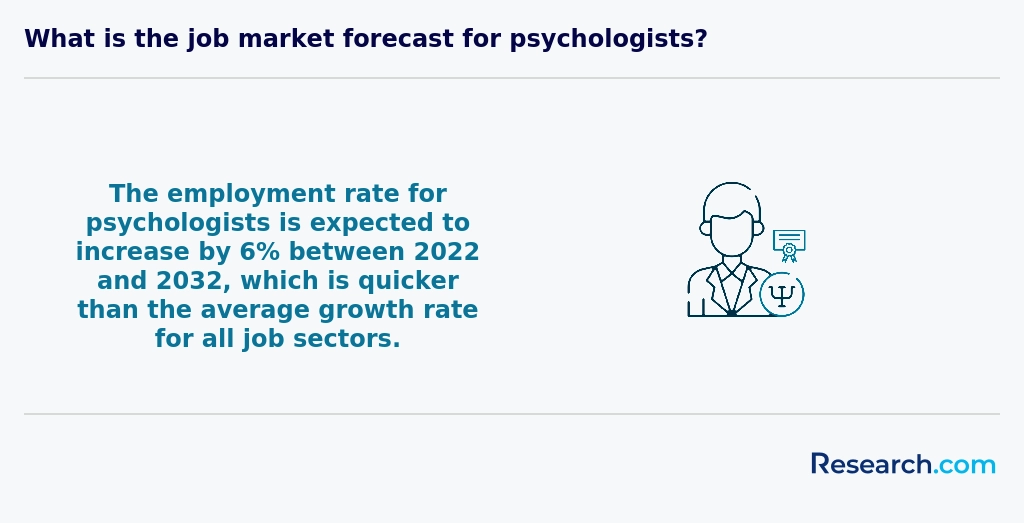
After completing an online psychology degree in America, preparing for the job market involves several key steps. First, gaining relevant experience through internships or volunteer positions in clinical, educational, or research settings can improve employability. The U.S. Bureau of Labor Statistics projects a 8% growth for psychologists from 2022 to 2032, highlighting strong demand but also competition. Networking with professionals and joining organizations like the American Psychological Association provides career resources and job leads. Additionally, obtaining state licensure is crucial for clinical roles, which often requires supervised hours post-graduation. Continuing education and certifications can further enhance job prospects.
Employers in America value several key skills when hiring psychology degree graduates. Critical thinking ranks high, enabling graduates to analyze complex behaviors and research findings effectively. Communication skills are essential, as psychologists must convey information clearly to clients and colleagues.
Data analysis proficiency has become increasingly important, especially with growing emphasis on evidence-based practices. According to the American Psychological Association (APA), familiarity with statistical software and research methodology strengthens job prospects. Empathy and ethical judgment are also crucial, reflecting the profession's focus on client welfare.
Additionally, adaptability and problem-solving abilities are needed to navigate varied psychological settings.
Finding internships relevant to a psychology degree in America involves a strategic approach. Start by consulting your online program's career services, as many universities have partnerships with local clinics, hospitals, or research centers. The American Psychological Association (APA) offers an extensive internship database tailored to students seeking clinical and research placements.
Networking is also crucial. Join psychology-related organizations like Psi Chi or local APA chapters to connect with professionals who can recommend opportunities. According to the APA, about 70% of psychology internships are found through networking and referrals.
Additionally, utilize platforms like Handshake or Indeed to search for internships that match your location and specialization. Early application is important as many competitive programs have deadlines months in advance.
An online psychology degree can significantly enhance career mobility and advancement in the United States. According to the American Psychological Association, skills gained through accredited programs prepare graduates for diverse roles in clinical, counseling, educational, and industrial-organizational psychology. Online degrees offer flexibility, enabling working professionals to upskill without interrupting their careers. This often leads to higher earning potential; for instance, the U.S. Bureau of Labor Statistics reports a median annual wage of $82,180 for psychologists in 2023, with advanced degrees typically commanding greater salaries.
Online programs often provide access to professional networking and internships, vital for career growth. Many employers increasingly recognize the credibility of online degrees from accredited U.S. institutions, aiding graduates in competing for promotions or new opportunities.
Studying for a psychology degree in America equips students with skills relevant to many interdisciplinary roles. Programs typically include courses in biology, sociology, statistics, and ethics, allowing students to understand human behavior from various scientific and social perspectives.
According to the American Psychological Association (APA), nearly 60% of psychology graduates enter fields that intersect with healthcare, education, business, and technology. This reflects how degrees foster flexibility in application.
Online psychology programs also emphasize research methods and critical thinking, essential for collaboration across disciplines like neuroscience, social work, and public health. Such training prepares graduates for integrated problem-solving in diverse work environments.
When choosing between a thesis and a non-thesis psychology degree program in America, consider your career goals. A thesis program typically involves original research and is ideal if you plan to pursue a doctorate or work in research-focused roles. According to the American Psychological Association (APA), about 40% of psychology graduates opt for thesis tracks to strengthen their research skills.
Non-thesis programs often emphasize coursework and practical experience, making them suitable for those aiming for applied psychology jobs or licensure. These programs may require internships or comprehensive exams instead of research.
Cost, time commitment, and available faculty mentorship also influence your choice. Thesis programs generally take longer and demand more direct faculty involvement.
American students seeking to study psychology abroad have several distinct options. Many U.S. universities offer online psychology programs in partnership with international institutions, allowing students to earn degrees recognized both in the U.S. and abroad. This flexible model aligns well with professionals balancing work and study, providing access to diverse theoretical approaches and cultural perspectives in psychology.
According to the American Psychological Association, approximately 25% of psychology students engage in some form of international study or collaboration during their education.
Additionally, U.S. students may pursue accredited online psychology degrees from foreign universities, but should verify if these programs meet American Psychological Association (APA) accreditation standards for clinical or counseling psychology certification in the U.S.
Finally, some institutions facilitate student exchanges or joint degrees, combining online coursework with short-term residencies overseas, broadening practical and cultural understanding without committing to full-time relocation.
Many part-time jobs in America effectively complement psychology degree education by providing practical experience and skill development. Positions such as psychiatric technician, behavioral health aide, or research assistant allow students to engage directly with mental health settings or data analysis, fostering both clinical and empirical skills.
According to the U.S. Bureau of Labor Statistics, psychiatric technicians earn a median hourly wage of $16.63, making it a viable option for students balancing work and study. Research assistant roles in universities or healthcare facilities often involve supporting psychological studies, which reinforces academic concepts while offering networking opportunities.
Volunteer roles in crisis centers or community agencies also provide exposure to counseling techniques and client interaction, key components of psychology education. These experiences strengthen resumes and improve employment prospects after graduation.
Online psychology students in America have several valuable networking opportunities despite the remote format. Many accredited programs offer virtual networking events, webinars, and discussion groups that connect students with peers and faculty.
Students can also join national organizations like the American Psychological Association (APA), which provides online communities, mentorship programs, and access to conferences. According to the APA, over 120,000 members participate in various psychology subfields, facilitating professional connections.
Additionally, internships and practicum placements arranged by online programs allow students to build local professional relationships. Many schools encourage participation in social media groups and alumni networks to foster peer support and career growth.
Alumni networks play a crucial role for students pursuing online psychology degrees in America. These networks connect current students with graduates who have navigated the challenges of online learning and professional psychology careers. Through these connections, students gain access to mentorship, career advice, and job opportunities.
According to the American Psychological Association, strong professional networks can improve employment outcomes, with nearly 60% of psychology graduates finding jobs through connections. Alumni often share insights on licensure and certification processes, which vary by state, helping students prepare for clinical practice.
Additionally, alumni networks foster a sense of community, reducing the isolation sometimes felt in online programs.
Customizing an online psychology degree in America allows students to align their education with specific career goals. Many accredited programs offer flexible curriculum options, such as choosing concentrations in clinical, counseling, forensic, or industrial-organizational psychology. According to the American Psychological Association (APA), approximately 60% of online psychology programs provide elective courses tailored to different specialties.
Students can also select practicum or internship placements relevant to their interests, helping build professional experience in desired fields. Additionally, some programs emphasize research methods, which benefits those aiming for academic or research careers. With the U.S. Bureau of Labor Statistics projecting 8% job growth for psychologists from 2022 to 2032, customizing your degree increases your competitiveness in a diverse job market.
Online psychology students in America often face challenges related to time management and self-motivation. Without the structure of traditional classrooms, many struggle to keep pace with assignments and lectures. According to the National Center for Education Statistics, about 30% of online learners report difficulties staying engaged in virtual settings.
Another common issue is limited access to hands-on experiences. Psychology programs typically require practicums or internships, which can be harder to arrange remotely. Additionally, students might find it challenging to build strong connections with professors and peers, impacting their academic support networks.
With an online psychology degree in America, graduates can pursue several professional certifications. One common path is becoming a Licensed Professional Counselor (LPC), which requires completing a master's degree, supervised clinical hours, and passing a state exam. Another certification is the Certified Alcohol and Drug Counselor (CADC), appropriate for those focusing on substance abuse counseling.
The American Board of Professional Psychology offers specialty certifications, such as in clinical or counseling psychology, but these typically require a doctoral degree. Certification as a Certified Rehabilitation Counselor (CRC) is also an option, involving additional coursework and internship.
Each state has distinct licensing requirements, so it is essential to check local regulations before pursuing certification.
Writing a winning application for an online psychology program in America starts with clear, focused goals. Admissions committees look for applicants who understand the field's demands, including research, ethical considerations, and clinical applications. Highlight your motivation for studying psychology, especially how it relates to your career or personal growth.
Include relevant experience such as volunteer work, internships, or jobs in mental health settings. According to the American Psychological Association (APA), practical experience strengthens applications by demonstrating commitment and real-world understanding.
Strong letters of recommendation from professors or supervisors familiar with your work also enhance your profile. Finally, tailor your personal statement to reflect the specific program's strengths and how they align with your aspirations.
Psychology careers in America are shaped by a global context that values mental health professionals highly. The U.S. Bureau of Labor Statistics (2023) forecasts a 10% growth in psychologist jobs through 2032, reflecting strong demand.
Globally, psychology practices vary but share core competencies, making American degrees widely respected. Many international standards align with guidelines from the American Psychological Association (APA), which accredits numerous online psychology programs.
U.S. graduates often work in diverse settings, such as clinical, counseling, or research roles, with salaries averaging $83,000 annually. This comparably high income and extensive research infrastructure attract students worldwide to American online degrees.
Understanding these trends helps applicants appreciate how their education fits into a broader professional landscape that is increasingly interconnected.
Gaining practical experience while studying for an online psychology degree in America is crucial for career readiness. Many accredited programs offer supervised internships or practicums at local clinics, hospitals, or community organizations. These placements allow students to apply theoretical knowledge in real-world settings. According to the American Psychological Association (APA), about 45% of online psychology students participate in internships as part of their degree requirements. Additionally, virtual simulations and case studies are common methods for skill development. Networking via professional associations like the APA or state psychological groups can also help secure hands-on opportunities.
Choosing the right concentration within an online psychology degree program in America requires careful consideration of your career goals and interests. Common concentrations include clinical, counseling, developmental, and industrial-organizational psychology. According to the American Psychological Association, clinical psychology remains the most popular specialization, reflecting a high demand for mental health professionals.
Research labor market trends through sources like the U.S. Bureau of Labor Statistics, which projects a 14% growth in psychologist jobs from 2021 to 2031. This can guide you toward in-demand fields. Additionally, verify if your chosen concentration prepares you for licensure requirements in your state, as these vary widely across the US.
Review the curriculum of programs carefully to ensure they align with your academic strengths and professional aspirations. Accredited programs by the APA or similar bodies provide structured coursework recognized nationwide, which can improve job prospects.
See What Experts Have To Say About Studying Psychology
Read our interview with Psychology experts

Joann Farrell Quinn, Ph.D., MBA
Psychology Expert
Director at the College of Medicine Department of Medical Education
Morsani College of Medicine

Robin M. Kowalski. Ph.D.
Psychology Expert
Professor of Psychology
Clemson University

Elizabeth L. Jeglic Ph.D.
Psychology Expert
Professor of Psychology
City University of New York

- Study Psychology Abroad https://astarfuture.co.uk/study_psychology_abroad.html
- Financial Aid For Psychology Students | Psychology.org https://www.psychology.org/resources/financial-aid/
- How to Pay for Your Psychology Education in California - Psychology California https://psychologyca.org/how-to-pay/
- Know more about thesis vs non- thesis: what is the difference? https://studyfans.com/en/blogs/816
- Study Psychology Abroad | Go Overseas https://www.gooverseas.com/study-abroad/psychology
- Top 10 Best Online Bachelors in Psychology Degree Programs 2016 https://www.bestpsychologydegrees.com/top/online-bachelors/
- Ontario Psychological Association - Networking and Community Resources https://www.psych.on.ca/become-a-member-(1)/member-services/networking-and-community-resources
- A Guide to Psychology Internships | Psychology Degree Guide https://psychologydegreeguide.org/resources/internships/
- How Psychology Students Can Get Clinical Experience Before Graduating | The Playful Psychologist https://www.theplayfulpsychologist.com/post/students-experience-how-to-get-the-experience-you-need-before-you-graduate
- Mental Health Challenges Faced by Psychology Students | The Healthcare Guys https://healthcareguys.com/2023/11/23/mental-health-challenges-faced-by-psychology-students/


