2027 Certified Nurse Educator (CNE) Exam Preparation: Using the Official Blueprint and Building a Study Plan
Audited and Verified:
Our Editorial and Data Verification Process
Research.com uses government datasets, official education statistics and primary institutional information to support its career and degree guides. Our review process checks factual accuracy, occupational definitions, source dates and the requirements associated with the credentials discussed.
How This Article Was Fact-Checked
Our editorial team verifies salary estimates, employment projections, education requirements and program information against original data providers and official organizations. Salary figures are checked against the relevant occupational definitions and reporting periods. Information about licensure, accreditation and required in-person training is reviewed separately.
Fact-checked and verified on:

Co-Founder and Chief Data Scientist
Experienced nurse educators can know their subject well and still need a different strategy for the Certified Nurse Educator (CNE) exam. The test assesses how educators facilitate learning, evaluate students, and contribute to nursing programs - not just what they teach. If you are considering certification, start with the National League for Nursing's current eligibility rules and exam blueprint before buying materials or scheduling a test. This guide shows you how to turn that blueprint into a realistic study plan, identify gaps in your preparation, and decide whether certification or additional coursework is the better next step.
Key Things You Should Know
- Use the National League for Nursing's current CNE candidate handbook and exam blueprint as your source of truth; a review book or course outline may not reflect the exam you will take.
- Confirm eligibility before paying for preparation. RN licensure or an RN-to-BSN degree alone should not be assumed to meet the CNE's graduate preparation and educator-experience requirements.
- An eight-week plan is a workable example, not a required timeline: allocate study time by blueprint emphasis and your diagnostic results, then practice applying educator principles to realistic scenarios.
What is the Certified Nurse Educator exam?
The CNE is a professional certification exam administered through the National League for Nursing (NLN). It is intended for nurse educators who can demonstrate the required academic preparation and, where applicable, teaching experience. Its questions test decisions an educator makes about learning, assessment, curriculum, and the educator role - not simply recall of clinical nursing facts.
CNE certification does not grant an RN license, qualify someone to practice as an advanced practice registered nurse, or replace an employer's evaluation of teaching competence. Those distinctions matter if you are still establishing your nursing credentials: accelerated LPN-to-RN bridge programs address a different goal from educator certification.
Before registering, download the current NLN CNE candidate handbook. Check its exam format, testing arrangements, identification rules, scoring information, and retake policy rather than relying on details repeated in older preparation guides.
What are the eligibility requirements for the CNE exam?
CNE eligibility is determined by the NLN's current candidate handbook, not by a school's use of the phrase "nurse educator." The published pathways center on graduate-level nursing preparation and nursing education coursework or qualifying faculty experience. The exact documentation and pathway criteria must be checked before applying; an education-focused job title by itself does not establish eligibility.
Compare your transcript and employment record with each requirement in the current handbook. An ADN-prepared RN considering bridge programs from an ADN to an MSN should verify both the degree ultimately awarded and whether its education coursework fits an NLN eligibility pathway. Admission to a bridge program is not eligibility for the CNE exam.
If your coursework has a different title from the handbook's examples, retain course descriptions and syllabi. Ask the NLN how its rules apply before paying an exam fee or enrolling in courses solely to close a presumed gap.
How do you use the official CNE exam blueprint?
The blueprint - also called the exam content outline - is a map of the educator responsibilities and tasks the exam assesses. Download the version associated with your planned test date and read its subtopics and weighting. If a handbook or outline changes, revise your plan; do not assume a previous version's percentages still apply.
Turn the outline into a study tracker using the following sequence. This makes the blueprint useful for deciding what to study, rather than merely reading it once.
- Copy each domain and subtopic into a tracker, noting its published exam weighting.
- Rate your confidence in each task based on both coursework and decisions you have made in teaching practice.
- Complete a diagnostic set of original practice questions and record why each missed answer was wrong.
- Prioritize high-weight domains with weak results, while reserving review time for every domain.
- Recheck progress with mixed, timed questions and revise your priorities.
Keep this tracker specific to the CNE. For example, RN-to-BSN programs without traditional clinical rotations may develop a nurse's academic skills, but their course structure is not a substitute for the NLN's educator-task blueprint.
The NLN outline organizes preparation around the work of a nurse educator. Check the current outline for its exact domain names, subtopics, and weights; the following working map shows the kinds of decisions to practice.
The distinctions below help you connect each content area to a teaching decision, which is more useful than memorizing a list of terms.
| Educator content area | Decision to practice |
| Facilitating learning | Choose a teaching strategy suited to objectives, learners, and the learning environment. |
| Learner development and socialization | Support progression and professional role development while addressing learner needs fairly. |
| Assessment and evaluation | Interpret evidence of learning and distinguish feedback, grading, and program evaluation. |
| Curriculum and program outcomes | Connect course objectives, learning activities, and measures of program effectiveness. |
| Educator improvement | Use feedback and evidence to refine teaching practice. |
| Scholarship, service, and leadership | Apply the educator role beyond an individual lesson or course. |
Clinical specialty knowledge can supply examples, but it is not the organizing principle of this exam. Short online psychiatric nursing certificates, for instance, serve a different educational purpose and should not be mistaken for CNE content preparation.
Begin with your test date, weekly study capacity, current teaching responsibilities, and diagnostic results. An educator who routinely writes assessments may need more work on curriculum evaluation; an experienced course coordinator may need to revisit learner-development theory. Equal time for every topic is rarely the best use of limited hours.
This eight-week example assumes you have already confirmed eligibility and can protect several study sessions each week. Extend it if work or caregiving makes those sessions unreliable.
- Week 1: Obtain the current blueprint, complete a diagnostic assessment, and rank gaps by exam weight and confidence.
- Weeks 2-5: Work through the highest-priority domains using a content review followed by scenario questions and an error log.
- Weeks 6-7: Practice mixed, timed sets; revisit recurring errors and explain why plausible alternatives are weaker.
- Week 8: Review concise notes, confirm test-day requirements, and avoid replacing rest with last-minute memorization.
Protect at least one flexible catch-up period rather than filling every available hour. A short program calendar - for example, one advertised in accelerated FNP education comparisons - should not be treated as a model for CNE preparation: your study pace should follow diagnostic evidence, not a degree program's marketing timeline.
Courses are most useful when their assignments require you to make and justify educator decisions. Look for graduate study in teaching and learning, assessment and evaluation, curriculum design, educational technology or simulation, and nursing education scholarship. Match actual syllabi and assignments to the current NLN outline; a course title alone says little about coverage.
If you are not yet eligible, ask the NLN which education-course pathway applies before purchasing a certificate or degree. If you are eligible but weak in one domain, a focused course or continuing education activity may be more efficient than another graduate credential. Compare education-focused coursework with a clinically focused route such as fast-track mental health nursing graduate study by asking whether its learning objectives address educator tasks. A clinical specialty does not automatically fill an education-course gap.
Start with the current NLN candidate handbook and blueprint. Then select one substantial educator-content reference and a question source that explains its answers. Additional products are worthwhile only if they address a documented weakness; collecting several overlapping guides can consume study time without improving decision-making.
Use a practice test diagnostically, not as a prediction of your exam result. Record the blueprint domain, the reasoning behind your answer, and the principle you missed. Favor original scenario questions over claims of access to recalled or "real" exam items, and check that commercial materials identify the outline version they cover.
A leadership degree or certificate may build useful professional skills without functioning as a CNE review resource. That distinction applies to leadership DNP education after a nursing master's: assess its coursework against your CNE gaps rather than assuming a higher degree prepares you for this particular test.
Choose a delivery format only if you need coursework to qualify or to strengthen a significant gap. An eligible educator with a focused review need may not need another program. If further study is warranted, compare the actual learning and scheduling requirements rather than treating "online" as synonymous with flexible.
These differences matter most when you are balancing teaching, clinical work, and family responsibilities.
| Factor | Online or hybrid study | Campus-based study |
| Schedule | May allow asynchronous work, but can still require live meetings and fixed deadlines. | Usually has scheduled attendance and travel commitments. |
| Practice activities | May require local teaching experiences, simulation, or campus visits. | May provide easier access to on-site teaching and simulation resources. |
| Best fit | Educators who can work independently and verify all required in-person obligations. | Educators who value regular in-person interaction and can attend consistently. |
Ask who arranges teaching experiences, whether on-site visits are required, and how the program's courses map to NLN eligibility. The same questions apply when considering broader graduate options such as accelerated Doctor of Nursing Practice programs; an online format or doctoral award does not, by itself, establish CNE readiness.
The lowest-cost route depends on what you already have. An eligible educator may need only an exam application, a carefully chosen reference, and practice questions. Someone missing a qualifying course or degree faces a substantially different decision. Because NLN fees and school charges can change, obtain current amounts directly from the certifier and each institution before setting a budget.
Build a total-cost estimate rather than comparing advertised tuition alone. Include the expenses that apply to your chosen route:
- CNE application and examination charges, including any applicable retake cost.
- Review books, question banks, courses, and time away from paid work.
- Tuition and mandatory fees for any needed education coursework or degree.
- Technology, travel, campus visits, and teaching-experience expenses where required.
Ask an employer whether educator professional-development funds cover the exam, review materials, or tuition, and whether reimbursement has service conditions. Comparisons aimed at a different goal, such as exploring less expensive nurse practitioner study, are not reliable cost estimates for a CNE pathway.
What careers, salaries, and job outlook follow CNE certification?
CNE can provide evidence of educator-focused professional development for roles such as nursing faculty or a clinical educator, but it does not guarantee hiring, promotion, or a raise. Employers may weigh graduate preparation, teaching record, clinical expertise, scholarship, and the specific duties of the position. Academic faculty and workplace educators are not interchangeable jobs; confirm which credential an employer requests.
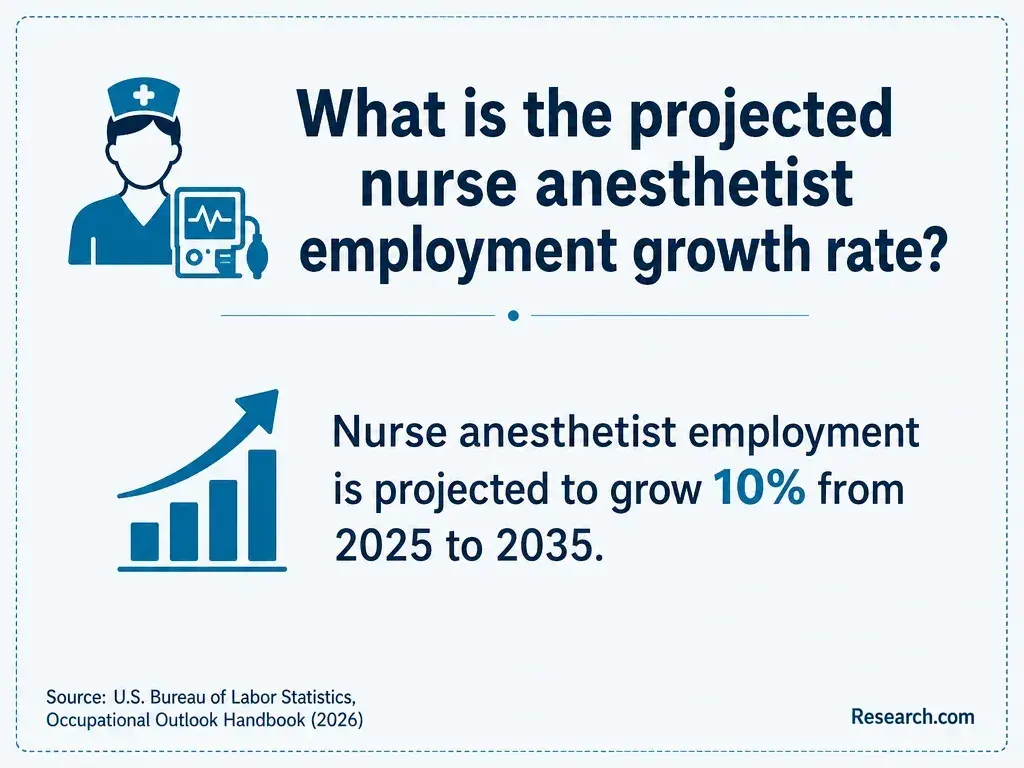
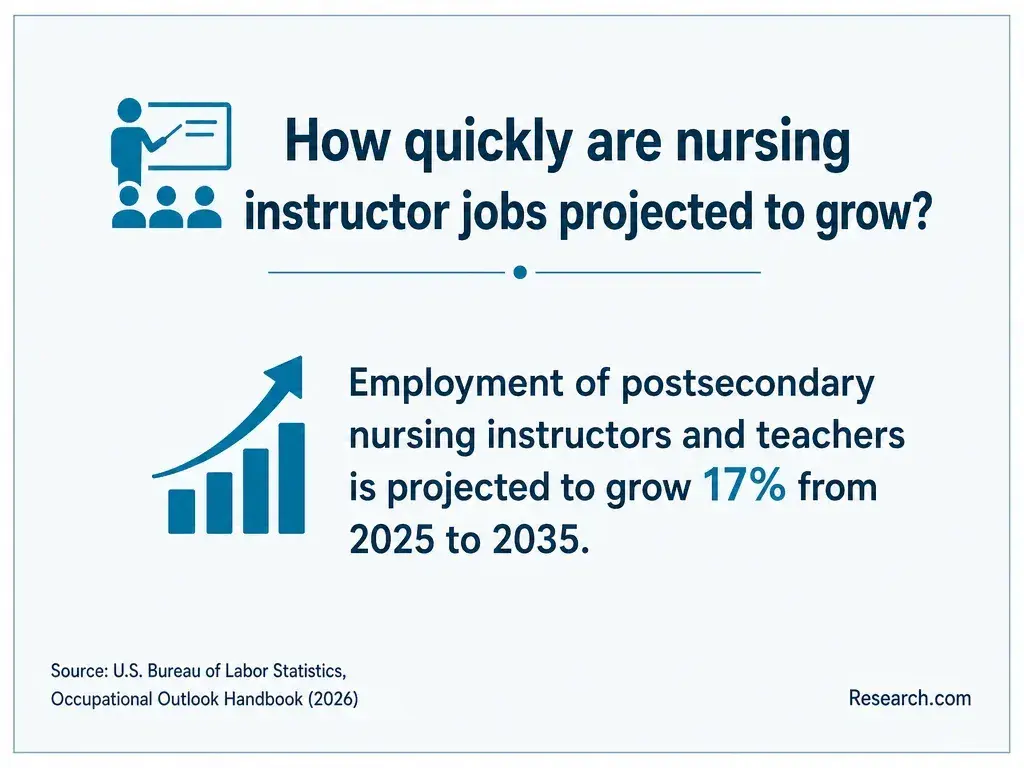
For salary research, use the U.S. Bureau of Labor Statistics occupation that matches the job's actual duties, such as postsecondary nursing instructor where appropriate, and check its latest published wage year and projection period. An occupation-wide median is not a CNE salary premium or a forecast of your offer. Compare local postings and institutional pay scales before assigning a financial return to certification.
If your intended work is advanced clinical practice rather than teaching, a different credential path may fit better. Comparing post-master's FNP study options addresses preparation for a distinct role; CNE certification does not authorize nurse practitioner practice.
Other Things You Should Know About Nursing
Check your employer's professional-development and reimbursement policies. If an employer pays exam expenses, it may require documentation; otherwise, avoid listing CNE after your name until the credential is awarded.
Possibly, if it meets the NLN's current pathway requirements. Keep employment dates, workload information, and role descriptions, and ask the NLN how to document them.
Return to the blueprint, prioritize heavily tested tasks you consistently miss, and study the reasoning behind answers. Delay scheduling if your available study time cannot cover the gaps responsibly.
List the credential accurately in a certification section, including any expiration information an employer requests. Pair it with concrete teaching responsibilities; the credential does not replace evidence of your work.
- A practical guide to test blueprinting | PubMed https://pubmed.ncbi.nlm.nih.gov/31017518/
- Diagnostic Assessments - Teaching https://www.buffalo.edu/catt/teach/develop/design/designing-assessments/diagnostic-assessments.html
- Guidelines for Creating a Study Schedule | Learning Strategies Center https://lsc.cornell.edu/how-to-study/studying-for-and-taking-exams/guidelines-for-creating-a-study-schedule/
- 10 Proven Nursing Exam Study Strategies That Actually Work | Chamberlain University https://www.chamberlain.edu/blog/10-proven-nursing-exam-study-strategies-that-actually-work
- Nursing: CNE Test Prep Resources - Guides @ UF https://guides.uflib.ufl.edu/nursing/CNEPrep
- CNE® Eligibility | nln.org https://www.nln.org/awards-recognition/cne/Certification-for-Nurse-Educatorscne/cne-eligibility
- Blueprints | NOCTI https://www.nocti.org/credentials/blueprints/