
2027 Most Affordable Online Bachelor's in Counseling Degree Programs Ranking in the USA

Co-Founder and Chief Data Scientist
Exploring online counseling degree programs can feel overwhelming, but finding an affordable option is easier with the right information. This article introduces the 2027 Most Affordable Online Bachelor's in Counseling Degree Programs Ranking in the USA, carefully crafted by the Research.com team of data scientists.
Designed for students across America, this ranking helps you make informed decisions about which programs offer great value without compromising quality. Pursuing a counseling degree opens doors to meaningful careers, personal growth, and the chance to make a positive impact on others' lives.
Discover your path with confidence and clarity by reading on.
Key benefits of getting online counseling degree in America
- Counseling degree graduates can earn competitive salaries, such as Addiction Counselors making around $60,080 annually and Community Outreach Coordinators earning about $54,020 per year, offering financial stability.
- Graduates from universities like Arizona State University often find diverse career paths, including roles as Rehabilitation Specialists or Family Support Workers, allowing flexibility and growth in helping professions.
- Online counseling degrees, such as those from Liberty University, provide convenience and the ability to balance work and study, making it easier to advance without disrupting your current lifestyle.
- Key benefits of getting online counseling degree in America
- What can I expect from online counseling degree in America?
- Where can I work with online counseling degree in America?
- How much can I make with online counseling degree in America?
- 2027 Most Affordable Online Bachelor's in Counseling Degree Programs Ranking in the USA
- Key Findings
- How long does it take to complete online counseling degree in America?
- Accreditation and Licensure
- What's the difference between online and on-campus counseling degree?
- The Importance of Accreditation in Online Counseling Programs
- What is the average cost of online counseling degree in America?
- Licensure and Certification Requirements
- What financial aid is available to online counseling degree students in America?
- Licensure and Certification Requirements
- What are the prerequisites for enrolling in online counseling degree program in America?
- Licensure and Certification Process
- What courses are typically in online counseling degree programs in America?
- What types of specializations are available in online counseling degree programs in America?
- How do you choose the best online counseling degree in America?
- What career paths are available for online counseling degree students in America?
- What is the job market for online counseling degree in America?
- Top Trending Counseling Rankings
- See What Experts Have To Say About Studying Counseling
What can I expect from online counseling degree in America?
Imagine balancing your busy life while diving into an online counseling degree, with tuition often hovering between $10,000 and $30,000 annually at popular institutions like Arizona State University or University of Florida. Graduates often share how affordable options allowed them to pursue their passion without drowning in debt. One graduate described feeling empowered knowing their investment was manageable, letting them focus on mastering communication and crisis intervention rather than financial stress.
The tuition landscape in America is diverse: some community colleges offer more budget-friendly paths, while renowned universities may ask for a higher price, reflecting their extensive resources and CACREP-accredited programs. The real magic happens when theory morphs into practice through local clinical placements, all arranged seamlessly, ensuring cost doesn't block these pivotal experiences.
This financial accessibility fuels motivation, helping students envision themselves as future mental health leaders, prepared for roles like case managers or behavioral health specialists, all from the comfort of their homes and within reach of their wallets.
Where can I work with online counseling degree in America?
Graduates with an online counseling degree from institutions like the University of Southern California or Arizona State University often find themselves immersed in vibrant community health centers, where their work becomes a lifeline for those facing addiction or trauma. Imagine walking into a clinic buzzing with hope, offering calm support amidst chaos-that's the power of your role. Others channel their passion into schools, shaping young minds while navigating the intricate dance of academic guidance and emotional support, armed with state-specific certifications earned through their studies.
Healthcare settings-hospitals and clinics-call for counselors who weave mental health insights into medical care, teaming up with doctors and social workers to uplift patients grappling with anxiety or chronic illness. Graduates recall the exhilaration of seeing real change, walking alongside patients as part of an integrated care team.
Private practice is a thrilling frontier, where after completing supervised clinical hours, counselors launch independent careers fueled by empathy and expertise. Nonprofits and government agencies also beckon, inviting graduates to serve veterans or the homeless, transforming lives with every session.
How much can I make with online counseling degree in America?
Picture graduating with your online counseling degree from a university like Arizona State or Liberty College and stepping into a world where your knowledge transforms lives-and pays well too. Intervention Specialists, for instance, are pulling in around $76,000 annually, a handsome reward for guiding people through tough transitions. Meanwhile, Rehabilitation Specialists earn about $48,430, turning their passion into a solid paycheck while helping clients regain independence.
Community Outreach Coordinators and Family Support Workers share a comfortable median salary near $54,000, combining meaningful emotional impact with financial stability. Addiction Counselors often see earnings closer to $60,080, reflecting the critical role they play in recovery journeys. These figures resonate profoundly with graduates who chose online degrees for flexibility without sacrificing credibility in the job market.
One graduate from a renowned online program shared how balancing work and study allowed them to secure a rewarding counseling position quickly-with a salary that soon surpassed their expectations, driven by licensure and practical experience rather than just where their degree came from. Across America, these hopeful professionals find that online counseling degrees unlock doors to careers rewarding both emotionally and financially.
2027 Most Affordable Online Bachelor's in Counseling Degree Programs Ranking in the USA
How do we rank schools?
Investing in your education is a significant decision that can shape your future, and the Research.com team understands the importance of making informed choices. To assist prospective students nationwide, we have meticulously crafted the "2027 Most Affordable Online Bachelor's in Counseling Degree Programs Ranking in the USA." Our commitment to quality, credibility, and accuracy is reflected in the extensive research and analysis conducted to compile this ranking.
We utilized the following reputable data sources to ensure a comprehensive evaluation of counseling programs:
By exploring this ranking, readers will gain valuable insights into the most affordable and credible online counseling degree programs, empowering them to make well-informed decisions about their educational journeys. For more details on how this ranking was created, please visit our Research.com methodology page.
# 1 position
Western Governors University
Bachelor of Psychology


# 5 position
Hobe Sound Bible College
Bachelor of Counseling


Key Findings
- Accreditation by CACREP is essential for recognized online counseling degrees and is preferred by employers and state licensing boards.
- The total cost for an online bachelor's in counseling typically ranges from $20,000 to $60,000, with public universities offering lower tuition for in-state students.
- The counseling job market is projected to grow by 22% from 2020 to 2030, driven by demand for mental health and specialized support professionals.
- Starting salaries for counseling graduates average $45,000 to $50,000 annually, while experienced licensed counselors can earn $75,000 or more.
- Most states require a master's degree, supervised clinical hours, and passing a licensure exam for counseling practice, making graduate education necessary beyond a bachelor's degree.
- Online programs include required supervised internships or practicum hours, usually completed in person at approved local sites.
How long does it take to complete online counseling degree in America?
Finishing an online counseling degree in America is like navigating your own unique journey through time-some graduates from popular schools like Arizona State University, navigating their bachelor's, clock in around four years if they're full steam ahead, while others embracing a part-time rhythm gracefully extend to six or more years. Imagine a student pacing themselves through the seasons, balancing work, family, and study, savoring the flexibility that top programs in states like California or New York offer.
For master's degrees, the story twists a bit: full-time students often wrap up in two to three years, hustling through 48 to 60 credit hours, as many graduates at the University of Florida have experienced. Yet, accelerated pathways-summer classes or year-round schedules-can compress this timeline, allowing those eager hearts to graduate in as little as 18 months.
Every journey includes the rite of passage: practicum and internships. These hands-on challenges, demanded by state licensing boards, add layers of experience but also extend the timeline. Still, these moments become milestones, turning theory into real-world impact and filling graduates with pride as they step toward their careers.
Accreditation and Licensure
Accreditation is essential to ensure your online counseling degree meets professional standards and qualifies you for state licensure.
- Enroll in CACREP-accredited programs for the broadest acceptance by state boards.
- Verify specific licensure requirements in the state where you plan to practice.
- Complete mandated practicum and internship hours under approved supervision.
- Register for and pass the National Counselor Examination (NCE) or state-specific licensure exam.
- Maintain licensure through continuing education units (CEUs) and periodic renewals.
To compare affordable CACREP-accredited options, explore cheapest cacrep-accredited programs online.
What's the difference between online and on-campus counseling degree?
Imagine a counseling student at a bustling university in California juggling midnight study sessions online, sipping coffee while their toddler naps nearby. That's the heartbeat of online degrees-a symphony of flexibility and real-life chaos seamlessly orchestrated. In contrast, a traditional on-campus student at a renowned Midwestern college strolls across vibrant quads, engaging face-to-face in deep discussions that sharpen their interpersonal finesse.
Both paths lead through the rigorous terrain of CACREP-accredited coursework paired with intense practicum hours. Online learners secure local clinical sites, often donning their own detective hats to find placements close to home. Meanwhile, on-campus peers rely on university-arranged opportunities, benefiting from direct faculty guidance.
Financially, online programs slice away commuting and housing costs, though some campuses still boast legendary library nooks that inspire their devoted residents. Stories from graduates reflect joy in balancing family life with their digital classrooms or thriving amidst campus camaraderie. The choice boils down to whether you crave the palpable campus energy or the liberating rhythm of remote study in America's diverse counseling landscape.
The Importance of Accreditation in Online Counseling Programs
To ensure that students receive a high-quality education, it is crucial to choose an online counseling program that is accredited by a recognized accrediting agency, such as the Council for Accreditation of Counseling and Related Educational Programs (CACREP). Accreditation not only verifies that the program meets certain standards of quality but also enhances the credibility of the degree earned. Students who graduate from accredited programs are more likely to be eligible for licensure and certification, which are essential for a successful career in counseling. For those looking for affordable options, exploring most affordable counseling schools can provide valuable insights into budget-friendly accredited programs. By selecting an accredited online counseling program, students can be assured that they are investing in an education that will prepare them for the demands of the profession and open doors to a wide range of career opportunities in the field of counseling.
What is the average cost of online counseling degree in America?
Landing an online counseling degree in America comes with a price tag that weaves through a spectrum of experiences, emotions, and decisions. The average cost often orbits around $47,220, a figure that tells the silent story of countless students balancing ambition with budgets. Graduates from popular universities feel a warm glow of accomplishment, knowing their investment unlocks doors to meaningful careers helping others. For in-state learners, the cost gracefully dips closer to $54,540, highlighting the perks of enrolling in regionally accredited public institutions that blend affordability and quality.
Yet, out-of-state students face a steeper climb, with costs rising near $58,260-a number that might inspire a mix of determination and resourcefulness. Many find creative ways to navigate these expenses, from scholarships to tailored financial aid, echoing the thoughtful choices of those who pursued affordable online counseling degree programs 2027.
Imagine a graduate from a well-known American college who once juggled family life and coursework, feeling both the pressure of tuition and the joy of mastering life-changing skills. Their story mirrors the journey of thousands striving for a counseling degree online, making the overall cost a tangible step toward personal and professional growth. For those curious about options, examining lists of the most affordable counseling schools emphasizes the importance of wise financial planning and smart school selection.
Licensure and Certification Requirements
A bachelor’s in counseling provides foundational coursework, but most states require a master’s degree and licensure to practice independently. Understanding these steps early helps you plan your education and career path efficiently.
- Choose a CACREP-accredited program to meet state board criteria - see our list of cheapest cacrep-accredited programs online.
- Complete 60–100 supervised practicum and internship hours during your master’s program.
- Pass the National Counselor Examination (NCE) or the National Clinical Mental Health Counseling Examination (NCMHCE).
- Submit a licensure application to your state board and fulfill ongoing continuing education for renewal.
By aligning your bachelor’s coursework with these requirements, you’ll streamline the path to becoming a licensed professional counselor.
What financial aid is available to online counseling degree students in America?
Imagine a graduate from Arizona State University easing their financial worries with the magic of federal Pell Grants, pocketing up to $7,395 that doesn't demand a future repayment. For many chasing counseling degrees online, the FAFSA form becomes their golden ticket-unlocking a treasure chest of federal grants and friendly student loans with low interest. Picture a hopeful learner from the University of Texas, reaping rewards from state-specific scholarships designed precisely to boost mental health workforce growth.
Then there's the comforting embrace of institutional aid, like a lifeline from the University of Southern California, where in-state residents or returning adult learners laugh a little easier thanks to generous tuition discounts and unique scholarships.
Professional groups, like the American Counseling Association, show up as unexpected allies, offering emergency funds and scholarships that feel like a personal cheer from a caring community. And finally, many find their employers-especially healthcare and social service agencies-rooting for them with tuition assistance programs that turn dreams into doable realities.
Licensure and Certification Requirements
Earning your state license is a pivotal step toward professional practice as a counselor, transforming your online degree into a recognized credential. While requirements vary, most states require a minimum of 3,000 supervised clinical hours, successful completion of the National Counselor Examination (NCE) or equivalent, and submission of official transcripts to the state board. To learn tailored strategies and timelines for licensure, including insights into how to become a therapist, graduates can consult resources provided by the American Counseling Association and state regulatory agencies. Key steps to licensure typically include:
- Clinical Supervision: Complete 2,000–3,000 hours of supervised practice under an approved supervisor, focusing on interventions, assessments, and case documentation.
- Examination: Pass the NCE or state-specific exams like the National Clinical Mental Health Counselor Examination (NCMHCE), preparing with practice tests and study guides.
- Application Submission: Provide official transcripts, verification of supervised hours, and background check results to the state licensing board.
- Ethical and Legal Training: Fulfill mandatory coursework in ethics, state law, and cultural competency to ensure compliance with professional standards. After initial licensure, ongoing professional development is crucial. Most states require 20–40 continuing education (CE) credits every 2–3 years, covering topics such as ethics updates, trauma-informed care, and diversity in counseling. Engaging in CE not only maintains your license but also enhances your expertise, credibility, and ability to serve clients effectively.
What are the prerequisites for enrolling in online counseling degree program in America?
When stepping into the world of online counseling degrees in America, picture the moment a recent graduate from a respected university like the University of Southern California recalls submitting their application. They needed a solid foundation-a high school diploma with a GPA hovering around 2.5 or higher to even get a seat at the table. For graduate hopefuls, it's a notch up: a bachelor's degree with at least a 3.0 GPA, often in psychology or a related field, is the golden ticket.
Imagine gathering your letters of recommendation, much like a student at New York University who leaned on professors and supervisors to vouch for their passion and professionalism. GRE scores can hover as a hurdle, although some schools waive them, especially if you bring robust work experience.
Applicants often pen personal statements that are more than essays-they're emotional blueprints of their counseling dreams, echoing the voices of those from institutions like Boston College. Beyond paperwork, they showcase experience-volunteering, internships-that breathes life into their readiness.
- Some dance with standardized tests, some skip them; flexibility is becoming the new norm
- Letters of recommendation act as trusted guides urging admissions committees to say yes
- Personal essays transform mere applications into heartfelt narratives
- Real-life experience stands as proof of passion and commitment
In America's online counseling programs, this blend of academic grit, heartfelt storytelling, and lived experience creates a mosaic of hopefuls ready to embark on meaningful, transformative journeys.
Licensure and Certification Process
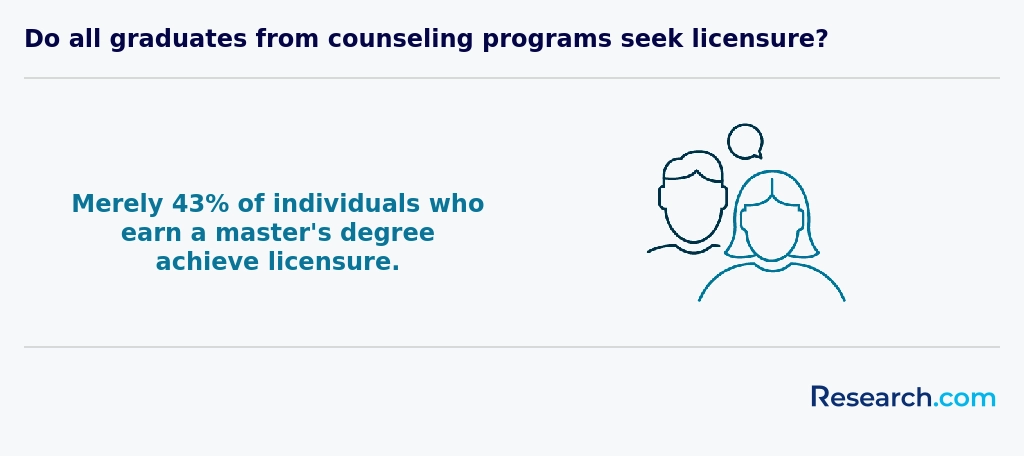
Navigating the licensure and certification process is a critical step for graduate online counseling students seeking to practice professionally. Each U.S. state sets specific requirements, but common elements include: 1. Supervised Clinical Hours: Most states mandate 2,000–4,000 hours of post-degree supervised experience. For example, aspiring counselors in Alabama can explore programs featured in our Affordable Counseling Degree Programs Ranking in Alabama to ensure their practicum placements align with state board standards. 2. Examination: Candidates typically must pass the National Counselor
What courses are typically in online counseling degree programs in America?
Diving into an online counseling degree in America feels like embarking on a journey through the human mind, heart, and society. Imagine tackling Introduction to Counseling Theories where you decode diverse approaches-from cognitive-behavioral puzzles to the warmth of humanistic care, just like graduates from universities known for strong programs who describe this as enlightening and transformative. Then, visualize Human Development as a timeline stretching from childhood curiosity to adult complexity, helping you truly grasp life's emotional milestones.
Think about exploring Abnormal Psychology, where you learn to identify mental health challenges much like frontline counselors-graduates often speak of this course fueling their empathy and competence. You'll also master Research Methods and Statistics, turning data into stories of healing, an essential skill in evidence-based practice highly praised by alumni from popular American colleges.
- Ethics and Professional Issues in Counseling grounds you in the legal and moral compass guiding confidentiality and respect.
- Counseling Techniques and Practicum offers hands-on virtual role-plays, where students practice real empathy in simulated sessions.
- Group Counseling teaches you the magic of shared healing spaces.
- Multicultural Counseling prepares you to embrace America's rich diversity with cultural sensitivity.
Some graduates from top programs highlight specialized courses like substance abuse counseling or marriage and family therapy, tailoring their expertise to community needs. These courses come alive when you imagine helping a struggling teenager or a couple rediscovering harmony, reflecting why these classes carry such emotional resonance for students pondering their future impact in America's mental health field.
What types of specializations are available in online counseling degree programs in America?
Diving into online counseling degree specializations USA reveals a rich palette of focused paths, each molding future therapists with unique skills. Graduates from top American colleges often describe their Clinical Mental Health Counseling programs as eye-opening journeys into understanding trauma and anxiety intimately, sharpening their ability to provide real-world support where it's needed most. Meanwhile, those who chose School Counseling share stories of guiding young minds through academic and emotional mazes, inspired by practicum experiences in bustling K-12 schools across the country.
Others gravitate toward Marriage and Family Therapy, captivated by the challenge of untangling complex family systems and weaving stronger bonds-a specialization growing fast as relationships face modern pressures. Rehabilitation Counseling attracts compassionate souls eager to empower individuals with disabilities, emphasizing inclusivity and vocational triumphs. Substance Abuse Counseling grads often speak with pride about their hands-on roles in recovery centers, transforming lives affected by addiction.
These options make picking the best counseling majors for online degrees in the USA feel like choosing a superpower tied directly to heartfelt service. Many students appreciate how programs from renowned universities balance theory and practice, with how to become a therapist paths threaded into their curriculum for real futures.
How do you choose the best online counseling degree in America?
Choosing the best online counseling degree in America means navigating a landscape where accreditation is your compass. Graduates from CACREP-accredited programs often share stories of smoother licensure journeys, feeling confident that their education matches state requirements. Imagine balancing coursework like asynchronous classes from the comfort of your home while gearing up for hands-on practicum experiences-just like those thriving at universities known for their flexible online counseling tracks.
Costs can feel like climbing a mountain, but many find relief in affordable counseling bachelor's programs America offers, especially through in-state tuition at public institutions. One graduate recalled accessing scholarships targeted just for counseling students, lifting financial stress and replacing it with excitement for the career ahead. If you want a peek into these opportunities, check out the Affordable Counseling Degree Programs Ranking in Alabama.
Beyond price and accreditation, remember the value of mentorship. Faculty with real-world counseling licenses and doctoral expertise become anchors in the storm of online learning. They guide students with empathy and insider knowledge, making the journey feel personal rather than distant. This is what transforms a simple degree into a thriving career, molded by a supportive academic community.
What career paths are available for online counseling degree students in America?
Graduates with an online counseling degree in America often find themselves stepping into roles where empathy meets expertise, transforming lives in schools, clinics, and private practices. Imagine a graduate from a well-known college crafting breakthroughs as a licensed professional counselor (LPC), guiding individuals through storms of trauma or addiction with calm assurance. Another might be the reassuring presence in a bustling school hallway, evolving as a school counselor who shapes the emotional resilience of young minds - a prime example of career paths for counseling graduates in America.
A notable graduate from a popular university shares how their journey into marriage and family therapy opened doors to healing fractured family bonds, while friends chose rehabilitation counseling to uplift individuals reclaiming their independence. The landscape of online counseling degree career opportunities in the USA is vast and varied, giving wings to good intentions through substance abuse counseling or community mental health roles.
For those launching this journey, exploring options at top accredited online colleges in America offers an encouraging pathway where passion meets practical training to thrive in these human-centered careers.
What is the job market for online counseling degree in America?
Imagine stepping into a bustling school hallway or a quiet counseling office in California armed with an online counseling degree that opens doors to a vibrant career landscape. Graduates from popular universities across America often share their sense of accomplishment as they navigate the growing world of mental health support, schools, and private practices. This surge in demand creates a thrilling marketplace for online counseling job opportunities in the USA, where roles like mental health counselors and school counselors offer not just employment, but meaningful impact and an inspiring paycheck-some reaching near $60,000 annually.
Picture a graduate from a top online program feeling confident, knowing their degree aligns with licensure requirements, which is essential for real-world success. Whether based in New York or Texas, they discover career paths expanding due to societal needs, especially with the rise in substance abuse counseling. Many also realize a cheap online associates degree as a stepping stone for advancing their careers.
The career outlook for counseling graduates in America reflects a vibrant ecosystem where dedication meets opportunity, fueled by an urgent societal call for emotional wellness professionals. This momentum makes the journey through an online counseling degree not only practical but deeply rewarding.
Frequently Asked Questions About counseling
Online counseling degree students in America can maximize their learning experience by actively engaging with both coursework and virtual communities. Research from the American Counseling Association highlights that hands-on practice, such as role-playing and virtual simulations, significantly enhances skill development. Additionally, students should take advantage of academic advising and participate in online discussion forums to build connections and deepen understanding.
Accreditation matters: choosing programs accredited by the Council for Accreditation of Counseling and Related Educational Programs (CACREP) ensures curriculum quality aligned with licensure requirements.
Finally, managing time effectively and seeking regular feedback from instructors can contribute to academic success and greater preparedness for professional roles in counseling.
In recent years, the counseling field in America has seen the rise of several specialized niches driven by societal needs and technological advances. One emerging area is telehealth counseling, which expanded rapidly due to increased demand for remote mental health services during the COVID-19 pandemic. According to the American Counseling Association (ACA), telehealth now represents a vital delivery method, making online counseling degrees more relevant. Additionally, trauma-informed counseling has gained attention, focusing on helping clients recover from adverse experiences, with about 70% of adults reporting at least one traumatic event in their lifetime (SAMHSA data).
Other growing specialties include career counseling for diverse workforces and substance abuse counseling, responding to the ongoing opioid crisis. School counseling continues evolving to address mental health and social-emotional learning comprehensively. Finally, multicultural and social justice counseling is expanding to meet increasing demand for culturally competent care in diverse communities across the US.
After completing an online counseling degree in America, preparing for the job market requires targeted steps. First, obtain state licensure, which typically involves passing exams like the National Counselor Examination (NCE) and completing supervised clinical hours. Requirements vary by state, so consult the American Counseling Association's guidelines.
Next, build practical experience through internships or volunteer work, often available during or after the degree program. Networking is vital; join professional groups such as the ACA or local counseling chapters to access job listings and mentorship.
Employment projections from the U.S. Bureau of Labor Statistics show a 22% growth in counseling jobs through 2031, making preparation key to accessing these expanding opportunities.
Employers in the United States highly value strong communication skills in counseling degree graduates. According to the National Board for Certified Counselors, effective listening and clear verbal interaction are critical for client success. Additionally, ethical decision-making and cultural competence are essential, given the diverse client populations counselors serve.
Graduates must also demonstrate strong critical thinking and problem-solving abilities to develop personalized treatment plans. The Bureau of Labor Statistics highlights that adaptability and emotional intelligence are increasingly important as mental health challenges evolve.
Finally, proficiency in using digital tools for telehealth and electronic health records is becoming a must, especially in online counseling roles, reflecting the growing demand for technology-savvy professionals.
Finding internships relevant to a counseling degree in America often begins by utilizing university career services. Many online counseling programs maintain partnerships with local clinics, schools, and mental health organizations to offer internship placements. According to the Council for Accreditation of Counseling and Related Educational Programs (CACREP), accredited programs typically require supervised practical experience, which can guide students to reliable internships.
Additionally, students can explore platforms like the National Board for Certified Counselors (NBCC) that list approved internship sites. Networking through professional associations such as the American Counseling Association (ACA) also provides leads on opportunities. Early and proactive communication with program advisors significantly increases chances of securing quality internships.
Obtaining an online counseling degree in America significantly impacts career mobility and advancement by providing access to licensure and specialized credentials required in the field. The U.S. Bureau of Labor Statistics projects a 23% growth in employment for mental health counselors between 2021 and 2031, highlighting strong job prospects.
Graduates from accredited online counseling programs often qualify for state licensure exams, enabling them to work as Licensed Professional Counselors (LPCs) or Licensed Mental Health Counselors (LMHCs). Higher credentials commonly lead to supervisory roles or private practice opportunities.
Furthermore, online degrees allow working professionals to gain fresh skills without relocating, which enhances flexibility for career transitions or promotions. According to the National Board for Certified Counselors, credentialed counselors typically earn 20% more than non-licensed peers, underscoring financial advancement benefits.
Studying for a counseling degree in America equips students with skills that extend beyond traditional therapy roles. Online programs often include coursework in psychology, social work, and healthcare, fostering an understanding of diverse professional fields. This interdisciplinary training prepares graduates to collaborate effectively with educators, medical providers, and social service agencies.
According to the American Counseling Association, about 70% of counselors work in settings requiring teamwork across professions. American online counseling degrees emphasize communication, ethical decision-making, and cultural competence to meet these demands. Often, students engage in practicum and internship experiences that provide real-world exposure to interdisciplinary teamwork.
This broad foundation increases graduates' employability across sectors, including schools, hospitals, and community organizations, where integrated care is crucial.
Choosing between a thesis and a non-thesis counseling degree program in America depends largely on your career goals. A thesis option involves conducting original research and writing a detailed paper. This path is suited for students interested in academic or research careers, or who may pursue doctoral studies later.
On the other hand, a non-thesis program focuses more on practical skills and coursework, which benefits those aiming to enter professional counseling roles directly. According to the American Counseling Association, practical experience and internships weigh heavily in licensing and job placement.
Additionally, non-thesis programs often allow faster completion, which can be important for working adults.
American students seeking to study counseling abroad have several options through online programs offered by foreign institutions. Many universities in Canada, the United Kingdom, and Australia provide accredited counseling degrees online, which may be appealing for international exposure. However, students should verify if these degrees meet the licensing requirements of professional bodies in the U.S., such as the American Counseling Association (ACA).
Some programs offer joint degrees or partnerships with U.S. schools, enabling graduates to qualify for state licensure more easily. According to the U.S. Bureau of Labor Statistics, demand for counselors is growing by 23% through 2030, so ensuring degree recognition is vital. Students typically must confirm coursework aligns with guidelines set by the Council for Accreditation of Counseling & Related Educational Programs (CACREP).
While studying abroad online expands cultural perspectives, prospective students should research state-specific licensure laws and accreditation standards before enrolling in an international counseling degree program.
Students pursuing online counseling degrees in America often seek part-time jobs that complement their academic studies and build relevant experience. Roles such as behavioral health technician or peer support specialist provide practical exposure to mental health care environments. According to the U.S. Bureau of Labor Statistics (BLS), these positions frequently require minimal prior experience, making them accessible for current students.
Other common part-time opportunities include crisis hotline worker or community outreach assistant. These jobs allow students to develop active listening and communication skills, essential for counseling professionals. Additionally, some students work as teacher's aides or rehabilitation aides, gaining insight into educational and therapeutic settings.
Engaging in these roles can enhance resumes and prepare students for licensure requirements and graduate studies in counseling.
Online counseling degree programs in America offer varied networking opportunities despite their virtual format. Many accredited schools provide access to professional organizations such as the American Counseling Association (ACA), which boasts over 54,000 members nationwide. These affiliations give students a chance to participate in conferences, webinars, and local chapter events, fostering connections with licensed counselors and educators.
Additionally, students can engage in virtual internships and practicum experiences required for licensure, facilitating professional relationships in clinical settings.
Online platforms such as LinkedIn and program-specific forums also support peer networking and mentorship.
The availability of these channels helps students build crucial industry contacts within the U.S. counseling field.
Alumni networks offer significant benefits to online counseling degree students in America by providing ongoing professional support and career opportunities. Graduates often gain access to exclusive job postings and internships, which is crucial in a field expected to grow 25% from 2021 to 2031 according to the U.S. Bureau of Labor Statistics.
These networks facilitate valuable mentoring relationships, allowing current students to connect with experienced counselors who can guide them through certification and licensure processes required in most states. Networking within these communities also fosters collaboration on continuing education, essential in meeting American Counseling Association (ACA) standards.
Moreover, alumni groups can enhance a student's reputation by association with recognized programs, promoting their credibility to employers and clients alike.
Customizing an online counseling degree in America allows students to align their education with specific career goals. Many programs offer concentrations such as mental health counseling, school counseling, or marriage and family therapy, enabling focused expertise. According to the Council for Accreditation of Counseling and Related Educational Programs (CACREP), specialization can enhance employment prospects in targeted fields.
Students often select electives that build skills relevant to their desired roles, such as substance abuse counseling or trauma-focused therapy. Additionally, practicum placements and internships can be tailored to work with particular populations or settings, providing practical experience that supports career objectives.
Flexibility in course scheduling also allows part-time study, benefiting those balancing work and education. The U.S. Bureau of Labor Statistics notes that counselors with specialized training usually see better job growth and higher salaries, underscoring the value of program customization.
Online counseling students in America commonly face several challenges. A primary difficulty is balancing coursework with personal and professional responsibilities, as 55% of distance learners report managing time as their biggest obstacle (NCES, 2023). Additionally, students often struggle with limited face-to-face interaction, which can impact their development of crucial interpersonal counseling skills. Clinical training is another hurdle; securing and completing supervised practicum hours remotely presents logistical complexities due to state licensure requirements. Furthermore, technology issues-including unreliable internet access-pose barriers for some students. These challenges require strong self-discipline and adaptability to succeed in online counseling programs.
With an online counseling degree in America, graduates can pursue several professional certifications to advance their careers. Common certifications include Licensed Professional Counselor (LPC), Licensed Clinical Mental Health Counselor (LCMHC), and National Certified Counselor (NCC). Each requires specific supervised clinical hours, typically ranging from 2,000 to 4,000, and passing a state or national exam.
The NCC certification, administered by the National Board for Certified Counselors, is widely recognized and boosts job prospects. The LPC, varying by state, allows practitioners to provide counseling independently. According to the U.S. Bureau of Labor Statistics, the demand for licensed counselors is projected to grow 22% by 2030, reflecting strong opportunities for certified professionals.
Writing a winning application for an online counseling program in America requires clear focus and preparation. Start by thoroughly researching the program's accreditation, as programs accredited by the Council for Accreditation of Counseling & Related Educational Programs (CACREP) are highly valued by employers and licensing boards.
Highlight your motivation for pursuing counseling, showing understanding of the profession's responsibilities. Use your personal statement to connect your experiences with career goals, and address why online learning fits your lifestyle.
Include relevant academic achievements and any hands-on experience, such as volunteering or internships. According to the U.S. Bureau of Labor Statistics, strong practical skills are essential for career readiness.
Finally, secure strong letters of recommendation from supervisors or professors familiar with your abilities in counseling-related fields to strengthen your application.
The counseling profession is recognized globally, but its development varies widely across countries. In the United States, counseling is a well-established field supported by accredited online degree programs, reflecting growing demand. According to the Bureau of Labor Statistics, employment for mental health counselors is projected to grow 23% from 2021 to 2031, much faster than average, highlighting career stability.
Internationally, approaches to counseling differ due to cultural and regulatory factors. Some countries prioritize clinical psychology more than counseling, while the U.S. emphasizes specialized counseling licenses and education standards.
The global rise in mental health awareness influences America's online counseling degrees, which often incorporate multicultural competence to prepare students for diverse client needs. This global perspective enriches U.S. programs, equipping future counselors to work in varied environments.
Gaining practical experience while pursuing an online counseling degree in America is essential for developing real-world skills. Many accredited programs require students to complete supervised clinical hours or internships as part of their curriculum. According to the Council for Accreditation of Counseling & Related Educational Programs (CACREP), students typically need to complete at least 100 to 700 hours of practicum and internship. These placements often occur at local clinics, schools, or mental health agencies, even if the degree is earned online.
Additionally, some online programs partner with site coordinators nationwide to help students find relevant placements. Virtual simulations and role-playing exercises are also common tools to enhance practical learning remotely.
Choosing the right concentration within an online counseling degree program in America depends on career goals and interests. Common concentrations include mental health counseling, school counseling, marriage and family therapy, and rehabilitation counseling. Each area addresses distinct populations and requires specific licensure paths.
Research from the American Counseling Association highlights that mental health counseling is the fastest-growing field, with a 23% job growth projected by 2030 according to the Bureau of Labor Statistics. School counseling focuses on supporting students' academic and emotional development.
Consider state licensure requirements, as they vary and affect which areas you can practice in after graduation. Also, review curriculum details to ensure the concentration includes supervised clinical experiences relevant to your desired work setting.
Top Trending Counseling Rankings
See What Experts Have To Say About Studying Counseling
Read our interview with Counseling experts

Meredith A. Rausch
Counseling Expert
Associate Professor
University of Alabama

References
- Interdisciplinary Training: Preparing Counselors for Collaborative Practice - The Professional Counselor https://tpcjournal.nbcc.org/interdisciplinary-training-preparing-counselors-for-collaborative-practice/
- Networking for Therapists: Building Connections for Career Success & Client Care https://www.mentalyc.com/blog/networking-for-therapists
- Mindful Career : Career Coaching https://mindful-career.com/student-career-guidance
- Paid Clinical Internship https://www.pathwaysmhs.org/internship-program.html
- Online Degrees https://onlinecounselingprograms.com/online-counseling-degrees/
- 11 Challenges That Counselors & Therapists Face - Talkspace https://www.talkspace.com/blog/counselor-challenges/
- Home https://www.husson.edu/online/blog/2025/10/benefits-of-alumni-networks
- Counseling Degree Programs Online with Financial Aid https://www.edumed.org/online-schools/counseling-degrees/financial-aid/
- The School Counselor and Academic Development https://www.schoolcounselor.org/Standards-Positions/Position-Statements/ASCA-Position-Statements/The-School-Counselor-and-Academic-Development
- How a Strong Alumni Network Can Benefit Students https://www.pacificu.edu/blog/how-strong-alumni-network-can-benefit-students


