2027 Best Computer Science Degree Programs Ranking in New Hampshire

Co-Founder and Chief Data Scientist
Choosing the right computer science degree is an important step for students in New Hampshire. This article presents the 2027 Best Computer Science Degree Programs Ranking in New Hampshire, crafted by the Research.com team of data scientists to guide your decision-making.
By exploring this ranking, you'll discover programs that offer strong education, career opportunities, and growth potential. Whether you're starting your college search or considering a new path, this guide helps you focus on quality and fit.
Investing in a computer science degree opens doors to exciting futures and meaningful work.
Key benefits of getting computer science degree in New Hampshire
- Graduates with a computer science degree in New Hampshire can earn competitive salaries, such as $138,110 annually for software engineers and developers, or $95,570 for web developers, ensuring strong financial stability.
- Many career paths are open, from software development to IT support, offering diverse opportunities like those seen from graduates of the University of New Hampshire who thrive in various tech roles.
- Online computer science degrees provide flexibility for busy students, allowing them to balance work and study effectively, as demonstrated by successful graduates from Granite State College.
- Key benefits of getting computer science degree in New Hampshire
- What can I expect from computer science degree in New Hampshire?
- Where can I work with computer science degree in New Hampshire?
- How much can I make with computer science degree in New Hampshire?
- 2027 Best Computer Science Degree Programs Ranking in New Hampshire
- Key Findings
- How long does it take to complete computer science degree in New Hampshire?
- What's the difference between online and on-campus computer science degree?
- Local Tech Ecosystem and Networking Opportunities
- What is the average cost of computer science degree in New Hampshire?
- Accreditation and Program Quality
- What financial aid is available to computer science degree students in New Hampshire?
- Student Life and Campus Resources
- What are the prerequisites for enrolling in computer science degree program in New Hampshire?
- Graduation Rates and Employment Outcomes
- What courses are typically in computer science degree programs in New Hampshire?
- What types of specializations are available in computer science degree programs in New Hampshire?
- How do you choose the best computer science degree in New Hampshire?
- What career paths are available for computer science degree students in New Hampshire?
- What is the job market for computer science degree in New Hampshire?
- Related Computer Science Rankings for Nearby States
- Top Trending Computer Science Rankings
- See What Experts Have To Say About Studying Computer Science
What can I expect from computer science degree in New Hampshire?
The average cost of pursuing a computer science degree in New Hampshire varies depending on whether you attend a public or private institution. For example, students enrolled at the University of New Hampshire, a leading public university, typically pay around $18,000 per year in tuition for undergraduate computer science programs if they qualify for in-state rates. Graduates from this program often appreciate the balance of quality education and affordability, which allows them to focus on hands-on learning without overwhelming financial stress.
On the other hand, private institutions like Dartmouth College have higher tuition fees, reflecting their prestigious offerings and smaller class sizes. However, graduates from these schools often take advantage of financial aid packages, making the investment manageable. Many find the personalized attention and access to advanced research opportunities worth the additional cost.
In practical terms, budgeting for tuition alongside living expenses and resources such as internships or lab fees will prepare you well. Graduates report that the combination of state-supported tuition and local industry connections makes New Hampshire a rewarding place to build a solid computer science career.
Where can I work with computer science degree in New Hampshire?
Graduates from New Hampshire's University of New Hampshire or Dartmouth College find strong employment prospects by targeting the state's growing technology and software sectors. Many secure roles at local companies like Dyn or Endurance International Group, working in software development, cybersecurity, or systems analysis. These positions offer steady career growth, matching the region's 12% projected job increase in computer and mathematical fields by 2030.
Others quickly pivot to healthcare or finance industries in cities such as Manchester or Portsmouth. In these fields, computer science skills support health informatics or protect sensitive financial data through cybersecurity roles-a real advantage for graduates seeking varied career paths.
Some graduates prefer public sector jobs, finding rewarding positions with New Hampshire state agencies that require expertise in data management and software maintenance. Academic roles or research computing at local universities also attract recent grads who value a collaborative, innovative environment.
Remote work opportunities have expanded for New Hampshire residents, allowing flexible schedules and access to larger tech hubs like Boston. This adaptability can make a computer science degree from a New Hampshire school feel even more valuable in today's job market.
How much can I make with computer science degree in New Hampshire?
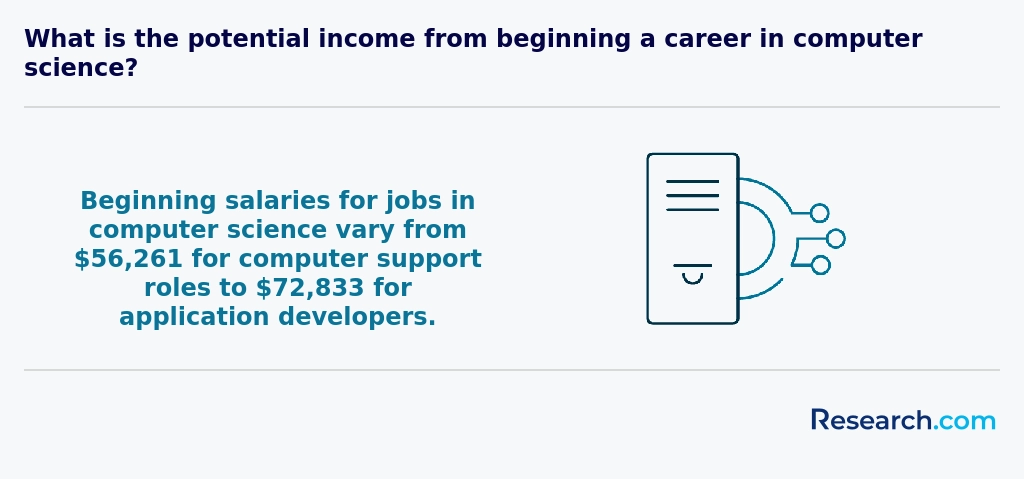
Graduates with a computer science degree from institutions like the University of New Hampshire often start their careers earning between $60,000 and $75,000. Early roles such as IT Support Specialist typically offer mean annual wages around $63,640, providing a solid entry point. As graduates gain experience, salaries rise notably, especially in specialized positions. For example, Web Developers earn approximately $95,570 annually, while Data Analysts command higher pay, with mean wages near $119,040.
Many New Hampshire graduates pursue software development, where mean wages match $138,110, reflecting the strong demand and advanced skills required. This mirrors the experiences of recent alumni who, after securing internships and refining coding expertise, move into higher-paying software engineer or developer roles.
Setting realistic milestones, like achieving certifications or focusing on in-demand skills such as cybersecurity or data science, can boost salary prospects. New Hampshire's tech landscape encourages remote work opportunities with competitive pay, making it easier for graduates to find well-paying jobs close to home or with major Northeast tech firms.
2027 Best Computer Science Degree Programs Ranking in New Hampshire
How do we rank schools?
Investing in your education is a significant decision that can shape your future, and the Research.com team understands the importance of making informed choices. To assist prospective students in New Hampshire, we have meticulously crafted the "2027 Best Computer Science Degree Programs Ranking in New Hampshire." Our commitment to quality, credibility, and accuracy is reflected in the extensive research and analysis conducted to compile this ranking.
We utilized the following reputable data sources to ensure a comprehensive evaluation of computer science programs:
By exploring this ranking, readers will gain valuable insights into the best computer science degree programs available in New Hampshire, helping them make well-informed decisions about their educational paths. For more details on our methodology, please visit our Research.com methodology page.


Key Findings
- In-state public universities in New Hampshire charge between $12,000 and $17,000 annually for computer science tuition.
- Private colleges in New Hampshire typically charge over $35,000 per year for computer science programs.
- The employment of computer and IT jobs in New Hampshire is expected to grow around 8% in the next decade.
- Entry-level computer science graduates earn between $60,000 and $75,000 annually on average.
- Mid-career professionals with 5 to 10 years of experience can expect salaries from $90,000 to $115,000.
- Senior or specialized roles in computer science may pay more than $130,000 per year.
How long does it take to complete computer science degree in New Hampshire?
Completing a computer science degree in New Hampshire typically requires about four years of full-time study at public universities like the University of New Hampshire. Graduates often describe following a clear, structured path through courses in programming, data structures, and software engineering, which helps them stay on track and feel confident about their progress.
For those balancing work or family, part-time options extend the timeline to five or six years. Many students appreciate this flexibility, as it allows them to maintain income and other commitments while steadily advancing their studies.
Graduate programs, such as a master's degree, usually add around two years. Some schools offer accelerated tracks, so students who are eager can finish sooner and enter the job market quickly.
Starting at a community college in New Hampshire is a smart step for many, saving time and money by transferring credits into a four-year university program. This practical route makes earning a computer science degree feel achievable and rewarding without overwhelming financial pressure.
What's the difference between online and on-campus computer science degree?
Choosing between online and on-campus computer science degrees in New Hampshire comes down to your daily lifestyle and learning preferences. On-campus programs at schools like the University of New Hampshire offer face-to-face time with professors, plus access to labs and research facilities. Graduates often recall how this direct interaction boosted their teamwork skills and provided quick feedback during projects.
In contrast, online degrees-such as those from Southern New Hampshire University-allow flexibility for students balancing work or family. Many New Hampshire online programs use interactive tools and virtual labs to mimic classroom experiences. Graduates appreciate being able to study on their own schedule, reducing commuting stress and housing costs.
Practical differences include on-campus programs fostering immediate collaboration, while online courses rely on digital communication and recorded lectures. Despite these contrasts, both formats meet strict accreditation standards, so the degree's value remains strong regardless of delivery style.
Local Tech Ecosystem and Networking Opportunities
New Hampshire’s vibrant tech ecosystem offers computer science students unparalleled access to industry events, mentorship programs, and collaborative workspaces. Major employers such as Dyn, Fidelity Investments, and BAE Systems regularly host tech talks, hackathons, and coding challenges, enabling students to build portfolios and secure internships before graduation. Local coworking hubs-like the Dartmouth Entrepreneurial Network and Colab in Manchester-foster peer collaboration and often feature guest lectures from startup founders and R&D leaders. By joining student chapters of organizations such as the Association for Computing Machinery (ACM) or Women in Technology (WiT), aspiring professionals can expand their networks and gain insider perspectives on emerging trends in cybersecurity, cloud computing, and artificial intelligence. Universities and colleges across the state also facilitate career fairs, on-campus recruiting, and alumni panels where recruiters from cutting-edge firms scout talent. Dedicated career centers offer resume workshops, interview prep sessions, and one-on-one coaching tailored to technical roles. For students interested in graduate studies and specialized analytics careers, the Research.com data science master degree online provides a flexible pathway to leadership roles in data-driven organizations. Engaging early with these local resources not only strengthens your professional footprint but also accelerates your transition from campus projects to high-impact positions in New Hampshire’s dynamic tech landscape.
What is the average cost of computer science degree in New Hampshire?
The average computer science degree cost in New Hampshire typically falls around $47,036 for both in-state and out-of-state students, though in-state students at public universities may sometimes see slightly varying total costs nearing $48,920. Graduates from popular institutions such as the University of New Hampshire often recall balancing tuition with living expenses, which contributes to the overall cost of earning their degree. These students highlight the importance of planning for not just tuition, but also ancillary fees like technology and housing, which add up quickly.
Many computer science students in New Hampshire face a combined cost that includes textbooks, specialized software, and room and board. For example, a typical budget might incorporate $12,000 to $15,000 annually in living expenses, reflecting the real-life choices of current students on or near campus. Understanding the total cost of computer science degree New Hampshire students encounter helps in setting realistic financial expectations and creating effective budgets.
Exploring the cheapest computer science schools in new hampshire can significantly reduce these expenses. Many graduates emphasize how leveraging scholarships and financial aid early in their college journey made achieving their goals feel more attainable and less stressful. Practical steps like researching in-state tuition reciprocity and grants also play a key role in managing costs while pursuing a rewarding computer science education.

Accreditation and Program Quality
Accredited programs ensure your degree meets industry and academic standards, boosting credibility with employers and graduate schools. In New Hampshire, look for:
- ABET accreditation: Confirms curriculum rigor, qualified faculty, and clear learning outcomes.
- Regional accreditation (NECHE): Guarantees overall institutional quality and eligibility for federal aid.
- Industry partnerships: Collaborations with local tech firms that offer real-world projects and internships.
- Modern facilities and student-faculty ratio: Indicators of hands-on support and personalized mentorship.
Verifying accreditation protects your investment, supports professional licensure or certification, and eases credit transfers. For those seeking advanced study in data-focused fields, explore accredited data science masters programs online.
What financial aid is available to computer science degree students in New Hampshire?
When pursuing a computer science degree in New Hampshire, start by completing the FAFSA to access federal aid options like Pell Grants, which can provide up to $7,395 for the 2023-2024 year. Graduates from the University of New Hampshire (UNH) often highlight how these grants eased their tuition burden, allowing them to focus more on coding projects than financial stress.
Next, explore state-specific scholarships such as those from the New Hampshire Community College System, which targets STEM students with helpful funding, and the NH Scholars program, designed to boost merit aid chances by meeting college-readiness standards. Many UNH and Franklin Pierce University students successfully combine these scholarships with institutional awards, some ranging from $1,000 to over $10,000 annually, significantly reducing their costs.
Consider work-study programs or assistantships for hands-on experience while earning. Several New Hampshire employers also offer tuition reimbursement to support employee education in tech fields, a practical option for working students balancing school and life. These layered options make earning your computer science degree financially manageable in the state.
Student Life and Campus Resources
A crucial addition to this article is a dedicated section detailing the student experience beyond the classroom. This section explores campus life, support services, and extracurricular opportunities that enrich a student’s journey in computer science. New Hampshire institutions offer vibrant communities where academic rigor is balanced with social engagement, mentorship programs, and professional development initiatives. From state-of-the-art lab facilities to active tech clubs and networking events, these campuses provide an environment that not only nurtures technical skills but also fosters personal growth and lifelong connections. For instance, many students take advantage of community-driven workshops and seminars, which help them build professional networks and prepare for future careers. Additionally, prospective students interested in maximizing their educational investment can explore resources that highlight the cheapest computer science schools in new hampshire, ensuring they find a balanced option that meets both academic and financial criteria. Overall, this comprehensive look into campus life and available resources can significantly enhance your decision-making process and help you envision your life as a thriving member of a supportive academic community.
What are the prerequisites for enrolling in computer science degree program in New Hampshire?
To enroll in a computer science degree program in New Hampshire, you'll need a high school diploma or GED as your first step. This foundational credential is essential for acceptance at institutions like the University of New Hampshire or Dartmouth College. Graduates often recall that a solid math background, especially in algebra and calculus, made the transition smoother and the coursework more manageable.
Many programs also recommend science classes such as physics or chemistry, which helped past students develop the analytical skills crucial for computer science problem-solving. English proficiency is equally important; being able to clearly express complex ideas in writing or discussions is something students at Southern New Hampshire University found vital for their success.
Most New Hampshire schools consider SAT or ACT scores, though test-optional policies are becoming more common. It's a smart idea to check each school's requirements early so you can prepare accordingly. Letters of recommendation and personal statements, showcasing your passion for technology, can make a positive impression on admissions committees.

Graduation Rates and Employment Outcomes
New Hampshire’s Computer Science programs consistently demonstrate strong student success, with an average graduation rate of 78% within four years and over 90% of graduates securing relevant employment within six months of commencement. Key factors influencing these outcomes include robust career services, dedicated internship partnerships, and active alumni networks that facilitate professional mentorship. • Graduation Rate: Leading institutions such as the University of New Hampshire report a fully certified ABET program graduation rate of 82%, while smaller colleges like Plymouth State achieve rates nearing 75%, reflecting diverse campus environments. • Time to Degree: Accelerated pathways-including summer sessions and credit-for-experience policies-help students complete bachelor’s degrees in as little as three and a half years, reducing tuition costs and debt burdens. • Job Placement: Through on-campus recruiting events and virtual career fairs, 92% of graduates from New Hampshire institutions secure roles in software development, data analysis, or cybersecurity within six months. Top employers include regional tech firms, healthcare analytics providers, and national defense contractors. • Median Starting Salary: New Hampshire graduates report a median entry-level salary of $68,000, exceeding the national average by 5%, thanks in part to strong state demand for cloud computing and AI specialists. For prospective students evaluating return on investment, comparing graduation success and career outcomes across states can be invaluable. For example, you may also wish to explore the Affordable Computer Science Degree Programs Ranking in Michigan to benchmark program costs, completion rates, and early-career earnings. By aligning graduation metrics with employment opportunities, students can confidently choose a program that maximizes both academic achievement and professional growth.
What courses are typically in computer science degree programs in New Hampshire?
If you're pursuing a computer science degree in New Hampshire, expect a solid lineup of foundational courses that build essential skills. Graduates from the University of New Hampshire often recall starting with programming classes in languages like Python or Java, which laid the groundwork for tackling real coding challenges. Courses such as Data Structures and Algorithms are a must, helping you develop problem-solving abilities crucial for software development roles.
Beyond the basics, you'll dive into systems courses covering operating systems and databases, which former students say made the complex inner workings of computers feel tangible. Software engineering classes simulate real project environments, teaching you team collaboration and lifecycle management - skills that employers highly value in New Hampshire's tech sector.
Electives often include in-demand topics like artificial intelligence, cybersecurity, and mobile app development. Many students feel excited applying mathematical concepts from linear algebra or statistics in hands-on labs, reinforcing their analytical thinking with practical experience.
What types of specializations are available in computer science degree programs in New Hampshire?
When choosing a computer science degree in New Hampshire, students often specialize in areas that directly match job market needs. At universities like the University of New Hampshire, graduates frequently select Software Development to build strong coding and application design skills, preparing them for software engineering roles with competitive salaries. Others find Cybersecurity rewarding, learning to protect systems from rising cyber threats, a field expected to grow substantially by 2030.
Specializations such as Data Science and Analytics are popular as well, tapping into the demand for professionals who analyze large data sets to inform business decisions. Many students aim to deepen their expertise with a data science master degree online, expanding their opportunities.
Additional options often include Artificial Intelligence and Computer Networks, which equip graduates to enter emerging tech sectors with confidence. These typical computer science degree specializations New Hampshire offers are designed with practical, career-focused outcomes in mind, helping students turn academic knowledge into real-world success.
How do you choose the best computer science degree in New Hampshire?
Start by focusing on program accreditation and curriculum strength when choosing the best computer science degree programs in New Hampshire. Graduates from the University of New Hampshire often praise the ABET-accredited BS in Computer Science for its rigorous coursework and specialization options in areas like cybersecurity. This kind of quality assurance guarantees a solid foundation and industry recognition.
Next, examine affordability. Public universities here align with national averages, but private colleges may charge significantly more. One graduate shared how leveraging in-state tuition and scholarships eased their financial burden. To explore cost-effective options beyond New Hampshire, consider looking at the Affordable Computer Science Degree Programs Ranking in Michigan for comparative insight.
Evaluate the program's flexibility, including online or hybrid options that cater to busy schedules. Graduates juggling jobs found hybrid courses helpful for balancing commitments while specializing in fields like AI. Finally, weigh job placement and internship opportunities-New Hampshire's tech hubs in Manchester and Nashua provide local avenues to build experience, which recent alumni found invaluable for launching their careers.
What career paths are available for computer science degree students in New Hampshire?
Graduates from computer science programs at universities in New Hampshire often find a variety of career options. Many begin as software engineers designing applications or work in cybersecurity roles protecting local businesses from digital threats, especially in cities like Manchester and Nashua. Others pursue data science positions, analyzing large datasets to solve real-world problems. Graduates from well-known colleges in the state report feeling confident stepping into roles in artificial intelligence or cloud computing, fields that are rapidly growing thanks to New Hampshire's expanding tech ecosystem.
Career opportunities in New Hampshire's tech sector offer steady growth, making computer science careers in New Hampshire both practical and rewarding. For students juggling cost concerns, combining a computer science degree with a quick program like a quickest associate's degree online can provide a strategic advantage before entering the job market. This approach helps graduates build skills efficiently and tap into the region's strong job opportunities in software development, data analysis, and IT management.
What is the job market for computer science degree in New Hampshire?
The computer science job outlook New Hampshire presents a solid opportunity for graduates ready to enter a growing market. Many who complete their degrees at well-known local colleges find themselves stepping into roles such as software developers or cybersecurity specialists within the state's expanding tech industry. These positions often offer attractive salaries exceeding the state's average wage, making the investment in education worthwhile.
Graduates frequently benefit from New Hampshire's proximity to major tech hubs like Boston, providing access to networking events and internships that enhance career prospects. For example, students from popular universities in New Hampshire share how hands-on co-op programs helped them secure competitive jobs shortly after graduation. Internships hosted by local companies are crucial for gaining real-world experience in this technology career opportunities in New Hampshire.
When considering costs, students should also explore options carefully, as tuition at public institutions averages around $10,000 annually. Those looking for less demanding paths might check out easiest bachelor degree options available to help balance study and work successfully.
Frequently Asked Questions About computer science
Computer science students in New Hampshire can maximize their learning by engaging actively in both academic and practical opportunities. Many universities, like the University of New Hampshire, offer cooperative education programs that integrate paid internships with coursework, providing real-world experience. According to the National Association of Colleges and Employers, internships increase job placement rates by over 60% for computer science graduates nationwide, a trend reflected locally. Students should also participate in tech clubs, hackathons, and research projects to deepen their skills and network with industry professionals. Leveraging state resources such as the New Hampshire Tech Alliance can connect students to local tech companies and events.
Emerging niches within the computer science field are shaping educational and career opportunities in New Hampshire. Areas such as artificial intelligence (AI), cybersecurity, and data science are experiencing rapid growth nationwide, including in this region. According to the New Hampshire Department of Labor, employment in computer and information technology occupations is projected to grow by 15% through 2030, faster than the average for all occupations.
In particular, cybersecurity careers are expanding due to increasing demand for data protection across industries. AI and machine learning are also gaining prominence as businesses integrate automation and analytics.
Additionally, niches like cloud computing, human-computer interaction, and blockchain technology are drawing attention in New Hampshire's academic programs and local tech sectors. These areas provide specialized skills that match the evolving needs of employers in the state and beyond.
Graduates with a computer science degree in New Hampshire can improve their job prospects by focusing on practical experience alongside academic knowledge. Participating in internships or cooperative education programs offered by local universities helps students gain relevant industry skills. Networking through local tech meetups, such as those in Manchester and Nashua, enhances connections with employers in New Hampshire's growing tech sector.
Familiarity with in-demand programming languages like Python, Java, and SQL remains crucial. According to the New Hampshire Department of Employment Security, the tech industry in the state is expected to grow by over 10% by 2028, offering numerous job opportunities. Additionally, obtaining certifications in cloud computing or cybersecurity can distinguish candidates in competitive markets.
Staying engaged with career services at colleges like the University of New Hampshire can also provide access to job fairs and career counseling tailored to the technology sector.
Employers in New Hampshire highly value computer science graduates who demonstrate strong programming skills, particularly in languages like Python, Java, and C++. These skills are essential due to local demand in tech industries, including software development and cybersecurity. According to the New Hampshire Department of Labor, problem-solving ability and analytical thinking rank among the top attributes sought by employers statewide.
Additionally, communication skills are crucial, as computer scientists often work in teams or with clients. Familiarity with cloud computing and data management tools also boosts a graduate's prospects.
Hands-on experience through internships or projects is frequently preferred to theoretical knowledge alone, reflecting the state's focus on practical skills.
Finding internships relevant to a computer science degree in New Hampshire involves leveraging multiple local resources. Many universities, such as the University of New Hampshire, offer dedicated career services that list internship opportunities in the tech sector. According to the New Hampshire Department of Employment Security, the state's tech industry has grown by 13% over the last five years, increasing demand for interns.
Students should explore local tech companies, including Keene-based startups and Dartmouth-Hitchcock's IT department. Additionally, attending job fairs and networking events like those hosted by New Hampshire High Technology Council can be valuable. Online platforms such as Handshake and internships.com also feature regional listings.
Active outreach to employers and participating in university co-op programs can further enhance chances of securing a quality internship.
A computer science degree significantly enhances career mobility and advancement opportunities in New Hampshire. The state's growing tech sector, including companies specializing in software development and cybersecurity, values graduates with strong technical skills and problem-solving abilities. According to the Bureau of Labor Statistics, employment for computer and information technology occupations in New Hampshire is projected to grow by 15% from 2021 to 2031, faster than the average for all occupations.
Holding a computer science degree often leads to higher starting salaries and eligibility for roles such as software engineer, data analyst, or IT manager. Many local employers seek candidates with formal education combined with practical experience, which degree programs typically provide through internships or cooperative learning.
In addition, graduates benefit from professional networks established through New Hampshire's universities, facilitating connections with regional tech companies. This network can be crucial for career advancement and accessing leadership positions in the technology sector.
Studying for a computer science degree in New Hampshire equips students with skills that extend beyond coding and software development. Programs often integrate interdisciplinary coursework in fields like data science, business, engineering, and healthcare. This broad approach prepares graduates to collaborate across industries and tackle complex problems using technology.
Local universities, such as the University of New Hampshire, emphasize practical experience through labs and internships that encourage applying computing knowledge to real-world challenges in varied sectors. According to the New Hampshire Department of Labor, the state's tech-related occupations are growing faster than the national average, highlighting demand for versatile professionals.
Such academic settings support the development of critical thinking, communication, and project management skills. These are essential for interdisciplinary roles that require working with diverse teams and stakeholders in a rapidly evolving job market.
When choosing between a thesis and a non-thesis computer science degree program in New Hampshire, consider your career goals first. A thesis option typically suits students interested in research or pursuing a PhD, as it requires conducting original research and writing a formal document. Non-thesis programs often focus more on coursework and practical skills, targeting those aiming for professional jobs in the tech industry.
Universities in New Hampshire like the University of New Hampshire offer both options. According to the National Center for Education Statistics, computer science enrollment in New Hampshire has grown by 12% over the last five years, reflecting rising interest.
Time and financial commitment can also influence your choice. Thesis programs may take longer to complete and often involve finding a faculty advisor for mentoring. Meanwhile, non-thesis degrees usually have a fixed curriculum and shorter duration, which appeals to working professionals.
Consider your preference for hands-on projects versus independent research. Understanding these factors helps you select the best path aligned with your ambitions and lifestyle.
Students based in New Hampshire who wish to study computer science abroad have several options through U.S. higher education institutions with global partnerships. Many universities offer exchange programs or dual-degree arrangements that allow New Hampshire residents to spend a semester or more at international campuses while earning credits toward their degree.
For example, the University of New Hampshire supports study abroad with partner schools in Europe and Asia that provide courses in computer science topics. These programs let students gain global experience and exposure to different technology markets.
Additionally, students can participate in summer research internships or faculty-led trips overseas, enriching their academic and professional skills.
According to the Institute of International Education, participation in STEM study abroad programs has grown by over 20% nationwide since 2015, reflecting increasing interest in global tech skills.
In New Hampshire, part-time job opportunities that complement a computer science degree include roles such as software developer intern, IT support technician, and web developer. These positions allow students to apply classroom knowledge to real-world projects, gaining valuable experience. According to the New Hampshire Department of Labor, the technology sector is growing steadily, with a 3.5% increase in tech employment over recent years, reflecting increasing demand for skilled workers.
Many local companies including software startups and tech firms offer flexible part-time roles suited to students. University career centers often list openings for part-time coding assistants or lab technicians, enhancing technical skills alongside academic studies.
Computer science students in New Hampshire have access to several strong networking opportunities that support career growth. Universities like the University of New Hampshire and Dartmouth College host technology-focused events, career fairs, and hackathons, connecting students directly with industry leaders. The state benefits from a growing tech sector, including cybersecurity firms and software companies, offering valuable internship programs and professional meetups.
Organizations such as TechNewHampshire and local chapters of national groups like ACM provide regular workshops and speaker sessions. According to the New Hampshire Department of Business and Economic Affairs, the tech industry employs over 20,000 professionals statewide, indicating a vibrant professional network for students to engage with.
Alumni networks play a crucial role for computer science students in New Hampshire by offering valuable connections and career resources. Graduates from local schools like the University of New Hampshire benefit from established networks that facilitate mentorship, internships, and job placements within the state's growing tech industry.
These networks often host events and workshops, helping students refine skills and stay current with industry trends. According to the New Hampshire Department of Employment Security, the state's IT sector grew by 6% from 2020 to 2023, highlighting rising opportunities for graduates.
Access to alumni can also lead to referrals and insider information on openings at companies like Dyn or Nokia Bell Labs within New Hampshire.
To customize your computer science degree program in New Hampshire, start by exploring schools offering flexible curricula. Many universities, including the University of New Hampshire, provide elective courses in areas like cybersecurity, data science, and software engineering. These options allow you to tailor your studies to specific career paths.
Internships and cooperative education programs are widely available in New Hampshire and can provide hands-on experience aligned with your interests. Additionally, some programs offer research opportunities with faculty, helping deepen expertise in emerging technologies.
Consider certificate add-ons or minors complementary to computer science, such as business or mathematics, to broaden career prospects. According to the New Hampshire Department of Labor, tech jobs are growing steadily, making these customizations valuable for job market readiness.
Computer science students in New Hampshire often face several challenges during their studies. One major difficulty is keeping up with the rapid pace of technological change in the field, which requires continual learning beyond standard coursework. Many students also find resource availability limited compared to larger states, with fewer local internships and industry partnerships, impacting real-world experience opportunities.
Another common challenge is mastering foundational math and programming skills, which are essential for success but can be demanding for newcomers. According to the National Center for Education Statistics, retention rates in STEM programs, including computer science, are lower than average, reflecting these academic hurdles.
Additionally, balancing workload and financial costs is a concern. While New Hampshire offers several public institutions, tuition and living expenses require careful planning, especially for out-of-state students.
With a computer science degree from New Hampshire, graduates can pursue several professional certifications that enhance career opportunities in technology fields. Popular certifications include the Certified Information Systems Security Professional (CISSP) for cybersecurity roles, and the Project Management Professional (PMP) for managing tech projects. Additionally, the Cisco Certified Network Associate (CCNA) is valuable for networking careers.
New Hampshire's growing tech sector, particularly in Manchester and Nashua, has a demand for certified professionals. According to the New Hampshire Department of Labor, IT occupations are expected to grow by 15% through 2030. Certifications like AWS Certified Solutions Architect are also in demand due to increased cloud adoption.
To write a winning application for a computer science program in New Hampshire, start by highlighting strong academic achievements, especially in math and science courses. Most universities, including the University of New Hampshire, emphasize a solid GPA and competitive standardized test scores.
Tailor your personal statement to reflect your passion for technology and any hands-on experience, such as coding projects or internships. Admissions committees value practical skills alongside academic records.
Include letters of recommendation from teachers familiar with your technical abilities. According to the National Center for Education Statistics, STEM programs in New Hampshire attract applicants with demonstrated interest in research and problem-solving.
Finally, meet all deadlines and provide clear, error-free documents to make a professional impression.
The demand for computer science professionals continues to grow worldwide, including within the United States and specifically in New Hampshire. According to the U.S. Bureau of Labor Statistics, employment in computer and information technology occupations is projected to grow 15% from 2021 to 2031, much faster than the average for all occupations.
New Hampshire benefits from this trend with notable tech hubs in cities like Manchester and Nashua, offering job opportunities for graduates. Research from the New Hampshire Department of Employment Security highlights that software developers in the state earn a median annual wage above the national average, reflecting strong regional demand.
Globally, a computer science degree is seen as a gateway to various tech-related fields such as artificial intelligence, cybersecurity, and data science, aligning well with current educational programs offered in New Hampshire universities.
Gaining practical experience while studying for a computer science degree in New Hampshire is critical for career readiness. Many universities, such as the University of New Hampshire, offer internship programs connected with local tech companies. These internships provide hands-on experience in software development, data analysis, and cybersecurity.
Additionally, students can participate in cooperative education (co-op) programs that alternate periods of academic study with paid work. According to the New Hampshire Department of Education, about 40% of STEM students engage in internships or co-ops during their studies, enhancing their resumes significantly.
Joining campus coding clubs and hackathons also offers practical experience by solving real-world problems collaboratively. Furthermore, open-source projects and freelance work available remotely can complement in-class learning effectively.
Choosing the right concentration within a computer science degree in New Hampshire depends on your interests and career goals. Popular concentrations include software development, cybersecurity, data science, and artificial intelligence. The state's institutions like the University of New Hampshire offer programs aligned with industry demands. According to the Bureau of Labor Statistics, computer and information technology jobs in New Hampshire are projected to grow faster than average through 2030, making specialized skills valuable.
Research local job markets to see which areas, such as cybersecurity or data analytics, have high demand. Additionally, consider internship opportunities at New Hampshire tech firms which often focus on applied skills. Consulting academic advisors about specific course offerings can also help tailor your concentration to personal strengths and employment trends.
Related Computer Science Rankings for Nearby States
- 2027 Best Computer Science Degree Programs Ranking in Massachusetts
- 2027 Best Computer Science Degree Programs Ranking in Maine
- 2027 Best Computer Science Degree Programs Ranking in New York
- 2027 Best Computer Science Degree Programs Ranking in Rhode Island
- 2027 Best Computer Science Degree Programs Ranking in New Jersey
- 2027 Best Computer Science Degree Programs Ranking in Ohio
- 2027 Best Computer Science Degree Programs Ranking in West Virginia
- 2027 Best Computer Science Degree Programs Ranking in North Carolina
- 2027 Best Computer Science Degree Programs Ranking in South Carolina
- 2027 Best Computer Science Degree Programs Ranking in Georgia
Top Trending Computer Science Rankings
See What Experts Have To Say About Studying Computer Science
Read our interview with Computer Science experts

Elan Barenholtz
Computer Science Expert
Associate Professor
Florida Atlantic University

Kathleen M. Carley
Computer Science Expert
Professor of Computer Science
Carnegie Mellon University

Martin Kang
Computer Science Expert
Assistant Professor
Loyola Marymount University

Imed Bouchrika, Phd
Computer Science Expert
Professor of Computer Science
National Higher School of Artificial Intelligence

References
- 5 Challenges in Teaching Computer Science & Solutions https://www.computingolympiad.org/post/top-5-challenges-in-teaching-computer-science-in-schools-and-how-to-overcome-them
- A Holistic Approach to Studying Interdisciplinary Collaboration: Computer Science https://sciety.org/articles/activity/10.21203/rs.3.rs-8694985/v1
- How AI Is Transforming Computer Science Careers | Role of AI https://www.gisma.com/blog/how-ai-is-transforming-computer-science-careers
- Computer Science Programs: Cost, Types, What to Expect https://www.computerscience.org/degrees/
- CS4NH Integrating Computer Science - New Hampshire Tech Alliance https://nhtechalliance.org/integrating-computer-science-into-nhs-classrooms/
- Top 12 Global Careers For Computer Science Degree Graduates https://womeninstemnetwork.com/careers-for-computer-science-degree/
- How can I network with computer science professionals and find job opportunities? https://2sigma.school/t/a/cfaq/how-can-network-with-computer-science-professionals-and-find-job
- Computer Science - SWPS University https://english.swps.pl/academics/warsaw/ba-programs/computer-science
- Alumni computer science dual https://www.fbi.h-da.de/en/informieren/ueber-uns/alumni/alumni-computer-science-dual
- Fields of Work in Computer Science: Top IT Careers | Walbrook https://www.walbrook.ac.uk/subjects/computer-science/computer-science-fields-of-work-career-in-it/