Choosing a counseling master's program in Columbia means looking beyond the degree title: the program must fit your budget, schedule, clinical training needs, and plans for South Carolina licensure. This guide explains those trade-offs for future counselors and working professionals considering a career change. It also features the 2027 Best Clinical Mental Health Counseling Degree Programs Ranking in Columbia, created by the Research.com team of data scientists to help students make an informed choice about which programs are worth considering. Use it to build a shortlist - and know what to verify before enrolling.
Key findings about Clinical Mental Health Counseling degrees in Columbia
For a Columbia student seeking South Carolina professional counselor licensure, a relevant master's degree is a starting point - not a license. Confirm the program's current curriculum, accreditation status, and clinical training against South Carolina board requirements before applying.
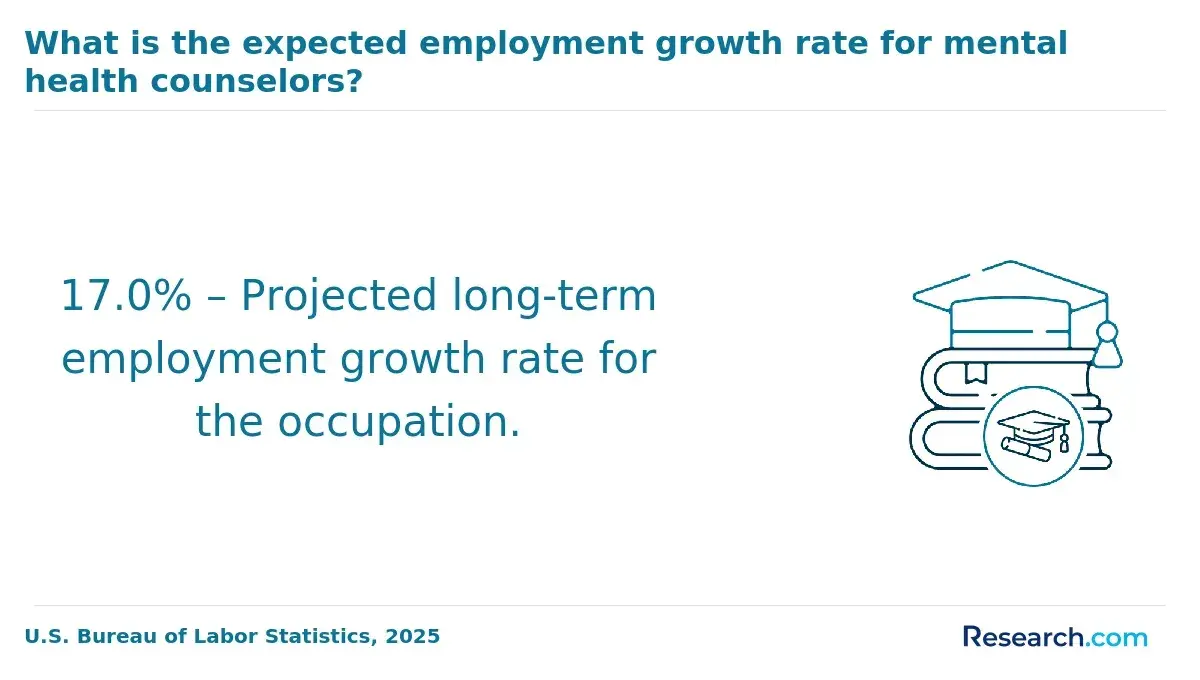
The U.S. median annual wage for substance abuse, behavioral disorder, and mental health counselors was $59,350 in May 2025; national employment is projected to grow 18% from 2025 to 2035 (U.S. Bureau of Labor Statistics). Neither figure predicts a new graduate's pay or local job offer.
Columbia applicants can compare South University-Columbia's explicitly clinical mental health counseling degree with Columbia International University's faith-integrated clinical counseling program. Placement arrangements, total cost, and fit with the intended license matter more than the degree title alone (institutional program descriptions).
What can I expect from a Clinical Mental Health Counseling degree in Columbia?
A clinical mental health counseling master's degree prepares students to assess concerns, develop treatment plans, provide counseling, and work within ethical and professional limits. Expect classroom study alongside supervised practicum and internship experiences; clinical work cannot be completed entirely through online coursework (Council for Accreditation of Counseling and Related Educational Programs, or CACREP).
This path suits people who want to provide ongoing mental health counseling and can accommodate supervised fieldwork. If your goal is school counseling, marriage and family therapy, or a nonclinical support role, compare those credentials first: similar-sounding degrees do not necessarily lead to the same license. The most popular clinical mental health counseling programs can help identify programs to investigate, but popularity is not evidence of licensing fit.
Where can I work with a Clinical Mental Health Counseling degree in Columbia?
Relevant settings include community mental health agencies, outpatient practices, hospitals, substance use treatment programs, and nonprofit service organizations. In Columbia, the mix of public, health-care, and community services makes the location of a program's placement network particularly important: a nearby internship may be more workable than a distant placement for someone already employed (U.S. Bureau of Labor Statistics; institutional placement policies).
Graduates should distinguish jobs available while working toward licensure from roles requiring an independent license. Ask each school which Columbia-area sites have recently accepted its students, who arranges placements, and whether your preferred employer accepts counselors at your expected credential stage.
The national median annual wage for the BLS occupation covering substance abuse, behavioral disorder, and mental health counselors was $59,350 in May 2025 (U.S. Bureau of Labor Statistics, Occupational Outlook Handbook). This is a national occupational median across experience levels - not a Columbia starting salary or an estimate of what a particular degree will earn.
When judging affordability, compare likely pay in the settings you want with total borrowing and any income you would forgo during fieldwork. A higher-paying career stage may depend on completing postdegree supervision and obtaining a license; the degree alone does not establish eligibility for independent practice (South Carolina licensing board).
The two Columbia options emphasize different forms of fit. Their program descriptions offer a starting point, but applicants should request current credit, placement, cost, and outcome details before treating either distinction as decisive.
South University-Columbia: Its Master of Arts is explicitly in clinical mental health counseling, making it a direct curriculum comparison for applicants focused on that professional path (South University program description). Students should still check its current programmatic accreditation status and obtain written confirmation of how its coursework and placements align with their intended state license; the title alone cannot establish eligibility.
Columbia International University: Its Master of Arts in Clinical Counseling integrates Christian faith with counselor preparation, a more consequential distinction for applicants who want that perspective in their training (Columbia International University program description). Students seeking a secular curriculum - or intending to practice in settings with different expectations - should examine course content and clinical-site options before deciding whether the fit is right.
A clinical mental health counseling master's commonly takes about two to three years of full-time study; part-time enrollment can take longer. The schedule depends on course sequencing, placement availability, and whether internships can fit around paid work. Ask each Columbia program for a term-by-term plan based on your enrollment load rather than relying on its shortest advertised timeline (institutional program policies).
Graduation is not the end of the licensure timeline. South Carolina has separate requirements for examination and supervised professional experience, so anyone planning independent practice should budget time for those steps as well (South Carolina licensing board).
The meaningful difference is where academic work happens - not whether clinical training is required. This comparison can help working Columbia applicants identify which schedule questions to take to admissions and placement staff.
Format
Potential advantage
Constraint to verify
Online or hybrid
Less routine travel for coursework
Required live sessions, campus visits, and locally available supervised placements
On campus
Regular in-person contact with faculty and peers
Commute, class times, and ability to combine coursework with fieldwork
Neither format automatically satisfies South Carolina licensure rules. Before enrolling in an out-of-state online program, obtain its written disclosure about preparation for South Carolina licensure and confirm the answer with the state board (U.S. Department of Education; South Carolina licensing board).
There is no single Columbia-wide price that reliably represents these programs: the payable amount depends on required credits, per-credit charges, fees, living arrangements, and aid. Rather than applying a national graduate-tuition average to a specific counseling degree, request each school's current full-program cost of attendance, including expected fieldwork-related expenses (institutional cost-of-attendance disclosures; College Scorecard).
The most affordable clinical mental health counseling programs offer a useful cost-focused comparison. Check what each quoted price covers, whether tuition can change before completion, and how part-time study would affect both fees and foregone earnings.
Start with the Free Application for Federal Student Aid (FAFSA), then compare each school's offer for institutional scholarships, assistantships, employer tuition benefits, and federal loan eligibility. Ask whether awards continue during internship terms and whether their conditions change if you attend part time (Federal Student Aid; institutional financial aid offices).
Federal borrowing rules are especially important for 2027 applicants: new graduate students generally cannot obtain Graduate PLUS loans for programs beginning on or after July 1, 2026. Limited transition provisions may apply to eligible continuing borrowers, so confirm your individual status with the school's aid office and Federal Student Aid before counting on that financing (Federal Student Aid). Avoid choosing a program on an advertised scholarship alone; compare the remaining cost and repayment obligation.
View the chart data as a table
Best score by program (Source: Research.com)
Category
Value
Columbia International U
88.93
South University-Columbi
90.68
Applicants generally need a bachelor's degree and must meet the school's graduate admissions requirements. Programs may request transcripts, references, a statement of purpose, an interview, or evidence of readiness for clinical work; requirements and prerequisite courses vary by institution (South University; Columbia International University).
If you have prior graduate coursework, request a written transfer-credit evaluation before accepting an offer. A transferable class may still fail to meet a counseling program's clinical sequence or the educational requirements of the state where you intend to seek licensure (institutional transfer policies; South Carolina licensing board).
Typical coursework covers counseling skills, human development, assessment, diagnosis, ethics, research, and approaches to counseling people from different backgrounds. Supervised practicum and internship connect those subjects to client care (CACREP standards).
Course names are less useful than course content when comparing programs. Request a curriculum map showing where clinical assessment, diagnosis, and supervised practice occur, then compare it with South Carolina board requirements. This is particularly important if a degree is named "clinical counseling" rather than "clinical mental health counseling" (South Carolina licensing board; institutional catalogs).
Clinical training may allow electives or placements focused on areas such as substance use, trauma, or work with particular age groups. Availability depends on the program and its approved sites; an advertised interest area is not necessarily a formal concentration or a separate credential (institutional program descriptions).
Choose an emphasis by working backward from the role you want. For example, someone interested in addiction treatment should ask about relevant coursework, clinical placements, and any separate employer or licensing requirements - not assume that a general counseling degree confers an addiction credential (South Carolina licensing board).
Start with the state where you plan to practice, then compare programs on requirements you can document. A strong ranking position can narrow the search; the most valuable clinical mental health counseling programs offer another perspective, but no ranking replaces an individual cost and licensure check.
Before committing, get clear answers to these questions:
Does the current curriculum meet the educational requirements for the South Carolina credential I intend to pursue, and who at the school will document that assessment?
What is the program's current CACREP status, if any, and what accreditation does the institution hold?
Who secures clinical placements, where have recent Columbia-area students trained, and can I complete fieldwork around my job?
What will the entire degree cost after confirmed aid, and how long is it likely to take at my enrollment pace?
Finally, compare that net cost with your present earnings, likely time away from work, debt payments, probability of completion, and the time needed to reach your target career stage. This gives a more useful return-on-investment picture than tuition or a national median salary alone.
View the chart data as a table
Wage range - Mental Health Counselors in South Carolina (BLS OEWS, May 2025) (Source: BLS)
Category
Value
10th percentile
35,010
25th percentile
43,070
Median
52,370
75th percentile
65,070
90th percentile
81,420
Graduates may pursue supervised counseling roles, behavioral health positions in community or health-care settings, and - after meeting applicable requirements - licensed professional counselor roles. Experience can later support clinical leadership, supervision, or a more specialized practice, depending on employer and credential requirements (South Carolina licensing board; U.S. Bureau of Labor Statistics).
The distinction between degree, license, and job title matters. An applicant aiming to be a school counselor or marriage and family therapist should compare the education rules for that profession before choosing a clinical mental health counseling master's; changing paths after graduation may require additional preparation (South Carolina licensing board).
View the chart data as a table
Median wage by U.S. state - Mental Health Counselors (BLS OEWS, May 2025) (Source: BLS)
State
Value
AK
80,770
AL
47,310
AR
51,580
AZ
65,300
CA
59,250
CO
62,390
CT
63,590
DC
60,450
DE
56,020
FL
56,790
GA
58,960
HI
60,090
IA
60,880
ID
63,360
IL
60,730
IN
53,760
KS
59,470
KY
54,190
LA
37,910
MA
59,890
MD
59,530
ME
59,970
MI
61,690
MN
58,780
MO
56,910
MS
46,990
MT
59,000
NC
55,490
ND
68,630
NE
63,770
NH
54,840
NJ
62,820
NM
74,100
NV
57,210
NY
59,450
OH
58,360
OK
59,350
OR
74,590
PA
52,010
PR
46,790
RI
65,120
SC
52,370
SD
53,650
TN
49,580
TX
62,630
UT
63,890
VA
59,880
VT
61,810
WA
68,910
WI
62,220
WV
49,430
WY
62,980
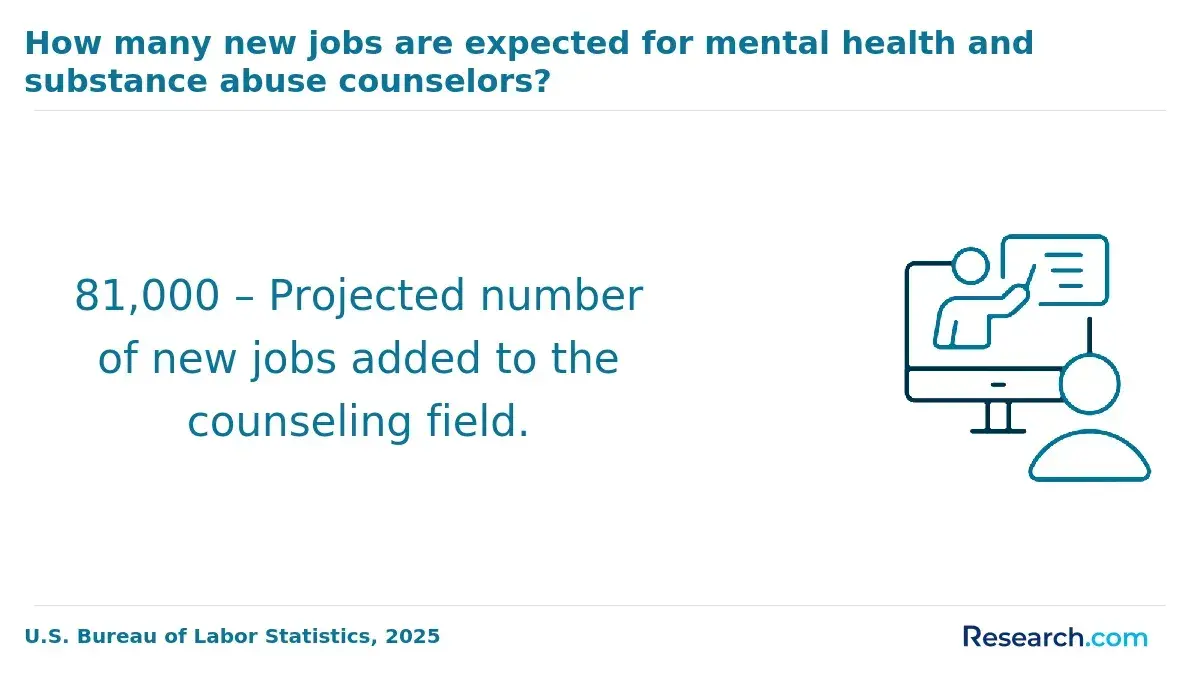
National employment for substance abuse, behavioral disorder, and mental health counselors is projected to grow 18% from 2025 to 2035 (U.S. Bureau of Labor Statistics, Employment Projections). That signals demand across the U.S., but it does not measure openings in Columbia or guarantee that a new graduate will secure a preferred position.
For a local decision, review current Columbia-area postings by setting and credential stage. Note which employers accept graduates working under supervision, which require independent licensure, and whether your prospective program has placements in those settings. Those details are more actionable than applying a national growth rate directly to the local market.
2027 Best Clinical Mental Health Counseling Degree Programs Ranking in Columbia
Education is a substantial investment, so Research.com evaluates counseling programs using multiple measures rather than treating tuition or reputation as a substitute for student outcomes. The team draws on education databases and checks how each measure contributes to the ranking so readers can compare programs with greater confidence.
The Best ranking first combines program completion (40%), employment or doctoral admission (20%), licensure exam pass rates where applicable (20%), CACREP programmatic accreditation where applicable (16%), and federal Title IV eligibility (4%). Shares are adjusted when a criterion does not apply. Program cost then contributes a smaller share - about 7% of the final score. Online and on-campus programs use the same method; other Research.com counseling rankings order programs by the dimension named in their titles.
The ranking draws on these data sources:
IPEDS database - institutional enrollment, completion, and cost information.
This approach helps narrow a shortlist, but a ranking cannot confirm that a particular curriculum meets an applicant's licensing needs or that its clinical placements fit their schedule. See Research.com's methodology for more about how the rankings are created.
# 1 position
South University-Columbia
Master
Master of Arts in Clinical Mental Health Counseling
Delivery mode: campus
90.68
/ 100
Final score
Program length
8 or 10 quarters
Specialization
Clinical Mental Health Counseling
Required credits
91 quarter credits
GPA range
2.30 - 4.00
Application process
direct
GRE
no
Prerequisites
Accredited bachelor's degree. GPA of at least 2.3 for the last 60 semester/90 quarter hours or overall; or a graduate degree with CGPA of at least 3.0. Non-native English speakers must meet the English proficiency requirement.
Additional requirements
Application; personal/professional statement on counseling goals and qualifications; official transcripts; résumé or career summary; background check; faculty interview; admissions committee approval; English proficiency if applicable.
Accreditation
Accredited by the Council for Accreditation of Counseling and Related Educational Programs (CACREP), with institutional accreditation from the Southern Association of Colleges and Schools Commission on Colleges (SACSCOC).
South University-Columbia earned a Research.com Counseling Program Score of 90.68/100. The program is CACREP-accredited, valid through 2033-10-31.
# 2 position
Columbia International University
Master
Master of Arts in Clinical Counseling
Delivery mode: hybrid
88.93
/ 100
Final score
Program length
Typical completion: 3 years; completion deadline: 7 years
Specialization
Clinical Mental Health Counseling
Required credits
60 semester credits
GPA range
3.00 - 4.00
Program completion rate
71% (2024-25)
Employment or doctoral admission
100% (2024-25)
Licensure exam pass rate
95% (2024-25)
Application process
direct
GRE
no
Prerequisites
Undergraduate Introduction/General Psychology, and Old or New Testament Survey (or biblical competency exam), each with a minimum 'C' (or CLEP 50); applicants missing these may be conditionally accepted.
Additional requirements
Online application, application fee, affirmation of CIU's Statement of Faith, official transcripts (min 3.0 GPA on most recent degree), 800-word essay, professional reference, and an in-person or online interview.
Accreditation
Accredited by the Council for Accreditation of Counseling and Related Educational Programs (CACREP), with institutional accreditation from the Southern Association of Colleges and Schools Commission on Colleges (SACSCOC) and the Association for Biblical Higher Education, Commission on Accreditation (ABHE).
Columbia International University earned a Research.com Counseling Program Score of 88.93/100, supported by 95% licensure exam pass rate and 71% program completion rate. The program is CACREP-accredited, valid through 2032-10-31.
Frequently asked questions about Clinical Mental Health Counseling degree in Columbia
Do I need a master's degree to become a licensed professional counselor in South Carolina?
Yes. The degree must meet the board's applicable educational requirements, and graduation alone is not licensure. Check the current rules for examinations and supervised experience with the South Carolina licensing board before enrolling.
Is CACREP accreditation required for every counseling job?
No single accreditation rule covers every employer or career path. CACREP is programmatic accreditation; institutional accreditation is separate. Check the requirements of your intended state license and employers rather than assuming either accreditation label settles every question (CACREP; South Carolina licensing board).
Can I complete a counseling degree entirely online?
Academic courses may be online, but counseling programs include supervised clinical training. Ask where placements take place and whether any in-person sessions or campus visits are required (CACREP; institutional program policies).
Which Columbia program should I choose if I want a faith-integrated curriculum?
Columbia International University describes a Christian approach to clinical counseling. Review its current courses, placement options, and licensure information to determine whether that approach fits your goals (Columbia International University).
Is a Columbia clinical mental health counseling degree worth the cost?
It may be if the program fits your intended license and its full cost is manageable relative to your career goals. Compare confirmed aid, debt, study time, lost earnings, and the supervised steps after graduation; a national counselor salary is not an individual earnings forecast.