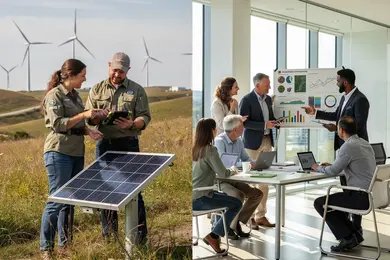
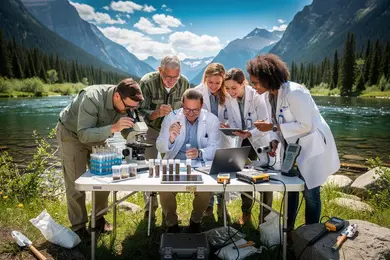
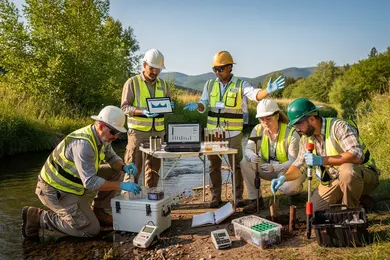
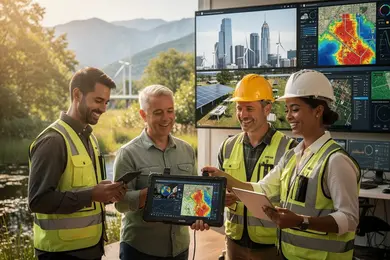
2027 Online Environmental Science Degrees for Broad Environment and Sustainability Preparation

Co-Founder and Chief Data Scientist
Environmental science professionals often face the urgent challenge of acquiring specialized knowledge while juggling full-time roles or geographic constraints, complicating timely career advancement. Data from the National Center for Education Statistics shows a 45% increase in online degree enrollment among adult learners since 2022, signaling a clear shift toward flexible, remote education to address this issue.
This trend reflects deeper logistical barriers that many cannot overcome through traditional campus programs-especially as employers demand immediate expertise in sustainability and environmental policy compliance. This article evaluates current online environmental science degrees, examining how their design, accessibility, and focus prepare students for these pressing workforce demands.
Key Things You Should Know
- Online environmental science degrees average 4.3 years to completion due to capstone and internship requirements, extending time-to-market compared to standard online STEM programs-costs rise accordingly as NSF reports a 15% tuition increase since 2022.
- Employers prioritize candidates with applied GIS and climate modeling skills, found in 78% of top-tier online programs, creating skill gaps for graduates from less technically focused curricula, affecting job placement rates by up to 22%.
- Tradeoffs between program specialization in sustainability policy versus broad environmental systems lead to divergent career trajectories; workforce analyses show 60% higher median salaries for those selecting interdisciplinary courses integrating data analytics and regulatory frameworks.
What is an online environmental science degree and how does it prepare students for sustainability careers?
An online environmental science degree programs for sustainability careers demand strategic evaluation of educational depth against career timelines. Shorter certificates at roughly $5,400 offer swift, foundational training suitable for entry roles or rapid reskilling but restrict advancement potential. In contrast, a comprehensive bachelor's degree involving 180 quarter credits and up to $66,000 in tuition equips students with critical thinking and specialized skills required for leadership positions in consulting, compliance auditing, or natural resource management.
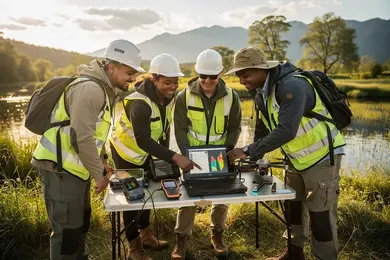
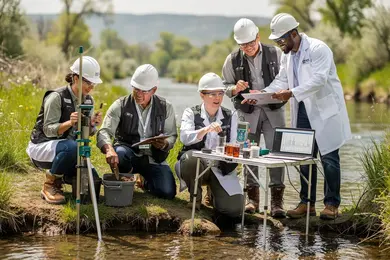
Employers increasingly expect graduates to demonstrate applied competencies, combining core environmental science principles with practical elements like virtual labs or fieldwork. This integration is vital for roles in manufacturing, where graduates spearhead sustainable supply chain projects reducing waste and carbon footprints, or in public agencies conducting climate adaptation planning. Prospective students must weigh the balance between flexible online format benefits-allowing continued employment-and the necessity of experiential learning to develop employer-valued skills.
Hiring realities also underscore the importance of choosing programs aligned with real-world expectations. Graduates proficient in environmental policy and data analysis are better positioned to design mitigation strategies and navigate regulatory frameworks. Access to informed comparisons of program structures and costs can help candidates optimize educational investment against desired occupational outcomes.
Those investigating program options might consider exploring geology degrees online as complementary pathways with overlapping sustainability applications.
How do online environmental science programs compare to campus-based degrees in flexibility, quality, and outcomes?
Choosing between online and campus-based environmental science programs hinges on the tangible demands of the field and career objectives. Online environmental science degree flexibility and quality comparison reveals that accredited online programs now mirror campus offerings in rigor and essential content, incorporating virtual labs, simulations, and synchronous elements to compensate for limited in-person engagement.
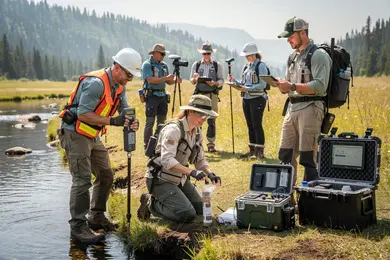
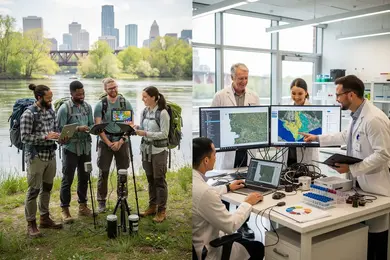
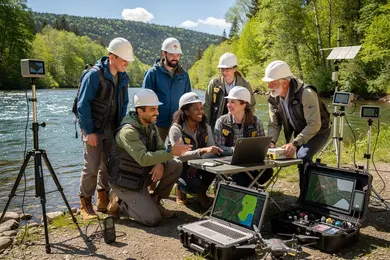
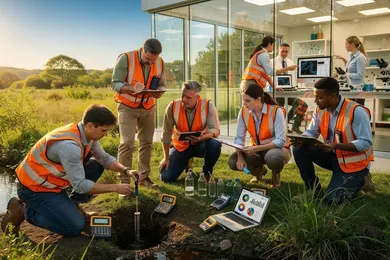
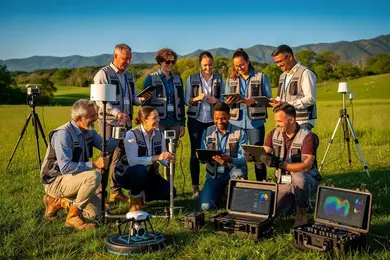
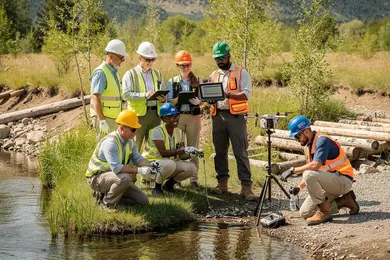
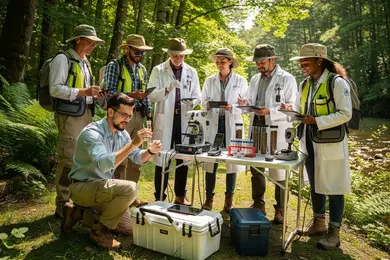
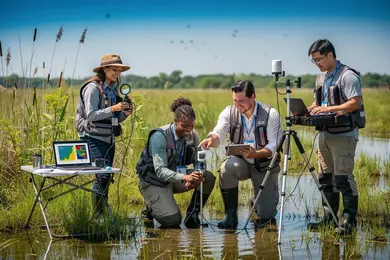
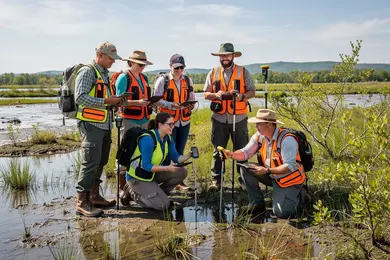
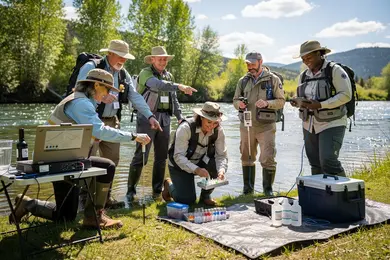
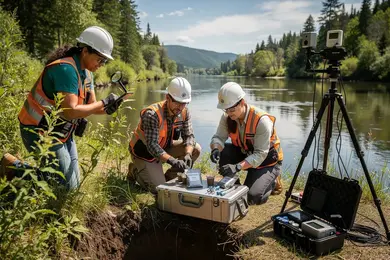
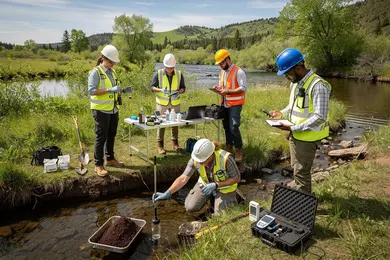
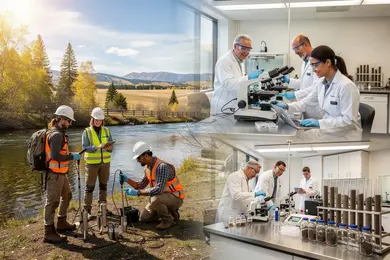
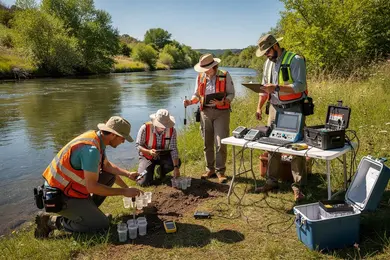
However, hands-on lab work and field research-indispensable for roles in environmental consulting or regulatory compliance-frequently necessitate hybrid formats or local partnerships to ensure adequate experiential training. This tradeoff favors online students targeting careers such as policy analysis or sustainability coordination, where on-the-job flexibility aligns better with flexible upskilling.
Employment data confirms minimal outcome differences between online and traditional graduates from credible programs with strong experiential components. Employers prioritize demonstrable skills, internships, and certifications over degree modality. The field's job outlook shows an 8% growth rate from 2023 to 2033, signaling sustained demand.
Prospective students must therefore plan to supplement online studies with local fieldwork or internships to offset networking and direct faculty access advantages found on campus. For advanced data-oriented career pivots, options like a PhD in data science online may also complement environmental science expertise.
How can students verify that an online environmental science degree is properly accredited and respected by employers?
Regional accreditation is the baseline requirement prospective students must verify when evaluating accredited online environmental science degrees, as this significantly influences employer respect and licensure eligibility. For example, state environmental agencies frequently require degrees from regionally accredited institutions, which confirms programs meet recognized academic standards and reduces risk of investing in unaccredited or diploma mill programs. Additionally, specialized programmatic accreditation in environmental education or related fields can further validate curriculum rigor, particularly in consultancy or compliance-heavy roles.
Recognized online environmental science programs employers respect often feature curriculum components aligned with workforce demands, such as Geographic Information Systems (GIS) training and regulatory compliance coursework. Those programs reporting alumni employment outcomes with salaries near or above the U.S. Bureau of Labor Statistics median annual wage of $76,480 in 2022 demonstrate practical financial value. Job postings from both public and private sectors frequently stipulate accreditation and specific skillsets, making direct employer feedback and internship placement data worth investigating.
Students should also be wary of programs lacking transparency and should verify accreditation information through official agencies rather than institutional claims. Employer partnerships and career support infrastructure materially influence career prospects. For comparative insights on related fields, consult online exercise science degrees, which illustrate how accreditation and employer expectations shape program credibility across disciplines.
What types of online environmental science degrees are available, from associate to master's programs?
Choosing between associate, bachelor's, or master's online environmental science degree programs requires weighing your professional goals against real-world hiring criteria. Associate degrees offer quick entry into technician or fieldwork roles but rarely open doors to advanced research or leadership positions. Bachelor's degrees remain the standard credential valued by employers, integrating interdisciplinary science and law coursework necessary for entry- to mid-level roles; however, graduates without practical experience through internships or project work often face limited opportunities. Master's degrees, demanding additional 30-45 credits, target those pursuing supervisory, consulting, or specialized roles, where advanced policy analysis and leadership skills are essential. The challenge for online master's students lies in supplementing rigorous academic work with practical experience, often self-arranged, to meet workforce expectations.
Key decision factors include accreditation, applied learning, and faculty expertise, all affecting graduate employability. Transitioning professionals may prioritize master's programs offering career services and flexibility, while recent high school graduates often lean toward associates or bachelors for foundational training. Market realities also shape affordability considerations; prospective students might compare environmental science costs with related fields, using resources like cost of computer science degree analyses to inform financial planning. The spectrum of broad sustainability and environmental science degrees online allows strategic alignment of credentials with career trajectories and economic constraints.
What core courses and specializations are typically included in online environmental science curricula?
Environmental science programs that emphasize applied skills in ecology, data analysis, and regulatory frameworks better prepare graduates for the sector's practical demands. Employers prioritize candidates who can analyze real-world ecosystem changes using GIS and statistical tools while navigating complex environmental policies affecting compliance and resource management. Specializations such as conservation biology or environmental toxicology align closely with distinct job functions-fieldwork for wildlife protection or chemical impact assessments, respectively-highlighting the importance of targeted expertise over general credentials.
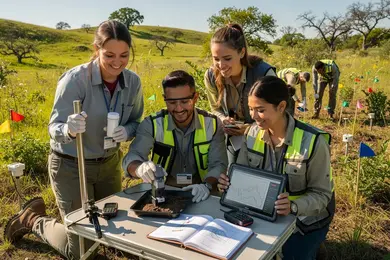
The requirement for hands-on lab and fieldwork presents a scheduling challenge, particularly in online formats. Incorporating remote data collection technologies and virtual labs is a necessary adaptation for meeting accreditation while maintaining flexibility. Employment data also clarify educational preferences: 81% of environmental scientists hold bachelor's degrees, signaling a baseline of comprehensive undergraduate preparation, whereas associate degrees (5%) limit prospects mostly to entry-level roles. Master's degrees (12%) open doors to specialized research or management, stressing the value of advanced study for career differentiation.
Critical decision factors for prospective students include curriculum breadth and depth, practical project opportunities, and mastery of quantitative and policy skills. These combine to meet the hiring criteria prevalent across environmental consulting firms, public agencies, and nonprofits, where demonstrated applied competence outweighs mere academic credentials.
What admission requirements and prior academic preparation are needed for online environmental science programs?
Applicants to online environmental science programs face a practical intersection of academic rigor and workforce readiness that demands more than general qualifications. Bachelor's admissions typically require a high school diploma plus foundational coursework in biology, chemistry, and math, reflecting employer preference for quantitative and scientific competencies critical to environmental modeling and data analysis.
Graduate admissions introduce additional layers: a relevant bachelor's degree with a minimum GPA around 3.0 and demonstrated expertise in ecology, geology, or policy. While some programs still require GRE scores, this is becoming less common due to limited impact on predicting student success. Crucially, submission of professional statements or portfolios showing prior research or applied projects is now standard, emphasizing the shift toward selectivity informed by declining broad environmentalist identification-from 78% in 1991 to 41% in 2020 per Gallup.
Working professionals pivoting careers must examine prerequisite courses or certifications carefully; consulting and regulatory sectors expect immediate technical competence. Online students should anticipate mastering specialized tools such as GIS software and virtual labs. Transfer credits, including military training, may shorten program duration but must align closely with curricular standards.
Programs without clear prerequisite pathways risk prolonging time to degree and increasing reliance on remedial coursework, with financial and career-timing consequences. Candidates must weigh upfront admission criteria and technology demands against long-term applicability and workforce expectations.
How long do online environmental science degrees take to complete and what do they cost?
Time-to-completion for online environmental science degrees varies significantly based on degree level and enrollment pace, affecting both cost and workforce entry timing. Associate degrees typically require about two years of full-time study, while bachelor's programs average four years, with accelerated tracks compressing this to three years, offering a tradeoff between faster labor market entry and intensified workload. Graduate degrees usually span 18 to 24 months, with timelines influenced by thesis demands and program structure.
Tuition costs reflect a complex balance between residency, institution type, and program intensity. Public universities charge approximately $150 to $400 per credit for in-state students, leading to total bachelor's costs near $9,000 to $24,000. Private and out-of-state rates can more than double, often exceeding $30,000. Graduate programs are costlier, ranging from $20,000 to $50,000. Additional expenses like lab kits or onsite fieldwork, common in applied sciences, must be factored in, impacting total investment.
Regional employment considerations further complicate program selection. For example, a student targeting environmental consulting roles in Tampa, FL, might strategically prioritize Florida-based schools offering lower tuition and stronger industry ties over generic out-of-state options. Employability often depends on aligning educational pathways with local job markets and employers' expectations for practical skills and experience.
- Associate degree: 2 years full-time
- Bachelor's degree: 3-4 years, accelerated options available
- Master's degree: 18-24 months, varies by program intensity
- Public in-state tuition: $150-$400/credit
- Bachelor's tuition range: $9,000-$24,000 (public), $30,000+ (private/out-of-state)
- Graduate program tuition: $20,000-$50,000
What environmental science careers can graduates pursue, and in which industries and work settings?
Graduates who pursue online environmental science degrees face a job market where technical expertise must align with practical outcomes and sector-specific needs. Career roles often bifurcate into government, private sector, nonprofits, and research, each demanding distinct but overlapping skill sets.
For instance, government positions require navigating regulatory frameworks such as the Clean Air Act while supporting resilience policies; private industry focuses more on pollution control and sustainability reporting combined with cross-functional collaboration. Nonprofits emphasize conservation and advocacy, where communication skills and grassroots knowledge are paramount.
Increasingly, data science competencies are not optional. The role of Data Scientist within environmental fields is projected to grow significantly, with median salaries exceeding $120,000, due to the integration of advanced analytics in climate modeling, renewable energy, and environmental finance. However, students should recognize this path demands strong analytical rigor and continuous upskilling.
Workforce realities also include geographic job availability constraints, certification requirements like the Certified Environmental Professional credential, and the critical value of internship experience to bridge academic theory and applied practice.
- Government careers often prioritize policy interpretation and compliance expertise.
- Industry demands pollution mitigation technologies and sustainability integration.
- Nonprofits focus on education, advocacy, and conservation leadership.
- Data science skills create crossover opportunities into analytics-driven positions.
Choosing a program that embeds practical labs and real-world placements better positions graduates amid these tradeoffs, ensuring employability aligns with evolving employer expectations in this dynamic sector.
What salary ranges and job outlook can environmental science graduates expect in the United States?
Starting salaries for environmental science graduates in the U.S. typically range from $50,000 to $70,000, widening with specialization and sector. Mid-career professionals often command between $75,000 and $95,000, especially in government or private consulting roles where regulatory knowledge is critical. For instance, the Environmental Protection Specialist position, as identified by Arizona State University, offers an average salary of around $82,220 and growth near 4.4%, based on U.S. government labor projections. This reflects consistent demand in compliance-heavy public-sector roles.
Job seekers aiming for federal or state agencies must navigate stringent hiring protocols, including security clearances or certifications, which affect hiring timelines and bargaining power. Consulting roles present different dynamics, with pay influenced by client industry-energy, manufacturing, or waste management-and often provide quicker advancement but less salary predictability.
Key workforce considerations include:
- Public-sector roles prioritize stability, certifications, and adherence to policies.
- Private-sector jobs offer performance-linked bonuses and variable pay scales.
- Nonprofit and academic positions usually have lower ceilings but may offer steadier employment.
Practical readiness hinges on skills in geographic information systems (GIS), environmental policy, or toxicology to align with employer expectations. Graduates must weigh whether to prioritize the relative security of government roles or the growth potential and variability inherent in consulting. Prospective students should ground their choices in these nuanced tradeoffs to better position themselves in the labor market.
Are there professional certifications or licensing requirements for environmental scientists and related roles?
Environmental scientist roles generally do not require formal licensing, but certifications such as the Certified Environmental Professional (CEP) or Environmental Scientist Certification substantially improve job prospects by signaling expertise in compliance, risk assessment, or remediation. Agencies and firms managing pollution control or hazardous waste often prioritize candidates with such credentials. In more specialized fields like environmental engineering or hazardous materials management, state licensure (e.g., Registered Professional Engineer (PE)) or occupational safety certifications like HAZWOPER are often mandatory to assume legal responsibility or sign off on technical reports.
Consider a professional shifting from a general environmental science background into regulatory compliance at an EPA contractor. Without specific certifications aligned to federal regulations and state permits, career progression may stall despite academic qualifications. Employers typically expect a bachelor's or master's degree supplemented by updated credentials to navigate compliance and regulatory complexities successfully.
Projected 8% job growth through 2032, driven by climate change and environmental hazards, increases demand for credentialed experts capable of interpreting changing regulations. Students and professionals should prioritize programs combining certification prep with hands-on regulatory experience to reduce employment lead times and maximize salary potential. This tactical approach avoids the time and financial sink of earning certifications post-degree while enhancing actual workforce readiness.
Other Things You Should Know About Environmental Science
Online environmental science degrees often emphasize theory, data analysis, and policy, but may have limited direct fieldwork components due to their virtual format. Many programs include local practicums or field assignments students complete independently, but this can reduce opportunities for supervised, collaborative field experience that employers value. Prospective students should prioritize programs that explicitly integrate in-person or hybrid requirements if they aim to build practical, on-the-ground skills used in environmental assessment or remediation roles.
Employers in environmental science weigh the reputation of the institution and the candidate's demonstrated competencies more than the mode of delivery. A well-structured online degree from a regionally accredited institution is often viewed as equivalent, provided the candidate has relevant internships or field experience. Graduates should be prepared to showcase applied skills and verified project experience, as online credentials without accompanying hands-on work may be perceived as less robust in highly technical roles.
Yes. In 2027, most credible online environmental science degrees are offered by institutions accredited by one of the six U.S. regional accrediting agencies, such as the Higher Learning Commission or WASC Senior College and University Commission. Programmatic accreditation is less common in this field, so institutional accreditation matters most.
References
- How to Become an Environmental Scientist: 8 Steps to Success - Prereqcourses https://www.prereqcourses.com/environmental-scientist/
- Accreditation Explained: Guidelines for Global Verification https://www.motaword.com/blog/understanding-accreditation-how-to-verify-institutions-globally
- Accredited Online Courses: How to Pick Programs That Actually Count https://www.upskillist.com/blog/accredited-online-courses-how-to-pick-programs-that-actually-count/
- CES - Certified Environmental Scientist https://www.nrep.org/certifications/certified-environmental-scientist-ces
- Join-Board Certified Environmental Scientist https://www.aaees.org/bces
- Online Environmental Science Degrees: Compare Schools https://www.degreesforgood.org/online-degrees/environmental-science/
- Is Your Online Degree Legitimate? How to Verify Private University Approval https://matchtocollege.com/blog/verify-private-university-online-degree-approval
- Online Environmental Science Degree | BS Environmental Science | University of Phoenix https://www.phoenix.edu/online-liberal-arts-degrees/environmental-science-bachelors-degree.html
- Explore UM | University of Manitoba - Environmental Science (BEnvSC) https://umanitoba.ca/explore/programs-of-study/environmental-science-benvsc