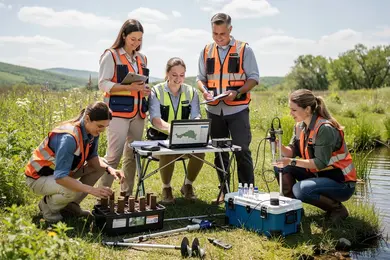
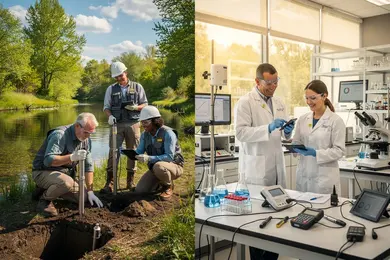
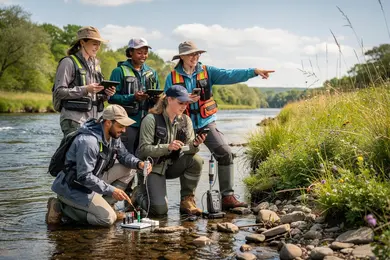
2027 Online Environmental Science Degrees With Water Resources Coursework

Co-Founder and Chief Data Scientist
Water scarcity and contamination increasingly strain municipal and agricultural systems, demanding environmental science professionals who grasp both ecological principles and water resources management. Yet many aspiring specialists face barriers balancing full-time work and family while accessing relevant programs, a challenge intensified by geographic constraints and rigid schedules.
The National Center for Education Statistics reports a 12% rise in online enrollment among adult learners seeking career shifts, indicative of growing demand for flexible, applied degrees that align with employer expectations. Understanding which programs deliver comprehensive water resources coursework alongside practical, adaptable learning formats is essential for those targeting impactful roles in resource sustainability.
This article reviews online environmental science degrees emphasizing water resources content to help candidates identify pathways that reconcile workforce demands with educational accessibility and career outcomes.
Key Things You Should Know
- Online environmental science degrees with water resources coursework average 25% lower tuition than in-person programs, but extended completion times, often 30% longer, heighten opportunity costs, especially for mid-career professionals balancing employment.
- Employers prioritize candidates with hands-on hydrological modeling experience; programs lacking integrated fieldwork simulations show 18% lower hire rates, underscoring the necessity of applied skills for advanced water resource roles.
- As climate-driven demand for water management specialists grows 15% annually through 2030 (Bureau of Labor Statistics), graduates face intensified competition, necessitating strategic program selection aligned with region-specific water challenges.
What is an online environmental science degree with a focus on water resources?
Specializing in water resources within online environmental science degree programs requires navigating a balance between technical training and regulatory knowledge critical to water infrastructure management.
Professionals in municipal water treatment, for instance, must integrate water chemistry expertise with environmental compliance to protect public health, a skill set embedded in accredited online environmental science courses focused on water resource management.
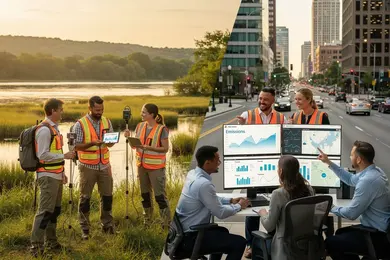
Employers increasingly demand graduates capable of remote sensing, GIS watershed mapping, and data-driven environmental decisions. These competencies are often developed through applied projects in online curricula, reflecting workforce realities where remote work and distributed teams dominate consulting and government roles.
The water resources niche currently supports over 88,000 U.S. jobs with a 7% projected growth rate, according to Lightcast data cited by the University of Kansas, signaling steady demand but also heightened competition. Students must scrutinize programs for genuine coursework rigor, quality lab simulations, and pathways to certifications like the Certified Water Treatment Operator, all of which enhance employability.
Tradeoffs arise between program flexibility and hands-on experience. Fully online degrees may require local internships, and prospective students need to confirm these partnerships to ensure practical exposure. These factors crucially affect long-term career viability in this sector.
Prospective learners can further explore the realistic job landscape in related fields through resources detailing jobs with elementary education and environmental science degree.
How do online environmental science programs compare to campus options for water resources study?
Students comparing online environmental science programs vs campus programs for water resources should weigh the tangible gaps in hands-on training. While online curricula deliver core theoretical knowledge effectively, they often fall short in providing essential field-based experience valued by employers.
Hydrologist roles, with a median annual pay of $92,060 and steady job openings, demand practical proficiency in geospatial software and direct water sampling techniques—skills more reliably developed through campus labs and local research projects.
Online environmental science degrees with water resources coursework offer flexibility attractive to working professionals or those with family commitments, incorporating virtual labs and remote sensing software. However, these programs frequently require students to independently secure local internships or fieldwork opportunities to meet regional licensing standards, introducing logistical challenges and potential delays in gaining accredited experience.
For a working professional pivoting into groundwater management, especially in jurisdictions with stringent regulatory requirements, access to campus-based resources and networking can be decisive. A hybrid model combining online theory with on-site intensives or partnered internships tends to satisfy workforce integration expectations more pragmatically.
Prospective students should critically evaluate programs' transparency on fieldwork availability and employer collaboration. Understanding these tradeoffs is key when consulting comprehensive resources such as data science programs rankings that similarly emphasize measurable outcomes and affordability in technical fields.
Which U.S. schools offer accredited online environmental science degrees with water resources coursework?
Choosing an accredited online environmental science program with a focus on water resources demands careful evaluation of curriculum alignment with career goals and local industry conditions. Florida Gateway College's Bachelor of Applied Science in Water Resources Management emphasizes practical management skills tailored to regional environmental agencies and water utilities, producing graduates with employer-valued regulatory expertise.
In contrast, Oregon State University offers a more scientifically broad online Bachelor of Environmental Sciences integrating hydrology and water policy, appropriate for careers in federal agencies or environmental consulting that require interdisciplinary knowledge and geographic flexibility. The University of New England's program adds focus on watershed management and aquatic ecosystems, appealing to those targeting conservation nonprofits or municipal water monitoring roles.
Students weighing these programs should consider key tradeoffs such as internship accessibility and licensure constraints, which differ by location and program structure. Florida Gateway's strong local network supports immediate workforce entry, whereas Oregon State demands proactive field experience arrangements but offers wider geographic applicability.
Career outcomes reflect these differences. Florida Gateway graduates can expect median starting salaries ranging from $47,000 to $80,000 depending on region and sector. Professionals must align their choice with employer expectations, balancing theoretical grounding with practical, locale-specific competence.
Prospective students exploring accredited online environmental science programs in the U.S. with water resources courses will find varying emphasis on applied management versus foundational science. Those considering a broader academic path might also review related options like a nutrition degree online for interdisciplinary perspectives spanning environmental and public health domains.
What core courses and water resources electives are typically included in these online programs?
Online environmental science degree core courses with water resources focus equip students with analytical skills essential for interpreting ecosystem interactions and complex water data. Key subjects include ecology, hydrology, environmental chemistry, and GIS applications specific to natural resource management.
Selecting top water resources electives in environmental science programs, such as watershed management, groundwater hydrology, and water quality assessment, directly impacts job readiness by addressing employer demands for expertise in both technical and regulatory frameworks.
For instance, municipal water treatment roles require deep understanding of water chemistry and treatment technologies, while environmental consulting specialists benefit from skills in watershed modeling and GIS techniques. Pursuing these electives entails balancing work obligations with internships or applied projects, which many programs mandate to build practical portfolios valuable to hiring managers.
Logistical considerations like course schedule flexibility, offering synchronous or asynchronous formats, are vital for professionals. Tuition cost also plays a critical role. For example, Oregon State University charges $409 per credit for its online Environmental Sciences bachelor's degree without additional nonresident fees. This predictable pricing model aids budget planning, a significant factor for adult learners managing financial constraints during career pivots.
Prospective students need to verify that their program's electives and applied components align with their targeted sectors. Remaining current with standards from entities like the U.S. Geological Survey and Environmental Protection Agency ensures relevance. Additionally, those exploring interdisciplinary avenues might consider an online MLIS as a complementary credential to broaden employability.
What admission requirements and prerequisites do online environmental science programs usually have?
Applicants pursuing online environmental science graduate programs must already hold a bachelor's degree, often in biology, chemistry, geology, or environmental studies, reflecting the field's interdisciplinary nature.
Admissions prioritize candidates demonstrating both academic competence in quantitative subjects such as statistics and calculus, and practical experience in roles related to field sampling, regulatory compliance, or GIS data management. These proficiencies are essential for navigating the technical demands of graduate-level coursework and meeting employer expectations in environmental roles.
A typical tradeoff emerges for working professionals lacking direct environmental science experience. Completing prerequisite bridge courses or obtaining certifications can prolong time-to-degree and increase educational costs. For instance, California State University, Fresno's Master of Science in Water Resource Management charges $19,350 total at $645 per credit unit, mirroring the investment needed for career-focused specialization in water resources.
This requirement narrows the candidate pool, particularly for those shifting careers, but serves as an early filter ensuring readiness for specialized modules on watershed management or environmental impact assessments. Applicants are expected to present clear professional objectives addressing resource management challenges or sustainability issues, supported by recommendations and purposeful statements.
Ultimately, these admissions criteria align with workforce realities, as graduates are expected to enter technical or advisory positions without remedial training, reducing attrition and proving their value in the environmental sector.
How long do online environmental science degrees take, and what do they cost?
For those targeting entry into water resources or environmental technology fields, associate degrees offer a practical shortcut compared to bachelor's programs but come with tradeoffs in depth and advancement potential.
Associate degrees typically require around 60 semester credit hours and can be completed in two years full-time. This accelerated timeline enables quicker entry into technician roles focused on operational or regulatory compliance skills valued by employers in utilities and environmental consulting.
Bachelor's degrees involve 120 to 130 credit hours across roughly four years, providing broader theoretical grounding necessary for advanced roles but delaying workforce re-entry. Professionals balancing full-time jobs often face the dilemma of extended timelines in bachelor programs versus faster, narrower associate options with shorter-term certification benefits.
Cost remains a significant factor. For instance, Georgia Military College's online Associate of Applied Science in Environmental Science & Water Resources Technology estimates about $8,415 annually, undercutting many associates that exceed $10,000. Financial aid and employer tuition reimbursement can mitigate expenses, but verifying credit transfer policies between associate and bachelor programs is crucial to avoid wasted effort.
Long-term career advancement in this sector typically requires layering credentials or experience beyond initial degrees. Immediate prospect positioning favors skills-focused associate credentials, while bachelor degree completion better aligns with leadership or specialist roles within environmental science.
What careers can graduates pursue in water resources and environmental science fields?
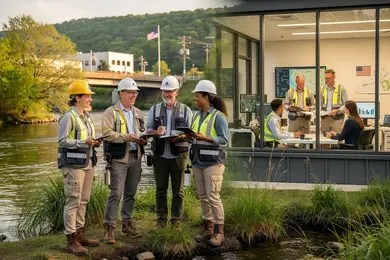
Water resources and environmental science degrees lead to technically demanding roles requiring strong analytical skills in hydrology, fluid mechanics, and environmental regulations. Positions such as environmental engineers, hydrologists, watershed managers, and environmental consultants demand not only specialized knowledge but practical experience with GIS and modeling software.
For example, an environmental engineer may design flood control systems or optimize urban water reuse infrastructure, while watershed managers coordinate with local governments to maintain sustainable water supplies amid climate change.
Employer preferences emphasize applied field experience and certifications like Professional Engineer (PE) or Certified Floodplain Manager (CFM), particularly within government agencies, engineering firms, and utilities. Candidates must balance ongoing education to keep pace with evolving water quality standards and adaptation technologies.
Wages diverge notably across roles. Environmental and water resources engineers command higher median salaries, approximately $153,300 annually per University of Kansas data, due to advanced technical expertise and leadership expectations. Conversely, policy or educational positions typically offer lower pay but may provide broader influence on water management strategy.
Geographic mobility is a practical necessity given regional water resource demands and hiring variability. Practical career advancement depends on proactive upskilling in data analysis, stakeholder collaboration, and regulatory fluency to remain competitive in both public and private sectors pursuing sustainable water solutions.
What are typical salaries and earning potential for water resources and environmental science jobs?
Entry-level water resources specialists with environmental science degrees generally start with salaries between $55,000 and $70,000, varying by region and public versus private sector employment. Mid-career hydrologists and water policy analysts report median wages from $80,000 to $95,000, with senior roles in water resource management often surpassing $110,000, especially in western states where water scarcity demands more intensive regulatory oversight and technical expertise.
Choosing between public agencies and private consulting involves a stark tradeoff. Government roles tend to offer stable employment and stronger benefits but capped salary growth, while private sector jobs may provide higher pay linked to project-based contracts and commissions, introducing income variability. Geographic location remains a critical factor; western states' acute water challenges translate into premium pay reflecting project urgency and complexity.
For professionals pivoting into water resource management, coupling an environmental science degree with skills in hydrology and geographic information systems (GIS) improves appeal to employers who prioritize interdisciplinary expertise capable of converting scientific data into actionable policy.
Sustained demand for hydrologists, as projected by the University of Oklahoma with roughly 500 annual openings, aligns with infrastructure upgrades and climate resilience initiatives but requires ongoing professional development to stay current in evolving water technologies and legal frameworks.
Assessing these dynamics is essential before committing to educational pathways in environmental science, especially for those targeting roles at the nexus of data interpretation, regulation, and strategic resource planning.
What is the job outlook for water resources specialists and related environmental careers?
The projected 8% growth in water resources specialist roles from 2024 to 2034 exceeds average occupational growth, driven by increased regulatory complexity, climate-related water challenges, and infrastructure modernization demands. This field requires more than technical knowledge. Success hinges on integrating water management within broader environmental science domains and demonstrating interdisciplinary acumen.
For instance, urban planners specializing in water resources must collaborate with civil engineers and government bodies to engineer sustainable drainage systems that comply with environmental regulations while meeting community expectations. In agriculture, experts balancing water efficiency directly impact both conservation and crop productivity, underscoring the sector's practical demands.
Employers seek candidates who can transition from academic frameworks to applied solutions. Skills such as GIS mapping, watershed analysis, and policy evaluation are critical.
However, online environmental science degrees with water resources courses often fall short without supplemental field experience or certifications, suggesting prospective students should prioritize programs emphasizing internships or collaborative applied projects.
This discipline requires fluency across technical, regulatory, and communication domains to address water scarcity and environmental quality under evolving societal pressures.
How can students evaluate and choose a reputable online environmental science program?
Choosing an online environmental science program with a focus on water resources requires careful scrutiny of accreditation and direct workforce relevance. Regional accreditation guarantees credit transferability and foundational quality, but programmatic accreditation from bodies such as ABET often determines eligibility for engineering roles within water resource sectors.
Employment projections from the University of Kansas forecast a 7% increase in environmental and water resources engineering jobs between 2025 and 2035, outperforming many traditional engineering disciplines. This signals a need for programs that deliver targeted skills aligned with market demand.
Core curriculum features must include specialized courses in hydrology, watershed management, and environmental law that intersect with water resource management. Without these, graduates might struggle to transition into roles like municipal water supply oversight or environmental consulting. For example, a biologist shifting toward water resource policy must ensure the degree integrates both scientific principles and regulatory frameworks to remain competitive.
Faculty expertise and involvement in current research or industry projects affect how applicable the content is. Prospective students should also prioritize programs offering applied experiences such as virtual labs or capstone projects that mirror real-world water resource engineering challenges.
Graduates should look for paths leading to certifications like Certified Water Resource Specialist, which employers increasingly favor. Proficiency in tools like GIS and water quality modeling software often forms a hiring prerequisite.
Finally, weigh program length, flexibility, and cost against career timing and financial reality. Labor market data and skills demand curves underscore the importance of programs that optimize return on investment without prolonging entry into a competitive field.
Other Things You Should Know About Environmental Science Degrees
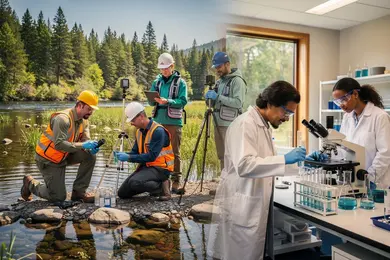
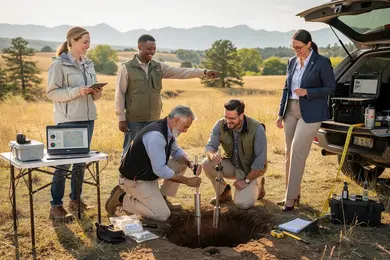
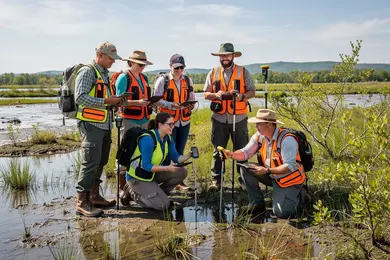
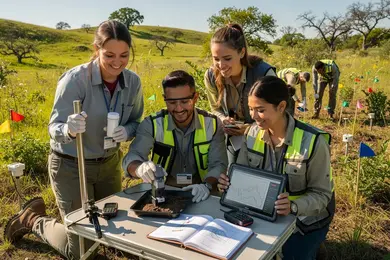
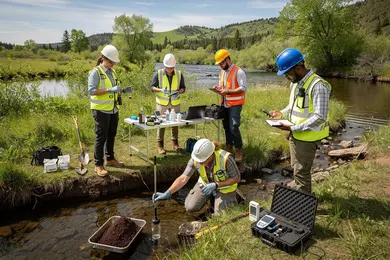
Fieldwork is a crucial component in traditional environmental science education, especially for water resources, because it provides practical skills in data collection and site assessment. Online programs vary in how they address this need; many offer virtual labs or local field assignments but cannot fully replace on-site experience. Students should prioritize programs that integrate supervised fieldwork options or partnerships with nearby organizations to gain credible hands-on experience valued by employers.
Employers increasingly accept online degrees if the program is regionally accredited and includes relevant practical components. However, online programs that lack experiential learning or networking opportunities may put graduates at a disadvantage when competing for field-based water resource positions. Graduates should select programs with strong internship or research components and maintain active involvement in professional communities to strengthen their employability.
Most water resources courses require basic GIS mapping, watershed analysis, and remote sensing interpretation. Students often use ArcGIS or QGIS to map drainage basins, analyze land cover, and model runoff. Programs may also expect a course in spatial data analysis or a lab totaling 3 to 4 credit hours.
References
- 2,000+ Water Jobs (Updated Today) – Free to Apply https://jobs.watertechintel.com/blog/jobs-in-water-resource-management
- Become an Water Resources Specialist: Career Path Guide | Skills U https://skillsu.com/role/water-resources-specialist
- Online Environmental Science Degree | BS Environmental Science | University of Phoenix https://www.phoenix.edu/online-liberal-arts-degrees/environmental-science-bachelors-degree.html
- Choosing a bachelor's in environmental science | edX https://www.edx.org/resources/how-to-choose-a-bachelors-in-environmental-science
- Water Resource Specialists Career Guide, Salary, Skills, Education, Outlook | Assessment.com https://www.assessment.com/management-careers/water-resource-specialists
- How Do I Become a Water Systems Engineer? https://www.onlineengineeringprograms.com/faq/how-to-become-a-water-systems-engineer
- Water Resources Careers Outlook - NWF EcoLeaders https://www.nwfecoleaders.org/careercenter/water