2027 Online Environmental Science Degrees for Environmental Health Roles

Co-Founder and Chief Data Scientist
Facing urgent regulatory deadlines, a mid-career professional must quickly upskill to address rising environmental health hazards linked to industrial pollutants. With employers increasingly expecting specialized expertise but limited time for traditional schooling, the pressure to find flexible, credible pathways intensifies. Recent data from the National Center for Education Statistics shows a 40% surge in enrollment in fully online environmental programs since 2022, signaling shifting access patterns driven by workforce demands and adult learner constraints.
Understanding the trade-offs between program flexibility, accreditation, and career alignment shapes informed choices. This article evaluates online environmental science degrees tailored for environmental health roles, guiding readers through the options that balance accessibility with practical employability outcomes.
Key Things You Should Know
- National Center for Education Statistics data shows 60% of environmental science online graduates enter roles requiring EPA knowledge; programs lacking specialized modules increase transition time, delaying salary growth beyond industry average ($72K/year).
- Employers prioritize candidates with remote-lab-access experience-found in 45% of top-ranked 2026 online environmental science degrees-which directly boosts hiring likelihood by 28%, linking digital skills to field readiness.
- Average online program cost rose 12% since 2023, with public institutions offering degrees at $18K versus $35K for private, forcing candidates to balance debt against career advancement speed amid tightening environmental regulations.
What is an online environmental science degree and how does it prepare you for environmental health careers?
Enrolling in online environmental science degree programs for environmental health careers requires careful evaluation of their capacity to deliver technical skills relevant to complex regulatory environments and fieldwork demands. These programs merge scientific fundamentals with environmental policy, toxicology, and risk assessment, producing graduates who can navigate regulatory frameworks and apply data-driven solutions to public health challenges.
This degree format is particularly useful for working professionals aiming for career pivots. For instance, someone in municipal water management can immediately leverage coursework on contaminant pathways and regulatory standards to improve water quality monitoring. However, online students face the tradeoff of less in-person exposure and must compensate with strong discipline and proactive engagement in virtual labs and hands-on assignments.
Key competencies include using Geographic Information Systems (GIS), environmental sampling methods, and epidemiology to identify pollution sources impacting human health in diverse environments, from industrial zones to urban neighborhoods. The practical skills focus aligns with employer demands, highlighted by a median annual wage of $80,060 for environmental scientists and health specialists, alongside projected steady job growth.
Choosing an accredited program integrating current federal and state environmental regulations, and offering internship or practicum opportunities, strengthens employability. Prospective students should also consider balancing online learning challenges by seeking supplemental field experience to meet industry expectations. For guidance on selecting affordable options, see online environmental engineering degree resources.
Are online environmental science programs as credible as campus programs for environmental health roles?
Online environmental science degree credibility for environmental health careers is increasingly defined by institutional accreditation and alignment with core competency frameworks rather than delivery mode. Employers prioritize proven mastery of toxicology, epidemiology, and environmental regulations over physical attendance, positioning graduates from well-structured online programs competitively. However, regional reputation of online environmental science programs for health roles can affect internship opportunities and employer perception, particularly where hands-on experience is indispensable.
Campus programs typically facilitate direct access to laboratories and fieldwork, essential for grasping contamination events and industrial hygiene practices. Many online programs mitigate this gap through mandatory residencies, local internships, or virtual simulations, though students pursuing fully remote options often need to secure field experience independently. This hands-on requirement is especially critical in regulated industries like occupational health or public safety, where certifications and documented practical skills frequently determine hiring.
For working professionals or those in underserved regions, online degrees provide vital geographic flexibility, but demand heightened self-discipline to parallel traditional experiential training. Ultimately, graduates' employability hinges less on modality and more on program accreditation, demonstrable skills portfolios, and strategic acquisition of hands-on experience. Workforce entrants should weigh these factors closely to navigate tradeoffs between program convenience and professional readiness.
For those considering advanced interdisciplinary study, options like a PhD in data science online can complement environmental science expertise through enhanced analytical capabilities relevant in emerging environmental health data applications.
What accreditation should online environmental science degrees have for environmental health and safety jobs?
Regional accreditation from a U.S. Department of Education-recognized agency remains the baseline credential for online environmental science degree accreditation for environmental health careers, directly influencing employability and professional certification eligibility. Nearly half of environmental scientist and specialist roles require a bachelor's degree, with a strong preference for natural sciences or closely related disciplines, per O*NET and U.S. Bureau of Labor Statistics data. Specialized accreditations, such as from the National Environmental Health Science and Protection Accreditation Council (EHAC), can enhance credibility for environmental health and safety jobs but are less widely available in online formats.
Prospective students should be wary of programs without regional accreditation, as these limit access to federal roles, certifications like the Registered Environmental Health Specialist credential, and transferability of credits for future graduate education. For working professionals switching fields, accredited degrees are essential to meet employer expectations in sectors such as manufacturing compliance or public health regulation.
Online programs must also include practical components-labs, practicum, or fieldwork-to develop applied skills crucial in environmental health. Graduates lacking these experiences face challenges adapting to real-world demands, potentially stalling career progression.
When comparing options, considering the best accredited online environmental science programs for safety jobs can provide insight into adaptable program models, though each must be evaluated for regional accreditation status and practical training offerings.
What environmental health-focused courses and specializations are typically offered in online environmental science programs?
Online environmental science courses for environmental health careers require an analytical balance between scientific expertise and applied regulatory knowledge. For instance, a water quality manager must master toxicology and exposure science, while a specialist in air pollution emphasizes policy and risk communication. This role-specific focus affects the practical value of course choices and directly influences employability in sectors such as government agencies, healthcare, and consulting firms.
Environmental health specializations in online environmental science programs commonly encompass Geographic Information Systems (GIS) and biostatistics, equipping students to interpret spatial data and population health trends. These technical skills are critical for environmental health epidemiologists and community health analysts confronted with real-world public health challenges. Employers also expect graduates to understand environmental sampling protocols and regulatory standards, including the Clean Air Act and Safe Drinking Water Act.
Electives in occupational health and industrial hygiene address workplace hazard assessment and OSHA compliance, reflecting the diverse demands across manufacturing, urban planning, and sustainability sectors. Navigating these options strategically can mitigate the friction of role-specific skill gaps after graduation.
The workforce realities in environmental health are reflected in wage data from the U.S. Bureau of Labor Statistics, where annual mean wages for environmental scientists and specialists exceed $80,000, with top earners surpassing $134,830. This delineation signals the tangible returns on specialized knowledge within online environmental science programs. Those evaluating pathways should also consider complementary credentials, such as an MLIS degree, to diversify expertise.
What admission requirements and prior education are needed for online environmental science degrees?
Admission into online environmental science degree programs often hinges on a candidate's ability to meet foundational academic and experiential criteria that align with employer expectations. Undergraduate entry requires a high school diploma or GED, but successful applicants typically present strong preparation in biology, chemistry, and mathematics, recognizing that later coursework demands fluency in these areas. Transfer students frequently need completed credits in core sciences to avoid remedial classes that extend time to degree.
Graduate programs expect a relevant bachelor's degree with a minimum 3.0 GPA in upper-level science coursework; they may also require GRE scores unless waived for demonstrated professional experience. Letters of recommendation and personal statements are not mere formalities-they serve as key indicators of research aptitude and sector-specific engagement, particularly for roles focused on occupational health and regulatory compliance.
The projected 12% growth in environmental health specialist employment through 2034 increases applicant competitiveness, especially in candidates proficient in Geographic Information Systems (GIS) and environmental data analysis software. Working professionals shifting careers must validate prior science competence or face additional prerequisites, which can delay progression or necessitate part-time enrollment.
Pragmatic considerations include managing asynchronous coursework alongside fieldwork or lab components often needing local partnerships or simulation tools. This balance of rigorous science preparation and practical exposure reflects the discipline's dual emphasis on analytical acuity and applied environmental problem-solving.
How long do online environmental science degrees take, and what do they typically cost?
Choosing an online environmental science degree involves weighing the realities of time, cost, and employer expectations against career goals. Bachelor's programs demand four years full-time, often longer for part-time students managing work, while accelerated formats can reduce this to three years. Master's degrees typically last two years but may stretch beyond three years when balancing professional and personal responsibilities.
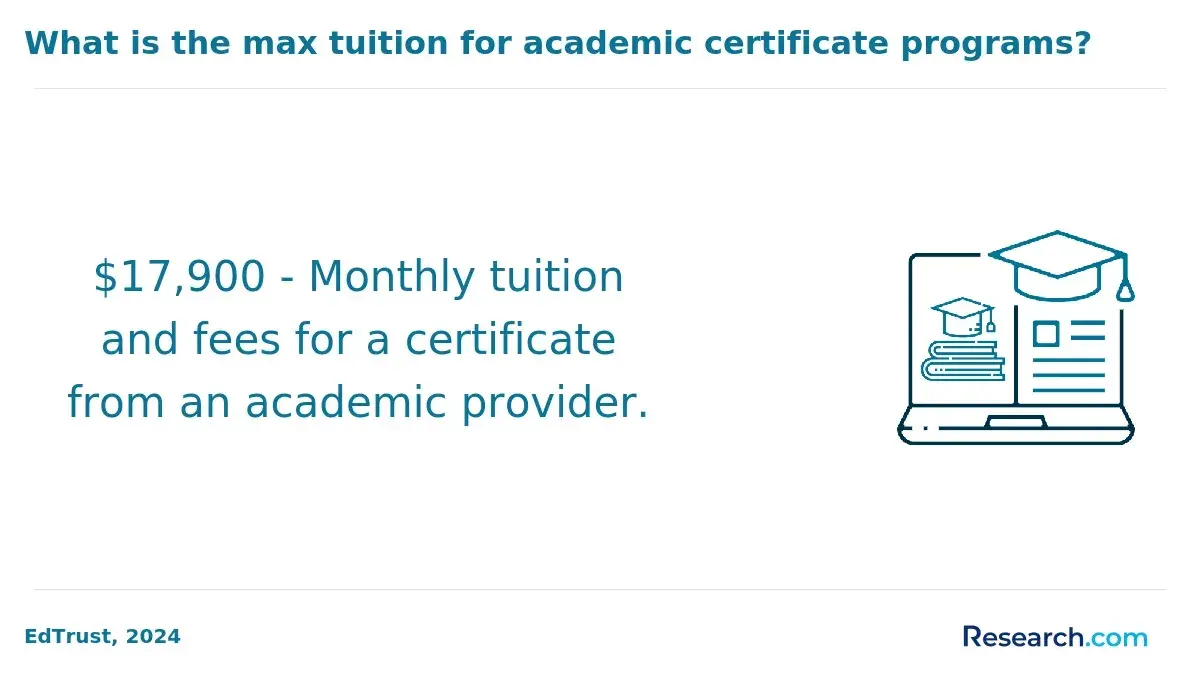
Tuition ranges highlight divergent institutional models: bachelor's degrees fluctuate widely from $80,000 to $170,000, reflecting public versus private status and program depth. Master's degrees cost significantly less, between $40,000 and $90,000, offering a financial advantage for advanced specialization or mid-career pivots. Certificate options exist but usually lack the rigor and recognition necessary for clinical or regulatory roles in environmental health.
Employers regard bachelor's degrees as the entry threshold for many analyst and regulatory positions, making the upfront investment essential for foundational competence. Master's degrees increasingly open doors to specialized disciplines like industrial hygiene or environmental risk assessment, often with less tuition and shorter completion times. A common hurdle is balancing study hours tied to rigorous labs and compliance training against workplace demands. Failure to complete within recommended timeframes can reduce return on investment and hiring competitiveness.
Pragmatic candidates should assess their ability to commit weekly hours and leverage prior coursework or experience credits to shorten duration. This strategic approach can mitigate income loss while optimizing the pathway to roles requiring scientific and regulatory expertise in environmental health.
What environmental health career paths can you pursue with an online environmental science degree?
Career paths stemming from an online environmental science degree demand more than theoretical knowledge; they require integration of practical skills with regulatory and compliance expertise. For instance, a safety manager at a manufacturing plant applies environmental science principles to control air quality risks while ensuring adherence to EPA standards. Similarly, consultants crafting site-specific remediation plans must combine data analytics with environmental regulations to effectively address contamination issues.
Financially, pursuing an online Graduate Diploma in Environmental Health Sciences, such as the University of Queensland's program costing approximately AUD $12,225 for eight subjects, can represent a cost-effective alternative to traditional U.S. campus degrees, particularly for mid-career professionals seeking to pivot without extensive financial burden.
Yet, significant tradeoffs exist. Candidates juggling full-time jobs must balance online study demands alongside acquiring hands-on experience essential for certifications like Certified Industrial Hygienist (CIH) or Registered Environmental Health Specialist (REHS). Employers increasingly expect graduates to demonstrate proficiency in field sampling, regulatory frameworks, and applied data interpretation.
Successful transition into leadership or specialized roles often hinges on evidence of measurable outcomes in environmental risk reduction and completion of integrated practicum experiences. Navigating evolving compliance landscapes governed by OSHA and EPA further complicates this pathway but remains a critical element for employability in government, consulting, or corporate sectors.
- Cost-effective online environmental health diploma as an alternative for career pivots
- Importance of practical skills and certifications beyond degree completion
- Balancing online studies with professional and hands-on training obligations
- Employer emphasis on regulatory knowledge and measurable impact
What salary ranges and earning potential exist in environmental health roles for environmental science graduates?
Salary outcomes for environmental health roles vary significantly based on specialization, location, and credentials, posing critical decisions for graduates weighing educational investments against tangible workforce returns. Entry-level positions typically range from $50,000 to $70,000, while mid-career salaries can climb to $95,000, especially for those with master's degrees or certifications in high-demand areas such as regulatory compliance or industrial hygiene. For example, specialists employed by government agencies or large firms frequently earn over $90,000, showcasing how interdisciplinary expertise in policy enforcement and exposure assessment commands a premium.
Higher-risk sectors like hazardous materials management and occupational safety usually include salary bonuses of around 10%, emphasizing the practical payoff of managing job-related dangers. Conversely, professionals without graduate-level qualifications often encounter slower wage growth and limited progression, particularly within smaller municipal or private organizations.
The expanding availability of online master's programs in environmental studies-at least 17 specialized environmental health options nationally-offers a credible path for working professionals to elevate earning potential by $10,000 to $20,000 over bachelor's-only holders without pausing their careers. However, those focusing on niche fields such as water quality or industrial hygiene face a strategic tradeoff between pursuing specialized certifications, which accelerate salary gains more rapidly, and broader master's degrees that foster versatile advancement across policy and research tracks.
What licenses, certifications, or professional credentials might environmental health professionals need?
Certification requirements shape the environmental health workforce more than many realize, directly influencing career opportunities and salary potential. For example, a professional in hazardous waste management without the Registered Environmental Health Specialist (REHS) or Certified Industrial Hygienist (CIH) credentials will likely face barriers to supervisory roles or regulatory compliance responsibilities. These credentials demand not only a relevant degree but also documented field experience and passage of standardized exams.
State licensing variability complicates credential planning. California's mandate for REHS contrasts with states imposing no formal certification, requiring candidates to strategically align their education and certifications to regional demands. These differences can delay career progress if overlooked.
Employers prioritize candidates with hands-on knowledge of EPA regulations and remediation, underscoring the need for practical focus during environmental science programs. Continuing education compounds this reality, requiring ongoing investment of time and resources to maintain credentials amid evolving environmental laws and technologies.
Those targeting intersections with climate health risk benefit from combining environmental health qualifications with atmospheric sciences certifications-a combination reflected in median salaries of $80,060 for environmental scientists versus $97,450 for atmospheric scientists reported by the U.S. Bureau of Labor Statistics. This wage gap illustrates how interdisciplinary preparation and strategic certification can substantially impact earnings and employability.
Early integration of certification exam prep within online environmental science programs mitigates credentialing delays and aligns job-readiness with jurisdictional standards, a crucial factor for professionals navigating between government, private consulting, or research roles.
How can you compare and choose reputable online environmental science programs for environmental health work?
Choosing an online environmental science program focused on environmental health requires scrutiny beyond surface credentials. Accreditation, while essential for regulatory recognition and certification eligibility, is only a baseline. Candidates should prioritize programs offering substantive coursework in toxicology, epidemiology, and relevant regulatory frameworks that mirror actual occupational demands.
Employment outcomes are the most telling indicator of a program's real-world value. Schools reporting graduate placement rates above 75% within a year typically have stronger employer ties and often include practicum components-especially those connected to public health agencies-that enhance job-ready skills compared to programs relying solely on asynchronous theory.
For working professionals, course delivery flexibility impacts feasibility; asynchronous or evening classes preserve income streams while studying. Given the median environmental health specialist salary of $83,910 and a strong 12% job growth projected through 2034, the ROI hinges on balancing tuition costs with practical outcomes.
Be cautious of programs lacking transparent syllabi or clear industry partnerships, as these gaps can hinder certification processes like the Certified Industrial Hygienist exam. Remote technical support and access to virtual labs are also critical for mastering analytical skills valued by employers.
- Focus on curricula closely aligned with occupational environmental health applications.
- Verify documented graduate employment rates and integration of applied practicums.
- Assess program flexibility relative to your work and life commitments.
Other Things You Should Know About Environmental Science
When selecting between synchronous and asynchronous classes, consider your learning style and schedule flexibility. Synchronous classes offer real-time interaction, ideal for immediate feedback, while asynchronous classes provide more flexibility but require self-discipline. Choose based on your personal and professional commitments.
Fieldwork and lab experience remain critical despite the online format because employers expect practical skills alongside theoretical knowledge. Programs that integrate virtual labs or local field components offer better preparation, but absence of hands-on experiences can hinder readiness for real-world environmental assessments. Prioritize degrees that mandate some form of experiential learning or partnerships with local agencies to meet occupational standards and strengthen your resume in competitive job markets.
Specializations exist but vary in depth and applicability. Selecting a program with a clear environmental health pathway improves your focus on relevant regulations, risk assessment, and occupational safety principles sought by employers. Generic environmental science degrees without focused electives might delay career advancement in specialized roles. Choose programs offering targeted electives or certificates to align your skills tightly with industry demands.
Look for institutional accreditation from a U.S. Department of Education-recognized agency, plus program approval where available. For environmental health careers, employers often value ABET accreditation for science and engineering programs and CEPH recognition for public health-related coursework or concentrations.
References
- Certified Environmental Health Professional - Florida Department of Health https://www.floridahealth.gov/licensing-regulations/regulated-professions/certified-environmental-health-professional/
- What Can You Do With an Environmental Science Degree? https://willamette.edu/academics/college/environmental-science/career-options
- Environmental Health https://www.publichealthdegrees.org/specializations/environmental-health/
- Online Environmental Science Degree | BS Environmental Science | University of Phoenix https://www.phoenix.edu/online-liberal-arts-degrees/environmental-science-bachelors-degree.html
- Introduction to Environmental Science https://www.straighterline.com/online-college-courses/introduction-to-environmental-science/
- Which Health, Safety and Environmental Course is Best? https://www.astutis.com/astutis-hub/blog/how-to-pick-a-course
- New Certifications https://www.nrep.org/certifications
- 13 Best EHS Certifications to Add to Your Resume - Lisam https://www.lisam.com/news/13-best-ehs-certifications-to-add-to-your-resume/
- REP Certification: Registered Environmental Professional Guide https://ehscareers.com/employer-blog/rep-certification-registered-environmental-professional-guide/