2027 Online Environmental Science Degrees With Strong Climate Resilience Training

Co-Founder and Chief Data Scientist
As climate disruption intensifies, environmental science professionals must urgently develop expertise in climate resilience to design adaptive strategies for vulnerable communities and ecosystems. Yet, balancing career demands with advanced education often limits access to comprehensive training. Recent data from the National Center for Education Statistics reveals a 25% rise in online degree enrollment among adult learners since 2023, signaling a shift toward flexible pathways that accommodate working professionals.
This trend reflects growing recognition that traditional semester-based programs inadequately serve those seeking timely skill updates for fast-evolving climate challenges. This article analyzes online environmental science degrees with strong climate resilience components, guiding readers to programs that best align with their career goals and lifestyle constraints.
Key Things You Should Know
- Programs emphasizing climate resilience now integrate geospatial analytics over classical ecology, reflecting a 37% employer preference increase in 2024 for data-literate graduates per the U.S. Bureau of Labor Statistics, shifting workforce demands significantly.
- Graduates from climate-focused environmental science degrees face a tradeoff: specialized training narrows immediate job pools-only 22% of openings explicitly require climate resilience compared to 45% for broader environmental roles, complicating early career placement.
- Rising tuition costs averaging 8% annually for targeted environmental science programs disproportionately impact mid-career entrants, delaying workforce reintegration and yield lower lifetime ROI for degrees exceeding a 30-month completion timeline, per NCES data.
What is an online environmental science degree with a focus on climate resilience?
An online environmental science degree with strong climate resilience training distinctly equips students to address urgent real-world challenges by integrating climate adaptation expertise with core scientific skills. Graduates with this focus tend to meet employer demand for professionals adept at quantifying and mitigating climate disaster impacts, critical as global losses from climate-related catastrophes reached $387 billion in 2024-almost double the previous decade's average.
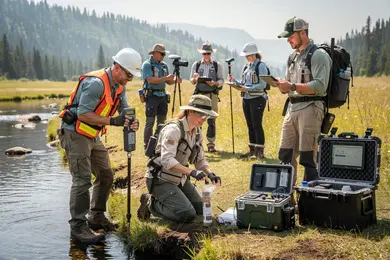
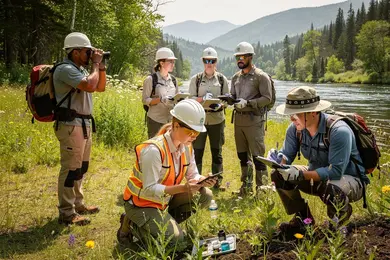
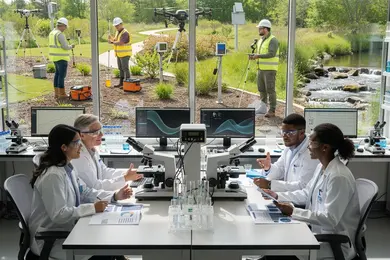
Practical competencies such as geospatial analysis, climate modeling, and policy evaluation tailored to vulnerable sectors (agriculture, urban planning, public health) differentiate candidates in fields like environmental consulting and risk management. These outcomes-oriented programs prioritize experiential learning, often through simulation labs and partnerships with local resilience initiatives, which better prepare students for the complexity of real climate stressors than broadly framed environmental curricula.
Working professionals pursuing an online environmental science degree must weigh accessibility and flexibility; programs offering asynchronous courses with project-based assessments allow direct application of skills on the job, expediting measurable contributions to climate adaptation strategies. The strategic inclusion of climate resilience coursework in environmental science programs is essential for those targeting roles emphasizing disaster risk analysis and mitigation policy implementation.
For those comparing affordability alongside practical benefits, options exist that balance cost and curriculum rigor. Resources like the cheapest online environmental science degree listings provide a realistic starting point, but decision-makers should prioritize program outcomes aligned with long-term employability over mere price.
How do online environmental science programs compare to campus-based options for climate training?
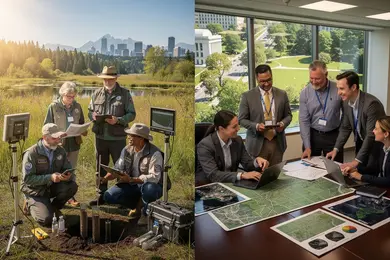
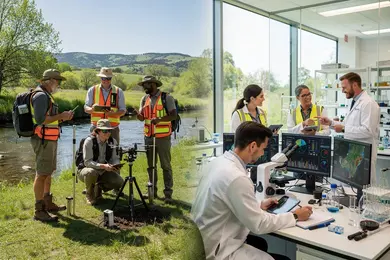
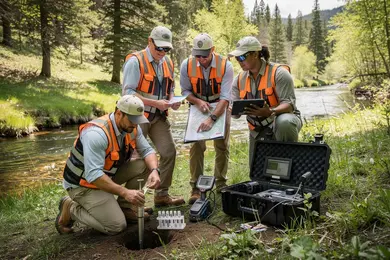
Choosing between campus-based and online environmental science degrees with climate resilience focus in the United States requires weighing tradeoffs in practical training and networking. Campus programs offer direct access to field labs and research centers, equipping students with hands-on skills crucial in environmental data collection and GIS, which are often prerequisites for federal research or academic roles. On the other hand, online programs provide flexibility for working professionals, incorporating virtual labs and adaptable local fieldwork to bridge skill gaps amid personal or geographic constraints.
Workforce data project steady demand for climate resilience expertise, with environmental scientists experiencing 6% job growth through 2032 and about 6,600 annual job openings. Employers in urban planning, disaster mitigation, and sustainability consulting prioritize demonstrable technical skills, often favoring campus graduates' stronger internship pipelines. Online students should proactively seek local applied projects to remain competitive.
Decision-making hinges on career goals and work-life balance:
- Campus programs suit immersive, collaboration-heavy training essential for fieldwork-centric and federal climate policy roles.
- Online degrees fit mid-career professionals needing flexible reskilling but require disciplined engagement to develop project portfolios.
- Median pay for climate resilience environmental scientists is $78,980, reinforcing the value of credentials paired with applied skills.
- Select programs with curricula updated post-2024 to incorporate emerging climate adaptation technologies and policies.
For those considering advanced research paths, exploring a data science PhD online may complement climate resilience expertise in analytical fields where computational skills are increasingly sought.
Which U.S. online environmental science degrees offer recognized accreditation and strong climate curricula?
Online environmental science degrees with a climate resilience focus require discerning evaluation beyond surface appeal. Employers increasingly demand graduates proficient in geospatial analysis, climate risk modeling, and applied policy-skills often underdeveloped in many state universities' offerings. For instance, degrees from institutions like Oregon State University or University of Florida may present updated curricula but sometimes lack the sector-specific rigor needed for roles in ecosystem restoration or urban planning, limiting immediate job readiness in climate resilience sectors.
Programs such as Unity Environmental University's online MS in Climate Change Adaptation and Resilience illustrate a rare model combining regional accreditation with a fixed tuition of $550 per credit through 2030, offering budgeting certainty often absent elsewhere. This financial predictability is a significant advantage for professionals planning long-term investment in education amid generally volatile tuition costs in online environmental science programs. Typical pricing ranges between $500-$700 per credit, reflecting higher costs justified by integration of current climate science and workforce alignment.
Decision-makers must weigh tradeoffs between program reputation, tuition stability, and true curriculum relevance to practical career objectives. Graduates aiming for disaster response or corporate sustainability roles benefit from specialized tracks focusing on resilience strategies employers prioritize. Prospective students should also consider exploring related options such as master of library science online programs if their interests extend to resource management in environmental contexts.
What core courses and specializations emphasize climate resilience in online environmental science programs?
Online environmental science degrees with climate resilience curriculum increasingly prioritize interdisciplinary skillsets that balance scientific assessment with applied policy and management. Core coursework often integrates climate systems science, ecosystem vulnerability, and resilience planning to prepare students for tangible problem-solving in sectors facing climate risks. Specialized tracks such as climate adaptation specializations in environmental science programs emphasize localized policy development-for instance, urban or agricultural resilience strategies aligned with market demand for evidence-driven solutions.
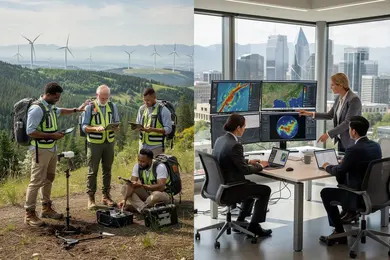
In practical terms, programs incorporating sustainable resource management teach technological tools like GIS and remote sensing, enabling graduates to monitor environmental shifts and inform sustainability initiatives across forestry, water, or fisheries industries. Employers now look for candidates who merge quantitative climate modeling capabilities with knowledge of environmental law and economics, essential to navigate regulatory complexity and drive cost-effective resilience projects.
Between 2020 and 2024, the rapid expansion to eight distinct online climate change preparatory degrees worldwide signals demand for focused, workforce-ready credentials. However, prospective students must weigh curriculum depth and real-world applicability carefully, as not all programs equip learners equally for frontline challenges. Those balancing environmental science skill acquisition with affordability might also consider exploring computer science degrees where technical modeling and data analysis expertise overlap.
What are typical admission requirements for online environmental science degrees in the United States?
Admission to online environmental science degrees demands more than baseline academic records; it requires alignment between prior experience and program expectations to maximize career relevance. Bachelor's programs typically mandate a high school diploma with a GPA around 2.5 to 3.0, though the trend toward test-optional policies lessens standardized testing hurdles. For professionals targeting online master's degrees, a bachelor's in a related field plus at least a 3.0 GPA are standard, ensuring foundational knowledge for advanced climate resilience studies.
Employers and programs alike value evidence of applied skills, so applicants must submit letters of recommendation that speak to research, analysis, or fieldwork capabilities. Personal statements should concretely connect career objectives to practical environmental challenges rather than abstract theory.
For example, a professional transitioning from policy work to sustainability roles should highlight experience in resource management to demonstrate readiness. Reliable technology access is a non-negotiable requirement given the fully online delivery mode, impacting the actual feasibility of program completion.
Applicants should also critically evaluate programs, as the proliferation of online "climate & sustainability" degrees increases the risk of credentials with limited labor market value; rigorous admission standards often correlate with programs that prepare students more effectively for sector demands.
How long do online environmental science programs take, and what do they cost?
Choosing an online environmental science program requires careful weighing of time and financial investment against specific career goals and workforce realities. Undergraduate degrees typically require 2 to 4 years full-time, but many part-time students juggling work extend this up to 6 years, impacting overall costs and career entry timing. Master's programs often last 1 to 2 years, yet accelerated tracks demand 15-20 hours weekly of intensive study, which may not suit all professionals transitioning from unrelated fields.
Tuition spans a wide range-approximately $15,000 to over $60,000-reflecting public versus private institution status and residency. Public online programs generally offer lower rates. Certificate or specialization options, costing $2,000 to $10,000, provide narrower skill credentials centered on climate resilience but limit broader employment opportunities.
Labor market data indicates that green-oriented roles command a 7-10% wage premium over comparable non-green jobs, enhancing ROI for those completing targeted environmental science training. Financial aid and employer tuition reimbursement are increasingly accessible but vary widely, making program flexibility and credit transfer policies critical to minimizing both cost and time-to-completion.
Students entering straight from high school should expect foundational coursework lengthening degree duration and expenses, unlike professionals leveraging prior credits or pursuing focused certifications to pivot efficiently. Evaluating these tradeoffs against long-term employability and workload capacity is essential for selecting the best pathway.
What climate resilience and environmental science careers can graduates pursue with these degrees?
Candidates with online environmental science degrees that emphasize climate resilience must weigh the balance between technical expertise and policy navigation to access meaningful roles in urban planning, disaster risk management, environmental consulting, and public policy advising. For instance, urban planners use climate data to design flood-resistant infrastructure, while disaster management professionals develop coordinated response systems for extreme weather events. This practical application demands skills in climate modeling, vulnerability assessment, and regulatory compliance that often determine employability.
Structured curricula, such as the University of Pennsylvania's Climate Science Certificate requiring courses in atmospheric science, climate change, disaster management, and global environmental issues, reflect employer expectations for grounded competencies. Yet, graduates face a tradeoff: specialization in data analysis offers depth, but broader strategic roles require cross-sector collaboration and policy literacy. Those without hands-on experience in climate impact tools frequently struggle in consulting jobs prioritizing solution implementation.
Regional labor market variations affect opportunity-growth is concentrated in coastal and wildfire-sensitive areas-so geographic flexibility influences outcomes. Additionally, continuous upskilling is mandatory as evolving federal and state regulations reshape resilience planning demands. Professionals who combine scientific rigor with practical regulatory navigation remain best positioned for upward mobility in these climate-focused fields.
- Urban planners and disaster managers apply climate data for infrastructure and emergency response design.
- Demand centers on skills in climate modeling, vulnerability assessment, and policy compliance.
- Tradeoffs exist between deep scientific specialization and integrated policy-strategy roles.
- Local labor markets show resilience job growth tied to climate risk geography.
- Ongoing skill development is essential due to changing regulatory frameworks.
What salary ranges and earning potential exist for climate resilience and environmental science roles?
Salaries in climate resilience and environmental science roles vary widely based on experience, sector, and specialization, ranging from around $55,000 for entry-level technicians to over $120,000 for senior professionals in consulting or federal agencies. Mid-career scientists focusing on climate resilience typically see compensation between $75,000 and $95,000. Such variability reflects real-world hiring practices where private sector roles often offer higher pay but less stability compared to public sector positions.
Credential choices shape career trajectories significantly. For instance, a graduate microcertificate in climate resilience from the University of Arkansas requires 24 weeks and stacks into a full master's online in about 1.5 years. This pathway accelerates access to higher-paying roles while minimizing time out of the workforce, unlike traditional master's degrees, which may better position professionals for executive opportunities but demand greater investment.
Employers seek candidates who merge technical proficiency-such as climate modeling and resilience planning-with practical field experience and regulatory knowledge. Environmental consultants with advanced climate resilience training often negotiate contracts in the $70,000 to $110,000 range, depending on project scope. Public sector employees face salary limits but benefit from job security and comprehensive benefits.
Additional credentials in data analytics or GIS notably enhance employability and earning potential, given current market demand for interdisciplinary skills. Professionals should evaluate stacked certifications to balance immediate workforce entry against long-term career advancement within climate resilience labor markets.
What certifications, licenses, or professional credentials align with climate resilience careers?
Certifications like Certified Climate Resilience Practitioner (CCRP) and Leadership in Energy and Environmental Design (LEED) directly tie to job qualifications in climate resilience by verifying critical skills in risk assessment, mitigation strategy, and sustainable infrastructure implementation. For example, a mid-career urban planner aiming to lead adaptive infrastructure projects needs these credentials to demonstrate competency beyond typical environmental science degrees.
Licenses such as Professional Engineer (PE) with an environmental focus or Certified Floodplain Manager (CFM) are commonly mandated for government roles involving climate adaptation projects, reflecting employer preferences for credentialed practitioners in regulatory and infrastructure domains.
These certifications demand applied knowledge verified through practical experience and continuing education, distinguishing credentialed applicants in competitive markets. Programs that incorporate scenario-based climate risk modeling and digital resilience planning tools-like those in the UC Climate Resilience Initiative curriculum-better prepare candidates for hands-on licensure requirements and real-world problem solving.
Tradeoffs include significant time and financial investment beyond a bachelor's degree, affecting how fast candidates enter the workforce versus the strategic advantage of certified expertise. Employers prioritize certified professionals for their ability to manage compliance and translate climate data into actionable, adaptive strategies.
How can students evaluate and choose a reputable online environmental science program?
Evaluating online environmental science programs demands scrutiny beyond accreditation to include curriculum relevance and tangible graduate outcomes. Accreditation signals baseline quality but does not guarantee specialized training critical for climate resilience roles. For example, a professional aiming to manage coastal adaptation must choose programs that cover technical elements like sea-level rise modeling rather than general sustainability concepts.
Graduate employment rates and formal employer partnerships reveal a program's direct alignment with workforce needs. Programs offering internships and applied research with industry connections facilitate faster integration into sectors such as environmental consultancies or government agencies. Those integrating data analytics with resilience principles respond better to employer demands for advanced quantitative skills.
Logistical considerations influence program suitability: asynchronous courses accommodate working professionals better, while synchronous sessions may benefit full-time students seeking interactive learning. Faculty with active climate resilience research experience provide instruction that reflects current challenges and evolving mitigation strategies.
The surge in enrollments for climate science-related programs since 2020, increasing by over 50% on major U.S. e-campus platforms, intensifies competition but also exposes students to programs capitalizing on demand without substantive skill development. Selecting rigorously vetted programs offering clear pathways to employment is essential for those pivoting careers into climate resilience.
- Prioritize programs integrating climate adaptation and resilience methodologies tailored to your targeted specialization.
- Evaluate graduate employment data and employer collaborations for practical workforce alignment.
- Balance course delivery formats with personal scheduling constraints and learning preferences.
Other Things You Should Know About Environmental Science
The choice between research-heavy and practice-oriented online environmental science programs depends on your career goals. Research-focused degrees typically involve more theoretical coursework and often require a thesis, which suits those aiming for roles in policy analysis, academia, or governmental research agencies. Practical programs prioritize applied skills with internships or project-based learning, which aligns better with immediate employment in environmental consulting, conservation, or sustainability roles. For career pivots targeting the job market, prioritizing programs with applied climate resilience training and hands-on experience will yield better employment outcomes.
Yes, employers in climate resilience heavily emphasize technical skills like Geographic Information Systems (GIS) and quantitative data analysis. These competencies are standard across environmental science roles tied to resilience planning, hazard assessment, and resource management. Prioritize programs embedding these skills in core or specialization courses, as they increase employability and the ability to contribute directly to climate adaptation projects. Skipping technical training limits career flexibility and advancement potential in the field.
Most programs require a completed application, official transcripts, a résumé, a statement of purpose, and one to three letters of recommendation. Some schools also ask for prerequisite coursework in biology, chemistry, or statistics, plus a 2.75 to 3.0 minimum GPA for admission to a 2027 online environmental science degree.
References
- Choosing a bachelor's in environmental science | edX https://www.edx.org/resources/how-to-choose-a-bachelors-in-environmental-science
- Essential Guide to the Climate Change Analyst Position https://enable.green/esg-roles/green-energy-careers/climate-change-analyst/
- Climate Adaptation and Mitigation Careers - NWF EcoLeaders https://www.nwfecoleaders.org/careercenter/climate-adaptation
- Online Master in Climate Change and Sustainability https://www.euclid.int/online_master_climate_change/
- Top 15 Environmental Science Colleges https://www.collegeadvisor.com/resources/environmental-science-colleges/
- Climate Resilience https://wit.edu/academics/sciences-humanities/degrees/undergraduate/climate-resilience
- Online Environmental Science Degree | BS Environmental Science | University of Phoenix https://www.phoenix.edu/online-liberal-arts-degrees/environmental-science-bachelors-degree.html
- Is Online Learning Better for the Planet? - The National Wildlife Federation Blog https://blog.nwf.org/2009/05/is-online-learning-better-for-the-planet/
- 99 sustainability certifications for 2026 https://trellis.net/article/99-sustainability-certifications-for-2026/