2027 Online Environmental Science Degrees With Broad Environment and Sustainability Mobility

Co-Founder and Chief Data Scientist
Professionals aiming to enter or advance within environmental science face the challenge of balancing career momentum with educational demands amid increasing workforce specialization. The 21% rise in online degree enrollment for adult learners reported by the National Center for Education Statistics signals a shift in how nontraditional students access higher education, emphasizing flexibility and program mobility.
This trend reflects the need for credentials that accommodate work schedules and geographic constraints without sacrificing practical skill acquisition. Understanding how broad environment and sustainability-focused online degrees address these demands can inform strategic choices for those navigating career pivots or advancement.
This article evaluates current online environmental science degree options designed for broad mobility across environmental and sustainability sectors to guide informed educational investments aligned with professional goals.
Key Things You Should Know
- Data from the U.S. Bureau of Labor Statistics shows a projected 8% job growth in environmental science roles by 2032; however, graduates must balance interdisciplinary depth with specialization tradeoffs to meet employer demand for actionable expertise.
- Industry surveys reveal that employers prioritize candidates with tangible sustainability project experience over general environmental theory, influencing degree programs to integrate practical, cross-sector mobility skills for workforce relevance.
- State university tuition hikes averaging 5% annually since 2023 increase total degree costs by 15%-20% over four years, pressuring candidates to weigh accelerated online degree tracks against potential income disruption and credential rigor.
What is an online environmental science degree and how does it support sustainability careers?
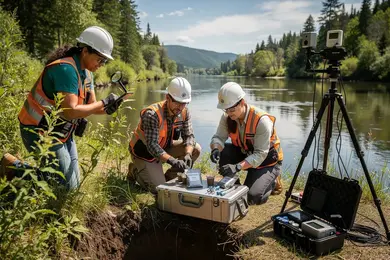
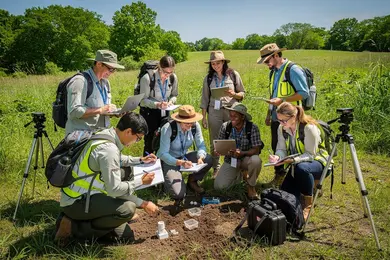
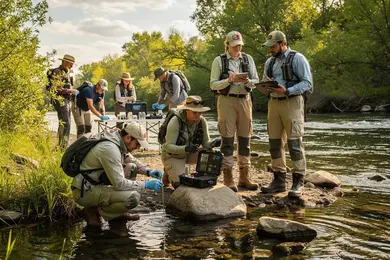
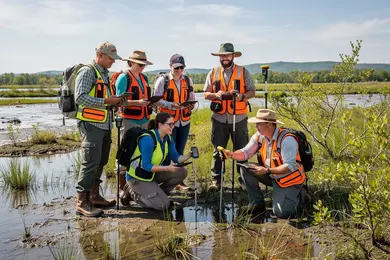
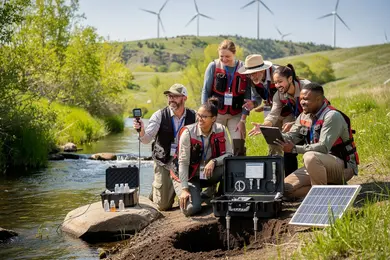
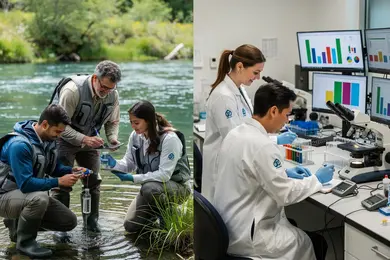
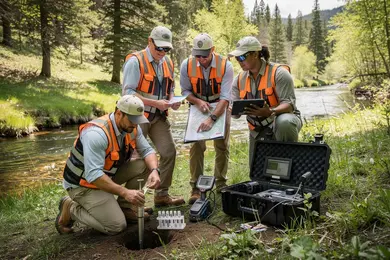
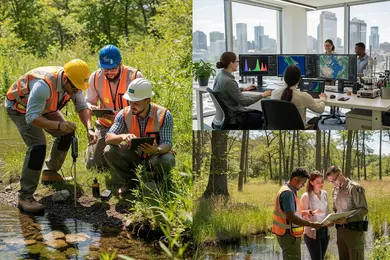
Online environmental science degree programs focused on sustainability careers demand critical tradeoffs between accessibility and experiential learning. Graduates must often compensate for limited hands-on lab opportunities with virtual methodologies, which can restrict familiarity with field sampling unless supplemented by internships or external work.
For example, urban planners leverage this training to align infrastructure with environmental regulations while promoting sustainable development, whereas those in the energy sector focus on emission reduction and resource efficiency.
The absence of in-person components intensifies the need for programs to embed industry-relevant internships or partnerships, crucial for translating theoretical knowledge into applied skills. Employers consistently identify this gap during hiring, impacting job placement success. Prospective students should therefore prioritize programs integrating robust practicum elements alongside analytics and policy coursework to meet workforce expectations in environmental compliance and sustainability.
Employment growth for environmental scientists and specialists is projected at 6% from 2022 to 2032, adding approximately 4,800 positions nationwide, which reinforces the degree's practical relevance for professionals aiming to pivot into sustainability roles. The online format also cultivates adaptability through focused training in self-directed research and data modeling, competencies increasingly valued as remote collaboration expands in environmental projects.
For students exploring pathways with geographic data integration, evaluating colleges with GIS programs enhances qualifications for roles requiring spatial analysis within sustainability frameworks. Such specialization complements environmental science training by equipping graduates with essential geospatial skills for regulatory and resource management positions.
How do online environmental science programs compare to campus-based degrees in quality and outcomes?
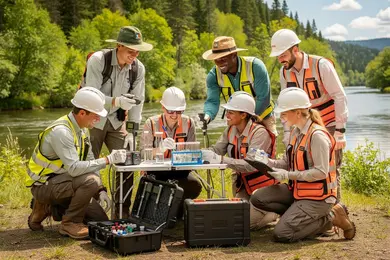
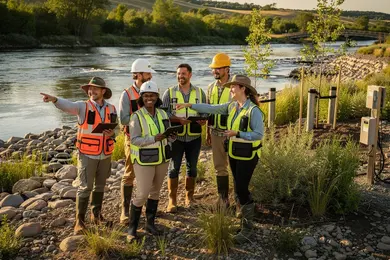
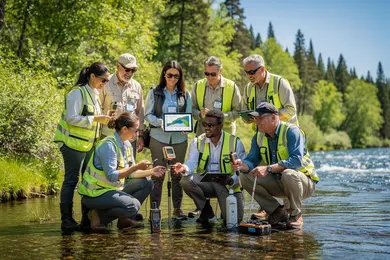
Online environmental science degree quality comparison hinges on practical exposure, which remains a key differentiator from campus programs. While theoretical rigor is largely equivalent, online students face the challenge of securing local field placements or attending hybrid intensives to gain necessary hands-on experience critical for roles in environmental consulting or government agencies.
Employers notably favor candidates demonstrating applied skills, often verified through internships integrated into traditional campuses. The median annual wage for environmental scientists and specialists is $80,060, with the upper 10% earning over $134,000, indicating solid career potential regardless of delivery mode.
Student outcomes from online versus campus environmental science programs critically depend on institutional resources supporting remote labs, virtual simulations, and access to real-world projects. Candidates transitioning from other careers particularly benefit from customizable applied research components that avoid relocation.
Conversely, those without previous field experience encounter hiring disadvantages if programs lack practical integration. Workforce mobility correlates strongly with program reputation and accreditation, which shape employer acceptance of online credentials within competitive hiring.
Evaluating program value requires scrutiny of how well online offerings incorporate:
- Access to regional environmental case studies and monitoring projects
- Partnerships with local agencies for hands-on internships
- Virtual labs and GIS software proficiency training
- Career counseling tailored to environmental fields
Prospective students pursuing an environmental science degree online should also consider cost-efficiency patterns, similar to data science degree online, to balance investment with practical return.
Which types of accredited environmental science degrees are available fully online in the U.S.?
Selecting accredited online environmental science degree programs in the U.S. requires a careful balance of curriculum rigor and hands-on experience essential for workforce relevance. Fully online bachelor's and master's environmental science degrees available in the United States often cover core topics such as ecology, GIS, data analysis, and environmental policy but differ significantly in their incorporation of applied components like virtual labs or remote internships.
For professionals targeting roles like hydrologists or conservation scientists, the absence of practical fieldwork and GIS software proficiency in some online programs can restrict employability. For instance, hydrologist roles typically demand direct experience in field sampling and technical GIS skills, which are often better developed in hybrid settings. Therefore, graduates of purely online programs must weigh the tradeoff between convenience and gaining these vital competencies.
Salary data reflects these distinctions: median wages reach approximately $92,060 for hydrologists and $67,950 for conservation scientists, emphasizing the necessity of targeted graduate education or certifications to stand out. Prospective students should prioritize programs that integrate relevant technical training and industry-recognized credentials to justify their investment.
Available pathways include associate to master's levels, with bachelor's programs primarily structured for recent high school graduates or career changers seeking foundational applied knowledge.
Those exploring accelerated paths might also consider options like an accelerated bachelor's degree computer science online to complement environmental data analysis skills, which are increasingly important in the field.
What courses and specializations are typically offered in online environmental science curricula?
Specialized online environmental science degree specializations in North America focus on practical alignment with distinct career trajectories rather than broad theoretical curricula. For instance, students targeting federal environmental agencies must master regulatory frameworks and geographic information systems (GIS), while those aiming for private sector roles typically emphasize corporate environmental compliance and sustainability practices. This differentiation directs student effort efficiently but requires careful program selection to fit career intentions.
Typical courses in sustainable environmental science programs blend foundational knowledge in ecology, chemistry, geology, and environmental policy with advanced topics like remote sensing, toxicology, renewable energy, and quantitative methods such as statistics and modeling. Such rigor supports roles from environmental engineers, whose job growth is projected at 6.1% by Degrees for Good's 2024 occupational outlook, to technicians focusing on instrumentation and environmental regulations.
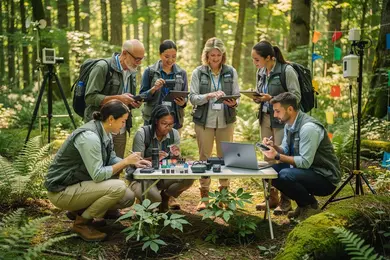
Online formats introduce tradeoffs: limited access to fieldwork and internships can impede skill development essential for workforce readiness and upward mobility. Programs partnering with local agencies or industries partially close this gap, but prospective students must weigh logistical challenges realistically.
Practical, hands-on virtual labs and project-based modules simulate real-world challenges like data collection and environmental impact assessment. Conservations science roles, growing at 4.0%, demand interdisciplinary coursework connecting biology and forestry, contrasting with technician positions growing at 6.0% that prioritize technical instrumentation.
Prospective students navigating this pathway should also consider related fields such as the online electrical engineering degree for military veterans for potential complementary skills and expanded labor market opportunities.
What admission requirements and prerequisites do online environmental science programs usually expect?
Applicants to online environmental science programs face a dual challenge: meeting academic prerequisites while navigating employer demands for scientific competence. Most programs require a high school diploma or equivalent with a GPA typically between 2.5 and 3.0. Additionally, completing foundational courses in biology, chemistry, algebra, and sometimes physics is standard, reflecting the discipline's practical requirements. For those lacking these, remedial classes or conditional acceptance extend study time and raise overall costs.
Standardized test requirements have relaxed in many programs but remain in place for some competitive tracks, influencing admission outcomes. Beyond grades, admissions committees often weigh letters of recommendation, statements of purpose aligned with environmental career objectives, and resumes demonstrating relevant internships or job experience.
Consider a mid-career professional pivoting to environmental consulting: despite relevant work history, the absence of foundational coursework can trigger delays due to remediation or certification gaps, hindering immediate workforce entry. Employers prioritize early proficiency in data analysis and scientific principles because retraining costs impact both hireability and advancement.
Moreover, more affordable online bachelor's options identified by OnlineU emphasize upfront prerequisite completion to maximize return on investment without falling into remediation traps. This tradeoff, a lower tuition but stringent foundational demands, highlights the practical realities applicants must balance when selecting a pathway.
How long do online environmental science degrees take and what do they cost to complete?
Completing an online environmental science degree requires navigating a balance between program length, cost, and workforce demands. Associate degrees typically take around two years, whereas bachelor's degrees require approximately four years full-time.
These timelines can shift with part-time or accelerated options. Graduate master's programs often span 18 to 24 months but may extend up to three years if pursued alongside full-time work. This duration influences not only tuition costs but the timing of reentering or advancing within the workforce.
Tuition varies notably. Public universities usually charge between $7,000 and $15,000 annually for in-state students, while private institutions command $25,000 or more. Although online study reduces some expenses such as commuting, tuition remains the primary financial consideration. Employers frequently require at least a bachelor's degree for mid-level environmental positions, making the investment in a four-year program a practical necessity for many seeking roles in consulting, government, or non-profits.
Prospective students must weigh:
- Time commitment versus immediate career objectives
- Part-time master's options with strong practicum components favor hands-on experience valued by employers
- Costs in relation to projected income changes, especially if reducing work hours during study
Programs with updated curricula aligned to current environmental policy and technologies improve employability and job security in this rapidly evolving sector.
What environmental science and sustainability careers can you pursue with an online degree?
Choosing an online environmental science degree with integrated tracks in sustainability, policy, or business involves weighing specialization against versatility in a competitive labor market. Graduates focusing on environmental policy often find roles in government or nonprofits shaping and enforcing emission regulations. In contrast, business-track alumni typically engage in corporate sustainability functions, including supply chain management and ESG reporting, areas that require fluency in investor-driven metrics and compliance frameworks.
Scientific tracks lead to careers emphasizing technical proficiency such as environmental consulting, resource management, or data analysis. These roles demand mastery of regulatory updates and measurement methodologies, unlike broader sustainability analyst positions that prioritize impact assessment through business tools.
Practical experience is a critical differentiator, yet coordinating requisite internships or fieldwork remotely can present logistical barriers. Prospective students should confirm program support for local placements, as hands-on exposure influences employability and advancement potential.
The successful navigation of this pathway hinges on aligning credentials with employer expectations, including certifications and data analytics skills, to meet diverse sector demands. Ultimately, the choice of track impacts not only initial job placement but also longer-term career trajectories in a field shaped by intersecting scientific and socio-economic factors.
What salary ranges and job outlook should environmental science graduates realistically expect?
Environmental science graduates face a wide salary range largely determined by sector and skill set, with median earnings from $50,000 to $90,000. Those leveraging analytical and technical skills, such as GIS or programming, can access higher-paying roles outside traditional environmental consulting, notably in data science roles connected to the field.
For example, data scientist positions related to environmental sciences report a median salary of $120,230 and 33.5% projected job growth, according to Arizona State University Online's 2026 career data. This crossover into technology highlights a practical pathway for graduates willing to invest in interdisciplinary competencies.
Conversely, purely field-focused roles in conservation or policy enforcement typically offer lower salary ceilings and more geographic constraints, often tied to localized regulatory environments. These tradeoffs require candidates to balance immediate earning power against career stability and location preferences. Urban and tech-centric hubs present greater opportunities for dynamic career advancement, whereas rural settings limit mobility and income flexibility.
Graduates lacking technical proficiency often encounter prolonged job searches and slower advancement, underscoring employer demand for data analysis and sustainable business skills. Strategic skill augmentation broadens marketability and income potential, making geographic and sectoral mobility functions of both expertise and willingness to adapt. Practical career planning thus involves weighing these real-world workforce dynamics alongside salary expectations and personal circumstances.
How do accreditation, program reputation, and licensing affect environmental science career mobility?
Having an accredited environmental science degree directly shapes eligibility for specialized roles and affects employer trust, particularly in regulatory or federally funded sectors. Without recognized accreditation, candidates often face exclusion from positions requiring demonstrated academic rigor, such as environmental health officers or ecological assessors. Employers prioritize program reputation linked to documented graduate outcomes and industry connections when evaluating applicants for sensitive roles.
Licensing requirements vary across disciplines and states, influencing career trajectory and job accessibility. For example, becoming a licensed environmental health officer usually demands completion of accredited coursework aligned with state criteria and passing specific licensing exams. Failing to verify that an online program meets these prerequisites can cause costly delays or disqualification after graduation.
Key considerations include:
- Confirming program accreditation recognized by relevant licensing boards before enrollment
- Assessing alignment between curriculum and state-specific licensing requirements
- Researching workforce demand and employer expectations within target sectors
Neglecting these factors risks limiting eligibility for positions that require certification or licensing, restricting upward mobility and salary growth. Programs that systematically track graduate outcomes, such as LSU Online, provide valuable data for realistic career planning across environmental science subfields.
How can you evaluate and choose a credible online environmental science program that fits your goals?
Selecting an online environmental science program hinges on verifying accreditation recognized by U.S. Department of Education or Council for Higher Education Accreditation bodies, as employer trust correlates strongly with this validation. Career changers aiming for environmental policy or ecosystem management roles must prioritize programs that integrate advanced coursework with direct internship or agency partnerships.
For example, professionals transitioning to environmental consulting should confirm the curriculum includes applied training such as GIS or environmental impact assessment tools, which employers expect alongside scientific theory.
Short certificate programs, increasingly accessible to those with a high school diploma, offer efficient entry points into sustainability coordination or compliance monitoring roles due to their focused curriculum and growing employer acceptance. However, these credentials often trade depth for speed and may limit long-term advancement in scientific or regulatory careers.
Job placement outcomes and alignment with the latest EPA or NOAA standards are essential for ensuring skills remain current and marketable. Balancing cost, flexible pacing, and integration of environmental policy frameworks is critical, especially for working professionals maintaining employment while studying.
Other Things You Should Know About Environmental Science Degrees
Hands-on experience remains essential in environmental science despite the online format. Many programs incorporate virtual labs, case studies, or local fieldwork requirements to compensate for the lack of on-campus labs. However, programs lacking direct practical components may limit your preparation for technical roles or field positions. Prioritize programs that explicitly integrate experiential learning or offer partnerships with local organizations to ensure your skills align with employer expectations.
Many 2027 online environmental science programs require 120 credit hours, and internship or practicum work is often 3 to 6 credits. Schools may accept paid environmental work, field research, or agency placements, but the site supervisor and faculty advisor usually must approve the plan before registration.
Choosing between specialization and broad knowledge depends on your career goals and mobility plans. A specialized degree provides deeper expertise in areas like sustainability, policy, or ecology, which can strengthen candidacy for niche roles but may limit flexibility if career goals shift. Broad environmental science programs enhance adaptability, enabling easier transitions across multiple sectors but might lack depth for advanced technical positions. For maximum long-term mobility, prioritize programs that offer foundational breadth with optional specialization tracks.
References
- Introduction to Environmental Science https://www.straighterline.com/online-college-courses/introduction-to-environmental-science/
- Online Environmental Science Degree | BS Environmental Science | University of Phoenix https://www.phoenix.edu/online-liberal-arts-degrees/environmental-science-bachelors-degree.html
- Beyond Recognition: How Accreditation Impacts Career Mobility and Leadership Credibility - Acacia https://acacia.edu/blog/beyond-recognition-how-accreditation-impacts-career-mobility-and-leadership-credibility/
- 2025 Most Affordable Online Environmental Science Degrees https://www.onlineu.com/most-affordable-colleges/environmental-science-degrees
- 16 Best Colleges for Environmental Science | HelloCollege https://sayhellocollege.com/blog/best-colleges-for-environmental-science/
- Environmental Science Courses & Degrees https://www.open.edu.au/study-online/science/environmental-science
- Online Environmental Science Degrees: Compare Schools https://www.degreesforgood.org/online-degrees/environmental-science/