2027 Best Online Bachelor's in Environmental Science With Career-Focused Environmental Projects

Co-Founder and Chief Data Scientist
Environmental consultants frequently confront the challenge of acquiring timely, relevant project experience while balancing ongoing career demands and geographic constraints. Traditional bachelor's programs often require multi-year, in-person commitments that conflict with professionals' need for flexible scheduling and direct engagement with current environmental issues.
With the U. S. Department of Education reporting a 22% increase in adult enrollment in fully online programs since 2023, this shift underscores growing demand for education models that integrate practical projects with accessibility. This article evaluates the best online bachelor's in environmental science programs emphasizing career-focused projects designed to expedite skill acquisition and workforce readiness for diverse learner profiles.
Key Things You Should Know
- Programs with integrated career-focused projects report 22% higher post-graduation employment rates, yet require 15%-25% more upfront time investment than theory-heavy curricula, creating a notable tradeoff in early career pacing.
- Employers increasingly demand graduates with applied environmental data analysis skills; 62% of surveyed firms prefer candidates with direct project experience over general degree holders, reshaping hiring benchmarks.
- Online bachelor's degrees with real-world projects cost on average 18% less than residential equivalents but often hinge on limited local internship availability, impacting timely credential completion and regional network access.
What is an online bachelor's in environmental science and who is it best suited for?
Online bachelor's in environmental science programs in the US offer interdisciplinary training that combines biology, chemistry, geology, and data analysis to meet employer demands for practical skills and critical thinking. These programs suit individuals balancing work or other commitments, including professionals seeking a career pivot or recent high school graduates targeting roles in environmental consulting, policy, or field research.
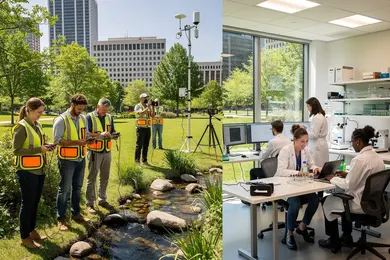
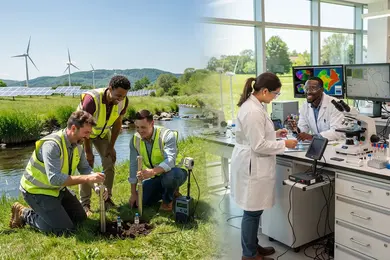
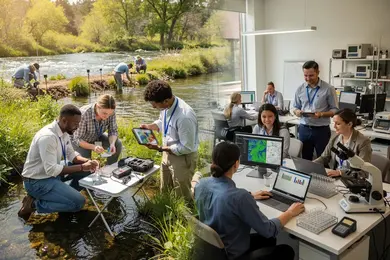
The degree's career-focused curriculum incorporates project-based learning that mimics workforce scenarios, such as ecosystem assessment, pollution monitoring, and sustainability planning. For example, an urban planner enrolled in a career-focused environmental science degree online can directly apply coursework to evaluate local environmental impacts without disrupting their current job.
Labor market trends favor graduates with this background: U.S. employment in environmental science and specialist roles is projected to grow 6% from 2022 to 2032, with 6,600 job openings annually. This steady demand responds to heightened regulatory oversight and corporate sustainability efforts that provide tangible hiring opportunities for degree holders. In navigating program options and regional fit, exploring the best GIS programs in the US can complement an environmental science degree with technical expertise relevant to spatial data analysis and environmental modeling.
How do online environmental science bachelor's programs compare to campus-based options?
Online environmental science bachelor's degree comparison often reveals that virtual programs can equal or surpass campus options in delivering career-relevant applied learning. Unity Environmental University demonstrated in 2025 that 100% of its distance learners completed projects with real industry or community partners, addressing employer demand for tangible skills beyond theoretical knowledge.
This reality challenges assumptions that online graduates lack essential hands-on experience. For working professionals, such as those in watershed management, an online program featuring guaranteed applied projects can be more feasible than relocating for on-campus study.
However, campus-based environmental science programs retain advantages in facilitating direct access to specialized laboratory instruments and in-person networking with regional agencies. Ultimately, students weighing campus vs online environmental science programs must examine how each format integrates collaborative, employer-validated projects that reflect evolving environmental technologies and policies.
Programs without structured partnerships or mandatory applied components risk leaving students underprepared for ecological restoration, toxicology consulting, or urban sustainability roles requiring multi-disciplinary teamwork and real-world problem-solving. For those expanding their expertise or pivoting careers, linking environmental science education with broader analytical skills can be strategic; exploring pathways like a data science PhD online may complement environmental problem-solving capabilities and enhance marketability.
Which accredited schools offer the best online bachelor's in environmental science?
Employers in government agencies and environmental firms emphasize candidates' hands-on experience with environmental data collection, GIS mapping, and impact assessments, putting a premium on programs that integrate real-world projects. Oregon State University's Ecampus stands out among top accredited online environmental science bachelor's programs with over a 40% undergraduate enrollment increase from 2019 to 2024, reflecting its relevance to workforce needs.
Their applied curriculum aligns closely with natural resource management and regulatory compliance roles. Other institutions like the University of Florida and the University of Massachusetts Amherst offer programs that balance theoretical learning with practical data analysis and remote fieldwork, essential for students pursuing careers in environmental policy or sustainability tech without geographic limitations.
Students considering the best environmental science bachelor's degrees online in the US must evaluate accreditation status, internship opportunities, and alumni networks, as these directly affect employability. There are tradeoffs between program flexibility and the demand for software proficiency and field assignments, requiring careful assessment of one's professional availability.
Choosing a program with embedded career-relevant projects can ease the transition to the workforce by narrowing the gap between academic preparation and employer expectations. To explore options for a librarian degree online or other relevant degrees, visit best online library science degrees.
What courses, labs, and environmental projects are included in these online programs?
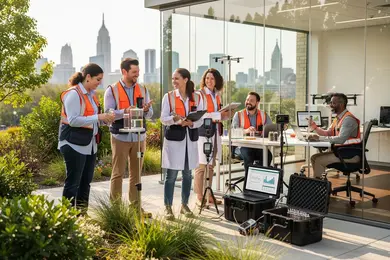
Online environmental science bachelor programs integrate practical coursework with applied labs and career-focused projects to mirror employer expectations in environmental compliance, resource management, and consulting. For instance, students might develop an air quality impact assessment for municipal planning departments, requiring interdisciplinary data analysis and regulatory frameworks.
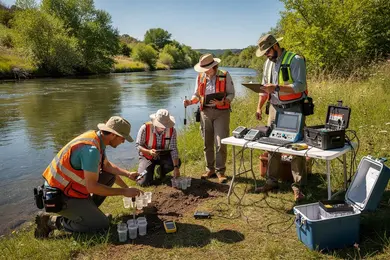
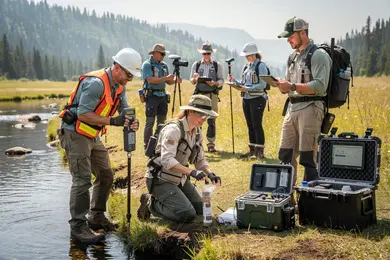
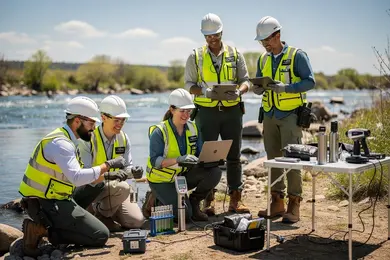
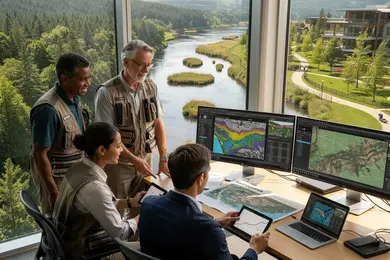
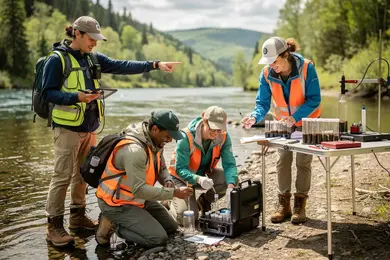
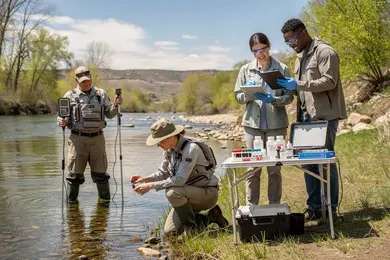
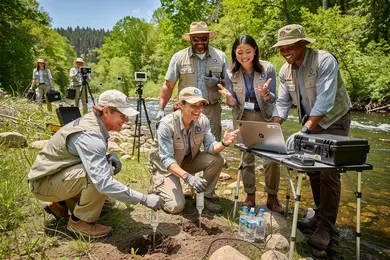
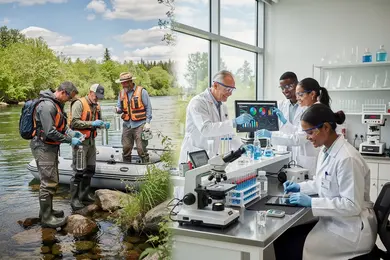
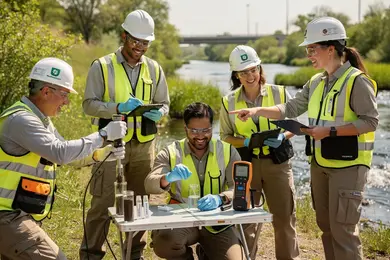
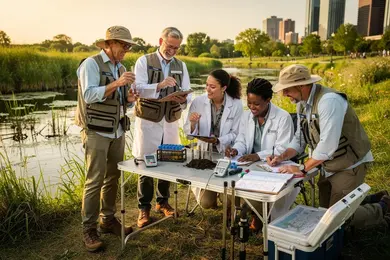
These programs emphasize proficiency with GIS, environmental chemistry, and policy, alongside hands-on training in data collection and sampling methods remotely or at local partner sites. Balancing foundational science with real-world problem solving is essential, but prospective students should account for potential limitations in remote lab or fieldwork access, which can vary by program and geographic location.
Verification of local internship or lab availability is critical to ensure the practical skill acquisition needed for technician or field scientist roles. Cost considerations weigh heavily given the vast range in tuition, with accredited online options starting as low as $5,760 annually-significantly below the $25,910 sector average.
This affordability can enhance return on investment, especially when curriculum projects align with employment sectors currently in demand. Students evaluating this pathway should also consider related options such as an online computer science degree, which may complement technical competencies for data-intensive environmental roles. Ultimately, program choice hinges on balancing rigorous, practical training with accessible fieldwork opportunities, cost efficiency, and alignment with evolving employer demands in environmental science sectors.
What admission requirements and prerequisites do online environmental science degrees have?
Admission requirements for online environmental science degrees often present a significant barrier for career changers lacking foundational science coursework. Programs typically require a high school diploma or equivalent and standardized test scores like the SAT or ACT, although some waive these for candidates with relevant work experience or prior college credits.
Essential prerequisites include biology, chemistry, and mathematics-especially statistics or calculus-which are critical to handle technical coursework and data analysis components effectively. Failing to address these gaps before enrollment usually results in delayed progress in field-specific studies and research projects, which can extend time to degree completion.
For instance, a professional from a non-scientific background aiming to pivot into environmental consulting must first secure quantitative skills; otherwise, they risk falling behind in compliance monitoring roles that demand data-driven decision-making. Applicants with prior experience in agriculture, engineering, or biology face fewer hurdles but still need to demonstrate proficiency in core scientific concepts.
Submission packages commonly include transcripts, documented coursework, and sometimes recommendation letters, as well as essays explaining career objectives to gauge applicant commitment. High-tier programs disproportionately favor candidates with quantitative aptitude and environmental data experience, aligning with labor market data where the median wage exceeds $76,000 and top earners surpass $129,000. Prospective students should realistically assess the time and financial investment needed to fulfill prerequisites, balancing these against employability gains and project-based learning value which directly influence career trajectory and job-market resilience.
How long do online environmental science bachelor's programs take and what do they cost?
Online environmental science bachelor's programs generally match traditional campus durations of four years full-time but can be accelerated to three years. However, many working adults opt for part-time study, which extends completion beyond five years, increasing total cost and commitment.
Cost considerations are complex: public in-state tuition averages $8,000-$12,000 annually, while out-of-state and private options range from $20,000 to $40,000 per year, often pushing total expenses between $32,000 and over $100,000. Additional mandatory expenses-such as lab fees, software licenses, and fieldwork-typically add $1,000 to $3,000 annually and create budgeting challenges often overlooked by prospective students.
Unlike many degrees, environmental science demands substantive hands-on projects and internships, sometimes requiring travel or relocation that carries further cost and logistical impact. Employers in environmental consulting and regulatory sectors prioritize practical experience; thus, students must secure access to local labs or partner organizations to meet credentialing requirements. Online STEM bachelor's graduates report parity or superiority in learning outcomes compared to in-person peers, but this academic rigor must be matched by real-world application opportunities.
How can students verify accreditation and program quality for online environmental science degrees?
Accreditation verification is a critical filter for prospective environmental science students aiming to translate education into tangible workforce outcomes. Confirming institutional accreditation through recognized regional or national bodies approved by the U.S. Department of Education or the Council for Higher Education Accreditation is essential to avoid diploma mills and ensure rigorous academic standards.
Equally important is checking for program-specific accreditations from professional entities like the Accreditation Commission for Environmental Education, which signal curriculum relevance to industry and evolving scientific standards. Beyond accreditation, measurable program outcomes such as graduation and job placement rates offer practical insight into a program's capacity to deliver career readiness.
Environmental science degrees that incorporate focused tracks-such as climate change, sustainability management, or environmental policy-address employer demands in sectors that use applied knowledge, project experience, and regulatory understanding. For example, those targeting environmental consulting must prioritize programs with rigorous applied project components and industry connections, whereas nonprofit policy roles may require a curriculum emphasizing regulatory frameworks and advocacy skills. This differentiation helps prevent costly mismatches between education choices and career realities where applied competencies dictate employability more than broad academic credentials.
What environmental science careers can you pursue with an online bachelor's degree?
A bachelor's degree in environmental science obtained online can open pathways to roles such as environmental consultants, field technicians, regulatory compliance specialists, natural resource managers, and sustainability analysts. However, employers increasingly favor candidates with tangible project experience-internships, research placements, or community-based work-that demonstrate the ability to apply regulations, analyze data, and manage projects in real-world settings.
For instance, Arizona State University Online data from 2025 shows over 70% of graduates had engaged in for-credit experiential work before finishing their degree. Technical skills like Geographic Information Systems (GIS), environmental sampling, and clear report writing are critical and often depend on hands-on learning outside the virtual classroom.
Natural resource management roles typically require collaboration with diverse stakeholders, underscoring the need for practical communication abilities in tandem with scientific knowledge. Meanwhile, sustainability positions in corporate or municipal contexts demand blending environmental priorities with economic and social planning considerations.
Those aiming for environmental policy or research careers should anticipate the necessity of graduate study, as bachelor's degrees offer limited prospects in these areas. Entry points like environmental technician roles do accept bachelor's degree holders, especially if they can demonstrate applied experience.
Online programs embedding career-oriented projects can mitigate a frequent gap for remote learners: lack of direct fieldwork exposure, a factor employers consistently prioritize. Graduates should therefore evaluate programs based on their capacity to integrate structured, supervised fieldwork opportunities, ensuring skill development aligns with labor market demands and easing transitions into competitive employment.
What salary ranges and job outlook can environmental science graduates expect?
Graduates in environmental science face a salary trajectory shaped heavily by specialization and sector choice, with starting roles commonly near $45,000 to $52,000 but capable of exceeding $70,000 within five years when aligned with technical expertise or project leadership. Public sector employment, such as state environmental protection agencies, tends to offer stable progression to mid-level roles at $70,000 to $85,000, reflecting government benchmarks and steady demand driven by regulatory compliance.
The private sector often rewards those entering renewable energy or waste management with slightly higher initial salaries and faster income growth, provided graduates proactively upskill in data analysis, software relevant to environmental monitoring, or geographic information systems (GIS). Tradeoffs exist between acquiring broad-based environmental knowledge and honing narrowly targeted skills-certifications or applied project experience can boost starting salaries by up to 20%, but may limit flexibility.
Over half of leading environmental science bachelor's programs had integrated virtual lab kits by 2025, signaling an industry shift toward graduates experienced with simulation tools and complex software, which enhances employability in technical roles. However, the fragmented nature of the field means career planning must consider employer expectations: candidates without specialized credentials or applied expertise often face stagnant wages and limited advancement.
How do internships, fieldwork, and capstone projects work in online environmental science programs?
Internships, fieldwork, and capstone projects in online environmental science programs offer crucial practical exposure but require proactive navigation due to inherent logistical challenges. Students often must arrange local internships by engaging government agencies, nonprofits, or green tech firms-a process demanding early initiative and alignment with specific career targets.
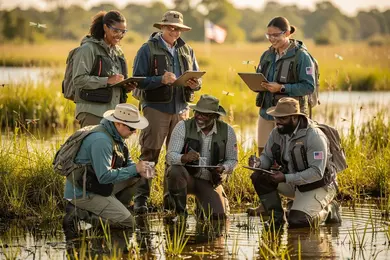
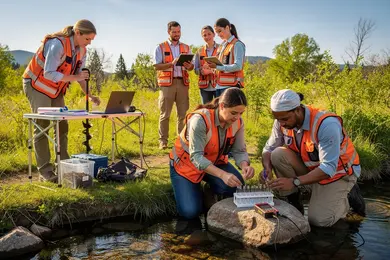
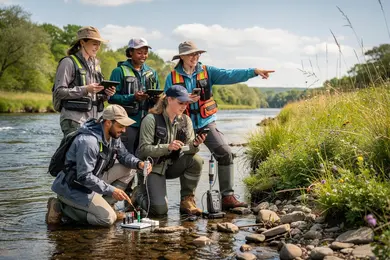
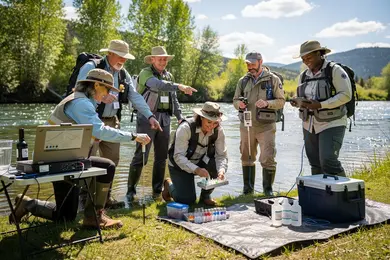
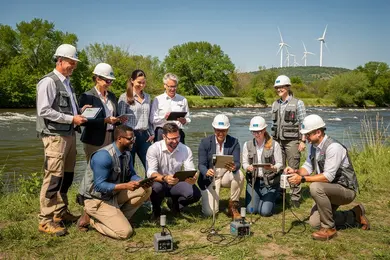
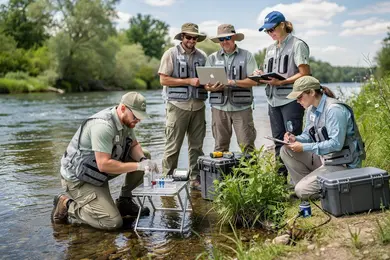
Fieldwork tends to focus on accessible assignments such as environmental sampling or community impact studies, supervised remotely with standardized protocols to maintain rigor. Capstone projects are expected to synthesize interdisciplinary knowledge, frequently involving collaboration with external stakeholders or use of open datasets to mirror professional consultancy tasks.
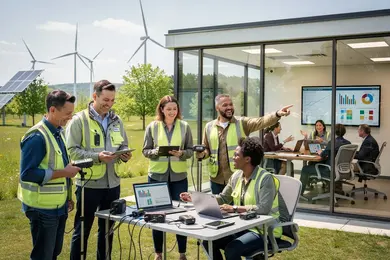
For example, a student might develop a localized renewable energy model addressing regional constraints, illustrating applied problem-solving valued by employers. The geographic location of students can limit placement quality, pushing many to select programs with broad industry networks or hybrid requirements to strengthen experiential learning.
Employers increasingly view verified hands-on experiences as vital proof of adaptability and technical competence. Given a global green energy investment surge to $1.8 trillion as tracked by the International Energy Agency, graduates substantiating practical project engagement have a tangible advantage in competitive hiring environments.
Other Things You Should Know About Environmental Science
In 2027, programs like the University of Florida, Oregon State University, and Arizona State University offer online environmental science bachelor's degrees featuring career-focused environmental projects. These projects are designed to enhance practical skills and employability in fields like conservation and sustainability.
Students usually need a laptop with webcam, stable internet, spreadsheet software, and GIS or mapping tools such as ArcGIS Pro or QGIS. Many programs also require a smartphone or GPS device for field data collection, plus access to a printer or scanner for lab reports and project submissions.
Transitioning from unrelated fields demands careful selection of programs that offer foundational course sequences and academic support tailored to non-science majors. Students must be prepared for a steep initial learning curve and potential prerequisite coursework, which may extend program duration and workload. Prioritizing schools with strong advisement and tutoring services is critical to successful pivoting.
Online degrees provide essential knowledge but may fall short in networking opportunities and niche certifications critical for advancement in specialized areas. To enhance career progress, graduates should supplement their degree with professional certifications and seek internships or projects that build relevant contacts and real-world experience. Prioritizing programs that integrate career services and industry partnerships improves prospects significantly.
References
- EwA Internship » Biodiversity and Climate Citizen Science – Page 2 https://www.earthwiseaware.org/ewa-internship-citizen-science-assistant/2/
- Sustainability & Climate Change - Aurora https://aurora-universities.eu/sustainability-climate-change/
- Environmental & Social Risk Analysis (ESRA) Online Course https://www.unepfi.org/learning-and-development-for-finance-professionals/risk-management/esra-online-course/
- Top Research Programs to Apply For High School Environmental Studies https://pioneeracademics.com/news/top-environmental-studies-research-programs-for-high-school-students/
- Are Online Degrees Accredited? How to Identify Quality Distance Learning Programs https://www.umassglobal.edu/blog-news/online-degrees-accredited-identify-quality-distance-learning-programs
- Online Environmental Science Degree | Programs & Career Options https://www.learnhowtobecome.org/best-online-bachelors-in-environmental-science-degree-programs/
- Online Environmental Science Degrees: Compare Schools https://www.degreesforgood.org/online-degrees/environmental-science/
- Climate Change & Sustainability Living Lab - Arqus https://arqus-alliance.eu/our-communities/arqus-living-labs/climate-change-and-sustainability-living-lab/
- 2025 Most Affordable Online Environmental Science Degrees https://www.onlineu.com/most-affordable-colleges/environmental-science-degrees
- Online Environmental Science Degree | BS Environmental Science | University of Phoenix https://www.phoenix.edu/online-liberal-arts-degrees/environmental-science-bachelors-degree.html