2027 Online Environmental Science Degrees for Natural Resources Roles

Co-Founder and Chief Data Scientist
Facing stringent hiring qualifications, many natural resources professionals struggle to update credentials without interrupting work or managing relocation. With a 24% surge in online enrollment reported by the National Center for Education Statistics since 2023, flexibility drives educational access for working adults in environmental science roles.
This shift reflects growing employer recognition of online degrees combined with real-world experience but also raises questions about program quality, accreditation, and specialization relevance. Navigating this evolving landscape demands strategic evaluation of available online environmental science degrees tailored for natural resources careers.
This article examines these programs' structure, outcomes, and career alignment to aid informed decision-making amidst complex workforce demands.
Key Things You Should Know
- Online environmental science degrees in 2026 demand a strong quantitative foundation; programs lacking advanced GIS and statistical training see lower graduate employability in natural resources sectors according to U.S. Bureau of Labor Statistics data.
- Employers show preference for candidates with integrated fieldwork experience despite remote learning trends, creating a tension where fully online programs must coordinate costly, location-specific practicums to remain competitive.
- Tuition and extended completion times average 15% higher for part-time enrollees balancing online study with work, impacting career pivot speed and increasing opportunity cost as reported by the National Center for Education Statistics.
What is an online environmental science degree and how does it prepare you for natural resources roles?
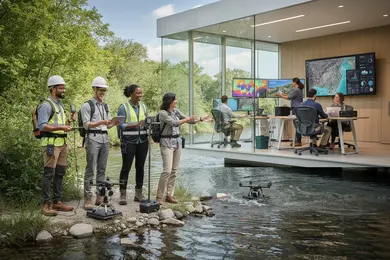
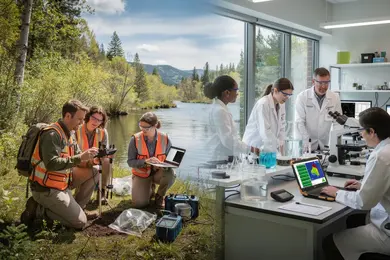
Online environmental science degree programs for natural resources management are distinct in their blend of interdisciplinary knowledge and applied skills, targeting critical roles in forestry, wildlife management, and resource planning. Graduates aren't just versed in biology and chemistry but gain technical proficiency with GIS software, remote sensing tools, and virtual labs, all essential for analyzing ecological data and supporting regulatory compliance in conservation frameworks.
For example, a resource manager at a federal agency may rely on spatial analysis acquired through an online program to monitor deforestation trends and inform policy decisions. This practical emphasis differentiates these degrees from broader science credentials by prioritizing environmental impact assessments and habitat restoration aligned with natural resource agencies.
Despite their accessibility, such online environmental science programs require self-discipline and depend heavily on stable technology. Fieldwork or internships-often necessary for hands-on experience-can introduce logistical challenges and lengthen time to completion. Thus, prospective students should evaluate whether programs maintain partnerships that facilitate practical placements relevant to their career aims.
As demonstrated by the expansion to 284 distance-learning environmental programs globally, employer acceptance of online credentials grows, but one must critically assess program quality and labor market fit, especially for applied natural resource roles demanding both analytical and experiential capabilities. Those comparing options may also consult rankings for related fields such as online geology programs to understand parallel pathways.
How an environmental science degree prepares you for careers in natural resources hinges on this intersection of applied learning and regulatory expertise, ensuring graduates can meet both compliance and sustainability workforce demands.
How do online environmental science programs compare to campus-based options for natural resources careers?
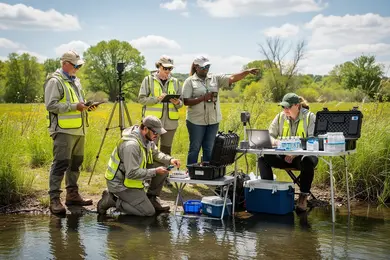
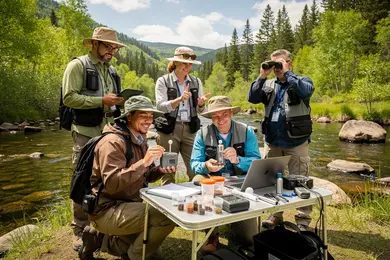
The choice between campus-based and online environmental science programs significantly impacts skill acquisition vital for natural resources careers. While online programs deliver comparable theoretical core competencies, they generally lack the hands-on experience crucial for roles requiring physical site assessments, environmental sampling, or GIS applications. For example, professionals shifting into forestry resource management need experiential learning typically accessible through campus lab work, field research, or local internships.
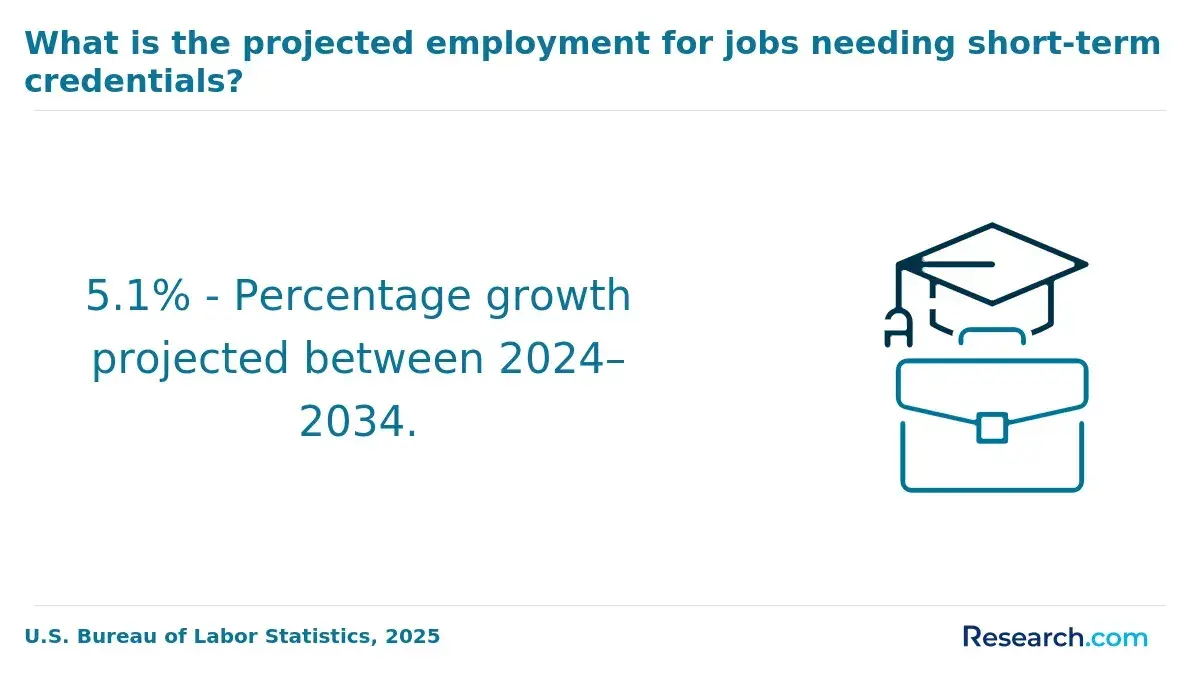
Employment projections for environmental scientists and specialists anticipate 4% growth from 2024 to 2034, with approximately 8,500 annual openings in the U.S. This demand prioritizes candidates demonstrating practical skills alongside academic knowledge. Campus programs hold an advantage by facilitating partnerships with government agencies and nonprofits for fieldwork, translating into direct employer engagement and career placement support.
Online environmental science degree benefits for natural resources careers include flexibility and geographic accessibility, but online learners must pursue synchronous field components or establish local internships to close the experiential gap. Without intentional integration of practical opportunities, graduates risk lagging behind peers in essential skillsets such as data collection and regulatory compliance.
Students focused on policy analysis or environmental education may find online routes sufficient, but those targeting technician or consulting roles should weigh hybrid or campus options carefully. Key evaluation criteria include accreditation, availability of hands-on learning, and employer network strength.
For professionals scrutinizing affordability in related STEM fields, exploring the cheapest data science degree paths can inform strategic educational investments aligned with labor market returns.
What types of environmental science degrees qualify you for natural resources positions?
Entry-level natural resources positions typically require bachelor's degrees in environmental science, natural resources management, forestry, wildlife biology, or conservation biology. These programs must provide foundational expertise in ecology, soil science, water resource management, and geographic information systems (GIS)—skills that employers expect. For instance, forestry technician roles demand hands-on knowledge of forest measurement techniques often acquired through forestry-specific curricula.
Advanced or specialized roles, such as habitat restoration, policy analysis, or natural resource economics, generally necessitate a master's degree emphasizing data modeling, environmental regulations, and ecosystem management.
These competencies are essential for managing complex projects or offering policy guidance within government agencies. Environmental science degrees with technical specializations, including environmental engineering or geology, prepare graduates for regulatory compliance, impact assessments, and technical consulting.
Choosing accredited environmental science programs for natural resources jobs is vital. Accreditation by organizations like ABET or the Society of American Foresters ensures relevant curricula aligned with employer expectations. Degree programs that integrate internships or cooperative education offer tangible field experience, accelerating readiness and employability. Graduates with such credentials see median salaries near $80,060, while top earners in natural resource management surpass $134,000 annually.
Online environmental science degrees for natural resource management careers are increasingly viable pathways, provided they balance academic rigor with applied learning opportunities. For professionals considering this option, resources like the online sports science degree listings can reveal program structures and pacing suitable for working students.
How can you verify accreditation and program quality for online environmental science degrees?
Accreditation verification is foundational when assessing online environmental science degrees, as recognition by the U.S. Department of Education or the Council for Higher Education Accreditation (CHEA) signals adherence to baseline academic quality and credit transferability. This is especially critical given that federal financial aid and many employers require such credentials.
For natural resources positions, specialized accreditation from organizations like the Society for Human Resource Management (SHRM) or the Association for Environmental Studies and Sciences (AESS) adds an extra layer of alignment with sector-specific competencies and expectations. Ensuring robust accreditation supports not just eligibility but also practical workforce acceptance, an often overlooked step in the online environmental science degree accreditation process.
Program quality extends beyond accreditation. Prospective students should scrutinize faculty expertise, curriculum depth, and especially the integration of hands-on learning, such as fieldwork, case studies, or lab simulations, that reflect real-world environmental challenges. Programs lacking applied components risk producing graduates who struggle in roles demanding practical skills in environmental consulting, engineering, or government agencies. This practical gap can hinder initial employment and career progression.
Graduate outcomes offer revealing insights. For instance, federal government environmental scientists earn a median salary of $107,990, significantly higher than the $83,000 median in consulting. This disparity illustrates the value of programs with federal internship pipelines or partnerships, directly influencing employability and earnings potential. Considering these outcomes is vital in the quality verification for natural resources degree programs.
Finally, thorough understanding of transfer policies and post-degree certification pathways is critical, as many roles require professional licensure or continuing education. Programs that fail to clarify these paths introduce risks of delays and added expenses. Students evaluating degree options may also benefit from insights drawn from related fields.
For example, veterans interested in technical STEM fields can compare pathways by exploring the best military friendly online electrical engineering degrees to gauge institutional support and credential portability across disciplines.
What core courses and specializations do online environmental science programs typically include?
Success in environmental science careers hinges on precisely aligned skills reflecting distinct sector demands. Core coursework, ecology, environmental policy, soil science, and GIS, forms the technical foundation, but specialization decisively shapes employability and job function. For instance, proficiency in GIS and policy analysis positions graduates for regulatory compliance and land-use roles in state agencies or consulting firms. Conversely, restoration ecology and environmental toxicology better support remediation and habitat conservation careers.
Quantitative expertise in statistics and environmental modeling further differentiates candidates in data-driven environments such as federal agencies and private firms. However, not all online programs deliver equitable practical experience; this is critical as employers increasingly seek applied problem-solving skills demonstrated through project-based learning or internships. Candidates should verify experiential learning options to mitigate common deficits associated with online-only formats.
Specialization selection also signals sector alignment, with watershed science graduates equipped for water resource management prioritized in EPA workforce data, while wildlife biology prepares for conservation-focused and monitoring positions with NGOs or government bodies.
Early career outcomes from Ohio State's Environmental Science graduates show a 93% placement within six months and average starting salaries near $45,000, reflecting the value of curricula closely integrated with evolving market requirements.
What are typical admission requirements for online environmental science programs in the U.S.?
Securing admission into online environmental science programs often hinges on more than minimum academic criteria; practical readiness shapes applicant competitiveness. While a high school diploma or GED with a 2.5-3.0 GPA baseline is standard, programs increasingly emphasize relevant prerequisite coursework in biology, chemistry, and earth sciences. This reflects employer expectations that graduates have foundational technical knowledge, reducing the training gap upon entering the workforce.
Applicants should consider how work or volunteer experience enhances their profiles, especially in graduate or specialized bachelor's tracks where hands-on environmental roles demonstrate immediate workplace relevance. Letters of recommendation may be essential for selective or advanced programs, though less common in undergraduate online formats.
Financial realities factor heavily into decisions. For example, the University of Arizona's rate of approximately $525 per credit, totaling about $63,000 for a 120-credit BS degree, illustrates how tuition investment should align with employment prospects and funding sources like employer sponsorship. Candidates without clear funding must weigh debt burdens against potential long-term returns.
Transfer credit evaluations can delay progression and lengthen time to degree completion, making early preparation and selecting programs with transparent transfer policies crucial. Practical strategies include timely documentation of transcripts, purposeful prerequisite completion, and clear articulation of environmental experience to meet admission and workforce gatekeeping.
How long do online environmental science degrees take, and what do they cost?
Completing an environmental science degree involves critical tradeoffs between time, cost, and labor market relevance, particularly for professionals seeking a mid-career pivot. Bachelor's programs typically require around 120 credit hours over four years full-time, but stretching completion to six or more years while working can dilute skill currency relative to evolving industry practices.
Employers in conservation and wildlife biology project modest job growth of 2-3% through 2035, emphasizing steady but slow expansion. This reality makes timely graduation and alignment with workforce demands essential for meaningful employment leverage.
Cost is a significant factor: public online programs average $10,000-$15,000 annually, whereas private institutions often exceed $25,000. Additional expenses for lab kits or fieldwork supplements can challenge remote learners financially. Prospective students should weigh the total cost, including opportunity costs of extended study periods versus potential wage increases. Median 2025 wages stood at $69,060 for conservation scientists and $72,860 for wildlife biologists.
Program flexibility plays a decisive role for working adults balancing jobs and internships. Asynchronous formats ease scheduling but limited synchronous sessions may delay degree completion if missed. Transfer credits can reduce unnecessary repetition and costs, while robust remote lab access and GIS training availability directly impact practical skill acquisition essential for employability.
What natural resources jobs can you pursue with an online environmental science degree?
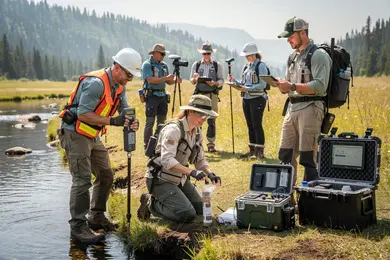
An online environmental science degree opens pathways into specialized roles where applied skills outweigh theoretical knowledge. For example, foresters employed by state agencies conduct forest health assessments and advise on timber management strategies that must balance economic goals with ecological sustainability. This dual demand for fieldwork and resource planning shapes hiring priorities, which heavily favor candidates proficient in Geographic Information Systems (GIS), data interpretation, and regulatory compliance.
Salary disparities illustrate how sector focus matters: conservation scientists and foresters earn a median salary around $67,950, whereas agricultural and food scientists command approximately $78,770, reflecting specialized expertise in crop and soil optimization. This gap signals that selecting a career path within environmental science requires evaluation not only of personal interest but also the regional labor market and industry-specific skills.
Employers expect measurable experience, so online programs lacking practical training or internships risk graduates encountering barriers in employability. Students shifting careers should prioritize degrees with applied projects or partnerships that integrate real-world data collection and analysis.
Advancement into supervisory or research positions generally necessitates graduate studies or certifications related to natural resource management, making upfront investment in further education a critical consideration with long-term payoffs.
What are the salary expectations and job outlook for environmental science and natural resources roles?
Employment outcomes in environmental science and natural resources vary significantly depending on specialization and experience. Entry-level environmental technicians generally start around $50,000, reflecting technical fieldwork roles requiring certifications but limited salary growth, often plateauing near $55,000 to $60,000 without further education.
In contrast, environmental scientists and compliance specialists, who engage with regulatory frameworks and sustainability initiatives, see starting salaries between $65,000 and $70,000, with potential to exceed $75,000 as expertise and responsibilities increase. This divergence underscores how choosing between more technical versus regulatory career pathways influences long-term earnings and job stability.
Regional factors also shape earning potential. Resource-rich states may offer higher wages but with intensified competition. Candidates who invest in advanced degrees or certifications often accelerate beyond entry-level limits, especially when employers prioritize proficiency in data analysis, GIS, and legal compliance. Prospective students and career changers should align their studies with local demand and employer expectations to avoid stagnation.
Growth projections from the U.S. Bureau of Labor Statistics anticipate demand rising faster than average through 2034, particularly within government agencies, consulting firms, and private industry compliance units. Practical decisions about educational investment must weigh salary trajectories against the realities of certification, geographic variations, and sector-specific labor markets to optimize career outcomes in environmental science and natural resources roles.
What certifications or licenses might environmental science graduates need for natural resources work?
Certification requirements in natural resources roles create significant entry barriers that go beyond holding an environmental science degree. For example, forestry management jobs typically mandate the Certified Forester credential, which involves both academic qualifications and hands-on experience verified through a comprehensive exam by the Society of American Foresters.
Similarly, roles in wildlife management or conservation biology generally require the Certified Wildlife Biologist credential, demonstrating specialized knowledge and field experience validated by The Wildlife Society.
Technical positions focusing on water quality, soil science, or hazardous materials cannot bypass credentials such as the Certified Professional Soil Scientist or Certified Hazardous Materials Manager designations. These certifications ensure compliance with regulatory frameworks and technical competence. Licenses like the Professional Geologist require passing national exams and documented work history, introducing further layers of practical qualification.
These credentialing hurdles have clear workforce consequences: candidates lacking certification may face exclusion from government contracts or consulting projects, particularly those funded by agencies like the EPA. This limitation restricts access to stable employment and sector growth. Additionally, maintaining certifications requires ongoing education investments, which demand foresight in career planning.
Employment data reflect this dynamic, with about 84,930 U.S. jobs in environmental science and natural resources projected to expand by 6% through 2032, adding nearly 6,900 positions annually. Navigating these credential requirements aligned with sector demands remains essential to leverage market growth effectively.
Other Things You Should Know About Environmental Science Degrees
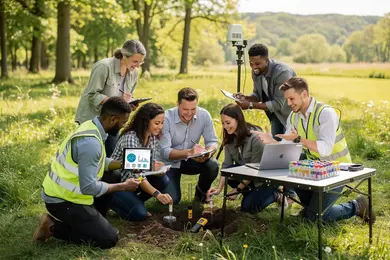
Employers in natural resources often expect practical problem-solving and field application skills. Many online environmental science programs include virtual labs and remote data analysis but may lack hands-on fieldwork exposure, which can be a disadvantage without supplemental experience. Students should prioritize programs that offer fieldwork opportunities or hybrid elements to ensure skill readiness.
Online environmental science programs vary in flexibility, but most still require substantial weekly time commitments for labs, projects, and research. Working professionals should select programs with asynchronous coursework and longer term lengths to allow manageable pacing. Prioritizing programs with clear time estimates and structured timelines helps minimize burnout and ensures steady progress.
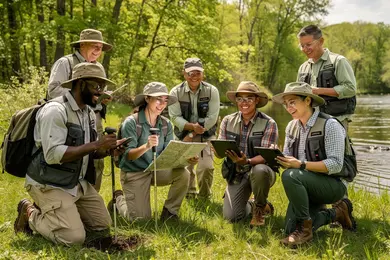
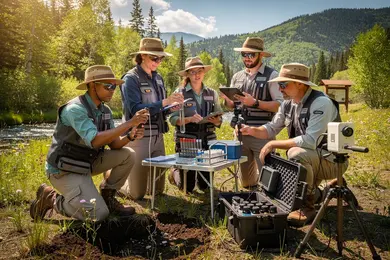
Students should confirm whether the program includes at least one field methods course, a supervised lab, or an in-person practicum. Many employers in natural resources expect hands-on training in GIS, sampling, and habitat assessment, and some states require documented field hours for related certifications or licenses.
Specialized programs align curriculum with targeted employer needs, such as wildlife management or water resource conservation, improving job competitiveness in those areas. However, overly narrow specialization can limit career flexibility if market demand shifts. Prospective students should weigh the stability of their desired subfield and consider broadly focused programs if uncertain about long-term specialization prospects.
References
- Search Online Natural Resource Management Degree https://www.cjbnetwork.com/search/category/natural-resource-management/setting/online
- Are Online Degrees Accredited? How to Identify Quality Distance Learning Programs https://www.umassglobal.edu/blog-news/online-degrees-accredited-identify-quality-distance-learning-programs
- Online Environmental Science Degrees: Compare Schools https://www.degreesforgood.org/online-degrees/environmental-science/
- 2025 Most Affordable Online Environmental Science Degrees https://www.onlineu.com/most-affordable-colleges/environmental-science-degrees
- Certification Guide for Young Professionals - Board for Global EHS Credentialing https://gobgc.org/professional-environmental-certifications-professionals/
- Online Environmental Science Degree | BS Environmental Science | University of Phoenix https://www.phoenix.edu/online-liberal-arts-degrees/environmental-science-bachelors-degree.html
- Environmental Certifications for entry-level and career changers https://www.theenvironmentalcareercoach.com/certification-links
- What Can You Do With an Environmental Science Degree? https://willamette.edu/academics/college/environmental-science/career-options
- Natural Resources Management and Biological Sciences https://careers.doi.gov/occupational-series/natural-resources-management-and-biological-sciences