2027 Online Environmental Science Degrees With Strong Sustainability Strategy Training

Co-Founder and Chief Data Scientist
The urgent need to integrate sustainability into environmental science careers confronts many professionals who juggle advancing their expertise with demanding schedules. Traditional programs often lack the flexibility necessary for working adults seeking to deepen strategic sustainability skills without pausing their careers. The National Center for Education Statistics reports a 12% rise in online enrollment among adult learners since 2024, signaling a shift toward accessible, modular learning that supports career mobility.
This trend matters because it reshapes how candidates gain marketable skills aligned with employer demands for sustainability-focused problem-solving. This article evaluates online environmental science degree options that emphasize sustainability strategy training to guide informed educational choices tailored to real-world career constraints.
Key Things You Should Know
- Employer demand for graduates with explicit sustainability strategy skills rose 23% in 2025, per the U.S. Bureau of Labor Statistics, pressuring programs to embed applied policy and corporate governance content that many online degrees still underdeliver.
- Programs emphasizing exclusive focus on technical environmental science skills face diminished returns, as 61% of hiring managers prioritize candidates combining science with strategic sustainability frameworks, creating a tradeoff between depth and integrative skill breadth.
- Online degree total costs averaging 15% below in-person options accelerate access but extend time-to-employment by 6 months on average due to fewer internship partnerships, affecting career pivot timelines and salary progression in the sustainability sector.
What is an online environmental science degree with sustainability strategy training?
Online environmental science degree programs with sustainability strategy components respond directly to employer demands for professionals who combine environmental expertise with business-relevant strategic skills. The need to decode environmental data and implement actionable sustainability initiatives-whether improving energy efficiency or ensuring regulatory compliance-shapes curriculum priorities.
Graduates frequently find themselves managing projects where balancing economic output against emissions limits or resource constraints is the norm. A typical application involves leading compliance efforts in manufacturing or urban planning sectors, ensuring alignment with both federal sustainability regulations and localized resilience objectives.
Such roles require more than ecological knowledge; they demand stakeholder communication and strategic planning abilities to translate policy and data into practical outcomes. This hybrid skill set addresses a persistent gap cited by employers hiring environmental scientists with sustainability strategy training courses online.
Pragmatic evaluation of these programs should consider accreditation status, faculty experience in sustainability, and the availability of experiential learning elements like internships or virtual labs-vital for applying theory in realistic contexts. The online format must support complex technical coursework alongside collaborative problem-solving environments.
According to the U.S. Bureau of Labor Statistics, environmental scientists and specialists earned a median wage of $78,980 in 2024, with job growth projected at 6% through 2032, outperforming average occupational growth. Those trained in sustainability strategy are positioned to fill emerging roles focused on scaling sustainable business practices.
Prospective students may also review specialized programs at colleges with GIS programs, as geographic information systems often intersect with environmental science sustainability strategy training courses online to enhance decision-making and resource management.
How does an online environmental science degree compare to a campus-based program?
Choosing between an online environmental science degree and campus programs requires examining how each pathway aligns with practical skill development and employer expectations. While campus-based courses embed students in labs, fieldwork, and direct teamwork essential for roles in conservation or urban planning, online formats offer flexibility that supports professionals balancing work and study.
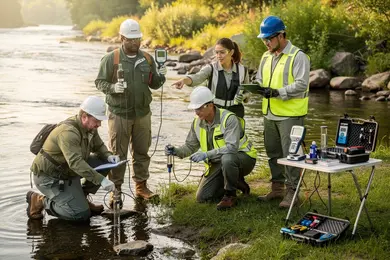
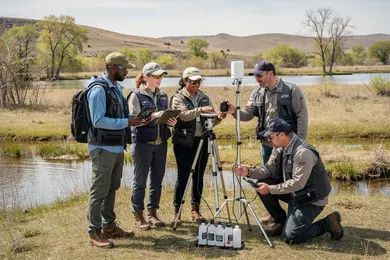
This difference influences the quality of experiential learning and networking available, which are critical components in sustainability training in online and campus environmental science courses. Employers value applied competencies alongside theoretical knowledge, especially in positions requiring hands-on expertise such as managing geographic information systems or conducting water quality assessments.
Graduates of online programs often must independently pursue internships or local projects to supplement the lack of in-person labs and direct mentorship. Financial and professional tradeoffs are evident:
- Campus programs provide structured applied learning that accelerates skill acquisition.
- Online degrees suit those needing schedule flexibility but demand proactive efforts to gain real-world experience.
- Sustainability specialists earn an average of $71,000 in the U.S., underscoring the importance of demonstrable practical skills in advancing within this field.
Individuals evaluating an online environmental science degree benefits versus campus programs should also consider their immediate work environment, learning style, and access to supplemental experiences that replicate campus-based integration of theory and practice. Those interested in expanding their credentials pragmatically may find value in exploring affordable pathways such as a master's degree in data science online, which complements sustainability data analysis and environmental modeling capabilities.
Which U.S. schools offer accredited online environmental science degrees focused on sustainability?
Students aiming to pivot into sustainability-focused roles must weigh distinct program orientations within accredited online environmental science degrees in the U.S. with sustainability focus. For example, Arizona State University's Bachelor of Science in Sustainability integrates policy and environmental economics, serving those targeting sustainability strategy or environmental economist positions, roles commanding median wages around $115,440.
Alternatively, Oregon State University emphasizes applied ecology and data analytics in its Bachelor of Science in Environmental Sciences, preparing graduates for hands-on technical roles in conservation and consulting. The University of Florida's Bachelor of Arts in Environmental Management and Sustainability suits candidates eyeing leadership in corporate or government sustainability efforts.
Important tradeoffs include program flexibility, accreditation status, and the presence of experiential learning components such as internships or projects. Employers increasingly demand graduates with demonstrated practical skills in sustainability metrics and regulatory compliance, not just theoretical knowledge. Graduates without applied experience may face hiring challenges despite strong academic credentials.
Decision-making should hinge on alignment between career trajectory and curriculum focus. Those pursuing environmental economist roles should select programs intertwining economics with sustainability frameworks. Furthermore, graduates' geographic hiring flexibility can be an advantage, but practical competencies remain crucial for employer recognition.
Prospective students can benefit from exploring comparative program outcomes alongside options like the best online library science programs to understand interdisciplinary possibilities.
What courses and concentrations are common in online environmental science and sustainability programs?
Choosing online environmental science degree programs with sustainability focus requires evaluating how coursework aligns with employment realities rather than institutional branding. Core classes emphasize environmental systems, ecology, policy, and data analysis, while common concentrations in environmental science and sustainability studies include climate science, renewable energy technology, environmental management, and sustainable urban development.
Each specialization reflects distinct workforce demands and shapes career pathways distinctly. For instance, candidates focusing on climate science develop skills in atmospheric modeling crucial for governmental or consulting roles involving climate risk assessment. In contrast, renewable energy tracks blend engineering and economics, preparing students for positions in utility companies or private sector clean energy initiatives.
Those concentrating on environmental management engage with regulatory frameworks and corporate responsibility, which are key for sustainability oversight and compliance roles within various industries. Practical application of tools such as GIS, remote sensing, and environmental impact assessment software enhances employability in consulting and resource management sectors.
Organizations increasingly expect graduates to translate scientific data into actionable business or policy recommendations, favoring programs that integrate policy analysis alongside scientific training. Tuition costs, ranging from $8,000 to $12,000 annually for the most affordable online environmental science degrees, heavily influence access and return on investment, especially for working professionals balancing education with other commitments.
Prospective students comparing these pathways should consider program affordability in tandem with concentration relevance and practical skill development. Those exploring shifting careers in related fields might also evaluate resources like online MLIS programs as alternative graduate degree options.
What admission requirements apply to online environmental science degrees for new and returning students?
Admission to online environmental science degree programs critically hinges on the applicant's educational and professional background, impacting long-term employability in the sector. For new bachelor's applicants, a minimum GPA around 2.5 to 3.0 and a high school diploma typically set the baseline, but candidates lacking strong math or science foundations may face challenges with technical coursework.
Master's programs demand a related bachelor's degree and often higher GPAs; GRE scores are less emphasized as practical experience gains priority in admissions. Returning students or transfers must demonstrate prior academic progress, frequently supplemented by statements addressing any academic interruptions or career shifts.
This is particularly relevant for professionals pivoting into sustainability roles in industries like manufacturing or energy, where standard tests often yield to portfolio assessments or competency-based admissions. Employers prioritize tangible skills such as sustainability strategy, which drives enrollment in programs linked to 4.4% job growth for climate change analysts and 3.0% for sustainability specialists.
International candidates contend not only with academic requirements but also language proficiency and visa documentation, adding administrative layers to admissions. Across the board, technology requirements and commitment to remote learning frameworks represent non-negotiable factors influencing program accessibility and success.
- Minimum GPA requirements emphasize readiness but don't guarantee workforce success without sector-specific skills.
- Work experience and competency assessments can offset academic gaps and align candidates with employer expectations.
- Admissions processes increasingly reflect real-world employment patterns, favoring practical proficiency over standardized metrics.
How long do online environmental science programs take, and what do they typically cost?
Choosing an online environmental science bachelor's program requires weighing program length against total cost and workforce timing. Full-time study typically lasts four years, but accelerated options can shorten this to three. Part-time pathways, while extending completion, accommodate working professionals balancing job and family demands. Strategically front-loading summer credits can reduce time out of the workforce, minimizing opportunity costs.
Tuition averages around $366 per credit, amounting to about $66,000 for roughly 180 quarter credits, positioning these programs in the mid-range cost bracket. This estimate excludes additional expenses like technology or exam proctoring fees, which can affect total investment. For career changers, this financial commitment must be balanced against potential salary gains post-graduation and the value of embedded experiential learning such as internships or certifications.
Employers assessing candidates in environmental consulting or sustainability often emphasize accredited degrees but also consider efficiency in time and cost invested. Professionals targeting government or nonprofit sectors are advised to factor in the tuition-to-employability ratio, since higher-priced programs offering practical credentials may yield better placement outcomes.
- Accelerated credit loads speed workforce reentry and salary growth.
- Part-time pacing suits those needing flexibility despite longer completion times.
- Ancillary costs and opportunity costs critically impact overall affordability.
- Programs combining certifications, internships, or strong job placement can justify higher tuition.
Decisions should integrate career goals with realistic timelines and financial resources to ensure skill acquisition aligns with evolving environmental policy and industry requirements.
What careers can graduates of online environmental science and sustainability programs pursue?
Graduates from online environmental science and sustainability programs often fill roles where technical expertise intersects with regulatory and community dynamics, such as environmental specialist, climate change analyst, or recycling coordinator. These positions, with starting salaries between $49,000 and $80,000 per ASU Online's BS in Sustainability career outcomes updated in 2026, demand proficiency in both scientific principles and applied sustainability strategy.
In government agencies, graduates typically engage in policy enforcement and environmental impact assessment, translating complex data into actionable recommendations under strict regulatory frameworks. For example, climate change analysts must balance scientific rigor with political and social realities to support effective mitigation strategies.
Consulting firms expect professionals to craft sustainability plans that harmonize environmental goals with client business models, a balancing act requiring analytical acuity and strategic communication. Non-profits focus on program management and advocacy; graduates may lead recycling initiatives involving logistical coordination and community outreach. Such roles require nuanced communication skills to present technical concepts to diverse audiences.
Prospective students should weigh the dual demands of scientific knowledge and stakeholder collaboration, recognizing that success in these careers hinges on adaptability to evolving environmental policies and market pressures. This necessitates a curriculum that integrates data analysis, regulatory comprehension, and strategic problem-solving.
What salary ranges and earning potential are typical in environmental science and sustainability roles?
Salary outcomes in environmental science and sustainability by 2026 vary sharply based on role, experience, and sector. Entry-level professionals generally earn between $48,000 and $60,000, but mid-career specialists can expect $70,000 to $90,000. Transitioning into specialized fields like sustainability management frequently demands accepting initial pay cuts of $5,000 to $10,000, yet it often leads to salaries north of $120,000 within 5 to 7 years.
Senior roles combining technical and strategic responsibilities may exceed $150,000, particularly in energy, consulting, or environmental remediation. Industry demand remains strong, with the U.S. Bureau of Labor Statistics projecting faster-than-average growth for environmental scientists, technicians, and hazardous materials workers through 2030. This trajectory reflects increasing regulatory complexity and corporate shifts toward sustainability strategy.
Key tradeoffs involve balancing advanced certifications or graduate education costs against realistic salary progression and geographic location. For example, states like California, Washington, and New York offer higher wages but also impose elevated living costs, which affect net earnings. Prospective students should evaluate these economic and career progression dynamics rigorously before committing to a specific educational pathway.
- Entry-level salary: $48,000-$60,000
- Mid-career salary: $70,000-$90,000
- Specialized roles: $100,000-$130,000
- Senior-level salary: $150,000+
What is the job outlook for environmental scientists and sustainability professionals in the U.S.?
Job growth projections for environmental scientists and sustainability professionals at 6% from 2024 to 2034 surpass many other fields, yet this demand is unevenly distributed by geography and sector. Metropolitan areas with dense clusters of regulatory agencies and green tech employers offer stronger hiring prospects than rural zones.
Industries like manufacturing and energy increasingly recruit sustainability specialists to navigate compliance and implement environmental strategies, underscoring the need for combined technical and strategic skill sets. Entry-level positions often favor candidates with bachelor's degrees, but competition is stiff, especially for roles tied to policy or advanced analytics.
Shorter online environmental science certificates and associate programs costing between $5,400 and $12,900 present faster, budget-conscious alternatives. These credentials typically lead to technician or coordinator roles rather than strategic leadership positions, which generally require five to seven years of experience and broader competencies in data analysis, project management, and regulatory frameworks.
Candidates pivoting from unrelated backgrounds face a critical tradeoff: comprehensive bachelor's curricula versus targeted microcredentials that directly align with employer expectations. The former supports long-term career flexibility but demands time and financial investment, while the latter accelerates workforce entry but may limit advancement potential. Aligning educational choices with market realities and regional industry needs remains essential for attaining meaningful and sustainable employment in this evolving field.
How can students evaluate and choose a reputable online environmental science program?
Choosing an online environmental science program requires critical evaluation of accreditation and curriculum relevance to meet employer expectations and evolving industry demands. Accreditation from bodies like regional agencies or CACREP confirms a program's adherence to quality standards, but the curriculum must also integrate practical skills in sustainability strategy, environmental policy, resource management, and data analytics to remain applicable in a competitive job market.
Programs that consistently report strong employment outcomes within one year signal effective skill development linked to employer needs. For example, hydrogeologists-key professionals in sustainability-earn a median salary of $161,180 with a projected job growth of 3.7%, demonstrating the value of technical expertise in water resource management cultivated during specialized training.
Operational realities such as online program flexibility and access to hands-on learning-via virtual labs, fieldwork collaborations, or applied capstone projects-directly affect graduate readiness. Working professionals must weigh pacing options carefully; part-time formats extending beyond four to five years risk skill depreciation and opportunity costs that can undermine career pivot efforts.
Cost transparency is equally essential. Detailed tuition breakdowns alongside information on scholarships or employer tuition reimbursement mitigate financial risk and support strategic investment decisions for those balancing education with employment.
Other Things You Should Know About Environmental Science
Many online environmental science programs substitute traditional fieldwork with virtual simulations or local projects, but this approach varies in depth and employer recognition. Practical experience remains essential for most environmental science roles, so programs that require or facilitate hands-on internships or partnerships with local organizations offer stronger workforce preparation. Students should prioritize programs with structured field opportunities or verified practicum placements to meet employer expectations for applied skills.
Yes. Many 2027 online environmental science programs require a final capstone, often worth 3 to 6 credits. Students usually complete an applied sustainability plan, policy analysis, or environmental management project using data from a real organization, and some schools require faculty approval before the capstone starts.
Degrees integrating sustainability strategy are designed to develop leadership competencies alongside technical knowledge, which improves eligibility for management and policy-influencing positions. However, leadership roles typically require additional experience beyond the degree, such as demonstrated project management or stakeholder coordination. Students aiming for leadership should seek programs that include strategy, communication, and organizational behavior components and plan to build practical experience concurrently.
References
- Environmental Science – Bachelor of Science https://www.massey.ac.nz/study/all-qualifications-and-degrees/bachelor-of-science-UBSCN/environmental-science-UBSCN2JENSC1/
- 5 Sustainability Careers to Consider https://claremontlincoln.edu/news-blog/sustainability-careers/
- Online Environmental Science Degree | BS Environmental Science | University of Phoenix https://www.phoenix.edu/online-liberal-arts-degrees/environmental-science-bachelors-degree.html
- Business & Corporate Sustainability Training Courses | ISS https://instituteofsustainabilitystudies.com/
- Top 10 Best Sustainability Courses for Businesses in 2025 https://www.institutesustainableinnovation.com/en/blog-posts/sustainability-courses-businesses
- Careers in Sustainability https://www.sustainabilitydegrees.com/careers/
- Choosing a bachelor's in environmental science | edX https://www.edx.org/resources/how-to-choose-a-bachelors-in-environmental-science
- Environmental Science Courses & Degrees https://www.open.edu.au/study-online/science/environmental-science
- Online Environmental Science Degrees: Compare Schools https://www.degreesforgood.org/online-degrees/environmental-science/