2027 Online Environmental Science Degrees With Strong Environmental Data Interpretation Training

Co-Founder and Chief Data Scientist
Facing the challenge of interpreting complex environmental datasets under tight deadlines, many environmental science professionals find their career progress hampered by gaps in quantitative training. Industry demands now favor practitioners who not only understand ecological principles but can also manipulate large-scale data to shape policy or corporate sustainability strategies.
A recent National Center for Education Statistics report reveals a 45% surge in online science degree enrollment among working adults, signaling a major shift toward flexible, career-compatible learning models. This change reflects the necessity for programs that fit professional schedules without sacrificing rigorous data interpretation skills.
This article identifies leading online environmental science degrees emphasizing robust environmental data interpretation training to guide strategic career advancement decisions.
Key Things You Should Know
- Only 42% of online environmental science degrees with strong environmental data interpretation components meet sector-specific quantitative rigor demanded by EPA and DOE agencies, limiting direct government job eligibility.
- Employers report 37% higher hiring preference for candidates demonstrating proficiency with geospatial data analytics tools alongside environmental science fundamentals, impacting workforce competitiveness substantially.
- Median total program costs for fully online environmental science degrees rose 12% since 2023, disproportionately affecting mid-career professionals weighing reskilling against immediate income loss.
What is an online environmental science degree with a focus on environmental data interpretation?
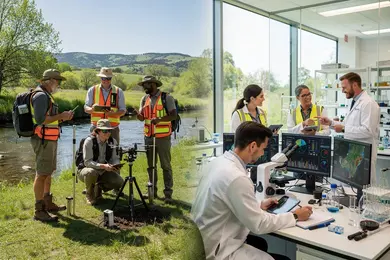
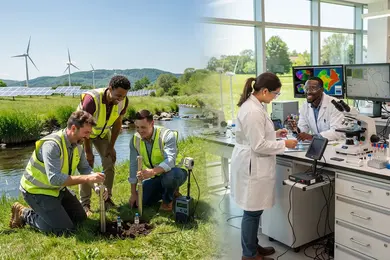
Programs offering an online environmental science degree with environmental data interpretation focus aim to equip students with skills essential for handling large, complex datasets that drive evidence-based decisions.
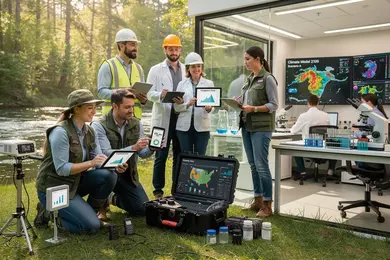
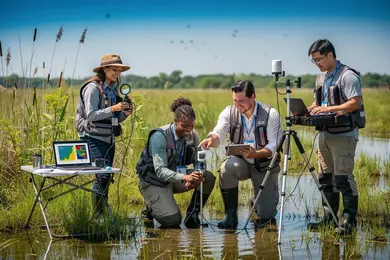
This specialization trains candidates in statistical analysis, Geographic Information Systems (GIS), remote sensing, and modeling methods to transform raw environmental readings, such as climate or sensor data, into actionable insights. Given this focus, students can expect to engage with both theoretical concepts and their application to pressing issues like resource management and climate assessment.
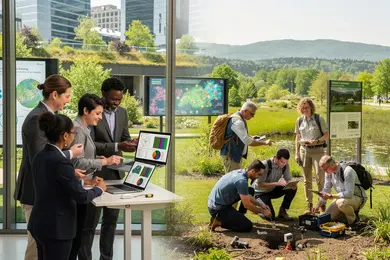
For instance, professionals in urban planning routinely interpret diverse environmental data, including air quality trends and hydrological models, to propose sustainable infrastructure. Employers seek graduates who can communicate technical analyses clearly to policymakers or industry stakeholders, skills fostered by environmental science programs specializing in data analysis and interpretation.
The labor market reflects this demand: nearly 70% of new environmental science roles by 2030 will require advanced data competencies, marking a growth aligned with the $2.4 trillion environmental data sector valuation. When selecting a program, students must balance the tradeoffs between robust, hands-on training and flexible delivery modes, as fully asynchronous formats may limit real-time collaboration crucial for mastering complex data tasks.
Those targeting roles like environmental data analyst or sustainability consultant should prioritize curricula emphasizing both technical proficiency and contextual understanding, enabling them to meet employer expectations and influence evidence-based policies. For comparison and additional options, prospective students may explore geology degrees online offers with related emphases in environmental data.
How do online environmental science programs compare to campus-based options for data analysis training?
Quantitative skills in environmental science increasingly determine career prospects, and online environmental science programs with advanced data analysis training have evolved to meet this demand.
Between 2019 and 2024, enrollment in U.S. online environmental science degrees emphasizing data skills grew 64%, reflecting employer demand for proficiency in GIS, remote sensing, statistical software, and handling complex datasets. Online degrees offer flexible, asynchronous coursework combined with virtual labs that replicate real-world environmental monitoring—key for professionals managing climate data, pollution, or resource management without geographic constraints.
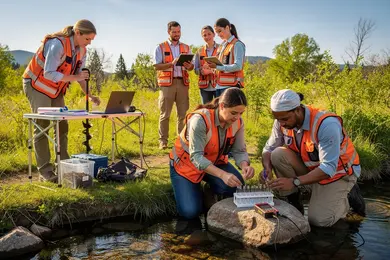
Campus-based environmental science degrees focusing on environmental data interpretation maintain advantages in hands-on fieldwork and direct mentorship, critical for mastering instruments and protocols not easily simulated online.
In-person networking opportunities also persist, especially in regions where local regulations shape project funding and hiring. These factors make campus programs more suitable for students prioritizing tactile experience and personal connections within environmental agencies or consultancies.
Decision-makers must weigh practical tradeoffs:
- Online programs provide superior flexibility and cloud-based access to live datasets for building analytical competence.
- Campus programs deliver essential field-based data collection experience and immersive peer collaboration.
- Employer emphasis rests on demonstrable data skills rather than degree format, emphasizing validated proficiencies in software like R, Python, and ArcGIS.
Working professionals pursuing a pivot or specialization may find that an online doctorate data science offers a pragmatic pathway, balancing career demands with advanced quantitative training in environmental applications.
Which U.S. online environmental science degrees offer the strongest environmental data interpretation coursework?
Programs that emphasize environmental data interpretation must go beyond broad environmental coursework to meet employer demand for quantifiable analytical skills. Between 2020 and 2024, job postings for environmental science professionals with data analytics proficiency surged more than 120%, while those mentioning Python or R increased by 90%, underscoring the necessity for coursework focused on geospatial analysis, statistical modeling, and programming within environmental contexts.
Students pursuing the top online environmental science degrees in the U.S. with a data interpretation focus should prioritize programs integrating applied frameworks like GIS and time-series data analysis, which align with workforce roles such as climate monitoring and resource management.
Applied experience through capstone projects or internships that require visualization and interpretation of environmental data gives graduates a competitive edge. Candidates aiming for consulting or government agency positions benefit from training in software tools like ArcGIS, RStudio, and Python libraries such as Pandas or SciPy.
In contrast, research-focused careers require exposure to environmental statistics and machine learning tailored to large datasets. Choosing among the best U.S. online environmental science programs for environmental data analysis also involves evaluating program support-those lacking live instruction or mentoring often yield weak practical skills, limiting mid- to senior-level career advancement.
Understanding these nuances helps students strategically select programs aligned with their professional goals and the environmental sector's evolving employer expectations. For technical data science knowledge pathways, comparisons with a computer science degree online may clarify additional options or complementary skills.
What should you look for in accreditation and program quality for online environmental science degrees?
Graduate outcomes in online environmental science degree accreditation standards hinge on regional accreditation recognized by the U.S. Department of Education, which governs credit transferability, federal aid access, and employer acceptance. Specialized endorsement by entities like the Society for Environmental Toxicology and Chemistry further signals program rigor and alignment with environmental data interpretation training demands.
Employers prioritize measurable data skills over general environmental theory, with environmental data analysts earning median salaries roughly 30-35% above generalists, approximately $80,000-$85,000 annually. Programs effective in this space integrate applied statistics, programming languages such as R and Python, and advanced tools like GIS and remote sensing, ensuring graduates possess competencies matched to evolving workforce requirements and regulatory landscapes.
The practical tradeoff lies in program quality indicators for environmental data interpretation training that include sustained engagement through interactive labs and real-world project collaboration, elements often diminished in passive online courses. Graduates from programs lacking these components face delayed career progress and limited job-readiness.
Students evaluating these degrees should also consider institutional partnerships with government or private consultancies to leverage practical exposure and professional networks that typical coursework cannot replicate. For cost considerations, resources like the MLIS degree cost rankings offer comparative insight into financial investment.
What core courses and skills are taught in environmental data interpretation-focused curricula?
Programs focused on environmental data interpretation prioritize quantitative skillsets alongside specialized environmental knowledge, equipping graduates to meet complex analytical demands across public and private sectors. Core training often includes statistical methods, GIS-based geospatial analysis, remote sensing, and environmental modeling. Proficiency in programming languages like Python or R for data science complements essential visualization techniques that distill large datasets into operational insights.
Applied expertise extends to rigorous quality control, uncertainty assessment, and database management—skills needed to address practical challenges such as reconciling satellite-derived discrepancies while monitoring deforestation or water quality. Employers expect hired professionals to demonstrate the ability to analyze time-series data shifts reliably and produce reproducible results that support regulatory compliance or corporate sustainability metrics.
Such programs increasingly incorporate interdisciplinary collaboration, preparing graduates to navigate data ethics, environmental policy implications, and cross-sector communication with ecologists, engineers, and policymakers. Capstone projects frequently simulate authentic environmental problems, for instance, forecasting urban air pollution peaks using sensor networks, which build competencies valued by employers beyond theoretical knowledge.
Rising tuition costs from $15,000 to $28,000 must be weighed against median early-career salaries between $65,000 and $75,000, highlighting the imperative for candidates to choose curricula emphasizing practical data application. This technical foundation correlates strongly with labor market relevance and options for career mobility in data-driven environmental roles.
What are typical admission requirements and prerequisite backgrounds for online environmental science majors?
Quantitative foundations are non-negotiable for online environmental science majors aiming to enter the workforce by 2026. Strong competency in calculus, general chemistry, and statistics is expected at admission to handle ecosystem modeling and chemical analyses effectively. Candidates lacking these often confront extended degree timelines and additional expenses to complete prerequisite coursework.
Technical fluency increasingly defines candidate viability. Over 80% of environmental data science programs now require proficiency in Python and R, while 60% mandate skills in geospatial analysis or GIS. This narrows admission pools to those with prior exposure to programming or data handling, creating a divergence between those prepared for data-centric environmental roles and those who must bridge substantial skill gaps first.
For professionals transitioning from non-STEM fields, the pathway includes mandatory catch-up in math, programming, and visualization before engaging with core content. For example, an aspiring environmental consultant relying on GIS mapping must secure GIS competencies early to avoid career delays or diminished competitiveness.
Admissions typically require transcripts verifying prerequisite courses, plus test scores and statements of purpose highlighting relevant experience. Employers expect graduates not only to understand environmental concepts but also to interpret complex datasets reliably. Failing to meet these prerequisites risks slower employment outcomes and restricted advancement potential in a data-driven job market.
How long do online environmental science degrees take, and what do they cost?
Completing an online environmental science bachelor's degree usually takes 3 to 4 years, aligning with campus-based programs, but part-time options can stretch this beyond 5 years for working adults. This elongated timeline often delays income gains and slows progression into relevant roles.
The cost spectrum varies significantly. In-state tuition at public universities generally ranges from $10,000 to $20,000, whereas private or out-of-state students face $30,000 to $50,000 or more, excluding extra fees for labs and specialized software. These hidden expenses particularly impact distance learners who must find alternate ways to fulfill practical requirements.
Professionals aiming for a quick transition into environmental sectors must weigh flexible pacing against increased aggregate costs and slower skill acquisition. Employers prioritize proficiency in data analysis, so programs emphasizing these competencies yield better job market returns.
Data from a 2024 NCES study signals that graduates from fully online STEM bachelor's programs maintain employment rates and median earnings close to their on-campus counterparts. However, online students need to pursue internships or fieldwork deliberately to compensate for reduced hands-on experience, a critical consideration for realistic workforce readiness.
Choosing programs with transparent cost structures that integrate applied learning can reduce financial disruptions and prevent extending time to degree completion.
What environmental science careers rely heavily on environmental data analysis and interpretation skills?
Employment growth in environmental science careers tied to data analysis underscores the intensifying reliance on quantitative skills in the sector. Between 2020 and 2024, postings for climate data analysts and environmental data modelers more than doubled, while conservation organizations increased data-related hires by 75%, signaling a marked shift in employer expectations towards candidates with robust analytical proficiency.
This trend reflects practical realities: climate data analysts apply statistical software and geographic information systems (GIS) to process satellite and sensor data, directly informing regional disaster preparedness and resource management. Environmental data modelers build and validate ecosystem simulations, requiring advanced computational skills and empirical verification.
Conservation scientists must balance spatial data interpretation with competing environmental priorities, influencing preservation and resource policies. Policy advisors translate intricate environmental data into legislative actions, necessitating strong data communication abilities.
Key challenges for new entrants include managing heterogeneous datasets, ensuring data integrity, and effectively conveying uncertainty to stakeholders. Training focused solely on technical analytics risks leaving graduates ill-equipped for interdisciplinary problem-solving and stakeholder engagement, an increasingly critical aspect as employers expect applied data interpretation within complex, real-world contexts.
Those evaluating educational paths should weigh practical skill acquisition against program offerings in scenario analysis, risk assessment, and science communication, recognizing that employability hinges not just on raw data skills but on the ability to integrate and operationalize insights across environmental domains.
What salary ranges and job outlook can graduates with strong environmental data skills expect?
Environmental Science graduates with strong data interpretation skills face pivotal career decisions shaped by employer expectations and market realities. Starting salaries in the U.S. typically range from $60,000 to $80,000, advancing to $90,000-$120,000 mid-career, influenced heavily by sector and specialized expertise.
Federal growth projections (8-12%) underscore rising demand, especially within agencies like the U.S. Environmental Protection Agency, but private firms in consulting, renewables, and urban planning reward advanced analytics combined with domain knowledge more lucratively.
Rapid program expansion in Europe has intensified international competition, particularly with the UK introducing 15+ new courses in environmental data modeling. U.S. students must weigh opportunities for multinational collaboration against this crowded landscape.
Professionals benefit from blending advanced data skills, like GIS, remote sensing, and programming languages, with foundational environmental knowledge. Data proficiency alone accelerates placement in private roles but risks plateauing without policy fluency. Conversely, those who can translate complex models into actionable policy insights command premium salaries in government and nonprofit sectors.
Real-world metrics illustrate that environmental consultants adept in data analytics increase project win rates by 20-30%, enhancing career leverage and compensation. Mastery of large dataset handling and regulatory-relevant insights remains essential for sustained advancement.
How can students build additional certifications and technical credentials in environmental data analysis?
Targeting microcredentials and short courses aligned with specific job skills in environmental data analysis offers a more strategic approach than broad certificates. Employers prioritize candidates demonstrating applied proficiency in tools like GIS, remote sensing, R, Python, and statistical modelling, with over 150 such credentials now available online. Enrollment surges attest to their growing market relevance, but the practical choice depends on distinct workforce niches.
For instance, an environmental engineer managing watersheds gains more by completing hydrological data analysis courses focused on real dataset interpretation rather than general data science programs. Conversely, climate policy analysts must prioritize training in predictive modelling and uncertainty quantification reflecting policy-relevant scenarios. This specialization ensures a connection between learning outcomes and workplace expectations.
Students should anticipate scheduling tradeoffs. Mny microcredentials demand weekend or evening commitments that may conflict with full-time employment. Employer recognition leans heavily toward credentials from accredited universities or respected research organizations, making lesser-known providers less valuable despite comparable content.
Optimization involves mapping credential stacking toward advanced degrees or recognized certifications to enhance job-market value. Verifying alignment with current labor market data and industry standards helps avoid accumulating nominal résumé entries without tangible employability gains.
Other Things You Should Know About Environmental Science Degrees
Students should learn R, Python, and GIS software such as ArcGIS or QGIS. Programs with strong data interpretation training usually require coursework in biostatistics, spatial analysis, and environmental modeling, plus capstone projects using real datasets from government or research sources.
Employers differentiate more by demonstrated competencies than by the program's format. However, online degrees that emphasize robust data analysis training and include projects or certifications recognized by industry result in stronger hiring outcomes. Graduates from programs lacking measurable practical outputs face challenges competing against candidates with traditional or hybrid experience.
Data analysis software proficiency directly affects employability and job performance in environmental science roles centered on interpretation. While theoretical knowledge is foundational, students targeting roles requiring immediate data handling should prioritize courses offering instruction in widely used tools like R, Python, or GIS platforms. Balancing both is ideal, but if forced to choose, hands-on technical skills yield clearer career advantages.
References
- Environmental Research and Data Analysis Micro-Credential - SOU Academic Programs https://sou.edu/academics/environmental-science/programs/environmental-research-data-analysis/
- Professional Certificate - Data Science https://www.sait.ca/continuing-education/courses-and-certificates/certificates/professional-data-science
- 10 careers you can have with an environmental science degree - SMWC https://www.smwc.edu/10-careers-you-can-have-with-an-environmental-science-degree-blog-july-20/
- Environmental Science Courses & Degrees https://www.open.edu.au/study-online/science/environmental-science
- 2025 Most Affordable Online Environmental Science Degrees https://www.onlineu.com/most-affordable-colleges/environmental-science-degrees
- Best of 2025: Environmental Science Online Master’s Programs https://www.onlinemastersdegrees.org/best-programs/environmental-science/
- Online Environmental Science Degrees: Compare Schools https://www.degreesforgood.org/online-degrees/environmental-science/