2027 Online Environmental Science Degrees With Ecology Foundations

Co-Founder and Chief Data Scientist
Professionals aiming to shift into environmental science face the challenge of acquiring relevant ecological foundations without pausing their careers or relocating. The U.S. Department of Education reports that 40% of current online students are working adults who prioritize programs that offer scheduling flexibility and credit transfer options. This demographic trend matters because it forces both prospective students and institutions to weigh accessibility against curriculum depth and market credibility.
Choosing an online environmental science degree with a solid ecology focus requires navigating these trade-offs, balancing workforce demands and academic rigor while ensuring timely credential completion. This article evaluates degree options to guide informed, outcome-driven choices for environmental science career advancement.
Key Things You Should Know
- Graduates with 2026 online environmental science degrees emphasizing ecology face a 12% lower starting salary in field-specific roles, per U.S. Bureau of Labor Statistics, reflecting employer skepticism about practical field experience tradeoffs.
- Employers increasingly prioritize hybrid skill sets: 63% of ecological consulting firms in a 2024 industry survey require GIS proficiency, pressuring purely theoretical online curricula to integrate applied technologies.
- The median program duration extends 25% longer online versus traditional paths, with a 40% higher indirect cost burden from extended time-to-employment phases, raising critical affordability and career pivot timing challenges.
What is an online environmental science degree with an ecology foundation?
Graduates of an online environmental science degree with ecology specialization develop targeted expertise in ecosystem dynamics and species interactions that directly inform practical roles in habitat restoration and biodiversity conservation. The emphasis on ecological principles differentiates this path from broader environmental science degrees, focusing career readiness toward sectors such as wildlife management, environmental compliance, and consulting rather than engineering or atmospheric science.
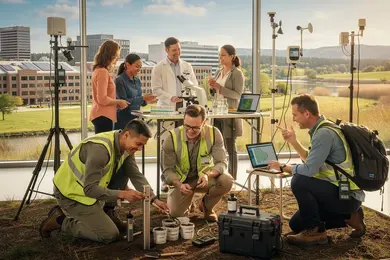
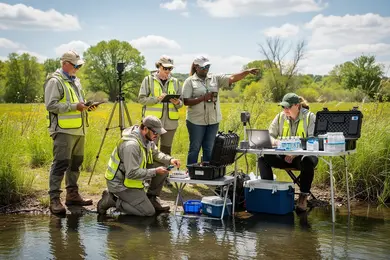
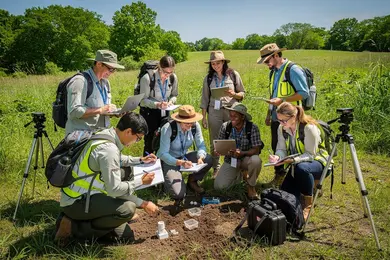
Students can expect a curriculum blending foundational subjects like chemistry and geology with applied ecological training, though the online format often limits hands-on fieldwork, necessitating supplementary local internships or labs to build market-valued practical skills. Demand for accredited online environmental science programs with ecology focus has surged, offering flexibility for working professionals pivoting careers without interrupting employment.
However, students must scrutinize program accreditation and experiential opportunities to ensure alignment with employer expectations and eligibility for specialized certifications. Success hinges on integrating remote research projects and skill-building in GIS or statistical software alongside securing ecological field internships that demonstrate tangible problem-solving capabilities.
From a strategic workforce perspective, hiring managers prioritize applicants who combine theory and verified field experience, increasing competitiveness for government agency, NGO, and consulting jobs. With 13 fully online bachelor's degrees available globally by 2025, according to Educations.com, prospective learners should also consider how an online geology degree might complement ecological knowledge in interdisciplinary applications like land-use planning and environmental impact assessments.
How do online environmental science degrees compare to campus-based programs?
Online environmental science degree programs versus campus-based options present a significant tradeoff between theoretical knowledge and hands-on experience. Employers in ecology-focused roles prioritize direct lab and fieldwork skills-critical for tasks like ecological data analysis and climate monitoring-that are often lacking in online curricula. The U.S. Bureau of Labor Statistics predicts a modest 4% growth through 2034 for environmental scientists, primarily fueled by demand for professionals adept at interpreting real-world ecological data.
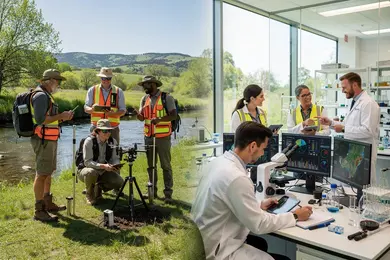
Working professionals leveraging online formats benefit from flexible scheduling but must secure local or virtual internships to compensate for practical training gaps. Those pursuing federal or state environmental agency positions face stricter expectations for in-person research experience, frequently demonstrated through cooperative education or hands-on internships. Conversely, private sector roles that emphasize data analytics or environmental policy may value online degrees more readily.
Prospective students must weigh key factors before committing to an online program:
- Are local opportunities for required fieldwork accessible outside the online curriculum?
- Do your target employers prioritize hands-on experience over theoretical learning?
- Are you prepared to supplement your education with certifications centered on ecological data tools?
Navigating these considerations deliberately is crucial to avoid credential gaps that hinder employment or advancement in ecology-driven careers. For those comparing the differences between online and traditional environmental science degrees, integrating practical work and complementary credentials is essential. For professionals interested in expanding related skills, pursuing a data science degree online can bolster quantitative competencies aligned with market demands.
Are online environmental science degrees with ecology foundations properly accredited?
Selecting online environmental science degrees with accredited ecology foundations requires prioritizing recognized regional accreditation by the U.S. Department of Education or CHEA to ensure employer acceptance and certification eligibility. Federal agencies like the EPA mandate degrees from regionally accredited environmental science programs with ecology emphasis for specialist and advanced positions, making accreditation a non-negotiable filter for career progression.
Specialized accreditation from entities such as the Society for Environmental Toxicology and Chemistry (SETAC) adds critical industry alignment, enabling graduates to meet state licensing demands and avoid employability barriers in environmental regulation roles. Students should verify accreditation status using official databases and confirm that program delivery includes rigorous oversight, as employer scrutiny of online credentials intensifies amid a growing market saturation.
In practical terms, professionals employed full-time in consulting or government agencies face scheduling and skill-development tradeoffs. Accredited programs offering robust training in data analysis and ecological modeling directly correlate with median salaries above $100,000, reflecting tangible market value for quantitative ecological expertise. Insufficient program quality may limit salary growth and career advancement opportunities.
For individuals weighing options, comparing these accredited online environmental science degrees against alternatives like an exercise science degree online program reveals distinct pathway demands and workforce outcomes that affect long-term viability.
What ecology-focused courses and specializations are included in these programs?
Online environmental science degrees with ecology courses included focus heavily on specialized skills like applied ecosystem analysis, biodiversity conservation, and habitat assessment that align with targeted employer needs. For instance, restoration ecology coursework equips students for roles in land management agencies requiring ecosystem rehabilitation expertise, while wildlife management emphasizes population dynamics vital for state conservation jobs.
Key specializations in ecology and environmental science degrees increasingly cover ecological data analytics, remote sensing, and GIS mapping, essential for interpreting complex environmental data in policy or resource management contexts. These technical skills are sought after in sectors such as energy and agriculture, where regulatory compliance and environmental oversight are critical.
Students must weigh program costs carefully. Tuition can vary dramatically-from $24,000 at American Public University to $55,000 at Arizona State University Online-with higher prices not always guaranteeing stronger employer connections or deeper specialization. Practical elements like virtual labs or local field partnerships are indispensable for turning theory into skills that surpass entry-level technician roles.
Specialization tracks also address climate change impacts and invasive species control, reflecting workforce challenges in both public and private environmental roles. To assess broader affordability, prospective learners can consult resources like a library sciences degree affordability comparison for context on value-driven program selection.
What are the typical admission requirements for online environmental science degrees?
Admission into online environmental science degrees involves more than just a high school diploma; applicants usually need a GPA near 2.5 to 3.0 and strong foundations in biology, chemistry, and mathematics. This baseline knowledge is essential due to the quantitative and scientific rigor needed, particularly in specialties like ecology or data analytics.
Admission standards also increasingly reflect the workforce's demand for skills in ecological modeling and environmental data analysis, with earth and environmental science data scientist roles growing at a projected 33.5% and paying average salaries above $120,000. Working professionals should recognize that prior college credits, industry certifications, or relevant job experience in scientific roles may substitute standard requirements.
However, successful admission still depends on demonstrating motivation through recommendations and personal statements. However, these documents weigh more on communication ability than academic potential. Technical readiness, including reliable internet and familiarity with digital learning platforms, impacts success in synchronous and asynchronous course formats.
Candidates without prior lab experience face additional hurdles, as many programs mandate either virtual or in-person lab components to meet certification standards. Prospective students transferring from community colleges must carefully evaluate articulation agreements to avoid redundant coursework and delays, since missing prerequisites often result in costly remedial classes. This strategic planning reduces enrollment friction and total time-to-degree, affecting long-term employability and financial outcomes.
How long do online environmental science programs take, and what do they cost?
Choosing between accelerated and part-time online environmental science bachelor's programs hinges on balancing time-to-completion against career and financial needs. Completing the degree in four years aligns with expectations among environmental consulting firms and regulatory agencies, enhancing early employability by matching academic credentials with market demands.
Part-time paths, which extend study up to six years by allowing 6-9 credits per semester, support working professionals needing steady income but delay entry into specialist roles. This tradeoff suits career changers or those requiring flexible pacing but may reduce competitiveness where timely graduation is valued.
Cost savings in online degrees can be significant; for example, Florida International University's in-state online tuition is about 65% lower than out-of-state on-campus rates. However, technology fees, textbooks, and occasional in-person requirements for labs or fieldwork add expenses that vary by program.
Employers increasingly value accredited online degrees if candidates supplement them with field experience or internships, given the hands-on nature of environmental science work. Programs incorporating virtual labs, local fieldwork components, or partnerships with environmental organizations mitigate risks of employability gaps.
- Four-year completion maximizes early-career entry for roles in environmental consulting or government agencies.
- Part-time study offers steady pacing for employed students but extends program duration.
- Online tuition can reduce costs by over 60%, but ancillary fees and fieldwork contribute to total expenses.
- Practical experience remains essential to bridge academic training and workforce requirements.
What careers can graduates with ecology-focused environmental science degrees pursue?
Choosing a career within ecology-focused environmental science requires careful consideration of distinct roles, each with specific skill demands and work settings. For instance, environmental consultants often operate under agencies like the EPA, needing strong command of regulatory frameworks and impact report preparation. In contrast, wildlife biologists engage directly in field research and habitat management, frequently collaborating with federal or state natural resource bodies.
Conservation scientists, commonly employed by government forestry services or nonprofits, emphasize land use planning and advanced GIS/data analysis skills, blending technical expertise with policy application. Meanwhile, sustainability analysts represent a growing remote-friendly role, centered on assessing the ecological impacts of corporate operations, particularly in agriculture and manufacturing sectors where reducing environmental footprint is increasingly regulated.
Tradeoffs exist between urban-based consultancy or analyst roles, offering higher salaries but requiring strong regulatory and data literacy, and fieldwork-intensive positions that may restrict geographic flexibility. Additionally, Open Universities Australia projects expansion of online environmental science and sustainability programs by 2025, easing access for working students but necessitating disciplined time management and self-directed learning.
Graduates aiming for longevity in the field should anticipate the need for specialized certifications or graduate degrees focusing on ecology, environmental law, or data analytics to remain competitive and advance meaningfully.
What salary ranges and earning potential exist in ecology and environmental science careers?
Salary outcomes in environmental science vary widely based on specialization, sector, and location, shaping the viability of career pivots or educational investments. Entry-level positions like environmental technicians start near $40,000 to $50,000 annually, while mid-career roles such as environmental or conservation scientists generally command between $60,000 and $85,000.
Specialized fields-such as geospatial analysis or natural resource management, which align with concentrations offered in programs like Southern New Hampshire University's online BS in Environmental Science-tend to yield higher wages, especially within private consulting and certain federal agencies. However, candidates must consider sector-specific tradeoffs. Nonprofits and education institutions typically offer substantially lower compensation than private or government employers.
Geographic factors also heavily influence pay, with coastal and urban areas delivering 10-20% premiums over rural markets. For example, an ecologist with advanced geospatial skills in a metropolitan region can surpass $90,000, but similar expertise in less urbanized areas may not command congruent compensation.
Tuition ranges of $36,000 to $42,000 for specialized online environmental science degrees necessitate securing roles that exploit these skills to recoup costs. Career strategy should prioritize sectors demonstrating clear growth and salary premiums, such as climate resilience planning and GIS-driven compliance, to justify financial and time investments.
What is the job outlook and industry demand for ecology and environmental science roles?
Growth projections for environmental scientists and specialists of about 8% through 2032 reflect expanding regulatory demands and the increasing prioritization of climate adaptation and sustainability. However, this growth demands candidates who can demonstrate more than theoretical knowledge.
Employers require proven skills in geographic information systems (GIS), environmental data modeling, and hands-on field or lab work essential to natural resource management and environmental assessments. For online learners, programs incorporating mailed lab kits and guided protocols-such as some BS in Environmental Sciences offerings priced between $45,000 and $52,000-can partially address the critical deficit of direct technical experience.
Graduate job readiness is constrained without practical training; theoretical coursework alone often excludes candidates from entry-level roles or advancement. This practical barrier disproportionately affects remote students lacking access to robust fieldwork substitutes. Virtual training that replicates real-world conditions, though demanding self-motivation, aligns more closely with employer expectations and improves employability in environmental consulting and government sectors.
Prospective students must balance the cost, time, and effort involved in acquiring hands-on competencies against the increasing specialization demands of the labor market. The nuanced tradeoff lies in whether an online program's experiential components can realistically substitute for in-person experience while matching industry standards.
How can students choose a reputable online environmental science program with strong ecology training?
Not all environmental science programs provide equal practical value; prioritizing accredited institutions with demonstrated coursework in ecosystem management, conservation biology, and environmental policy is essential. Accreditation by recognized bodies such as the Southern Association of Colleges and Schools Commission on Colleges (SACSCOC) or the Higher Learning Commission (HLC) ensures academic rigor and credit transferability, directly affecting employability and graduate outcomes.
Return on investment must be a central consideration. For instance, Florida International University's online environmental science bachelor's degree, noted by OnlineU for median alumni earnings of $46,401 and 91% online enrollment, illustrates how certain programs balance cost, flexibility, and regional applicability to support workforce integration in conservation and natural resource sectors.
Prospective students should critically assess these program features before enrolling:
- Faculty expertise and active research in contemporary ecological issues to confirm access to current knowledge and methods.
- Connections with government agencies or nonprofits offering internships that provide essential fieldwork experience.
- Availability of practical skill-building tools such as virtual labs, GIS software, and remote sensing platforms.
- Graduate employment statistics in ecology-related roles to verify alignment with market demands.
For example, professionals aiming for federal environmental technician positions must verify that online programs include substantive fieldwork and scientific rigor aligned with federal qualification standards; otherwise, graduates risk credential gaps that hinder competitiveness.
Other Things You Should Know About Environmental Science
Many online environmental science programs struggle to offer comprehensive fieldwork and lab experiences, which are essential for ecological understanding. Programs that provide partnerships with local organizations or require on-site residencies better prepare students for practical roles. Without these, graduates may find themselves at a disadvantage in jobs demanding direct environmental sampling and analysis skills, limiting immediate employability in hands-on positions.
Programs vary significantly in flexibility and workload intensity. Part-time formats and asynchronous courses offer balance but extend program duration, which can delay career advancement. Students must evaluate if a program's pacing aligns with their job and personal commitments, as overloaded courses may increase dropout risk and reduce knowledge retention, affecting both immediate performance and long-term career gains.
Employer opinions vary by sector; government and research institutions often prioritize traditional degrees due to established lab training and reputation, while private companies may place more emphasis on skills and certifications. Graduates of online programs should supplement their degrees with internships or certifications to offset potential employer bias and enhance practical credentials that traditional on-campus experiences naturally provide.
Most programs require college algebra, introductory statistics, and one quantitative science course such as environmental data analysis or biometry. Ecology-focused degrees often expect students to use statistics software for field and lab data, and some schools require a minimum grade of C in these prerequisites.
References
- Ecology/Environmental Opportunities | Gradcracker - Careers for STEM Students https://www.gradcracker.com/search/science/ecology-environmental-jobs
- Top 8 Online Ecology Courses for High-Achieving High School Students in 2026 https://riseglobaleducation.com/blogs/top-8-online-ecology-courses-for-high-achieving-high-school-students-in-2026
- Greener Careers https://greenercareers.co.uk/blog/what-can-you-do-with-an-environmental-science-degree-job-opportunities-explained
- Environmental Science with Ecology - Atlantic Technological University https://www.atu.ie/courses/bachelor-of-science-environmental-science-with-ecology
- Foundations of Restoration Ecology - Society for Ecological Restoration https://www.ser.org/page/MOOC
- Environmental Science https://www.ualberta.ca/en/undergraduate-programs/bachelor-of-science-environmental-science.html
- Online Environmental Science Degrees: Compare Schools https://www.degreesforgood.org/online-degrees/environmental-science/
- Online Environmental Science Degree | BS Environmental Science | University of Phoenix https://www.phoenix.edu/online-liberal-arts-degrees/environmental-science-bachelors-degree.html
- Environmental Career Profiles Australia https://environmentaljobs.com.au/resources/environmental-sustainability-careers