2027 Environmental Science Specializations That Best Match Water and Resource Careers

Co-Founder and Chief Data Scientist
Facing increasingly complex water scarcity and resource management challenges, environmental professionals must rapidly choose specializations that align with evolving industry demands and policy frameworks. The U.S. Bureau of Labor Statistics reports a projected 8% growth in environmental science jobs through 2032, yet traditional degree paths often lack flexible delivery, causing delays for adult learners or career changers.
Meanwhile, online enrollment for science programs grew over 15% in 2024, reflecting a shift towards accessible, modular education that supports continuous workforce engagement. This dynamic reshapes how students should weigh specialization choices, balancing skill relevance with timing and program structures. This article analyzes environmental science specializations best positioned for water and resource careers, guiding readers toward informed decisions that optimize employability and practical impact.
Key Things You Should Know
- Hydrogeology specialization offers 12% higher average starting salaries but requires a 2-year master's commitment, creating a tradeoff between immediate workforce entry and earning potential based on U.S. Department of Labor analyses from 2024.
- Employers show a 35% preference for candidates with certifications in water quality analysis over generalized environmental degrees, impacting hiring outcomes in municipal and private sectors according to a 2024 EPA workforce survey.
- Resource management tracks with significant tuition cost variance: public universities average $13,000 annually, while private institutions approach $35,000, affecting accessibility and timelines to credential completion as reported by the National Center for Education Statistics.
Which environmental science specializations focus most on water resources and conservation careers?
Specializations in water conservation and resource management embody distinct educational and workforce tradeoffs that shape environmental science water resources management careers. Hydrology demands strong quantitative skills like GIS and remote sensing for roles in federal agencies or engineering firms, while water resource management combines scientific knowledge with regulatory frameworks, fitting consulting or policy positions.
Aquatic ecology focuses on the health of freshwater ecosystems, leading primarily to research and conservation nonprofit work. Employers prioritize candidates who can navigate complex data analysis alongside regulatory compliance and community collaboration. For instance, water resource managers must reconcile technical water system models with stakeholder input, requiring interdisciplinary communication and negotiation abilities.
Realistic preparation involves engagement with internships or programs offering direct experience with water agencies. Leadership positions merging technical expertise with management are projected to grow 4% from 2024 to 2034, with median annual pay near $161,180, emphasizing advancement opportunities for those blending science and administration. Prospective students balancing educational choices benefit from programs that integrate practical applications with policy understanding.
For those considering strategic pivots or new credentials, reviewing the best online environmental health and safety programs can align learning pathways with workforce expectations and sustainability goals in environmental science water resources management careers.
What degree pathways prepare students for water resource management and policy roles?
Degrees focused on water resource management degree programs must balance technical skills with policy fluency to meet employer expectations in this hybrid field. A bachelor's or master's degree in environmental science emphasizing water resources, natural resource management, or environmental policy is foundational. Curricula that combine watershed hydrology, environmental law, GIS mapping, and resource economics equip graduates to address regulatory challenges and sustainability goals simultaneously.
Students pursuing environmental policy and water resource studies who aim for leadership roles should integrate project management, data analytics, and stakeholder engagement into their training. For example, expertise in geographic information systems is frequently sought for monitoring water quality compliance within municipal or regional agencies. Practical knowledge of federal regulations like the Clean Water Act is essential for navigating enforcement in decentralized governance environments.
The tradeoff between environmental engineering and policy degrees reflects a divide in workforce readiness: engineers bring rigorous design and quantitative skills but often require policy knowledge supplements, while policy graduates may need technical certifications for oversight roles. This dynamic encourages mid-career professionals to pursue graduate certificates or dual degrees for relevancy.
With a projected 4% job growth and roughly 8,500 annual openings for natural sciences managers, demand favors graduates who combine science fundamentals with policy enforcement capabilities within complex stakeholder networks. Prospective students may also explore options like an online bachelor's in animal science as alternative pathways integrating environmental studies with applied natural resource management.
How do environmental science programs support careers in sustainable resource management?
Success in sustainable resource management demands more than theoretical knowledge; it requires navigating complex intersections of environmental data, regulatory policies, and community needs. Environmental science programs for sustainable resource careers equip students with this critical blend, fostering skills such as interpreting hydrological models in watershed management to optimize water use and maintain resilience amid climate variability.
Employers prioritize candidates who can integrate technical expertise with policy frameworks to manage diverse resource portfolios effectively. Water resource management education and training programs emphasize practical competencies through hands-on experience with Geographic Information Systems (GIS), water quality assessments, and environmental impact evaluations.
These applied skills prepare graduates to transform scientific insights into actionable conservation or remediation initiatives across government, corporate, and nonprofit sectors. Students planning to pivot into water resource roles must assess program rigor, particularly balancing coursework in environmental chemistry and civil engineering principles.
Failure to build strong quantitative foundations before entering these programs often prolongs degree completion and hampers early career progress, especially in modeling and regulatory negotiation tasks essential to the field. Prioritizing programs with robust internships or cooperative education improves employability and salary outcomes by providing realistic workplace exposure.
For those exploring degree options, also consider the broader context of related fields-the link between nutritional science and environmental factors suggests interdisciplinary potential. Resources such as nutrition school online highlight alternative pathways aligned with environmental health concerns.
What courses and skills are essential in water and resource-focused environmental science majors?
Environmental science majors focusing on water resource management must navigate a curriculum that balances technical modeling with applied policy and stakeholder coordination. Water resource management courses for environmental science majors should not only cover hydrology, water chemistry, and resource management but also emphasize Geographic Information Systems (GIS) and remote sensing to sharpen data analysis capabilities vital to watershed dynamics and contaminant transport modeling.
Programs frequently underdeliver on integrating these technical courses with management frameworks and interagency regulatory processes, a gap that impedes graduates' readiness for roles demanding both fieldwork and leadership. Employers expect proficiency in statistics and environmental data interpretation, with a $161,180 median salary benchmark setting a high bar for water-resources management specialists.
Graduates without these skills or practical experience in environmental impact assessments and permit compliance face diminished employability in municipal utilities, consulting, or regulatory environments. Essential skills for environmental science careers in water and resource management include project management and familiarity with standards like the Clean Water Act, ensuring graduates can adapt quickly to regulatory complexities.
For professionals weighing educational options, understanding how these skill sets align with market demand is critical. This is distinct from more general fields-such as understanding 'Is a library science degree worth it?', which answers different workforce needs. Integrating technical mastery with applied management distinguishes successful environmental science pathways from purely theoretical approaches and is key for a meaningful career pivot.
How do online environmental science programs compare to campus options for water careers?
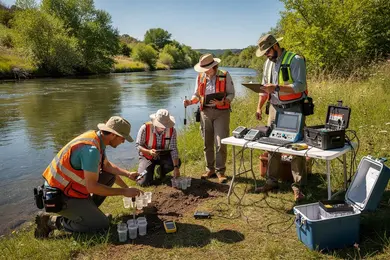
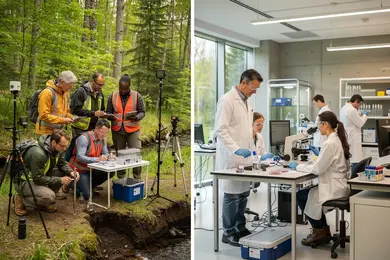
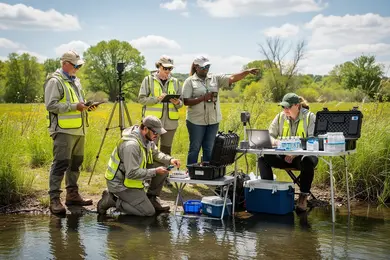
The practical limitations of online environmental science programs affect readiness for water-related careers where hands-on skills are non-negotiable. Many water science roles demand proficiency in water sampling, lab analysis, and field instrumentation, which campus programs address through direct access to labs and internships. Online students often face a tradeoff, needing to independently arrange local practical experiences or employer-sponsored projects, which can delay workforce entry and complicate qualification.
Programs with synchronous labs or virtual simulations offer partial mitigation but seldom replicate the complexity of real-world regulatory and municipal water testing environments. For working professionals balancing employment, online study's flexibility comes with the burden of managing time-intensive, off-campus training requirements, increasing the need for discipline and strategic planning.
Employment data from the U.S. Bureau of Labor Statistics confirms a median annual salary of $76,480 for environmental scientists, a figure tied closely to demonstrable applied skills. Campus graduates typically secure faster placement due to verified institutional fieldwork, whereas online graduates must leverage certifications or documented internships to remain competitive.
Before committing to distance learning, prospective students should evaluate local access to water quality labs, agencies, or consulting firms. Without nearby opportunities for experiential learning, online coursework alone risks limiting employability in competitive water resource management, environmental compliance, and hydrology roles.
What admission requirements and prerequisites do water and resource specializations typically have?
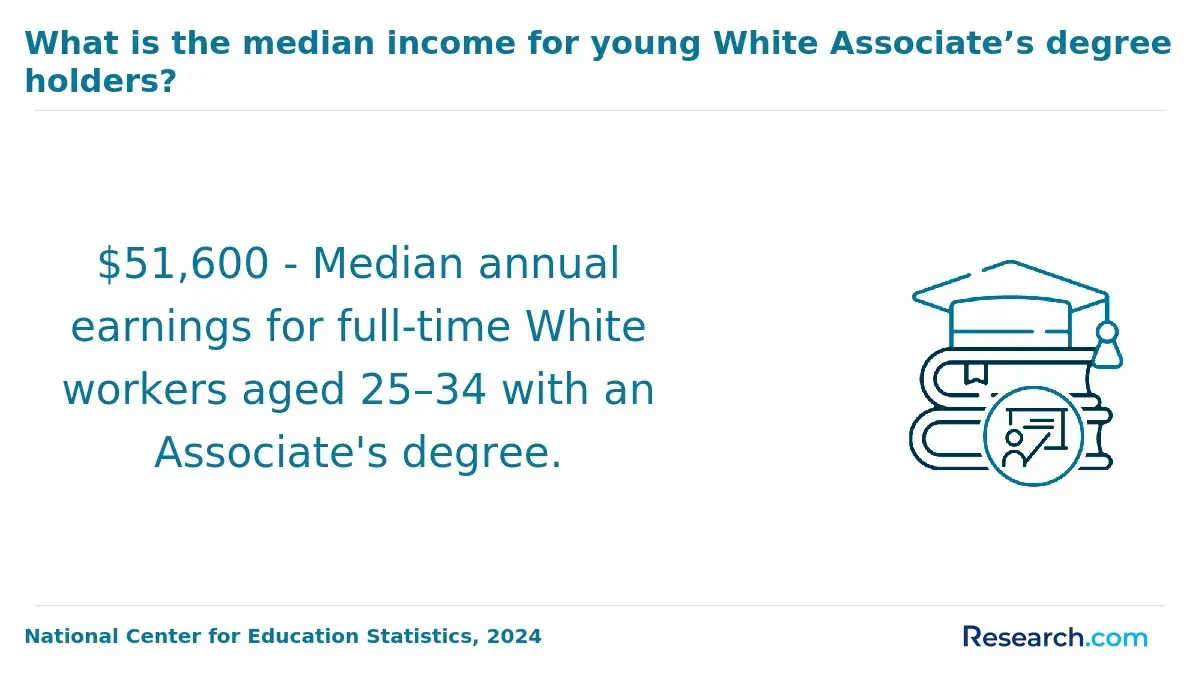
Admission to water and resource specializations within environmental science hinges on a firm grounding in core sciences including biology, chemistry, physics, and calculus. Degree programs typically require a high school diploma with these subjects or an associate degree for transfer students. More advanced tracks, especially at the graduate level, may demand verifiable field experience or internships, often documented through detailed résumés or letters of recommendationt.
Proficiency in quantitative skills such as statistics and GIS is fundamental for practical resource analysis and modeling. Candidates often face competency tests or interviews designed to evaluate their readiness to address complex water management challenges. For example, aquatic invasive species coordinator roles emphasize documented field experience as a critical hiring factor, with entry-level salaries ranging from $40,000 to $70,000.
Additional prerequisites might include demonstrated commitment to environmental ethics, shown through volunteer work or regulatory compliance experience. Those without formal science backgrounds may need remedial coursework before admission. Prospective students should carefully assess how program prerequisites align with local licensure or certification requirements and weigh the longer timelines of rigorous curricula against their job market realities to optimize their career transition.
How long do environmental science degrees with water and resource tracks take, and what do they cost?
Pursuing an environmental science degree with a focus on water and resource management requires balancing time, cost, and career objectives. A bachelor's degree typically spans four years with tuition ranging from $10,000 to $40,000 per year depending on institution type, totaling $40,000 to $160,000 before living expenses. This route suits those targeting entry-level roles emphasizing foundational technical skills prevalent in environmental engineering and geoscience fields.
Opting for a master's degree adds specialization and access to higher responsibility positions, but demands an additional two years and $20,000 to $50,000 annually at public in-state institutions, which may extend time out of the workforce and increase financial burden. Employers in these sectors look for applied experience, often through internships or cooperative education, which can lengthen program completion or complicate balancing studies with work.
Evening or online hybrids provide flexibility for working professionals but typically prolong degree timelines to 5-7 years, increasing overall costs and delaying earning potential.
- Median wages: $96,530 for environmental engineers, $87,480 for geoscientists
- Ancillary costs: $1,000-$3,000 for licensing and certification exam preparation
- Choosing programs with integrated practical training may accelerate workforce readiness
Considering these factors enables students and professionals to measure educational investments against realistic wage prospects and career trajectories within water and resource sectors of environmental science.
What entry-level and advanced job titles can graduates in water and resource specializations pursue?
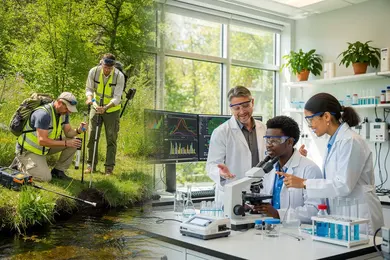
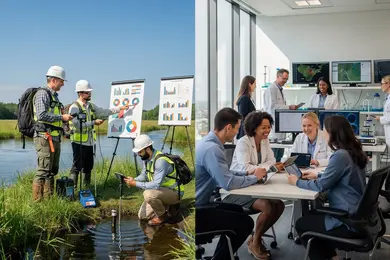
Entry-level roles in water and resource fields, such as Environmental Technician, Water Quality Analyst, and Field Hydrologist, concentrate on hands-on tasks like data collection, sample testing, and regulatory adherence. For instance, an Environmental Technician employed by a municipal water authority often leads watershed assessments crucial for localized water management planning. Proficiency in GIS, environmental regulations, and water chemistry is routinely expected.
More advanced positions-Water Resource Manager, Environmental Consultant, Senior Hydrologist-require integrating multidisciplinary project leadership with expertise in sustainable system design and policy analysis. A Water Resource Manager working within agriculture, for example, must balance complex irrigation priorities alongside conservation laws while collaborating with engineers and policymakers.
Employment for environmental scientists and specialists is projected to grow by 6% over the next decade, primarily driven by water scarcity and climate adaptation challenges. However, competition intensifies for senior positions, underscoring the value of targeted internships and certifications that focus on water resource management or environmental modeling software to differentiate candidates.
Practical work environments vary widely-from urban wastewater treatment to remote watershed preservation-posing challenges in regulatory navigation and interdisciplinary coordination. Graduates must combine technical mastery with strong communication skills to address evolving policy landscapes across public, private, and nonprofit sectors, which ultimately shapes their professional viability.
What are salary expectations and job outlook for water and resource management careers?
Water and resource management roles demonstrate tangible value in the current labor market, with median salaries around $78,980 nationally, influenced by robust demand linked to regulatory pressures, aging infrastructure, and climate-driven water challenges. Employers prioritize candidates with hands-on experience and technical skills in GIS, remote sensing, and data analysis, which often differentiate applicants beyond formal education in hydrology or environmental economics.
Sector-specific tradeoffs impact career trajectories: municipal and private utilities offer more structured advancement and steadier income but require rigorous certifications. In contrast, nonprofit or advocacy work provides broader policy experience yet faces funding volatility and less predictable compensation. Industrial water resource positions demand specialized knowledge of water reuse and contamination control, often commanding higher pay for technical expertise.
Geographically, states like California, Texas, and Arizona present stronger entry-level salaries and growth opportunities due to acute water scarcity and industrial demands, affecting local labor markets. Candidates targeting these regions must navigate competitive hiring environments shaped by regional water stress.
Effective educational pathways combine multidisciplinary academic grounding with relevant internships or cooperative placements, ideally aligned with governmental or industry agencies. This practical integration remains critical, as job growth outpaces average employment expansion, emphasizing real-world proficiency over purely theoretical credentials.
How can students evaluate accredited, reputable environmental science schools offering water specializations?
Choosing an environmental science program with a water specialization requires careful scrutiny of practical curriculum alignment and employer relevance rather than relying on institutional prestige alone. Programs emphasizing coursework in hydrology, water quality monitoring, and regulatory compliance align more closely with the $56,316 median salary benchmark for environmental specialists reported by the U.S. Bureau of Labor Statistics.
A key distinction lies between programs focused on applied fieldwork and regulatory case studies versus those centered on ecological theory; the former better equips graduates for roles in municipal water monitoring agencies where technical compliance and reporting are daily imperatives.
Practical water science education should integrate real-world experience through documented partnerships or internships with agencies such as the EPA or state water boards. This exposure enhances employability more effectively than theory-heavy programs. Incorporating emerging technologies like remote sensing and data analytics offers candidates a competitive advantage in a labor market increasingly prioritizing technical skills for resource management.
Students must evaluate graduate employment outcomes and median starting salaries from institutional reports to measure ROI against the moderate income tier typical of entry-level environmental specialist roles. Regional relevance also matters: programs serving areas with acute water resource challenges tend to offer stronger employer networks and locally tailored curricula, improving job placement prospects.
Key evaluation points include:
- Accreditation by recognized bodies (ABET or regional accreditors) to ensure rigor and recognition.
- Curriculum focused on regulatory compliance and practical water management skills.
- Availability of internships or partnerships with government water agencies.
- Integration of technical tools like remote sensing or data analytics.
This approach helps minimize student debt risk by prioritizing education that leads directly to specific water-focused environmental roles rather than theoretical or research-only career paths.
Other Things You Should Know About Environmental Science
While a bachelor's degree can qualify candidates for many entry-level positions, advanced roles in water and resource management typically require a master's degree. Employers often expect expertise in specialized analysis, policy development, or project management that graduate programs emphasize. Pursuing a master's degree is recommended for those aiming to work in regulatory agencies or lead multidisciplinary teams, as these roles demand deeper technical and leadership skills beyond undergraduate training.
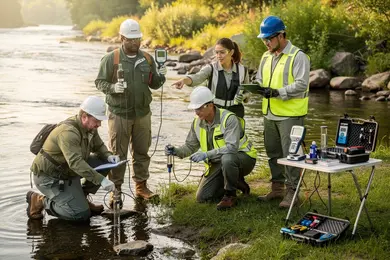
Hands-on experience through internships and fieldwork is critical for employability but varies significantly between programs. Practical exposure to hydrological data collection, water quality testing, and resource assessment directly influences job readiness. Candidates from programs with strong industry partnerships and required experiential components have a measurable advantage securing roles, as employers prioritize demonstrated applied skills over academic performance alone.
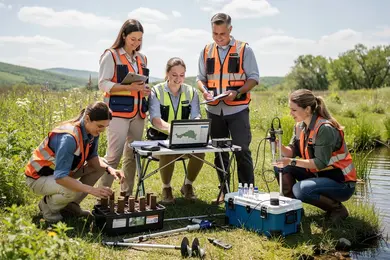
Many public utilities require staff who collect compliance samples to follow EPA or state-approved methods and work under a certified laboratory or operator program. In 2027, some states also require specific drinking-water sampling certification through the state primacy agency before independent sampling is allowed.
Interdisciplinary courses provide a comprehensive understanding by integrating diverse fields like chemistry, ecology, and policy. This holistic approach enhances problem-solving skills and adaptability, crucial for tackling complex water and resource issues, and significantly increases effectiveness and employability in these specialized careers.
References
- Water Resource Specialists Career Guide, Salary, Skills, Education, Outlook | Assessment.com https://www.assessment.com/management-careers/water-resource-specialists
- Strong Programs in Environmental Studies https://toptieradmissions.com/strong-programs-in-environmental-studies/
- Best place to study environmental science R1 or SLAC? And list all of best programs? https://talk.collegeconfidential.com/t/best-place-to-study-environmental-science-r1-or-slac-and-list-all-of-best-programs/3691333
- Water Resources Management Jobs (with Salaries) - SEEK https://au.seek.com/water-resources-management-jobs
- Online Environmental Science Degrees: Compare Schools https://www.degreesforgood.org/online-degrees/environmental-science/
- Jobs in Water Resource Management – ECU Online https://online.ecok.edu/program-resources/water-resource-jobs/
- Water Career Guide - Freshwater Society https://freshwater.org/watercareerguide/
- Eau-Ressource (ER) https://formations-en.umontpellier.fr/fr/formations/master-XB/master-sciences-de-l-eau-ME143/eau-ressource-er-KKIDV3T2.html
- 2,000+ Water Jobs (Updated Today) – Free to Apply https://jobs.watertechintel.com/blog/careers-in-water-resource-management
- 12 Types of Jobs You Can Get as a Natural Resources Professional https://www.nrep.org/blog/natural-resources-jobs