2027 Environmental Science Specializations That Best Match Climate and Sustainability Careers

Co-Founder and Chief Data Scientist
Facing urgent demands to address climate resilience, many environmental science professionals must choose specializations that align with rapidly evolving labor markets and employer expectations.
For instance, the U. S. Bureau of Labor Statistics projects a 10% growth in environmental science-related jobs over the next decade, yet only candidates with focused expertise in sustainability or climate adaptation often secure the most competitive roles. Simultaneously, the National Center for Education Statistics reports a 15% rise in part-time and online enrollment among adult learners in these fields since 2023, signaling a significant shift toward flexible education models crucial for career mobility.
This article identifies environmental science specializations best suited to meet these practical workforce demands and educational realities.
Key Things You Should Know
- Climate modeling specialization commands a 15% higher starting salary but demands advanced quantitative skills, creating a barrier for candidates lacking strong statistical backgrounds, according to NSF workforce data from 2024.
- Employers prioritize candidates with hands-on sustainability assessment experience; 62% of environmental firms cite this as essential for mid-level roles, indicating theoretical-only programs limit career advancement opportunities.
- Programs focusing on environmental policy yield slower ROI. Median pay grows 10% over five years versus 18% in tech-driven fields, posing higher financial risk for mid-career switchers per BLS 2024 earnings analysis.
Which environmental science specializations align most directly with climate and sustainability careers?
Specializations within environmental science for climate careers shape distinct professional trajectories, each presenting unique tradeoffs between policy influence, operational impact, and technical skill demands.
Climate policy and environmental governance target regulatory design and compliance, equipping graduates for roles where navigating complex legislation is essential. This path suits those engaging with government or NGOs, where understanding legal frameworks directly affects employment prospects amid expected 7% job growth and a median salary nearing $79,000.
Sustainable resource management focuses on integrating renewable energy and conservation within industries like manufacturing and agriculture, balancing upfront costs against long-term environmental compliance benefits. Practical sustainability careers lean heavily on this specialization to drive corporate strategy decisions that grapple with logistical and financial tradeoffs, emphasizing measurable reductions in carbon footprints.
Environmental data analytics meets rising demand for actionable insights through large dataset modeling of climate impacts and emissions forecasting. Professionals must adeptly handle complex software and interpret uncertain data models, frequently working in consulting, environmental startups, or municipal planning where quantitative precision guides strategy.
Choosing among these key sustainability-focused environmental science fields depends on individual aptitude for policy navigation, resource management logistics, or technical data interpretation, each carrying distinct workforce implications. For those evaluating advanced study options, exploring the top GIS masters programs may reveal specialized pathways that complement these core fields with spatial analytic expertise relevant across climate and sustainability sectors.
What climate and sustainability job roles can you pursue with each specialization?
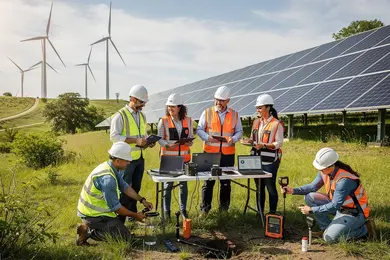
The demand for climate and sustainability careers by environmental science specialization reveals divergent workforce dynamics that warrant deliberate navigation. Renewable Energy & Decarbonization Systems roles, projected to add 12.9 million global jobs by 2030 according to the University of Waterloo, emphasize immediate employability in technical areas like solar and wind project engineering but require readiness for operational complexities and policy integration.
This contrasts with Environmental Policy and Regulation, where slower salary growth may be offset by influential roles in shaping and enforcing climate laws, demanding legal acumen and stakeholder management skills.
Specializing in Climate Modeling and Meteorology suits professionals capable of interpreting complex datasets for applications in urban planning and insurance risk assessments. Conservation Science careers, meanwhile, are field-intensive, focusing on ecosystem restoration and biodiversity analytics in NGOs or government agencies, requiring adaptability and biological data expertise.
Water Resources and Management fields prioritize geospatial analysis and regulatory navigation to address infrastructure adaptation and drought resilience, reflecting localized but critical environmental challenges. Balancing these pathways involves assessing personal aptitude alongside practical certification barriers and long-term earnings potential.
Prospective students evaluating job roles in environmental science for climate and sustainability should consider how specialization aligns with both market demand and the nature of day-to-day responsibilities. For those weighing advanced education options, affordable pathways such as an MS data science online offer complementary data skills increasingly valued across specialties.
How do environmental science degrees compare with sustainability and climate-focused degrees?
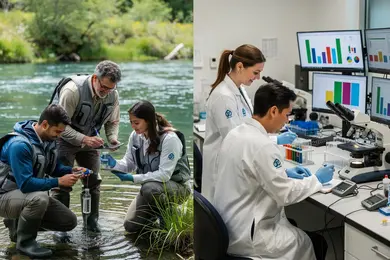
Choosing between environmental science degree programs versus sustainability studies hinges on the intended career path and employer expectations. Environmental science degrees ground students in natural systems, chemistry, biology, and ecology, equipping them for roles requiring fieldwork and laboratory analysis, such as ecosystem restoration or environmental monitoring.
In contrast, sustainability and climate-focused degrees emphasize applied skills, policy analysis, environmental economics, and data modeling, that align with rising demand in corporate ESG reporting, climate finance, and renewable energy sectors.
For instance, a professional targeting corporate sustainability roles benefits more from sustainability studies, which sharpen competencies in regulatory frameworks and risk management tools.
This distinction reflects broader workforce trends. LinkedIn data cited by the University of Waterloo shows an 8% annual growth in demand for climate risk analytics and data science skills, favoring applicants with quantitative and tech-driven expertise commonly honed in sustainability programs.
Prospective students navigating climate change career pathways in environmental science and sustainability should weigh these tradeoffs:
- Environmental science offers broad scientific literacy but may need supplementary digital or policy training to compete in today's market.
- Sustainability degrees accelerate entry into corporate and climate-focused jobs but might lack deep ecological or laboratory experience.
Consider integrating complementary studies such as the best library science programs for skills in data management and research support, enhancing employability across green sectors.
What courses and skills are essential in climate and sustainability-oriented environmental science programs?
Environmental science programs that emphasize climate change adaptation courses must integrate technical rigor with cross-disciplinary fluency to meet employer expectations. Professionals routinely apply expertise in geospatial technologies, environmental engineering, and life cycle assessment to projects such as urban resilience planning, addressing climate-induced threats like flooding or heat waves.
Such work demands not only quantitative skills, statistics, environmental chemistry, hydrology, but also competencies in programming languages like Python or R to handle complex climate data efficiently.
Students pursuing these programs face a significant tradeoff between specialized technical training and essential sustainability skills for environmental science careers, including policy analysis, stakeholder engagement, and communication. Neglecting these skills limits graduates' ability to translate data into actionable solutions or navigate regulatory frameworks effectively. Employers prioritize candidates capable of balancing cost-efficiency with compliance, particularly in infrastructure design and resource management.
Projected employment growth for environmental engineers at 7% between 2023 and 2033, with a median salary near $100,000, reflects robust demand for professionals who combine theoretical knowledge with practical experience.
Internship opportunities in environmental consulting firms or municipal planning departments can bridge this gap. Prospective students should also evaluate program curricula for integration of workforce-relevant training rather than isolated coursework.
For those weighing options across disciplines, resources such as online MLIS programs demonstrate how critical it is to align course offerings with industry needs to maximize employability and impact.
How do online environmental science programs for climate careers differ from campus options?
The choice between online and campus environmental science programs hinges on nuanced career goals and the nature of hands-on experience needed for specific roles. Campus programs offer unfiltered access to real-time lab work, field research, and immersive internships that are vital for positions requiring species identification or ecological monitoring.
These align with employer expectations in growing sectors such as conservation biology and natural resource management, where direct experiential learning is often non-negotiable.
Conversely, online programs excel in flexibility, providing asynchronous learning that supports employed professionals navigating career pivots without relocating. However, this flexibility demands proactive efforts to secure local internships or on-the-job opportunities to obtain the practical exposure that campus peers gain more naturally. Without this, skill development in complex ecosystem modeling or biodiversity assessment may lag behind.
For example, a mid-career professional targeting sustainability consulting might benefit from online interdisciplinary electives unavailable on campus, leveraging the program while maintaining employment. Yet, candidates aiming for research-intensive roles or federal environmental agency positions generally find campus programs more aligned with the immersive science exposure those jobs require.
In summary, consider these tradeoffs when evaluating educational pathways:
- Campus programs offer superior hands-on training required for technical field roles.
- Online programs provide scheduling flexibility and curriculum customization suited for working professionals.
- Employers in expanding environmental sectors prioritize confirmed experiential engagement, often favoring campus-trained applicants.
Prospective students should weigh practical skill acquisition against professional and logistical constraints, aligning program format with their specific career trajectory and market expectations.
What should you look for in accreditation and program quality for these specializations?
Program accreditation and practical outcomes significantly influence employability in environmental science subfields like Environmental Health, Toxicology, and Pollution Control. Selecting a program accredited by recognized entities such as ABET or the Council on Education for Public Health (CEPH) safeguards alignment with industry standards and federal regulations.
This alignment is critical because environmental scientists in these areas face a roughly 7% job growth projected over a decade, with median salaries ranging between $70,000 and $80,000, per U.S. Bureau of Labor Statistics data summarized by Iowa State University.
Employers prioritize candidates with hands-on experience in data analysis, risk assessment, and regulatory compliance, especially for pollution control roles requiring immediate contamination response following EPA protocols. Applicants who have completed internships or capstones involving environmental impact assessments demonstrate the applied competencies that increase workforce readiness.
Programs closely connected to ongoing research initiatives or government datasets offer stronger preparation for the complex analytical and toxicological evaluations demanded in this sector. Conversely, graduates from programs without these resources risk gaps in skills essential for health risk profiling and regulatory adherence.
Logistical factors, such as program delivery format and proximity to industry clusters, matter for mid-career professionals balancing employment with skill acquisition. Transparency in graduate employment rates and alignment with U.S. licensing standards are practical markers of program relevance, with absence often signaling weaker workforce integration.
What admission requirements, program length, and typical costs do students face?
Choosing an environmental science specialization without assessing program rigor and workforce alignment risks delays and missed opportunities. Admission typically demands strong math and science foundations at the undergraduate level, while graduate applicants need a related bachelor's with a GPA around 3.0. Selective master's and doctoral tracks may expect GRE scores and recommendations, although many programs have eased these requirements to broaden access.
Program length varies by credential and delivery mode: bachelor's degrees take roughly four years full-time, but part-time or accelerated formats alter this timeline. Master's programs usually last 1.5 to 2 years, with thesis options extending duration. Certificate and diploma courses are pragmatic for professionals seeking shorter-term specialization, lasting months to a year.
Costs fluctuate widely based on residency and institution type, ranging from $10,000 to $50,000 annually. Graduate-level studies cost more, especially in niche fields like sustainable business or green finance. Beyond tuition, students must budget for supplementary expenses including textbooks, lab fees, and fieldwork, which can add several thousand dollars.
Significantly, career prospects in circular economy or clean energy sectors will favor candidates with cross-disciplinary skills combining technical, financial, and policy training. The University of Waterloo projects up to 24 million new jobs in these areas over the next decade, shifting employer expectations toward versatile expertise and practical experience rather than singular academic credentials.
What are the salary ranges and earning potential in climate and sustainability careers?
Salary prospects in climate and sustainability fields vary sharply with specialization, experience, and sector, forcing candidates to balance immediate compensation against long-term growth. Entry-level roles typically pay between $50,000 and $70,000 annually, while senior positions often surpass $120,000.
For example, environmental scientists and specialists report median earnings near $80,000, whereas sustainability directors in corporate or government settings earn roughly $90,000 to $130,000.
Specialists in climate communication or advocacy, common in nonprofit or education sectors, start lower, around $45,000 to $65,000. Yet, Iowa State University's Environmental Science Graduate Program notes a 91% employment rate in sustainability-related roles within six months post-graduation, indicating robust demand. However, transitioning professionals should anticipate variable pay structures, especially in startups or NGOs where non-monetary benefits may offset lower wages.
Technical expertise in renewables, environmental data, or regulatory compliance tends to command higher salaries but often necessitates certifications or advanced degrees. Geographic location significantly influences earnings; urban hubs like San Francisco, Washington D.C., and Boston offer premium pay that corresponds with elevated living costs. Employers increasingly expect a blend of technical and soft skills, such as stakeholder engagement and communication, which shapes hiring and remuneration decisions.
Prospective students should weigh short-term earnings in educational or advocacy roles against eventual advancement into policy or corporate sustainability strategy, where compensation surpasses $100,000 but requires strategic skill development and patience.
What is the job outlook and industry demand for climate and sustainability specialists?
Climate and sustainability specialist roles are shaped by competing priorities across industries, requiring professionals to balance environmental outcomes with operational viability.
For instance, agricultural employers seek candidates who can implement data-driven, climate-smart land use strategies that increase yield while minimizing emissions. Conversely, urban planners focusing on sustainability navigate complex regulatory and community interests to meet policy-driven emission targets. Such distinctions affect the nature of work, skill expectations, and timeline pressures.
Employment prospects for this sector project steady growth around 4% over the next decade, with roughly 8,500 openings annually reflecting demand rooted in climate change mitigation, resource management, and regulatory compliance. Median salaries near $80,060 indicate the value of specialized expertise, particularly in GIS, climate modeling, and sustainability reporting frameworks.
However, candidates face hurdles acquiring interdisciplinary skills spanning ecology, policy analysis, and applied resource management. Entry-level roles typically require internships or certifications tied to environmental assessments, further reinforcing practical experience as a prerequisite.
Choosing to specialize involves tradeoffs:
- Sustainable agriculture roles tend to yield more immediate, concrete impacts but may require intensive technical knowledge of biological and land systems.
- Policy or energy sector positions often involve navigating complex stakeholder negotiations and adapting to shifting federal and state climate regulations, which can influence job stability and progression.
Decisions about specialization must weigh personal readiness for either technical versus regulatory challenges, as well as preferences for tangible project outcomes versus longer-term policy-driven objectives.
Are certifications or licenses needed for climate and sustainability roles, and how do you qualify?
Certification and licensing decisions in climate-related fields reflect distinct employer demands and sectoral realities that shape career latitude. Regulatory roles, such as environmental compliance officers handling hazardous materials, frequently require state or federal licenses like the Certified Hazardous Materials Manager, limiting geographic and industry mobility but granting legal authority.
Technical positions, including those in environmental informatics, GIS, or remote sensing, favor certifications like GIS Professional (GISP) or Remote Sensing Certification, as these credentials prove applied data skills essential to evolving climate strategies and compliance standards. Job listings for these roles have grown approximately 8% annually, signaling sustained demand for specialized expertise verified through certification.
Conversely, many sustainability consultants and program managers lean on advanced degrees in environmental science coupled with project management certifications rather than strict licensure, reflecting a pragmatic balance between technical depth and broad operational agility.
Employers increasingly treat certifications as proxies for current expertise amid quickly evolving technologies and regulations. Aligning credential choices to targeted sectors is critical: specialized licenses confer authority but restrict flexibility, whereas interdisciplinary certificates and degrees facilitate adaptation across sustainability roles.
Other Things You Should Know About Environmental Science Degrees
Environmental science careers linked to climate and sustainability demonstrate steady growth due to regulatory pressures and increasing corporate environmental responsibility. However, job stability varies by specialization and region; technical roles with data analysis or policy expertise offer more consistent demand than entry-level generalist positions. Prioritize programs that integrate practical experience and industry-relevant skills to improve long-term employability, as employers emphasize applied knowledge alongside academic credentials.
In 2027, specializations like renewable energy, climate policy, and sustainable agriculture lead climate and sustainability careers. These fields align with current industry demands, offering roles in energy consulting, policy advising, and sustainable food production, crucial for addressing global environmental challenges.
Many employers want ArcGIS Pro or QGIS proficiency plus a remote-sensing certificate covering satellite imagery, spatial analysis, and carbon or land-use mapping. Entry-level roles often ask for one completed portfolio project, and some federal jobs require a GIS course or 12–18 related credit hours.
Employers increasingly value interdisciplinary skills that blend environmental knowledge with data analysis, communication, and project management. While deep specialization builds expertise, candidates who can collaborate across disciplines and translate science into actionable strategies often secure higher-level roles. For career advancement, prioritize educational paths that develop versatile competencies alongside focused technical training to meet employers' expectations for strategic problem-solving.
References
- The 11 Highest-Paying Careers in Sustainability https://www.sustainabilitydegrees.com/blog/highest-paying-careers-in-sustainability/
- Institutional vs Program Accreditation: What You Should Look For | Articles | Unimy https://www.unimy.com/article/institutional-vs-program-accreditation-what-you-should-look-for
- Accreditation processes for technical programs https://edquip.co/blog/accreditation-processes-for-technical-programs
- Sustainability Jobs 2026: Global ESG & Climate Hiring Trends https://enable.green/news/sustainability-jobs-2026/
- Skills for Success in Climate Careers: Technical Expertise and Soft Skills | EuroClimateJobs https://www.euroclimatejobs.com/article/808/skills-for-success-in-climate-careers-technical-expertise-and-soft-skills
- Best Research Programs for Students Interested in Climate and Sustainability https://riseglobaleducation.com/blogs/best-research-programs-for-students-interested-in-climate-and-sustainability
- How to choose a credible sustainability certification aligned with your business goals. | Change Climate https://www.changeclimate.org/blog/4-ways-to-navigate-sustainability-certifications
- Sustainability Certification: Guide to Green Standards & Accreditation https://ecovadis.com/glossary/sustainability-certification/