2027 Best Online Environmental Science Degrees for Stable Environmental Careers

Co-Founder and Chief Data Scientist
Environmental scientists face mounting pressure to bridge complex ecological challenges while adapting quickly to evolving workforce demands and credentialing standards. Nearly half of all online undergraduates in 2024 were adult learners balancing jobs and family, according to the National Center for Education Statistics, signaling a clear need for flexible, career-aligned education pathways.
This shift reflects a broader trend where traditional campus programs struggle to accommodate working professionals aiming to pivot or advance in environmental science roles amid growing competition and employer expectations for interdisciplinary skills. This article evaluates the best online environmental science degrees tailored for stability and upward mobility, helping candidates navigate tradeoffs between program structure, accessibility, and long-term career outcomes.
Key Things You Should Know
- Employers in the U.S. Environmental Science sector increasingly prioritize graduates with hands-on GIS and data analytics skills, demanding programs integrate real-world projects; lacking these can reduce hireability by over 25% according to recent National Science Foundation analyses.
- Prolonged degree durations in online environmental science correlate with 15-20% higher dropout rates, highlighting timing tradeoffs; accelerated formats reduce opportunity costs but may limit depth in critical regulatory knowledge per U.S. Department of Education data.
- Cost disparities among accredited online environmental science programs-ranging from $10,000 to $60,000-directly impact debt-to-income ratios, influencing job mobility and career advancement within public and private sectors as shown in 2024 Bureau of Labor Statistics reports.
What is an online environmental science degree and how does it compare to campus programs?
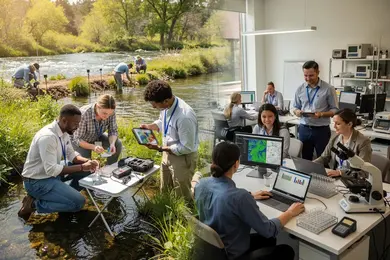
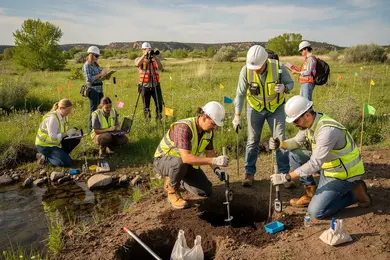
Online environmental science degree benefits hinge on balancing flexibility with rigorous, employer-valued competencies. While these programs deliver core topics equivalent to traditional campus tracks-such as ecology, environmental policy, and data analysis-they shift practical fieldwork into locally sourced or brief on-site formats. This arrangement requires students to actively coordinate experiential learning, a critical factor since hands-on skills remain decisive for roles in environmental impact assessments or regulatory compliance.
Compared to campus programs, online formats better accommodate students juggling employment, family, or geographic constraints but often lack inherent networking opportunities found in internships or labs. For example, professionals eyeing careers in sustainability consulting or remote research might thrive in this model. However, entry into sectors emphasizing dense professional networks, such as government environmental policy or remediation, may require additional effort outside the program.
Employers in clean energy and environmental services, with workforce projections growing from 9 million to 14 million over the decade, prioritize demonstrated technical expertise regardless of learning mode. Successful navigation of an online environmental science degree demands disciplined self-management, strategic internship acquisition, and access to local environments for field skills.
Candidates should rigorously evaluate programs' support for these experiential requirements to avoid gaps that could hinder employability. Those considering this pathway may also consult resources like the online geology degree listings for comparative insights on similar disciplines and program structures.
How do I choose the best accredited online environmental science program in the U.S.?
Employers and graduate schools increasingly scrutinize accreditation, making it a nonnegotiable criterion when selecting accredited online environmental science programs in the U.S. Regional accreditation recognized by the Council for Higher Education Accreditation or the U.S. Department of Education is not just a formality but a gatekeeper for credibility and credit transfer. Degrees from nonaccredited or nationally accredited programs often face rejection in rigorous professional contexts.
Curriculum for the best online environmental science degrees for U.S. students must emphasize applied data analysis, environmental policy, and field methodologies aligned with real-world job functions. For example, a professional targeting environmental compliance roles should prioritize courses in environmental law and regulatory frameworks, while aspiring ecologists need strong training in geospatial analysis and ecosystem research.
Employers value integration of current tools such as GIS and remote sensing, which directly influence employability. Program flexibility and student support are critical tradeoffs, especially for working professionals making a career pivot. Asynchronous coursework balanced with periodic synchronous sessions helps maintain work-life balance. Practical partnerships for virtual labs or local internships compensate for online formats lacking physical fieldwork.
The 8% job growth projection for environmental scientists through 2032 and a median wage exceeding $75,000 underscore the tangible returns for graduates equipped with these applied skills. Assessing total program cost relative to outcomes is essential. Graduates from accredited programs tend to secure employment more quickly.
Students comparing options would also benefit from reviewing rankings like those found in the affordable data science degree listings, as environmental science increasingly overlaps with data science competencies.
What types of online environmental science degrees are available and which level do I need?
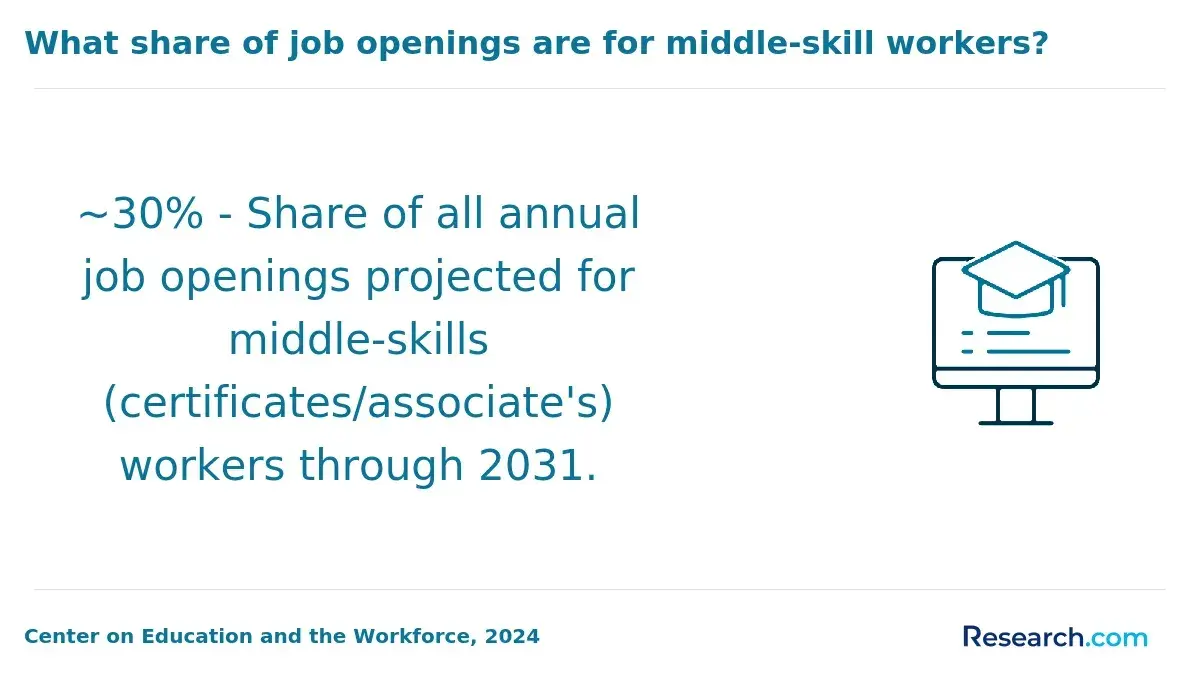
Environmental science careers demand carefully choosing from types of online environmental science degrees available, since each level aligns differently with job market expectations. An associate degree often leads to technician roles but lacks the depth most employers require for sustainable career growth. A bachelor's degree is generally needed for roles involving compliance, ecosystem management, or environmental consulting, as it teaches essential scientific concepts and applied skills.
For positions like environmental scientist or sustainability manager, which demand advanced project oversight and specialized knowledge, a master's degree becomes pivotal. These distinctions greatly impact employability and long-term salary trajectories. Students should weigh affordability and program quality, especially given the tuition gap-with average annual in-state bachelor's costs around $7,530 versus $16,415 for out-of-state students.
Such financial factors influence net return on investment as well as geographic flexibility. Practical training embedded in accredited programs, such as internships or capstones, plays a significant role in standing out among applicants. This hands-on experience often outweighs credentials alone in hiring decisions, reflecting real workforce demand.
For professionals comparing environmental science with other fields, examining aligned paths like online degrees in computer science can reveal strategic trade-offs in market demand, skill transferability, and career pivot options.
What core courses and specializations are typically offered in online environmental science programs?
The value of core courses in online environmental science degrees lies in their integration of both foundational knowledge and applied skills that employers demand. Key subjects such as ecology, chemistry, geology, environmental policy, and data analysis combine theoretical frameworks with practical tools like GIS and environmental statistics. These quantitative competencies directly influence employability in technical roles within consulting firms or government agencies.
Students must weigh program costs against curricular depth; tuition ranges from $24,000 to $55,000, with lower-priced programs offering broader interdisciplinary exposure, while higher-priced options frequently include advanced research and specialization opportunities. Specializations in online environmental science programs tend to parallel regional labor market demands and sector needs.
Fields such as environmental toxicology prepare students for managing chemical risks in public health, renewable energy aligns with sustainable infrastructure development, and conservation biology supports habitat preservation. For instance, an environmental policy track emphasizes law and economics, essential for policy analysis in governmental and nonprofit settings. Hydrology specialization is crucial in drought- or flood-prone regions.
Optimal career outcomes often hinge on practical skills aligned with labor market realities. Graduates proficient in GIS and ecological field methods paired with policy expertise possess a competitive edge in environmental science roles. This nuanced approach mirrors the practical considerations of those pursuing a master's in library science, where specialization and applied skills matter equally in career pivots.
What are the usual admission requirements for online environmental science degrees?
Admission to online environmental science master's programs hinges on academic background and professional relevance, with many institutions enforcing a minimum GPA of 2.5 to 3.0. Applicants frequently need a bachelor's in environmental science, biology, chemistry, or related STEM fields, along with transcripts, letters of recommendation, and purpose statements that align with environmental career objectives. While some schools still require GRE scores, an increasing number waive this to reduce entry barriers.
Professionals pivoting careers must document applicable experience-such as sustainability initiatives or regulatory compliance-to strengthen applications, given admissions committees' emphasis on real-world context alongside academic credentials. Those lacking environmental science prerequisites often face additional coursework requirements to meet eligibility.
International candidates encounter further stages, including English proficiency testing (TOEFL or IELTS) and credential evaluation to confirm equivalency. This multi-step screening ensures candidates demonstrate both academic readiness and professional intent suitable for complex environmental challenges.
Tuition costs vary significantly, with total program fees ranging from $11,538 to $46,050 and per-credit prices spanning $385 to $1,535, factors that directly influence budgeting and return on investment, especially for those seeking employer-funded advancement or skill validation.
- Strong academic records combined with relevant work experience improve admission chances
- Non-traditional students may need prerequisite courses, extending time and expense
- Cost variance demands careful financial planning relative to career goals
How long do online environmental science programs take and what do they cost?
Candidates seeking a bachelor's in environmental science must weigh program structure against employability outcomes. While standard full-time tracks run four years, compressed three-year paths often sacrifice critical hands-on components like labs and internships that employers value for practical readiness. For working professionals, part-time options stretching to five or six years offer necessary flexibility but prolong financial and opportunity costs.
Cost disparities dramatically influence student decisions. Programs charging around $3,765 per semester provide an affordable route for individuals targeting government or NGO positions where credentials meet thresholds but networking demands are lower. Conversely, tuition exceeding $10,000 per semester tends to correlate with brand prestige and more integrated experiential learning, potentially justifying higher debt for those pursuing consultancies or specialized federal roles.
Career changers must consider balancing income retention with program pace, seeking curricula that accommodate part-time study without compromising essential field experience. Additional fees-including technology access and software-add to total investment, so comprehensive budgeting is crucial.
Employers in environmental consulting often prioritize relevant experience alongside formal education, underscoring the importance of programs offering externships and project-based components. An informed choice requires aligning time-to-completion, cost, and practical training to job market realities rather than assuming faster or cheaper is better.
What stable environmental careers can I pursue with an online environmental science degree?
Career opportunities in environmental science demand a nuanced understanding of sector-specific roles and regional dynamics. For instance, environmental consultants tasked with evaluating construction impacts operate in a landscape of tightening regulations, particularly at federal and state levels, making their expertise increasingly indispensable. Similarly, regulatory compliance positions in manufacturing or energy industries hinge on adherence to evolving environmental standards, where lapses incur substantial penalties.
Conservation efforts typically involve federal or nonprofit employment, with funding influenced by political and public budgetary priorities, thus affecting job continuity. Accelerated master's programs-some completed in as little as one year-offer a tactical advantage by reducing time-to-degree and enabling faster entry into these professions compared to traditional multi-year paths.
However, prospective students must weigh this speed against the intensity of coursework and the critical need for internships or fieldwork to meet employer expectations for hands-on experience. Key labor market considerations include:
- Urban demand for specialists in pollution control and environmental health.
- Rural opportunities focused on ecosystem restoration.
- Salary progression tied to certifications like Certified Environmental Scientist or Hazardous Materials Manager, which serve as hiring prerequisites in many settings.
Balancing accelerated education with practical requirements underscores the importance of selecting programs offering integrated practicum components or established industry partnerships. Such elements improve real-world applicability and employability in a competitive field where experience often trumps credentials alone.
What is the salary potential and job outlook for environmental science graduates?
Data-centric roles in environmental science demand a combination of domain expertise and advanced quantitative skills, shaping workforce outcomes more than traditional field experience alone. Positions such as environmental and earth sciences data scientists show a 33.5% employment increase according to Arizona State University's 2026 career outcomes data, with an average salary of $120,230.
This growth significantly surpasses national averages, reflecting strong demand driven by sectors like renewable energy, environmental consulting, and climate policy analysis. Job functions differ notably by employer: government roles often prioritize pollution monitoring and regulatory compliance using GIS and statistical modeling, whereas private-sector analysts focus on climate risk assessment for infrastructure and financial resilience.
Graduates lacking technical competence in software and real-world data applications risk exclusion from higher-paying positions, particularly where analytics and problem-solving define value. Geography also affects employment prospects and income levels. Coastal urban centers typically offer higher salaries but come with intensified competition. Nonprofit sectors generally yield lower compensation compared to government agencies or private consultancy.
Key considerations for prospective students include:
- Prioritizing programs emphasizing data analytics combined with environmental science
- Developing proficiency in GIS, programming, and statistical tools
- Understanding sector-specific expectations and geographic labor market disparities
Maintaining relevance in this expanding field requires continuous upskilling and strategic networking within data-driven environmental sectors.
Are licenses, certifications, or professional credentials required for environmental science careers?
Licenses and certifications in environmental science are not universally mandatory but significantly shape career trajectories by signaling validated expertise to employers. Entry-level roles in research or policy typically prioritize accredited degrees over credentials. However, positions handling regulatory enforcement or hazardous materials, such as environmental site assessors or government inspectors, require specific state licenses or certifications like the Certified Environmental Professional (CEP).
For example, a state-certified environmental regulator must hold formal credentials to conduct inspections, while a renewable energy analyst can often progress with just a degree. Employers use these credentials to differentiate candidates, linking them to verified practical skills and compliance knowledge. Data from EnvironmentalScience.org shows graduates with accredited environmental science degrees earn an average salary of $76,480, reflecting an 8% employment growth projection through 2032.
The tradeoff involves time and experience: obtaining certifications like the CEP usually requires a minimum of five years in the field plus passing rigorous exams, which delays workforce entry but opens paths to leadership and higher pay. Candidates skipping this step often face limited upward mobility and plateau below supervisory levels.
- Technical field roles typically mandate state licenses.
- Research and policy jobs lean heavily on academic credentials, with certifications enabling further advancement.
- Private sector consulting and sustainability roles benefit substantially from certifications demonstrating regulatory expertise and applied knowledge.
This strategic credentialing approach aligns real-world requirements with career progression beyond degree completion alone.
How can working adults succeed in online environmental science programs while balancing other responsibilities?
Success in online environmental science programs for working adults depends largely on choosing courses that accommodate fluctuating schedules without compromising academic rigor. For instance, a compliance officer managing government regulations can benefit from asynchronous formats that allow study outside standard business hours. The tuition spectrum can nearly double-from around $28,000 up to more than $55,000-between budget-conscious and premium programs.
Balancing studies with job and family commitments demands reliable institutional support. Employer tuition assistance can significantly reduce upfront costs, while academic advising and career services tailored to adult learners improve retention and streamline workforce reintegration after graduation. Candidates should confirm availability of these services before enrolling.
Technical readiness also influences success. Stable internet and suitable digital tools are essential to navigate labs and increasing synchronous sessions that replicate workplace collaboration. Career tracks like renewable energy management require specialized electives and networking strategies distinct from ecological research, so aligning coursework with specific employment goals is critical.
Pragmatic time management, including breaking assignments into weekly goals and maintaining communication with instructors, helps mitigate falling behind when juggling multiple responsibilities. Taken together, these operational factors-program flexibility, cost management, institutional support, and disciplined scheduling-define realistic pathways to advancing in environmental science careers.
Other Things You Should Know About Environmental Science
An online environmental science degree should come from a school with regional institutional accreditation, such as from the Higher Learning Commission or SACSCOC. If the program is targeted to environmental science, look for AACSB only if it includes business coursework; for science programs, program-specific accreditation is less common.
Broad environmental science degrees provide foundational knowledge and versatility across multiple sectors but may be less attractive to employers seeking specialized skills. Specialized tracks, such as environmental policy, toxicology, or GIS, offer targeted expertise that aligns closely with specific job markets, improving hiring prospects in those niches. Students should prioritize programs with clear specialization options if they have defined career goals requiring technical depth.
Working professionals must weigh flexibility against course intensity. Part-time programs generally offer manageable pacing to balance work and study but extend time to degree completion. Accelerated programs reduce overall duration but increase workload and can strain work-life balance, often demanding full-time commitment. Professionals should prioritize part-time options unless they can commit significant time, as burnout risks are high in accelerated formats without flexible employer support.
References
- Online Environmental Science Degree | Programs & Career Options https://www.learnhowtobecome.org/best-online-bachelors-in-environmental-science-degree-programs/
- REP Certification: Registered Environmental Professional Guide https://ehscareers.com/employer-blog/rep-certification-registered-environmental-professional-guide/
- Environmental Certifications for entry-level and career changers https://www.theenvironmentalcareercoach.com/certification-links
- Join-Board Certified Environmental Scientist https://www.aaees.org/bces
- CES - Certified Environmental Scientist https://www.nrep.org/certifications/certified-environmental-scientist-ces
- Online Environmental Science Degree | BS Environmental Science | University of Phoenix https://www.phoenix.edu/online-liberal-arts-degrees/environmental-science-bachelors-degree.html
- Certification Guide for Young Professionals - Board for Global EHS Credentialing https://gobgc.org/professional-environmental-certifications-professionals/
- Online Environmental Science Degrees: Compare Schools https://www.degreesforgood.org/online-degrees/environmental-science/
- Environmental Science https://www.ualberta.ca/en/undergraduate-programs/bachelor-of-science-environmental-science.html