2027 Online Environmental Science Degrees With Long-Term Career Stability in Environmental Work

Co-Founder and Chief Data Scientist
Environmental science professionals face mounting challenges balancing work, urgent upskilling, and sector shifts amid evolving regulatory pressure and climate imperatives. Many must navigate restrictive schedules and limited campus access while employer demand for advanced, versatile expertise climbs sharply. Recent data from the National Center for Education Statistics reveals a 20% surge in online science degree enrollment since 2022, indicating broad shifts toward digital pathways that accommodate working adults and nontraditional students.
This trend signals critical changes in workforce readiness and educational accessibility that directly affect program selection, timing, and career mobility. This article evaluates online environmental science degrees with proven long-term career stability, helping readers strategically align education choices with evolving professional demands.
Key Things You Should Know
- Degrees emphasizing GIS and data analytics dominate 2026 environmental science hiring, with BLS projecting 12% job growth; graduates lacking these skills face narrowing opportunity windows despite broad environmental expertise.
- Employers prioritize candidates with hands-on experience in regulatory compliance and environmental impact assessment, increasing demand in government and consulting sectors, pressuring academic programs to integrate practical components or risk graduate underemployment.
- Average program costs rose 8% since 2023 per NCES data, intensifying time-to-degree tradeoffs for mid-career professionals balancing wage loss against uncertain credential ROI amid tightening labor budgets.
What is an online environmental science degree and how does it prepare you for environmental work?
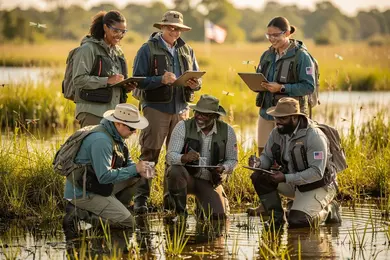
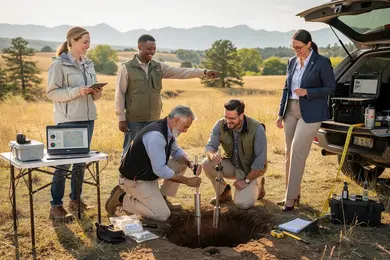
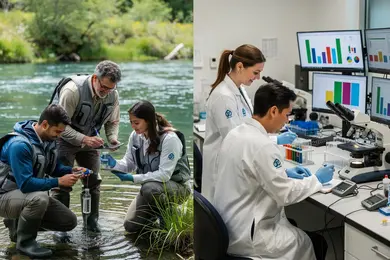
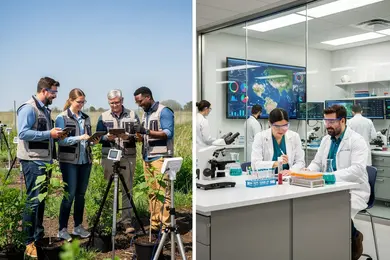
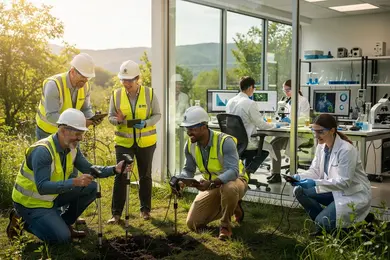
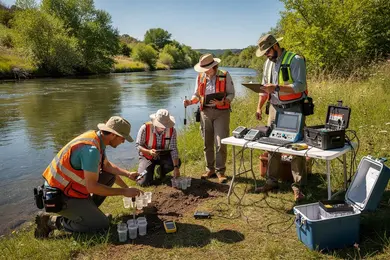
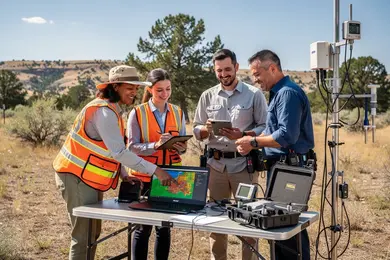
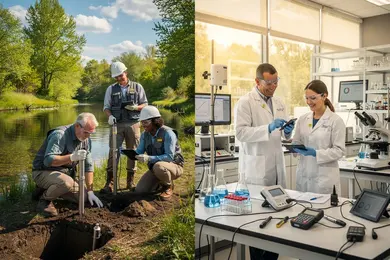
The practical value of an online environmental science degree hinges on its alignment with workforce demands and real-world skill application. Graduates are expected to perform specialized data collection, risk assessments, and ensure regulatory compliance, often requiring familiarity with tools like ArcGIS-making training in a geographic information systems degree highly relevant. Unlike traditional programs, accredited online degrees integrate simulated labs and remote fieldwork that replicate regional environmental challenges, enhancing employability in roles such as environmental consultant or specialist.
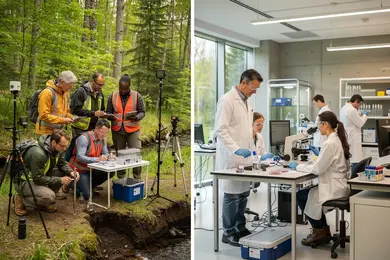
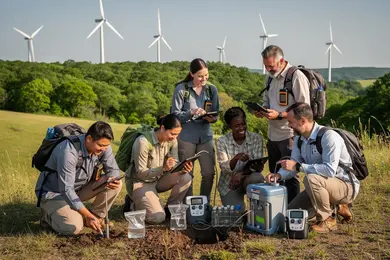
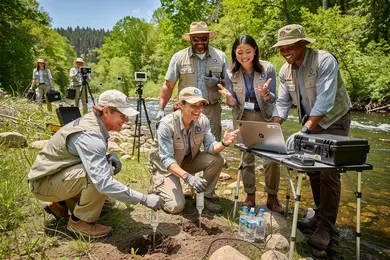
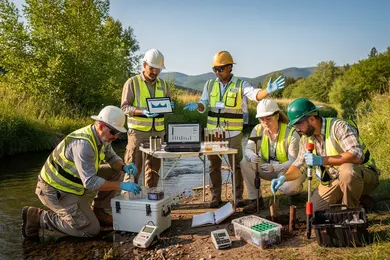
For working professionals navigating a career shift, the flexibility of these programs is advantageous but demands proactive engagement to secure local internships or co-ops. Employers consistently prioritize hands-on experience, particularly in environmental testing or remediation projects, which online curricula alone cannot fully substitute. Understanding this tradeoff is critical for students weighing online education against direct field immersion.
Students considering online environmental science degree benefits should recognize that median wages for environmental scientists and specialists reached $80,060 as of May 2024, with employment projected to grow 4% through 2034, creating approximately 8,500 openings annually. This data underscores the necessity of coupling online learning with applied fieldwork to remain competitive amid evolving environmental regulations and sustainability standards.
How do online environmental science programs compare to campus-based degrees for credibility and quality?
Employers distinguish online environmental science degree credibility compared to campus programs primarily by practical training components. Fully online degrees without direct fieldwork or laboratory experience struggle in roles demanding hands-on skills such as environmental sampling or compliance monitoring. Conversely, accredited online programs that integrate internships or hybrid practicum elements mitigate this concern and maintain workforce acceptance.
Campus-based environmental science degrees continue to dominate in delivering immersive in-person labs, fieldwork, and personal networking with faculty or industry leaders-critical for professions like conservation or government environmental agencies where tangible experience is non-negotiable. However, working professionals whose career objectives align with data analysis, policy evaluation, or remote environmental consulting often find that the quality of online versus campus-based environmental science degrees is comparable when the online programs emphasize rigorous coursework paired with remote project collaborations.
Given current job placement data-showing 76% overall employment and 73% highly skilled roles among environmental science graduates-students should assess programs based on ability to develop practical competencies and employer recognition rather than format alone. Prospective learners must verify that online programs offer structured practicum options and understand the long-term networking tradeoffs versus on-campus pathways.
For those seeking career mobility through a data scientist degree or related fields, a strategic combination of environmental science education and data proficiency can enhance opportunities in emerging sectors.
Which accredited online environmental science degrees offer the best long-term career stability?
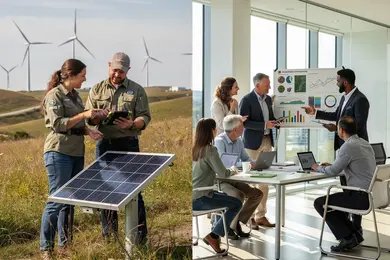
Long-term job security in environmental science largely depends on program accreditation, curriculum relevance, and integration of applied skills such as GIS technology and regulatory policy. Graduates from accredited online environmental science degree programs with career stability consistently outperform those from non-accredited or theory-heavy programs when entering fields like environmental consulting and renewable energy.
Employers seek candidates who combine hands-on experience with foundational science knowledge. For example, students completing internships focused on environmental compliance or risk assessment frequently secure positions in government or private sectors without prolonged job searches. This practical emphasis mitigates career stagnation risks common among graduates lacking applied training.
Data from the U.S. Bureau of Labor Statistics reveals environmental scientists in the top 10% earn over $134,830 annually, compared to a median salary of $80,060-highlighting how specialized skills and professional credentials create substantial upward mobility. Prospective students should prioritize programs with embedded career support, faculty expertise, and curricula aligned to state and federal regulations to avoid limiting their earning potential and advancement.
When selecting an online degree for environmental science, consider the balance between theoretical foundation and real-world application. This contrasts with fields like library science, where research methodologies play a different role; for a comparative insight, see online degree for library science. Such evaluation helps align education investments with evolving workforce demands and competing industry standards.
What admission requirements and prior coursework are needed for online environmental science programs?
Admission to online environmental science programs often hinges on clearly defined prior coursework prerequisites for environmental science degrees. Without foundational classes like biology, chemistry, mathematics, and earth sciences, students frequently struggle with advanced curriculum areas such as ecology or environmental policy, leading to longer degree timelines and increased risk of attrition. This is particularly relevant when programs admit students lacking core science backgrounds, who then face a tradeoff between extended preparatory coursework and a delayed industry entry.
Graduate programs further raise the bar by requiring completed lab courses and quantitative training alongside a bachelor's degree in environmental science or a related STEM field. Employers, especially in public agencies and private consulting, prioritize candidates with solid quantitative skills and practical experience through fieldwork or internships, which enhance employability in a labor market projected to grow by approximately 4,000 new jobs annually.
Prospective students planning strategic career pivots must weigh the necessity of strict prerequisite mastery. Specialized roles like environmental toxicology or hydrogeology demand prior coursework in chemistry and geology to align with employer expectations effectively. Students without formal science training might consider bridge programs or additional prep courses, as choosing programs with transparent prerequisite policies directly impacts long-term career outcomes.
Those exploring related fields might compare educational pathways, for example, examining credentials in areas like online electrical engineering degrees for veterans, to understand the practical differences in technical prerequisites and workforce demands.
What core courses and specializations are included in most online environmental science curricula?
Environmental science programs with weak quantitative content or insufficient GIS training hinder graduate employability as employers prioritize candidates who can handle complex datasets and model environmental scenarios. Core coursework typically covers ecology, geology, environmental chemistry, and statistics, forming the analytical foundation necessary for roles ranging from government agencies to consulting firms. Specializations such as climate change science or sustainable resource management shape career pathways distinctly, with climate policy analysis or carbon accounting requiring focused expertise, while broader environmental compliance roles may favor generalist training.
For instance, professionals skilled in sustainable resource management often navigate the intersection of scientific knowledge and legal frameworks to support biodiversity and water conservation agencies. Balancing specialization against a versatile curriculum remains a strategic consideration for students aiming for stability in a field rapidly shifting due to policy and technological advancement.
Labor market trends identified by the University of Arizona indicate that job growth in environmental and sustainability sectors outpaces the national average through 2030, largely driven by regulatory changes and expanding climate initiatives. This underscores the importance of integrated skill sets combining robust statistics, GIS proficiency, and policy fluency.
Prospective candidates should critically evaluate program offerings based on their depth in quantitative methods and applied training, understanding that insufficient focus translates into limited access to emerging green jobs shaped by evolving employer demands.
- Core courses: ecology, environmental chemistry, geology, statistics
- Applied skills: geographic information systems (GIS), environmental policy, environmental impact assessment
- Specializations: climate change science, sustainable resource management, renewable energy technologies, environmental health
- Workforce demand driven by regulation, climate policy, and technological innovation
How long do online environmental science degrees take and what do they typically cost?
Completing an online environmental science degree involves strategic choices that directly impact both time-to-completion and financial burden. Bachelor's programs typically span four years, though accelerated options reduce this to three for full-time students; conversely, part-time enrollment-common among working professionals-can extend duration beyond five years, increasing indirect costs by delaying workforce reentry or upskilling.
Graduate degrees generally require 18 to 24 months full-time, but flexibility varies, influencing opportunity costs for mid-career pivots. Public institutions charge between $8,000 and $20,000 annually for in-state online students, while private universities often exceed $30,000 per year. Total program expenses range broadly from $30,000 to $90,000 depending on credit demands and program length, with additional fees for labs or software potentially adding $500 to $2,000 yearly.
The decision matrix for students moving into fields like sales, IT, or healthcare must weigh:
- Tuition and ancillary fees against expected salary delays
- Program design that integrates interdisciplinary skills favored by employers shifting away from purely research roles
- The tradeoff between accelerated completion's upfront intensity and part-time flexibility's extended timeline
Evaluating financial aid early is critical, as is scrutinizing program curricula for relevance to evolving workforce demands, ensuring that investment balances cost-efficiency with marketable skill acquisition.
What environmental science careers can you pursue with an online degree?
Choosing an online environmental science degree means navigating a competitive labor market where practical application and regulatory expertise weigh heavily. For instance, environmental compliance officers must understand complex federal and state laws to ensure corporate adherence, a task supported by programs emphasizing applied training. Graduates targeting analytical roles should be ready to augment their statistical knowledge with hands-on experience from internships or real-world data projects, as employers increasingly expect proficiency in digital environmental monitoring tools.
Key workforce realities include:
- Employment in environmental science fields typically demands familiarity with policy frameworks or specialized sectors like renewable energy, often requiring certifications or hybrid learning beyond online coursework.
- Science graduates hold an 81% rate of employment in highly skilled roles, highlighting a tangible advantage compared to 69% for non-science majors, but this reflects not just degree possession, but the capacity to leverage quantitative skills practically.
- Career pivots into waste management or energy sectors often necessitate blending theoretical understanding with locally sourced internships, emphasizing that fully remote study may limit niche employability without supplemental experience.
The practical takeaway is that an online environmental science pathway must be paired with strategic, real-world engagements-such as certifications or policy-focused projects-to align with employer expectations and broaden career opportunities beyond the generalized academic foundation.
What are the salary ranges and long-term earning potential in environmental science careers?
Environmental science careers present a practical balance between specialization and geographic factors affecting salary growth and job availability. Positions like conservation scientists average around $65,000 annually, while GIS technicians and cartographers typically earn between $55,000 and $85,000. Growth projections of 3% for conservation scientists and 6% for GIS-related roles through 2034 signal steady, if not explosive, market demand, which helps sustain earning potential without oversaturation.
Professionals entering government or nonprofit sectors might encounter slower initial salaries but benefit from greater job stability. Conversely, private sector roles-especially in environmental consulting or GIS-focused tech firms-often provide higher starting wages and accelerated mid-career income progression, particularly for those with technical certifications or project management expertise.
To illustrate, an environmental science graduate with advanced GIS skills working in a metropolitan region can surpass $85,000 within a decade, while others lacking continual technical skill updates may face wage stagnation. Employers increasingly expect applicants to combine field experience with applied data analysis and geographic information systems capabilities.
Career pivots require deliberate investment in certifications or graduate education in resource management or environmental technology to capitalize on projected growth effectively. These targeted upgrades reduce employment friction and position candidates to leverage evolving environmental challenges and technology-driven opportunities.
What is the job outlook and demand for environmental science professionals in the coming decade?
The environmental science job market through 2034 reflects steady demand balanced against regional and skill-specific variables. Approximately 90,300 positions exist nationwide, with an average annual salary near $80,060, indicating a stable yet competitive field primarily driven by regulatory and environmental compliance needs.
Professionals in government, consulting, and private sectors confront increasing expectations tied to pollution control, climate mitigation, and sustainable resource management. For instance, urban planners requiring environmental impact assessments illustrate how growth varies by specialization and locale.
Key workforce considerations include:
- Specialized technical skills such as GIS, data science, and policy analysis yield higher return on investment but demand substantial initial training.
- Geographic mobility impacts career resilience, as roles cluster around regions with active environmental governance or resource development.
- Long-term viability hinges on continuous education and adapting to evolving technologies and regulatory landscapes.
Midcareer professionals must weigh certification versus advanced degrees to maintain relevance. Practical decision-making should prioritize sector-specific needs and employer expectations over generic credentials. This pragmatic approach aligns with data from the Bureau of Labor Statistics, ensuring informed choices grounded in labor market realities rather than promotional narratives.
How can you evaluate and choose a reputable, accredited online environmental science program?
Choosing an online environmental science program demands verification of accreditation from authorities recognized by the U.S. Department of Education or the Council for Higher Education Accreditation to avoid credentials lacking industry respect. Beyond institutional legitimacy, students should assess whether programs include specialized courses in climate science, sustainability, and environmental regulation-skills linked to the projected 8% growth in green jobs nationally through 2030.
Program outcomes such as graduation rates and employment within target sectors like government agencies or environmental consulting firms provide tangible measures of relevance. For example, pursuing state regulatory roles requires programs offering applied legal training or policy compliance practicums rather than only theoretical courses, shaping workforce readiness.
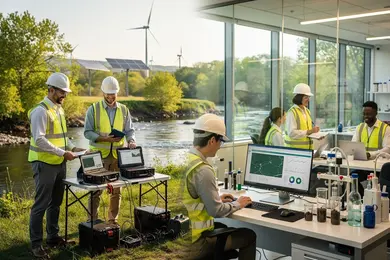
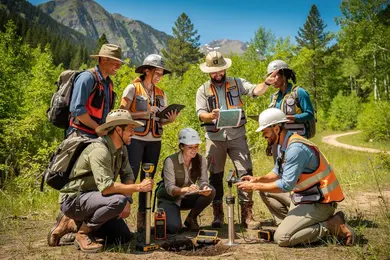
Practical experience remains a decisive factor. Fields like geospatial analysis or environmental health mandate hands-on opportunities; thus, programs with virtual labs, fieldwork options, or partnerships facilitating internships address this critical need. Candidates balancing work and study must weigh synchronous session schedules, credit for professional experience, and financial aid availability to ensure flexibility and value.
Neglecting these details risks investing in programs that fail to align with employer expectations or provide transferable skills in a sustainability-focused job market. Prioritizing accredited, outcome-driven, and experiential learning elements better positions candidates for emerging environmental roles with meaningful employment prospects.
Other Things You Should Know About Environmental Science
Employers increasingly accept online degrees for entry and mid-level positions, but leadership roles typically require demonstrated applied experience beyond academics. Online programs that integrate internships, project work with real clients, or research collaboration better position graduates for advancement. Select programs emphasizing practical experience and mentorship to improve prospects for supervisory or management tracks.
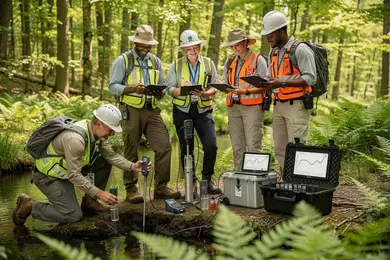
Most accredited online environmental science degrees require 1 major field component, such as a lab course, internship, or capstone, totaling 3 to 6 credits. Programs with strong career stability often also expect 100 to 150 supervised hours in fieldwork, monitoring, or data collection, usually completed locally under approved supervision.
Choosing between a broad curriculum and specialization depends on career goals and market demand. Broad programs provide flexible skill sets applicable across sectors, favoring roles in policy, analysis, or compliance. Specializations (e.g., water resources, sustainability, GIS) cater to employers seeking niche expertise but may limit job versatility. For long-term stability, prioritize programs offering foundational breadth with elective specialization options to adapt as industry needs evolve.
References
- Future Jobs: 6 Green Careers Shaping the Next Decade https://www.globalcitizen.org/en/content/future-jobs-green-careers-for-young-people-gen-z/
- Online Environmental Science Degrees: Compare Schools https://www.degreesforgood.org/online-degrees/environmental-science/
- Environmental Science Degree Jobs | University of Phoenix https://www.phoenix.edu/articles/environmental-science/environmental-science-degree-jobs.html
- 16 Innovative Environmental Science Careers https://www.collegeadvisor.com/resources/environmental-science-careers/
- Is a degree in environmental science worth it? | edX https://www.edx.org/resources/is-a-degree-in-environmental-science-worth-it
- Environmentalscience https://www.environmentalscience.org
- 2025 Most Affordable Online Environmental Science Degrees https://www.onlineu.com/most-affordable-colleges/environmental-science-degrees
- Is Now a Good Time for a Career in Environmental Science? https://www.nrep.org/blog/is-environmental-science-a-good-career
- Best place to study environmental science R1 or SLAC? And list all of best programs? https://talk.collegeconfidential.com/t/best-place-to-study-environmental-science-r1-or-slac-and-list-all-of-best-programs/3691333
- Online Degree vs. Traditional: Choosing the Right Path https://beal.edu/online-degree-vs-traditional/