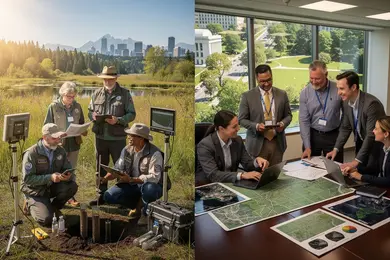
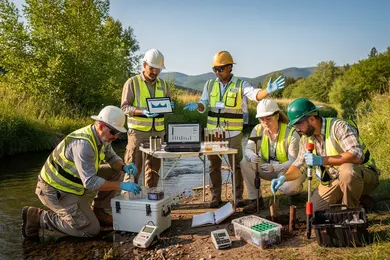
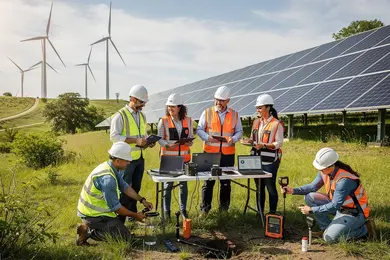
2027 Best Online Environmental Science Programs for Professionals Seeking Natural Resource Management Careers

Co-Founder and Chief Data Scientist
Professionals aiming to transition into natural resource management frequently encounter inflexible program schedules and limited access to specialized training, threatening timely career advancements. As of 2024, the National Center for Education Statistics reports a 15% increase in online enrollments for environmental-related graduate programs, signaling a growing demand for remote learning tailored to working adults.
This shift reflects both the workforce's need for adaptable education formats and employers' increasing preference for credentials that balance academic rigor with practical application. This article evaluates the best online environmental science programs designed to overcome these barriers, guiding professionals toward choices that optimize accessibility, credential value, and career mobility.
Key Things You Should Know
- Accelerating demand for skills in natural resource economics and data analytics, per 2024 U.S. Bureau of Labor Statistics, forces candidates to weigh specialized online programs against broader degrees, trading niche expertise for interdisciplinary versatility.
- Employers prioritize graduates with integrated GIS and climate resilience training; absence in curricula reduces hireability, reflecting 2024 Society for Human Resource Management findings on employer readiness gaps.
- Cost disparities among accredited online options often delay enrollment decisions; median program expenses rose 8% in 2024 according to NCES, affecting mid-career professionals' timing to pivot without employer tuition support.
What are the best online environmental science programs for natural resource careers?
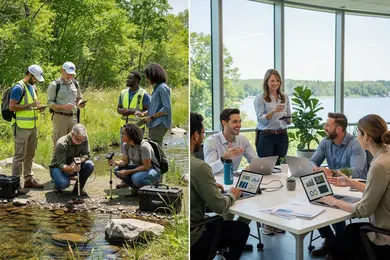
Online environmental science programs geared toward natural resource management must balance technical rigor with applied skills directly relevant to the workforce. Candidates aiming for federal land management roles, such as with the U.S. Forest Service, should prioritize programs integrating local fieldwork and applied natural resource methods to meet hiring standards that involve technical assessments.
The top online degree programs in environmental science for natural resource careers often include training in data analytics, regulatory compliance, and GIS technology, reflecting employer demand across public and private sectors. Dual concentrations or certificates in environmental policy or law enforcement enhance employability in compliance-driven positions.
Students and mid-career professionals face tradeoffs between self-paced programs, which offer flexibility, and cohort models that provide structured peer interaction and advising. The availability of career services focused on environmental NGOs and federal jobs is a critical differentiator impacting long-term outcomes.
With 149 online environmental studies master's programs worldwide in 2025, careful selection is essential. Evaluators should consider alumni networks, curriculum relevance, and program alignment with workforce needs documented in recent labor market research for natural resource management. For those comparing with related fields, exploring the online geology degree pathways may illuminate alternative or complementary routes within natural resource sectors.
Are online environmental science degrees accredited?
Accreditation status directly impacts employability and certification eligibility for those pursuing an online environmental science degree. Agencies, especially state employers hiring environmental specialists, require degrees from accredited programs to ensure candidates meet technical and legal standards. Without recognized accreditation, graduates face restricted job opportunities and limited access to certifications from entities like the Environmental Protection Agency.
Employers focus on credentials accredited by bodies recognized by the U.S. Department of Education or the Council for Higher Education Accreditation. Regional commissions such as the Middle States Commission or Western Association of Schools and Colleges serve as key benchmarks, while some accredited natural resource management programs online offer added value through specialized accreditation in sustainability or resource management.
Professionals considering a pivot or reskilling should be cautious about nonaccredited degrees; these often lack financial aid options and may not accept transferred credits, increasing educational costs and time. The field anticipates 6% growth in job openings for environmental specialists, yet access to these roles favors candidates with credible, verified credentials. Practical decision-making necessitates prioritizing accredited programs to ensure eligibility for government contracts and alignment with evolving regulatory qualifications.
For individuals balancing career shifts and educational investment, exploring a data science master online degree may also offer complementary skills with growing market demand and rigorous accreditation pathways.
What jobs can you get with an online environmental science degree?
Positions tied to environmental science careers in natural resource management demand a practical blend of ecological expertise, policy fluency, and stakeholder negotiation skills. For instance, a natural resource manager working in forestry balances commercial interests with conservation mandates, requiring strong regulatory knowledge and quantitative ability.
Employers in government, nonprofit, and consulting sectors expect candidates-especially those from online environmental science degree job opportunities in natural resource management-to have relevant certifiable skills and field experience, which may not be fully addressed within academic programs alone. Financially, environmental scientists and specialists commanded a median wage of $78,980, with top earners exceeding $129,250.
However, advanced credentials and specialization in areas like resource management correlate closely with reaching these upper salary tiers. The necessity of integrating technical proficiency with interdisciplinary communication adds complexity for professionals; for example, translating water quality data into actionable recommendations for urban planners demands both scientific and collaborative competencies.
Program structure influences readiness-online curricula emphasizing applied internships and region-specific resource issues improve job market fit. Geographic variations also affect demand, with some markets favoring toxicology or land restoration expertise versus renewable resource management. Graduates must anticipate ongoing development requirements as environmental regulations and technologies evolve.
Working professionals considering a strategic degree pivot should evaluate offerings carefully. Those seeking comparative insights might consult the best exercise science degree online rankings for program quality benchmarks across related scientific fields.
How do online and campus environmental science programs compare?
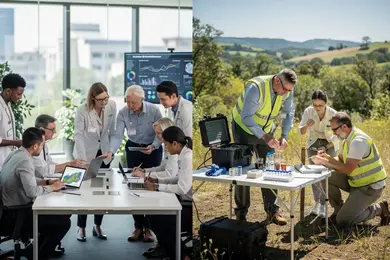
Choosing between online vs campus environmental science programs requires weighing affordability against the necessity for hands-on training. Online bachelor's programs average between $7,500 and $9,000 annually in 2026, substantially below the cost of private four-year campus degrees, making them attractive for working professionals seeking flexibility and minimized income disruption.
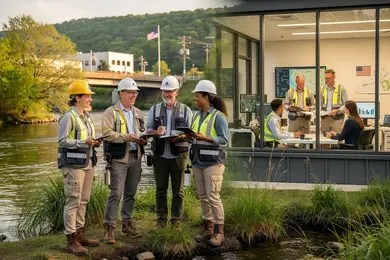
However, many natural resource management employers, particularly those in federal or state agencies, prioritize verified field experience and lab skills typically gained through campus-based or hybrid formats. Campus programs deliver critical in-person labs, fieldwork, and networking with local agencies-essential for roles demanding direct environmental regulatory compliance or specialized expertise such as water resource management and wildlife conservation.
Conversely, online learners benefit from asynchronous coursework but often must independently secure regional internships or practical experiences to meet workforce requirements. When comparing online and traditional environmental science degrees in terms of employability, those aimed at policy analysis, GIS mapping, or data modeling may find online curricula sufficiently rigorous and accredited.
Yet, navigating hiring preferences sometimes necessitates supplementary certifications or experiential credits post-graduation. Prospective students should assess their capacity for self-directed field training alongside the cost tradeoffs. For individuals exploring cross-disciplinary transitions, examining programs like the MLIS degree highlights how affordability rankings influence educational pathways beyond environmental science.
What courses are in an online environmental science curriculum?
Online environmental science programs targeting natural resource management must balance theoretical knowledge and technical skill application amid limited in-person exposure. Core courses-ecology, soil science, hydrology, and environmental chemistry-establish foundational expertise essential for assessing complex ecosystems.
Quantitative training in GIS, statistics, and data analysis equips graduates to meet employer demand in forestry, conservation, and water resource sectors for precise data interpretation and spatial analysis. Students pursuing specialized roles face distinct instructional priorities: for instance, those aiming for state park management need applied training in habitat restoration and conflict mitigation between humans and wildlife, while water utility roles require detailed understanding of watershed regulatory frameworks and compliance.
Work-integrated learning poses a challenge online, with top curricula incorporating virtual laboratories and local fieldwork assignments to address hands-on skill gaps. Policy, law, and sustainable management courses prepare learners for navigating regulatory and stakeholder dynamics, while business-oriented modules on environmental economics and project management align with governmental and consultancy roles stressing budget oversight and cost-benefit evaluations.
Given that at least 30 distinct online programs specialized in natural resource management exist worldwide, evaluating programs on both technical depth and practical adaptability is crucial for alignment with regional workforce demands and career objectives.
What are the admission requirements for environmental science programs?
Environmental science graduate programs typically require a bachelor's degree in a related discipline such as biology, chemistry, or geology, paired with foundational coursework in statistics, ecology, and chemistry. This baseline ensures that students have the analytical and technical skills necessary for advanced study.
However, for professionals transitioning into natural resource management, relevant work experience can sometimes substitute for academic prerequisites, particularly in flexible or online programs tailored to adult learners. Admissions expectations also often include two to three letters of recommendation from academic or professional supervisors who can validate an applicant's problem-solving and project management capabilities.
The submission of standardized test scores like the GRE has become optional in many programs post-2024, though competitive applicants might still benefit from including them. Additionally, a focused statement of purpose outlining career objectives and program fit helps admissions committees discern genuine motivation and alignment with sector demands.
The practical emphasis of online programs can be seen in their reported job placement rates of 80-90% within six months after graduation, comparable to on-campus outcomes at institutions like Oregon State Ecampus. These programs prioritize evidence of self-management and strong communication skills, aligning admissions criteria with real-world job requirements in remote or hybrid environmental roles.
How long do online environmental science programs take?
Online environmental science programs demand strategic choices about duration, delivery, and workload intensity that directly impact career readiness and employability. Associate degrees typically require 18 to 24 months full-time, while bachelor's degrees span about four years but can be accelerated to three with transfer credits or heavier course loads.
Master's programs range from one to two years, depending on full- or part-time enrollment and project requirements like a thesis or capstone. For working professionals, asynchronous or competency-based formats offer essential flexibility but often extend total program length. For instance, a sustainability analyst balancing a full-time position may opt for a two-year part-time master's plan to gain new qualifications without interrupting employment.
Conversely, a recent graduate targeting quick immersion in climate policy might prefer an accelerated bachelor's track. Employers prioritize candidates with timely completion combined with practical skills, especially as employment for climate change analysts and sustainability specialists grows by 4.4%. Median salaries near $82,220 reflect the value of efficiently earned advanced credentials.
However, students must manage coursework intensity, practicum commitments, and program sequencing to avoid delays. Programs accredited by recognized bodies that embed real-world projects reduce risk of extended study caused by repeated courses or skill deficits, directly influencing employability in this evolving field documented by Arizona State University career outlook data.
How much do online environmental science programs cost?
Cost variability in online environmental science programs reflects the tension between affordability and practical workplace relevance. Tuition often ranges from $15,000 to $45,000 for bachelor's or master's degrees, influenced heavily by institution type and credit pricing-public universities frequently charge $300-$600 per credit for in-state students, while private schools may exceed $1,000.
Beyond tuition, specialized programs with fieldwork or lab requirements can add significant expenses for equipment and travel. Nearly half of environmental scientists find employment in state, local government, and consulting roles. Professionals aiming for these sectors must carefully evaluate programs not just on price but on alignment with employer expectations for compliance, technical proficiencies, and certification readiness.
A curriculum missing these specific skill sets can limit employability, no matter how costly the program. Financial aid availability varies, but many working students face opportunity costs from reduced work hours. Programs that offer accelerated pacing or flexible schedules can substantially ease this burden. High tuition does not correlate consistently with superior employment outcomes, particularly when programs lack hands-on components or industry connections.
Decision-making here requires balancing sticker price against workforce integration benefits. Prioritizing programs that embed applied training and direct industry relevance is key, especially given the dominance of public agencies and consulting firms within the job market for environmental scientists.
What is the salary outlook for natural resource management careers?
Natural resource management salaries in 2026 reflect distinct tradeoffs between sector stability and earning potential. Federal and state employees benefit from consistent salaries near the national median of $73,230 but often encounter limited upward mobility without further credentials. By contrast, private consultants and specialists working in urban hubs like Washington D.C. or California can reach $90,000 to $110,000 within five years.
The salary range also underscores geographic and institutional disparities: entry-level government roles in rural areas may offer $50,000 to $60,000, a significant gap compared to urban consultancy positions. Students considering online specializations should weigh the tangible career impact of targeted credentials against cost and experiential learning opportunities, as employers prioritize proven project management skills and measurable outcomes.
Key workforce implications include:
- Sector choice affects salary volatility and career growth trajectories.
- Location plays a substantial role in compensation, with urban markets demanding specialized expertise.
- Integration of sustainability-focused credentials improves employability and salary prospects.
These dynamics highlight the practical necessity for prospective natural resource managers to align educational investments with employer expectations and market realities to optimize career returns in environmental science fields.
Do natural resource management careers require certification or licensure?
Licensure is rarely required across natural resource management careers, but certifications are essential for many specialized roles, especially in regulatory compliance and technical consulting. For instance, professionals aiming to become registered foresters or certified wildlife biologists must obtain state or national certifications. These credentials often determine eligibility to approve environmental impact reports or manage critical projects.
Employers prioritize certifications for roles affecting public resources, such as water quality assessments or habitat restoration permits. Environmental consultants commonly need Certified Environmental Professional (CEP) status to compete effectively for government contracts, while foresters require Licensed Forester credentials to lead forest management initiatives.
Holding such certifications typically improves salary potential and job security in a sector that the U.S. Bureau of Labor Statistics projects will grow over 15% through 2024, with continued strong demand expected through 2034. Entry-level positions generally demand only a bachelor's degree in environmental science or related fields. However, moving into managerial or technical specialties usually necessitates passing certification exams and participating in ongoing professional education.
Without these credentials, advancement opportunities narrow significantly, potentially excluding candidates from higher-stability, growth-oriented segments of this workforce. Key considerations include understanding specific state licensing rules and aligning educational choices accordingly, ensuring time and resources are allocated to credential attainment strategies aimed at maintaining competitiveness over a long-term career.
Other Things You Should Know About Environmental Science
Many online environmental science programs offer asynchronous coursework, which allows for flexible study schedules. However, these programs still demand consistent weekly time commitments, often 15-20 hours, including labs and projects. Working professionals should prioritize programs with clear pacing structures and realistic workload expectations to avoid burnout and ensure they can meet employer and academic standards simultaneously.
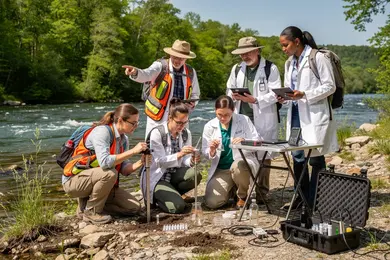
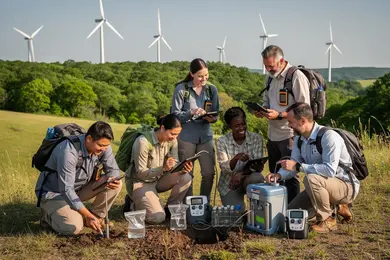
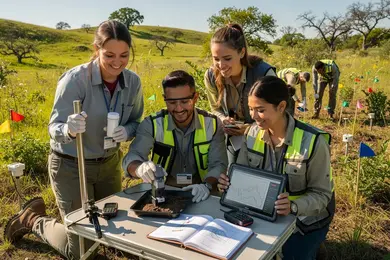
Hands-on fieldwork remains a critical component for natural resource management careers despite online delivery. Top-quality programs integrate local field components or simulated labs to meet employer expectations for practical skills. If a program lacks robust field experience options, graduates may face challenges demonstrating applied competencies, which can limit job opportunities, especially with agencies prioritizing practical environmental assessment skills.
Interdisciplinary programs offer broader perspectives but may dilute specialized skill development essential for natural resource management roles. Choosing a program focused on natural resource management expedites mastery of specialized tools, regulations, and sector-specific challenges employers seek. Professionals aiming for specific roles in conservation, forestry, or wildlife management should prioritize targeted curricula over general environmental science to maximize employability.
Many 2027 online environmental science programs require a capstone in the final term, usually worth 3 to 6 credits. Schools often ask students to complete a field-based or workplace project, submit a written report, and present findings to faculty or a community partner.
References
- Online Environmental Science Degree | BS Environmental Science | University of Phoenix https://www.phoenix.edu/online-liberal-arts-degrees/environmental-science-bachelors-degree.html
- Search Online Natural Resource Management Degree https://www.cjbnetwork.com/search/category/natural-resource-management/setting/online
- Change the World: Online Options for Green Master’s Degrees https://www.onlinemastersdegrees.org/features/green-masters-degrees/
- Environmental Science Courses & Degrees https://www.open.edu.au/study-online/science/environmental-science
- Online Environmental Science Degrees: Compare Schools https://www.degreesforgood.org/online-degrees/environmental-science/
- What does a Natural Resource Specialist do? Career Overview, Roles, Jobs | APS https://jobs.apsnet.org/career/natural-resource-specialist-2
- Academics — Natural Resources | University of Idaho https://www.uidaho.edu/natural-resources/academics
- CNRP - Certified Natural Resources Professional https://www.nrep.org/certifications/certified-natural-resources-professional-cnrp
- Natural Resource Management: Current Job Trends and Future Growth | ECO Canada https://eco.ca/new-reports/careers-natural-resource-management/