2027 Environmental Science Salary by State Report

Co-Founder and Chief Data Scientist
Environmental science professionals frequently face the dilemma of evaluating job prospects against geographic cost-of-living differences and varying state-level demand for their expertise. As remote and hybrid roles increase, the Bureau of Labor Statistics reports a 12% growth in environmental science jobs over the next decade, but wage disparities remain significant across states, complicating career decisions.
Additionally, adult learners transitioning into environmental careers benefit from flexible online programs, yet must weigh how state-specific salary trends align with educational investments. This article examines environmental science salary variations by state, offering data-driven insights to help students and professionals optimize location and career strategies based on realistic earning potential.
Key Things You Should Know
- Average entry-level environmental science salaries vary by over 35% between states, with California median wages at $70,000 compared to West Virginia's $43,000, forcing strategic location choices that weigh cost of living against compensation, based on recent BLS workforce data.
- Employers increasingly demand specialized GIS and data analysis skills, reflected in 62% of job postings nationwide, creating a workforce bias favoring candidates with interdisciplinary technical training over purely academic credentials, according to a 2024 EMSI report.
- Graduate degree attainment lengthens time-to-employment by 12 months and doubles educational cost burden, with FAFSA-reported debt data showing median student debt of $39,000, prompting many prospective professionals to consider accelerated certifications for quicker labor market entry.
What is environmental science salary by state?
Geographic variations in environmental science salary differences by state hinge on local economic contexts and regulatory environments. For instance, states with stringent environmental oversight like California and New York pay around 10% to 20% above the national median wage of $80,060, driven by demand for specialists in areas such as air and water quality monitoring.
This contrasts with less-industrialized states-Wyoming and New Mexico, for example-where average earnings tend to fall between $60,000 and $65,000 but offer federal land management roles that provide geographical flexibility and stable benefits. The average environmental science earnings across states reflect these tradeoffs: higher salaries often accompany increased living costs and more competitive job markets, as seen in Massachusetts and Washington.
Candidates must consider these regional disparities when evaluating relocation options, balancing income potential against cost of living and job availability. Employers prioritize candidates proficient in data analytics, GIS mapping, and regulatory compliance, with specialized skills potentially adding $5,000 to $10,000 to starting salaries.
However, certifications or graduate degrees to acquire these competencies involve upfront costs that may delay initial earnings growth. Employment sectors also exhibit differences: consulting roles may accelerate salary increases but demand intensive client management, whereas state government positions tend to offer steadier wage growth trajectory. Prospective students seeking to navigate this complexity might explore options like best online environmental health and safety degree programs, which can provide focused skills with flexible delivery to match varied professional scenarios.
Which states pay environmental scientists the most?
District of Columbia leads the highest paying states for environmental science jobs, with a median wage of $115,730 in 2023-47% above the national median-driven by federal agencies' concentrated demand for expertise in compliance and impact analysis. Professionals aiming for these roles must develop strong regulatory knowledge relevant to federal environmental policies, as competition and expectations for advanced skill sets are steep.
California, Alaska, and Texas follow with elevated environmental science salary rankings by state, each reflecting distinct industry focuses. California's broad sectors like tech and agriculture necessitate specialized training in pollution control and natural resource management, while Alaska's compensation spikes come with remote and challenging conditions.
Relocating professionals should consider that higher nominal salaries in states like D.C. or California often coincide with increased living costs, which can diminish real earnings. Employers across these top-paying regions require demonstrated competencies in data analysis, project management, and environmental regulations.
Candidates holding only basic certifications without relevant experience may find it difficult to access top-tier positions. Practical entry routes involve securing internships or contract roles locally to build necessary credentials and networks.
For those evaluating educational pathways, especially when considering an online animal science degree, contextualizing cost versus regional job market realities is crucial. Geographic salary disparities reflect underlying economic and regulatory drivers, underscoring the need for strategic, state-specific career decisions.
What affects environmental science salaries by state?
Environmental science salary differences across states reflect more than geographic variation; they expose critical workforce dynamics and employer priorities. Professionals in states like California and Washington benefit from higher pay driven by active clean energy sectors and regulatory environments demanding advanced expertise.
Conversely, regions with limited industrial activity or weaker environmental policies-often rural or economically constrained-offer substantially lower wages. For example, the national 10th percentile wage of $48,580 contrasts sharply with the 90th percentile at $133,660, illustrating how seniority and location combine to impact earning potential.
Regional factors influencing environmental science wages include the presence of consulting firms, government agencies with strong environmental programs, and market demand for specialized skills. States with robust public sector funding for natural resource management, such as Colorado or Massachusetts, provide compensation that aligns with complex responsibilities.
Job seekers weighing a move into environmental science must balance salary offers against cost of living disparities and the likelihood of geographic mobility. Employers often pay premiums for certifications and interdisciplinary skills reflective of stringent local regulations on air and water quality.
Those exploring educational pathways should consider how wage variation intersects with employability and career goals. For professionals investigating alternatives, evaluating available online exercise science degrees can inform parallel career pivots or complementary qualifications that enhance labor market flexibility.
What environmental science jobs pay the highest salaries?
High salaries in environmental science jobs with highest salaries by state depend heavily on specialized skills and regional economic factors. Roles such as environmental engineers working on contamination cleanup or sustainable infrastructure command pay between $90,000 and $120,000, with the upper range tied to states that enforce stringent environmental regulations or host active industrial sectors.
Senior environmental consultants who manage interdisciplinary teams and handle client engagement often exceed $110,000 annually, particularly in metropolitan areas where demand for risk assessment and regulatory compliance expertise is strongest. Entry-level positions like field technicians typically start near $50,000, but advancing requires proficiency in GIS tools, environmental modeling software, or environmental law.
The top paying environmental science careers in different states reflect these variations in both technical demands and local industry presence. Employment in environmental science is projected to grow 4% over the next decade, producing roughly 8,500 job openings annually. Yet, higher wages generally cluster in roles requiring graduate-level degrees, certifications, or management experience.
Professionals who focus on contaminated site assessment and sharpen quantitative skills can leverage these competencies across public and private sectors for better pay, although relocation to states with large industrial or regulatory footprints may be necessary. Considering education options, those evaluating an affordable library science degree online should also assess how specialized environmental science training aligns with their career trajectory and regional demand.
What degree do you need for environmental science jobs?
Securing a bachelor's degree in environmental science or a related discipline such as geology, biology, or chemistry remains the baseline for access to most entry-level roles. Employers prioritize foundational expertise in environmental systems, regulatory frameworks, and data analysis, with additional weight given to internships or certifications that demonstrate applied skills, especially in consulting or hazardous waste management sectors.
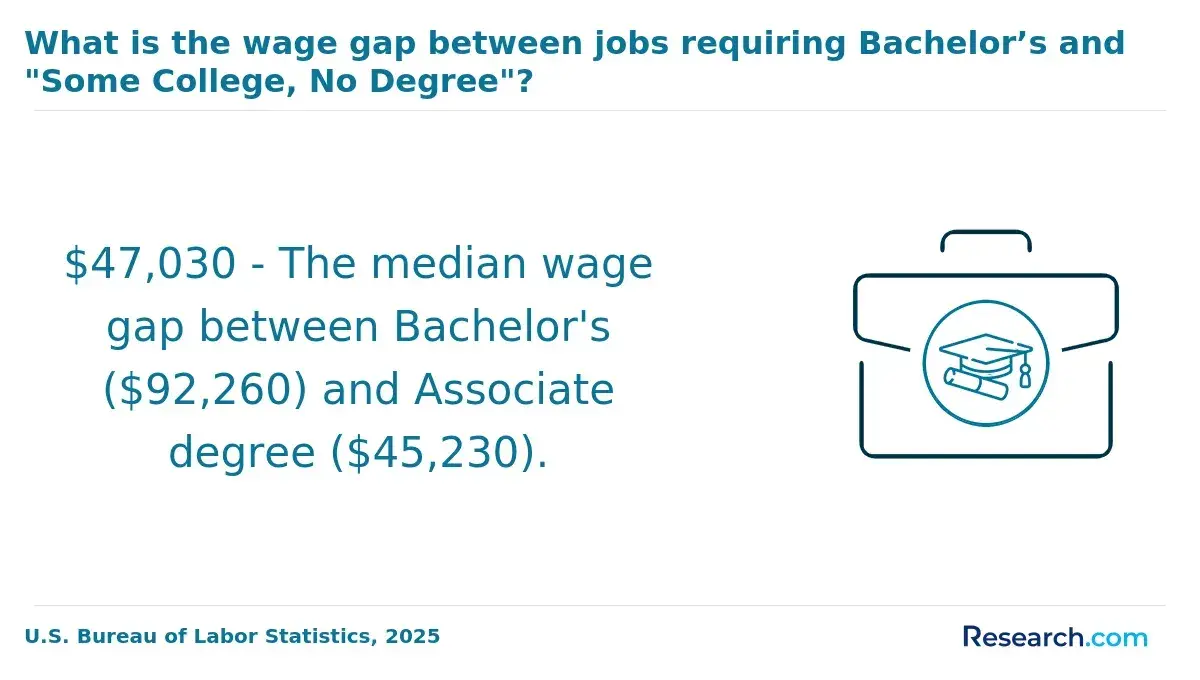
A bachelor's holder can anticipate a median salary near $84,123 nationally, with entry-level wages typically spanning $75,000 to $98,500, per ZipRecruiter data through May 2026. However, advancement into specialized or leadership roles generally requires a master's degree or higher.
Graduate education deepens capabilities in quantitative analysis and environmental modeling, which governments and private firms expect for project management or regulatory leadership positions. Without this, upward mobility becomes constrained, forcing reliance on certifications or extensive field experience instead.
Consider a professional pivoting from chemistry to environmental toxicology: without targeted coursework in environmental law and risk assessment, employability remains limited. Prospective students and working professionals should focus on programs emphasizing practical, employer-valued competencies such as Geographic Information Systems (GIS) and environmental data analytics to increase relevance.
Which environmental science programs are accredited?
Accreditation for environmental science programs in the U.S. involves more than institutional approval; it dictates access to critical employment opportunities and shapes career trajectories. Regional accreditors such as the Higher Learning Commission (HLC) and Middle States Commission on Higher Education (MSCHE) establish foundational credibility, but specialized endorsements from bodies like the Accreditation Commission for Environmental Education (ACEE) or the Society for Environmental Toxicology and Chemistry (SETAC) often determine practical readiness in targeted fields.
Employers, especially federal agencies offering median salaries around $103,500, expect graduates from programs with these combined accreditations, along with demonstrable outcomes like internships or government research collaborations. State agencies and private consulting firms, paying lower median wages ($67,700 and $75,800 respectively), place relatively more weight on regional reputation and practical skills over specialized accreditation.
For students, navigating these requirements means seeking programs that integrate institutional accreditation with industry-recognized certifications and direct experiential learning. Missing such elements can delay entry into regulated roles or limit upward mobility in public sector positions where licensing and certification are prerequisites.
Should you choose online or campus environmental science programs?
Deciding between campus and online environmental science programs depends largely on geographic employment trends and the nature of practical experience employers expect. Urban centers like Sacramento, CA; Tallahassee, FL; and Montgomery County, MD concentrate many environmental science jobs, offering graduates in these locations greater access to internships, networking, and hands-on projects integral to hiring preferences.
For students near these hubs, campus programs provide immersion in regional environmental issues and direct connections to local employers. Online programs cater effectively to professionals balancing work and personal commitments or those outside urban regions.
Yet, they risk limiting exposure to location-specific fieldwork and laboratory experiences that many employers value, especially in concentrated metropolitan job markets. Without local engagement, online learners may need purposeful strategies, such as securing internships in target cities, to meet practical skill expectations.
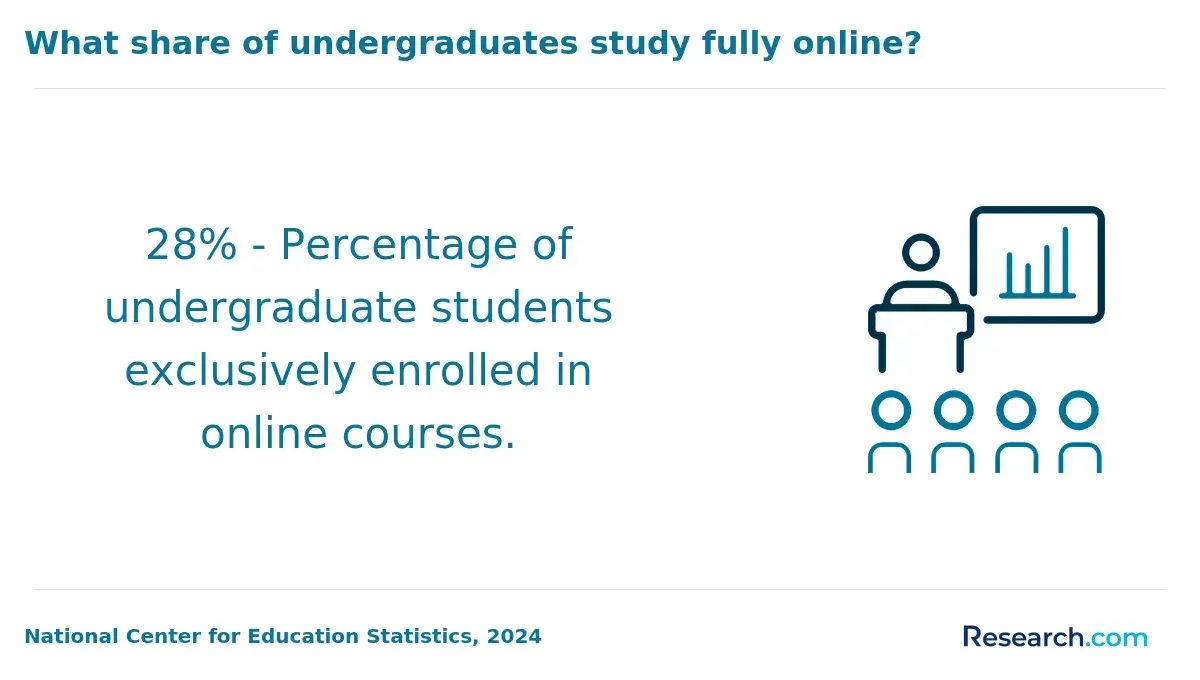
For instance, a career changer in rural Montana pursuing an online environmental science degree must deliberately arrange urban-based internships to overcome geographic barriers and acquire relevant, applied experience favored by employers. Conversely, recent high school graduates living near metropolitan areas can leverage campus programs' embedded resources to accelerate employment in competitive urban labor markets.
Pragmatically, this choice reflects a tradeoff between flexibility and direct workforce integration. Campus programs embed students in employer networks and experiential learning aligned with local labor demands, while online options require more proactive planning to bridge geographic and practical gaps.
What courses are in an environmental science degree?
Pursuing an environmental science degree requires balancing foundational knowledge with practical skills that align closely with employer demands across sectors like government, NGOs, and private industry. Core coursework integrates ecology, chemistry, geology, and biology to build an understanding of ecosystems and Earth's processes, but success hinges on pairing these with regulatory frameworks and quantitative methods such as statistics and GIS.
For example, professionals at consulting firms routinely leverage combined expertise in environmental law and field sampling to design compliance strategies for industrial clients. This illustrates a common workforce expectation where theoretical learning must translate into applied problem-solving.
The curriculum also involves hands-on lab and field techniques essential for accurate environmental sampling, pollution assessment, and habitat evaluation. Supplemental topics-renewable energy, resource management, environmental ethics-address emerging challenges like climate change but may require tradeoffs regarding specialization versus breadth, especially if pursuing advanced courses like remote sensing or environmental modeling.
Entry-level environmental scientists have an average salary of around $52,654 in 2026, per Payscale data, underscoring the need for analytical proficiency alongside interdisciplinary knowledge. Prospective students should weigh the program's rigor against their career focus, as practical competence is often valued as much as classroom learning for navigating complex environmental impact assessments and remediation planning.
How much do environmental science programs cost?
Cost considerations shape the viability of pursuing environmental science degrees, with tuition spanning a wide spectrum based on residency, institution type, and degree level. Public in-state undergraduate tuition typically hovers around $12,000 per year, while private colleges can exceed $35,000 annually. Graduate programs, especially specialized master's tracks, push costs upward to $20,000-$50,000 per year, not including extra expenses like fieldwork supplies and exam fees. This financial load necessitates realistic evaluation of return on investment according to career objectives.
For example, an individual aiming to become a natural sciences manager can anticipate a median annual income near $161,180, a figure that may justify higher initial educational expenses. Conversely, entry-level environmental technician roles often offer substantially lower pay, making more affordable or flexible programs-including online formats that reduce living costs-more sensible choices for those candidates.
Aligning program investment with realistic salary data and career trajectory reduces risk of excessive debt and supports sustainable workforce entry. Evaluating these factors in the context of prevailing labor market data, such as that reported by EnvironmentalScience.org citing BLS, helps balance educational expenses against tangible wage outcomes.
What certifications help environmental science careers?
Certifications in environmental science differentiate candidates in a market where regulatory knowledge and technical skills are increasingly mandatory. For example, consulting firms and government agencies favor the Certified Environmental Professional (CEP) credential for its focus on compliance and project oversight, while field roles benefit from certifications such as HAZWOPER or GIS proficiency that validate hands-on remediation and spatial analysis capabilities.
In academia, credentials emphasizing environmental risk assessment or sustainability leadership can provide measurable salary advantages. Data from the U.S. Bureau of Labor Statistics shows postsecondary environmental science educators earned a mean annual wage of $93,010, with top earners surpassing $146,780-showing how targeted certification can influence income trajectories.
Professionals pivoting into environmental science from related fields often rely on credentials like the Registered Environmental Manager (REM) to signal compliance expertise and systems knowledge, a consideration employers prioritize for regulatory or audit-sensitive roles. Tradeoffs include ongoing maintenance fees and continuing education demands, requiring candidates to balance short-term costs against enhanced job responsibilities and advancement potential. Without certifications, individuals risk slower wage growth and limited movement within technical or regulatory-heavy sectors.
Other Things You Should Know About Environmental Science
The 2027 Environmental Science Salary by State Report shows significant salary variations. States like California and New York offer higher salaries, often exceeding $80,000 annually, attributable to a high demand for specialists. Conversely, states such as Missouri and Alabama tend to offer lower salaries, around $50,000 to $60,000, reflecting varying demand and cost of living.
Employers prioritize hands-on experience, especially internships and fieldwork, over purely academic credentials for entry-level hires in environmental science. Practical skills in data collection, environmental assessment, or GIS are often decisive. Students should seek programs or opportunities that offer substantial fieldwork components to improve employability, as degrees without applied experience tend to limit early career advancement.
State salary data in 2027 reports usually comes from the U.S. Bureau of Labor Statistics, which publishes state-level wage estimates for environmental scientists and specialists. Some reports also use state labor departments, such as California EDD or Texas LMI, when they provide updated regional occupation data.
Environmental science professionals holding targeted certifications-such as Certified Environmental Professional (CEP) or Registered Environmental Manager (REM)-are often expected to take on leadership, compliance, or technical oversight roles. Without these certifications, even with similar degrees, professionals may be limited to junior or support positions. Prioritizing well-recognized certifications can accelerate career progression and salary gains, especially in regulated sectors such as waste management or air quality control.
References
- Most Popular Online Environmental Science Degrees 2025 https://www.onlineu.com/degrees/environmental-science
- Accredited courses https://www.eianz.org/resources/accredited-courses/accredited-courses
- Environmental Certifications for entry-level and career changers https://www.theenvironmentalcareercoach.com/certification-links
- Environmental Science Courses & Degrees https://www.open.edu.au/study-online/science/environmental-science
- Environmental Science Undergraduate Degree Courses https://www.whatuni.com/degree-courses/search
- CES - Certified Environmental Scientist https://www.nrep.org/certifications/certified-environmental-scientist-ces
- Our List of Post-Secondary Accredited Programs | ECO Canada https://eco.ca/educators/program-accreditation/current-programs/
- Environmentalscience https://environmentalscience.org/
- Online Environmental Science Degree | BS Environmental Science | University of Phoenix https://www.phoenix.edu/online-liberal-arts-degrees/environmental-science-bachelors-degree.html
- What Can You Do With an Environmental Science Degree? https://willamette.edu/academics/college/environmental-science/career-options