2027 Best Online Environmental Science Programs for Professionals Seeking Environmental Health Careers

Co-Founder and Chief Data Scientist
Professionals aiming to enter or advance in environmental health roles often face rigid scheduling conflicts that prevent them from pursuing traditional onsite degrees, risking lost opportunities in a field where timely expertise directly impacts regulatory compliance and public safety. According to the National Center for Education Statistics, online enrollment for graduate environmental disciplines jumped nearly 30% in 2024, signaling a shift toward flexible program structures that accommodate working adults without compromising curriculum quality.
This trend reveals growing demand for accessible, career-aligned online options that balance in-depth scientific understanding with applied health interventions. This article identifies and evaluates the best online environmental science programs designed specifically to help professionals navigate these challenges and secure relevant credentials efficiently.
Key Things You Should Know
- Programs emphasizing applied environmental health skills yield a 17% higher midcareer salary average, yet employers signal diminished interest in purely theoretical curricula, prioritizing candidates with clear regulatory and data-analysis experience according to 2024 Bureau of Labor Statistics data.
- Environmental science roles show 25% faster growth in urbanized regions, pushing professionals to weigh geographic enrollment options carefully as local employer demand directly predicates virtual program ROI, per recent National Science Foundation workforce projections.
- Rising tuition trends-averaging 6% annually for specialized environmental science certifications-create a timing tension; early enrollment is often financially advantageous but risks skill mismatch amid rapid environmental policy shifts documented by the EPA since 2023.
What are the best accredited online environmental science programs for environmental health careers?
Accreditation by regional agencies and specialized bodies such as the National Environmental Health Science and Protection Accreditation Council (EHAC) substantially influences employer recognition and employability in environmental health careers. Candidates assessing the best accredited online environmental science programs for environmental health careers must also consider applied learning features, as theoretical-only training risks underpreparing graduates for practical tasks.
For instance, urban public health roles demand familiarity with contaminant analysis backed by fieldwork, whereas manufacturing compliance positions prioritize OSHA-aligned certifications.
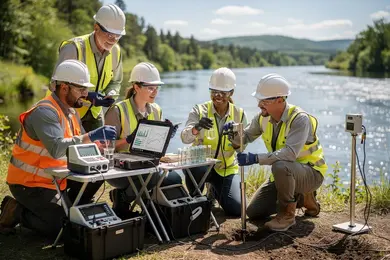
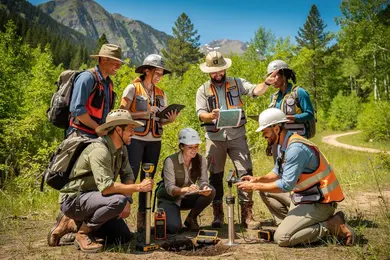
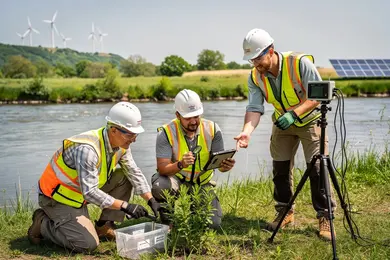
Balancing program duration, modality, and cost directly impacts long-term career flexibility. Accelerated programs shorten time-to-employment but may undervalue critical subjects such as toxicology and epidemiology, limiting advancement prospects. Conversely, hybrid offerings with limited in-person requirements can deliver essential hands-on mentorship, vital for mastering environmental sampling techniques.
Employer partnerships and reported graduate employment rates provide more reliable indicators of program value than promotional claims. Professionals deciding among top environmental science degrees for professionals in environmental health should assess each program's integration of practical skills and data collection methodologies.
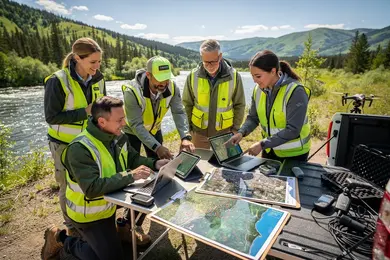
Additionally, environmental science students benefit from interdisciplinary knowledge, including geographic information systems (GIS), which complement field sampling and hazard assessments. Resources detailing colleges with GIS programs can guide those aiming to expand their technical toolkit for diverse environmental roles.
How do online environmental science degrees compare to campus-based programs for working professionals?
Online environmental science degree benefits for working professionals hinge on flexibility but reveal critical tradeoffs in practical training and networking compared to campus programs. While traditional campus degrees integrate direct fieldwork, laboratory access, and agency collaboration, online programs rely heavily on virtual simulations and require students to independently pursue local internships to match hands-on experience.
This limitation bears consequences in early-career stages where employers prioritize verified field exposure, especially in roles tied to environmental compliance or industrial hygiene. Working professionals often choose online programs to maintain full-time employment without geographic constraints. However, accelerated online tracks demand rigorous self-discipline and advanced time management to handle complex case studies and regulatory updates effectively.
Employers in environmental health favor candidates with demonstrable project management and collaborative skills typically developed through campus group work and industry networking events. The U.S. Bureau of Labor Statistics projects 8% job growth for environmental scientists through 2032, with a current median wage of $76,480. Those pursuing roles in environmental impact assessment or public health risk analysis must assess whether the online format's experiential gaps jeopardize eligibility for certifications or mandated internships.
Practical program selection should verify career services, mentorships, and local partnerships that offset these deficits. Additionally, professionals aiming for federal or state environmental agency roles should confirm curriculum alignment with required technical competencies and clearance processes. Such strategic decisions determine whether an online environmental science degree supports advancement or necessitates supplemental practical experience and network-building efforts akin to campus cohorts.
For insights on pivoting careers effectively, some students consult guidance like the one for speech pathologist transitions.
What types of online environmental science degrees support environmental health career pathways?
Online environmental science degrees for environmental health professionals require weighing immediate skill acquisition against long-term strategic positioning. Bachelor's programs offer baseline qualifications aligned with regulatory compliance and risk assessment roles in government or industry, ideal for professionals targeting entry-level positions.
Conversely, master's degrees with specialized tracks in environmental health science or industrial hygiene provide in-depth expertise in epidemiology and exposure assessment, making graduates more competitive for mid-to-senior technical and leadership roles.
Environmental science degree programs supporting health career pathways vary widely in focus and format. Certificate programs address specific workforce needs such as environmental sampling or hazard communication, often serving professionals transitioning from fields like public health or engineering who need targeted competencies without committing to full degrees.
The U.S. Bureau of Labor Statistics projects 5% employment growth for roles including health and safety engineers, with a median wage of $104,420, reflecting steady demand for graduates who combine scientific proficiency with regulatory and analytic skills. Employers prioritize practical experience, so evaluating programs for case studies, virtual labs, and strong industry connections is critical for improving job placement.
Prospective students might also explore complementary pathways; for example, those interested in public health intersections might consider a nutritionist degree to expand their interdisciplinary portfolio. Ultimately, choosing between accelerated certificate options and comprehensive master's programs depends on balancing immediate applicability against broader leadership ambitions.
How can I verify accreditation and program quality for online environmental science schools?
Confirming accreditation for online environmental science programs involves more than checking institutional labels; it requires verifying regional or national recognition through authoritative bodies like the U.S. Department of Education's Database or the Council for Higher Education Accreditation. Specialized accreditations such as ABET provide additional assurance that curricula align with industry standards, a critical factor for employers evaluating applicants.
Assessing program quality in online environmental science schools demands scrutiny of measurable outcomes, including graduation rates and workforce integration data. Programs that report employment rates above 70% in relevant environmental health roles within six months post-graduation better reflect market viability. Graduate testimonials and recruiter feedback reveal distinctions between research-focused programs and those geared toward technical roles.
Curriculum transparency is a practical litmus test. Programs lacking clear credit distribution, fieldwork, or research components often underdeliver on skill development. Direct collaborations with environmental agencies or intensive lab components translate into tangible advantages, especially where certifications or hands-on proficiency are prerequisites.
Cost remains a pragmatic consideration. While average annual in-state tuition for online environmental science bachelor's programs ranges from $9,000-$12,000, on-campus equivalents typically exceed $20,000. Still, affordability should not overshadow accreditation and outcome quality, as sacrificing either can reduce long-term value.
Prospective students looking for parallels in cost-effectiveness and credibility may also explore other fields, such as the MLIS degree, which offers insight into balancing affordability with practical career benefits.
What core courses and specializations are offered in online environmental science programs?
Online environmental science programs often fall short in preparing students for roles beyond technical entry-level jobs unless they include focused coursework in environmental health, policy, and risk assessment. The ability to analyze toxic exposures or navigate complex regulatory frameworks distinguishes mid-career professionals from generalists. For example, environmental health risk assessment is critical when assessing industrial contamination impacts.
Core classes typically cover environmental chemistry, ecology, GIS, and data analysis-foundational but insufficient alone for policy or compliance roles. Specializations such as:
- Environmental health risk assessment, essential for industrial or urban planning scenarios
- Environmental policy development, crucial for roles in government and non-profit advocacy
- Sustainability science, important for implementing corporate social responsibility and green innovations
The real workforce implication is clear: programs without applied skills in these areas limit graduates to technician-level roles rather than strategic advisory positions. Prospective students aiming for environmental risk management must prioritize tracks combining toxicology, statistical modeling, and policy analysis to match employer expectations.
Without practical application modules and case studies illustrating real-world impact, theoretical knowledge risks poor employability. Verifying syllabus specifics is essential. The mix of interdisciplinary content directly influences career trajectories, reflecting a labor market where actionable expertise outweighs academic breadth.
What are typical admission requirements for online environmental science degrees for adults?
Online environmental science degree programs for adults demand more than basic academic achievement; they require clear evidence of professional relevance and preparedness. While most programs expect a bachelor's degree-often in a related field-some accommodate candidates with degrees from unrelated backgrounds if supported by substantial environmental work experience.
Transcript GPA thresholds typically range between 2.5 and 3.0, targeting candidates capable of managing graduate-level rigor. Standardized tests like the GRE are becoming optional but remain a deciding factor for highly research-driven institutions or applicants with marginal academic records. Equally important is a detailed professional resume that verifies experience in environmental consulting, regulatory compliance, or industrial health.
Letters of recommendation, ideally from supervisors familiar with technical capacities and commitment to environmental work, weigh heavily in admissions decisions. A focused statement of purpose that connects career objectives to degree outcomes supplements evaluation, clarifying candidate motivation.
If balancing full-time employment with degree requirements poses the main challenge, working professionals must consider the intensity of undergraduate prerequisites and documentation expectations. Institutions boasting graduate employment rates above 90% within six months-especially in environmental consulting and regulatory roles-tend to uphold stringent standards as a quality control mechanism.
How long do online environmental science programs take and what do they cost?
Choosing the right online environmental science program hinges on balancing time commitment with career goals. Accelerated master's degrees, typically completed in 18-24 months, suit those targeting rapid progression into specialist or managerial roles but demand a heavy and consistent workload. In contrast, part-time options extending up to 3 years better accommodate professionals maintaining full-time jobs, though this delays entry into advanced positions.
Cost is a significant factor, ranging from about $15,000 at public institutions to over $60,000 at private universities for the full degree. This disparity often correlates with faculty expertise, institutional resources, and program reputation rather than simply price. Employers favor candidates demonstrating hands-on experience combined with advanced analytic skills.
For example, an environmental technician aiming for a specialist role may benefit more from an accelerated track despite the strain, whereas a working professional balancing family might prioritize a longer, more manageable schedule. Financial aid and scholarships can offset costs but should be weighed against anticipated salary gains.
Data from EnvironmentalScience.org and 2024 BLS reports indicate environmental scientists typically earn 40-50% above the U.S. median wage, emphasizing the credential's potential to significantly improve earnings over time.
What environmental health jobs can I pursue with an online environmental science degree?
An online environmental science degree opens access to roles such as Environmental Scientist, Environmental Health Specialist, Toxicologist, and Compliance Officer, but navigating the path requires understanding real workforce dynamics. The field currently counted approximately 76,900 professionals with an expected growth of 6,100 jobs by 2032, a moderate pace shaped by government agencies, consulting firms, and private industry priorities.
Competition remains acute, particularly for roles demanding field experience and specialized certifications. Different employers impose distinct expectations: consulting firms emphasize GIS and data modeling proficiency, while government roles prioritize regulatory compliance and public health program knowledge.
Prospective students should verify that their program covers relevant software and the regulatory frameworks tied to target roles, particularly for environmental health careers involving OSHA-related enforcement. Practical tradeoffs include the challenge of fieldwork integration in online formats, often limited or requiring hybrid models with practicum components-critical for hands-on skills in environmental monitoring and site assessment.
Certifications like Certified Hazardous Materials Manager or Registered Environmental Health Specialist are frequently essential for employability and salary gains, necessitating early planning, additional coursework, and experience beyond the degree. Understanding these factors helps students make informed decisions aligned with workforce realities rather than relying on generic degree value assertions.
What salary ranges and job outlook can environmental health professionals expect?
Entry-level salaries for environmental health professionals typically range between $50,000 and $65,000 annually, but this varies significantly depending on experience and sector. Mid-career specialists with five to ten years under their belts see salaries between $70,000 and $90,000. Advanced positions such as environmental health managers or consultants often surpass $100,000, especially in industries like manufacturing, government regulatory agencies, and healthcare facilities.
Location and industry deeply influence job availability and required expertise. Urban hubs with dense manufacturing or healthcare sectors demand specialized knowledge in local regulations and toxicology standards, while rural roles combine fieldwork with community health education but may offer fewer openings. For instance, managing compliance in industrial plants requires attention to complex regulatory nuances.
Graduates from online environmental science programs-37 reported by Educations.com in 2025-must seek out programs tied closely to local regulatory bodies or industry partners to secure internships and practical experience, vital for competitiveness. Lack of hands-on exposure creates a notable barrier, as employers prioritize candidates with demonstrated practical skills alongside academic credentials.
Certifications like Registered Environmental Health Specialist (REHS) can boost salary potential by 10% to 20% by signaling validated expertise and greater responsibility readiness, which is often essential for career progression beyond entry level. Job growth projections from the U.S. Bureau of Labor Statistics indicate a 9% increase in certain technician roles through 2032, outpacing average occupational growth and driven by expanding safety and environmental regulations paired with public and corporate accountability pressures.
Are licenses or certifications needed for environmental health careers and how do programs prepare you?
Licensing and certification remain non-negotiable for most environmental health roles tied to regulatory enforcement, industrial hygiene, or public safety. For example, a public health inspector must secure credentials such as the Registered Environmental Health Specialist/Registered Sanitarian (REHS/RS) certification before exercising full inspection authority. Conversely, risk assessors or analysts may pursue alternative certifications aligned with their specialized functions.
Online environmental science programs that fail to embed targeted preparation for certification exams and hands-on experience introduce avoidable barriers. Candidates often need documented fieldwork-typically completed through partnerships with local agencies or structured internships-to meet eligibility requirements. Programs offering 100% online delivery without campus visits help working professionals meet these demands while balancing employment.
State-specific licensure requirements significantly influence career trajectories. For instance, industrial hygienists in California face stricter continuing education rules, making it imperative that education aligns with these standards to avoid delays or constrained advancement.
Key considerations when choosing programs include:
- Integration of certification exam prep (e.g., NEHA standards)
- Clearly defined practical experience or internship options
- Alignment with state licensing criteria
- Flexibility for working professionals without compromising credentialing rigor
Ignoring these factors can substantially lengthen the time to employment and reduce competitive standing within environmental science careers.
Other Things You Should Know About Environmental Science
Online environmental science programs often require strong self-discipline because they compress complex scientific content into flexible, but intense formats. The lack of fixed lecture times can lead to uneven workload peaks around assignment deadlines, which demands proactive time management. Working professionals should prioritize programs with clear weekly expectations and access to faculty support to avoid falling behind, as delayed comprehension can hinder performance in sequential courses.
Employers in environmental health fields increasingly accept online degrees if the program is regionally accredited and includes practical components like labs or fieldwork. However, purely theoretical or low-interaction online programs may weaken job prospects, especially in technical roles requiring hands-on skills. Prioritize programs that integrate applied projects, internships, or partnerships with local agencies to improve real-world readiness and employer confidence.
Many 2027 online environmental science programs require a supervised practicum, capstone, or field experience, often totaling 120 to 300 hours. Programs aligned with environmental health careers may place students in public health agencies, laboratories, or compliance offices, and some require a site approval form before enrollment.
In 2027, top-ranked online environmental science programs for those focusing on environmental health include Arizona State University's Online Bachelor of Science in Environmental Science, Johns Hopkins University's Master of Science in Environmental Sciences and Policy, and Oregon State University's Graduate Certificate in Sustainable Natural Resources. These programs offer flexibility and comprehensive curricula tailored for professionals.
References
- The Truth About Environmental Health and Safety Jobs in 2025 [Salary Guide] | EHS Jobs https://ehscareers.com/career-resources/find-the-job-5/environmental-health-and-safety-jobs-in-2025-salary-guide-1
- Explore Environmental Career Profiles | ECO Canada https://eco.ca/career-profiles-index/
- Change the World: Online Options for Green Master’s Degrees https://www.onlinemastersdegrees.org/features/green-masters-degrees/
- Public Health Career Salaries: What to Expect Across Roles https://www.scuhs.edu/bshs-article/public-health-career-salaries-what-to-expect-across-roles/
- Certification Guide for Young Professionals - Board for Global EHS Credentialing https://gobgc.org/professional-environmental-certifications-professionals/
- Online Environmental Science Degrees: Compare Schools https://www.degreesforgood.org/online-degrees/environmental-science/
- Online Environmental Graduate Programs: Are They Right for You? https://www.cjbnetwork.com/articles/online-environmental-graduate-programsare-they-right-for-you
- Online Environmental Science Degree | BS Environmental Science | University of Phoenix https://www.phoenix.edu/online-liberal-arts-degrees/environmental-science-bachelors-degree.html
- Careers in Environmental Public Health - MPH Online https://www.mphonline.org/environmental-public-health-jobs/