2027 Best Online Bachelor's in Environmental Science With Environmental Monitoring Coursework

Co-Founder and Chief Data Scientist
Professionals tasked with assessing industrial emissions face mounting pressure to deliver accurate, real-time environmental monitoring data amid tightening regulatory demands and advancing remote sensing technologies. The challenge intensifies as 45% of environmental science enrollees in recent national surveys chose online programs, citing flexibility as paramount to balancing full-time work with skill acquisition.
This shift reflects broader workforce shifts where mid-career pivots and geographic constraints limit access to traditional campus settings. Selecting an online bachelor's program with specialized environmental monitoring coursework therefore becomes a strategic choice that influences employability and practical expertise needed for emerging roles. This article evaluates top programs that align with these urgent professional dynamics to guide informed enrollment decisions.
Key Things You Should Know
- Programs emphasizing environmental monitoring combine GIS, remote sensing, and data analytics skills critical for agency roles; however, this specialization can delay broader ecological training, limiting initial cross-sector adaptability.
- Federal and state environmental employers increasingly mandate certified field technician experience alongside degrees, creating workforce entry barriers unless programs integrate real-world lab and monitoring practicum components.
- Online bachelors with environmental monitoring coursework reduce geographic barriers but incur 15%-20% higher total costs over debt-amortization periods compared to hybrid models, impacting mid-career professionals balancing immediate labor market returns.
What is an online bachelor's in environmental science with environmental monitoring coursework?
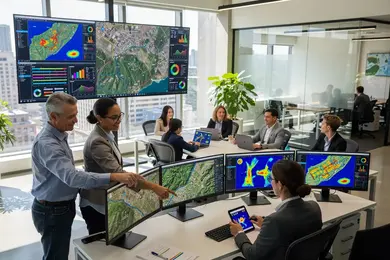
An online bachelor's degree in environmental science with monitoring focus equips students with targeted skills in data collection, sensor operation, and regulatory compliance necessary for environmental assessment roles. Employers increasingly seek candidates who can manage remote sensing technologies and translate large datasets into actionable insights, especially as the environmental monitoring market expands rapidly.
Graduates face varied practical demands depending on sector placement: urban planners integrate monitoring data to balance development and ecosystem preservation, while private industry professionals optimize protocols to meet emissions regulations. Programs identified as accredited environmental science programs with environmental monitoring coursework differ in their inclusion of hands-on fieldwork, which is critical since real-world proficiency outweighs theoretical knowledge in hiring decisions.
Prospective students should confirm availability of virtual labs or local partnerships, especially given the challenge of acquiring technical expertise remotely. Success in this pathway requires familiarity with GIS tools, statistical software, and sensor calibration-skills that directly affect employment prospects and salary growth.
For individuals reconsidering their career trajectory, this degree offers access to positions in consulting, government, and nonprofit sectors focused on pollution control and resource management. However, candidates without a science background can expect a steeper learning curve, potentially extending time-to-degree due to required competency in quantitative areas such as chemistry and calculus.
Understanding these tradeoffs and aligning them with long-term objectives is essential. To explore practical career outcomes, see what can you do with an environmental science degree.
How does an online environmental science degree compare to a campus-based program?
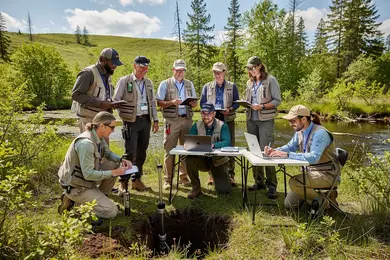
Choosing an online environmental science degree over a campus program involves significant tradeoffs in practical skill development critical for technical roles. While both routes provide comparable theoretical foundations, online students must often secure their own local labs or field sites to fulfill hands-on requirements, such as watershed sampling, tasks campus students access through institutionally coordinated resources.
Flexibility remains a core advantage of online programs, appealing to nontraditional students balancing work and family, but this same flexibility demands strong self-discipline to avoid delays in essential skill acquisition. Students without structured, on-site mentoring and collaborative research opportunities-features more readily available in traditional settings-may face slower progression toward workforce readiness in environmental roles.
Recent admission data highlight a decline in standardized test submissions, supporting broader accessibility for online applicants, but also inviting variability in academic preparedness that can affect program rigor. Employers increasingly prioritize proven practical experience over the mode of degree delivery, emphasizing certification, virtual labs, and field placements as key components for online students to demonstrate equivalent competency.
Understanding these dynamics within the broader landscape of environmental science education, students might also consider complementary advanced options such as an online PhD in data science to enhance analytical skills relevant to environmental data analysis.
Which accreditation and quality standards should online environmental science programs meet?
Accreditation directly impacts the value of online environmental science programs in the United States, with regional accreditation being the baseline for federal aid and foundational quality assurance criteria for online environmental science degrees. Specialized recognition from agencies like ABET or EHAC signals curriculum rigor necessary for environmental monitoring roles that require technical proficiency.
A program lacking these credentials often leaves graduates ill-prepared for employer demands in data-driven roles. The practical implications of outdated or theoretical curricula become apparent in fields heavily reliant on GIS or remote sensing technologies. In 2024, U.S. undergraduate programs incorporating such content increased by over 40%, emphasizing a workforce pivot toward applied skills.
Graduates who cannot competently use platforms such as ArcGIS or ENVI face significant hurdles transitioning into environmental consulting, regulatory, or resource management positions. Employers frequently require evidence of hands-on experience with real-world datasets and regulatory compliance knowledge, which is why quality assurance criteria for online environmental science degrees stress integration of internships or fieldwork into the curriculum.
Federal agencies like the EPA exemplify this expectation by demanding verifiable spatial impact assessments from their analysts, a standard ignored by many unaccredited or insufficiently updated programs. Prospective students must critically evaluate whether a program's content aligns with evolving industry tools and standards, as failure to do so incurs costly on-the-job training delays or outright job mismatches.
For those interested in similar fields, exploring offerings such as a library science degree online can provide complementary skills in data management and analysis relevant to environmental data sets.
What environmental monitoring courses and lab experiences are included in these programs?
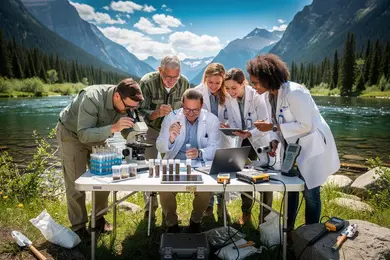
Online bachelor's programs in environmental science with environmental monitoring courses must balance comprehensive lab experiences with the limitations of remote learning. Graduates acquire skills in deploying sensor networks, real-time data collection, GIS mapping, and interpreting analytical instruments such as spectrophotometers and gas chromatographs.
These competencies reflect employer expectations for regulatory compliance and consulting roles requiring validated technical proficiency in both field operations and laboratory quality control. Hands-on environmental monitoring labs in online environmental science degrees are often supplemented by simulation labs or internships facilitated through partnerships with agencies or companies.
The Sloan Consortium reports that 72% of online STEM bachelor's programs at public universities include these real-world pathways, which are critical to converting theoretical knowledge into actionable skills that improve employability. For professionals targeting pivot roles in environmental consulting or compliance auditing, the variation in lab intensity across programs is consequential: virtual labs may not meet all certification requirements, and some field training could demand in-person attendance.
Effective curricula front-load field sampling before advancing to data analysis, aligning academic output with industry needs in contamination assessment or industrial emissions monitoring. This calibrated education approach contrasts with purely theoretical tracks and underscores practical tradeoffs students must evaluate when selecting programs. For those simultaneously seeking advanced credentials, courses occasionally complement a master of library science for data management expertise.
What admission requirements and prior preparation are needed for these online degrees?
Admission to online bachelor's degrees in environmental science with environmental monitoring requires more than a high school diploma. Candidates must demonstrate proficiency in math and laboratory sciences, including biology, chemistry, and quantitative analysis, skills vital for field and data-centric monitoring roles. Many programs still require SAT or ACT scores unless mitigated by relevant work or college experience.
Failure to meet prerequisites in earth or environmental sciences often lengthens degree timelines due to remedial coursework. Working professionals pivoting into environmental science face a tradeoff between immediate job readiness and foundational skill gaps. Employers expect proficiency in Geographic Information Systems (GIS), regulatory frameworks, and data collection methods from the outset.
Bridging non-STEM backgrounds with targeted statistics and environmental technology courses can mitigate this risk but may extend time and financial investment. Admissions committees increasingly prioritize applicants' demonstrated analytical capacities, often evidenced through internships or environmental projects.
This emphasis aligns with labor market data showing a projected 6% job growth over the next decade and median wages near $79,000, reinforcing the need for technical aptitude to meet compliance and pollution assessment demands. Applicants should weigh the practical implications of program rigor against workforce entry timelines and capacity to handle technical content, as premature enrollment without adequate preparation might hinder completion and employability.

How long do online environmental science programs take, and what do they cost?
Choosing an online environmental science bachelor's program requires balancing program length, costs, and technical depth against realistic workforce outcomes. Standard full-time paths take around four years, but working adults often extend to five or six years when juggling employment and studies. Public universities average $40,000 to $60,000 in total tuition, while private institutions can exceed $100,000, with additional expenses for specialized software and lab fees.
Programs focusing on environmental monitoring-covering GIS and remote sensing-demand extra investment but build technical skills increasingly valued by employers. Graduates equipped to handle complex environmental data challenges are more competitive for roles in consulting and regulation, where median salaries for environmental data scientists reach about $94,000, roughly 20% higher than traditional environmental scientists, according to the Environmental Financial Consulting Group's 2024 Environmental Consulting Salary Survey.
Deciding between accelerated versus extended study hinges on career priorities:
- Faster completion enables quicker workforce entry but may limit technical specialization.
- Longer programs deepen analytical skills, justifying higher starting salaries but prolonging upfront costs and delayed earnings.
Ultimately, prospective students should weigh tuition, time investment, and the program's emphasis on practical data management to align education with employer expectations and career pivots in environmental consulting and data analysis.
What careers can you pursue with environmental monitoring training from this degree?
Graduates of environmental science bachelor's degrees with training in environmental monitoring enter a job market that demands both technical competence and regulatory insight. Roles like environmental technicians and compliance analysts routinely require operating complex monitoring systems and interpreting data for agencies such as the EPA. This blend of skills is essential given the increasing regulatory scrutiny companies face, especially in industries vulnerable to environmental impact assessments.
Field experience remains a critical limitation of purely online programs, despite their cost advantage-averaging $10,500 annually at public institutions versus $16,800 for on-campus. Employers prioritize candidates who can translate monitoring data into actionable compliance reports and real-time environmental risk evaluations, skills typically honed through internships or cooperative education settings.
For example, municipal water authorities expect specialists to use monitoring data to ensure contaminant levels meet public health standards daily. Practical proficiency in GIS, remote sensing, and data analytics platforms is frequently emphasized, reflecting industry priorities for precision and adaptive resource management. Conservation science roles leverage this expertise to assess habitat shifts and species health, influencing policy and operational decisions in natural resource management.
- Technical operations include equipment deployment for air, water, and soil monitoring.
- Regulatory roles require interpreting environmental data within compliance frameworks.
- Online degree affordability must be balanced with opportunities for hands-on experience.
What are typical salaries and earning potential for environmental monitoring professionals?
Salary ranges for environmental monitoring professionals reflect the intersection of geography, sector, and specialized skills rather than simple tenure. Median annual compensation spans from $50,000 to $75,000, with lower entry points near $45,000 common in government and nonprofit roles. In contrast, professionals in private sectors-particularly energy, consulting, or advanced data analytics-may exceed $90,000, illustrating how technical expertise and certification drive earning potential.
Regional disparities are tangible: a technician in a municipal water quality department in the Midwest earning approximately $52,000 contrasts sharply with an environmental scientist in California's technology-driven air quality sector pulling over $85,000. These gaps underline the need to evaluate local labor markets and employer priorities beyond headline salary figures.
Working while completing an online environmental science bachelor's degree preserves income stability for 68% of students who maintain full-time employment during study, but this balance entails tradeoffs. Intensive upskilling or regulatory certification phases often require temporary reductions in productivity and earnings.
Employers increasingly prioritize candidates with hands-on environmental monitoring experience combined with academic credentials. Graduates lacking applied field or lab work frequently encounter slower career advancement, reinforcing the value of integrating internships or practicums into educational programs aligned with shifting environmental regulations.
What is the job outlook for environmental science and environmental monitoring roles?
Employment growth in environmental science and monitoring reflects nuanced workforce shifts rather than uniform expansion. While the U.S. Bureau of Labor Statistics anticipates a 5% growth for environmental scientists and specialists through 2032, roles emphasizing data analytics and sensor technology integration often outpace this average. For instance, professionals adept in real-time pollution tracking fulfill urgent employer needs as organizations prioritize precise, actionable environmental data.
Graduates with a bachelor's degree in environmental science combined with focused monitoring coursework position themselves advantageously for specialized roles. Typical employers include government agencies, consulting firms, and private companies managing resource impact assessments. However, candidates lacking certification or field experience frequently face entry barriers, necessitating targeted internships or technical credentials to convert academic knowledge into practical skills.
Key hiring criteria center on proficiency in geospatial analysis, environmental informatics, and understanding regulatory frameworks. These competencies affect organizational compliance capabilities, influencing job stability and promotion prospects. Additionally, the ability to articulate complex environmental data to non-specialists is a decisive factor in professional evaluation.
From a financial perspective, environmental science graduates report a median 10-year return on investment (ROI) of approximately $393,000, surpassing the $281,000 median for the average bachelor's degree, as per the 2024 Georgetown University Center on Education and the Workforce. This premium reflects growing employer investment in compliance roles supported by rigorous environmental monitoring.
How can you choose a reputable online environmental science program focused on monitoring?
Choosing an online environmental science program hinges on verifying not just accreditation but the embedded technical rigor and practical skill development. Employers such as the EPA demand proficiency in hands-on environmental monitoring tools, including GIS mapping and data collection technologies, which must be integral rather than peripheral in the curriculum.
A program lacking fieldwork components or local practicum partnerships risks leaving graduates underprepared for real-world roles in air quality or water resource management. The increase in online and hybrid applications-from 27% to 42% in 2024-reflects broader accessibility but masks significant variability in program quality. Prospective students should weigh options based on demonstrated graduate employment rates specifically linked to environmental monitoring careers.
Programs that align curricula with national environmental data standards and offer pathways to certifications like Certified Environmental Scientist enhance market readiness. However, students focusing solely on theoretical knowledge may find themselves at a disadvantage when tasked with regulatory reporting or impact assessments in field settings.
For professionals pivoting careers, flexible scheduling combined with opportunities for continuing education credits can accelerate degree completion while maintaining workforce engagement. In summary, the practical integration of applied fieldwork, technology training, and certification compatibility determines the true value of an online environmental science degree in meeting employer expectations and advancing environmental monitoring capacities.
Other Things You Should Know About Environmental Science
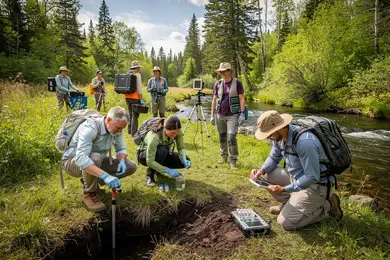
Most online environmental science programs still require at least one field or lab component, often completed through a local site, an intensive weekend, or a short residency. Common requirements include 1–3 science lab credits, GPS sampling, water-quality testing, and data analysis using industry software.
Employers recognize online degrees if they come from accredited institutions with rigorous curricula, but skepticism persists where programs lack clear validation of field skills. Graduates must demonstrate practical competencies through internships, certifications, or portfolios beyond the degree itself. Prioritizing programs with established industry connections and career support often results in stronger employment outcomes compared to purely theoretical online degrees.
Online environmental science programs with environmental monitoring components often require balancing asynchronous coursework with scheduled virtual labs or field assignments. The workload can be intensive, especially when lab data collection or project reporting deadlines coincide with other obligations. Prospective students should assess their capacity for self-discipline and time management, as incomplete hands-on preparation can affect readiness for technical roles after graduation.
References
- 2025 Most Affordable Online Environmental Science Degrees https://www.onlineu.com/most-affordable-colleges/environmental-science-degrees
- EM - Environmental Monitoring Online Certificate https://www.unbc.ca/continuing-studies/courses/em-environmental-monitoring-online-certificate
- Educational Accreditation — The ESG Institute https://www.the-esg-institute.org/educational-accreditation
- How to Complete Your College Degree Online https://claremontlincoln.edu/news-blog/how-complete-degree-online/
- Environmental Scientist https://www.ube.ac.uk/built-environment-job-profiles/environmental-scientist/
- Environmental Monitoring Officer - Green Careers Hub https://www.greencareershub.com/find-your-green-role/job-profiles/environmental-monitoring-officer/
- Online Environmental Science Degrees: Compare Schools https://www.degreesforgood.org/online-degrees/environmental-science/
- Food Assurance North America | EMP https://www.eurofinsus.com/assurance/food/services/training-e-learning/food-safety-food-quality-training/environmental-monitoring-program-emp/
- Higher Education Accreditation | North American Association for Environmental Education https://naaee.org/programs/higher-education-accreditation