2027 Online Environmental Science Degrees With Climate Science Concentrations

Co-Founder and Chief Data Scientist
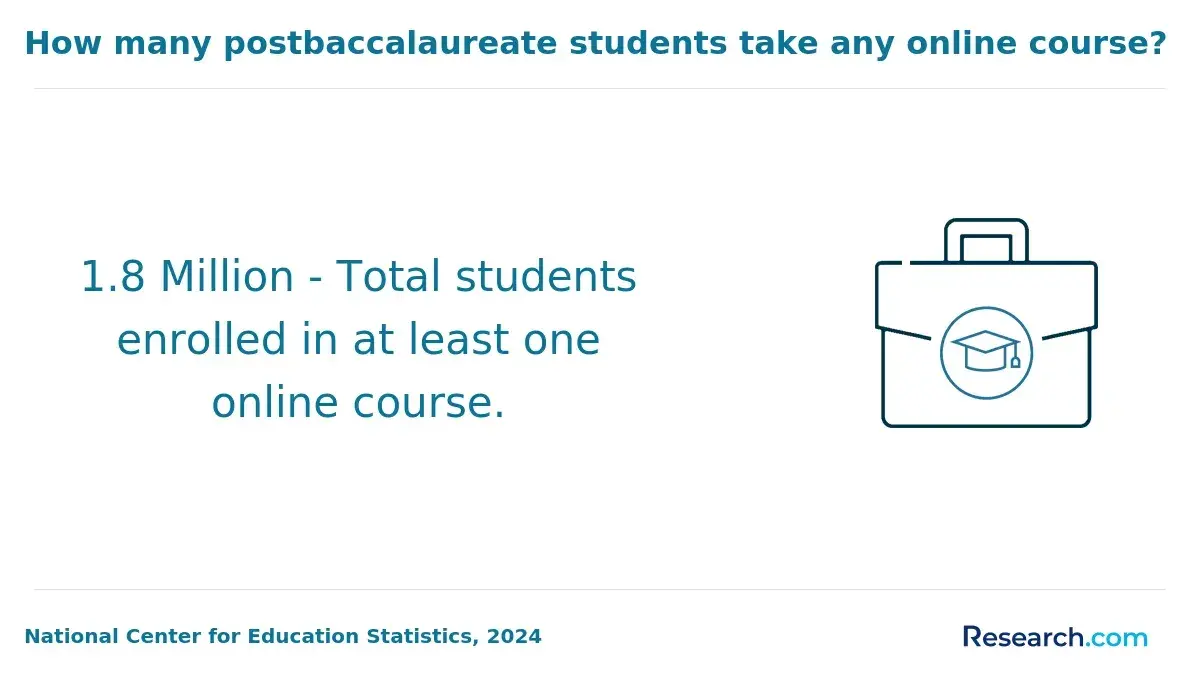
Professionals seeking to integrate climate science expertise into environmental roles often confront rigid program schedules and geographic constraints that delay career transitions. With online higher education enrollment up by 15% since 2023 according to the National Center for Education Statistics, flexible learning options have reshaped access, particularly for working adults balancing employment and family obligations. This shift matters because job market growth for environmental specialists with climate-focused knowledge demands timely, adaptable credentials that align with evolving employer requirements.
This article evaluates online environmental science degrees featuring climate science concentrations, aiming to guide prospective students through program options, practical tradeoffs, and strategic implications for career advancement.
Key Things You Should Know
- Recent federal labor data highlight a 12% projected growth in climate-related roles through 2032 but stress that online environmental science degrees with narrow climate concentrations often limit interdisciplinary skill acquisition, potentially restricting adaptability in evolving job markets.
- Employer surveys from 2024 reveal 68% of hiring managers prioritize measurable project experience and data analytics proficiency over broad theoretical knowledge, suggesting online degree programs must integrate practical, quantitative climate science modules to enhance graduate marketability.
- Cost analyses indicate that accelerated online environmental science degrees with climate science focuses reduce total expenses by up to 35% but may compress essential fieldwork opportunities, creating a timing-cost-access tradeoff affecting career readiness for field-intensive roles.
What Are Online Environmental Science Degrees?
Online environmental science degree programs in the US with accredited climate science concentrations offer specialized skills tailored to workforce needs, especially in quantifying carbon footprints and conducting climate risk assessments. These programs combine data analysis, ecosystem evaluation, and policy assessment but require students to balance virtual coursework with local fieldwork, posing challenges for those lacking easy access to practical environments.
Degree holders entering federal agencies, environmental consultancies, or energy firms face employers prioritizing applicants who prove applied experience with advanced tools, including geospatial technologies often covered in GIS degree programs. The median annual salary for environmental scientists is $78,980, with top earners exceeding $133,930, underscoring the link between practical competencies and salary outcomes.
Prospective students must critically assess programs for accreditation, internship opportunities, and the inclusion of up-to-date software training critical for adapting to shifting climate regulations. Online delivery reduces geographical barriers but demands disciplined scheduling to fulfill fieldwork and capstone requirements integral to employer recognition.
For mid-career professionals pivoting toward sustainability roles, weighing tuition costs against the market's premium on climate-focused skills is essential. Programs embedding interdisciplinary projects with climate science concentrations cultivate expertise aligned with growing investments in climate adaptation strategies.
Which Schools Offer Climate Science Concentrations?
Choosing climate science concentrations within environmental science degrees demands a careful balance between curriculum depth and practical employability. Institutions like the University of Michigan, Colorado State University, and Oregon State University integrate rigorous coursework with specialization options in atmospheric processes, climate modeling, and mitigation strategies. However, graduates' career outcomes hinge significantly on program design factors beyond academics. For instance, Colorado State's alignment with governmental climate adaptation offices facilitates direct employment in climate impact assessments, reflecting the advantage of programs connected to active research and agencies such as NOAA or the EPA.
Several critical factors influence the decision-making process for prospective students assessing top universities providing environmental science degrees with climate science specializations. Proximity to diverse ecosystems, such as Oregon State on the Pacific Coast, offers immersive experiences in sea-level rise and wildfire mitigation, enriching practical skills that directly meet growing industry demands. Conversely, programs lacking integration of hands-on climate monitoring technologies may limit graduates' access to technical specialist roles, despite overall degree rigor.
Employment projections indicate 6% growth in environmental science roles through 2034, underscoring the value of competencies in GIS applications, regulatory policies, and interdisciplinary communication. Online, hybrid, or traditional program formats impose further tradeoffs concerning networking and internship placement opportunities essential in securing positions aligned with the additional 4,800 projected jobs. When researching data science degrees or climate science concentrations, candidates should critically evaluate how well program structures incorporate applied training and industry partnerships.
For a data science perspective on affordability metrics related to combining environmental analysis and climate modeling skills, students can consult data science degrees.
Are Online Environmental Science Degrees Accredited?
Accreditation is a pivotal filter in evaluating online environmental science degrees accreditation standards, as it directly affects employability, access to financial aid, and professional certification eligibility. For instance, degrees like the University of Arizona Online's BS in Environmental Science demonstrate regional accreditation, ensuring the curriculum meets industry-accepted rigor. Graduates from such programs qualify for roles in government agencies or firms with stringent degree requirements-contrasting sharply with unaccredited programs, which severely limit career mobility and financial support options.
The practical costs of accredited online degrees tend to align with traditional on-campus rates. For example, the University of Arizona's rate of $525 per credit hour results in about $63,000 for a 120-credit bachelor's degree, underscoring that pricing differences hinge more on institutional policies than accreditation itself. This financial reality shapes decision-making when students weigh affordable delivery models against program quality.
Employers in climate science sectors closely evaluate program integrity, especially for specialized concentrations, favoring candidates whose credentials reflect verified training in technical skills like climate modeling or environmental impact assessments. Prospective students should rigorously verify accreditation status through official disclosures or databases to avoid pitfalls that can block professional certification or license acquisition, crucial for career growth.
Those exploring accredited climate science concentration programs online should recognize that accreditation can be a determinative factor in navigating advanced certification pathways and eligibility for roles in environmental policy or remediation management. Comparing different degree offerings, including fields like computer science degrees online, can inform strategies for complementary skills acquisition in interdisciplinary environmental work.
What Courses Are in a Climate Science Concentration?
Climate science concentrations within online environmental science degrees demand rigorous interdisciplinary training, balancing technical skills and policy comprehension to address evolving workforce needs. Core classes for climate science concentrations in environmental science programs typically include climate dynamics, greenhouse gas inventories, and climate modeling techniques, equipping students to analyze complex environmental systems effectively. For instance, regulatory careers require knowledge of environmental law and policy, while carbon accounting roles depend heavily on geospatial analysis and remote sensing expertise.
Electives focus on renewable energy systems, climate resilience planning, and environmental economics, matching employer preferences for versatile professionals skilled in advanced statistical software and GIS tools. Demand data confirms that proficiency in these areas increases employability across public agencies and private firms managing climate risks. The practical challenge lies in integrating computational rigor with policy analysis-students must navigate steep learning curves in statistical coursework to capitalize on this demand.
Programs increasingly incorporate environmental chemistry and sustainable development metrics, critical for impact assessment and resource management roles. Hands-on lab work and capstone projects provide simulation-based experience needed to translate theoretical knowledge into actionable solutions. Students evaluating climate science courses in online environmental science degrees should verify alignment with recent EPA guidelines and IPCC frameworks, ensuring curricular relevance to current regulatory conditions.
For those considering a strategic shift or skill upgrade, comparing offerings systematically is essential. Resources like the masters of library science rankings can help identify affordable pathways in related fields, demonstrating the value of comprehensive program analysis.
How Do Online and Campus Programs Compare?
Choosing between online and campus environmental science programs depends largely on career goals tied to employer expectations and practical skill demands. Campus-based study excels in delivering immersive fieldwork, laboratory access, and direct networking-elements pivotal for roles such as government environmental analysts who compete for internships and hands-on experience within agencies like the EPA.
In contrast, online programs concentrate on computational skills, including remote sensing, data modeling, and climate data analytics. These align well with emerging, high-growth positions such as climate-focused data scientists, where technical proficiency often outweighs traditional field experience. According to recent labor projections referenced by Arizona State University, this specialty is expected to grow by 33.5% with an average salary of $120,230.
Students pursuing virtual learning must proactively secure local internships or professional partnerships to offset the absence of structured field experiences, which can introduce logistical friction and delay workforce entry. Additionally, online programs offer greater scheduling flexibility, benefiting working professionals balancing multiple responsibilities.
Key tradeoffs prospective students should consider include:
- The necessity of self-direction and networking effort for online formats.
- Campus programs' stronger emphasis on interdisciplinary collaboration and in-person problem solving.
- Employer segmentation of roles into field-intensive versus data-centric categories.
Ultimately, career trajectories in environmental science increasingly bifurcate, requiring a strategic match between educational format and targeted occupational demands.
What Are the Admission Requirements?
Online environmental science degrees with a climate science concentration demand strong academic and quantitative foundations, reflecting employer expectations in a competitive job market. Admission hinges on transcripts evidencing a minimum 2.5 to 3.0 GPA with coursework in biology, chemistry, physics, or environmental studies. Proficiency in statistics or calculus is often necessary, supporting data-driven climate modeling and impact analysis applied in government and consulting roles.
Applicants must typically provide a statement of purpose that clearly connects their professional objectives to climate-related challenges. Letters of recommendation are best sourced from individuals familiar with the applicant's scientific competence rather than general references. For career changers, documented environmental work experience can offset some academic gaps and enhance employability in niche sectors like environmental policy or risk assessment.
GRE scores are mostly optional yet may strengthen applications for programs aligned with federal agencies. International candidates need TOEFL or IELTS proof of English proficiency. Common obstacles include completing prerequisite science courses when transitioning from unrelated backgrounds and balancing part-time studies with ongoing employment commitments.
Salary benchmarks vary widely by sector, with federal environmental scientists earning a median of $107,990 versus $83,000 in consulting and $81,920 in engineering services-highlighting the financial impact of choosing programs with rigorous scientific preparation that align with advanced climate mitigation and adaptation roles.
How Long Do These Degrees Take?
Completing an online environmental science degree with a climate science focus demands strategic timing aligned with workforce realities. A full-time bachelor's typically takes four years, matching employer expectations for foundational skills essential in government, NGOs, and private sectors. Accelerated tracks or transfer credits can shorten this to about three years, but part-time study often extends completion to five or more years, potentially delaying entry into an expanding job market.
For working professionals, balancing program pacing with job responsibilities affects reentry timing and ability to seize openings. The U.S. Bureau of Labor Statistics reported approximately 80,500 environmental scientists employed in 2022, underscoring steady demand where delays can weaken competitiveness.
Key considerations include:
- Program flexibility in labs and fieldwork, which often require synchronous participation or local arrangements.
- Structured practicum or capstone projects linked with employers that aid job placement despite longer part-time durations.
- Clear credit transfer policies and sequenced coursework to minimize administrative delays.
Master's degrees in climate science generally require 1.5 to 2 years of full-time study, with part-time paths extending up to 4 years; these options suit professionals prioritizing work-life balance but entail longer timeframes that may impact timely advancement.
How Much Do Online Programs Cost?
Choosing an online environmental science degree with a climate science focus requires close scrutiny of how cost interplays with career outcomes and program rigor. Bachelor's programs typically range from $15,000 to $45,000, while master's degrees can exceed $60,000, with pricing often influenced by residency status or program structure. For working professionals, accelerated tracks may justify higher tuition by shortening time to completion, reducing income disruption.
Employers in environmental consulting, policy, and renewable energy frequently weigh degree credibility and graduate network strength against tuition expense. For instance, a $25,000 degree from a regionally accredited university offering a solid climate science curriculum can increase employability more than a cheaper program lacking critical coursework or connections. Hidden costs such as $500 to $1,000 yearly fees for specialized software or virtual labs must also inform budgeting.
International online programs, like those offered through Open Universities Australia, present alternatives with diverse climate perspectives and often competitive pricing, but evaluating transfer credit acceptance and differing accreditation standards is essential for U.S. students.
- Average textbook costs near $1,200 per degree
- Technology upgrades and potential travel expenses for internships
- Financial aid availability varies widely and should be researched early
Practical decision-making around online environmental science degrees benefits from transparent cost assessment combined with employer expectations and program outcomes.
What Jobs Can Graduates Pursue?
Successfully entering climate-focused environmental roles increasingly depends on combining rigorous data skills with applied regulatory knowledge. For instance, professionals completing accelerated programs like the University of California, Riverside's 13-month MS in Environmental Engineering gain the ability to deliver swift climate adaptation projects or infrastructure resilience planning-capabilities that many traditional programs lack. Employers in government, private sectors, and nonprofits prioritize candidates who can turn climate data into actionable policy or technical solutions, particularly in contexts ranging from urban planning to renewable energy deployment.
The work often involves complex tasks such as environmental impact assessments, carbon footprint analysis, and GIS-driven ecosystem predictions. Graduates must balance theoretical grounding with hands-on skills in data modeling and regulatory frameworks to meet evolving climate standards. Federal entities like the Environmental Protection Agency expect experience that aligns closely with their operational needs.
Job roles can include:
- Climate change analyst developing emission reduction policies for municipalities
- Sustainability officer implementing corporate environmental responsibility programs
- Environmental engineer designing water and air quality controls aligned with climate projections
- Research specialist applying GIS to predict ecosystem changes
Rapid credential completion programs support strategic reskilling yet require ongoing professional development to address fluctuating climate data and policy shifts. Successful candidates demonstrate project management and interdisciplinary collaboration, often facilitated by online education's virtual labs and team assignments, making this pathway suitable for professionals aiming to recalibrate their expertise efficiently.
What Salaries and Job Outlook Can Graduates Expect?
Environmental science graduates focused on climate science face a starting salary range typically between $55,000 and $75,000, heavily influenced by their employment sector and location. Federal and state agencies often hover near $60,000, whereas consulting firms start slightly lower at around $58,000 but may reward certifications and performance with quicker salary growth. Specialization in data modeling and policy analysis, valued especially in renewable energy and urban planning, can bump mid-career salaries above $85,000.
The labor market for climate science roles is expanding at about 6% annually through 2034, outpacing many traditional sciences. However, practical skills in digital tools and cross-disciplinary collaboration significantly affect hiring outcomes. Geographic disparities create uneven opportunities, with urban centers featuring robust green industries offering better pay and faster employment than rural areas.
Professionals switching from unrelated fields should consider internships or certifications in climate data science to close skill gaps and improve salary prospects. Entry-level positions in nonprofits and academia may start closer to $50,000 but remain essential for advancing into specialized roles involving regulatory compliance, sustainability initiatives, or infrastructure resilience.
Long-term career sustainability demands continuous upskilling, given rapid shifts in climate policy and technology. These dynamics make practical, applied knowledge more valuable than credentials alone when navigating career pivots or growth in this arena.
Other Things You Should Know About Environmental Science
Yes. Many 2027 programs require 3 to 6 credits in GIS, remote sensing, or climate data analysis, often alongside statistics and environmental modeling. These courses are used to interpret satellite data, map land-use change, and evaluate climate trends for research or applied environmental work.
Employers in climate science roles increasingly demand evidence of technical competencies, data analysis skills, and project experience beyond academic credentials alone. Online degrees that offer labs, research collaboration, and capstone projects build more relevant portfolios. Candidates from programs that emphasize theoretical knowledge without applied components may face challenges competing for positions requiring immediate operational capability.
Online programs offer flexibility but often require substantial self-discipline to balance coursework, assignments, and projects alongside work or family duties. Climate science coursework tends to be quantitatively rigorous, involving statistics and software tools, which can increase weekly study hours. Prospective students should assess program pacing, access to faculty support, and technology demands to avoid underestimating the sustained commitment required.
Accreditation remains the baseline for employer recognition and credit transferability; however, specialized certifications in data modeling, GIS, or climate risk analysis can offer targeted skills that differentiate candidates. Working professionals seeking career advancement should prioritize programs that integrate certification opportunities with degree completion, optimizing both academic credibility and specific technical expertise valued in the climate sector.
References
- Most Affordable Online Colleges Of 2025 https://www.affordablecollegesonline.org/cheap-online-colleges/
- Report: College Grads’ Expectations Differ from Reality of Job Market https://njbia.org/report-college-grads-expectations-differ-from-reality-of-job-market/
- I have a degree, now what? https://targetjobs.co.uk/careers-advice/career-ideas/i-have-degree-now-what
- Cost of Online Education vs. Traditional Education [2025]: Comparison https://educationdata.org/cost-of-online-education-vs-traditional-education
- Admission Requirements | Undergraduate Admissions + Programs https://www.ualberta.ca/en/admissions/how-to-apply/admission-requirements/index.html
- Climate Science https://programsandcourses.anu.edu.au/major/clsc-maj
- Admissions Criteria https://ed.wum.edu.pl/pl/admissions-criteria
- Graduates Expectations vs. Job Market Reality https://www.lloydstaffing.com/graduates-expectations/
- Annual Grad Report — ZipRecruiter Economic Research https://www.ziprecruiter-research.org/annual-grad-report